






A collector's guide to Afghanistan: its geology, mining history and notable minerals, illustrated with the 752 specimens documented from this locality on EarthWonders.
Key facts
Afghanistan is not a single mineral locality so much as a chain of world-class gem provinces strung through the Hindu Kush: ancient lapis in the marble of Badakhshan, emerald in the altered rocks of Panjshir, ruby in the Jegdalek marbles east of Kabul, and some of the finest late-20th- and 21st-century gem pegmatite specimens from Nuristan, Kunar, and Laghman. For collectors, the country’s importance rests on the extraordinary contrast of its deposits. Sar-e-Sang is a metamorphic lapis-lazuli system in which lazurite, afghanite, pyrite, calcite, diopside, scapolite, forsterite, phlogopite, and related feldspathoids make specimens that can look almost architectural: saturated ultramarine-blue crystals and masses set sharply against white carbonate, often sparked with metallic pyrite. The Nuristan–Kunar–Laghman pegmatites are a different world entirely: complex, highly evolved granitic pegmatites carrying elbaite, spodumene, beryl, cleavelandite, quartz, feldspar, lepidolite, pollucite, topaz, phosphates, and tantalum-niobium minerals.
Historically, Afghanistan’s lapis lazuli is among the oldest continuously exploited gem materials on Earth. Sar-e-Sang supplied lapis to the ancient Near East, Egypt, Mesopotamia, and South Asia; in the modern specimen trade it also gave collectors the blue feldspathoid mineral afghanite, first described from the lapis mines in 1968. The pegmatites entered the Western collector consciousness more suddenly. Soviet geologists recognized important rare-metal and gem pegmatites in the early 1970s, and by the late 1970s dramatic Afghan crystals of kunzite, green and multicolored tourmaline, aquamarine, and morganite were being compared with the great pegmatite localities of Brazil, California, and Madagascar.
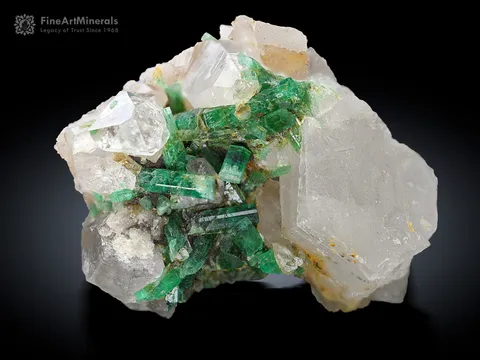
The best Afghan specimens have an unmistakable visual language. Paprok tourmalines are slender, glassy, and color-zoned, often pink, green, blue-green, or bicolored. Mawi and Nilaw spodumenes can be large, lustrous, striated, etched, and strongly pleochroic, with lilac, pink, greenish, yellowish, or violet-blue tones depending on orientation and color stability. Sar-e-Sang pieces are famous for deep blue lazurite or afghanite in snow-white calcite or marble, with pyrite providing a bright metallic counterpoint. Panjshir emeralds, although more often discussed as gems than cabinet specimens, can make superb small crystals on quartz-ankerite or carbonate-rich matrix with pyrite.
Regional View
Country View
Afghanistan’s collecting significance is also shaped by the geography of extraction. The great deposits are remote mountain workings: adits in cliffs, short seasonal campaigns at snowbound elevations, and hand sorting at mine camps or trading centers such as Kabul and Peshawar. Much fine material reached Western collections through informal networks rather than through long-lived industrial mine operators, which is one reason older labels can be imprecise. “Nuristan,” “Laghman,” “Kunar,” “Pech,” “Paprok,” “Mawi,” and “Afghanistan” appear interchangeably on older specimen tags, even when later research can place the piece more accurately.

Photo: Wikimedia Commons

Photo: Wikimedia Commons
Search for specimens: View all specimens from Afghanistan
The collector localities of Afghanistan fall into several distinct geological families. In the northeast, the Nuristan, Kunar, and Laghman gem pegmatites are complex rare-element granitic pegmatites, broadly of the lithium-cesium-tantalum family. Their mineralogy reflects extreme fractionation: spodumene, elbaite, lepidolite, beryl, pollucite, topaz, albite-cleavelandite, quartz, microcline, muscovite, spessartine, cassiterite, columbite-tantalite, manganotantalite, microlite-group minerals, and phosphates occur in veins and pockets. Classic descriptions of Nilaw and Mawi place the pegmatites in metamorphic and intrusive terranes of gneiss, mica schist, quartzite, marble, amphibolite, granites, diorite, and gabbro. At Nilaw and Mawi, pegmatite bodies range from small veins to large lenses and thick tabular masses; some veins are zoned, with fine-grained border zones, feldspar-quartz-mica zones, spodumene-rich zones, and late pocket assemblages.
Mawi, part of the Nilaw-Kolum pegmatite field, is one of the great spodumene specimen names. Older field descriptions record large crystals of spodumene in several colors, plus morganite, aquamarine, and tricolored elbaite. The main Mawi vein has been described as roughly 40 meters thick and more than a kilometer long, and later imagery-based studies place the main mining area near the Kolum workings. Collectors know Mawi for complete or nearly complete kunzite crystals, etched spodumene “floaters,” spodumene with cleavelandite, and the occasional beryl or tourmaline association. Many pieces reached the market as loose pocket crystals rather than matrix specimens because miners and gem buyers prized the crystals themselves, and matrix plates were often damaged or stripped in extraction.
Nilaw is important for spodumene, tourmaline, cleavelandite, lepidolite, beryl, pollucite, and tantalum-niobium minerals. In the older literature, crystal-lined cavities at Nilaw were described toward the upper parts of pegmatite bodies, while columbite-tantalite occurred in blade-rich layers. Korgal, also discussed in the classic Laghman literature, became known for very transparent green elbaite; the Kunar side of the pegmatite belt produced excellent beryl and tourmaline, including material from Dara-e-Pech and related fields. Paprok, high in Nuristan near Kamdesh, is one of Afghanistan’s premier tourmaline localities, famous for elegant elbaite crystals, color zoning, and association with albite, quartz, feldspar, lepidolite, and other pegmatite minerals. Modern satellite-based reporting places the Paprok workings at very high elevations, with seasonal mining limited by snow and difficult access.
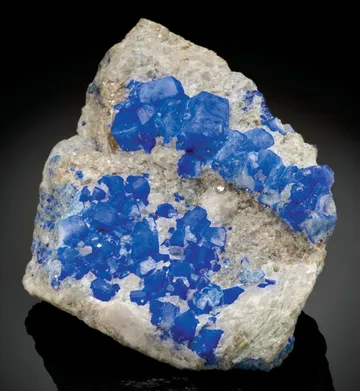
Sar-e-Sang, in the Kokcha Valley of Badakhshan, is Afghanistan’s classic lapis-lazuli district and one of the most historically important gem localities in the world. The lapis occurs in metamorphosed carbonate rocks: calcite- and dolomite-rich marble cut by blue feldspathoid-bearing zones in association with silicates such as diopside, scapolite, forsterite, phlogopite, and related minerals. Pyrite is a characteristic accessory. The collector material ranges from massive lapis carving rough to crystallized lazurite, afghanite, haüyne, sodalite, marialite, richterite, phlogopite, and diopside specimens. Afghanite, a cancrinite-group feldspathoid, was first described from Sar-e-Sang and remains one of the locality’s most desirable rare-species specimens, especially as blue crystals on calcite or marble with pyrite.
Panjshir emeralds occur in a different geological environment. The emerald-bearing zones are associated with hydrothermally altered rocks along structural zones east of the Panjshir River, especially around Khenj, Buzmal, Mikenj, and related mining areas. The host assemblage includes schist, marble, quartzite, gabbro-diorite dikes, quartz porphyry, quartz-ankerite veins, carbonate minerals, pyrite, albite, mica, and tourmaline in altered fault and fracture zones. The mining is generally small-scale: tunnels and adits driven into mountainsides, selective blasting, hand breaking, washing, and parcel sorting. Fine matrix emerald specimens are scarcer than cuttable crystals and gem rough, but the best pieces show saturated green prismatic crystals with quartz, carbonate, mica, and pyrite.
Jegdalek, east of Kabul in the Surobi District, is Afghanistan’s historic ruby and sapphire field. The deposit is marble-hosted, developed in gneiss-marble sequences of the Nuristan central massif. Ruby occurs in thin veins, lenses, and pocket-like concentrations in calcitic to dolomitic marble, with associated spinel, fuchsite, clinohumite, pargasite, diopside, chlorite, titanite, and mica-group minerals. Specimen-quality Jegdalek ruby is selective: much production is fractured, translucent, or cut as cabochon-grade corundum, while the best crystals show a red to purplish-red glow, pseudohexagonal form, blue zoning in some pieces, and strong contrast with pale marble.
Modern mining across Afghanistan remains largely artisanal or small-scale, although the regulatory framework and licensing language have shifted repeatedly under successive governments. The Ministry of Mines and Petroleum has overseen formal mining rights and permitting, while many gem localities have long been worked by local groups, families, commanders, contractors, and traders. For collectors, the practical result is that exact mine attribution can be uneven. Specimens may be bought at mine camps, Kabul’s gem market, Peshawar, Dubai, or Tucson long after leaving the source, and locality information can be simplified at each step of the chain.
Current collecting access for outsiders should be regarded as highly restricted. These are not recreational rockhounding areas. Security conditions, local permissions, mine ownership, seasonal snow, altitude, and transport all matter, and the best-known deposits are active working mines rather than casual collecting sites. Specimen acquisition is therefore mostly through established dealers, older collections, or Afghan and Pakistani trading networks. Well-documented old labels, photographs from the source dealer, and chain-of-custody information carry real value, especially for high-end tourmaline, spodumene, emerald, ruby, afghanite, and fine crystallized lazurite.
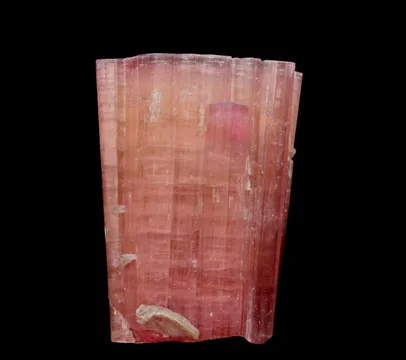
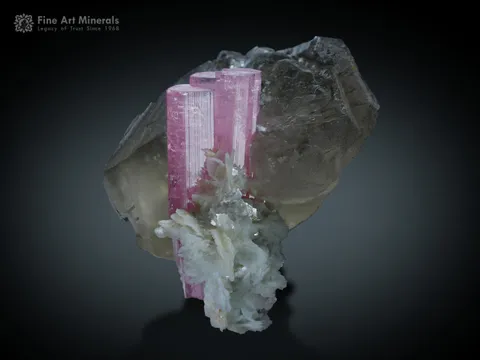
Afghanistan’s tourmaline reputation rests on the highly evolved lithium pegmatites of Nuristan, Laghman, and Kunar—especially Paprok, Mawi, Nilaw-Kolum, Korgal, Parun, and the Dara-i-Pech or Pech Valley field—where tourmaline occurs in clay-filled miarolitic pockets with quartz, albite var. cleavelandite, microcline, muscovite, lepidolite, spodumene, beryl, pollucite, phosphates, cassiterite, and columbite-tantalite minerals. The collector material ranges from black schorl in the coarser pegmatite zones to gem elbaite in pencil-like, strongly striated prisms; older geological reports describe gem tourmaline “pencils” to about 20 cm, and cuttable Nuristan crystals to roughly 15 cm long and 4 cm wide. Colors are the great Afghan strength: pink and rubellite tones, apple to forest greens, blue-green and indicolite blues, achroite zones, and multicolored crystals with either sharp banding or softer transitions along the prism. The best specimens are not merely bright crystals—they are undamaged, lustrous, glassy prisms with complete or complex terminations, convincing natural color, and an architectural matrix of snowy cleavelandite, smoky quartz, lepidolite, or beryl; ordinary pieces are loose fragments, heavily contacted prisms, or muddy-colored sections with little transparency and no real display balance.
Afghan kunzite is spodumene at its most spectacular: large, bladed to tabular crystals from Nuristan and Kunar pegmatites, often with broad flat faces, sharp edges, twinning, strong pleochroism, and a tendency to show its richest color down the length of the crystal. Mawi is the heavyweight locality, a giant pegmatite in the Nilaw-Kolum field that has produced enormous pocket yields since the 1970s, including the celebrated summer 1995 production of about 1,800 kg of kunzite from one pocket, with roughly 300 kg of faceting grade, followed by another pocket of about 2 tons; Pech Valley pegmatites, including Kanakana at Voradesh, have also yielded large quantities, while Waygal is noted for rare deep purple crystals with blue to indigo terminations. Colors can be pale lilac, pink, rose, lavender, purple, blue-violet, greenish before light exposure, yellow triphane-like tones, or nearly colorless, and associations include albite/cleavelandite, quartz, lepidolite, tourmaline, morganite, aquamarine, pollucite, spessartine, fluorapatite, and tantalum minerals. Top specimens combine saturation, size, clean internal gemminess, sharp unrepaired terminations, and ideally matrix; lesser examples are chalky, cleaved, sun-faded, edge-bruised blades or gem rough with little specimen character.
Quartz is the quiet framework mineral behind many of Afghanistan’s great pegmatite specimens, but it also produces display pieces in its own right: colorless to milky crystals, smoky crystals, rose quartz, amethyst, and unusual included quartz occur across the Nuristan–Kunar pegmatite province and in the Ghazni amethyst occurrence. In the Mawi pegmatite, quartz forms major zones with microcline, albite, muscovite, spodumene, beryl, and tourmaline; at Paprok and Dara-i-Pech it provides the glassy points and pale to smoky anchors that make elbaite, morganite, lepidolite, and spodumene compositions work visually. Pech Valley is known for quartz specimens with blue elbaite inclusions, while Parun has produced rose quartz crystals that can sit like a crown on pale smoky quartz. Ghazni material is different in character: amethyst specimens from the Muqur District occurrence appeared on the market with goethite needles and associated calcite. The best Afghan quartz is sharp, transparent, undamaged, and compositionally useful—either a clean smoky or clear crystal carrying a colored pegmatite mineral, a well-formed rose quartz association, or a lively amethyst with attractive inclusions—whereas ordinary pieces are massive, bruised, iron-stained, or simply serve as broken pegmatite matrix.
Elbaite is the species name behind much of Afghanistan’s finest gem tourmaline, and the country’s best examples—especially from Paprok, Mawi, Parun, and Dara-i-Pech—stand among the classic modern lithium-pegmatite specimens. At Paprok, crystals commonly rise from cleavelandite, smoky quartz, lepidolite, quartz, or pollucite-bearing matrix as ribbed prisms in pink, green, blue-green, blue, rubellite, indicolite, achroite-zoned, and multicolor forms; a famous Paprok elbaite in the mim Museum is a 27 cm main crystal, dark green and glassy toward the top and pink toward the base, with cleavelandite near the bottom. Dara-i-Pech has yielded first-generation larger translucent pink crystals with flatter terminations and second-generation gemmy green-to-blue crystals reaching about 20 cm, and its finest “pencils” are valued for delicate color, clarity, and complex terminations. Good Afghan elbaite is all about the combination of color architecture and physical integrity: a clean, lustrous, unrepaired crystal, ideally with a complete termination and a natural pedestal of cleavelandite or smoky quartz, outranks a larger but dull, contacted, or internally shattered prism; deep blues and blue caps are especially prized when the color is natural-looking and the crystal is still bright rather than over-dark.
Afghan morganite, the pink to peach beryl from the same lithium-rich pegmatite system that gives the country its tourmaline and kunzite, is most strongly associated with Dara-i-Pech, Mawi, Paprok, and Kanakana. The Pech Valley has produced very fine morganite crystals to about 25 cm, including tabular hexagonal crystals, blockier prismatic forms, and rare crystals with pale aquamarine cores; documented specimen associations include cleavelandite, quartz, smoky quartz, elbaite, spodumene, kunzite, fluorapatite, and even stilbite-Ca. Mawi material is often admired for pink morganite perched on snowy cleavelandite, while Kanakana has produced notable morganite and aquamarine-core crystals in the same broad gem system that yielded major kunzite pockets. Colors run from very pale pink through peach, salmon, warm orange-pink, and purplish pink; the best pieces show a complete, lustrous, transparent to translucent beryl crystal with crisp hexagonal form and a matrix that adds contrast rather than clutter. Ordinary Afghan morganite is pale, etched, contacted, or just a loose gem crystal; cabinet-grade pieces earn their premium when the crystal is well centered, undamaged, richly colored, and naturally associated with the classic cleavelandite-quartz-tourmaline pegmatite suite.
Lepidolite in Afghanistan is less often the star than the stage lighting: it is the lilac, pink, lavender, silvery, or mauve lithium mica that sets off Paprok and Mawi elbaite, spodumene, morganite, topaz, microlite-group minerals, and rare phosphates. In the Nilaw-Kolum and Mawi pegmatites it belongs to late, highly evolved albite-muscovite-quartz zones rich in lithium minerals, multicolored tourmaline, spodumene, and pollucite; at Paprok it is recorded with elbaite, albite var. cleavelandite, quartz and smoky quartz, topaz, hydroxylherderite, microlite-group minerals, viitaniemiite, beryllonite, pollucite, and other rare pegmatite species. The usual habit is scaly to platy aggregates, books, granular masses, and sparkling micaceous coatings, but good crystallized pieces do occur, including lepidolite crystals around several centimeters across from Paprok. Collectors should look for fresh color, pearly luster, distinct plates or rosettes, and a balanced association with gem tourmaline or beryl; massive crumbly lavender matrix is common and attractive enough, but the better specimens are those where lepidolite contributes texture, color contrast, and locality character without overwhelming or shedding from the piece.
In Afghan pegmatite collecting, albite usually means cleavelandite: the white, bladed, platy, sometimes sugary albite that makes Paprok, Mawi, and Dara-i-Pech specimens look unmistakably Himalayan-Hindu Kush. It is a major constituent of the gem-bearing pegmatites, occurring with quartz, microcline, muscovite, lepidolite, schorl, elbaite, spodumene, beryl, pollucite, topaz, fluorapatite, microlite-group minerals, and tantalum-niobium oxides; at Mawi, late albite-muscovite-quartz zones include sugary albite and concentrations of lepidolite, multicolored tourmaline, and spodumene. Paprok cleavelandite is especially familiar as the snowy matrix for gem elbaite, rubellite, indicolite, morganite, smoky quartz, lepidolite, hydroxylherderite, and topaz. The habit ranges from loose white plates and stacked blades to radiating fans and compact sparkling aggregates, often far more important aesthetically than chemically. Fine pieces have clean, undamaged blades with enough open space to display the associated colored crystal; ordinary albite is just massive white pegmatite, but top Afghan cleavelandite behaves like sculpture, lifting tourmaline or morganite away from the matrix and giving the specimen its contrast, scale, and balance.
Smoky quartz from Afghanistan is most collectible when it is part of the lithium-pegmatite aesthetic rather than a standalone quartz point: Paprok and Dara-i-Pech specimens place tea-gray to brown smoky crystals with elbaite, cleavelandite, lepidolite, morganite, and spodumene, while Parun has produced pale smoky quartz with rose quartz crystals perched or clustered at the tips. Habits include sharp prismatic crystals, windowy faces, doubly terminated or partially freed pocket crystals, and matrix crystals acting as pedestals for tourmaline; documented Afghan combination pieces include elbaite with smoky quartz and cleavelandite from Paprok, morganite with smoky quartz and cleavelandite from Mawi and Pech Valley, and spodumene with smoky quartz from Pech Valley. The best smoky quartz has natural-looking transparency, sharp terminations, and enough depth of tone to contrast against white albite without becoming opaque; overly black, lifeless crystals are less desirable unless the provenance and treatment history are persuasive. Serious collectors prize smoky quartz here for composition—an undamaged quartz crystal carrying a gemmy blue-green elbaite or a pink beryl can be far more important than a larger but isolated point.
Apophyllite is a rarity in the Afghan pegmatite context, and that scarcity is precisely why locality-secure pieces interest specialists. The best-documented collector material is fluorapophyllite-(K) from the Nilaw-Kolum pegmatite area in Laghman/Nuristan, where it has been recorded in association with scolecite and stilbite on delicate specimens rather than in the abundant basalt-cavity style familiar from India’s Deccan localities. Habits are the expected apophyllite geometry—bright, sharp, pseudo-cubic to short-prismatic crystals with pinacoid and pyramidal faces—typically colorless to pale green, sitting with white acicular scolecite and cream to tan stilbite sprays; one Jan Buma collection specimen from the Nilaw-Kolum pegmatite measured about 9 cm across, with a main apophyllite crystal under 2 cm and strong fluorescence noted. Because Afghan apophyllite is not a common market staple, quality depends first on believable provenance and, ideally, species-level labeling; visually, the best pieces are airy, intact, and sharply crystallized, while ordinary or questionable examples are small zeolite aggregates with vague “Afghanistan” labels and no locality support.
Calcite in Afghanistan is not usually collected as the showy primary mineral it is in classic carbonate districts, but it is a critical matrix and association mineral in several Afghan specimen types. At Sar-e-Sang in the Koksha Valley of Badakhshan, calcite-rich marble hosts the celebrated lapis-lazuli assemblage, including lazurite, afghanite, sodalite-group minerals, pyrite, diopside, phlogopite, scapolite/marialite, and related calc-silicate species; specimens of blue afghanite or lazurite on white to gray calcite with brassy pyrite are among the most recognizable Afghan carbonate combinations, and the calcite may add orange fluorescence under shortwave ultraviolet. At the Muqur District amethyst occurrence in Ghazni, calcite is recorded with quartz var. amethyst and goethite, giving a very different association from the Badakhshan marbles. More recent market material from Badghis has shown blue celestine contrasting on golden-yellow calcite. The better calcite-bearing Afghan specimens have clean contrast, intact associated crystals, and useful fluorescence or color separation; ordinary pieces are simply marble matrix, broken carbonate, or cut decorative material with little crystallographic appeal.
Stilbite from Afghanistan is a connoisseur’s accessory mineral rather than a volume species, and it should not be mentally filed with the abundant Indian zeolite trade. Verified Afghan examples come from the Nuristan–Laghman–Kunar pegmatite province, including the Mawi/Nilaw-Kolum area and Pech Valley associations; one notable miniature from Nuristan/Laghman was described as light brown, pearly, diverging stilbite bundles carrying a 2.7 cm water-clear quartz crystal on a 4.2 cm specimen, and Pech Valley morganite combinations have included stilbite-Ca with quartz and cleavelandite. In the rare apophyllite-bearing Nilaw-Kolum material, stilbite appears with fluorapophyllite-(K) and scolecite, giving a delicate late-stage pocket association. Habits are sheaflike, bow-tie, fan-shaped, and bladed aggregates in cream, tan, pale brown, or pearly white tones. The best Afghan stilbite is locality-provenanced, sharp, lustrous, and intact, ideally adding a soft zeolitic texture to quartz, morganite, or apophyllite; ordinary examples are small beige sprays whose value rests almost entirely on whether the Afghanistan label can be trusted.
Spodumene is one of Afghanistan’s defining pegmatite minerals, and the broader spodumene category includes not only pink and purple kunzite but also greenish, blue, yellow, colorless, pale gray, and etched non-gem crystals from Nuristan and Kunar. The Mawi pegmatite is extraordinary in scale—about 1.5 km long and up to 40 m thick—with quartz-spodumene zones, local spodumene segregations several meters across, and frozen crystals reportedly reaching 2 m in the pegmatite, though collectible crystals are usually far smaller; specimen literature illustrates Mawi and Pech Valley crystals from miniature size through 30-plus cm cabinet pieces, including a 36 cm Mawi spodumene and Pech Valley examples with smoky quartz. Afghan spodumene habit is typically tabular to bladed, with broad flat faces, sharp edges, cleavage, twinning, and sometimes hydrothermal etching; associations include quartz, smoky quartz, cleavelandite, lepidolite, tourmaline/elbaite, morganite, aquamarine, pollucite, spessartine, fluorapatite, cassiterite, and tantalum minerals. Fine specimens need clean form, termination, luster, color, and minimal cleavage damage; large broken blades are common, but intact matrix pieces and sharply terminated gemmy crystals are the material serious collectors compete for.
Afghan cleavelandite is chiefly the bright, platy albite that gives the Nuristan lithium pegmatites their snowy architecture: stacked, curved, knife-bladed aggregates in white to cream, sometimes pearly and sometimes sugary, lining pockets with elbaite, smoky quartz, lepidolite, topaz, microlite-group minerals, beryl, morganite, aquamarine, muscovite, spodumene, and kunzite. Paprok in Kamdesh District is the reference name collectors most often want on the label, with nearby Wozgul and Pashki in the Parun pegmatite field, and Mawi in the Nilaw-Kolum field, also part of the same northeastern Afghan rare-metal pegmatite story. In the best pieces, cleavelandite is not just “white matrix”; it is the sculptural setting that lifts a tourmaline, spodumene, topaz, or beryl crystal into space, forming crisp rosettes, fans, and ledges rather than chalky massive albite. Ordinary specimens are dull, compact, or broken-looking; good Afghan cleavelandite has clean bladed texture, undamaged edges, visual rhythm, and strong contrast against saturated tourmaline colors or smoky quartz, with cabinet-size combinations especially desirable when the feldspar is integral to the composition rather than merely a base.
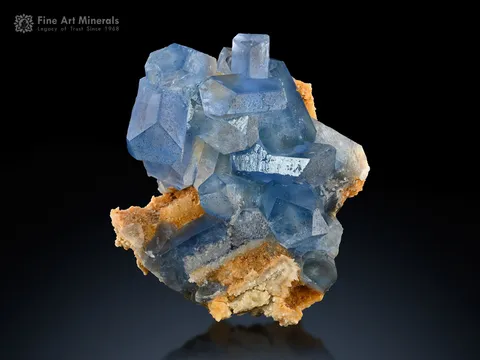
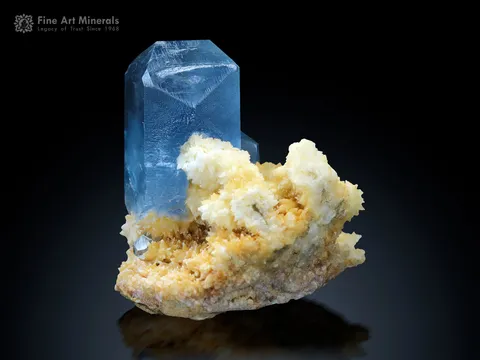
Afghan celestine is a comparatively recent surprise in the collector market, centered on the Laman celestine deposit near Qala e Naw in Badghis Province, far west of the better-known gem districts of Nuristan, Kunar, Laghman, Badakhshan, and Jegdalek. The material is notable because it is not the pale, blocky celestine one might expect from many sedimentary occurrences: the better Laman pieces carry lustrous sky-blue to steel-blue, transparent to gemmy prismatic or short-prismatic crystals on contrasting yellow, golden, cream, or white calcite druse, with individual crystals documented in the several-centimeter range and some reports of crystals approaching 5 cm. Most collector pieces fall into thumbnail to small-cabinet sizes, and the aesthetic value depends on exactly the traits Afghan celestine can show at its best: saturated blue color, sharp terminations, glassy luster, transparency through the crystal body, and strong separation from the calcite matrix. Lesser pieces are pale, abraded, or crowded into indistinct clusters; the premium examples look almost architectural, with one or a few clean blue crystals perched high on sparkling calcite and with minimal bruising on the terminations.
Feldspar from Afghanistan is inseparable from the rare-element pegmatites of Nuristan and adjacent northeastern districts, where albite, albite var. cleavelandite, and microcline form the structural framework for many of the country’s most famous specimen combinations. At Paprok, feldspar occurs with elbaite, lepidolite, quartz and smoky quartz, topaz, microlite-group minerals, beryl, morganite, aquamarine, spodumene and kunzite, muscovite, schorl, and phosphate minerals; at Mawi and related Nilaw-Kolum localities, the feldspar association continues with beryl, aquamarine, morganite, elbaite, muscovite, lepidolite, pollucite, quartz, topaz, spodumene, and spessartine. For collectors, Afghan feldspar is rarely purchased as a single-species trophy in the way a great tourmaline is; its importance lies in how it records the pegmatite pocket. Cleavelandite contributes bladed white “snow,” while microcline supplies blockier, cream to pale feldspar masses or crystals, and the finest pieces are those where feldspar creates contrast, support, and locality character without overwhelming the main crystals. A superior Afghan feldspar specimen has fresh, undamaged blades or clean blocky crystal faces, carries a credible Paprok or Mawi-type association, and frames tourmaline, spodumene, beryl, or quartz in a balanced three-dimensional composition; ordinary pieces are simply feldspar rubble with damaged attached crystals.
Afghan lazurite is the mineral name at the heart of the Sar-e-Sang lapis lazuli legend in Badakhshan, although careful collectors should remember that the blue sodalite-group mineralogy there is analytically complex and some material historically called lazurite may involve haüyne, sodalite, or related phases. In the collector and lapidary trade, the classic look is unmistakable: intense ultramarine blue in calcite-rich marble, commonly with pyrite, and locally with afghanite, phlogopite, diopside, scapolite, hauyne-sodalite group minerals, and other calc-silicate or feldspathoid associates. Massive lapis ranges from white-calcite-veined ornamental rough to rich, nearly solid blue cutting material, but mineral collectors usually prize specimens that show discrete blue crystals, crystal groups, coatings, or sharply bounded blue patches against white calcite or marble, especially when small brassy pyrite crystals add sparkle without muddying the color. The finest Afghan lazurite pieces are not merely dark rocks; they show saturated royal to ultramarine blue, crisp contrast, minimal gray or white dilution where blue is the focus, and a label tied to Sar-e-Sang, Ladjuar Medam, Pitwak, or the Kokcha Valley mining district. Ordinary lapis with abundant calcite and scattered pyrite can be attractive as decorative stone, but top mineral specimens have form, matrix contrast, and a convincing mineralogical story.
Chalcedony is a quieter Afghan collectible than tourmaline, lapis, or ruby, but verified Afghan records place it in very different geological settings from the famous gem pegmatites: Mindat lists chalcedony at the Ghanigay fluorite occurrence in Nesh District, Kandahar Province, and onyx, an agate variety of chalcedony, at Zardag in Dishu District, Helmand Province, a district better known to collectors for unusual carbonate material and arid southwest Afghan mineral occurrences. The Afghan material is best understood as massive, banded, translucent to opaque silica rather than as freestanding crystals, with collector interest falling on agate or onyx pieces that preserve natural banding, rind, color contrast, translucency, and locality integrity. Because Afghan chalcedony is far less familiar in the specimen trade than Mexican, Brazilian, Moroccan, or American agate, a good example needs to work harder: it should have clear provenance, attractive natural banding or botryoidal surface, honest unenhanced color, and a shape that displays the silica texture without over-polishing away the geological context. Ordinary pieces are anonymous tumbled or carved agate that could have come from anywhere; the keepers are locality-specific Afghan chalcedony or onyx specimens with enough natural surface and internal structure to justify the label.
Afghan aragonite has two collector personalities: the large southwestern Helmand aragonite bodies known as ornamental-stone deposits, and the more specimen-oriented Imam Rabat aragonite-azurite occurrence in Nawzad District, Helmand Province. The Zoldag, Panawuk, Muzdan, Sukalog, Malik Dukan, and related south Helmand deposits are reported as substantial aragonite bodies in young subvolcanic and sedimentary settings, with material valued as decorative stone; Imam Rabat, by contrast, has yielded collectible aragonite with azurite, documented in blue, brown, and clear colors, commonly as trillings and with long-wave ultraviolet fluorescence. The pieces that have captured collector attention are vivid blue to turquoise aragonite aggregates, sprays, botryoidal crusts, or trilling clusters, often enriched or accented by azurite, a style very different from the classic brown Spanish or white cave aragonites. The best Afghan aragonite specimens show natural saturated blue color, crisp growth texture, intact needles or trilling forms, and visible association with azurite or contrasting matrix; mediocre examples are massive, polished, dyed-looking, or too damaged to show the fragile carbonate habit. Because blue carbonate material from the region is often confused in the trade, serious buyers should favor pieces with specific Helmand locality data and, where possible, diagnostic aragonite habit rather than vague “blue Afghan calcite” labeling.
Afghan ruby is dominated by the Jegdalek deposit in Surobi District, Kabul Province, east of Kabul, a classic marble-hosted corundum district worked through many small pits and mines in calcite-dolomite marble. Jegdalek rubies and pink sapphires occur with calcite, dolomite marble, phlogopite, pyrite, graphite, margarite, spinel, chlorite-group minerals, titanite, orthoclase, plagioclase, and other metamorphic associates; published gemological work shows that much of the production is semitransparent pink sapphire or carving-grade corundum, with true ruby forming a smaller but much more coveted portion. Specimen crystals are commonly pinkish red to red, pseudo-octahedral, tabular, prismatic, or irregularly corroded, often only millimeters to a centimeter or so when sharply displayed on matrix, though larger rough masses occur. The ideal collector piece is vivid red rather than washed pink, translucent to gemmy at the edges or through the core, well isolated on pale marble, and accompanied by phlogopite or pyrite in a way that proves the locality rather than distracts from the ruby. Strong red fluorescence under long-wave UV can be a bonus, especially on clean matrix specimens; ordinary Jegdalek pieces are opaque, fractured, heavily included, or little more than red corundum smears in marble, whereas fine specimens show recognizable crystal form, color saturation, and a dramatic red-on-white contrast.
Pyrite in Afghanistan is most important as an accent mineral rather than as a standalone national specialty, but that accent can be decisive. At Sar-e-Sang in Badakhshan, pyrite is part of the visual grammar of lapis lazuli: brassy specks, grains, seams, or small crystals flashing through blue lazurite- or haüyne-rich rock and white calcite marble, often with afghanite, phlogopite, diopside, and other calc-silicate or feldspathoid minerals nearby. At Jegdalek, pyrite also appears in the marble-hosted ruby assemblage, where tiny metallic crystals can accompany red corundum and phlogopite. Good Afghan pyrite specimens succeed through contrast: bright, untarnished metallic yellow against ultramarine lapis, white calcite, or red ruby-bearing marble. In lapis rough, a little well-distributed pyrite gives desirable sparkle and confirms the classic Afghan look, while too much pyrite can darken the stone or turn it visually busy; in mineral specimens, isolated sharp grains or small crystals on calcite or blue feldspathoid matrix are more collectible than dull disseminations. The strongest pieces are not “pyrite specimens” in the Spanish or Peruvian sense, but Afghan association specimens where pyrite punctuates the color field and anchors the locality story.
Afghanite is one of the great locality-name minerals: first described from Sar-e-Sang, Badakhshan, and still most meaningful to collectors when it comes from the lapis-lazuli district of the Kokcha Valley. In Afghan specimens it belongs to the same chemically fascinating feldspathoid-carbonate environment as lazurite, haüyne, sodalite, calcite, diopside, phlogopite, pyrite, nepheline, marialite, vesuvianite, and related calc-silicate minerals, and classic descriptions place it in thin veinlets cutting lazurite as well as in blue grains or crystals in calcite-rich matrix. Visually, it ranges from pale to saturated blue, sometimes sky-blue and transparent in the best small crystals, but it can be easily confused in hand specimen with lazurite, sodalite, or haüyne unless the crystal habit, association, and provenance are credible. Good Afghanite pieces show distinct blue crystals, grains, or patches that are visibly separate from the surrounding calcite or lapis matrix, ideally with pyrite or phlogopite accents and a precise Sar-e-Sang label; fluorescent response can add another layer of interest on some specimens. Ordinary pieces sold as “afghanite” may simply be mixed blue lapis material, so the premium rests on sharpness, transparency, verified identification, and a composition that lets afghanite read as the principal mineral rather than as an indistinct blue component.
Mica in Afghanistan is best appreciated as a family of locality-defining associates: silvery to white muscovite and lilac lepidolite in the Nuristan rare-metal pegmatites, and bronze to brown phlogopite or pale margarite in the Jegdalek ruby marbles. In the Paprok and Mawi-style pegmatites, muscovite occurs as platy books, radiating aggregates, and pearly plates between smoky quartz, spodumene, albite-cleavelandite, microcline, aquamarine, morganite, elbaite, topaz, and other pocket minerals, while lepidolite can provide the purple lithium-rich groundmass that makes tourmaline and feldspar combinations instantly recognizable. At Jegdalek, phlogopite is one of the classic matrix companions to ruby, forming micaceous bands or plates in calcite-dolomite marble with corundum and occasional pyrite. The best Afghan mica specimens are therefore association pieces: bright muscovite fans with gem beryl or spodumene, lepidolite-rich matrices carrying colorful elbaite, or phlogopite plates setting off red ruby in marble. Standalone mica books are usually secondary unless they are unusually sharp, lustrous, large, or transparent; ordinary mica is flaky matrix, while collector-quality mica contributes texture, contrast, and paragenetic evidence without shedding badly or obscuring the main crystals.
Afghan garnet reaches collectors through more than one geological doorway. The most distinctive specimen-style material is andradite from Marki Khel in Sherzad District, Nangarhar Province, a metamorphic skarn association where dark reddish-brown to greenish andradite crystals occur with epidote, clinochlore, diopside, magnetite, vesuvianite, calcite, muscovite, and biotite. These pieces are prized for their sharp dodecahedral garnets on contrasting green epidote-chlorite matrix, sometimes with black octahedral magnetite adding a second focal point; the finest examples are lustrous, well separated, and undamaged, while ordinary ones become visually muddy because dark garnet and dark green matrix merge. A second Afghan garnet story comes from the rare-metal pegmatites, where spessartine is recorded from Mawi in Nuristan and the Dara-e-Pech field in Kunar; there it is usually an accessory rather than a great cabinet-making species, with bright orange crystals providing color contrast to spodumene, quartz, feldspar, and other pegmatite minerals. Older gem reports also mention Afghan garnet occurrences in Nangarhar, but in the specimen market the strongest garnet identity is Marki Khel andradite. Good Afghan garnet is all about contrast, crystal form, and association: sharp reddish to greenish garnets on green skarn, or orange spessartine in a credible pegmatite context, not anonymous dark grains with no locality character.
Afghan aquamarine comes from the same northeastern pegmatite province that made the country famous for tourmaline and kunzite, with Mawi in the Nilaw-Kolum pegmatite field, Paprok in Kamdesh District, and the Dara-e-Pech and related Kunar localities all appearing in the mineral and gem record. The crystals are beryl in the blue to greenish-blue range, typically hexagonal prisms, sometimes water-clear and sometimes etched, striated, or partly included, and they occur with muscovite, albite-cleavelandite, microcline, quartz, schorl, elbaite, fluorapatite, morganite, spodumene, lepidolite, topaz, and other rare-element pegmatite minerals. Afghan aquamarine is not as abundant in the market as Pakistani aquamarine, which makes precise locality data especially important; documented Paprok material includes fine doubly terminated crystals in the centimeter to nearly 10 cm class, and gemological reporting has also noted remarkable Afghan cat’s-eye aquamarine from Pech Valley rough. For specimen collectors, the best pieces combine fresh blue color, transparency, sharp terminations, and a clean pegmatite association, especially aquamarine with muscovite or cleavelandite that still looks natural rather than repaired or overcleaned. Ordinary examples are pale, abraded, heavily etched single prisms; superior Afghan aquamarine has enough saturation, luster, and matrix context to distinguish it from the flood of generic Himalayan-region beryl.
Afghan amethyst is a small but distinctive sideline to the country’s better-known pegmatite and lapis suites, with the best-documented collector material coming from Ghazni Province, especially the Muqur District amethyst occurrence and the Golakhel Au occurrence. The Muqur material entered the gem and mineral trade around 2002 and is memorable not for giant Brazilian-style geodes, but for prismatic purple quartz crystals and clusters that commonly carry acicular goethite inclusions, with calcite also recorded in the assemblage. Color tends to sit in the lavender to violet range rather than dense, inky purple; the stronger pieces show clean transparency in the tips, lively luster, and sharp faces rather than the bruised or iron-stained look of lesser crystals. Old reports also note amethyst from Badakhshan and Kandahar, and market notes have mentioned dark, stubby Afghan crystals from Bamiyan, but for serious collecting purposes an Afghan amethyst is most convincing when it has a specific Ghazni/Muqur-style label, visible goethite needles that match the known material, and undamaged, well-separated terminations rather than merely purple quartz sold under a broad “Afghanistan” tag.
Afghan scapolite is above all a Badakhshan mineral, tied to the Sar-e-Sang–Kokcha Valley lapis-lazuli district rather than to the lithium pegmatites that dominate much of the country’s specimen trade. The most important labels are Sar-e-Sang, Pitwak Mine, Sar-e-Sang River, Ladjuar Medam/Lajuar Madan, Dar-e-Zu, and nearby meta-evaporite occurrences, where scapolite occurs in calc-silicate, marble, skarn, and evaporitic assemblages with calcite, diopside, phlogopite, pyrite, lazurite, afghanite, sodalite, gypsum, and anhydrite. Documented Pitwak material includes tetragonal prisms with pyramidal and pinacoidal faces, in white, gray, and blue tones; analytically, marialite is the best-established scapolite there, and surviving marialite can fluoresce bright yellow under long-wave UV. The blue specimens require caution: some are orthoclase pseudomorphs after scapolite, or altered/coated material, and the blue color should not automatically be treated as blue scapolite. The best collector pieces are therefore not just attractive purple, lilac, white, or blue crystals; they are well-formed, terminated prisms on contrasting marble or calcite, ideally with analytical or strong locality provenance, and in the fluorescent submarket they must show a crisp UV response without being confused by alteration products or vague “Kokcha” trade labeling.
Topaz from Afghanistan is a classic accessory gem mineral of the highly evolved LCT pegmatites of Nuristan and Kunar, especially Paprok, Mawi in the Nilaw-Kolum pegmatite field, and the Dara-e-Pech/Pech Valley workings. It is not usually the headline species beside the giant elbaite, kunzite, morganite, and aquamarine, but fine specimens do occur as transparent to translucent, glassy prisms, commonly colorless to pale champagne, sherry, or faintly bluish, with simple, sharp terminations that contrast well against lepidolite, albite-cleavelandite, feldspar, quartz, and elbaite. Paprok has produced documented topaz specimens on matrix around miniature size, including a 3.3 cm crystal figured in the Afghan pegmatite literature; the Pech Valley has also yielded topaz with elbaite and lepidolite, and Mindat photo data for Paprok repeatedly links topaz with lepidolite, cleavelandite, elbaite, microlite-group minerals, feldspar, and zircon. Good Afghan topaz is separated from ordinary pieces by clarity through the prism, undamaged terminations, a natural pegmatite matrix, and association quality: a small, lustrous topaz perched among lavender lepidolite and white cleavelandite is more desirable than a larger but chipped, loose, water-worn, or poorly documented crystal.
Afghan “microlite” in specimen commerce is best treated carefully as microlite-group material, and many of the significant Paprok examples have been identified more specifically as fluornatromicrolite. Paprok, in Kamdesh District, Nuristan, is the key locality: confirmed fluornatromicrolite has been recorded there by SEM-EDS, and the collector material is famous for sharp, lustrous, brown to honey-yellow octahedral crystals set in lepidolite or perched on pastel elbaite, cleavelandite, and other pegmatite matrix. Documented crystals are usually small but visually powerful; reported and figured examples include octahedra to about 1.6 cm in lepidolite, a 1.7 cm crystal in lepidolite celebrated as among the finest known for the species group, and combination specimens in which 7 mm to centimeter-scale octahedra sit on pink, blue, or multicolored tourmaline. Mawi and the Nilaw-Kolum field also belong in the broader Afghan microlite story, with rare combinations on tourmaline and with topaz, zircon, lepidolite, and feldspar. The best pieces are judged by crystal sharpness, glassy luster, rich brown or amber color, undamaged octahedral form, and aesthetic contrast; ordinary examples are often little more than dark grains in mica, whereas a top Afghan microlite-group specimen has an unmistakable octahedron in a matrix that tells the Paprok pegmatite story at a glance.
Afghan apatite of collector interest is principally fluorapatite from the country’s gem pegmatites, with important records from Paprok, Mawi, Parun, and the Dara-e-Pech pegmatite field. The most scientifically detailed recent work concerns light-purple apatite from Dara-e-Pech in Kunar: the studied specimens formed aggregates of hexagonal prismatic crystals on albite matrix with schorl grains, showed shell-like fractures under magnification, and contained dark mineral and fluid inclusions; chemical work identified the material as impure fluorapatite and gave an Early Cretaceous magmatic-hydrothermal age around 135 Ma for the apatite-bearing system. Paprok material has been recorded with beryl, morganite, aquamarine, cleavelandite, muscovite, quartz, tourmaline, and pollucite, and trade literature has noted terminated crystals from a 2008 Paprok find; Mawi is also historically significant, with fluorapatite crystals on quartz reported from older finds. Color is commonly purple to pinkish purple in the most desirable gemmy pieces, though paler and matrix-bound crystals occur. Fine Afghan apatite is not judged simply by size: the best specimens have saturated purple color, crisp hexagonal form, attractive albite or quartz matrix, and clean surfaces, while dull, fractured, or poorly labeled material loses much of the locality premium.
Afghan rose quartz is one of the more surprising modern additions to the country’s specimen suite because the collectible material is crystallized, not merely massive carving rough. The best-documented occurrences are in Nuristan’s Parun pegmatite field, with related trade labels sometimes pointing to Paprok or nearby Parun-area pegmatites; Mindat records rose quartz there with smoky quartz, indicolite tourmaline, and the childrenite-eosphorite series, and figured specimens include pink crystalline coatings, drusy clusters, and rose quartz associated directly with blue tourmaline. The Parun pieces have appeared in more than one small find, including early 2000s material and later parcels sold as a 2021 find, and the style is quite unlike the huge massive Afghan quartz chunks sometimes seen in decorative trade. The finest pieces are miniature to small-cabinet specimens in which sparkling, gemmy, rich pink crystals form a crown, skin, or cluster over smoky or milky quartz, ideally with a blue indicolite accent; ordinary pieces are pale, granular, massive, or simply pink quartz without recognizable crystal faces. Because crystallized rose quartz is uncommon worldwide, a well-documented Afghan specimen with saturated color, intact sparkling surfaces, and a specific Parun/Paprok-area provenance is far more important than its modest physical size might suggest.
Afghan indicolite is blue elbaite from the same rare-metal pegmatite systems that made Nuristan and Kunar famous for tourmaline, with the strongest locality names including Dara-e-Pech/Pech Valley, Paprok, Mawi, and Parun. The material ranges from narrow, pencil-like prismatic crystals to chunky, striated, terminated crystals and parallel-growth clusters; colors vary from sea-blue and blue-green through deep indigo, and many crystals look nearly black until backlit. Dara-e-Pech is especially important for green to deep-indigo elbaite “pencils,” and documented Kunar specimens show associations with albite-cleavelandite, quartz, beryl, morganite, aquamarine, kunzite, muscovite, stibiotantalite, microcline, and hydroxylherderite. One celebrated Parun/Darra-i-Pech style, the so-called Freilich indicolite, is a large parallel-growth blue tourmaline specimen about 16 x 9 x 3.5 cm whose thin palisade-like crystals transmit light dramatically; other Pech Valley specimens pair indicolite with smoky quartz and cleavelandite. The best Afghan indicolites have rich blue color visible in normal light, clean transparency or strong translucency, intact terminations, and bright contrast on white cleavelandite or quartz; lesser examples may be technically blue tourmaline but read as opaque black rods unless lit from behind.
Afghan diopside is a Sar-e-Sang–Kokcha Valley specialty and belongs to the marble, skarn, and lapis-lazuli environment of Badakhshan rather than to the lithium pegmatites. It occurs at Sar-e-Sang localities such as Ladjuar Medam, Pitwak Mine, the Sar-e-Sang River area, Jungaluk, and unnamed meta-evaporite occurrences, commonly with calcite or marble, phlogopite, pyrite, anhydrite, gypsum, sodalite, marialite, afghanite, grossular, orthoclase, albite, and quartz. The collector specimens range from pale yellow-green or olive blocky crystals embedded in white calcite-marble to saturated green, apparently chromian, well-formed crystals that can be surprisingly large; documented pieces include isolated crystals around 8–9 cm on bright white matrix. Pitwak diopside is also of real interest to fluorescent-mineral collectors: large blocky pale yellow-green crystals in calcite-marble can fluoresce pale blue-white to white under long-wave, mid-wave, and short-wave UV, while the calcite or marble may respond pink to purple. The best specimens combine sharp, lustrous, blocky green crystals with strong isolation on white matrix, good three-dimensional relief, and, where relevant, an attractive UV response; ordinary pieces are massive green pyroxene in marble, important geologically but far less satisfying as display specimens.
Afghanistan’s supporting cast is unusually deep, with more than two hundred valid mineral species documented from the country and two valid type-locality species standing out: afghanite from Ladjuar Medam at Sar-e-Sang in Badakhshan, and khanneshite from the Central Khanneshin deposit in the Khanneshin carbonatite complex of Helmand. Around Sar-e-Sang, the lapis-lazuli system adds lazurite, sodalite and hackmanite, haüyne, nepheline, calcite, pyrite, phlogopite, forsterite, hydroxylclinohumite, scapolite, diopside, and apatite to a matrix suite unlike any pegmatite locality in the country. In Nuristan and Kunar, the rare-metal pegmatites supply the rarities that systematic collectors watch for behind the famous tourmaline and kunzite: fluornatromicrolite, pollucite, beryllonite, hydroxylherderite, hambergite, stibiotantalite, tantalite-(Mn), cassiterite, pezzottaite-(Cs), childrenite-eosphorite series minerals, lepidolite, petalite, and väyrynenite, including figured Paprok crystals of väyrynenite and fluornatromicrolite that have become modern Afghan classics. The result is a locality suite where world-class gem crystals, fluorescent skarn minerals, type-locality species, and rare pegmatite phosphates and tantalates all coexist under the broad but sometimes imprecise label “Afghanistan,” making careful sublocality documentation one of the most valuable features a specimen can carry.
Afghan specimens reward precision in labeling. “Afghanistan” alone is too broad for a serious collection when the locality can be narrowed to Sar-e-Sang, Panjshir, Jegdalek, Paprok, Mawi, Nilaw-Kolum, Dara-e-Pech, or another named field. Older labels may use spellings such as Badakshan/Badakhshan, Kokscha/Kokcha, Sar-i-Sang/Sar-e-Sang, Laghman/Lagman, Nuristan/Nurestan/Nooristan, Paprok/Paprook/Paprock, and Panjsher/Panjshir. These spelling variants do not automatically signal a problem, but a specimen of high value should have its locality cross-checked against the mineral assemblage and habit.
The most common authenticity issue is not outright fabrication of Afghan pegmatite specimens, but overbroad or romanticized locality attribution. Elbaite, aquamarine, morganite, and spodumene from Afghanistan and Pakistan have passed through the same trading centers for decades, and some labels can migrate from “Afghan/Pakistan” to whichever country is more marketable. The matrix is often the best clue: Mawi and Nilaw spodumene commonly appears with cleavelandite, quartz, feldspar, lepidolite, and pegmatitic mica; Sar-e-Sang blue feldspathoids are tied to marble/calcite, pyrite, phlogopite, scapolite, diopside, and related metamorphic minerals; Panjshir emeralds are expected with quartz, ankerite or carbonate, pyrite, mica, and altered schistose or carbonate-rich material.
Spodumene deserves special caution. Afghan kunzite is commonly pleochroic and can fade with strong light exposure, particularly pink to violet colors related to radiation-sensitive color centers. Blue-violet and greenish Afghan spodumene has also generated debate in the trade because some colors may be natural, artificially irradiated, unstable, or improperly marketed as “hiddenite.” True chromium-colored hiddenite is a much stricter term than the general market sometimes suggests. Store fine spodumene away from prolonged sunlight and avoid heat; do not display valuable kunzite permanently in a sunny case. Spodumene also has perfect cleavage, so tall crystals and etched floaters are vulnerable to shocks, pressure from stands, and careless shipping.
Lapis lazuli is another trouble area. Genuine Sar-e-Sang lapis can show superb saturated blue color with pyrite and calcite, but the broader lapis market is full of dyed material, reconstituted lapis, dyed howlite or magnesite, sodalite substitutes, blue glass, and resin-bonded composites. For mineral specimens, be suspicious of pieces with unnaturally uniform electric-blue color, dye concentrated in fractures, painted-looking “pyrite,” or a waxy composite texture. In contrast, fine crystallized lazurite and afghanite specimens should have plausible carbonate matrix and associated minerals. Because lazurite, afghanite, haüyne, and sodalite-group minerals can resemble one another visually, analytical confirmation is valuable for rare-species claims.
Panjshir emeralds are commonly fractured like most emeralds and may be oiled or otherwise clarity enhanced in the gem trade. Oiling is less relevant to matrix specimens unless a crystal has been treated to improve appearance, but dyed Afghan emerald has been documented in gemological literature. Collector crystals should be examined under magnification for filled fractures, residues, unnatural color concentrations, and repaired contacts. A small but undamaged emerald on natural matrix can be more desirable to a mineral collector than a larger but heavily fractured or treated loose crystal.
Tourmaline from Paprok, Kunar, and related pegmatites is generally durable enough for display, but slender crystals, repaired terminations, and rehealed or reattached sections are common concerns in high-value pieces. Color-zoned elbaite should be checked for glued repairs at natural-looking color breaks. Large crystals with matrix should be inspected for added bases, reconstructed cleavelandite, or concealed pins. Afghan tourmaline is abundant enough in the market that ordinary crystals remain obtainable, but top Paprok color, sharp terminations, fine luster, balanced aesthetics, and strong provenance command a premium.
Sar-e-Sang afghanite and lazurite specimens may fluoresce, and fluorescence can be a useful supporting observation, particularly for afghanite, but it is not a substitute for mineral identification. Calcite-rich matrix can be bruised or etched by acids, and pyrite-bearing pieces should be kept dry and stable. Massive lapis is widely available, but fine crystallized lazurite, sharp afghanite, rich blue feldspathoid specimens on contrasting white matrix, and historic old-collection examples are substantially scarcer.
In the older Laghman accounts, the romance of Afghan pegmatites is not a slogan but a map of sore feet. In 1977, the jeep road north from the Kabul–Jalalabad route ended far below the productive sites. From the small bridge at Gandalabouk over the Alingar River, reaching the nearest houses near Dahaneh-Pyar required a full day on foot through 25 kilometers of narrow gorges. Nilaw demanded another full day and another 15 kilometers of bad rocky trail. The deposits announced themselves not with signs or headframes, but as white pegmatite bands visible across a green valley. At Mawi, after crossing the Koh-e-Sagoli range at about 3,000 meters, the visitor descended into the short valley until the dumps of the workings came into view.
Those early descriptions also carry the unmistakable voice of field frustration. The dumps at Mawi held great plates of quartz, microcline, and cleavelandite where spodumene crystals had once been attached; the bases remained, but the gem hunters had removed the crystals. The same observers noted tricolored tourmaline, colorless tourmaline, spessartine, and two enormous botryoidal muscovite balls as much as 30 centimeters across, but the punch line was practical: it was “illusory” to imagine collecting fine crystals with only a geologist’s hammer. The mountains had crystals, but the pockets belonged to miners with tools, explosives, stamina, and local knowledge.
Panjshir’s emerald camps offer a different scene. When GIA field gemologist Andrew Lucas traveled there with Arthur Groom, the trip began not at a mine portal but with political and social navigation: they met Abdullah Abdullah before setting out for the valley. At Kabul’s Chicken Street, once an antique and poultry market and now a gem trading center, Groom sat across from a dealer and divided emerald rough by quality. From the town of Pawat, Lucas climbed steep mountain trails for four hours and reached the mining area at sunset. A few hundred miners were winding down while the night shift began, and the evening soundtrack was the wind through the mountains punctuated by dynamite blasts. Dinner was fresh lamb, rice, and Nan-e Afghani; breakfast was fresh goat milk and more bread.
At the Panjshir workings, the balance between violence and delicacy is narrow. Miners used diesel-powered drills to make holes in hard rock, then set charges to remove overburden without destroying the emeralds. After blasting, they returned to pull rock from the tunnel, break promising pieces by hand, and wash the fragments through screens. The long, slender crystals known in the trade as “pencils” were especially suited to cutting small stones, including melee for fine watches. Lucas’s most memorable line from the valley was not about the emeralds themselves but about the people: “Come as a foe and leave defeated. Come as a friend, and you will find some of the most hospitable and friendly people on the planet.”
Sar-e-Sang is the Afghan mineral story that seems to belong simultaneously to archaeology, geology, and living trade. The settlement sits high in Badakhshan, with mine sites above the village in the 2,500–2,750 meter range. Mining is seasonal, generally favored from summer into autumn. Small adits only a few meters wide are driven into cliff faces, and lack of ventilation limits the depth of many workings. Dynamite, when available, does the heavy breaking. The lapis comes out of marble as blocks and pockets of blue-bearing rock; miners carry fresh material down to the settlement, where it enters a trading chain that may pass through mules, vehicles, local buyers, Pakistani dealers, Kabul, Peshawar, Dubai, or Tucson.
The same blue stone has carried very different meanings in different centuries. In antiquity it traveled to Mesopotamia, Egypt, South Asia, and beyond as one of the most prized colors on Earth. In recent decades, it has also been entangled with commanders, militias, state contracts, tolls, and insurgent finance. One modern account noted that in 2013 the Lajwardeen Mining Company won a contract for Sar-e-Sang but was forced out within 21 days by local militia. For the collector, that history adds a difficult ethical dimension to a beautiful object: old-stock lapis, documented collection specimens, and clear provenance are not just niceties, but part of responsible buying.
Pierre Bariand and J. F. Poullen, “Famous Mineral Localities: The Pegmatites of Laghman, Nuristan, Afghanistan,” The Mineralogical Record, 9(5), 301–308, 1978 — Classic field-based account of Nilaw, Mawi, Korgal, Laghman geology, pegmatite zoning, and early Afghan specimen production.
Jean Wyart, Pierre Bariand, and Jean Filippi, “Lapis-Lazuli from Sar-E-Sang, Badakhshan, Afghanistan,” Gems & Gemology, Winter 1981, 17(4) — Foundational gemological and geological treatment of the Sar-e-Sang lapis deposits, including mineral assemblage and genesis.
Gary Bowersox, “A Status Report on Gemstones from Afghanistan,” Gems & Gemology, Winter 1985 — Important survey of Afghan emerald, tourmaline, kunzite, ruby, aquamarine, and lapis as they entered modern gem and specimen markets.
Gary W. Bowersox, Lawrence W. Snee, Eugene E. Foord, and Robert R. Seal II, “Emeralds of the Panjshir Valley, Afghanistan,” Gems & Gemology, Spring 1991, 27(1), 26–39 — Primary modern reference on Panjshir emerald geology, mining, gemology, and early 1990s production.
Bowersox, Foord, Laurs, Shigley, and Smith, “Ruby and Sapphire from Jegdalek, Afghanistan,” Gems & Gemology, Summer 2000 — Key gemological reference for the Jegdalek marble-hosted corundum deposit and its ruby/sapphire characteristics.
Peter Lyckberg, “Gem Pegmatites of Northeastern Afghanistan,” The Mineralogical Record, 48(5), 610–675, 2017 — Major modern synthesis of Afghan pegmatites, including Mawi, Paprok, Nilaw, Dara-e-Pech, and related specimen-producing fields.
The Mineralogical Record, “Afghan Pegmatites,” September–October 2017, Vol. 48, No. 5 — Special issue devoted to Afghanistan’s pegmatite mineralogy and specimen production.
Pierre Bariand, Fabien Cesbron, and Roger Giraud, “Une nouvelle espèce minérale: l’afghanite de Sar-e-Sang, Badakhshan, Afghanistan,” 1968; summarized in Mindat’s afghanite reference record — Original description of afghanite, the cancrinite-group mineral named from Afghanistan and first found at Sar-e-Sang.
Handbook of Mineralogy: Afghanite — Concise mineral data sheet noting Sar-e-Sang as type locality, associated species, type material repositories, and key references.
Thomas P. Moore and Robert W. M. Woodside, “The Sar-e-Sang Lapis Mine,” The Mineralogical Record, May–June 2014, Vol. 45, No. 3; cited in Tearline’s Afghanistan gemstone mining analysis — Important modern account of Sar-e-Sang mining and lapis specimen context.
“Romancing the Source: Afghanistan,” Andrew Lucas and Tao Hsu, GIA — GIA field-gemology feature and video page on Panjshir emerald mining, trade, and field conditions.
“Searching for Emeralds in Afghanistan,” GIA — Field report with video player, photographs, and firsthand observations from Panjshir emerald mines.
“Digging to Survive: Former Afghan Soldiers and Police Officers Hunt Emeralds in Panjshir Valley,” South China Morning Post — News video documenting modern emerald mining in Panjshir after political upheaval.
“Hidden Gems,” Journeyman Pictures — Documentary transcript following Afghanistan’s gemstone trade, including Kabul market dynamics and named dealers.
“Lapis Lazuli from mines of sar-e-sang Badakhshan, Afghanistan,” Arslan Rauf, YouTube — Early online video showing Sar-e-Sang lapis material and Afghan lapis trade context.
“Lapis Lazuli mining in Sari-i-Sang in northern Afghanistan,” Dailymotion — Short video item focused on lapis mining at Sar-e-Sang in the Kokcha Valley.
Mindat: Mawi pegmatite, Nilaw-Kolum pegmatite field, Nuristan, Afghanistan — Core locality page for one of Afghanistan’s most important spodumene, beryl, and tourmaline pegmatites.
Mindat: Sar-e-Sang, Kuran wa Munjan District, Badakhshan, Afghanistan — Essential locality database page for Sar-e-Sang lapis, lazurite, afghanite, pyrite, calcite, and associated minerals.
Wikimedia Commons: Minerals of Sar-e-Sang District — Useful image archive for Sar-e-Sang lazurite, afghanite, sodalite, pyrite, calcite, phlogopite, and related specimens.
Wikimedia Commons: Elbaite from Paprok, Nuristan, Afghanistan — Documented Rob Lavinsky photograph of a bright color-zoned Paprok elbaite crystal.
Wikimedia Commons: Spodumene var. kunzite from Mawi pegmatite — Documented Mawi kunzite floater with locality, size, photographer, and license details.
GIA: Historical Reading List — Lazurite from Afghanistan and its artistic use as ultramarine — Curated bibliography for Afghan lapis lazuli in gemology, archaeology, art, and pigment history.
IUGS Geoheritage: The Sar-e-Sang Lapis Lazuli Deposit — Geological-heritage overview of Sar-e-Sang, its antiquity, and associated minerals.
USGS: Mine and mineral occurrences of Afghanistan — Broad national inventory of more than 1,000 Afghan mines, deposits, occurrences, and pegmatite fields.
USGS: Afghanistan mineral information page — Current USGS portal for Afghanistan mineral-sector reports and annual mineral information.
USGS: Summaries of Important Areas for Mineral Investment and Production Opportunities of Nonfuel Minerals in Afghanistan — gemstones — Resource assessment material for Afghan rare-metal pegmatites and gem occurrences.
USGS: Panjshir emerald area summary — Technical summary of Panjshir emerald mineralization, alteration, and structural setting.
Tearline: Geospatial Analysis of Afghanistan Gemstone Production Under the Taliban — Satellite-imagery-based review of Sar-e-Sang, Panjshir, Mawi, Paprok, Nilaw, and other active or recently active gemstone sites.
Global Witness: Afghanistan’s lapis mines funding Taliban and armed groups — Important ethical-source reference on conflict, corruption, and lapis mining in Badakhshan.
Global Witness: War in the Treasury of the People — Full report on lapis lazuli, tourmaline, armed groups, and mineral governance in Afghanistan.
The Guardian: Illegal mining of lapis lazuli fuels Taliban’s rise in Afghan province — News coverage summarizing the conflict-mineral concerns surrounding Badakhshan lapis.
Pajhwok Afghan News: Licence issuance begins for precious stone extraction in Panjsher — Recent reporting on gemstone extraction licensing in Panjshir.
Gemdat: Jegdalek ruby deposit, Surobi District, Kabul, Afghanistan — Useful summary of the Jegdalek ruby deposit, host rocks, dimensions, associated minerals, and gem characteristics.
GIA: Geographic Origin Determination of Emerald — Includes Afghan emerald characteristics and inclusions relevant to Panjshir material.
GIA: Geographic Origin Determination of Ruby — Includes context for Afghan Jegdalek ruby among marble-hosted ruby deposits.
Rocks & Minerals: “The Where of Mineral Names: Afghanite, Sar-e-Sang, Koksha Valley, Kuran wa Munjan District, Badakhshan, Afghanistan” — Locality-focused mineral-name article on afghanite and its type locality.
Fluorescent Mineral Society: Afghanite, Afghanistan — Fluorescence-focused specimen entry for Sar-e-Sang afghanite.
Pala International: Pegmatites of Laghman, Nuristan, Afghanistan — Readable reprint of the classic Mineralogical Record article with historical photos and field descriptions.
_1.jpg)

