Qala e Naw District, Afghanistan — Laman celestine deposit yields blue celestine on calcite, an architectural, color-rich locality prized by collectors for rar…
Key facts
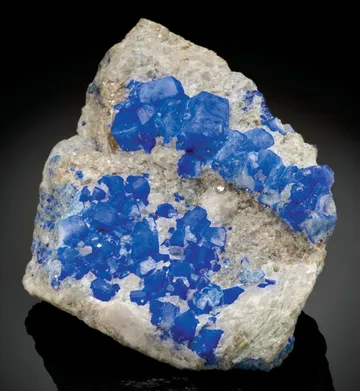
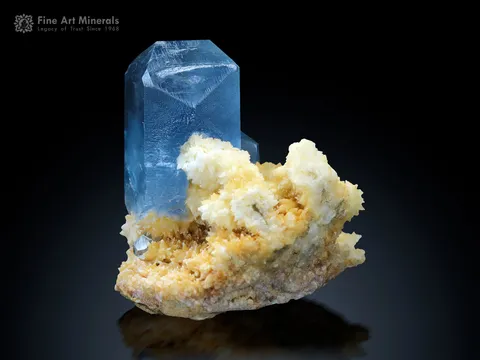
Qala e Naw District, in Badghis Province of northwestern Afghanistan, entered the collector conversation for one reason above all: the Laman, or Dara-e-Laman, celestine deposit. This is not one of the classic Afghan pegmatite or marble localities that supplied beryl, tourmaline, kunzite, lapis lazuli, or ruby to the market for decades. It is a sedimentary carbonate-hosted occurrence near Laman, roughly south-southeast of Qala-e-Naw city, where blue celestine crystals grew with calcite on pale limestone matrix. The combination is immediately recognizable: cool blue to sky-blue SrSO4, commonly stout and glassy, standing against yellow, honey, cream, or white drusy calcite and limestone.
The geological setting is part of the sedimentary northern and northwestern Afghan terrane, where Cretaceous to Paleogene carbonate, marl, gypsum, clay, and phosphorite-bearing successions crop out around the Paropamiz–North Afghan Platform margin. The Laman area was already known in Afghan mineral-resource literature for limestone and gypsum occurrences, and Kotal-i-Sebzak nearby is a documented phosphorite occurrence in Late Cretaceous clay, sandstone, and limestone. The celestine specimens, however, are a much more recent collector phenomenon: they appeared in modest numbers in the 2020s and quickly stood out because fine blue celestine is unexpected from Afghanistan and because the best pieces have a saturated color and sculptural contrast that makes them far more than a curiosity.
Regional View
Country View
The top specimens are miniatures to small cabinets with one or several terminated celestine crystals perched rather than buried. The desirable look is open and architectural: blue crystals rising from yellowish calcite-coated limestone, with little crowding, minimal bruising on terminations, and enough matrix to frame the color contrast. In the very best examples, the celestine is not merely pale blue but distinctly saturated, transparent to translucent, and lustrous, with individual crystals reaching several centimeters across.
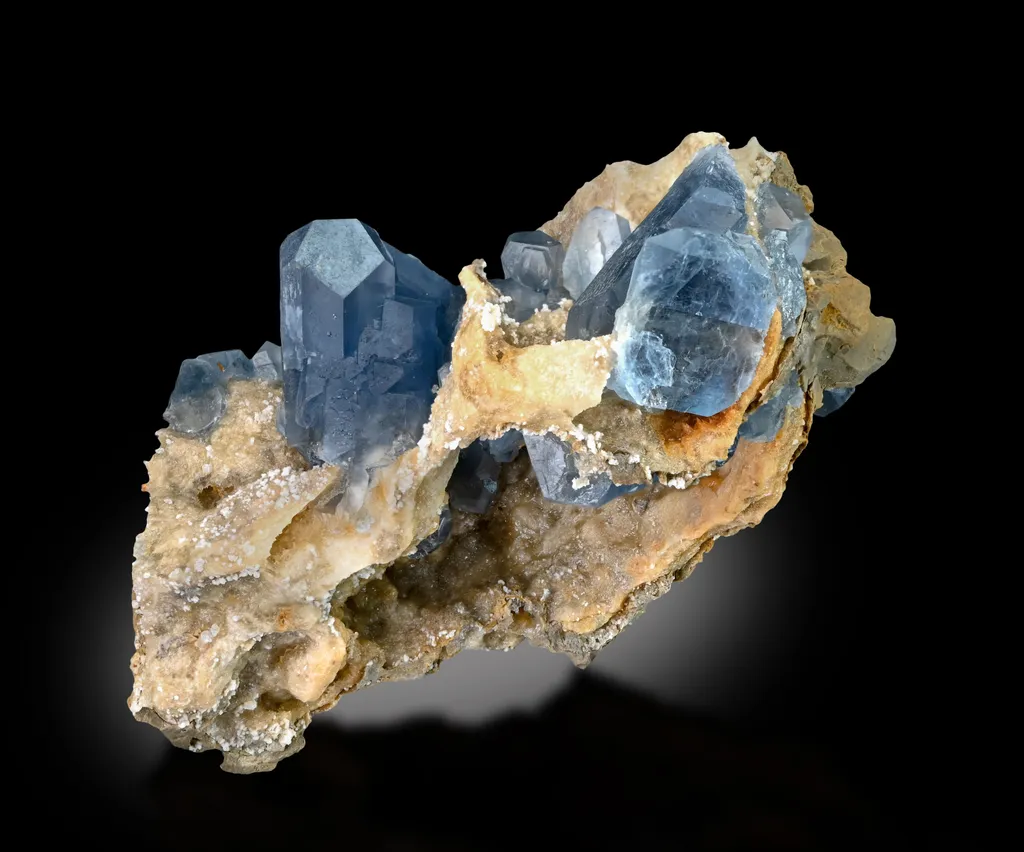
Photo: EarthWonders
Search for specimens: View all specimens from Qala e Naw District, Afghanistan
The collector locality is the Laman celestine deposit, also circulated in the trade as Dara-e-Laman or Dara-i-Laman, in Qala e Naw District, Badghis Province. Mindat places the deposit at 34°45'6" N, 63°5'45" E, about 26 km from Qala-i-Naw, and describes it simply but importantly as a celestine deposit hosted in limestone. Nearby Laman occurrences reinforce the carbonate-evaporite character of the district: the Laman gypsum occurrence consists of loosely consolidated gypsum lenses in Late Cretaceous to Paleocene calcareous rocks, and USGS construction-materials work records Laman limestone and marl in Upper Cretaceous formations more than 300 meters thick, with an upper argillaceous interval roughly 150 meters thick. That is the bedrock context collectors should have in mind when looking at these specimens: not pegmatite pockets, but carbonate-hosted cavities, seams, and replacements in a sedimentary landscape.
The exact ore-body geometry at the specimen-producing celestine workings has not yet been described in a detailed public mine report. The available specimen evidence and published locality descriptions point to celestine crystallization in calcareous host rock, with calcite forming drusy coatings, honey-yellow crusts, and cavity linings on white limestone. The association fits comfortably with the broader Afghan-Tajik and North Afghan sedimentary celestite model, in which celestite may occur with carbonate and evaporite rocks and can form through sedimentary, diagenetic, or low-temperature recrystallization processes. At Laman, collectors see the attractive end of that system: open-space blue crystals rather than merely massive or bedded celestite ore.
The district also contains the Kotalj-i-Sebzak, or Kotal-i-Sebzak, phosphorite occurrence near 34°39'29" N, 63°8'59" E, documented as phosphorite nodules in Late Cretaceous clay, sandstone, and limestone. Modern work on the Sabzak phosphorite-bearing limestones along the Herat–Qala-e-Naw highway describes a Late Cretaceous carbonate-phosphorite succession on the northern margin of the Paropamiz Mountains, sloping northward toward the Laman area. This matters because it places the specimen locality in a geologically coherent belt of shallow-marine carbonate, clay, marl, evaporite, and phosphate deposition rather than in the better-known high-grade metamorphic or pegmatitic mineral provinces of eastern Afghanistan.
The mining history is short in the collector literature. Soviet and Afghan geological surveys recorded industrial-mineral occurrences around Laman and Kotal-i-Sebzak decades ago, but the blue celestine specimens themselves became widely visible only in the early to mid-2020s. Dealers and collector reports in 2024 described the material as having appeared sparsely in small lots over the preceding few years, with particularly fine miniature and small-cabinet pieces offered by Afghan and Pakistan-linked dealers. No long-established commercial celestite mine operator is publicly tied to the specimen lots, and the locality is best treated as a small specimen-producing occurrence rather than a documented large-scale industrial mine.
Collecting access today should be considered effectively closed to casual foreign collectors. Afghanistan remains under severe travel warnings from Western governments, and the U.S. Department of State’s 2026 advisory remains Level 4, “Do Not Travel.” Even apart from security concerns, permission from local landholders and mineral-rights authorities would be required, and there is no safe, public, recreational collecting framework comparable to many North American or European localities. For serious collectors, legitimate acquisition is through established mineral dealers and vetted specimens already exported into the international market.
The notable find is the Dara-e-Laman celestine-on-calcite material itself. The most admired pockets produced separated, glassy blue crystals on yellow-white calcite druses over limestone, rather than massive celestite or tight clusters. Specimen sizes range from toenails and miniatures to small cabinets, with occasional larger cabinet plates. Strong examples show a main crystal in the 2–5 cm range, cleanly terminated and positioned so the blue crystal contrasts against the warm calcite rather than disappearing into it.
Calcite from Qala e Naw District is important not as the headline species but as the aesthetic stage on which the Laman celestines perform: it occurs as cream, yellow-white, honey, brownish, and drusy coatings on pale limestone matrix, sometimes sparkling enough to make the blue celestine appear brighter by contrast. On the finest Dara-e-Laman specimens the calcite is not a shapeless carbonate rind; it forms a textured, warm-toned base that frames individual celestine crystals and gives depth to the piece. Ordinary examples have muddy, broken, or visually flat calcite with partly embedded blue crystals, while better pieces show clean calcite-covered limestone, attractive yellow coloration, open cavities, and minimal damage where celestine crystals meet the matrix.
Celestine is the collector mineral of Qala e Naw District, specifically from the Laman or Dara-e-Laman deposit, where it forms stout, short-prismatic to equant blue crystals on calcite-coated limestone. The best crystals are translucent to transparent, sharply terminated, and noticeably more saturated than ordinary pale celestine, with individual crystals reported to nearly 5 cm and display specimens commonly in the miniature to small-cabinet range. Crystal faces may show a glassy luster and blocky habit rather than the delicate tabular sprays familiar from some other celestine localities. The most desirable pieces balance three qualities at once: saturated blue color, intact terminations, and an uncluttered yellow to cream calcite matrix that creates the now-classic Afghanistan blue-on-gold contrast.
Other documented minerals and mineral materials from Qala e Naw District are sparse but geologically useful. Gypsum is recorded from the Laman gypsum occurrence in Late Cretaceous to Paleocene calcareous rocks, while Kotalj-i-Sebzak is documented for phosphorite with apatite-group material and clay minerals in Late Cretaceous clay, sandstone, and limestone. No type-locality mineral is documented from Qala e Naw District in the standard locality records consulted, and the district’s rarity interest for specimen collectors rests overwhelmingly on the recent blue celestine-calcite association rather than on a long list of exotic species.
The central authenticity issue is locality precision. Specimens may be labeled “Afghanistan,” “Badghis,” “Dara-i-Laman,” “Dara-e-Laman,” “Laman,” or “Qala e Naw District,” and these labels are not always used consistently in the trade. For collector-grade pieces, the most defensible label is Laman celestine deposit, Qala e Naw District, Badghis Province, Afghanistan, with Dara-e-Laman or Dara-i-Laman retained as a trade or historical field name when present on the original label.
No well-publicized, locality-specific fake or treatment problem has attached to the Laman celestines, but buyers should still be conservative. The most plausible risks are repaired celestine crystals, reattached crystals on calcite matrix, enhanced photography that exaggerates blue saturation, and generic “Afghanistan celestine” labels applied without a clear Badghis provenance. Ask for multiple angles and, for expensive examples, look closely at contact points between blue crystals and the calcite matrix. A natural piece should have coherent growth relationships, drusy calcite continuing around crystal bases, and no suspicious glue sheen in fractures or pockets.
Condition matters greatly. Celestine has perfect cleavage, moderate hardness, and enough brittleness that exposed corners and terminations chip easily. Many Laman pieces place the best blue crystals proud of the matrix, which is exactly what makes them attractive and exactly what makes them vulnerable. Check the main terminations, projecting edges, and any thin calcite bridges. Small bruises on peripheral crystals are common and may be acceptable; damage to the dominant display crystal sharply reduces value.
Handle these specimens as delicate display pieces, not as rough cabinet stock. Keep them out of prolonged direct sunlight as a precaution for color preservation, avoid acidic cleaning because the calcite matrix will react readily, and do not soak friable limestone-calcite bases unless you are prepared for matrix loosening. The celestine itself is relatively dense because of strontium, so even small specimens can feel heavier than their apparent volume suggests; mount support should hold the limestone matrix securely rather than pressing on exposed crystals.
Market availability is real but not abundant. Small examples and thumbnails appear periodically from Afghan and Pakistan-based sellers and on broader online marketplaces, while the best miniatures and small cabinets with deep blue, cleanly isolated crystals have been scarce enough to attract strong dealer and collector attention. Prices vary widely with size and aesthetics: modest small pieces may be accessible, but saturated, damage-free, architectural specimens have already reached serious cabinet-specimen prices.
The most vivid chapter in the locality’s short collector history unfolded not at a mine mouth but on the modern specimen market. For years Afghanistan had been a country collectors associated with pegmatite color—kunzite, tourmaline, aquamarine, morganite—and with famous metamorphic minerals such as lapis lazuli. Then, quietly, blue celestine from Badghis began appearing in small lots. The surprise was part of the appeal: this was not the kind of mineral most collectors expected from Afghanistan, and it did not look like the country’s familiar gem-pocket material.
By April 2024, Thomas P. Moore’s online report for The Mineralogical Record treated the Dara-i-Laman pieces as one of the notable new things on the web. He described the specimens as stout, translucent to transparent, sky-blue celestine crystals on drusy calcite-coated white limestone, appearing sparsely over the previous few years. The important change was quality: a handful of miniature and small-cabinet specimens on Ghulam Mustafa’s Fine Art Minerals site showed the locality at a level Moore had not previously seen.
One specimen in that group crystallized the locality’s appeal. It was an 8 cm piece from Dara-i-Laman, with sharp glassy blue celestine crystals approaching 5 cm, perched singly and in light clusters on yellow-white calcite druse over white limestone. The price was $3,500, but the more memorable judgment was Moore’s comparison: even the best celestines from Madagascar and Michigan, two places long respected for the species, had “met their peers” in the new Afghan material. That was the moment the Laman occurrence stopped being a regional oddity and became a locality serious celestine collectors had to know.
The trade labels tell their own story of a locality settling into focus. Early pieces circulated under slightly different names—Dara-i-Laman, Dara-e-Laman, Badghis, Afghanistan—before the Laman celestine deposit in Qala e Naw District became the more precise mineralogical reference. For collectors, that label convergence matters. It is how a new occurrence moves from rumor and dealer shorthand into the organized geography of mineral collections.