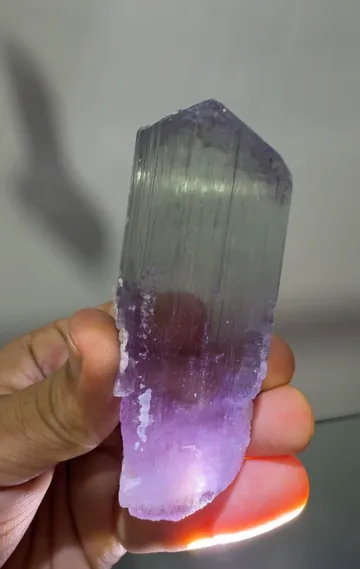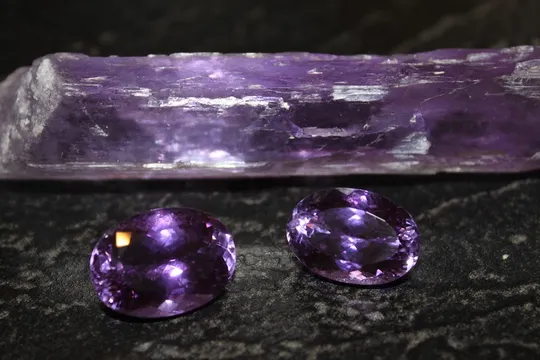
Kunzite: pink to lilac spodumene with strong pleochroism, glassy crystals on white matrix; prized for color, clarity, and localities like Pala and Nuristan.
Key facts
Kunzite is the prized pink to lilac gem variety of spodumene, colored by manganese. It is beloved for its delicate yet vivid hues, strong pleochroism (color appears different when viewed from different directions), and for growing as large, well-formed prismatic crystals with glassy luster. Fine crystals often show gentle pastel pinks to saturated magenta-lilac, with the c-axis typically displaying the strongest color. Crystals may be single or in parallel groups, sometimes on a contrasting matrix of white cleavelandite, quartz, or lavender lepidolite—combinations that make exceptional display pieces.
Kunzite is a modern classic: discovered in 1902 at Pala, California and named in honor of George F. Kunz, it quickly became a darling of both jewelers and mineral collectors. Many specimens are transparent and sizeable, with some crystals exceeding 20–30 cm. However, kunzite’s perfect cleavage and brittleness mean undamaged terminations and unrepaired pieces are scarce; pristine, richly colored crystals or elegant, balanced matrix specimens are the benchmark.
Kunzite bridges the gem and specimen worlds. For gem cutters, it offers large, clean rough and a romantic color palette; for specimen collectors, it offers striking, light-transmitting crystals with dramatic pleochroism that changes as you rotate the piece. Historic Pala crystals, and later waves of production from Afghanistan and Pakistan, cemented kunzite’s prestige. The best pieces from Nuristan (Afghanistan) and San Diego County (USA) are especially coveted for color saturation, clarity, and aesthetics on matrix.
Kunzite’s popularity is enhanced by its display properties: it glows under backlighting, often fluoresces orange to pink under shortwave UV, and shows clear pleochroism with slight rotations. Prices vary widely—from modest single crystals with pale color to world-class, richly colored, transparent, undamaged specimens that command significant sums. Because many pieces are cut into gems, fine intact crystals—particularly on matrix—are much rarer than total production suggests.
Below are some of the best-known sources of collectible kunzite, each with an established reputation and distinctive style of specimens.
Mawi is another classic Nuristan pegmatite famous for refined kunzites—often medium to intense pink with glassy luster. Crystals can be stout or slender, typically well-terminated and sometimes in attractive parallel arrays. Matrix specimens featuring cleavelandite, lepidolite, or quartz occur, though many crystals are found loose. Collectors prize these for their balanced form, high clarity in the upper portions, and saturated color that holds even under ambient light.
The birthplace of kunzite as a named gem species, Pala’s early 1900s discoveries made history. Pala crystals tend toward pastel pink to lilac, sometimes as thick, glassy prisms with lustrous faces, and occasionally on albite or lepidolite matrix. While production today is limited, historic pieces—particularly well-terminated crystals with strong pleochroism—are treasured for both beauty and provenance. Pala kunzite stands as an American classic alongside the district’s famed tourmalines.
Kunzite is 6.5–7 on Mohs but has perfect cleavage and is brittle. It also can be light-sensitive. Gentle, informed care keeps specimens beautiful.
By selecting for color that holds in ambient light, sharp natural terminations, bright luster, and minimal damage—ideally on an attractive matrix—collectors can secure kunzite specimens with enduring appeal and historic significance.