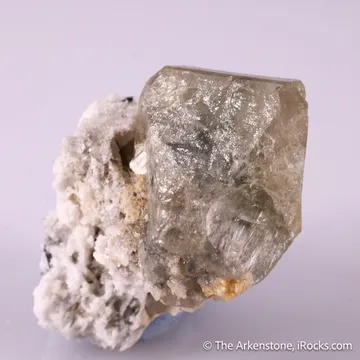
Albite: sodium plagioclase famed for snow-white cleavelandite blades and Alpine pericline crystals; pegmatite matrices, bright luster, and appeal.
Key facts
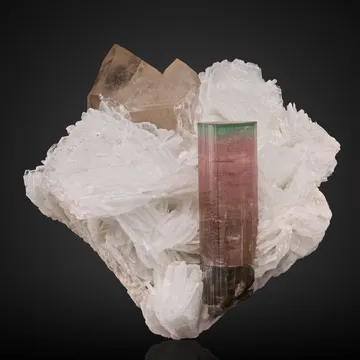
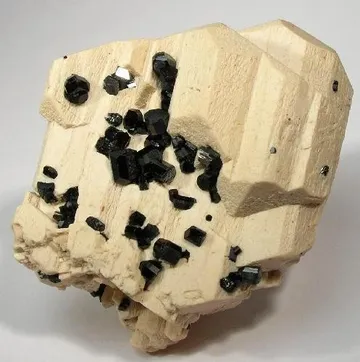
Albite is the sodium-rich endmember of the plagioclase feldspar series (NaAlSi3O8) and one of the most abundant rock-forming minerals on Earth. For collectors, however, albite is far more than a common feldspar: in pegmatites it often develops into elegant, snow-white “cleavelandite” blades arranged in fans and rosettes, providing dramatic contrast to gem crystals like tourmaline, aquamarine, and topaz. In Alpine-type clefts, albite can form razor-sharp “pericline” crystals with intricate twinning and superb luster. It also occurs as blocky, tabular crystals with fine growth striations, sometimes tinted cream, gray, or very pale green. While single albite crystals can be attractive, the species truly shines as a matrix mineral that frames and elevates associated gems—many of the world’s most famous pegmatite specimens feature tourmaline or beryl standing out against snowy cleavelandite.
Expect hardness around 6–6.5, perfect cleavage in two directions (hence the “cleave” in cleavelandite), and characteristic polysynthetic twinning that often appears as fine striations on crystal faces. Excellent albite displays bright vitreous to pearly luster, crisp edges, and clean white color or pleasing translucency. Because it’s plentiful, you can build a varied albite suite—from elegant Alpine micro-mounts to major pegmatite matrix showpieces—without breaking the bank, though top matrix combinations can be highly prized.
Albite enjoys steady demand because it anchors some of the most aesthetic pegmatite combinations in the hobby. Collectors love “snow-on-dark” contrast: white cleavelandite setting off rubellite, indicolite, schorl, or purple fluorite. Albite’s visual role is so integral that dealers and collectors often describe specimens primarily by their associations—“tourmaline on cleavelandite”—with the albite doing the crucial compositional work. Alpine-type pericline albites, meanwhile, attract connoisseurs who appreciate sharp crystallography and twinning. Pricing ranges widely: single cleavelandite fans are affordable, while large, undamaged matrix pieces hosting world-class tourmaline or aquamarine can be centerpiece-level and expensive. Albite’s broad occurrence and aesthetic versatility keep it relevant for all levels of collecting.
Below are renowned localities known for producing albite specimens that collectors prize for either their crystal habit (cleavelandite or pericline) or their associations with colorful pegmatite species. All localities listed have verified IDs for mapping and galleries.
Erongo’s granite-pegmatite environment is famous for fluorite, aquamarine, and schorl—often on snow-white cleavelandite. The albite typically forms thin to thick bladed fans that create strong contrast against dark tourmaline or purple/green fluorite. Many specimens show tidy, layered rosettes, high luster, and excellent composition, with crystals radiating from a common center. Larger matrix pieces can be particularly sculptural.
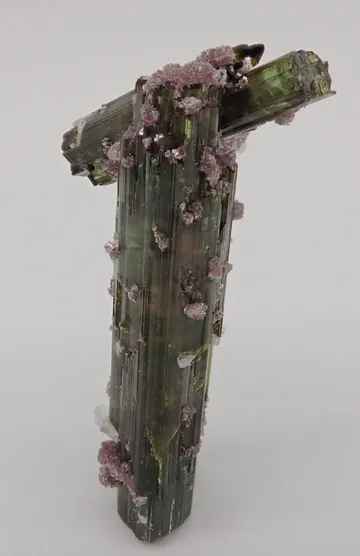
Minas Gerais’ Pederneira Mine is legendary for multi-color tourmalines perched on brilliant white cleavelandite. Albite occurs as dense sheaves and crisp fans, often intergrown with lepidolite and quartz to produce layered, high-contrast displays. The finest pieces combine saturated blue/green/pink tourmalines with intricate albite textures and excellent balance—true modern classics in pegmatite collecting.
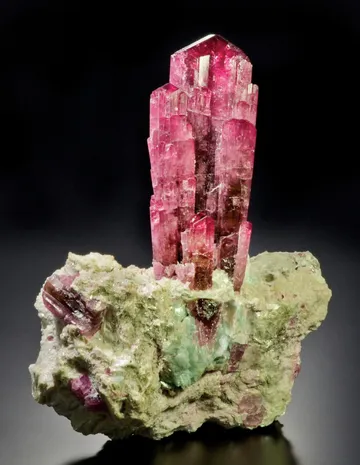
Paprok’s famous pink-green elbaite sprays frequently sit on snowy cleavelandite. Albite here tends to be thin-bladed, radiant, and delicately arranged, providing an airy foundation for gemmy tourmaline clusters. Albite’s role is both aesthetic and structural, arching to cradle crystals and create “bouquet” compositions that display superbly.
Malkhan’s robust rubellite tourmalines often reside on bright white cleavelandite. Albite blades can be quite thick, forming layered, undulating rosettes that dramatically showcase deep red tourmaline prisms. Clean, unrepaired matrix specimens are sought after, with the albite delivering both contrast and sculptural flow.
Shigar’s pegmatites are known for aquamarine, topaz, and schorl on cleavelandite. Albite typically forms clean white rosettes and layered blades that curve around gem crystals, producing airy, balanced compositions. When undamaged and well-arranged, these pieces are quintessential “pegmatite art.”
Crystal habit and form:
Color and luster:
Associations and aesthetics:
Condition:
Rarity considerations:
Repairs and reattachments:
Treatments:
Handling:
Cleaning:
Light and temperature:
Storage and display:
By focusing on clean, lustrous blades or sharp pericline crystals, minimal damage, and tasteful associations, you can assemble an albite suite that ranges from elegant micro to showy cabinet, with enduring aesthetic appeal.