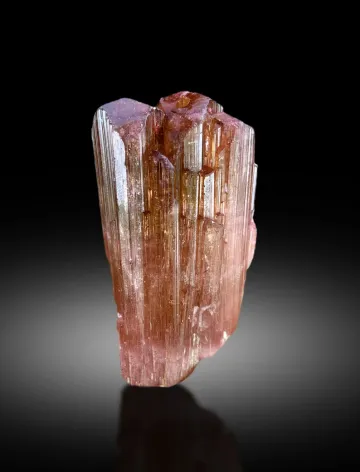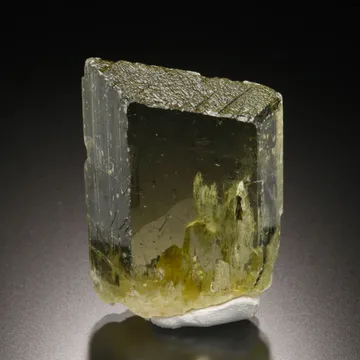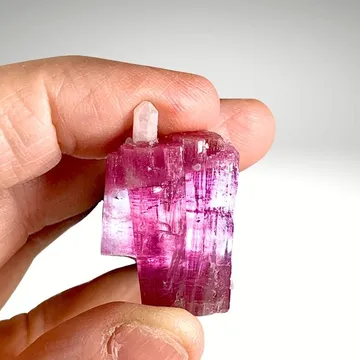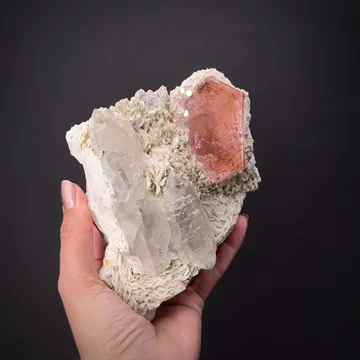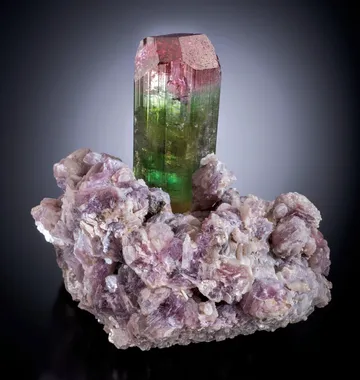
Nouristan, Afghanistan - a pegmatite-rich locality famed for elbaite tourmaline, kunzite, morganite, aquamarine and pocket-rich Paprok, sought by collectors.
Key facts
Nouristan—more commonly rendered Nuristan in mineral labels and the geological literature—is one of the great modern names in pegmatite collecting. Its fame rests on a rugged belt of rare-element granitic pegmatites in the eastern Hindu Kush, where lithium-, beryllium-, boron-, cesium-, tantalum-, niobium-, tin-, and fluorine-enriched melts crystallized into complex, pocket-bearing bodies. For collectors, this is not a single mine so much as a province-wide constellation of pegmatite fields: Paprok in Kamdesh District; Mawi, Nilaw, Korgal, Kulam, Pashagar, and related workings in the Nilaw-Kolum area; and the Parun-Waygal belt farther north and east. Together they have produced some of the most admired late-20th- and early-21st-century specimens of elbaite tourmaline, kunzite spodumene, morganite and aquamarine beryl, pollucite, beryllonite, hambergite, fluorapatite, topaz, hydroxylherderite, phosphates, and tantalum-niobium oxides.
The best Nouristan specimens have a look that is instantly recognizable: sharply striated, lustrous elbaite “pencils” in pink, green, blue, colorless, and multicolored zones; grass-green bodies capped in pink or deep blue; red and green crystals on snow-white cleavelandite; tourmaline perched on smoky quartz; gem kunzite blades and tablets from enormous pockets; and morganite in pastel pink to purplish tones on feldspar and quartz. Paprok, in particular, has given collectors a standard by which many modern tourmalines are judged: large, sculptural, saturated, highly lustrous crystals in aesthetic association with albite, smoky quartz, lepidolite, beryllonite, and rare phosphates.
Regional View
Country View
Historically, Nouristan’s pegmatites entered scientific and collector consciousness in stages. Afghan and foreign geological work expanded after the founding of the Afghanistan Geological Survey in 1955, and Soviet geologists carried out major investigations of the rare-metal pegmatites in the 1960s and 1970s. Pierre Bariand and Jean-François Poullen’s 1978 Mineralogical Record article helped bring the Laghman-Nuristan pegmatites to Western collectors, while Gary Bowersox and colleagues’ 1985 Gems & Gemology status report documented the gem tourmaline, spodumene, and beryl then reaching the market. Peter Lyckberg’s 2017 Mineralogical Record review remains the richest modern collector-oriented account of the fields, pockets, mining conditions, and notable specimens.
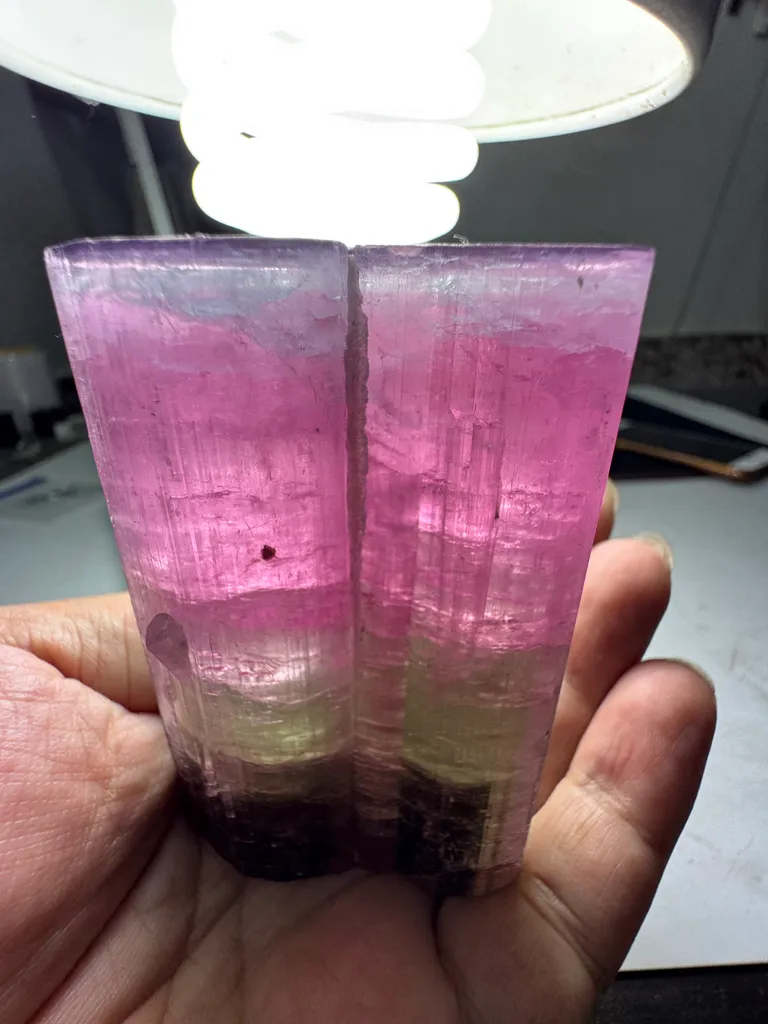
Photo: EarthWonders
Search for specimens: View all specimens from Nouristan, Afghanistan
The collector locality “Nouristan, Afghanistan” is best understood as a regional label for the province’s complex rare-metal pegmatite systems rather than as one mine. The major specimen-producing areas fall within the northeastern Afghan pegmatite belt in and around Nuristan Province, with several historical spellings in use: Nuristan/Nouristan, Parun/Paron/Paroon, Kulam/Kolum, Nilaw/Nilau, Kantiway/Kantiwa, and Paprok/Papruk/Paprowk. Labels on older specimens may be broad, imprecise, or filtered through the Pakistan-Afghanistan gem trade; a “Nuristan” label may conceal a much more specific source such as Paprok, Mawi, Nilaw, Korgal, Kulam, Pashagar, Waygal, or Pashki.
Geologically, the region belongs to a Himalayan-age rare-metal pegmatite province associated with fertile Oligocene two-mica granites of the Laghman intrusive complex. The pegmatites cut older metamorphic country rocks, including gneiss, schist, quartzite, marble, amphibolite, and locally gabbro-norite. The economically and aesthetically important bodies are LCT-family pegmatites: lithium-cesium-tantalum systems with boron, beryllium, phosphorus, fluorine, tin, niobium, and rubidium enrichment. They range from relatively simple feldspar-quartz-mica bodies to highly evolved, internally zoned, pocket-bearing pegmatites capable of producing gem crystals and rare species.
The ore bodies are dikes, lenses, veins, and pegmatitic zones of impressive scale. Regional studies describe bodies from a few meters to about 40 meters thick and locally traceable for great distances; in individual fields, veins may be hundreds of meters to several kilometers long. The Mawi pegmatite is described as a giant body about 1.5 km long and up to 40 meters thick, while the Kulam pegmatite is described as a subhorizontal body more than 3 km long and 5 to 40 meters thick. At Pashki, in the Parun field, pegmatite bodies are exposed at 3,000 to 4,300 meters elevation over an area roughly 2 by 3.5 km, with steeply dipping, northeast-striking spodumene-rich pegmatites and a preliminary lithium-resource estimate to 100 meters depth.
The pocket mineralization varies from field to field. In the Nilaw-Kolum-Mawi system, gem spodumene, elbaite, and morganite beryl are the headline species. Mawi is especially celebrated for enormous kunzite pockets, with historical reports of individual pockets yielding 1.8 to 2 tons of kunzite and others yielding hundreds of kilograms. Mawi also produced morganite, aquamarine, elbaite, spessartine, fluorapatite, stibiotantalite, tantalite-(Mn), columbite-(Mn), cassiterite, pollucite, and other accessory minerals. The best gem cavities occur within the central and evolved portions of zoned pegmatites, often in association with quartz, albite-cleavelandite, microcline, muscovite, lepidolite, and clay pocket fillings.
Paprok is the dominant name for tourmaline collectors. The Paprok workings are not a neat single adit but a high mountain system of pegmatite veins and tunnels west-northwest of Paprok village. The main mines are reached by routes through Kehi Darra and Chappa Darra, with named workings including Me Tunnel Madan, KAL Tunnel Madan, GUL Tunnel Madan, Al Madan, and Noor Ahmed Madan. These tunnels have penetrated hundreds of meters into the mountain and exposed dozens of tourmaline pockets. The pockets can be large enough to yield many kilograms—or even hundreds of kilograms—of elbaite crystals, matrix specimens, and broken shards. The most admired Paprok material consists of pink, green, blue, red, colorless, and multicolored elbaite on white albite, smoky quartz, quartz, lepidolite, and rare species such as beryllonite and hydroxylherderite.
Kulam is more complexly zoned and is important for both gem and rare-mineral collectors. Cavities in its albitized muscovite-microcline zones range from a few centimeters to about 50 cm, exceptionally much larger, and contain quartz, microcline, cleavelandite, gem spodumene, green and blue elbaite, pink morganite, colorless to white pollucite, and rarer petalite, hydroxylherderite, cassiterite, tantalite-(Mn), and microlite. Late leaching of microcline appears to have been important in forming some of the better gem spodumene, quartz, pollucite, and tourmaline specimens in the field.
Nilaw and Korgal are less familiar on labels than Paprok and Mawi, but both have produced gem elbaite. Nilaw yielded delicate pink and green elbaite “pencils,” including a notable 2008 find, while Korgal is described as especially rich in Cs, Rb, Li, Ta, and Nb and known for extraordinarily transparent green elbaite, with pink elbaite much rarer. Pashagar, a smaller mine reached by footpaths south of the Alingar River, produced a sharply defined 1992 pocket of pink gem elbaite on highly lustrous smoky quartz, along with smaller later pockets, before closing.
The Parun-Waygal area adds another chapter: blue elbaite, rose quartz on pale smoky quartz, childrenite-eosphorite series minerals, pezzottaite at Dewa, and world-class kunzite from Waygal. A 2010 Waygal pocket reportedly produced extraordinary deep purple kunzite crystals, including a 55 cm, 7 kg crystal with an indigo zone at the termination. That locality illustrates the tension in Afghan gem pegmatite collecting: the same crystals that would rank among the world’s great mineral specimens may be sold as gem rough and cut before the specimen community can react.
Mining has been artisanal, seasonal, and shaped by geography as much as geology. Soviet geological teams in the 1970s explored for Li, Cs, Rb, Nb, and Ta, but the specimen trade developed largely through local miners, Afghan and Pakistani gem dealers, and later international dealers. Paprok mining is limited by snow, cold, wind, cliff-face exposures, tunnel access, and the short window from late summer into autumn. Mawi and some lower or more accessible pegmatites have been worked more steadily, but production still fluctuates with security, weather, pocket discovery, transport, and the availability of tools and explosives.
There is no realistic casual collecting access for foreign mineral collectors today. These are remote high-mountain workings in a region with difficult roads, extreme weather, unstable security history, local mineral-rights realities, and active artisanal mining. Serious collectors should treat Nouristan as a market-acquired locality. The best route is through reputable dealers who can explain whether a piece is truly from Paprok, Mawi, Kulam, Nilaw, Parun, Waygal, or another field, and who will disclose repairs, restoration, irradiation, and old-label uncertainty.
Nouristan tourmaline is dominated in the specimen market by elbaite from Paprok, with additional important production from Mawi, Nilaw, Korgal, Kulam, Parun, and related fields. The classic habit is a vertically striated, lustrous, prismatic crystal—often a “pencil”—in pink, green, blue, red, colorless, bicolored, tricolored, and watermelon-zoned forms; larger first-generation crystals may form subparallel bundles with flatter terminations, while second-generation crystals are often cleaner, more gemmy, and more sharply terminated. The finest Paprok pieces are not merely colorful loose crystals but balanced matrix specimens: saturated green bodies with pink or blue caps on white cleavelandite, smoky quartz, lepidolite, beryllonite, or quartz, with clean luster, undamaged terminations, strong transparency, and an honest contact to matrix. Ordinary pieces tend to be paler, more included, broken, repaired, or loose without the architectural matrix that makes the great Paprok specimens so memorable.
Other minerals from Nouristan make the province far more than a tourmaline locality. Mawi is famous for kunzite spodumene, including vast pocket yields and large gem crystals, and it has also produced morganite, aquamarine, spessartine, purple fluorapatite, stibiotantalite, tantalite-(Mn), columbite-(Mn), cassiterite, pollucite, and fluorite. Paprok is one of the world’s most important rare-species pegmatites: beryllonite occurs as white cogwheel aggregates and crystals, pollucite forms large white to colorless trapezohedra, hambergite is known from spectacular doubly terminated crystals, viitaniemiite was recovered as a 17 cm crystal on lepidolite, väyrynenite occurs as orange-pink gem crystals, and the locality list also includes hydroxylherderite, petalite, topaz, childrenite, eosphorite, wodginite, microlite-group minerals, stibiotantalite, tantalum-niobium oxides, and beryl varieties including morganite, aquamarine, and goshenite. The Pashki pegmatites have become scientifically important for spodumene-associated goshenite and detailed trace-element zoning studies, while Parun-Waygal adds blue elbaite, rose quartz, childrenite-eosphorite minerals, pezzottaite, and some of the most remarkable kunzite reported from Afghanistan.
Nouristan specimens reward locality discipline. “Afghanistan,” “Nuristan,” “Laghman,” “Konar,” “Paprok,” and “Mawi” have all been used with varying precision in the trade, and older labels may reflect dealer routes rather than mine geology. Paprok tourmaline should not automatically be accepted on color alone; similar-looking elbaite has come from Kunar Province, Badakhshan, Pakistan, Brazil, Madagascar, and other pegmatite districts. The most reliable identifications combine habit, matrix, association, old provenance, and a dealer history that can place the specimen within a specific field or find.
Repairs are common enough that they should be assumed possible until ruled out. Pegmatite pocket crystals detach during pocket collapse, blasting, extraction, washing, transport, and later handling. Tourmaline crystals may be repaired through the prism, reattached at the base, glued onto cleavelandite or quartz, or mounted into an attractive but false matrix. Inspect the contact under magnification, especially where a dark or saturated tourmaline enters white albite or lepidolite. Glue can hide in pocket clay, along cleavage planes, inside cleavelandite rosettes, and under added dust or crushed matrix. A disclosed repair on an important Paprok specimen is not automatically fatal, but undisclosed repairs, added matrix, and reconstructed associations should be priced very differently from intact pocket pieces.
Irradiation is a documented concern for Afghan-region spodumene and quartz. Pale spodumene from some Waygal and Chathras-area material has been irradiated to intensify kunzite-like color, and associated quartz can become unnaturally dark smoky. For Nouristan spodumene, be wary of very strong orange-pink color in otherwise pale material, dark smoky quartz that seems out of character for young Himalayan-system pegmatites, and specimens whose color story is offered without disclosure. Kunzite also has a natural tendency to fade in strong light; display fine spodumene away from direct sunlight and high-UV lighting.
Tourmaline treatment is less commonly the central issue than repair and locality, but suspiciously saturated loose crystals still deserve scrutiny. Some pink tourmaline may show fluorescence under shortwave UV, while green and dark red elbaite are generally less responsive; fluorescence is therefore a descriptive feature, not a simple proof of locality or natural color. Beryllonite can fluoresce strongly, and rare phosphate or beryllium species should be handled with normal mineral-care caution: avoid abrasion, chemical cleaning, and unnecessary soaking, especially where specimens include lepidolite, cleavelandite, clay, or repaired contacts.
Condition standards are high because the locality has produced truly great specimens. On tourmaline, look first at termination integrity, luster, color zoning, transparency, and whether the crystal is aesthetically placed on matrix. Abraded prism edges, bruised caps, glued bases, missing sidecars, clay-filled fractures, and polishing or trimming at the base all affect value. On kunzite, cleavage and edge chipping are the chief concerns; even excellent crystals may have natural etching, internal parting, or repaired cleavages. On morganite and aquamarine, edge wear, etched faces, dull luster, and rehealed fractures matter. On rare species such as beryllonite, viitaniemiite, väyrynenite, hydroxylherderite, and hambergite, correctness of identification and provenance can be as important as visual appeal.
Market availability is uneven. Small to medium Paprok tourmalines, loose elbaite pencils, and ordinary kunzite crystals appear regularly, but top matrix tourmalines, large unrepaired multicolored elbaites, fine Mawi kunzite on matrix, good beryllonite combinations, and documented rare-species specimens are genuinely scarce. The best pieces often remain in long-term private collections or major museum collections. New production can still reach the market, but it comes irregularly and often through Pakistan-based trading networks; patient buying and strong provenance matter more than chasing every fresh “Afghanistan” label.
In the older literature, the road to the Nouristan pegmatites reads less like a mining commute than a mountain ordeal. Bariand and Poullen described reaching the Mawi area in the 1970s as a journey of roughly two days on foot from the end of the jeep road north of Nuristan village, along narrow trails above steep rocky gorges, and then across a 3,000-meter range. The geography explains much of the mineral history: a world-class pegmatite could be only a few kilometers away on a map and still be a major expedition in human terms.
The Soviet period left its own strange marks in the pockets. During intense geological work in 1972 and 1973, Soviet teams employed local men for drilling, blasting, and opening pegmatites while exploring for lithium, cesium, rubidium, niobium, tantalum, and gem minerals. Local workers later remembered that they were not allowed access to the pockets and ore zones revealed by their own labor. Years afterward, when a kunzite pocket was opened in post-Soviet times, one crystal reportedly carried a two-inch hole made by a Soviet drill—a perfect, absurd image of strategic-resource geology colliding with a gem crystal that collectors would rather have seen untouched.
Mawi’s pockets were on a scale that still startles. In summer 1995, one giant pocket produced about 1,800 kg of kunzite, including roughly 300 kg of faceting-grade material, and another pocket produced about 2 tons. Earlier, in July 1973, 420 kg of spodumene were extracted, followed by another 176 kg in October and November. Bariand and Poullen saw dump plates covered with quartz, microcline, and cleavelandite—the broken homes of kunzite crystals that miners had already removed. The irony is painful to specimen collectors: the pockets were rich enough to fill lots with gem rough and shards, yet matrix spodumene specimens, the pieces most prized now, were comparatively rare because so many crystals were detached before anyone treated the matrix as valuable.
Paprok’s geography is even more severe. The workings lie about 16 km west-northwest of Paprok village, but the distance is deceptive. A fit young local man in his twenties reportedly tried to reach the main mine on his first visit, walked hard for 16 hours, and still had to turn back before reaching it because wind and bitter cold overwhelmed the attempt. Mining there is possible for only a short part of the year, generally from early September through early November. The village road itself was not simply given by government infrastructure; villagers reportedly financed and built improved access with income from mineral finds.
Inside the Paprok mountain, the “mine” becomes a branching collector’s map: Kehi Darra to the main mines, Chappa Darra to other high-altitude workings, and named tunnels such as Me Tunnel Madan, KAL Tunnel Madan, GUL Tunnel Madan, Al Madan, and Noor Ahmed Madan. KAL Tunnel Madan is described as the most prolific. Some tunnels reached depths of about 200 meters into the mountain and exposed dozens of tourmaline pockets. Teams of up to 100 people worked individual mines, staying as long as ten days before being relieved, and because the ridge is cold, windy, and dangerous, the miners lived inside the tunnels. Even under sun, they wore thick layers of wool, windproof clothing, and head protection.
One of the best small trade stories belongs to Pashagar in 1992. A pocket produced 72 specimens of pink, gemmy elbaite on highly lustrous smoky quartz. Malem Haji brought them to the brothers Asmat and Faisal Umar Shinwari in Landi Kotal, who bought the lot for $16,000 and then sold it for the same price to Tariq Iqbal and Wayne Thompson, later receiving $5,000 as after-sale profit. That detail captures a distinctive feature of the Afghan-Pakistani mineral trade: profit-sharing arrangements could continue after the first handshake, with trust and future business folded into a deal.
Paprok’s 2009 season produced the kind of pocket description collectors remember. One pocket yielded pink elbaite with flat tops and thin inky blue caps. A second produced some of the finest large Afghan matrix tourmalines: divergent groups of pale pink crystals with grass-green overgrowths and flat green-capped terminations, set on plates of milky to transparent quartz with delicate white spherical cleavelandite. Individual tourmalines reached about 15 cm long and 10 cm thick, while matrices reached about 40 cm across. The same pocket yielded second-generation bicolored pink-and-green gem pencils to 16 cm, some with deep green terminations and touches of purple, lying on beryllonite or smoky quartz. For a collector, that is the dream Paprok composition: color, scale, matrix, and rare-species association all in the same geological breath.
Then there is the 1991 viitaniemiite. Paprok produced a single extraordinary crystal about 17 cm long on medium-grained lepidolite, later entering the Vienna Museum of Natural History. Soon after its discovery it reportedly sold for only 4,850 German marks. In hindsight, the number feels almost comic; today, a major, documented, world-class specimen of a very rare pegmatite phosphate from Paprok would be treated as a trophy-level rarity.
The Waygal kunzite story is more bittersweet. In 2008, miners opened a pocket yielding richly colored purple kunzite that deepened toward ruby-red after exposure to intense sunlight. In April 2010, another pocket reportedly produced what may have been the finest kunzite crystals in the world: the best was 55 cm tall, weighed 7 kg, and carried a flawless deep purple body with an 8 cm indigo zone at the razor-sharp termination. Ten additional flawless gem crystals totaled 6 kg. The crystals were offered as specimens, but collectors and dealers did not move fast enough; the lot was sold to a gem dealer, and most of the crystals were cut. It is one of those losses that specimen collectors can feel physically: a pocket that produced history, then disappeared into faceted stones.
Peter Lyckberg, “Gem pegmatites of northeastern Afghanistan,” The Mineralogical Record, 48(5), 610–675, 2017 — The major modern collector reference for Mawi, Nilaw, Korgal, Kulam, Paprok, Parun, and related northeastern Afghan pegmatites, with pocket histories, access notes, specimen descriptions, and photographed museum and private-collection pieces.
Gary W. Bowersox, Edward J. Gübelin, Robert E. Kane, John I. Koivula, and Christopher P. Smith, “A Status Report on Gemstones from Afghanistan,” Gems & Gemology, Winter 1985 — Classic gemological account documenting Nuristan tourmaline, spodumene, and beryl, including pocket sizes, mining depths, miner numbers, and gem properties.
Pierre Bariand and Jean-François Poullen, “The pegmatites of Laghman, Nuristan, Afghanistan,” The Mineralogical Record, 9(5), 301–308, 1978; Pala International reprint — Early Western collector-mineralogical report on the Be- and Li-rich pegmatites and their assemblage of quartz, microcline, albite, lithium tourmalines, beryl, spodumene, lepidolite, phosphates, tantalum-niobium minerals, cassiterite, spessartine, apatite, and pollucite.
Mark D. Cocker, “Chapter 24A. Summary for the Mineral Information Package for the Nuristan Rare-Metal Pegmatite Area of Interest,” in USGS Open-File Report 2011-1204 — Authoritative regional geological and economic summary of the Nuristan rare-metal pegmatite AOI, including the LCT pegmatite framework, fertile granites, rare-metal enrichment, and major pegmatite fields.
Lucyna Natkaniec-Nowak, Magdalena Dumańska-Słowik, and Andreas Ertl, “‘Watermelon’ tourmaline from the Paprok mine (Nuristan, Afghanistan),” Neues Jahrbuch für Mineralogie - Abhandlungen, 186(2), 185–193, 2009 — Key analytical paper on Paprok watermelon tourmaline, documenting zonation and fluor-elbaite in the Nuristan region.
A. Wesełucha-Birczyńska and L. Natkaniec-Nowak, “A Raman microspectroscopic study of organic inclusions in ‘watermelon’ tourmaline from the Paprok mine (Nuristan, Afghanistan),” Vibrational Spectroscopy, 57(2), 248–253, 2011 — Raman study of a 53 mm Paprok watermelon tourmaline crystal, including color zones, organic inclusions, and spectroscopic differences between zones.
Sergey G. Skublov and coauthors, “Trace element zoning of colorless beryl from spodumene pegmatites of Pashki deposit (Nuristan province, Afghanistan),” Frontiers in Earth Science, 2024 — Recent study of goshenite from Pashki, with detailed geological context for the Parun pegmatite field, vein No. 3, spodumene mineralization, and beryl trace-element zoning.
Philip A. Davis, Laura E. Cagney, Scott A. Arko, and Michelle L. Harbin, “Local-area-enhanced, 2.5-meter resolution natural-color and color-infrared satellite-image mosaics of the Nuristan mineral district in Afghanistan,” USGS Data Series 709-X, 2013 — Useful geospatial reference for the Nuristan mineral district and its difficult mountain terrain.
Mindat: Nouristan, Afghanistan — Regional locality page for the province-level collector locality.
Mindat: Paprok, Kamdesh District, Nuristan, Afghanistan — Core locality record for the classic Paprok tourmaline and rare-mineral pegmatites, including mineral list, photos, references, and variant locality information.
Mindat: Pashki pegmatites, Parun pegmatite field, Nuristan, Afghanistan — Locality record summarizing the Pashki Li-Ta-Rb-Cs pegmatites, elevation range, dimensions, host rocks, and lithium-resource estimate.
Mindat: Nouristan, Afghanistan — Best starting point for province-level locality hierarchy, mineral listings, and sublocalities.
Mindat: Paprok, Kamdesh District, Nuristan, Afghanistan — Essential reference for Paprok, the premier tourmaline and rare-mineral locality within Nuristan.
GIA: “A Status Report on Gemstones from Afghanistan” — Concise gemological source for Nuristan tourmaline, spodumene, and beryl production in the 1980s.
USGS: Nuristan Rare-Metal Pegmatite Area of Interest — Regional geology, resource context, pegmatite fields, rare-metal enrichment, and exploration background.
Pala International: “Pegmatites of Laghman, Nuristan, Afghanistan” — Accessible reprint of an important early Mineralogical Record article on the Afghan pegmatite assemblage.
ResearchGate: Peter Lyckberg, “Gem pegmatites of northeastern Afghanistan” — The most detailed collector narrative on Mawi, Paprok, Kulam, Nilaw, Korgal, Parun, and other northeastern Afghan pegmatites.
ScienceDirect: Raman study of organic inclusions in Paprok watermelon tourmaline — Analytical paper useful for understanding Paprok tourmaline zoning and inclusions.
Frontiers in Earth Science: Trace-element zoning of goshenite from Pashki — Recent open-access scientific work on Pashki beryl and Parun-field pegmatite geology.
USGS Data Series 709-X: Nuristan mineral district satellite mosaics — Geospatial context for the remote mountain district.