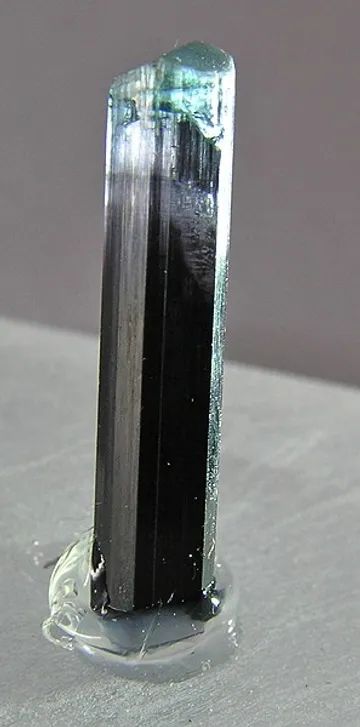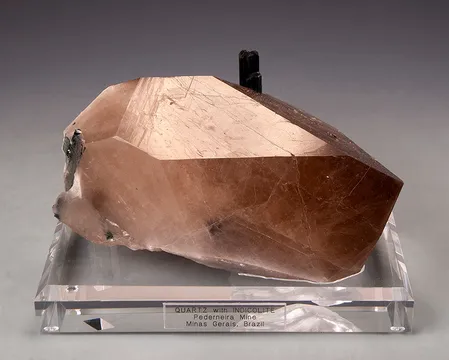
Indicolite: blue tourmaline with saturated hues, strong pleochroism, and sharp, lustrous prisms; prized for color, rarity, and dramatic matrix crystals.
Key facts
Indicolite is the blue variety of tourmaline, most commonly an elbaite. Its most desirable hues range from saturated royal to cobalt and teal blue; paler sky-blue to blue-green stones are also collected, especially when lustrous and transparent. Like all tourmalines, indicolite forms elongated, striated trigonal prisms, often with flat or pyramidal terminations and striking color zoning. Because blue is comparatively rare in the tourmaline spectrum, fine indicolite is a trophy color, particularly in crystals with strong saturation that still show good light transmission.
Pleochroism is pronounced: viewed down the c-axis, colors can appear deeper (even inky), while across the a–b axes they lighten and “open.” Specimens often display best when oriented to show the brighter axis and with modest backlighting to bring out internal glow. Classic associations include snow-white cleavelandite (albite), quartz (rock crystal or smoky), and lilac lepidolite—combinations that heighten the blue visually. Collectors seek both elegant single prisms and balanced matrix clusters. Prices span from modest for small bluish-green crystals to very high for saturated, gemmy blues or rare copper-bearing “Paraíba-type” blues in crystal form.
Blue tourmaline has long captivated collectors because truly fine blue is markedly scarcer than green or pink. Historic highlights include California’s 1972 Tourmaline Queen “blue cap” pocket, Afghan/Nuristan bicolors with vivid blue tips in the 1980s–1990s, and a sequence of Brazilian finds from the Cruzeiro and Pederneira mines that yielded transparent blue prisms on dramatic matrix. In the 2000s–2010s, Mozambique and Brazil produced copper-bearing, neon teal-blue elbaites—legendary as gems and occasionally preserved as small but dazzling crystals.
Indicolite’s enduring appeal lies in the color challenge: finding saturated blue without being too dark or too green, in crystals that are sharp, lustrous, and preferably on contrasting matrix. Even thumbnail crystals of superb hue can be showstoppers, and collectors often upgrade repeatedly as their eye for color and pleochroism refines.
Minas Gerais’ Pederneira Mine is famed for sculptural, multi-crystal clusters featuring vivid blues and blue-greens, frequently with sharp zoning and “cap” color changes. Albite (cleavelandite), quartz, and lepidolite provide pristine white or lilac contrast, making the blue tourmalines pop. Many pockets yielded slender, lustrous prisms with glassy terminations; the finest show rich medium to deep blues that remain luminous in ambient light. Due to pocket stress, repairs are common; un-repaired matrix pieces with strong color are coveted.
Pala is an American classic. While famed for pinks and the legendary “blue cap” pocket (indigo caps atop pink bodies) from the Tourmaline Queen, the district also produced true blue to blue-green crystals. The best display with snowy albite or mica-rich matrix, and a few rare matrix clusters are significant historic pieces. California indicolite combines provenance with beauty—top examples are scarce and keenly sought.
Color:
Clarity & Luster:
Crystal Form:
Condition:
Aesthetics:
Repairs and Reattachments:
Polishing:
Treatments:
Fakes:
Handling:
Light and Display:
Temperature:
Cleaning:
Storage:
By focusing on saturated but bright blue color, sharp form, clean terminations, and appealing matrix contrast, collectors can assemble a compelling suite of indicolite—from classic Brazilian and Afghan crystals to the rare neon cuprian blues that helped define a modern era of tourmaline collecting.