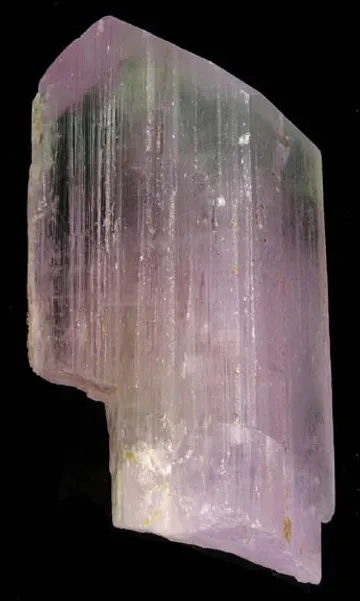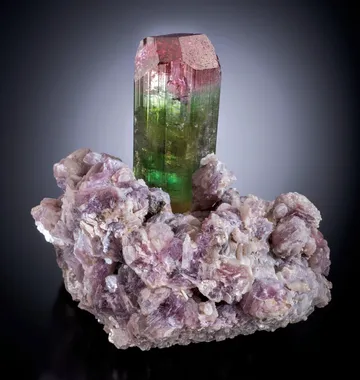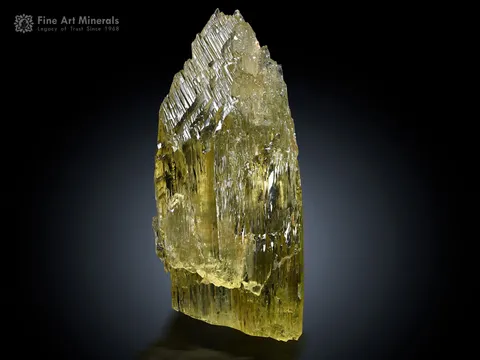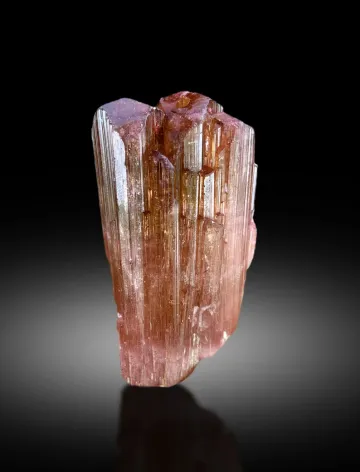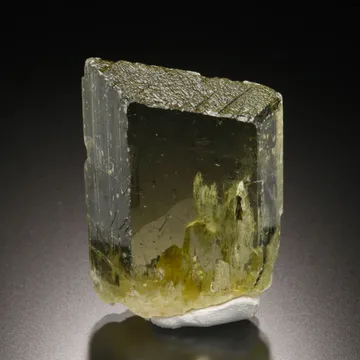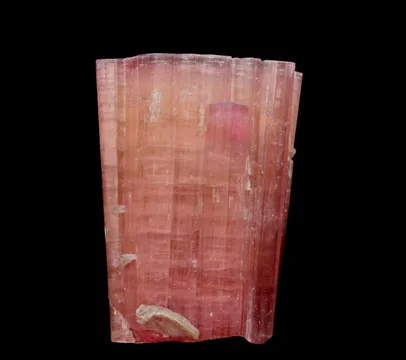
Pachigram pegmatite field, Afghanistan — a rare-metal locality famed for pink tourmaline and spodumene in Li-Be-Sn-Nb dykes; prized by collectors for crystals.
Key facts
Pachigram is one of the high-Hindu Kush rare-metal pegmatite fields that has recently become much more visible to specimen collectors than its older geological literature would suggest. The field is cataloged today in Nuristan, though older Soviet, United Nations, and USGS-derived records often place “Pachighram” in Nangarhar or Kunar administrative usage; collectors will see all three names on labels. Mineralogically, its importance lies in Li-Be-Sn-Nb pegmatite dykes intruded into metamorphic country rock: a spodumene–albite–microcline system with schorl, phosphates, cassiterite, columbite-tantalite, and gem pockets capable of producing showy pink tourmaline on quartz, cleavelandite, mica, and albite.
Regional View
Country View
The finest Pachigram specimens have the unmistakable Afghan pegmatite look: saturated cranberry-pink tourmaline prisms, bright vitreous luster, sharp terminations, and icy to smoky quartz protruding from a snow-white feldspar and mica matrix. The best examples are not simply bright; they have architectural balance, clean terminations, strong contrast against white cleavelandite or albite, and enough exposed quartz or mica to prove they are true pocket pieces rather than trimmed single crystals.

Photo: EarthWonders / Fine Art Minerals
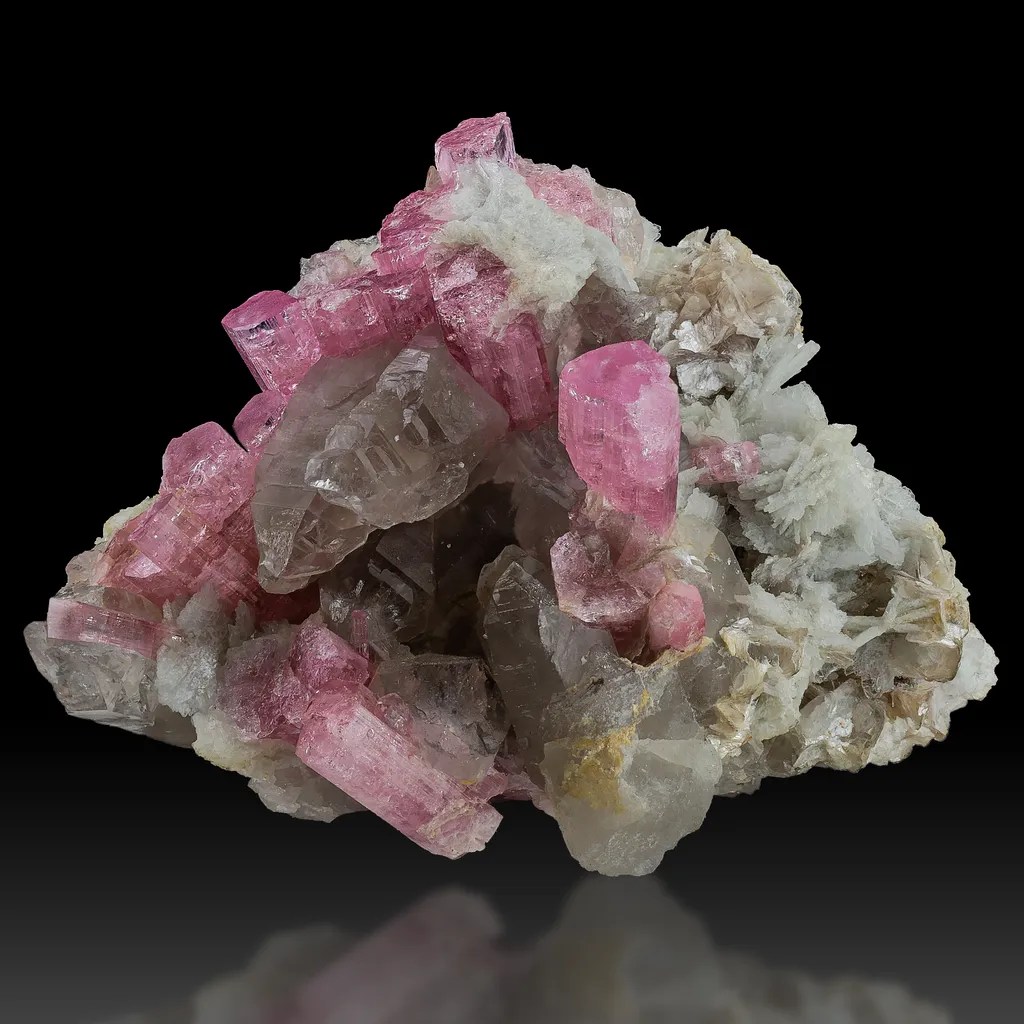
Photo: EarthWonders
Pachigram is a pegmatite field rather than a single cleanly bounded mine. Published geological summaries describe roughly 100 pegmatite dykes, ranging from short lenses about 10 m long to bodies as much as 1 km in length, with reported thicknesses from about 1 m to 20 m. The field is tied to a narrow, elongate graben-syncline in Upper Carboniferous to Lower Permian schist and slate, together with older Proterozoic schist and gneiss, all intruded by Oligocene granitic rocks. That setting places Pachigram squarely in the rare-metal pegmatite belt of eastern and northeastern Afghanistan, where strongly fractionated granitic melts generated Li, Be, Sn, Nb, Ta, Cs, Rb, and gem-mineral assemblages.
Three pegmatite types are consistently distinguished in the better summaries of the field. The first is an oligoclase-microcline, schorl-tourmaline, muscovite type, essentially the darker, more mica- and schorl-bearing phase. The second is albite-rich pegmatite with abundant phosphates, important because phosphate minerals are a useful sign of late-stage lithium pegmatite evolution. The third, and most economically significant in the literature, is the spodumene-microcline-albite to spodumene-albite type, reported particularly around Dega or Degha, Canigal or Tsanigal, and Pachigram proper. These spodumene-bearing dykes are the reason Pachigram appears in lithium resource summaries, even though collectors now encounter it chiefly as a pink-tourmaline locality.
The Degha pegmatites are a useful example of the field’s rare-metal character: they are reported as Li-rich dykes up to about 150 m long and 2.5 m thick, with spodumene, microcline, albite, cassiterite, and columbite-tantalite. Broader field summaries add lepidolite and polychromic tourmaline at Degha, and tourmaline occurrences at Tsotsum and Mualevi. Mindat’s current mineral list for the Pachigram field and its sublocalities includes albite, almandine, amblygonite, cassiterite, columbite-tantalite, microcline, muscovite, schorl, scorzalite, spodumene including kunzite, staurolite, and tourmaline. That list is not long by pegmatite standards, but it is focused: lithium silicates, feldspars, micas, phosphates, tin and niobium-tantalum oxides, and tourmaline.
The mining history is more opaque than the mineralogy. Pachigram is recorded in formal mineral inventories as a pegmatite field or occurrence, not as a large modern industrial mine with a continuous published operator history. Its specimen production is best understood as small-scale pegmatite mining and pocket extraction, with material moving through the Afghan-Pakistani gem and mineral trade, especially Peshawar dealers. Contemporary marketplace records show Pachigram specimens sold as cabinet and small-cabinet pink tourmaline combinations, commonly with quartz, smoky quartz, cleavelandite or albite, muscovite, and mica. Some labels also use spellings such as Pachighram, Pachigam, Pacigram, and Pachigram Mine, and some dealer descriptions place particular pieces in Kunar while database records place the field in Nuristan; for serious provenance work, those label variants should be preserved rather than “corrected away.”
Collecting access today should be treated as effectively closed to casual collectors. The field lies in remote high mountain terrain, not in a managed fee-digging district, and reliable access would require lawful permission, current security assessment, and local mineral-rights arrangements. For most collectors, Pachigram is a market locality: the meaningful questions are label integrity, whether the piece is genuinely from Pachigram rather than a nearby Nuristan or Kunar pegmatite field, and whether the condition, repair status, and associations match the specimen’s asking price.
Pachigram tourmaline is best known in the specimen trade as bright pink to cranberry-pink crystals, commonly assigned in dealer language to rubellite or pink tourmaline, though formal species identification is seldom supplied with individual commercial specimens. Good pieces show lustrous, striated prisms with clean flat or complex terminations, either as single upright crystals or as small clusters emerging from white albite or cleavelandite with smoky quartz and mica. Published field data record schorl-tourmaline-muscovite pegmatites and named tourmaline occurrences at Tsotsum and Mualevi, while recent market specimens show cabinet pieces with tourmaline crystals around 3–6 cm and matrix specimens up to large-cabinet scale. What separates a superior Pachigram tourmaline from an ordinary one is not color alone: the best examples combine vivid saturation, undamaged or convincingly restored terminations, open growth rather than embedded broken stubs, strong white feldspar contrast, and enough quartz or mica association to place the crystal visually in its pocket environment.
Quartz from Pachigram is usually a companion mineral rather than the main event, but it gives many of the field’s best tourmaline specimens their depth and contrast. In the market material, quartz appears as smoky to pale smoky crystals, sometimes sharp and partly exposed, set among white albite or cleavelandite and pink tourmaline; dealer records include large-cabinet tourmaline–smoky quartz–albite combinations as well as smaller pink tourmaline crystals paired with quartz. The finest quartz here is not judged as a standalone quartz locality would be judged: clarity and termination matter, but the real premium lies in how the smoky quartz frames the pink tourmaline, whether the quartz crystals are undamaged and naturally attached, and whether the matrix reads as a balanced pegmatite pocket rather than a repaired or over-trimmed assemblage.
Beyond tourmaline and quartz, Pachigram’s documented suite is a compact rare-metal pegmatite assemblage. Spodumene is the economically central lithium mineral, with kunzite reported from an unnamed gem-bearing pegmatite in the field. Degha and Tsanigal add albite, microcline, cassiterite, and columbite-tantalite, and Tsanigal is also the source of amblygonite and scorzalite in the compiled mineral list. Schorl and muscovite represent the more iron- and mica-rich pegmatite phases; almandine and staurolite belong to the metamorphic setting rather than the gem-pocket aesthetic. No well-documented type-locality mineral appears to be tied to Pachigram in the accessible mineralogical records, so the locality’s rarity value rests instead on its combination of lithium pegmatite mineralization and attractive pink tourmaline–feldspar–quartz specimens.
Pachigram is a locality where provenance discipline matters. Labels may read Pachigram, Pachigam, Pachighram, Pacigram, Mualevi, Mawi, Degha, Dega, Tsanigal, Canigal, Nuristan, Kunar, or Nangarhar, and not all of those terms occupy the same level of geographic precision. Older geological literature and modern collecting labels do not always agree on province names, so a contradictory-looking label is not automatically false; however, a specimen sold merely as “Afghanistan tourmaline” should not be upgraded to Pachigram without prior documentation, dealer testimony, or an old label.
Condition is the central buying issue. Pink Afghan tourmaline on feldspar and quartz commonly breaks along contacts, and Pachigram pieces are no exception. Recent market records include both “no repair” claims and at least one large-cabinet tourmaline-with-quartz specimen with a repaired main crystal. Inspect terminations, crystal bases, and contact points under magnification; look for glue lines at the base of tourmaline prisms, mismatched luster across a fracture, unnatural gaps filled with resin, and feldspar or mica artificially packed around a crystal. A repaired Pachigram specimen can still be desirable, but the repair should be disclosed and priced accordingly.
Treatments are less commonly documented than repairs, but claims of “natural pink color” and “treatment: none” appear in current dealer descriptions, which tells you what the market worries about. Pink tourmaline color should be evaluated in daylight-equivalent light, not just under high-saturation dealer photography. Beware over-bright images that make moderate pink material look electric. Also distinguish pink tourmaline from rubellite terminology: many listings use “rubellite” loosely, while formal species and variety assignments usually require more than a sales description.
The white matrix minerals create their own condition problems. Cleavelandite and albite blades chip easily, muscovite can shed, and smoky quartz points may have contacted the pocket wall or been bruised during extraction. On better specimens, tiny feldspar bruises are tolerable if the tourmaline is pristine; on lesser pieces, damaged white matrix can make the whole specimen look tired. Avoid soaking matrix specimens casually: mica books and feldspar clusters can trap water, dirt, or cleaning residues. For display, keep pink tourmaline away from strong, prolonged sunlight, since many lithium pegmatite colors are best treated conservatively even when a particular specimen has no documented fading history.
Market availability is uneven but real. Pachigram pink tourmaline has appeared in recent years as small-cabinet to large-cabinet specimens, with asking prices ranging from low four figures for small, clean crystals to five figures for cabinet clusters with saturated color, quartz, albite, and no visible repairs. The most desirable pieces combine strong color, sharp terminations, matrix balance, and credible locality history; loose or isolated single crystals, repaired matrix pieces, or specimens with vague Afghan labels should be valued more cautiously.