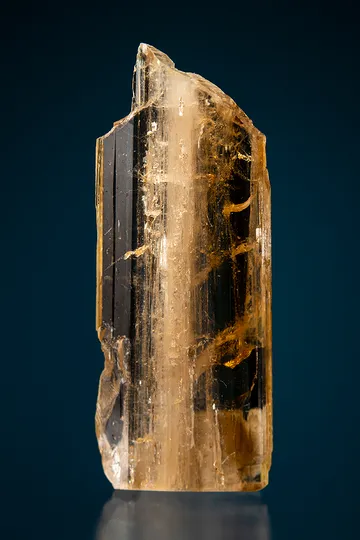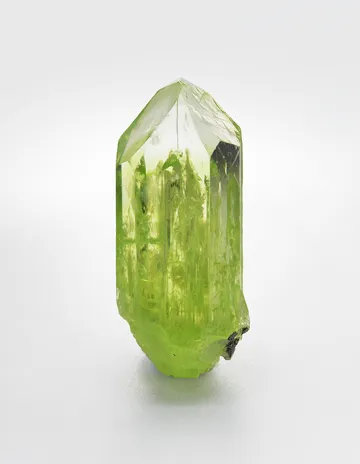
Diopside — classic clinopyroxene with prism crystals in chrome-green to violane violet, varied habits and marble localities prized by collectors.
Key facts
Diopside (CaMgSi2O6) is a classic clinopyroxene prized by collectors for its crisp prismatic crystals and rich color range—from pale to deep bottle-green, chrome-saturated greens, honey-browns, colorless, and, more rarely, violet “violane” (Mn-bearing diopside). It forms in metamorphosed marbles and skarns, as well as in ultramafic rocks and serpentinites, commonly alongside garnet (grossular/andradite), vesuvianite, wollastonite, calcite, forsterite, and graphite. Well-formed crystals are typically short to elongated prisms with bright vitreous luster and distinct striations.
Collectors seek diopside for its diversity of habits and matrix associations: sharp, gemmy chrome-green prisms from skarns; elegant green needles in graphite-rich marbles from Tanzania; or pastel-lavender violane slabs from Italy. A few localities produce superbly transparent crystals suitable for cutting (chrome diopside), but most high-end collector pieces are kept intact for their striking form and associations. While common as a rock-forming mineral, top-quality diopside crystals are relatively selective to a handful of famous occurrences.
Diopside occupies a sweet spot in collections: widely distributed and affordable at entry levels, yet capable of true showpieces from elite localities. Chrome diopside’s vivid emerald-like hue has pushed demand in both gem and specimen markets, while classic skarn assemblages—bright diopside on contrasting white calcite or with garnets—offer superb cabinet display potential. Modern finds from the Urals, Quebec, and Merelani sustain interest, and historical “violane” from the Italian Alps adds a unique, painterly color variant. Because diopside cleaves and can be brittle, pristine large crystals are not common—so fine pieces, especially on matrix, maintain steady desirability.
Below are renowned diopside sources with distinctive, collectible looks. Each locality has a long track record of producing representative or exceptional specimens.
Quebec’s iconic Jeffrey Mine (Asbestos, Québec) is a skarn and serpentine environment that has yielded sharp, lustrous diopside crystals ranging from pale to rich green, often with superb associations: grossular, vesuvianite, prehnite, calcite, and occasional chromian species. Crystals can be isolated, glassy prisms or graceful clusters standing on pale matrix for strong contrast. The best are gemmy at the tips with bright vitreous luster and excellent terminations.
Collectors prize Jeffrey diopsides for their balance of form, color, and context: textbook crystals on clean matrix, frequently accompanied by collectible species from the same complex deposit. Historically abundant, truly top pieces are now far less common and command premiums.
Merelani is best known for tanzanite, but it also produces elegant, slender chrome diopside crystals, bright bottle-green to emerald tones, often perched on graphite-rich schist or embedded with calcite and quartz. Many show excellent transparency and sharp terminations; some are needle-like sprays that sparkle against dark graphite for dramatic contrast.
These Merelani diopsides have a refined, modern aesthetic—clean, lustrous prisms with vivid color and minimal repairs relative to fragile skarn pieces. Unattached single crystals can be perfectly formed “jewels,” while true matrix specimens are prized for their texture and contrast.
By focusing on vivid color, crisp form, and attractive matrix, collectors can acquire diopside specimens that punch above their weight—combining classic skarn character with elegant aesthetics from a handful of world-class localities.