






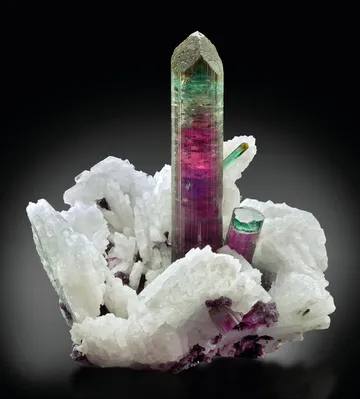
Minas Gerais, Brazil — premier mineral locality producing imperial topaz, aquamarine, tourmaline, and historic diamonds; highly prized by collectors.
Key facts
Minas Gerais is less a single mineral locality than a mineral kingdom: a state whose very name means “General Mines,” and whose collecting identity is built from three great mineral worlds. In the east and northeast, the Eastern Brazilian Pegmatite Province threads through the Araçuaí orogen in a swarm of lithium- and boron-rich granitic pegmatites that have yielded aquamarine, morganite, heliodor, elbaite, schorl, lepidolite, cleavelandite, spodumene, brazilianite, hureaulite, eosphorite, childrenite, fluorapatite, columbite-tantalite, cassiterite, and a long list of rare phosphates. In the south-central Iron Quadrangle, around Ouro Preto, Mariana, Itabira, Nova Lima, and Belo Horizonte, ancient greenstone belts, banded iron formations, quartz-carbonate-sulfide veins, and intensely weathered rocks supplied colonial gold, iron ore, hematite, quartz, pyrite, dolomite, euclase, and the world’s classic imperial topaz. Farther north, the Diamantina and Southern Espinhaço diamond fields anchor a separate alluvial and conglomeratic diamond history that helped make Brazil the dominant diamond source before South Africa.
For collectors, Minas Gerais matters because it repeatedly produced not merely gem rough, but world-standard crystals: pencil-bright imperial topaz from Ouro Preto, blue aquamarine prisms from the Teófilo Otoni–Marambaia and Jequitinhonha districts, sharp green-yellow brazilianite from Córrego Frio and nearby pegmatites, multicolored tourmalines from Cruzeiro, Pederneira, Jonas, Santa Rosa, Golconda, Aricanga, and Araçuaí, and matrix pieces in which white cleavelandite, lilac lepidolite, smoky or clear quartz, muscovite, feldspar, and gem crystals compose themselves into unmistakably Brazilian architecture.
Regional View
Country View
The best Minas Gerais specimens have a look that collectors recognize across a room. Pegmatite pieces tend to be clean, airy, and color-forward: glassy elbaite prisms with pink-to-green-to-black zoning; aquamarine standing pale blue against mica or schorl; brazilianite in bright yellow-green wedges on albite; quartz crystals that may be clear, smoky, rose, or included. Ouro Preto imperial topaz is more intimate and gemlike: elongated, chisel-terminated crystals in honey, sherry, peach, orange, pink, or reddish tones, often bright enough to read as gemstones even before cutting. Iron Quadrangle material is heavier and more metallic—hematite roses, specularite, quartz, sulfides, and historic gold-mining associations—while Diamantina diamonds belong more to gem history than cabinet-mineral abundance.

Photo: Wikimedia Commons

Photo: Wikimedia Commons

Photo: Wikimedia Commons
Search for specimens: View all specimens from Minas Gerais, Brazil
Minas Gerais is best understood as a cluster of mineral provinces rather than one mine. The great collector-producing belt of eastern Minas Gerais lies within the Eastern Brazilian Pegmatite Province, a vast field of granitic pegmatites related to late- to post-collisional magmatism of the Araçuaí orogen along the margin of the São Francisco craton. The pegmatites are commonly hosted by schists, gneisses, quartzites, and related metamorphic rocks, and many are strongly differentiated LCT-type bodies enriched in lithium, cesium, tantalum, boron, beryllium, phosphorus, and volatile components. Their internal zoning—quartz cores, feldspar-rich intermediate zones, albite-cleavelandite pockets, lithium mica zones, tourmaline-bearing cavities, and phosphate-rich replacement assemblages—created the conditions for both gem rough and superb crystallized specimens.
The mining geography is immense. Around Teófilo Otoni, Marambaia, Medina, Malacacheta, Pedra Azul, Araçuaí, Itinga, Coronel Murta, and the Jequitinhonha River valley, aquamarine and other beryls made the region famous. Around Governador Valadares, Conselheiro Pena, Galiléia, Divino das Laranjeiras, Mendes Pimentel, São José da Safira, and nearby districts, the collector record is dominated by elbaite tourmaline, rare phosphates, brazilianite, muscovite, feldspar, quartz, morganite, columbite-group minerals, cassiterite, and a suite of phosphate alteration minerals that has made the area indispensable to mineralogical literature. Mines such as Cruzeiro, Pederneira, Jonas, Golconda, Santa Rosa, Sapucaia, Córrego Frio, Telírio, and Gentil are not interchangeable names; each has its own pocket style, associated minerals, and specimen personality.
The classic Minas Gerais pegmatite mining pattern began with secondary deposits. In the humid tropical climate, feldspar-rich pegmatites decomposed deeply, sometimes into white kaolinized zones and red lateritic soils. Resistant minerals—quartz, beryl, tourmaline, topaz, and some phosphates—survived after the softer minerals broke down. Miners followed float, mica flakes, kaolin, quartz crystals, and gem fragments into eluvial hilltop deposits, colluvial slope “spills,” and alluvial gravels in valley bottoms. Many early aquamarine, topaz, and tourmaline finds were not extracted from open, fresh, hard-rock pockets but recovered from weathered pocket remains where the gem crystals lay loose in clay. Later, as accessible secondary deposits declined or high-value targets justified the work, underground galleries and hard-rock operations became increasingly important at major localities such as Cruzeiro and Pederneira.
Cruzeiro, in the São José da Safira area northwest of Governador Valadares, is one of the most productive tourmaline mines in the world. Its principal workings exploit several parallel pegmatite bodies intruding quartzite, with sharply defined contacts and gemstone zones close to the quartz core. Tourmaline there occurs as green, blue, pink, rubellite, bicolor, and multicolor elbaite, commonly associated with albite, lepidolite, quartz, mica, and garnet. The modern mine history passed from wartime mica interest to tourmaline production in the 1950s, then through the hands of Julius Sauer of Amsterdam Sauer before José Neves and Antonio De Assis Neves purchased it in 1982. Under the Neves family, Cruzeiro developed into a large, organized underground operation producing gem rough, carving material, cabochon material, and specimens. For specimen collectors, Cruzeiro is especially important because it has yielded large, striated, brightly zoned crystals, some with the classic pink-to-green-to-black sequence, and because significant production has continued into the modern market rather than existing only as old-stock legend.
Pederneira, also in the São José da Safira district, is a modern specimen mine of exceptional importance. It was first recognized as a wartime mica prospect in the 1940s, but its real collector fame began around 1999–2000 when upper workings and new tunnels entered pocket zones rich in elbaite, lepidolite, cleavelandite, quartz, muscovite, feldspar, spessartine, and accessory species. The mine’s pocket names—Keké’s Pocket, Sharon Stone, Rocket, Afghan, Porcupine, 18%, Grandon, Azul Bien Grande, Violet, Blue Gem, Cranberry Blue, and others—function almost like provenance labels in advanced tourmaline collecting. Pederneira specimens are prized for color architecture: cranberry-red interiors, green or blue-green outer zones, gemmy blue sections, scepters, “rocket” forms, matrix groups on white cleavelandite and lilac lepidolite, and delicate multi-crystal compositions that survived because the modern operation recognized specimen value.
The Jonas mine near Conselheiro Pena has a shorter but astonishing place in tourmaline history. The famous 1978 rubellite pocket in the Itatiaia hillside produced deep magenta-red to “cranberry” elbaite on albite, quartz, and lepidolite, including major matrix pieces and large cuttable crystals. The pocket was unusually clean for a pegmatite cavity, and many specimens reportedly required little washing. Fine Jonas material is now mostly older collection material, and the name carries real market weight when attached to a verifiable, old-provenance specimen.
Golconda, especially Golconda III, is tied to green tourmaline lore. Its 1961 pocket yielded a huge quantity of exceptional “emerald”-green tourmaline, and older accounts treat the find as a benchmark for Brazilian green tourmaline color and clarity. Santa Rosa, Aricanga, and related Governador Valadares-area mines add further depth to the region, especially for blue, green, pink, and multicolored elbaite. The Araçuaí districts to the northeast contributed a separate tourmaline tradition, with rubellite, green, blue, and bicolored crystals from numerous mines around Araçuaí, Coronel Murta, Itinga, and Taquaral.
Córrego Frio, in the Linópolis–Divino das Laranjeiras–Mendes Pimentel area, is one of Minas Gerais’ most important mineralogical localities. It is the type locality for brazilianite, scorzalite, and souzalite, and it produced gemmy yellow to greenish-yellow brazilianite crystals associated with albite, muscovite, quartz, tourmaline, and phosphate assemblages. Nearby Telírio workings have produced much of the high-quality brazilianite seen in more recent trade, but Córrego Frio type-locality material retains special historical authority.
Sapucaia, at Sapucaia do Norte near Galiléia, is another rare-phosphate landmark. The lithium-rich pegmatite has yielded a remarkable suite of phosphate minerals and is recorded as a type locality for multiple species, including moraesite and tavorite among others. Sapucaia material is more specialized than the bright gem-tourmaline material for which Minas Gerais is popularly known, but for systematic collectors of phosphates the name is fundamental.
Ouro Preto belongs to a different geological and collecting tradition. The imperial topaz district lies in the Iron Quadrangle, in a landscape of intensely weathered rocks, carbonate units of the Minas Supergroup, quartz-hematite-dolomite-euclase veins, and long gold-mining history. The principal topaz mines include Capão do Lana and Vermelhão, with JJC also prominent in more technical studies. Capão is known as one of the oldest and most productive mechanized imperial topaz mines in the district, using earthmoving, water, and recovery methods to process thick brown overburden for crystals. The topaz occurs in a range of yellow, orange, sherry, peach, pink, and pinkish-purple colors, with the rarest attractive hues commanding strong gem and specimen interest. Crystals are often elongated and lustrous but may be fractured; the best undamaged miniature and small-cabinet crystals are among the most desirable Brazilian mineral specimens.
The Iron Quadrangle also frames the older gold and iron identity of the state. Ouro Preto, Mariana, Nova Lima, Passagem de Mariana, Itabira, and neighboring districts are associated with gold in quartz-carbonate-sulfide veins, banded iron formation, hematite, magnetite, pyrite, and related minerals. These localities rarely feed the fine-mineral market with the same frequency as the eastern pegmatites, but they give Minas Gerais its historical foundation: the colonial gold rush, the rise of Vila Rica/Ouro Preto, the Escola de Minas tradition, and the industrial iron-ore operations that continue to shape the region.
Diamantina and the Espinhaço Range add the diamond chapter. Diamonds were found in the early 1700s in alluvial deposits associated with the Jequitinhonha drainage near Arraial do Tijuco, later Diamantina. These deposits were historically decisive because Brazil became the dominant western diamond source before South African kimberlite mining transformed the market. For mineral-specimen collectors, loose diamonds with reliable Minas Gerais provenance are more gemological than display-oriented, but the region’s historical and geological importance is enormous.
Collecting access today is not comparable to a public rockhounding district. Most important Minas Gerais localities are private mines, active industrial operations, exhausted workings, claimed garimpos, or environmentally regulated areas. The best route for collectors is through documented specimens: old labels, mine-specific provenance, dealer records, museum references, and pocket histories. Casual entry into mines such as Cruzeiro or Pederneira is not appropriate, and abandoned pegmatite workings can be unstable, deep, oxygen-poor, flooded, or legally inaccessible. Serious collectors should treat “Minas Gerais” as a state-level label that invites further work; whenever possible, refine the provenance to mine, district, municipality, pocket, and collection history.
Minas Gerais is not one quartz locality but a whole quartz province, and the best labels separate very different looks: the Corinto area is the classic source for water-clear prismatic rock-crystal clusters, commonly bright, glassy, terminated or doubly terminated, dug by hand from sandstone-hosted pockets in the region west of Tomás Gonzaga; Diamantina and the Espinhaço Range add smoky, tabular, faden-like and included quartz from hydrothermal veins; the eastern pegmatite belt around Governador Valadares, Conselheiro Pena, Galiléia, Itinga, Virgem da Lapa and São José da Safira supplies quartz as pocket matrix with elbaite, albite-cleavelandite, lepidolite, muscovite, beryl and phosphates; and the Itabira–Ouro Preto side of the state is important for included material, especially rutile-bearing quartz. Good Minas Gerais quartz is judged less by mere size than by freshness: undamaged terminations, high transparency, glassy luster, elegant intergrowth, balanced double terminations, crisp scepter or faden character where present, and inclusions that are sharp and internal rather than muddy. Ordinary pieces are abundant—milky points, bruised clusters, over-cleaned plates, or broad “Brazil” labels without a mine or district—while the specimens serious collectors chase have a locality-specific personality: Corinto clarity and architecture, Diamantina smoky form, Pederneira or Jonas pegmatite associations, or clean rutile, chlorite, kaolinite or iron-oxide scenes suspended in the crystal.
Elbaite is the aristocratic tourmaline species of Minas Gerais, and the state’s finest pieces come from the lithium-rich pegmatites of the Governador Valadares, Conselheiro Pena, São José da Safira, Araçuaí-Itinga and Doce Valley districts: Cruzeiro for long-running production of green, blue-green, indicolite, pink, rubellite, bicolored and watermelon crystals; Jonas for the legendary 1978 rubellite pocket near Itatiaia, where cranberry-red crystals occurred with albite, quartz and pink lithium mica; Pederneira for highly aesthetic gem pencils, blue-green crystals, pink-to-red terminations, matrix groups on cleavelandite, lepidolite and quartz, and named pockets such as Rocket, Afghan, Porcupine, Big Blue, Grandon and Blue-Green; and Golconda, Santa Rosa and Aricanga for additional classic material. Habits range from slender striated prisms and doubly terminated pencils to thick rubellite logs, sceptered crystals, repaired pocket groups and loose gem crystals, with sizes from thumbnail singles to cabinet and museum specimens; the state’s major tourmaline literature records individual crystals and matrix groups in the tens of centimeters, and the Jonas find included rubellites around a meter long. The collector premium rests on saturated natural color, transparency, complete terminations, pleasing color zoning, unrepaired or honestly repaired pocket relationships, and lively contrast against snow-white albite, lavender lepidolite or bright quartz; dull blackened roots, incomplete broken pencils, heavy clay staining, vague “Brazilian tourmaline” labels and undisclosed restoration separate ordinary material from true Minas Gerais elbaite.
Pyrite from Minas Gerais is not the state’s most glamorous export, but it is important in the gold and manganese mining districts, especially when it preserves the ore context rather than appearing as anonymous brassy grains. The Morro Velho mine at Nova Lima is the key collector reference: a deep historic gold mine where pyrite belongs with quartz-carbonate vein material, siderite or dolomite, pyrrhotite, arsenopyrite, native gold and locally cubanite or scheelite; old specimen suites more often feature pyrrhotite, siderite and quartz, but pyrite is part of that sulfide assemblage and can occur as sharp brassy crystals, granular masses, or alteration/pseudomorph relationships tied to pyrrhotite-rich ore. In the Ouro Preto–Mariana and broader Quadrilátero Ferrífero gold belt, pyrite is again an ore and gangue mineral with quartz-carbonate veins, arsenopyrite and pyrrhotite, while the Morro da Mina manganese mine at Conselheiro Lafaiete has produced small pyrite crystals in calcite-rich matrix alongside more famous manganese silicates and carbonates. Good Minas Gerais pyrite specimens are therefore contextual: crisp crystals on calcite, quartz, siderite or dolomite, clean metallic luster, stable condition, and a label to Morro Velho, Morro da Mina, Ouro Preto, Mariana or another specific mine; ordinary pieces are massive sulfide chunks, pyrite-stained quartz, or generic “Minas Gerais” material without the geological association that makes the specimen meaningful.
Beryl is one of the defining minerals of the Minas Gerais pegmatite belts, and in collector use the name covers a broad suite: blue aquamarine, colorless goshenite, yellow to greenish heliodor-type crystals, pink morganite, and historically important deep-blue Maxixe-type beryl. The northeastern and eastern pegmatite fields described by Keith Proctor—especially the Teófilo Otoni–Marambaia, Jequitinhonha River, Araçuaí-Itinga, Virgem da Lapa, Governador Valadares and Conselheiro Pena districts—produced gem beryl in pockets and coarse pegmatite zones with quartz, albite, microcline, muscovite, tourmaline, lepidolite, topaz, spodumene and phosphates. Named collector benchmarks include Medina and Pedra Azul for aquamarine, the Sapucaia pegmatite near Galiléia for very large beryl crystals, Dos Barras for blue-capped yellow beryl, Resplendor and Pederneira for morganite, and the Piauí valley near Taquaral/Itinga for Maxixe beryl first recognized in the early twentieth century. Minas Gerais beryl can range from opaque, blocky, meter-scale pegmatite crystals to transparent terminated aquamarines in the 10–30 cm class and smaller matrix pieces; the best are sharply hexagonal, naturally terminated, strongly colored for the variety, internally clean enough to transmit light, and preferably still carrying feldspar, mica or quartz matrix that fixes the locality. Ordinary examples are pale, etched, fractured or sawed sections, and collectors should be especially alert to vague “Brazilian beryl” labels and to Maxixe-type material whose deep blue color is famously light-sensitive and not equivalent to stable aquamarine blue.
“Tourmaline” on a Minas Gerais label may mean gem elbaite, black schorl, color-zoned crystals not analytically assigned to species, or mixed pocket groups where species-level naming is secondary to locality and aesthetics. The state’s collector identity is built on lithium pegmatites: Cruzeiro, Aricanga, Golconda, Santa Rosa and Jonas around the Governador Valadares district; Pederneira at São José da Safira; and the Araçuaí-Itinga and Jequitinhonha districts, where tourmaline occurs with albite-cleavelandite, quartz, muscovite, lepidolite, microcline, beryl, spessartine, cassiterite and phosphate minerals. Colors cover nearly the whole tourmaline vocabulary—green verdelite, blue-green and blue indicolite, pink and cranberry rubellite, watermelon sections, polychrome pencils, black schorl and dark green-to-black root zones—with habits from long striated prisms to doubly terminated pocket crystals, scepters, spray-like groups and tourmalines perched on quartz or cleavelandite. Minas Gerais also has an important “matrix specimen” tradition: Pederneira and Jonas pieces are most convincing when the tourmaline is naturally integrated with white albite, lavender to pink lepidolite or clear quartz rather than simply glued to an attractive base. The finest specimens combine vivid color, transparency, intact terminations, orientation, pocket freshness, strong provenance and disclosed preparation; lesser pieces are broken pencils, heavily repaired composites, muddy black roots, or attractive but imprecise “Brazil tourmaline” specimens that could have come from any number of pegmatites.
In Minas Gerais pegmatites, albite earns its collector importance mostly in the cleavelandite habit: white, cream or faintly bluish platy blades forming fans, rosettes, jackstraw aggregates and snowy pocket linings that set off tourmaline, brazilianite, lepidolite, quartz and beryl. Pederneira is the modern showpiece locality, where albite occurs both as massive or sugary core-zone material and as bladed cleavelandite in highly evolved cavities; named Pederneira pockets produced tourmalines on cleavelandite, tourmalines with cleavelandite and lepidolite, and quartz-tourmaline groups in which the feldspar is visually indispensable. Jonas adds historic rubellite associations, including albite underfoot and on matrix in the great 1978 pocket, while Linópolis and Córrego Frio are important for albite with brazilianite and phosphate minerals; the broader eastern Minas Gerais pegmatite province carries albite with muscovite, quartz, microcline, schorl-elbaite tourmaline, spessartine, cassiterite, apatite and rare phosphates. Good albite specimens from the state are not just white filler: the blades should be sharp, lustrous, undamaged along the thin edges, and arranged in a way that gives architecture and contrast to a specimen. Ordinary pieces are chalky, massive, bruised or visually subordinate; the better ones make the colored minerals look better while still being a collectable feldspar in their own right.
Brazilianite is a Minas Gerais signature mineral, with the classic district centered on Linópolis, Divino das Laranjeiras, in the Conselheiro Pena pegmatite region. The type locality is the Córrego Frio mine, and the nearby Telírio mine/claim has remained one of Brazil’s principal sources of fine brazilianite crystals for decades. The best material shows glassy yellow, lemon-yellow to chartreuse or yellow-green monoclinic crystals, commonly prismatic to wedge-terminated and sometimes doubly terminated, on pale albite, cleavelandite, muscovite, feldspar or quartz; pocket pieces may be thumbnails with a single sharp crystal, cabinet specimens with several crystals arranged on albite, or matrix plates in which muscovite books add texture behind the green-yellow phosphate. Córrego Frio is historically deeper than a specimen name: the pegmatite also yielded the type minerals scorzalite and souzalite, and descriptions of its zonation place brazilianite-bearing cavities near quartz, muscovite, albite and cleavelandite-rich portions of the body. Collectors separate fine Linópolis brazilianite by color saturation, transparency, undamaged tips, vitreous luster, attractive placement on contrasting white feldspar, and precise labels—Córrego Frio carries type-locality weight, while Telírio has its own long production history. Pale, etched, chipped or detached crystals are common enough; a sharp green-yellow crystal naturally seated on albite or muscovite is the Minas Gerais prize.
Minas Gerais aquamarine is the blue beryl that made the state a permanent name in gem pegmatites, especially through the Medina–Pedra Azul area, the Jequitinhonha River valley, Virgem da Lapa, Santa Maria de Itabira and related northeastern districts. Crystals occur in granitic pegmatites as hexagonal prisms, etched prisms, tapering or skeletal-looking crystals, gemmy sections and matrix pieces with quartz, albite, muscovite, microcline and tourmaline; colors run from pale icy blue and blue-green to stronger blue, with truly saturated, transparent, stable color carrying the premium. Medina is particularly valued for elegant, gemmy aquamarine crystals, including strongly colored etched examples around 20 cm, while the Angico mine in the Medina pegmatite field yielded major late-1990s crystals large enough to become Mineralogical Record cover material; Pedra Azul is tied to the giant rough crystal that produced the celebrated Dom Pedro aquamarine carving, though most collectible specimens are far smaller. Fine Minas Gerais aquamarines are judged by clean terminations, brightness, depth of blue, freedom from distracting fractures, natural etching that enhances rather than weakens the form, and honest locality detail. Ordinary pieces are pale, cloudy, broken prism sections or polished/wired gem rough; exceptional pieces retain the unmistakable pegmatite-crystal authority of a natural beryl prism, ideally with matrix or an old label naming Medina, Pedra Azul, Santa Maria de Itabira, Virgem da Lapa or another specific field.
Muscovite is the quiet engine behind many Minas Gerais pegmatite specimens: it occurs as silvery, tan, greenish, reddish, book-like, platy or pseudohexagonal mica crystals in the same evolved bodies that produce tourmaline, beryl, albite, quartz, lepidolite and phosphates. At Pederneira, the mine’s story began not with tourmaline glamour but with a World War II mica discovery, when muscovite books from an outcrop were gathered and sold during the wartime demand for sheet mica; later Pederneira specimens place muscovite in the broader pocket assemblage with albite-cleavelandite, lepidolite, quartz and elbaite. At Jonas, muscovite is part of the lithium pegmatite mineral list and a later pocket in the early 1990s produced reddish muscovite crystals several centimeters across on albite, a much more specimen-worthy expression than ordinary mica sheets. Córrego Frio and Linópolis brazilianite pieces also commonly use muscovite as a pale micaceous matrix or accent, and eastern Minas Gerais pegmatites in general show muscovite with albite, microcline and quartz in wall and core-zone settings. Good Minas Gerais muscovite has well-formed books or rosettes, bright pearly luster, sharp edges, attractive color, and association with a named pegmatite mineral such as brazilianite, rubellite, aquamarine or cleavelandite; ordinary mica is abundant, flexible, cleaved and visually flat, so a specimen needs form, locality and association to rise above “pegmatite mica.”
Lepidolite from Minas Gerais is most collectible when it is crystallized lithium-mica matrix in a tourmaline pocket, not simply a purple massive mica chunk. The Jonas Mine provides the classic historical image: the great rubellite pocket near Itatiaia contained red elbaite with albite, transparent quartz and pink lithium-bearing mica, and smaller gem crystals were famously surrounded by intricate clusters of pink lepidolite. Cruzeiro adds lepidolite-bearing combinations with green, blue-green, indicolite, pink, rubellite, bicolored and watermelon tourmaline, while Pederneira made lavender to purple lepidolite, cleavelandite and quartz part of the visual language of modern Minas Gerais tourmaline specimens. Habits are scaly aggregates, micaceous books, rosettes, sparkling crusts and pocket linings; colors range from pale pink and lilac to lavender, purple, tan-pink or whitish, depending on composition, alteration and pocket conditions. The best pieces have sparkling, fresh mica integrated naturally with gem elbaite, albite or quartz, and the lepidolite should frame the colored crystal rather than merely pad the matrix. Ordinary material is soft-looking, massive, cleaved, earthy or unattributed; fine Minas Gerais lepidolite has pocket freshness, delicate crystal texture, color contrast and a precise label to Jonas, Cruzeiro, Pederneira or another named pegmatite.
Smoky quartz from Minas Gerais spans several collector styles, from loose doubly terminated crystals and small groups from the Diamantina region to smoky-citrine and included quartz from Corinto and other sandstone or hydrothermal quartz districts, plus pegmatite-pocket smoky crystals associated with albite, muscovite, tourmaline, lepidolite and beryl in the eastern part of the state. Diamantina material is especially recognizable when it shows sharp, glassy double terminations, skeletal or etched growth, tabular habit, faden-like structures or smoky zoning rather than simple brown points; some pieces are matrixless pocket crystals, while others are clusters or unusual forms that trade on sculptural shape as much as color. The color range is pale tea, champagne, gray-brown, medium smoky and darker morion-like brown, with the finest natural-looking specimens showing depth of color while still transmitting light through clean interiors. Good Minas Gerais smoky quartz is crisp, lustrous, undamaged, well terminated, and ideally has a specific district or mine label; inclusions, phantoms, rehealed surfaces, scepters or double terminations add value when they enhance the specimen. Ordinary smoky quartz from Brazil is plentiful, so collectors should be cautious with very dark, uniform, unlabeled points, polished pieces, and generic “Minas Gerais” material unless the form, provenance or associations clearly justify the attribution.
Rutile in Minas Gerais is most familiar to collectors as golden, reddish brown, black or hairlike inclusions in quartz, but the state also has important free or matrix rutile occurrences tied to the Espinhaço Range and iron-rich districts. The Diamantina region is known for quartz, anatase and rutile associations in hydrothermal veins and related diamond-field geology; the Itabira area has produced quartz crystals filled with broad golden rutile blades; and the Ouro Preto–Antônio Pereira side of the Quadrilátero Ferrífero includes rutilated quartz in manganiferous itabirite and quartz veins, where needles may be tiny, black to red-black and aligned through the host quartz. In pegmatite and vein specimens, rutile may appear as sprays, acicular lattices, embedded needles, dense parallel bundles, or small twinned crystals, with hematite, quartz, anatase, muscovite and iron oxides among the recurring companions depending on the district. Fine Minas Gerais rutile is about geometry and visibility: bright metallic needles that stand out cleanly in transparent quartz, broad golden blades suspended without cloudiness, attractive crossing patterns, or sharp free crystals on a credible matrix. Ordinary pieces have muddy inclusions, fractured quartz, weak contrast or polished novelty treatment; the best retain natural crystal form and a precise label to Itabira, Diamantina, Ouro Preto or another specific Minas Gerais occurrence.
Minas Gerais topaz means two rather different collector worlds, and the label should make clear which one is being offered: the imperial topaz belt west of Ouro Preto, centered around Rodrigo Silva, Dom Bosco, Boa Vista, José Correia, Vermelhão/Saramenha, and Capão do Lana, and the granite-pegmatite topazs of the Jequitinhonha and Doce Valley districts. The Ouro Preto material is the classic prize: orthorhombic prismatic crystals, usually small by cabinet standards—many under 2 cm, though historic giants are recorded—ranging from pale yellow through golden, orange, sherry, peach, pink, and rarely reddish or purplish tones. They formed in weathered quartz–potassium-feldspar hydrothermal veins and kaolinitic pockets in the deeply altered rocks of the Quadrilátero Ferrífero, with quartz, euclase, hematite, and rutile as the best-known associates. Capão do Lana is especially important because its clay-hosted recovery has yielded a broad run of loose crystals; those carefully hand-extracted from exposed white kaolinite seams tend to be sharper and less bruised than pieces knocked through hydraulic washing. The finest Minas Gerais topaz specimens have saturated natural color, transparency, crisp terminations, and minimal cleavage damage; a vivid, untreated imperial crystal with strong luster and honest provenance to Ouro Preto is far more desirable than a pale, abraded, or ambiguously “pinked” stone, while pegmatitic colorless to blue topaz from places such as Virgem da Lapa is judged more on size, glassiness, termination quality, and association with albite, quartz, tourmaline, or hydroxylherderite than on imperial color.
Heliodor from Minas Gerais is best approached as a yellow beryl of the state’s eastern pegmatite belt, with Padre Paraíso—especially Córrego Vermelho and the broader Padre Paraíso region—among the most recognizable modern specimen labels. The better crystals are slender to medium-thick hexagonal prisms, often etched or slightly frosted on the prism faces but capable of carrying bright, gemmy, water-clear caps; documented specimen examples range from elegant 2–3 cm miniature crystals to much larger, wand-like pieces over 10 cm long, and double-terminated crystals are a meaningful plus rather than a casual detail. Color is the decisive first impression: true lemon to deep golden yellow, preferably without the greenish cast common in less attractive beryl, separates a serious heliodor from a merely yellowish aquamarine-family specimen. Typical Minas Gerais pegmatite context is quartz, smoky quartz, albite or cleavelandite, muscovite, feldspar, topaz, and other beryllium minerals, though many heliodors reach the market as loose crystals rather than matrix pieces. The best collector pieces combine bright yellow saturation, transparency through the edges or cap, sharp termination geometry, and limited pocket etching; ordinary examples are opaque-centered, chipped, washed-out yellow-green, or too plain in form to compete with the state’s superb aquamarines and morganites.
Minas Gerais hematite is anchored by the Iron Quadrangle and above all Itabira, a name so tied to iron that even locality literature notes specular hematite, martite, quartz, kaolinite, and the jacutinga ore style in the same geologic conversation. For collectors, Itabira is not merely “ore”: it has yielded some of the state’s most satisfying metallic specimens, from thick, blocky, modified rhombohedral crystals to overlapping platy aggregates with mirror-bright steel-black faces, and martite pseudomorphs preserving magnetite-like octahedral form. The broader district’s banded iron formations and high-grade hematite ores make context important, because a cabinet specimen with clean crystallography is a very different object from a massive iron-ore hand sample. Fine Minas Gerais hematite should have a bright, unoxidized metallic sheen, crisp edges, and sculptural relief; the best platy pieces show parallel, almost architectural stacking without looking crushed, while blocky crystals are valued for complete faces, striations, and freedom from distracting bruises. Quartz association can add contrast, but hematite from this part of Brazil usually earns its place by luster and form alone: a heavy, lustrous Itabira crystal with minimal rub is a classic, whereas dull, granular, or amorphous material belongs more to the ore shelf than the fine-specimen cabinet.
Schorl is the black backbone of many Minas Gerais pegmatites, occurring alongside the better-publicized elbaite, beryl, quartz, albite, muscovite, lepidolite, and phosphate minerals of the Jequitinhonha and Doce Valley fields. Labels from Virgem da Lapa, including Toca da Onça and Xanda, and from the great eastern pegmatite districts around Governador Valadares, São José da Safira, Conselheiro Pena, Itinga, and Linópolis are all credible in the specimen market, but the collector should distinguish true schorl from very dark elbaite or foitite where locality suites overlap. The typical habit is a vertically striated, opaque black, trigonal-prismatic tourmaline crystal, from small sprays on albite to stout cabinet-size prisms embedded in quartz or feldspar; in some rose-quartz and beryl-bearing pegmatites, schorl occurs as large dark rods or blades cutting through pale host minerals and giving the specimen its graphic contrast. The best Minas Gerais schorl is not just “black tourmaline”: it is lustrous, sharply terminated, well isolated, and compositionally dramatic on white cleavelandite, smoky or milky quartz, microcline, or pink-to-green tourmaline-bearing matrix. Ordinary pieces are broken black sticks in feldspar; good pieces have termination, striation, balance, and a matrix that turns a common pegmatite accessory into a finished mineral specimen.
Euclase is one of Minas Gerais’s connoisseur minerals, with the historic Ouro Preto district—especially Dom Bosco, Boa Vista near Rodrigo Silva, and the topaz-bearing Capão do Lana area—forming the classic Brazilian story. In the Ouro Preto belt it occurs with yellow to imperial topaz in clay pockets and quartz-rich veins, and at the Boa Vista euclase pegmatite it is recorded with muscovite, quartz, smoky quartz, rutile, schorl, almandine, and topaz. Collector crystals are typically slender to tabular monoclinic forms, colorless, pale blue, blue-green, greenish, or rarely a stronger blue; documented Dom Bosco and Boa Vista examples around 2.5–3.5 cm are already significant, and matrix pieces with euclase perched on muscovite or albite are far scarcer than loose crystals. What separates the best Minas Gerais euclase is a combination of water clarity, lively blue or greenish color, undamaged termination, and the clean, glassy luster that makes the species look deceptively delicate. Because euclase has perfect cleavage, even a fine crystal must be examined for edge nicks, rehealed breaks, and bruised terminations; an intact, doubly terminated or sharply terminated Ouro Preto crystal with visible color and good provenance is a far more important specimen than a larger but pale, contacted, or water-worn piece.
Minas Gerais hureaulite is most closely associated with the phosphate-rich pegmatites of the Doce Valley, especially the Cigana claim, also known in older specimen usage as the Jocão pegmatite, at Barra do Cuieté, Conselheiro Pena, with additional collectible material from the Linópolis area. The Cigana material is the state’s showy style: short prismatic to stubby monoclinic crystals in salmon-pink, orange-pink, pink-tan, or reddish tones, commonly in drusy groups and miniature to small-cabinet specimens rather than large individual crystals. The 2006-era finds placed bright hureaulite on the market with associations such as rockbridgeite, correianevesite, phosphosiderite, strengite, quartz, and other secondary pegmatite phosphates; the best examples show translucent, lustrous crystals around a few millimeters up to roughly 5–7 mm on contrasting dark or blue phosphate matrix. Pomarolli and Linópolis hureaulite can also be attractive, usually in smaller, delicate druses with pink to yellowish-pink color. Because the species sits in a complex alteration suite, analysis and reliable provenance matter, especially where small pink phosphates can be visually confusing. A top Minas Gerais hureaulite specimen has rich color, sharp crystal definition, lively sparkle, and aesthetic contrast with its phosphate matrix; dull crusts, muddy aggregates, or unverified pink coatings are much less compelling.
Beryllonite from Minas Gerais belongs to the rare-phosphate side of the Eastern Brazilian pegmatite province, with Linópolis, Divino das Laranjeiras—especially the Almerindo and Telírio claims—providing the most familiar collector labels. It is a sodium beryllium phosphate, NaBePO4, and the Minas Gerais material typically appears as colorless to white, transparent to translucent tabular crystals, commonly etched, striated, or plate-like rather than equant, and far less abundant than the district’s brazilianite, albite, muscovite, and ordinary pegmatite minerals. Almerindo is recorded for tabular etched crystals to about 3 cm, while Telírio has produced attractive later finds, including beryllonite with albite, fluorapatite, and brazilianite; small, complete, water-clear crystals perched on contrasting matrix can be more important than larger but chalky or shapeless pieces. Linópolis beryllonite is especially desirable when the crystal edges are sharp enough to show the monoclinic tabular habit, the transparency is high, and the specimen is honestly attributed to a specific claim. Good pieces are crisp, glassy, and undamaged, preferably in association with brazilianite or snowy albite; ordinary ones are cloudy, etched beyond recognition, or sold under vague “Minas Gerais” labels that strip away much of the locality value.
Minas Gerais rose quartz is important not because the state produced masses of pink quartz—many places did—but because Galiléia produced true crystallized rose quartz, one of the rarest and most visually distinctive quartz habits in the mineral world. The key localities are Berilo Branco near Sapucaia do Norte, the Sapucaia mine or Proberil claim area, and the Pitorra and Alto da Pitorra claims at Laranjeiras; older labels often blur “Sapucaia” and “Berilo Branco,” so precise provenance matters greatly. The classic style is small pink euhedral quartz crystals arranged as belts, halos, rosettes, fans, sprays, or crowns on smoky quartz, colorless quartz, microcline, albite, and muscovite, with the celebrated 1959–1961 Berilo Branco production setting the standard for pink-on-smoky compositions. Individual crystals in fine pieces are often only millimeters to a couple of centimeters, and a sharply formed rose-quartz crystal around 2 cm is already remarkable for the variety. The best Minas Gerais examples show real crystal faces, strong but natural pink color, balanced placement on contrasting smoky or white matrix, and minimal bleaching or abrasion; ordinary pieces are merely massive rose quartz, pale broken clusters, or locality-imprecise “Sapucaia” specimens with no crystallographic distinction.
Childrenite from Minas Gerais is a specialist’s pegmatite phosphate, best known in attractive specimen form from the Poço d’Antas claim in the Piauí Valley at Taquaral, Itinga, and also recorded in the complex phosphate suites of Ilha and Linópolis. The Poço d’Antas material is distinctive: brown, caramel, cinnamon, or reddish-brown prismatic crystals, commonly elongated, lustrous, and sharply terminated, sometimes doubly terminated, on quartz, albite, orthoclase, feldspar, or associated with pale spherical roscherite aggregates; documented specimens from the 2006 find show main crystals around 1–2 cm, which is quite respectable for the species. Other Minas Gerais occurrences may sit close to the childrenite–eosphorite series, so analysis is not academic fussiness but good collecting practice, especially where small brown phosphate prisms are mixed with altered or pseudomorphed material. The best pieces have isolated, well-defined crystals with glossy faces, clear terminations, and a contrasting pale matrix or companion roscherite; lesser specimens are brown crusts, ambiguous series labels, or broken phosphate aggregates without the sharp form that made the Poço d’Antas find so appealing.
Minas Gerais fluorapatite is most collectible from pegmatites, with the Sapo Mine at Ferruginha, Conselheiro Pena, providing the best-known modern specimen style and Jonas, Virgem da Lapa, adding important gem-quality pink material to the state’s record. Sapo fluorapatite commonly occurs as lustrous hexagonal to tabular crystals on white bladed albite or cleavelandite with muscovite, quartz, and other pegmatite minerals; colors range from deep olive green and mossy green through blue-green to deep blue, often with zoning that concentrates color in the crystal centers and leaves paler rims. Good Sapo specimens tend to be miniature to cabinet size, with individual apatite crystals commonly under 2 cm but documented groups and crystals exceeding that, and the best examples stand out because the apatites are isolated, sharply faced, mirror-lustrous, and bright against snowy albite. Virgem da Lapa and Jonas material can be quite different, including sharp pink to violet-pink crystals associated with albite and tourmaline in small vugs. Because apatite is softer and more easily bruised than the quartz and feldspar around it, condition is central: a clean, undamaged, zoned crystal on aesthetic albite is far better than a larger but rubbed, edge-chipped, or muddy cluster.
Morganite from Minas Gerais comes from the same lithium- and beryllium-rich pegmatite culture that made the state famous for elbaite, aquamarine, albite, lepidolite, and rare phosphates, with Pederneira, Jonas/Itatiaia, Linópolis, and other eastern pegmatite districts supplying the most interesting specimen associations. As a pink beryl, it appears as hexagonal prisms to blocky crystals, pale blush to salmon-pink, sometimes etched, heavily striated, or modified at the dipyramidal corners; many crystals are removed as gem rough, so intact matrix specimens are far scarcer than loose chunks. Pederneira is the glamour locality for combinations: morganite can occur with elbaite or schorl tourmaline, quartz, albite or cleavelandite, lepidolite, and columbite-tantalite, and the famous large tourmaline–quartz–morganite–albite specimen known as the “King of Pederneira” shows how dramatically pink beryl can function as part of the mine’s pocket architecture. Minas Gerais also has a history of large morganite production for cutting, including substantial finds in the Itatiaia/Jonas area, but specimen value depends less on bulk and more on crystallography. The finest pieces show pleasing pink color, translucency to gem zones, recognizable beryl form, and undamaged association on albite or tourmaline-rich matrix; ordinary morganite is pale, massive, etched, or simply faceting rough with no display presence.
Anatase from Minas Gerais is a Diamantina-region mineral in the collector imagination, rooted in the Espinhaço Range where hydrothermal quartz veins and diamond-bearing alluvial gravels have produced anatase, rutile, and quartz associations for more than a century. The common older placer crystals are usually small, pseudo-octahedral, gray-blue to brownish, and sometimes water-worn, but the famous Datas de Cima and Caxambu occurrences south of Diamantina added a more dramatic vein style from the mid-1990s onward. These anatases can be colorless, ocher, golden yellowish, tan, caramel, or dark brown, often adamantine, double terminated, and unusually elongated along the c-axis into top-like, sword-like, or complex bipyramidal habits; most are around 1 cm, while exceptional crystals from the studied deposits reach 3–4 cm. Caxambu specimens are especially notable for partial to complete coatings of fine coppery rutile needles, reflecting the intimate anatase–rutile relationship in the quartz-vein pockets. The best Minas Gerais anatase has sharp, complete bipyramidal form, high luster, attractive transparency or warm color, and either a clean quartz association or aesthetically placed rutile overgrowth; ordinary pieces are small abraded placer grains, dull brown fragments, or rutile-coated lumps in which the anatase crystal form is lost.
Minas Gerais kyanite is at its best from the Barra do Salinas district of Coronel Murta, where the species breaks out of its usual “blue blades in quartz” anonymity and becomes a legitimate display mineral: long, flattened to columnar blades in saturated royal to steely blue, commonly lodged in white to clear quartz and less commonly accompanied by mica or staurolite. The classic look is a cluster of sword-like crystals rising from quartz, with individual blades that may run from thumbnail scale to several centimeters, and exceptional old and trade-reported pieces reaching large cabinet size; Capelinha material was also sold historically as transparent to translucent blue tabular crystals on and in quartz, with crystals of several inches recorded in dealer lists. Ordinary Minas Gerais pieces are opaque, splintery, or sawn-looking masses half-buried in milky quartz; the fine ones have a distinctly architectural stance, bright vitreous faces, translucency along the blade, a strong even blue rather than grayish zoning, visible natural terminations, and enough contrasting quartz matrix to make the specimen read as a natural pocket piece rather than a lapidary chunk.
Spodumene from Minas Gerais belongs to the state’s great lithium-pegmatite story, especially the Araçuaí–Itinga, Galiléia, Divino das Laranjeiras, Conselheiro Pena, and São José da Safira districts, where greenish, yellowish, pink, and lilac material occurs with lepidolite, albite/cleavelandite, quartz, feldspar, tourmaline, beryl, columbite-tantalite, cassiterite, and lithium phosphates. The best-known collector and gem material is kunzite from the Urucum area near Galiléia and related Doce Valley pegmatites, with prismatic crystals and cleavage sections that range from small cabinet crystals to impressive hand-size pieces; green spodumene has also been recorded from Araçuaí, while broader “triphane” yellow and pale green material is part of the Minas Gerais trade. What separates a serious specimen here is not merely size—spodumene can be big—but survival: crisp prism faces, an intact termination, a clean basal end rather than a broken cleavage plane, visible pleochroic pink-lilac or greenish color, gemmy windows, and preferably an undamaged association with cleavelandite, lepidolite, or quartz. Common pieces are opaque, bruised, chalky, or simply gem rough; the memorable Minas Gerais examples keep enough crystal form and color to show why the same pegmatites fed both collectors and cutters.
Apatite in Minas Gerais is a pegmatite mineral with several distinct collector personalities: dark green fluorapatite from the Córrego Frio system at Linópolis, bright blue fluorapatite on albite or muscovite from localities such as the Sapo mine at Ferruginha, Conselheiro Pena, and blue to purple crystals from the Golconda area near Governador Valadares. At Córrego Frio, classic descriptions note dark-green hexagonal crystals up to about 3 cm across, commonly clear or gemmy, intimately tied to the same phosphate-rich pegmatite environment that produced brazilianite, scorzalite, souzalite, albite, cleavelandite, muscovite, and quartz. Sapo and Golconda specimens tend to be judged more visually: small to miniature hexagonal crystals or crystal groups in saturated blue, violet-blue, or purple tones, often perched on pale feldspar with mica sparkle. The ordinary material is tiny, chipped, or lost in sugary albite; the better Minas Gerais apatites have sharp hexagonal outlines, glassy luster, saturated color that is not just surface staining, good contrast on matrix, and minimal edge bruising, since even a one-centimeter crystal can carry the whole specimen when the color and placement are right.
Montebrasite from Minas Gerais is a specialist’s lithium phosphate, most prized from the Linópolis district of Divino das Laranjeiras, including the Telírio, João Firmino, and Pomarolli-area pegmatites, where it occurs in the same evolved pegmatite suites as albite, cleavelandite, quartz, microcline, muscovite, beryl, green tourmaline, spodumene, brazilianite, fluorapatite, childrenite–eosphorite, frondelite, phosphosiderite, and other rare phosphates. Fine specimens are typically small, but they can be extremely elegant: tabular to bladed crystals, glassy to pearly, colorless to pale lemon-yellow or faint golden green, sometimes transparent enough to look more like a gem crystal than a phosphate cabinet specimen. A complicating point for collectors is nomenclature: much old material in this family was traded as “amblygonite,” and careful modern labeling often favors montebrasite for Minas Gerais examples unless analysis supports otherwise. The good pieces are sharp, lustrous, complete all around, and visibly translucent, with a clean tabular habit rather than a cleaved lump; ordinary examples are just pale, blocky phosphate fragments. Provenance to Linópolis, Telírio, João Firmino, or Pomarolli adds real value, because this is one of the few places where montebrasite is collectable as a discrete crystal rather than merely as a name on a phosphate paragenesis list.
Minas Gerais phenakite is most strongly associated with Rio Piracicaba, especially the São Miguel de Piracicaba area east of Belo Horizonte, long regarded in the mineral trade as a classic source for the species, and also with smaller or less frequently seen occurrences around Padre Paraíso, Resplendor, and the Galiléia area. The Rio Piracicaba style is distinctive: colorless to whitish or slightly smoky crystals, commonly flattened rhombohedral forms with a very narrow prism zone, sometimes appearing like thin, lustrous tablets rather than the more familiar prismatic phenakites from other countries. Documented specimens range from small thumbnails and miniatures to rare crystals several centimeters across, and Minas Gerais material has also supplied gemmy rough capable of cutting sizable faceted stones. For collectors, the species is easy to underrate in photographs because color is not the point; the value lies in sharp trigonal geometry, glassy luster, clean transparency or translucency, undamaged rhombohedral edges, and an old, specific locality label. Massive, frosty, or quartz-like pieces are common enough to be forgettable; a fine Minas Gerais phenakite has that deceptive clarity and precise form that explains the mineral’s old reputation as a “deceiver” among beryllium silicates.
Indicolite from Minas Gerais is the blue end of the state’s elbaite-tourmaline legend, centered on the great eastern pegmatite districts and especially the Pederneira, Cruzeiro, Aricanga, Santa Rosa, and Golconda systems. Golconda II produced a famous 1968 output of fine blue tourmaline that served for years as a reference hue for indicolite, while modern Pederneira specimens established a more sculptural standard: steel-blue to teal-blue striated trigonal prisms, sometimes slightly curved, singly or in groups, and commonly associated with white cleavelandite, quartz, lepidolite, feldspar, smoky quartz, or other pegmatite minerals. Cruzeiro material adds the broader Doce Valley vocabulary of blue, green, bicolor, and eye-clean gem tourmaline, though the best specimen pieces must retain crystal form rather than simply serve as gem rough. A strong Minas Gerais indicolite has saturated blue or blue-green color without going black, gemmy internal life, bright vertical striations, an undamaged termination, and preferably a natural matrix setting that proves it came from a pocket. Lesser examples are dark rods, broken pencils, or pale aquamarine-colored fragments; the important pieces have the intensity, transparency, and composition that make them immediately separable from ordinary elbaite.
Columbite in Minas Gerais is a pegmatite accessory with real collector presence when it appears as a sharp, heavy, black to brown-black tabular crystal rather than as a nondescript oxide grain. It occurs through the eastern lithium–beryl pegmatite province, including Linópolis and the Telírio and Jove Lauriano areas of Divino das Laranjeiras, as well as São José da Safira and Pederneira-type assemblages where columbite-tantalite accompanies cleavelandite, morganite, quartz, tourmaline, cassiterite, spodumene, lepidolite, and rare phosphates. Because the Fe-Mn and Nb-Ta chemistry is rarely obvious by eye, many trade specimens are responsibly labeled “columbite” or “columbite-tantalite” unless analyzed; visually, the better pieces are lustrous, striated, wafer-like to blocky plates, sometimes several centimeters across, with sharp edges and no excessive iron-coating. The best Minas Gerais specimens often gain value from association—black columbite on snowy cleavelandite, near pink beryl, or in a phosphate pegmatite context—because the contrast reveals the geometry. Ordinary pieces are dense black chips; good ones are complete, euhedral, heavy for their size, and carry a named pegmatite locality rather than a vague “Brazil” label.
Rockbridgeite from Minas Gerais is not a “pretty” species in the usual gem-pegmatite sense, but in the phosphate pegmatites of Sapucaia, Córrego Frio, Cigana/Jocão, Criminoso, and related Doce Valley localities it is an important alteration mineral and a valuable association species. It occurs as very dark green to nearly black crusts, acicular aggregates, botryoidal coatings, nodules, and tiny crystals in oxidized phosphate zones, typically tied to the breakdown of primary phosphates such as triphylite and related Fe-Mn lithium phosphates, and it may appear with hureaulite, strengite, phosphosiderite, frondelite, heterosite, barbosalite, tavorite, jahnsite-group minerals, correianevesite, and other rare secondary phosphates. The Cigana/Jocão material is especially appealing when black rockbridgeite forms a contrasting base or dusting on translucent salmon-pink hureaulite or on rare phosphate matrix; Sapucaia and Boca Rica associations are more systematic-mineralogy prizes. Fine pieces are judged by definition, contrast, and documentation: dense silky acicular sprays, crisp black microcrystals, or attractive coatings with colorful phosphate companions are desirable, while dull massive black phosphate is largely a label specimen unless it has analytical support or a historically significant locality.
Cassiterite from Minas Gerais is best understood as a rare-element pegmatite mineral, not the Bolivian vein-style showpiece familiar to many collectors. At the Golconda pegmatite near Governador Valadares, cassiterite was described from the central zone as coarsely crystalline masses with developed crystals up to about 4 cm in diameter, usually subhedral but locally rough euhedral dipyramids, with some zoned crystals ranging from black to greenish yellow and associated with other central-zone minerals such as beryl, tourmaline, garnet, tantalite, microlite, spodumene, cookeite, muscovite, quartz, feldspar, and albite. Linópolis pegmatites, including the Córrego Frio district, have also produced collector cassiterite, including brown-black crystals on pale albite. The best Minas Gerais pieces have sharp tetragonal form, bright adamantine-to-submetallic luster, a visible dipyramidal habit or well-formed tabular crystal, and a contrasting feldspar matrix; less desirable pieces are black granular masses or broken ore fragments. Because good crystals are relatively uncommon in these pegmatites, a modest but complete cassiterite crystal with a precise Minas Gerais pegmatite locality can be more interesting to a serious collector than a larger, anonymous lump.
Amethyst in Minas Gerais comes from several geological settings, but the state’s most distinctive documented deposits are hydrothermal quartz veins cutting quartzites of the Espinhaço range and adjacent eastern margin, especially around Montezuma and the Minas Gerais–Bahia border area. These veins are not the basalt-geode style that made southern Brazil famous; they are structurally controlled quartz veins, with amethyst associated chiefly with clear or milky quartz and iron oxides, and at Montezuma the main mineralized veins have been described on the order of roughly 0.70 to 1.10 m thick. This region is also important gemologically because some amethyst turns green when heated, producing the commercial material known as prasiolite, so collectors should distinguish natural purple amethyst specimens from heated green quartz and from later-treated material. Minas Gerais amethyst specimens are typically prismatic quartz crystals, clusters, and vein fragments with violet color that may be pale lavender to richer purple; the better pieces show clean terminations, glossy faces, attractive color zoning or phantoms, and minimal iron staining unless the oxide adds contrast. Ordinary specimens are bruised vein quartz with faint color; the pieces worth keeping have both geological identity and enough crystal aesthetics to stand apart from the enormous global supply of amethyst.
Cleavelandite, the platy albite variety, is one of the quiet architectural minerals of Minas Gerais pegmatites: rarely the headline when tourmaline, morganite, brazilianite, or apatite is present, but often the white stage on which those species become great specimens. In the Linópolis–Córrego Frio system it belongs to the late pegmatite stage and lines the crystal-cavity zone with muscovite, quartz, and porous albite; in São José da Safira and Pederneira material, it forms snow-white blades, fans, and rosettes associated with elbaite, indicolite, lepidolite, quartz, and beryl. The finest pieces are not merely “matrix”—they are sharply bladed, pearly to vitreous, three-dimensional cleavelandite aggregates with clean white color and little iron staining, ideally carrying a gem crystal naturally perched rather than glued or reconstructed. Even without a major companion, a crisp cleavelandite spray from Minas Gerais can be collectible for form, especially when the blades are undamaged and layered like frozen pages. Common material is friable, chalky, or stained feldspar; good material has luster, separation, sculptural openness, and a locality specific enough to place it within the state’s great eastern pegmatite belt.
Citrine from Minas Gerais occupies a complicated but important place in the quartz market: the state has long supplied natural yellow to smoky-yellow quartz and has also been a major source area for heated amethyst and smoky quartz sold as citrine, so specimen quality begins with honest color history. Natural Minas Gerais citrine is typically lighter and subtler than the burnt-orange heat-treated material—champagne, honey, gray-orange, smoky yellow, or lemon-brown rather than vivid reddish orange—and occurs as prismatic quartz crystals, points, clusters, and gem rough from quartz-bearing veins and pegmatitic to hydrothermal environments. The scale can be impressive, as Minas Gerais quartz has furnished large faceted citrines as well as hand-size rough and crystals, but collectors should value crystal integrity over carat weight: undamaged terminations, bright faces, natural etching or growth features, internal clarity, and an even unforced yellow tone are the marks of a worthwhile piece. Ordinary examples are polished points, heated amethyst clusters, or broken smoky quartz with a trade name; the better Minas Gerais specimens retain natural quartz habit, show believable color zoning, and come with provenance or dealer confidence strong enough to separate them from the huge treated-citrine stream.
Microcline is not a headline rarity in Minas Gerais so much as the architectural feldspar of its pegmatites: blocky K-feldspar masses, perthitic crystal sections, and cleavelandite-fringed matrix pieces recur through the Eastern Brazilian Pegmatite Province, while the best collectable examples are the relatively scarce amazonite crystals from places such as Santa Maria de Itabira. Those Santa Maria de Itabira pieces are the ones that make seasoned feldspar collectors slow down: sharp, lustrous, blue-green to green-blue blocky crystals, sometimes with alternating amazonite and paler microcline striping, set off by white albite or cleavelandite, smoky quartz, and locally dark biotite. Elsewhere in the state, microcline appears more often as cream, flesh-colored, or white pegmatite matrix in association with muscovite, quartz, topaz, hydroxylherderite, tourmaline, and columbite-tantalite, with Xanda, Itatiaia, Virgem da Lapa, Conselheiro Pena, Divino das Laranjeiras, and the broader Pedra Azul–Medina pegmatite fields all represented in the record. Ordinary Minas microcline is massive or contacted matrix feldspar; good specimen-grade material has intact crystal form, visible twinning or crisp blocky geometry, strong luster, pleasing contrast with albite/quartz, and, in the amazonite examples, saturated natural color without the chalky alteration that dulls many pegmatitic feldspars.
Minas Gerais eosphorite is most memorably tied to the Taquaral–Itinga area, especially the Ilha claim, where it occurs as slender golden-brown to brown, locally violet-tinged crystals on crystallized rose quartz—one of the most distinctive phosphate-and-quartz associations in Brazilian collecting. The crystals are typically small, commonly millimetric to under a centimeter in the showier rose-quartz specimens, but the best are elongated, lustrous, transparent to translucent, sharply terminated, and sometimes doubly terminated, standing as individual needles or airy sprays rather than flattened crusts. At Ilha, eosphorite belongs to a complex secondary phosphate assemblage with zanazziite, wardite, whiteite-group minerals, roscherite-group minerals, collinsite, apatite, montebrasite, albite, muscovite, pyrite, and quartz, much of it developed in pockets and alteration zones of phosphate-rich pegmatite. The collector premium here is not size alone: a modest cabinet specimen with clean brown eosphorite crystals perched on saturated, well-crystallized rose quartz—and perhaps accented by olive-green zanazziite—is far more desirable than a larger but drusy, dull, or confused phosphate coating.
The classic Minas Gerais siderite specimens are from the Morro Velho gold mine at Nova Lima, where the species occurs not as a pegmatite accessory but as a distinctive carbonate of the gold-mining environment, famously associated with quartz and, on some pieces, pyrrhotite, marcasite, pyrite, dolomite, and other sulfides. Morro Velho siderite ranges from cream and pale tan to yellow-green, brown, or tarnished silvery tones, and its habits are unusually recognizable: flattened rhombs, lenticular plates, disc-like crystals, dendritic sheets, and the well-known “herringbone” structures that old dealer lists singled out as characteristic of the locality. Fine examples may show compressed gemmy rhombs to a couple of centimeters wrapped around or scattered over clear, doubly terminated quartz, or pale flattened siderite blades rising from a sparkling quartzose matrix; some specimens are miniatures, but older cabinet pieces can be substantially larger and are now far scarcer than they once were. A good Morro Velho siderite is judged by sharpness of the flattened crystals, luster, three-dimensional placement on quartz, contrast with sulfides, and the absence of edge bruising—because ordinary material can look like muddy carbonate on quartz, while the best pieces have a sculptural, unmistakably Morro Velho character.
Goshenite from Minas Gerais is the colorless end of the beryl story in a state better known for aquamarine, morganite, and emerald, and the most interesting collectable material comes from the Doce valley pegmatites around Resplendor, São Geraldo do Baixio, Conselheiro Pena, Macaco mine, Linópolis, and related gem districts. The crystals range from small, water-clear tabs on muscovite to stout hexagonal prisms and loose etched floaters several centimeters across; São Geraldo do Baixio is especially noted for naturally etched, colorless to very faintly pinkish beryls, including a large 2008 pocket whose material shows preserved basal pinacoids, deep dissolution textures, and in some crystals a “half-moon” appearance from partial solution of the prism. Resplendor goshenites are also represented by classic water-clear tabular crystals, some associated with elbaite or broader tourmaline assemblages, while Ponto do Marambaia pegmatites in the Padre Paraíso–Caraí area are documented with beryl, goshenite, aquamarine, blue topaz, large quartz crystals, K-feldspar, and biotite. The best Minas goshenites are not merely clear chunks of beryl: they combine glassy transparency, intact hexagonal outline, sharp basal faces or dramatic natural etching, clean terminations, and, when present, elegant association with muscovite, albite, quartz, or tourmaline.
Minas Gerais kunzite is the pink to lilac gem variety of spodumene from lithium-rich granitic pegmatites, with the Urucum mine or claim at Galiléia, in the Conselheiro Pena district, standing as the state’s best-known specimen locality. Brazilian kunzite was first sourced in the early twentieth century around Barra do Cuieté near Conselheiro Pena, and the broader producing belt includes Galiléia, Conselheiro Pena, Resplendor, and Água Boa; at Urucum, a famous 1968 spodumene zone yielded roughly 3,000 kg of gem and collection material, with crystals reported up to about 2 kg. The material is prized for long, flattened prismatic crystals with lilac-pink to purplish-pink color, sometimes with greenish-yellow or pale zones that reveal spodumene’s strong pleochroism; a Smithsonian Urucum example is a transparent, twinned, gem-quality crystal about 42 cm long, with purplish-pink and pale greenish-yellow areas and conspicuous hydrothermal etch pits. Collectors should look for transparency, fresh luster, attractive pleochroic color, completeness, and natural etching that enhances rather than destroys the form; mediocre pieces are pale, cleaved, abraded, or sun-faded, while a fine Minas kunzite keeps the delicate pastel color alive across a large, elegant crystal.
Beyond these five species, Minas Gerais is one of the world’s great type-locality provinces, with an extraordinary concentration of phosphate and pegmatite rarities. The Córrego Frio pegmatite at Linópolis–Divino das Laranjeiras is the historic source of brazilianite, scorzalite, and souzalite, with brazilianite occurring as yellow to yellow-green gem crystals in vuggy quartz–muscovite–albite zones and the blue phosphates tied to the same classic pegmatite system. The Sapucaia or Proberil pegmatite near Galiléia is equally important for rare phosphate mineralogy, including type material of barbosalite, frondelite, faheyite, moraesite, tavorite, ruifrancoite, jahnsite-(NaMnMg), and arrojadite-(PbFe), while the Gentil pegmatite at Mendes Pimentel added matioliite to the Minas roster. The Ilha claim near Taquaral is the type locality for zanazziite and remains famous for rose quartz-phosphate combinations, and the state’s wider catalogue also includes maxixe-type blue beryl from the Piauí valley, world-class imperial topaz from the Ouro Preto district, fine euclase, tourmaline, beryl, chrysoberyl, rhodonite from Morro da Mina, and the immense quartz, feldspar, mica, and rare-element pegmatite assemblages that make Minas Gerais a benchmark locality for both cabinet aesthetics and systematic mineralogy.
The largest authenticity issue with Minas Gerais specimens is not that the minerals are commonly synthetic; it is that the state-level label is too broad. “Minas Gerais, Brazil” can honestly describe thousands of specimens but still hide the information collectors most need. A fine elbaite should, if possible, be distinguished as Cruzeiro, Pederneira, Jonas, Golconda, Santa Rosa, Aricanga, Araçuaí district, or another specific mine. A brazilianite should be separated between Córrego Frio, Telírio, Linópolis-area material, or other nearby pegmatites. Imperial topaz should be tied to Ouro Preto, and preferably to Capão do Lana, Vermelhão, JJC, or another documented mine. “Brazil” and “Minas Gerais” are acceptable for common commercial pieces, but inadequate for top-tier locality specimens.
Tourmaline condition requires close inspection. Minas Gerais elbaite crystals are often repaired, reattached to matrix, or stabilized after extraction, particularly long prisms and complex matrix groups. Repairs are not automatically a problem; many major tourmaline specimens from famous pegmatites required professional preparation because crystals detached naturally from pocket walls or were recovered in fragments. What matters is disclosure. Check for glue lines at the base, mismatched luster across breaks, suspiciously perfect placement on cleavelandite or lepidolite, filled cracks, polished terminations, trimmed matrix, and reconstructed multi-crystal groups. Pederneira and Jonas pieces with named-pocket claims deserve especially careful provenance review because the names materially affect value.
Imperial topaz from Ouro Preto is frequently confused in the broader market with citrine, smoky quartz, ordinary yellow topaz, treated blue topaz, and non-Brazilian pink or orange topaz. The term “imperial” is a trade term without a single official grading boundary, so color, origin, crystal habit, and documentation are more important than the word itself. Some brownish yellow or orange imperial topaz can be heat treated toward peach or pink tones. Blue topaz from Brazil is commonly produced by irradiation and heat treatment of pale or colorless material; it should not be sold as natural blue topaz without clear disclosure. Topaz also has perfect basal cleavage, so even attractive crystals can have cleave scars, internal fractures, or old repairs.
Quartz and citrine from Minas Gerais require extra skepticism. Brazil is a major source of natural quartz, but the commercial market is full of heat-treated amethyst sold as citrine and irradiated or heat-treated quartz sold under fashionable color names. Natural smoky quartz, rose quartz, amethyst, and clear quartz from Minas Gerais are abundant, but color alone is not proof of natural origin. For collector-grade pieces, look for believable locality style, old labels, natural surface texture, and consistency between crystal habit, matrix, and claimed mine.
Brazilianite is relatively soft and brittle compared with quartz or tourmaline, and good crystals may show edge wear, bruised terminations, cleavage damage, or old repairs. The richest greenish-yellow, glassy, sharply terminated crystals from Córrego Frio and nearby workings are genuinely scarce in fine condition. Beware vague “Brazilianite, Brazil” labels on mediocre material when the asking price assumes Córrego Frio type-locality prestige.
Aquamarine and other beryls from Minas Gerais range from inexpensive single crystals to major museum-grade specimens. Many aquamarines are naturally etched, rehealed, or abraded if recovered from secondary deposits; others show contact marks where they grew against feldspar, mica, quartz, or schorl. Heat treatment to improve blue color is accepted in the gem trade when disclosed, but for mineral specimens the value lies more in natural crystal form, surface integrity, and locality than in faceting color.
Fluorescence is not the main collecting driver for Minas Gerais as a whole, but it can be useful in special cases. Some imperial topaz studies note differences in fluorescence behavior between treated and untreated material, while some apatite, feldspar, calcite, and phosphate specimens from pegmatites may respond under UV. Because Minas Gerais assemblages are varied, test gently and record results, but do not use fluorescence alone as proof of origin or treatment status.
Market availability is uneven. Common quartz, schorl, muscovite, aquamarine fragments, and undifferentiated tourmaline remain broadly available. Good Cruzeiro tourmaline still appears regularly, though fine large crystals and matrix pieces are expensive. Pederneira specimens are actively pursued and strongly provenance-sensitive; top pocket pieces are high-end collector material. Jonas rubellite on matrix is mostly older stock and rarely cheap when genuine. Fine Ouro Preto imperial topaz crystals are scarce relative to demand, especially undamaged, well-colored, and well-documented examples. Historic brazilianite from Córrego Frio and rare phosphates from Sapucaia sit in the specialist market, where documentation can matter as much as aesthetics.
The Papamel aquamarine story reads like a parable about Minas Gerais: a pit abandoned in disgust, a fortune less than a meter away, and a crystal too large for ordinary logistics. In late June 1910, at the Papamel mine on the Marambaia River, the Syrian Tanuri brothers unearthed a waterworn, doubly terminated aquamarine crystal weighing 110.5 kg. It measured 48.5 cm long and 38 cm in diameter, was blue-green through much of its body, and was described as transparent enough that print could be read through it from end to end. The crystal had been left behind by another miner who had quit the pit. German dealers August Klein and Viktor Bohrer-Borges bought it while in the area; George Kunz reported the purchase price as the equivalent of US$25,000 and estimated that it could yield 200,000 carats of finished gems. Then came the ordeal of moving it: first 72 km by mule through jungle to Araçuaí, then by canoe down the Araçuaí and Jequitinhonha rivers, then by coastal steamer to Bahia, and finally by German steamer to Hamburg. When Klein reached Idar-Oberstein, the crate was missing. He backtracked to Hamburg and found it sitting unidentified in a freight warehouse, waiting for someone to claim it. No museum bought the great crystal intact. It was cut up, leaving only a nearly 6 kg remnant for the American Museum of Natural History.
The Jonas rubellite pocket of 1978 is the kind of episode that makes hard-rock pegmatite mining feel closer to theater than industry. Ailton Barbosa, son of the miner connected with the earlier Itatiaia “parrot” tourmalines, persuaded dealer Jonas Lima to finance work on the hillside near Conselheiro Pena. For months, the crew found almost nothing worth the effort: small green tourmalines, then tons of black tourmaline with albite, and the sort of discouragement that ends most mines. A week before the discovery, Jonas wanted to quit. Ailton insisted they continue, claiming they would find a huge pocket and rubellites as thick as a forearm. To keep the men fed and the dynamite coming, he even surrendered the title to his Volkswagen for one final week.
On Good Friday 1978, while cleaning out a worthless chamber, Ailton noticed water entering from above and guessed that another cavity might lie overhead. Working with hand tools and partial sticks of dynamite, he made a hole just large enough to push his arm through. In the darkness he groped upward and pulled out a large, nearly flawless rubellite. When the miners shone a strong light through the opening, the wall beyond flashed red. Ailton rushed to Conselheiro Pena, called Jonas in Governador Valadares, and delivered the laconic message: “I found the gems, COME ON DOWN.” The pocket they reopened from a better angle was big enough to walk into—about 3 m high, 3 m long, and 2.5 m wide—with rubellite and albite crunching underfoot. Its walls were lined with deep red tourmaline on snow-white albite, transparent quartz, and pink lepidolite. It produced hundreds of kilograms of cuttable cranberry-red rubellite and thousands of kilograms of rubellite-on-matrix specimens. Some of the great pieces acquired names, including Joninha, named for Jonas’s young son.
The aftermath was nearly as dramatic as the discovery. Security became an obsession. Major Jonas specimens were reportedly guarded in a warehouse on tables said to be wired to dynamite stacked underneath, with Jonas threatening to destroy the cache rather than lose it to robbers or authorities. In 1980, the four great specimens were quoted at a combined US$9,000,000, and Jonas eventually charged admission just to see them. Whether or not every flourish of the tale improved in the telling, the pocket itself is beyond doubt: it remains one of the defining rubellite discoveries in mineral-collecting history.
Cruzeiro’s story is quieter but broader, a long family saga rather than a single pocket. The deposit area was known first through mica and green stones misread as emeralds or sapphires. The mine’s modern development began with José Neves and Antonio De Assis Neves, who moved from mica into tourmaline in the 1950s. Julius Sauer later bought much of the production and the mine itself, then eventually sold it back into the Neves orbit. In 1982 José Neves sold everything he owned and partnered again with Antonio to buy Cruzeiro. Julius Sauer had warned him not to take too many risks in gemstone mining. A month later José hit a major pink tourmaline deposit, followed by red, pink, green, blue, and bicolor tourmaline, including 26 kilos of clean rubellite.
The family then endured a catastrophe. In January 1992, both Neves brothers died in a plane crash; Douglas Williams Neves, still a teenager, stepped into the business with Beatrice Neves and Antonio de Neves Jr. Douglas had grown up at the mine, picking tourmaline himself, washing stones, and selling them to his father. Under the family, Cruzeiro became a major organized operation, with deep galleries, multiple pegmatite bodies, and a production scale that made visiting gemologists marvel at large crystals coming from the walls and pockets by pick and hand tool. At the mine, indicators such as albite, lepidolite, mica, lithium minerals, black tourmaline lines, and quartz-core contacts guide the miners toward gem tourmaline. When a good pocket is found, the owners may work through the night to remove crystals safely; the excitement, they say, still arrives like a child receiving a present.
Pederneira begins with weather and wartime mica. In the 1940s, a farmer named Pacheco walked the mountain after a storm and found muscovite exposed in an outcrop. World War II had made mica valuable, and Americans were working nearby at Cruzeiro, so Pacheco filled barrels with mica and hauled them by mule to São José da Safira. The Americans inspected the mine but found too little mica for a major operation. Decades later, the same mountain would become one of the modern world’s great tourmaline specimen mines.
The modern Pederneira story pivots on a photograph. In early 2000, dealer Daniel Trinchillo was shown a small print of a newly recovered tourmaline specimen by Michel Jactat. The piece would become known as the “Sharon Stone” tourmaline, 17 cm long. Trinchillo’s reaction was immediate: “WOW!” Within days he was flying to Belo Horizonte and then riding nearly seven hours to Governador Valadares, only to learn that the lot was already reserved and the specimen itself was wrapped “like a basketball” in paper and tape. He did not get the tourmalines, but he did leave with two outstanding quartz groups that others had overlooked. The failed purchase became the beginning of a long relationship with the mine, its partners, and its pocket-by-pocket history.
Reaching Pederneira itself was part of the adventure. From Governador Valadares the route ran north-northwest past São José da Safira, Aricanga, Cruzeiro, and the tiny town of Cruzeiro, then over about 50 km of unpaved road with cattle crossings, bumps, landslides, and security concerns. In earlier days, an old ridge-top airstrip could be used to bring specimens out quickly rather than risk hijacking on the road; later, helicopters became the faster option for urgent transport. The pockets justified the trouble. Rocket Pocket in 2001 yielded more than 350 crystals from a cavity only about half a cubic meter or slightly larger. Grandon Pocket in 2004 produced the largest intact Pederneira specimen. Azul Bien Grande, discovered in the last days of May 2004, was so productive that three rooms in a house in Governador Valadares were needed just to lay out the recovered material. It is no accident that experienced collectors speak of Pederneira not only by mine name, but by pocket name.
Keith Proctor, “Gem Pegmatites of Minas Gerais, Brazil: Exploration, Occurrence, and Aquamarine Deposits,” Gems & Gemology, Summer 1984. A foundational overview of the eastern Minas Gerais pegmatite province, early exploration, aquamarine production, secondary deposits, and historic gem finds. https://www.gia.edu/dam/migrated-assets/docs/doc3/Satellite-1495880557370.pdf
Keith Proctor, “Gem Pegmatites of Minas Gerais, Brazil: The Tourmalines of the Araçuaí Districts,” Gems & Gemology, Spring 1985. The companion article on Araçuaí-region tourmaline deposits and the mining districts that supplied important red, green, blue, and multicolored elbaite. https://www.gia.edu/doc/SP85.pdf
Keith Proctor, “Gem Pegmatites of Minas Gerais, Brazil: The Tourmalines of the Governador Valadares District,” Gems & Gemology, Summer 1985. Essential reading on Cruzeiro, Golconda, Santa Rosa, Jonas, and the great tourmaline finds of the Governador Valadares region. https://www.gia.edu/dam/migrated-assets/docs/doc1/Gem-Pegmatites-of-Minas-Gerais-Brazil-The-Tourmalines-of-the-Governador-Valadares-District.pdf
Peter C. Keller, “The Capão Topaz Deposit, Ouro Preto, Minas Gerais, Brazil,” Gems & Gemology, Spring 1983. Classic account of the Capão do Lana imperial topaz mine, its history, geology, and recovery methods. https://www.gia.edu/doc/The-Capao-Topaz-Deposit-Ouro-Preto-Minas-Gerais-Brazil.pdf
Daniel A. Sauer, Alice S. Keller, and Shane F. McClure, “An Update on Imperial Topaz from the Capão Mine, Minas Gerais, Brazil,” Gems & Gemology, Winter 1996. Important modern update on Capão mining, color range, heat treatment, and fluorescence observations in Ouro Preto imperial topaz. https://www.gia.edu/dam/migrated-assets/docs/doc1/An-Update-on-Imperial-Topaz-from-the-Capao-Mine-Minas-Gerais-Brazil.pdf
Antonio Luciano Gandini, Mineralogia, inclusões fluidas e aspectos genéticos do topázio imperial da região de Ouro Preto, Minas Gerais, Universidade de São Paulo, 1994. Doctoral research on imperial topaz mineralogy, inclusions, and genetic conditions in the Ouro Preto district. https://repositorio.usp.br/item/000741292
W. T. Pecora and J. J. Fahey, “The Córrego Frio Pegmatite, Minas Gerais: Scorzalite and Souzalite, Two New Phosphate Minerals,” American Mineralogist, 1949. Original description tying Córrego Frio to two new phosphate minerals and an important pegmatite assemblage. https://msaweb.org/AmMin/AM34/AM34_83.pdf
Daniel Trinchillo, with geological notes by Federico Pezzotta and Andrea Dini, “The Pederneira Mine, São José da Safira, Minas Gerais, Brazil,” The Mineralogical Record, vol. 46, no. 1, January–February 2015. The major monograph on Pederneira’s geology, ownership, named pockets, mining history, and specimen production. https://www.mardanifineminerals.com/images/pederneira-mine-2015.pdf
Barbara L. Dutrow and Darrell J. Henry, “Complexly Zoned Fibrous Tourmaline, Cruzeiro Mine, Minas Gerais, Brazil: A Record of Evolving Magmatic and Hydrothermal Fluids,” 2000. Research paper on chemical zoning and fluid evolution recorded in Cruzeiro tourmaline. https://repository.lsu.edu/geo_pubs/919/
Y. M. Federico, P. A. K. K. et al., “Tourmaline evolution in the granitic pegmatite of the Cruzeiro mine, Minas Gerais, Brazil,” research record. A mineral-chemistry study of Cruzeiro tourmaline evolution within the pegmatite system. https://www.researchgate.net/publication/281813984_Tourmaline_evolution_in_the_granitic_pegmatite_of_the_Cruzeiro_mine_Minas_Gerais_Brazil
Andrew Lucas, Duncan Pay, Tao Hsu, Shane McClure, and Pedro Padua, “Expedition to the Cruzeiro Tourmaline Mine in Minas Gerais, Brazil,” GIA, 2015. Field report documenting the modern Cruzeiro operation, Neves family history, pegmatite geology, production, and market routes. https://www.gia.edu/gia-news-research-cruzeiro-tourmaline-mine-expedition
U.S. Geological Survey, Mica Deposits in Minas Gerais, Brazil, Bulletin 964-C. A historical industrial-minerals reference documenting the wartime and postwar significance of Minas Gerais pegmatites for sheet mica, beryl, kaolin, and columbite-tantalite. https://pubs.usgs.gov/bul/0964c/report.pdf
U.S. Geological Survey, Gold Deposits of the Quadrilátero Ferrífero, Minas Gerais, Brazil, Bulletin 1980. A key reference for the Iron Quadrangle, including field-trip logs and deposit geology for historic gold mines such as Morro Velho, Passagem de Mariana, São Bento, and Cuiabá. https://pubs.usgs.gov/bul/1980a/report.pdf
“Journey Into the Pederneira & Cruzeiro Mine in Minas Gerais, Brazil!” — The Vug. Field-oriented video visit to two of the state’s most celebrated tourmaline pegmatite mines. https://www.youtube.com/watch?v=GvXoqNz5S5k
“Mining for Tourmaline in Brazil” — GIA. Embedded media within GIA’s Cruzeiro expedition report showing the scale and working environment of the Cruzeiro tourmaline operation. https://www.gia.edu/gia-news-research-cruzeiro-tourmaline-mine-expedition
“Discovery, Tragedy, and Triumph” — GIA. Embedded media in the Cruzeiro report focused on the Neves family history and the mine’s modern development. https://www.gia.edu/gia-news-research-cruzeiro-tourmaline-mine-expedition
“The Pegmatites” — GIA. Embedded geology segment in GIA’s Cruzeiro report explaining the mine’s pegmatite bodies and tourmaline-producing zones. https://www.gia.edu/gia-news-research-cruzeiro-tourmaline-mine-expedition
Mindat — Minas Gerais, Brazil — Broad locality database entry with mineral list, sublocalities, type-locality records, references, and specimen photos for the state.
GIA — Gem Pegmatites of Minas Gerais, Brazil: Exploration, Occurrence, and Aquamarine Deposits — Entry page for Keith Proctor’s foundational aquamarine and pegmatite overview.
GIA PDF — Gem Pegmatites of Minas Gerais, Brazil: Exploration, Occurrence, and Aquamarine Deposits — Direct PDF of the 1984 article, especially useful for the Papamel aquamarine story and deposit models.
GIA — The Tourmalines of the Governador Valadares District — Entry page for Proctor’s article on Cruzeiro, Golconda, Santa Rosa, and Jonas.
GIA PDF — The Tourmalines of the Governador Valadares District — Direct PDF with the major historical account of the 1978 Jonas rubellite pocket and the 1961 Golconda III green tourmaline find.
GIA — Expedition to the Cruzeiro Tourmaline Mine — Modern field report on Cruzeiro’s geology, mining methods, production, ownership history, and tourmaline market.
GIA — Historical Reading List: Imperial Topaz from Minas Gerais, Brazil — Curated bibliography and overview for Ouro Preto imperial topaz.
GIA — The Capão Topaz Deposit, Ouro Preto, Minas Gerais, Brazil — Entry page for the classic Capão do Lana imperial topaz paper.
GIA PDF — The Capão Topaz Deposit — Direct PDF of Keller’s detailed mine and deposit study.
GIA — An Update on Imperial Topaz from the Capão Mine — Entry page for the 1996 update on mechanized mining, colors, and treatment observations.
GIA PDF — An Update on Imperial Topaz from the Capão Mine — Direct PDF of the 1996 update.
GIA — Topaz Quality Factors — Useful treatment and terminology background for distinguishing imperial topaz from treated blue topaz and citrine-like material.
Serviço Geológico do Brasil — Córrego Frio Pegmatite Geosite — Official geosite record for the Córrego Frio type locality of brazilianite, scorzalite, and souzalite.
Serviço Geológico do Brasil — Sapucaia Pegmatite Geosite — Official geosite record for Sapucaia type material and rare phosphate significance.
Mindat — Sapucaia Mine, Sapucaia do Norte, Galiléia, Minas Gerais — Locality page for one of the world’s important rare-phosphate pegmatites.
Mindat — Pederneira Mine, São José da Safira, Minas Gerais — Locality database entry for the celebrated Pederneira tourmaline mine.
The Mineralogical Record PDF — The Pederneira Mine — Long-form monograph on Pederneira’s geology, partners, pocket names, and major specimens.
USGS — Mica Deposits in Minas Gerais, Brazil — Historic industrial-minerals bulletin documenting the strategic mica and pegmatite-mining era.
USGS — Gold Deposits of the Quadrilátero Ferrífero, Minas Gerais, Brazil — Detailed reference on Iron Quadrangle geology and major gold deposits.
GIA — Brazilian Diamonds: A Historical and Recent Perspective — Context for Diamantina, Jequitinhonha, and the broader Brazilian diamond story.
GIA — Diamond Mining in Minas Gerais, Brazil — Field report on modern Minas Gerais diamond mining and recovery.
CODemge — Gemas e Minerais de Coleção — Minas Gerais mineral-resource overview emphasizing gems, rare minerals, brazilianite, and pegmatite localities.
CODemge — Diamante — State resource overview for diamond occurrences and districts in Minas Gerais.
SciELO — Recent Mineral Discoveries in the Coronel Murta, Taquaral, and Medina Pegmatite Fields — Technical article on rare minerals from northeastern Minas Gerais pegmatite fields.
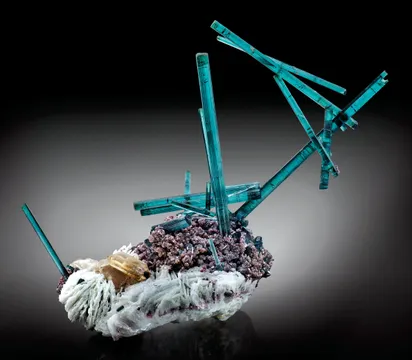
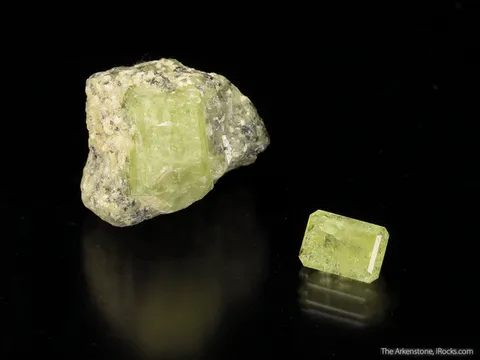
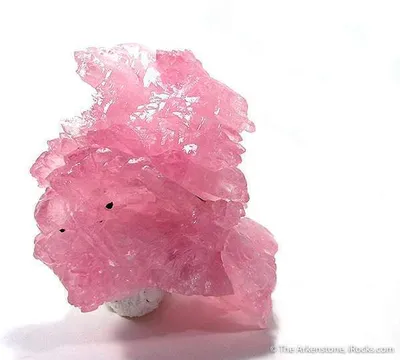
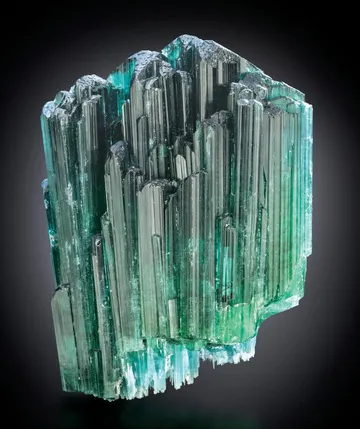
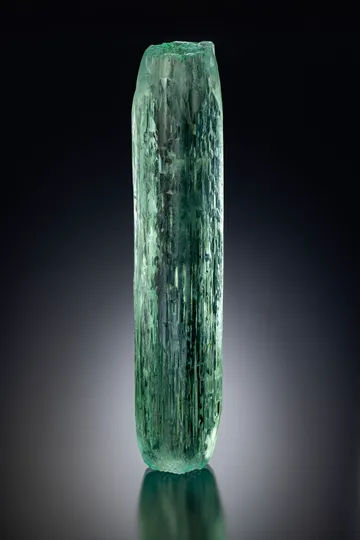

.jpg)
