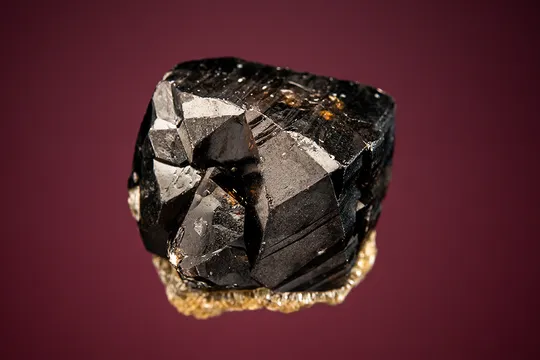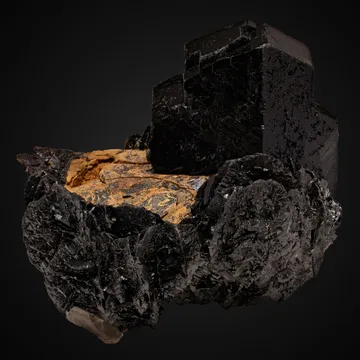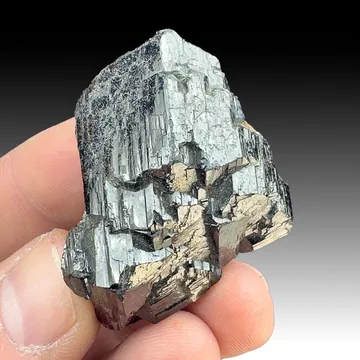
Cassiterite - mirror-like luster and dense, prismatic crystals; localities Panasqueira, Xuebaoding, Viloco; value hinges on finish, size, and matrix.
Key facts
Cassiterite (SnO2) is the primary ore of tin and a storied collector species known for brilliant, mirror-like luster and hefty, high-density crystals. Typically black to deep brown, it can also be translucent honey-amber to “root beer” brown in thinner crystals. Well-formed tetragonal prisms and bipyramids, often with complex contact or cyclic twinning (“cogwheel” twins), give the species striking geometry under light. On matrix, cassiterite excels when contrasted against white albite or quartz, or paired with colorful associates such as fluorapatite, fluorite, scheelite, topaz, or muscovite.
Most fine specimens come from granite-related tin systems: greisens and pegmatites, or from hydrothermal veins in classic tin districts. While many crystals are opaque and utilitarian-looking, the best examples—ultra-lustrous “black diamond” prisms, gemmy cinnamon-brown crystals, or dramatic twinned stars—are undisputed display pieces. Cassiterite’s combination of sharp form, brilliant luster, and rich historical importance makes it a cornerstone of advanced systematic and aesthetic collections.
Cassiterite’s fame stems from both industrial and aesthetic value. Historically, it underpinned Bronze Age metallurgy and later fueled major mining booms in Cornwall, Bolivia, and Southeast Asia. Collector interest has been renewed repeatedly by major finds: mirrored, on-matrix Panasqueira clusters; gemmy, honey-brown Chinese crystals from Mount Xuebaoding and Xihuashan; spectacular twinned “cogwheel” crystals from Viloco, Bolivia; and elegant pegmatitic crystals from Erongo, Namibia.
Prices cover a wide spectrum. Classic thumbnails and small singles are affordable, while fine, undamaged matrix clusters with top luster from Panasqueira or Xuebaoding can be expensive. Distinctive twinning, exceptional translucency, and striking associations push values sharply higher. Because cassiterite is relatively abundant in many districts, collectors at any level can participate—yet truly great pieces remain scarce and heavily competed for.
The following localities are celebrated for producing cassiterites that define the species for different habits, colors, and associations.
A benchmark European source, Panasqueira (Beira Baixa, Portugal) is famous for jet-black, mirror-bright cassiterite crystals, often in superbly arranged clusters on quartz, siderite, or muscovite. These crystals can be stout and highly reflective, with stepped faces and twinning that catches light beautifully. Panasqueira specimens frequently feature attractive associations: olive-brown siderite saddles, fluorapatite clots, quartz, and ferberite/wolframite—all adding context and photographic appeal. Robust, aesthetic matrix groups with pristine terminations and minimal repair are highly sought after.
The Viloco tin district (La Paz Dept.) is legendary for contact and cyclic twinned cassiterites—the iconic “cogwheel” stars and sharp V-twins. These often form elegant, sculptural singles or clusters, sometimes on quartz. The crystals exhibit deep black to brown colors with a bright submetallic-to-adamantine luster. Twinning here is both an aesthetic and scientific hallmark, making Viloco specimens indispensable to a comprehensive cassiterite suite. Perfectly formed twins with undamaged edges are surprisingly rare and carry a significant premium.
Erongo pegmatites are known for handsome cassiterite crystals, ranging from lustrous black prisms to warm, translucent “root beer” browns. They occur with muscovite books, albite, schorl, and occasionally aquamarine, producing harmonious, high-contrast compositions. Crystals often show complex growth and occasional twinning, with broader prisms than many Chinese examples. Aesthetic matrix arrangements and good transparency in the upper faces are key drivers of desirability.
Color and Transparency:
Luster:
Crystal Form and Twinning:
Matrix and Associations:
Size and Condition:
Aesthetics:
Repairs:
Polishing and Surface Enhancements:
Treatments:
When in doubt, buy from reputable sources and ask for disclosure regarding repairs or surface work.
Handling:
Light and Temperature:
Cleaning:
Storage:
By prioritizing sharp form, top luster, minimal damage, and strong aesthetics—ideally on contrasting matrix—you can assemble a cassiterite suite that spans the species’ most iconic habits and historic localities.