Alto da Pitorra, Brazil — renowned for euhedral pink rose quartz crystals from eastern Minas Gerais pegmatites, prized for color, form, and collector rarity.
Key facts
Alto da Pitorra is one of the elite Brazilian occurrences for crystallized rose quartz: not merely rose-colored quartz in massive lapidary blocks, but true, terminated pink quartz crystals from a differentiated granitic pegmatite in eastern Minas Gerais. The locality lies at Laranjeiras in the municipality of Galiléia, in the Rio Doce region, within the Aimorés pegmatite district of the Eastern Brazilian Pegmatite Province. That setting matters. The pegmatites of this belt are famous not only for quartz, but for the evolved rare-element assemblages that made eastern Minas Gerais a classic province for beryl, tourmaline, lithium minerals, feldspar, mica, tin, niobium, and tantalum minerals.
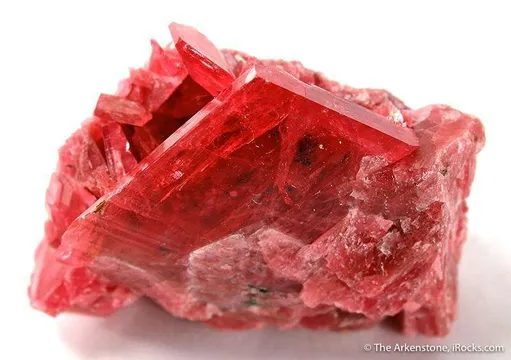
Collectors value Alto da Pitorra because it joined the very short list of localities that changed the conversation about “rose quartz” as a specimen mineral. Massive rose quartz had long been abundant from Brazil and Madagascar, but fine euhedral pink quartz crystals were historically rare. When the Pitorra material entered the market in quantity after the early-1989 discovery, it gave collectors another source for sharp, transparent to translucent pink crystals in sprays, rosettes, mounded clusters, subparallel groups, small scepters, and crowns perched on earlier quartz. The best pieces have a distinctly Brazilian look: delicate pink crystals rising from smoky, milky, or colorless quartz, sometimes with albite, muscovite, microcline, or feldspar matrix, and often compact enough to sit perfectly in the miniature to small-cabinet range.
Regional View
Country View
The finest Alto da Pitorra specimens reward close looking. Their value is not based only on pink color, but on the uncommon combination of color, form, transparency, luster, and survival. A top example may show individual rose-quartz prisms with clean terminations, growth figures, subtle stepped faces, and a flowery architecture that seems too fragile for quartz. Ordinary pieces are attractive; exceptional ones are crystalline rose quartz in the strict collector’s sense—balanced, sharp, visibly pink without overlighting, and free of the iron-oxide staining that is common in the deposit.

Photo: Wikimedia Commons — Rob Lavinsky, iRocks.com, CC BY-SA 3.0
Search for specimens: View all specimens from Alto da Pitorra, Brazil
Alto da Pitorra is a granitic pegmatite occurrence, historically worked as a gem-tourmaline producer before its crystallized rose quartz became the locality’s defining specimen product. It is situated near Galiléia, northeast of the town, on the northern slope of the Serra da Pitora range. In the older literature the name appears with variant spelling as Alto da Pitora, Lavra da Pitora, Lavra da Pitorra, or Pitorra claim; collectors should recognize these label variants, while still preserving the more complete locality string when possible: Alto da Pitorra, Laranjeiras, Galiléia, Minas Gerais, Brazil.
The pegmatite described by Cassedanne and Alves is narrow, steep, and internally zoned. It trends northeast–southwest, dips almost vertically, and is enclosed in coarse granite containing lens-shaped micaschist xenoliths. Its width is reported as about 1.5 to 5 metres. The central blocky zone contains large K-feldspars, spodumene laths, and grey to milky quartz. This is not the setting of massive rose quartz blocks from a simple feldspar-quartz core; the crystallized pink quartz belongs to a late stage of pegmatite evolution, forming in small elongated vugs associated with fissures that cut the body.
Those fissures are important to understanding the specimens. The rose quartz is described as perched on late albite, hydrothermalized K-feldspar, milky quartz crystals, and muscovite in small vugs along the pegmatite. The main visual associations documented for Alto da Pitorra specimens are quartz, smoky quartz, albite, muscovite, microcline or orthoclase, and occasionally elbaite; the broader mineral list includes beryl, cassiterite, tantalite, lepidolite, amblygonite-montebrasite, opal-AN, schorl, citrine, and smoky quartz. Iron and manganese oxides are widespread, and their staining is one of the most recognizable condition and preparation issues in Pitorra material.
Mining was by small underground workings rather than a single large open pit. The 1990 description records roughly twenty adits driven along the pegmatite, with some reaching as much as 80 metres in length, and with irregular rooms and pits developed underground. The explored portion was described as about 300 metres along strike and about 60 metres in vertical extent. By October 1989, approximately 1,000 kilograms of crystallized rose quartz had reportedly been recovered, including about 100 kilograms of superior quality and another 100 kilograms of very good color. The prospect was then under lease by José Pinto, a miner and gem dealer from Governador Valadares, and the production figures were attributed to Carlos Vasconcelos, a gem dealer from the same city.
Collectors today mostly encounter Alto da Pitorra as dispersed specimen material, old dealer stock, auction pieces, and occasional newer small finds. It should be treated as a private mining locality, not a public recreational collecting site. Good labels matter because Galiléia has several celebrated rose-quartz occurrences, including Berilo Branco/Sapucaia and Pitorra, and because specimens have circulated for decades under shortened labels such as “Pitorra Mine,” “Pitorra claim,” or simply “Galiléia.” The strongest labels preserve both the mine/claim name and the district-level context.
The notable finds are not remembered as a single named pocket so much as a series of vugs and fissure zones that produced crystallized rose quartz in several habits. Some pieces are isolated clusters free of matrix, a feature emphasized in the literature as typical for Pitorra specimens. Others show rose crystals on smoky or milky quartz, on feldspar, or with albite and muscovite. Fine later material, including richly colored specimens collected around January 2008, demonstrated that Pitorra could still produce rose-quartz clusters with unusually saturated color and larger translucent crystals, though such pieces remain much scarcer than ordinary small sprays.
Quartz from Alto da Pitorra is best understood as both the stage and the performer: earlier milky, grey, smoky, colorless, or slightly citrine quartz forms the supports on which later pink quartz grew, while some specimens consist of normal quartz crystals partly overgrown by rose-colored crystals. Documented pieces include mostly transparent pink quartz across earlier slightly smoky quartz groupings, crowns of rose quartz around clear quartz prisms, and specimens where the supporting quartz reaches several centimetres while the pink crystals form sashes, sprays, or clustered caps. Good quartz specimens from this locality show contrast—clear or smoky quartz with a skin of sharp pink crystals—whereas ordinary pieces may be too stained, too massive, or too poorly crystallized to show the late-stage overgrowth relationship clearly.
Alto da Pitorra rose quartz occurs as true crystals: single crystals, radiating clusters, subparallel groups, rosettes, crowns around older quartz, and occasional small scepter-like forms. Individual crystals are commonly measured in millimetres to a few centimetres; a 1.5 cm scepter was illustrated in the early literature, dealer descriptions note crystals over 2 cm on unusually large old pieces, and fine miniatures commonly fall in the 3 to 8 cm specimen-size range. Color ranges from pale pink and pinkish white to stronger rosy pink, with many crystals transparent to translucent and some opalescent or internally cloudy. The best pieces combine visible natural pink color, gemminess, lustrous faces, sharp terminations, minimal staining, and a balanced “flower” or crown structure; the most ordinary examples are small, pale druses or damaged sprays without the clarity and architecture that made Pitorra famous.
Other minerals documented from Alto da Pitorra are typical of an evolved Minas Gerais pegmatite but generally play supporting roles in specimen collecting. Albite, including cleavelandite, is a common matrix and late pocket mineral. Muscovite may occur as bright plates on or near rose quartz, and feldspar appears as microcline, orthoclase, or hydrothermalized K-feldspar. Smoky quartz is an important association for aesthetic pieces, while citrine is also recorded. Schorl, elbaite, beryl, cassiterite, tantalite, lepidolite, amblygonite-montebrasite, opal-AN, pyrite, sericite, chlorite, spodumene, and niobotantalite are part of the documented mineralization, though Alto da Pitorra is not known as a type locality for a new mineral species. Its great rarity is not a named species; it is the occurrence itself: euhedral pink quartz crystals from a Brazilian pegmatite pocket system.
The first authenticity concern is nomenclature. Many mineralogists distinguish common massive rose quartz from the rarer euhedral pink quartz that collectors still often call “crystallized rose quartz.” Alto da Pitorra specimens belong to this rare euhedral category, and the terminology on labels may vary. A specimen sold as “rose quartz” from Pitorra is not automatically wrong, but a serious label should specify whether it is crystallized pink quartz/rose quartz and should keep the full Galiléia–Laranjeiras–Minas Gerais locality chain.
The second concern is locality mixing. Galiléia and the wider eastern Minas Gerais pegmatite province produced rose quartz from more than one famous occurrence. Pitorra material is often recognized by its lack of abundant phosphate minerals and, in many examples, lack of tourmaline, especially compared with phosphate-bearing Lavra da Ilha material and tourmaline-rich associations from some other deposits. Still, visual assignment is not foolproof. Provenance from older collections, mine-run lots, or respected dealers is especially useful for high-value pieces.
No well-documented, locality-specific fake industry for Alto da Pitorra specimens appears in the serious mineral literature, but the value of crystallized rose quartz creates the usual risks: repaired sprays, reattached crystals, concealed contacts, overly optimistic “no damage” descriptions, and photography that exaggerates pink saturation. Examine edges and high points carefully; quartz is hard but the delicate divergent aggregates chip readily. Many otherwise fine Pitorra specimens show peripheral bruising, small missing tips, or magnification-level chipping. Iron and manganese oxide staining is common enough to be part of the locality’s character, but heavy stain can hide damage and reduce both transparency and eye appeal.
Treatment issues are broader than Pitorra itself. Transparent synthetic pink quartz has been commercially available since the 1990s, and it can resemble natural pink quartz in color mechanism. Synthetic material is usually a gemological concern rather than a common specimen-level deception for complex Pitorra clusters, but unusually clean, isolated, strongly colored crystals without convincing locality provenance deserve scrutiny. For natural transparent pink quartz, prolonged exposure to strong light may fade color in some material, and irradiation can restore pink color in certain cases. Display fine Pitorra specimens out of direct sunlight and away from high-heat lighting; treat them as both quartz specimens and color-sensitive gem minerals.
Market availability is sporadic. Small and thumbnail pieces appear regularly enough that a patient collector can obtain a representative example, but top-quality specimens are much harder to replace. Recent public auction and dealer records show the spread clearly: modest small rose-quartz sprays may still be traded in the low hundreds or less, while exceptionally sharp, gemmy miniatures and thumbnails with strong color can rise into four figures. The strongest specimens are those with saturated natural pink color, complete crystallization, transparency, and a memorable form—especially bouquets, crowns, and rose quartz perched on contrasting smoky or clear quartz.
In the first days of 1989, an old tourmaline producer on the northern slope of the Serra da Pitora began giving up something more delicate than the gem rough that had drawn miners there before. The workings were not grand: about twenty adits driven along a pegmatite only a few metres wide, some extending up to 80 metres, with irregular rooms and pits following the productive zones. The scale underground was nonetheless impressive for a specimen locality. The adits explored roughly 300 metres of strike and about 60 metres vertically, tracing the fissures and small vugs where the late pink quartz had crystallized on albite, altered feldspar, milky quartz, and muscovite.
By October of that same year, the numbers were already remarkable. Carlos Vasconcelos of Governador Valadares reported that about 1,000 kilograms of crystallized rose quartz had been recovered from the deposit. Of that, only a fraction made the grade that collectors remember: about 100 kilograms classified as superior quality and another 100 kilograms noted for very good color. Those figures explain the modern market perfectly. There is enough Pitorra material for collectors to know the locality well, but not enough truly exceptional material for fine specimens to feel common.
The specimens themselves carry the story of the pocket walls. Many begin as ordinary hexagonal prisms and then split into parallel smaller crystals toward the end of growth, producing multi-terminated heads, repeated cross sections along the c axis, and delicate clusters that look almost like frost. Some pieces grew as small crowns around older quartz; others detached as matrix-free clusters. A few developed into small, perfect scepter forms. The deposit’s iron and manganese oxides stained many pieces, so every clean, bright, intact specimen that survived mining, washing, trimming, and export represents a surprisingly narrow escape.
One of the reasons Pitorra became a connoisseur’s locality is that its beauty is concentrated in hand-sized objects. Berilo Branco/Sapucaia supplied monumental icons; Pitorra supplied crystallography. A fine miniature can show nearly everything one wants from the locality: a mound or bouquet of lustrous pink prisms, subtle changes from transparent to rosy zones, a smoky or milky quartz support, and a shape that reads instantly from across a case. Later finds, including intensely colored pieces collected around January 2008, showed that the old 1989 fame was not a single exhausted flash. Even after the classic production, Pitorra could still surprise collectors with specimens whose color was not merely pastel but truly rosy.
Cassedanne, Jacques P., and Jeanete Alves (1990), “Crystallized Rose Quartz from Alto da Pitora, Minas Gerais, Brazil,” The Mineralogical Record, 21(5), 409–412. The key locality paper for Alto da Pitorra, documenting the 1989 production, geology, workings, associated minerals, habits, and production estimates.
Cassedanne, Jacques P., and Maurice Roditi (1991), “Crystallized and Massive Rose Quartz Deposits in Brazil,” Journal of Gemmology, 22(5), 273–286. A broader survey of Brazilian rose quartz deposits that places Alto da Pitora among the principal crystallized rose-quartz producers in Minas Gerais.
Clifford, Janet H. (2012), “Connoisseur’s Choice: Rose (Pink) Quartz, Lavra da Pitorra, Laranjeiras, Galiléia, Minas Gerais, Brazil,” Rocks & Minerals, 87(6), 530–539. A collector-focused modern treatment of Pitorra rose/pink quartz, with locality-specific discussion and specimen context.
Goreva, Y. S., Chi Ma, and George R. Rossman (2001), “Fibrous nanoinclusions in massive rose quartz: The origin of rose coloration,” American Mineralogist, 86, 466–472. Includes an Alto da Pitora/Galiléia single-crystal pink quartz sample for comparison with massive rose quartz, helping clarify the color-mechanism distinction important to collectors.
Balitsky, V. S., I. B. Makhina, V. I. Prygov, James E. Shigley, Emmanuel Fritsch, Shane McClure, D. DeGhionno, John I. Koivula, and Ren Lu (1998), “Russian Synthetic Pink Quartz,” Gems & Gemology, 34(1), 34–43. Important for understanding synthetic transparent pink quartz and why high-value natural crystallized pink quartz should be judged with gemological caution.
Pedrosa-Soares, Antônio Carlos, Mario Luiz S. C. Chaves, Ricardo Scholz, and Coralie H. Dias (2022), “PEG2009 Pre-Symposium Field Trip Guide: Eastern Brazilian Pegmatite Province (Minas Gerais),” Estudos Geológicos, 32(2), 37–51. Useful regional framework for the Eastern Brazilian Pegmatite Province, including the historical and geological importance of Minas Gerais pegmatites.
Mindat occurrence record for rose quartz from Alto da Pitorra. Records rose quartz as a world-class/significant species occurrence at Alto da Pitorra and lists associated minerals based on photo data.
Mindat locality page for Alto da Pitorra, Laranjeiras, Galiléia, Minas Gerais, Brazil. Provides locality hierarchy, estimated coordinates, district assignment, and the documented mineral list.
Natural History Museum Vienna mineral collection reference as indexed through Mindat. Confirms museum-collection documentation for rose quartz from the locality alongside the Cassedanne and Alves reference.
Mindat — Alto da Pitorra locality page — The best compact reference for locality hierarchy, estimated position, district assignment, and mineral list.
Mindat — Rose quartz from Alto da Pitorra — Species-specific page documenting the rose quartz occurrence, photo-data associations, and references.
Mindat — Pitorra claim, Laranjeiras, Galiléia — Useful for understanding the closely related market label “Pitorra claim” and its specimen-quarry context.
Gem-A — “Crystallized and Massive Rose Quartz Deposits in Brazil” — Essential open-access survey placing Alto da Pitora among Brazil’s principal crystallized rose-quartz deposits.
The Mineralogical Record — September–October 1990 issue — Issue containing the original Cassedanne and Alves article on crystallized rose quartz from Alto da Pitora.
Rocks & Minerals, Volume 87, Issue 6 — Contains Janet H. Clifford’s “Connoisseur’s Choice” article on Lavra da Pitorra rose/pink quartz.
Wikimedia Commons — Quartz-197410.jpg — Openly licensed photograph of a rose quartz specimen from Alto da Pitorra with locality and size details.
Wikimedia Commons — Quartz-51111.jpg — Openly licensed photograph showing glassy, water-clear light-pink crystals from Alto da Pitorra.
GIA — Rose Quartz Description — Gemological overview explaining the distinction between common massive rose quartz and rare transparent crystalline pink quartz.
GIA — “Russian Synthetic Pink Quartz” — Practical background on synthetic transparent pink quartz and identification concerns relevant to high-end crystallized pink quartz.
American Mineralogist — Goreva, Ma, and Rossman rose-quartz coloration study — Technical paper on rose-quartz color mechanisms, including comparison with an Alto da Pitora single-crystal pink quartz sample.
MineralAuctions — Pitorra Claim rose quartz auction record — Recent public sale record illustrating current collector demand for fine Pitorra crystallized rose quartz.
MineralAuctions — Alto da Pitorra superb thumbnail record — Recent auction example showing the premium for gemmy, sharp thumbnail-size material.