






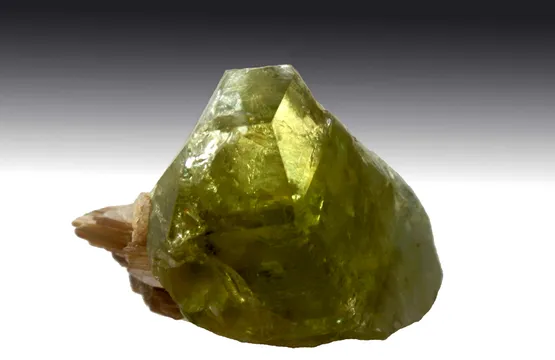
Brazilianite — luminous yellow to yellow-green crystals with glassy luster from Minas Gerais, Jequitinhonha Valley; prized for size, color, and sculptural matr…
Key facts
Brazilianite is a striking sodium aluminum phosphate best known for its luminous yellow to yellow‑green color and glassy luster. Typically forming stout, prismatic monoclinic crystals, it can range from transparent gemmy singles to dramatic matrix clusters perched on white albite, muscovite, or smoky quartz. The species originates from granitic pegmatites, where it often forms in the secondary phosphate zone by alteration of primary lithium phosphates (triphylite–lithiophilite).
Aesthetically, the best brazilianite balances saturated color with clarity and strong luster; when backlit, top crystals glow with a warm, lemon‑to‑chartreuse brilliance. The type and greatest quantity of fine specimens come from Minas Gerais, Brazil, especially the Jequitinhonha Valley, with occasional classic pieces from other Brazilian districts. Rarely, smaller crystals from outside Brazil appear, but Brazil remains unrivaled for cabinet‑size, display‑quality material.
In hand, brazilianite feels more delicate than its blocky crystals suggest: it has good cleavage and only moderate hardness (~5.5), so pristine tips and undisturbed edges are prized. Choice matrix pieces showing contrasting white albite, silvery muscovite, and dark smoky quartz elevate the species into true showpieces for serious collections.
Brazilianite enjoys steady desirability among collectors thanks to its vivid, happy color and sculptural crystal forms. The species rose to prominence after mid‑20th‑century discoveries at the Córrego Frio pegmatite, with subsequent waves from nearby Minas Gerais pegmatites bringing larger and more transparent crystals to market.
Its appeal spans the spectrum of collectors:
Because top brazilianite is both photogenic and fragile, premium, unrepaired matrix specimens remain limited and command strong prices relative to size. New finds appear sporadically, but few rival the combination of color, clarity, size, and aesthetics seen in the classic Brazilian pockets.
Below are notable localities with strong track records of collector‑quality brazilianite. Each is known for distinctive habits, associations, or color qualities that help define what collectors seek in the species.
Type locality and a cornerstone for the species, Córrego Frio is famous for lustrous lemon‑yellow to yellow‑green crystals, often stout and highly three‑dimensional. Classic pocket pieces show brazilianite rising from snow‑white albite with muscovite books and occasional smoky quartz. Crystals range from gemmy thumbnails to cabinet clusters with 5–10 cm individuals; the finest display deep color, sharp terminations, and minimal edge wear despite the mineral’s cleavage.
Collectors value Córrego Frio specimens for their historical importance, saturated color, and textbook associations. Many larger clusters are repaired due to pocket breakage; unrepaired matrix pieces with multiple pristine tips are scarce and premium.
Linópolis is a classic pegmatite district known for attractive brazilianite on white cleavelandite/albite with muscovite. While crystals can be smaller on average, the best are limpid and brightly lustrous, making elegant small cabinets and miniatures. Associations with phosphates like eosphorite/childrenite are well known here, adding textural and color contrast.
Collectors look for crisp, undamaged tips and good composition. The district’s pieces often “read” cleanly from a distance—simple, high‑contrast arrangements with bright color are typical and desirable.
With sensible handling and thoughtful selection, brazilianite rewards collectors with cheerful color, elegant form, and classic pegmatite aesthetics—an essential species for any display focused on phosphates or Brazilian pegmatites.