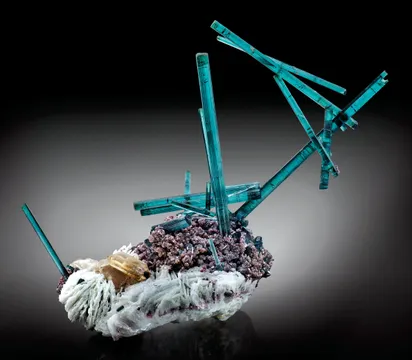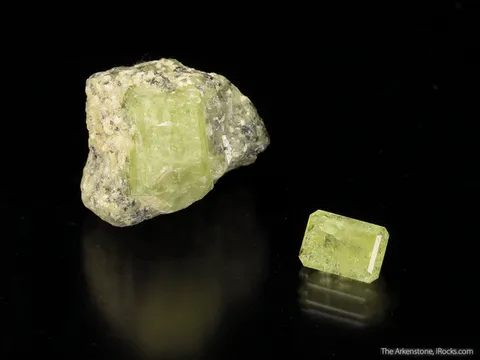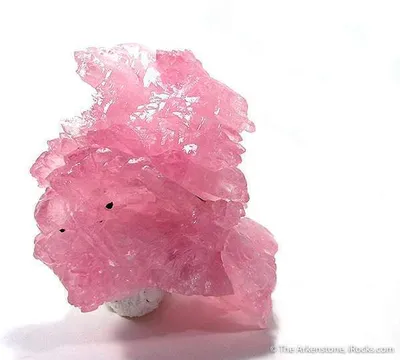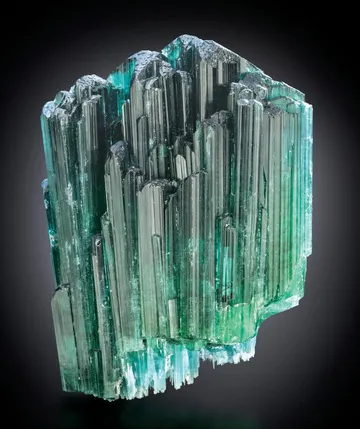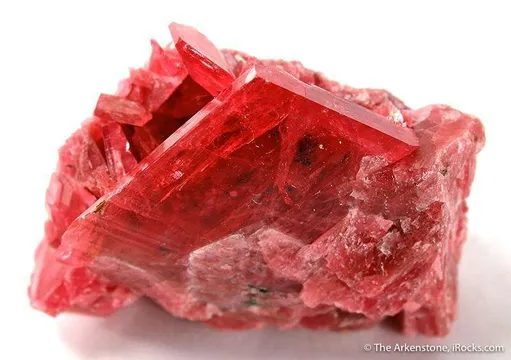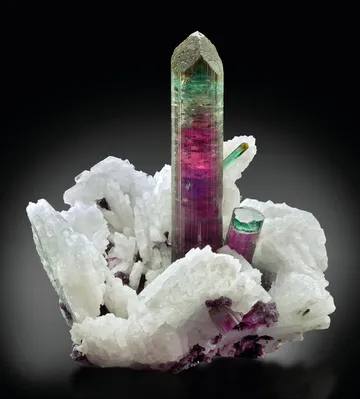
Medina, Brazil — a classic aquamarine locality in the Pedra Azul pegmatites, prized for glassy blue beryl crystals with natural etching and rich color.
Key facts
Medina, in northeastern Minas Gerais, is one of the classic names in Brazilian aquamarine collecting. The locality belongs to the Pedra Azul pegmatite district within the Eastern Brazilian Pegmatite Province, a gem belt tied to the Araçuaí orogen and its late Neoproterozoic–Cambrian granitic magmatism. What distinguishes Medina from many other Brazilian beryl localities is not simply that it produced gem aquamarine, but that its best crystals have a memorable sculptural signature: glassy blue to blue-green beryl prisms, often doubly terminated or nearly so, with natural solution-etched faces, tapered “pencil” outlines, casement-like negative depressions, and the kind of transparency that makes a loose crystal glow from the inside.
The Medina field is best known through Serrinha and related small pegmatites, with Funil adding scientific importance through confirmed F-dominant herderite. Geologically, these are not the lithium-rich, tourmaline-saturated pegmatites that made other Minas Gerais districts famous for elbaite. In the Pedra Azul–Medina setting, the pegmatites are generally small, residual bodies related to Fe-K-rich alkaline G5 granites, especially the Medina granite. Their collectible suite is correspondingly distinct: aquamarine and other beryl, topaz, feldspar, quartz, muscovite, fluorapatite, fluorite, phenakite, schorl, and rare Be-phosphates such as herderite.
Regional View
Country View
For collectors, the Medina “look” is instantly recognizable when it is good: a single, freestanding aquamarine crystal with saturated color for Brazil, a clean interior, bright luster, and natural etching that enhances rather than destroys the form. Lesser Medina crystals may be pale, abraded, cloudy, incomplete, or too heavily dissolved to retain elegant geometry; the great ones keep enough prism and termination to read as crystals while showing the resorbed skin that makes the locality so desirable.
Search for specimens: View all specimens from Medina, Brazil
Medina lies in the Pedra Azul pegmatite district of northeastern Minas Gerais, within the Eastern Brazilian Pegmatite Province. The broader province was generated during the long-lived evolution of the Araçuaí orogen, and the Pedra Azul district is linked to post-collisional G5 granitic magmatism. In the Medina area, the most important gem bodies are residual pegmatites associated with the Medina granite, an Fe-K-rich alkaline granite dated at roughly Cambrian age. The Serrinha pegmatite is described in the geological literature as a system of branched, thin pegmatite veins hosted by the pink facies of the parent Medina granite.
The deposit style is quite different from the great lithium-cesium-tantalum pegmatites of the Araçuaí and Governador Valadares regions. Pedra Azul–Medina pegmatites are generally small to medium, commonly only a few meters thick, and many are internal to or close to their source granite. They are typically biotite-rich, relatively poor in tourmaline, and lacking lithium minerals. The economic target has historically been gem beryl—especially aquamarine—and topaz, with quartz, feldspar and mica as the ordinary rock-forming pegmatite minerals. Fluorapatite, fluorite, herderite, phenakite, and schorl round out the better-documented collector assemblage.
Funil is the scientifically best-described Medina mine in the published literature. It is a zoned, weathered pegmatite about 3 meters thick, trending east-west. Near the surface it is subvertical; at depth it dips roughly 40 degrees south. The published account places its significant herderite near the hanging wall, in the same part of the body where important topaz discoveries had been made in the 1990s. That position matters mineralogically: topaz records fluorine-rich residual conditions, and the same upper, volatile-enriched portions of the pegmatite favored F-rich members of the herderite–hydroxylherderite series.
Serrinha provides the other major strand of the Medina story. Its topaz has been studied through Raman spectroscopy and inclusion work, showing solid inclusions such as microcline, albite, quartz, topaz, rutile, wolframite and uranophane, plus CO2-rich fluid inclusions with minor methane. The same work interprets the topaz as crystallizing during high-temperature pneumatolytic conditions at a depth of about 8.5–10 km, followed by lower-temperature hydrothermal activity. For collectors, that research helps explain why Serrinha and related Medina specimens often have complex etched surfaces: these crystals were not merely grown, but partially reworked by late fluids.
Medina’s best aquamarine production is associated in the collector literature with small pockets rather than large, continuous specimen runs. The famous late-1990s pocket yielded only a limited number of collector-quality aquamarines; the rest of the material was deformed or suitable chiefly as cutting rough. Older labels may say “Medina Mine,” “Medina pegmatite field,” “Serrinha,” or simply “Medina, Minas Gerais,” and these should be read with care. The modern locality hierarchy generally places the important specimen material in the Medina pegmatite field of the Pedra Azul pegmatite district, with Serrinha and Funil as named sublocalities when known.
Collecting access today should be treated as private and controlled. These are mines and claims, not open collecting parks. Old pieces circulating on the market generally came through Brazilian miners, gem dealers, or international specimen dealers rather than casual self-collection. Anyone considering field access must obtain permission from landowners and mineral-rights holders and must understand that weathered pegmatite workings, shafts, pits, and undercut faces can be unstable.
Medina aquamarine is prized for loose, gemmy hexagonal crystals in blue to blue-green hues, commonly with strong natural etching, tapered ends, solution-sculpted prism faces, and negative geometric depressions that give the best pieces a distinctive architectural surface. Fine crystals range from thumbnails and miniatures to major cabinet crystals exceeding 10 cm; documented elite examples include pieces around 13–21 cm, and the broader Medina/Serrinha production is reported to have produced clear blue crystals approaching 30 cm. The finest specimens balance color, transparency, luster, completeness, and etching: enough dissolution to create the classic Medina texture, but not so much that the crystal becomes dull, shapeless, or frosted. Associations are usually sparse on display-quality pieces, though the pegmatites contain quartz, feldspar, muscovite, topaz, fluorapatite, schorl, and rare herderite; most famous aquamarines are valued as sculptural single crystals rather than matrix combinations.
Beyond aquamarine, Medina’s documented mineral suite includes topaz, heliodor, alkali-beryl, quartz, microcline, albite, muscovite, biotite, schorl, fluorapatite, fluorite, phenakite, and herderite. Topaz is especially important at Serrinha and Funil, both as a collector mineral and as an indicator of fluorine-rich pegmatite evolution. The great rarity is true F-dominant herderite from the Funil mine: euhedral centimetric greenish-gray crystals, in some cases coated with thin schorl needles, that were chemically analyzed and shown to be genuine herderite rather than the much more commonly encountered hydroxylherderite. Medina is not known as a major type-locality field, but Funil’s confirmed herderite gives the district unusual scientific weight among Brazilian pegmatites.
The first caution with Medina aquamarine is locality precision. “Medina,” “Serrinha,” “Funil,” “Medina Mine,” “Tres Barras,” and “Pedra Azul district” have all appeared on labels or records. A label that says only “Minas Gerais, Brazil” is not enough to call a specimen Medina; the locality style helps, but provenance matters. True Medina aquamarines commonly show natural etching, tapered forms, and blue-green gem interiors, yet etched aquamarine also occurs elsewhere, and Brazilian aquamarine without a reliable chain of custody is frequently over-attributed to famous names.
The second caution is treatment and enhancement. Aquamarine as a gem material is commonly heat-treated in the trade to improve blue color, but specimen crystals from Medina are valued most when natural, complete, lustrous, and unmodified. For loose crystals, inspect for repaired terminations, polished faces, acid-brightened surfaces, and artificial oiling or resin used to hide cracks. A natural Medina etched surface should have integrated, crystallographically controlled depressions and consistent luster transitions; suspiciously glossy, rounded, or uniformly polished surfaces deserve closer examination.
Condition is crucial. Many Medina aquamarines were recovered as loose crystals or partial crystals, and the same dissolution that makes them beautiful can leave thin edges, fragile “wings,” etched pits, and contacted bases. Chips on prism ridges, bruised terminations, rehealed fractures, and internal tension cracks are common. The best pieces are complete floaters or near-floaters, with undamaged terminations and clean interiors; lesser specimens may still be attractive if the etching is strong and the color is rich, but value drops quickly with dull luster or broken ends.
Herderite from Funil requires analytical caution. Visually, herderite and hydroxylherderite cannot be reliably separated. Specimens labeled simply “herderite, Brazil” should be treated skeptically unless they have a credible Funil provenance and analytical backing. For a serious systematic collection, a Funil herderite label is strongest when accompanied by Raman, electron microprobe, or other reliable confirmation, or when traceable to the small studied finds discussed in the mineralogical literature.
Market availability is limited but not impossible. Small to medium Medina aquamarines appear periodically through specialist dealers, auctions, and older collections. Major late-1990s pocket crystals are scarce and are usually already in advanced private or institutional collections. Prices vary dramatically: modest etched miniatures may be obtainable, but clean, saturated, complete examples with old provenance command a premium far above ordinary Brazilian aquamarine.
The Medina story collectors repeat most often is the late-1990s aquamarine pocket. It was not a giant cavern lined with endless blue crystals; the remarkable point is how little of the production survived as world-class specimens. The pocket produced roughly twenty collector-quality crystals, while much of the remaining aquamarine was distorted, unattractive as specimens, and better suited to cutting. That imbalance is part of the legend. For a brief moment, a small Brazilian pegmatite yielded aquamarines with the size, transparency, and color to stand among the finest of the species, yet only a handful had the form and surface quality that collectors wanted to preserve.
One well-documented crystal from that find became famous for its 15.2 cm length, water-clear sea-green body, double termination, tapered ends, and natural “casement window” depressions. It passed through major hands—Alvero Lucio, Daniel Trinchillo, Joe Freilich, Irv Brown, Gail and Jim Spann—and was described by dealers as among the finest aquamarines of its size. Another celebrated Medina crystal from the same collecting culture was a 19.3 cm flawless, strongly colored aquamarine with exceptional etching, published in Wayne Thompson’s Ikons. These are the pieces that shaped the modern collector’s idea of Medina: not matrix clusters, not cutting rough, but freestanding crystal sculpture.
Serrinha also supplied a quieter, more scientific drama. A large gem topaz crystal from the locality, 13 cm long, broke spontaneously while being washed in warm water. The accident produced an 11 cm crystal and three smaller fragments, which became the material for a Raman and inclusion study. What began as a collector’s mishap turned into a window into the pegmatite’s history: CO2-rich fluid inclusions, traces of methane, and a suite of solid inclusions recording processes from high-temperature pneumatolytic crystallization to later hydrothermal alteration. For a locality famous for the beauty of its etched aquamarines, that broken topaz offered a laboratory-scale explanation of the fluid-rich world in which these crystals formed.
Funil’s herderite discovery carries a different kind of tension. For decades, “herderite” on mineral labels was a slippery name, often applied to hydroxylherderite or to members of the series without proof of fluorine dominance. At Funil, greenish-gray centimetric crystals collected near the hanging wall were analyzed and shown to be F-dominant. In August 2009, one Funil sample was even thought likely to become the first herderite specimen in the world with confirmed provenance suitable for modern structural study; almost simultaneously, however, herderite from Mogok, Myanmar, and another occurrence from China entered the published record. Funil did not become the defining modern type locality, but it became something nearly as valuable to systematic collectors: one of the rare Brazilian sources where the name “herderite” can be used with analytical confidence.
Wilson, W. E. (2021). “The Medina pegmatite field, Pedra Azul District, Minas Gerais, Brazil.” The Mineralogical Record, 52(3), 225–244. A major locality article devoted specifically to Medina, cited in the Journal of Gemmology literature-of-interest listings.
Menzies, Michael A. (2025). “Connoisseur’s Choice: Aquamarine, Medina Pegmatite Field, Pedra Azul District Minas Gerais, Brazil.” Rocks & Minerals, 100(5), 454–473. A recent collector-focused treatment of Medina aquamarine, with photography and discussion aimed at fine-mineral connoisseurs.
Dumańska-Słowik, Magdalena; Toboła, Tomasz; Natkaniec-Nowak, Lucyna; Pedrosa-Soares, Antonio Carlos (2016). “Characteristics of inclusions in topaz from Serrinha pegmatite (Medina granite, Minas Gerais State, SE Brazil) studied by Raman spectroscopy.” Vibrational Spectroscopy, 85, 196–201. The key analytical paper on Serrinha topaz inclusions, fluid composition, and crystallization conditions.
Menezes Filho, Luiz Alberto Dias; Chaves, Mario Luiz de Sá Carneiro; Dias, Coralie Heinis; Atencio, Daniel (2016). “Recent mineral discoveries in the Coronel Murta, Taquaral, and Medina pegmatite fields, northeastern Minas Gerais, Brazil.” REM: International Engineering Journal, 69(3), 301–307. The primary open-access source for Funil mine herderite and the geological setting of the Medina pegmatite field.
Pedrosa-Soares, A. C., et al. (2011). “Late Neoproterozoic–Cambrian granitic magmatism in the Araçuaí orogen (Brazil), the Eastern Brazilian Pegmatite Province and related mineral resources.” Geological Society, London, Special Publications, 350, 25–51. Regional geological framework for the Araçuaí orogen, G5 granites, and gem-bearing pegmatite districts including Pedra Azul.
Proctor, Keith (1984). “Gem Pegmatites of Minas Gerais, Brazil: Exploration, Occurrence, and Aquamarine Deposits.” Gems & Gemology, Summer 1984. Classic GIA overview of Minas Gerais pegmatite exploration, mining, and aquamarine deposits.
Mindat: Pedra Azul pegmatite district, Minas Gerais, Brazil — Useful locality hierarchy and mineral list placing Medina within the Pedra Azul district.
Mindat: Funil mine, Medina, Minas Gerais, Brazil — Locality entry for the Funil mine, including its documented herderite-bearing assemblage.
Mindat: Aquamarine from Medina, Minas Gerais, Brazil — Species-locality record highlighting Medina aquamarine as a classic, world-class occurrence.
Mindat: Aquamarine from Serrinha pegmatite, Medina, Minas Gerais, Brazil — Focused occurrence page for Serrinha aquamarine.
SciELO: Recent mineral discoveries in the Coronel Murta, Taquaral, and Medina pegmatite fields — Open-access scientific paper with the best published details on Funil herderite and Medina field geology.
ScienceDirect: Serrinha topaz inclusion study — Analytical study of topaz from the Serrinha pegmatite, including Raman data and fluid-inclusion interpretation.
GIA: Gem Pegmatites of Minas Gerais, Brazil — Foundational gemological overview of Minas Gerais pegmatite districts and aquamarine production.
Recursos Minerais de Minas Gerais: Gemas e minerais de coleção — Portuguese-language state mineral-resource summary noting Pedra Azul district production of aquamarine, topaz, apatite, herderite, and hydroxylherderite.
Mineral Auctions: Medina aquamarine sale record — A useful recent market comparable for a small, doubly terminated Medina aquamarine with old collection provenance.