






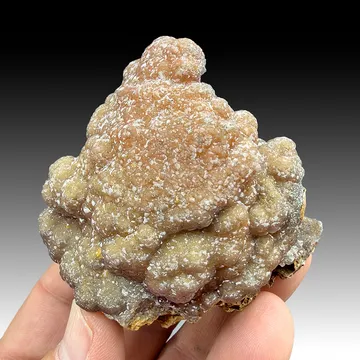
Santa Eulalia Mining District, Mexico — historic Ag-Pb-Zn locality prized for classic rhodochrosite, calcite, hemimorphite, creedite, fluorite and more.
Key facts
Santa Eulalia is one of the great old names of Mexican mineral collecting: a vast silver-lead-zinc carbonate replacement district in the rugged Sierra Santa Eulalia, east of Chihuahua City, where oxidized ore caves and deep sulfide workings have supplied both metal and specimens for centuries. Collectors know the district not for a single signature species, but for a whole suite of classics: iron-stained dogtooth calcite with glowing hematite phantoms, velvety pink rhodochrosite, blue-white hemimorphite in limonite-lined cavities, golden mimetite, lavender creedite, lustrous pyrrhotite, pale-green ludlamite, smithsonite, gypsum, fluorite, and a long tail of rarities. In geological terms it is a large, intrusion-related Ag-Pb-Zn system hosted chiefly by Cretaceous limestone and dolomite, with mantos, chimneys, skarns, and deeply oxidized zones that created the open spaces collectors prize.
Regional View
Country View
The district is traditionally divided into the West Camp around Francisco Portillo, with mines such as Potosí, Buena Tierra, Inglaterra, Santa Rita, Mina Vieja, Carmen, and Cocineras, and the East Camp centered on San Antonio. That division matters to collectors. West Camp labels tend to accompany many of the old-time rhodochrosites, calcites, mimetites, gypsum, and pseudomorphs; San Antonio is especially important for hemimorphite, smithsonite, creedite, fluorite, arsenopyrite, ludlamite, and sulfide-zone material. The best Santa Eulalia specimens have a distinctive “mine-made” look: gossanous brown matrix, iron-oxide films, hollow replacement textures, and crystals that often record several episodes of growth, coating, dissolution, and overgrowth.

Photo: Wikimedia Commons / James St. John
The district’s history is equally central to its appeal. Santa Eulalia helped drive the early prosperity of Chihuahua, and the old literature repeatedly returns to the same themes: extremely rich oxidized silver-lead ores near the surface, difficult water supply, crude early mining, and later industrial mining that followed sulfide ore to great depth. Modern collectors inherit that layered history in labels: “Santa Eulalia,” “San Antonio,” “Potosí,” “Buena Tierra,” “Francisco Portillo,” “Aquiles Serdán,” and sometimes only “Chihuahua, Mexico” may all refer to pieces from this district.

Search for specimens: View all specimens from Santa Eulalia Mining District, Mexico
Santa Eulalia lies in central Chihuahua, in the municipality of Aquiles Serdán, roughly east-southeast of Chihuahua City. The mining district occupies part of the Sierra Santa Eulalia, a limestone-dominated mountain range cut by faults, dikes, and volcanic cover. The ore system belongs to the Mexican belt of high-temperature carbonate-hosted Ag-Pb-Zn-Cu deposits—what collectors and economic geologists usually call carbonate replacement deposits, or CRDs. In these systems, metal-bearing hydrothermal fluids moved through structurally prepared limestone and dolomite, replacing favorable beds and fracture zones with massive sulfides, skarn minerals, and later oxidized secondary assemblages.
The district’s ores occur principally as mantos, chimneys, pods, and skarn bodies rather than as simple open veins. Structural control is strong, but stratigraphy is equally important: favorable carbonate beds were replaced along bedding, while crosscutting faults and dikes localized chimney-like bodies. The West Camp is best known for massive sulfide manto and chimney ores with local iron-calcic skarn development, whereas the East Camp around San Antonio is characterized by intrusion-centered skarn and peripheral massive sulfide bodies. The intervening Middle Camp produced much less ore.
Oxidation is the key to Santa Eulalia’s specimen mineralogy. Early mining chased near-surface oxidized ores dominated by lead carbonates and sulfates, silver halides, iron oxides, and zinc secondary minerals. In the West Camp, oxidation penetrated irregularly to great depth, its depth controlled in part by whether volcanic cover impeded downward-moving waters. In San Antonio, the water table is described in the modern mineralogical literature as high, flat, and well-defined near the 8th level, with a particularly strong supergene zinc zone above it and fresh sulfides below. That vertical zoning explains why Santa Eulalia collections often contain both bright oxidized-cavity specimens and sharp sulfide-zone crystals from the same overall district.
Mining began in the Spanish colonial period and became deeply entangled with the rise of Chihuahua. Old accounts describe surface and near-surface ores worked by hand, with richer lead-silver material carried from irregular stopes and “honeycombed” openings. Modern production shifted to larger industrial operations, especially after flotation allowed profitable treatment of the sulfide ores—galena, sphalerite, pyrrhotite, pyrite, arsenopyrite, and related minerals—that earlier miners had bypassed or abandoned at water and sulfide transitions. The major mines most often encountered on specimen labels include Potosí and Buena Tierra in the West Camp and San Antonio in the East Camp; other recurring labels include Inglaterra, Mina Vieja, Santa Rita, Cocineras, Carmen, Condesa, and Santa Juliana.
Production figures vary by author and date, but all credible accounts place Santa Eulalia among Mexico’s great silver-lead-zinc districts. Published summaries credit the district with hundreds of millions of ounces of silver and millions of tonnes of lead and zinc over its life. The 2006 Servicio Geológico Mexicano summary gives historical production on the order of 37 million metric tonnes of crude ore, with large contained silver, lead, and zinc totals; Peter Megaw’s 2018 mineralogical summary describes more than half a billion troy ounces of silver and nearly 6 million tonnes of lead and zinc recovered. The difference reflects differing cutoff dates and accounting approaches, not any doubt about the district’s scale.
Collector access today should be treated as industrial and restricted. These are real mines, not open public collecting areas. Historic workings are deep, complex, unstable, and in places flooded or water-filled; active or suspended operations, private ownership, ventilation hazards, and mine-security rules all make casual entry inappropriate. Most collector specimens reach the market through old collections, miner-preserved pocket material, dealer inventories, and occasional finds from authorized mining activity rather than through recreational field collecting.
The notable specimen finds are not confined to one species. Santa Eulalia has produced entire cavities and pocket zones of collectible material: dogtooth calcite with hematite phantoms, hemimorphite-smithsonite cavities in the San Antonio oxidation zone, purple creedite from both East and West Camp sources, rhodochrosite with quartz and sulfides from Potosí, gypsum plates and “ram’s horn” forms, mimetite on limonite and calcite, and sulfide specimens including pyrrhotite, pyrite, galena, sphalerite, and arsenopyrite. The district is large enough, old enough, and mineralogically overprinted enough that labels with a specific mine or level are worth a premium when the specimen quality supports them.
Santa Eulalia calcite is one of the district’s great collector staples, ranging from small gossan-cavity pieces to cabinet plates of sharp scalenohedral “dogtooth” crystals, commonly honey-brown, tan, white, colorless, or reddish from iron oxides. The most recognizable pieces show hematite coatings, clay-stained internal phantoms, or earlier hematite-marked crystals engulfed by later calcite, giving a layered red-brown “pineapple” or butterfly-like effect; Potosí, Buena Tierra, San Antonio, Santa Rita, Mina Vieja, and other West Camp workings all appear on good labels. Fine pieces are lustrous, undamaged, and three-dimensional, with transparent or translucent crystals rather than dull massive calcite; the best cabinet examples have crystals several centimeters long, balanced coverage, strong iron-oxide contrast, and, in some material, a notable orange to red fluorescence under ultraviolet light.
Santa Eulalia rhodochrosite is typically a collector’s carbonate-replacement rhodochrosite, not the large transparent gem rhombs of some vein localities: it occurs as rich pink to rose, satiny to lustrous crystals and crusts, commonly associated with quartz, fluorite, pyrrhotite, galena, sphalerite, pyrite, goethite, gypsum, hematite, and calcite. Potosí in the West Camp is especially important, including documented 11th-level material with quartz, pyrite, and sphalerite; San Antonio and the Contessa area also appear in occurrence records. Good specimens show saturated pink color, discrete crystal form, lively luster, and attractive contrast against sulfides or pale quartz; ordinary pieces are more massive, bruised, brown-coated, or visually lost in dark matrix.
Hemimorphite from Santa Eulalia is a classic supergene zinc-zone mineral, especially from San Antonio but also from Potosí and broader district workings, forming white, pale blue, bluish green, colorless, or grayish crystalline crusts, sprays, sheaves, and botryoidal to drusy linings on limonitic gossan. It is frequently associated with smithsonite, calcite, mimetite, hematite, goethite, chalcophanite, cerussite, willemite, aurichalcite, and wulfenite, reflecting the intensely oxidized Pb-Zn ore environment. The best pieces have sparkling, sharply crystallized hemimorphite over contrasting brown iron-oxide matrix, sometimes with yellow mimetite or greenish smithsonite; weak examples are chalky, massive, or so fragile that the druse has been rubbed smooth.
Quartz at Santa Eulalia is important less as isolated show quartz and more as a matrix and companion mineral that gives structure to rhodochrosite, fluorite, sulfide, and skarn-zone specimens. District records show quartz with calcite, fluorite, rhodochrosite, pyrrhotite, siderite, sphalerite, pyrite, hematite, goethite, galena, cinnabar, gypsum, arsenopyrite, ilvaite, dolomite, and hedenbergite, with minor varieties including citrine, prase, chalcedony, and rare amethyst noted in the district. Good collector pieces are those where quartz is clean, lustrous, and compositionally important—clear to smoky crystals carrying pink rhodochrosite, metallic sulfides, or colored fluorite—rather than plain massive silica with little display value.
Santa Eulalia mimetite is an oxidized lead-arsenate classic, especially abundant in the San Antonio and Potosí specimen record, appearing as yellow, orange-yellow, honey, tan, brownish, or greenish prismatic crystals, druses, and crusts on limonite, calcite, hemimorphite, or wulfenite-bearing matrix. Its common associations—calcite, wulfenite, hemimorphite, goethite, fluorite, dolomite, plattnerite, hematite, smithsonite, quartz, cerussite, and galena—make it one of the most diagnostic minerals for Santa Eulalia oxide-zone pieces. The best mimetite specimens show bright, separate, lustrous crystals rather than dusty coatings, and many collectors prize combinations where golden mimetite is perched on white hemimorphite or brown gossan with enough relief to avoid the “yellow crust” look.
At Santa Eulalia hematite is both a specimen mineral and a visual signature: it forms coatings, internal phantoms, red-brown films, black specular patches, and iron-oxide matrix throughout the oxidized and skarn-influenced parts of the district. San Antonio and Potosí records show hematite with calcite, and many of the most recognizable calcites owe their character to hematite deposited before or during later calcite growth. Fine hematite-bearing pieces are judged by contrast and preservation—sharp calcite phantoms, bright specular luster, or attractive red inclusions—while ordinary pieces are simply iron-stained gossan without distinct crystal form or compositional drama.
Santa Eulalia is unusually important for pyrrhotite, a species that rarely produces broadly admired display specimens; San Antonio, Inglaterra, and Potosí are all documented sources, and the species is part of the sulfide assemblage that became economically important after flotation. Collector pieces show bronze to dark-brown metallic hexagonal plates, tabular crystals, aggregates, and sometimes pseudomorphic relationships, associated with calcite, galena, pyrite, sphalerite, siderite, gypsum, quartz, fluorite, and goethite. The best examples have sharp terminations, strong metallic luster, and minimal oxidation to dull brown crusts; because pyrrhotite can tarnish and locally alter, stable, fresh-looking crystals from old collections are especially desirable.
Pyrite at Santa Eulalia occurs in the primary sulfide assemblage and in later specimen associations from both East and West Camp workings, including San Antonio and Potosí. It is documented with calcite, quartz, siderite, sphalerite, fluorite, dolomite, ludlamite, galena, pyrrhotite, smithsonite, arsenopyrite, cronstedtite, gypsum, and rhodochrosite, making it an important companion on both ore and display pieces. Good specimens show bright, well-formed brassy crystals or attractive intergrowths with calcite, rhodochrosite, siderite, or ludlamite; dull granular ore, oxidized cubes, and pyrite that is beginning to decompose are best avoided unless the association is exceptional.
Gypsum from Santa Eulalia includes clear selenite blades, sparkling plates of water-clear crystals, and curved “ram’s horn” forms from oxidized cavities and sulfate-rich mine environments. San Antonio and Inglaterra are documented specimen sources, and gypsum is associated with calcite, creedite, vanadinite, minium, goethite, pyrite, pyrrhotite, sphalerite, rhodochrosite, quartz, aragonite, and manganese oxides. Good gypsum pieces have glassy transparency, clean terminations, graceful curvature or undamaged blades, and matrix contrast; ordinary examples are bruised, cloudy, cleaved, or too fragile to survive handling without flaking.
Smithsonite is one of Santa Eulalia’s hallmark zinc-oxidation minerals, especially from San Antonio, where it is commonly associated with hemimorphite, calcite, fluorite, sphalerite, creedite, galena, baryte, anglesite, goethite, quartz, pyrite, rosasite, arsenopyrite, and hydrozincite. It appears as botryoidal, drusy, crystalline, and pseudomorphic material in pale blue-green, tan, cream, gray, or brownish tones, with notable specimens preserving the shape of earlier calcite scalenohedrons as sparkling smithsonite pseudomorphs. Strong pieces have rich surface luster, recognizable form, pleasing color, and meaningful association with hemimorphite or calcite; lesser pieces are massive zinc carbonate with little sparkle or poor color.
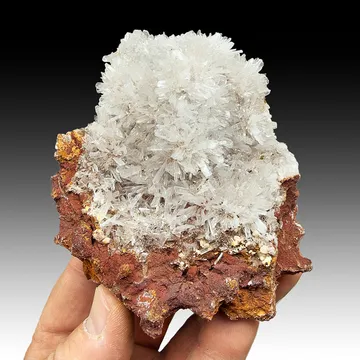
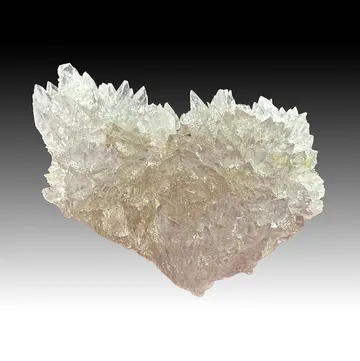
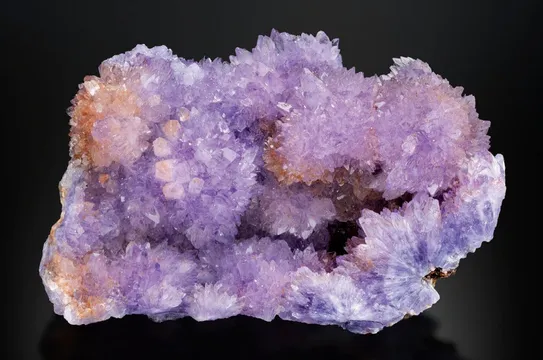
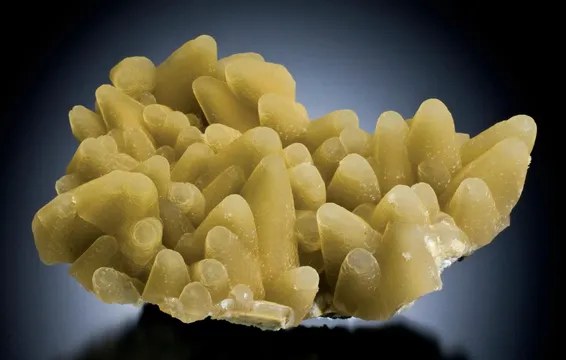
Santa Eulalia creedite is among the district’s most coveted specialties, famous for gemmy colorless to pale lavender and purple crystals, commonly in small but highly aesthetic clusters on matrix, smithsonite, goethite, hemimorphite, diopside, calcite, gypsum, or selenite. San Antonio, the West Camp, Condesa, Inglaterra, and Potosí all appear in the locality record, and dealers have long singled out the purple Santa Eulalia material as one of the world standards for the species. Fine specimens combine sharp monoclinic crystals, high glassy luster, good separation, and true lavender-purple color; the deepest purple pieces require careful display because that color is light-sensitive and can fade.
Fluorite from Santa Eulalia is a collector’s association mineral of real interest, occurring from San Antonio, Carmen, Buena Tierra, Potosí, Mina Vieja, and other district workings in blue, purple, green, colorless, and pale-toned crystals. It is documented with calcite, quartz, rhodochrosite, pyrrhotite, gypsum, sphalerite, siderite, pyrite, galena, smithsonite, mimetite, coronadite, ilvaite, natanite, willemite, baryte, hematite, sklodowskite, arsenopyrite, and goethite. The most desirable pieces use fluorite color as a foil for other Santa Eulalia species—purple with rhodochrosite, green or blue with calcite, fluorite with mimetite, or fluorite in zinc-oxidation assemblages—whereas plain damaged cubes without locality character are much less compelling.
Goethite is widespread in Santa Eulalia’s oxidized ore environment and appears both as brown to black botryoidal crusts and as more distinctive stalactitic, columnar, or epimorphic forms, including pieces described as casts after earlier gypsum. San Antonio, Inglaterra, Buena Tierra, and Potosí are all represented in the record, with associations including hemimorphite, quartz, smithsonite, gypsum, rhodochrosite, hedenbergite, creedite, fluorite, galena, pyrrhotite, siderite, ludlamite, chlorite-group minerals, and calcite. Better pieces have sculptural form, velvety to satiny luster, and warm golden-brown oxidation contrast; common goethite-stained matrix is visually useful but not necessarily collectible on its own.
Galena is one of the principal primary ore minerals of Santa Eulalia and is present in both massive ore and crystallized specimens from San Antonio, Potosí, Buena Tierra, and related workings. In collector pieces it is most attractive as bright lead-gray cubes or stepped aggregates with rhodochrosite, quartz, fluorite, sphalerite, pyrite, pyrrhotite, siderite, calcite, or secondary minerals such as smithsonite and anglesite. Because much district galena was mined as ore, high-quality specimens need sharp faces, metallic freshness, and a strong association; dull cleavages, heavy massive chunks, and oxidized ore pieces are common but far less desirable.
Santa Eulalia ludlamite is a genuine connoisseur species, especially from a small 1980s San Antonio discovery that produced pale to apple-green, translucent, lustrous platy crystals and aggregates on oxidized or sulfide-bearing matrix. Published and dealer records place ludlamite with siderite, quartz, pyrite, calcite, sphalerite, cronstedtite, fluorite, goethite, galena, pyrrhotite, and chlorite-group minerals; individual crystals and clusters are usually small, commonly in the millimeter to low-centimeter range. The finest pieces are vivid green, glassy, well-crystallized, and undamaged; they are scarce on the market because the classic find was limited and good specimens disappeared quickly into advanced collections.
Sphalerite is one of the backbone ore minerals of Santa Eulalia’s sulfide zone and occurs as dark brown to black, resinous to metallic crystals and masses, including iron-rich marmatite-type material. It is documented with calcite, quartz, fluorite, rhodochrosite, pyrite, galena, pyrrhotite, siderite, dolomite, smithsonite, arsenopyrite, and gypsum, and it appears in both primary sulfide ore and oxidation-zone transition assemblages. Good specimens show sharp lustrous crystals with contrasting rhodochrosite, calcite, quartz, or fluorite; massive black ore lacking crystal faces is historically relevant but rarely a display-grade sphalerite specimen.
Selenite, the transparent crystalline variety of gypsum, is an attractive Santa Eulalia accessory and occasional specimen-former, occurring as clear blades, plates, and transparent crystals in cavities from the district, including Potosí and San Antonio-related material. Recorded associations include calcite, aragonite, creedite, goethite, manganese oxides, quartz, and rhodochrosite, and the most appealing examples are creedite-on-selenite combinations or clean, glassy selenite blades with contrasting matrix. Good selenite must be judged harshly for bruising, cleaves, and edge wear because gypsum is soft; pristine transparency, sharp terminations, and undamaged crystal edges separate collection-quality pieces from fragile fragments.
Santa Eulalia aragonite occurs in oxidized carbonate environments as white, cream, tan, brownish, or iron-stained sprays, crusts, cave-calcite-like growths, and “flos ferri” style forms from both East Camp and West Camp records. San Antonio material is documented, and West Camp aragonite from the Francisco Portillo–Santa Rita area is associated with calcite and, in some records, adamite. Good pieces are airy, branching, lustrous, and intact, with recognizable aragonite form rather than massive carbonate; because Santa Eulalia also produces abundant calcite, aragonite labels deserve scrutiny unless the habit is convincing or the specimen has an older, reliable pedigree.
Siderite from Santa Eulalia is most important in San Antonio sulfide-zone and phosphate associations, where it occurs with quartz, ludlamite, calcite, pyrite, sphalerite, cronstedtite, fluorite, goethite, galena, pyrrhotite, and chlorite-group minerals. Collectors encounter it as tan, brown, gray-brown, or darker rhombs, curved rhombs, aggregates, or matrix for greener ludlamite and metallic sulfides. Fine siderite pieces show crisp rhombohedral form, good luster, and an attractive association—especially ludlamite on siderite or siderite with quartz and sulfides—while ordinary dull brown carbonate matrix is mostly of supporting interest.
Arsenopyrite is a well-documented Santa Eulalia sulfide-zone species, particularly from San Antonio and Potosí, where it occurs in sharp silvery to steel-gray crystals and aggregates with quartz, pyrrhotite, calcite, muscovite, sphalerite, pyrite, rhodochrosite, fluorite, gypsum, smithsonite, and siderite. Modern field notes from the collecting community specifically mention attractive San Antonio arsenopyrites among recent finds, and the mineral also fits the district’s high-temperature skarn and replacement assemblage. The best pieces have bright, well-terminated crystals with minimal tarnish and a clean matrix association; small but sharp arsenopyrite sprays can outrank larger dull sulfide chunks.
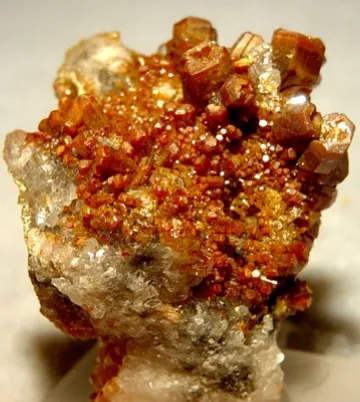
Vanadinite is a minor but notable oxidized lead-vanadium species at Santa Eulalia, documented in the East Camp and broader district mineral list and associated in San Antonio records with gypsum and minium-bearing oxidation assemblages. It is much scarcer here than at the great Mexican vanadinite districts, so collectors should expect small crystals or drusy occurrences rather than large brilliant red plates. Good Santa Eulalia vanadinite is valued primarily for locality, association, and sharpness—especially on gypsum or iron-oxide matrix—while unlabeled red vanadinite should not be casually assigned to Santa Eulalia without strong provenance.
Willemite is a documented zinc silicate in the Santa Eulalia oxidation and skarn-influenced zinc assemblage, recorded from both East and West Camp lists and commonly of greatest interest to specialists in fluorescent or secondary zinc minerals. It is associated in the district record with calcite, fluorite, hemimorphite, smithsonite, hydrozincite, and other zinc-zone species, but it is far less abundant as a show mineral than hemimorphite or smithsonite. The best willemite specimens from Santa Eulalia are those with confirmed identity, visible crystalline or massive response under ultraviolet light, and convincing association with the district’s zinc minerals; because many pale zinc silicates and carbonates can resemble one another, analytical or pedigree support adds real value.
Santa Eulalia’s wider mineral list is extraordinary for a single district, extending through primary sulfides and sulfosalts, skarn silicates, oxidized lead-zinc-copper minerals, uranium-vanadium species, phosphates, carbonates, sulfates, halides, and iron-manganese oxides. Notable collector and specialist species include cerussite, anglesite, wulfenite, aurichalcite, legrandite, adamite, descloizite, coronadite, chalcophanite, plattnerite, cassiterite, ilvaite, hedenbergite, diopside, andradite, grossular, vesuvianite, natanite, jeanbandyite, tyuyamunite, sklodowskite, hydronováčekite, cinnabar, acanthite, native silver, and bromargyrite/chlorargyrite-series silver halides. Although the district has produced world-class specimens of several species, Peter Megaw’s 2018 summary notes that no mineral species unique to Santa Eulalia had yet been found; its greatness lies instead in the breadth, quality, and overprinted complexity of its mineral assemblage.
Santa Eulalia specimens reward close label reading. “Santa Eulalia,” “Aquiles Serdán,” “Francisco Portillo,” “San Antonio,” “Potosí,” and “Buena Tierra” can all be legitimate, but they are not interchangeable levels of precision. An old label saying only “Chihuahua, Mexico” may conceal a Santa Eulalia origin, especially for dogtooth calcite, hemimorphite, smithsonite, creedite, or mimetite; conversely, familiar Mexican species such as hemimorphite, mimetite, wulfenite, and vanadinite are often misattributed among Santa Eulalia, Ojuela, Naica, Los Lamentos, and other Mexican localities. A mine-specific label, especially one naming Potosí, San Antonio, Buena Tierra, Inglaterra, Mina Vieja, or a level, is worth preserving.
No single widespread fake problem defines the locality, but mislabelling is common enough to matter. Calcite with hematite phantoms is one of the easier Santa Eulalia “looks” to recognize, yet similar iron-stained calcites occur elsewhere in Mexico. Hemimorphite and smithsonite require more care: massive pale zinc minerals on limonite can be confused, and dealer labels sometimes use old or loose names. Aragonite versus calcite should also be checked, particularly for “cave calcite” trade labels. For rarities such as ludlamite, natanite, jeanbandyite, willemite, tyuyamunite, and hydronováčekite, rely on old expert labels, analytical data, or reputable collection history rather than visual identification alone.
Condition standards vary by species. Calcite should be checked for bruised dogtooth tips and cleaved edges; many otherwise dramatic cabinet plates have peripheral contacting from pocket removal. Hemimorphite, smithsonite, and mimetite can be delicate, with rubbed druse, loose limonite, or powdery oxide matrix. Gypsum and selenite scratch and cleave easily, so pristine edges are uncommon and valuable. Pyrrhotite and some pyrite-bearing pieces deserve monitoring for alteration, especially if stored in damp conditions. Creedite crystals are often small and edge-contacted, and purple creedite should be displayed away from prolonged strong light because the color is known to be light-sensitive.
Fluorescence is an added attraction in selected Santa Eulalia material. Calcite with iron-oxide phantoms may fluoresce orange to red; hydrozincite-bearing zinc specimens can show strong response; willemite-bearing pieces are worth checking under shortwave ultraviolet. As always, fluorescence should supplement—not replace—solid species identification.
Market availability is uneven. Calcite, hemimorphite, rhodochrosite, mimetite, gypsum, smithsonite, and fluorite appear regularly enough that collectors can be selective, though top-quality examples with old labels and undamaged crystals are not casual purchases. Creedite, ludlamite, pyrrhotite, fine arsenopyrite, and well-documented rarity suites are much harder to replace. The strongest Santa Eulalia pieces combine three things: unmistakable locality character, excellent crystal preservation, and a label that narrows the district to a mine, camp, level, pocket, or older collection.
The old Santa Eulalia literature reads at times like mining geology and at times like frontier folklore. In William Adams’ 1909 report, the discovery story is attributed to older historians including Baron von Humboldt, Charles A. Dahlgren, and General Lew Wallace: around 1700, three fugitives hiding in the Santa Eulalia fastness sent word to a priest that, if pardoned and absolved, they could show him enough silver to build a cathedral. In Adams’ telling, the pardon was arranged, the mines opened, and miners and traders poured in. Whether read as literal history or mining-camp legend, the story captures how Santa Eulalia was remembered—as a mountain that could turn outlaw knowledge into a city.
Another early account gives the district one of its most evocative place-name explanations. Spanish prospectors coming from the Santo Domingo placers saw the iron-stained capping of Picacho Oriental glistening in the sun. To them it was “Muy buena tierra para mineral”—very good ground for ore. The phrase echoes directly in the mine name Buena Tierra, and it suits the specimens: so many Santa Eulalia pieces are still visually built from “good earth,” with brown gossan, iron oxide, pale carbonate, and bright secondary minerals grown where ore and water met.
Adams was fascinated by the cathedral arithmetic. He repeated older claims that the Chihuahua Cathedral cost 1,800,000 pesos and the church at Santa Eulalia another 150,000 pesos, paid in part by a levy of one real for every marc of silver produced. The figures led him to enormous inferred production totals for the early years, but the mineral collector need not settle the accounting to feel the scale: this was a district whose oxidized silver-lead ores were rich enough to become architecture, civic power, and legend.
The same report gives a vivid picture of early mining before hoists and flotation plants. Rich ores were carried through honeycombed workings on human backs, up “chicken” ladders, or on burros over corkscrew trails. Only the richer lead-silver ores were worth moving under such conditions. Waste stayed underground; leaner ore was left behind. That old selectivity helps explain the modern district: later companies did not simply inherit exhausted holes, but a maze of old workings, bypassed sulfides, low-grade bodies, and oxidation zones that still had geological and specimen potential.
A modern collecting note from Walter S. Bowser in the Canadian Rockhound gives a quieter but useful field collector’s snapshot around 2000. Bowser called Santa Eulalia one of his favorite localities and noted that, while most mines were closed, San Antonio El Grande in the East Camp was still the active exception, about six miles from the West Camp and roughly a half hour by road. He pointed to recent San Antonio finds of creedite, arsenopyrite, blue, purple, and green fluorite, and the “ever present hemimorphite.” Just as important, he warned that many labels said only “Chihuahua,” while other labels used Aquiles Serdán or Francisco Portillo—small paper details that still decide whether a specimen is merely pretty or properly historic.
Peter K. M. Megaw, “The Santa Eulalia Mining District, Chihuahua, Mexico,” The Mineralogical Record, 49(1), 2018 — The major modern collector-mineralogical monograph on the district.
Peter K. M. Megaw, “Mineralogy of the Santa Eulalia Mining District, Chihuahua, Mexico,” 39th Annual New Mexico Mineral Symposium, 2018, pp. 22–24 — Concise overview of district geology, camps, oxidation, production, and world-class specimen species.
Peter K. M. Megaw, “Mineralogy of the Santa Eulalia Mining District, Chihuahua, Mexico,” New Mexico Mineral Symposium abstract page — Searchable abstract version of the 2018 symposium summary.
P. K. M. Megaw, J. Ruiz, and S. R. Titley, “High-temperature, carbonate-hosted Ag-Pb-Zn(Cu) deposits of northern Mexico,” Economic Geology, 83(8), 1988, pp. 1856–1885 — Foundational regional paper placing Santa Eulalia in the northern Mexico CRD belt.
William Paxton Hewitt, “Geology and Mineralization of the Main Mineral Zone of the Santa Eulalia District, Chihuahua, Mexico,” Transactions of the American Institute of Mining Engineers, 241, 1968, pp. 228–260 — Classic technical study of the district’s main mineralized zone.
Servicio Geológico Mexicano, Carta Geológica-Minera Aquiles Serdán H13-C67, Chihuahua, 1:50,000 — Government geological-mining map metadata with useful Spanish-language summary of stratigraphy, structures, ore bodies, production, and mine status.
Wm. Adams, General Report on the Santa Eulalia Mining District and the Old Spanish Mines of the Fresno Ranch, Chihuahua, Mexico, 1909 — Historic mining report rich in early district descriptions, mine names, discovery legends, and period mining economics.
J. Spratt and P. Tandy, “The composition and structure of jeanbandyite and natanite,” Mineralogical Magazine, 62(5), 1998, pp. 707–712 — Technical paper documenting Santa Eulalia among the confirmed occurrences of jeanbandyite and natanite.
Mineralogical Record index entry for creedite — Useful for tracing older published references to Santa Eulalia creedite, including notes on crystal size and Potosí occurrences.
Mindat: Santa Eulalia Mining District, Aquiles Serdán Municipality, Chihuahua, Mexico — Main locality page with mineral list, sublocalities, age information, and locality references.
Mindat: West Camp, Santa Eulalia Mining District — Focused page for the Francisco Portillo/West Camp side of the district, including Potosí, Buena Tierra, and other important specimen sources.
Mindat: San Antonio Mine, East Camp, Santa Eulalia Mining District — Key sublocality page for San Antonio, the most important East Camp source for many oxidized zinc and sulfide-zone specimens.
Mindat: Calcite from Santa Eulalia Mining District — Occurrence page with associations and gallery links for the district’s abundant calcite.
Mindat: Rhodochrosite from Santa Eulalia Mining District — Occurrence page documenting rhodochrosite sources and associations, including Potosí and San Antonio.
Mindat: Hemimorphite from Santa Eulalia Mining District — Useful association data for the district’s classic hemimorphite-smithsonite-mimetite assemblages.
Mindat: Mimetite from Santa Eulalia Mining District — Occurrence page for mimetite and its common associations with calcite, wulfenite, hemimorphite, and goethite.
Mindat: Fluorite from Santa Eulalia Mining District — Occurrence page showing fluorite’s broad role with calcite, quartz, rhodochrosite, sulfides, smithsonite, and mimetite.
Mindat: Quartz from Santa Eulalia Mining District — Association-heavy occurrence page useful for understanding quartz as a matrix and companion species.
Mindat: Smithsonite from San Antonio Mine — Strong reference for San Antonio smithsonite and its zinc-zone associations.
Mindat: Creedite from San Antonio Mine — Includes the important note that purple Santa Eulalia creedite is light-sensitive.
Mindat: Pyrrhotite from San Antonio Mine — Occurrence page marking San Antonio pyrrhotite as world-class for the species.
Mindat: Siderite from San Antonio Mine — Useful for the siderite-ludlamite-quartz-pyrite association.
Mindat: Arsenopyrite from Aquiles Serdán Municipality — Documents district arsenopyrite associations with quartz, pyrrhotite, calcite, muscovite, and other sulfides.
Walter S. Bowser, “Mineral Collecting in Santa Eulalia, Mapimi, and Cerro del Mercado, Mexico,” Canadian Rockhound, 2000 — Collector-oriented field note with useful label cautions and comments on San Antonio finds.
Wikimedia Commons: Minerals of Santa Eulalia District — Open image category with Santa Eulalia mineral photographs, including calcite, creedite, gypsum, and other species.
Fluorescent Mineral Society FMDB: Mexico — Includes fluorescent Santa Eulalia entries such as calcite, hydrozincite, and fluorite-bearing specimens.
.jpg)
