






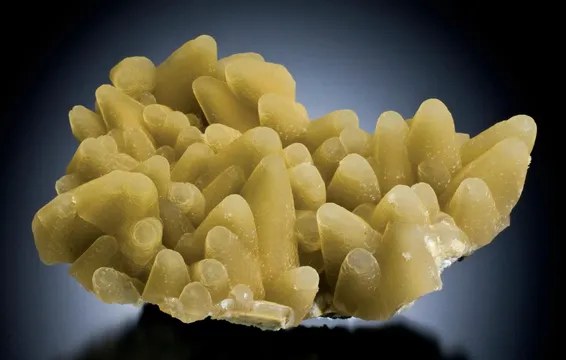
West Camp, Mexico - historic Santa Eulalia locality, producing creedite, rhodochrosite, and sulfides; prized for cavern-grown, multi-generation crystals.
Key facts
West Camp is the western half of the Santa Eulalia mining district in Chihuahua, one of Mexico’s great silver-lead-zinc carbonate-replacement districts and one of the most recognizable names on old specimen labels. It lies on the western flank of the Sierra Santa Eulalia, near Santo Domingo and the historic Real de Santa Eulalia, in a belt of Cretaceous limestone and dolomite cut by intrusive dikes and sills and later mantled by Tertiary volcanic rocks. For collectors, West Camp matters because its ore system combined bulk metal production with repeated mineralizing, oxidizing, and retrograde alteration events that opened vugs, fissures, skarn cavities, and sulfide pockets at exactly the right times for crystal growth.
The West Camp assemblage is broad, but its personality is unmistakable: purple to amethystine creedite sprays, pink to cherry-red rhodochrosite from the Potosí Mine’s main silicate orebody, world-class brassy pyrrhotite, caramel-brown and red-phantom “Mariposa” calcite, green adamite on white aragonite, lustrous hemimorphite, yellow mimetite, smithsonite, quartz, pyrite, sphalerite, siderite, galena, fluorite, ilvaite, hisingerite, and rare secondary species. The best specimens are not merely “Mexican ore pieces”; they have a crisp, cavern-grown aesthetic—sparkling, three-dimensional, often multi-stage, with one generation visibly overgrowing another.
Historically, Santa Eulalia has been worked since the early 1700s and became one of Mexico’s major silver and base-metal producers. West Camp was the dominant productive area in the classic literature on the district, especially the “Main Mineral Zone” studied by Prescott, Hewitt, Megaw, and later researchers. Its deepest sulfide bodies and silicate orebodies produced not only ore but some of the district’s most prized cabinet and thumbnail specimens, particularly from the Potosí, Buena Tierra, Inglaterra, Santo Domingo, and related workings.
Regional View
Country View
West Camp specimens reward close looking because many are records of a sequence rather than a single crystallization event: hematite-rich first-generation calcite buried inside later translucent calcite; pyrrhotite crystals partly or wholly replaced upward by pyrite; rhodochrosite, fluorite, quartz, and rare species grown into voids opened during retrograde hydration of silicate ore; yellow mimetite deposited on aragonite, calcite, or manganese-oxide surfaces in the oxidized zone.

Search for specimens: View all specimens from West Camp, Mexico
West Camp is the classic western mineralized center of the Santa Eulalia district, Aquiles Serdán Municipality, Chihuahua. The district is a limestone- and dolomite-hosted carbonate replacement system, part of the larger Mexican belt of intrusion-related silver-lead-zinc deposits. Its host rocks are mainly Lower Cretaceous carbonate and evaporite units folded into a broad, doubly plunging anticline, then intruded by multiple igneous bodies and overlain by volcanic and volcaniclastic rocks. The West Camp differs from the East Camp in style: instead of the more symmetric intrusion-cored skarn geometry of San Antonio, West Camp is dominated by massive sulfide mantos and chimneys, with local high-level calcic-iron skarn and silicate ore bodies.
The principal ore minerals of the West Camp sulfide system are pyrrhotite, pyrite, sphalerite, and galena, with minor chalcopyrite and locally arsenopyrite and silver-bearing phases. West Camp ore bodies occur as mantos—roughly horizontal, stratabound replacement bodies—and chimneys or pipes, which are steeper discordant replacements and fissure-related bodies. In the Potosí Mine, the orebody is described as chimney-like, and the West Camp ores are commonly divided into three broad assemblages: early silicate-rich ore with silver-bearing iron sulfides and relatively little galena or sphalerite; the main lead-silver-zinc massive sulfide assemblage of pyrrhotite, pyrite, sphalerite, and galena with fluorite, quartz, and carbonates; and a later lead-rich phase dominated by galena or its oxidation products.
The Potosí Mine is central to the collector history of West Camp. It is the source of all documented West Camp rhodochrosite, and the best rhodochrosite is tied to the main silicate orebody, extending roughly from between the 8th and 9th levels down to the 11th level, with the 10th level as the principal access. That body is a calcic-iron skarn and silicate ore assemblage built from manganoan hedenbergite and manganoan fayalite, then altered by retrograde hydration to chlorite, quartz, ilvaite, and rhodochrosite. The alteration created cavities in which rhodochrosite, fluorite, quartz, hübnerite, and rare species could crystallize.
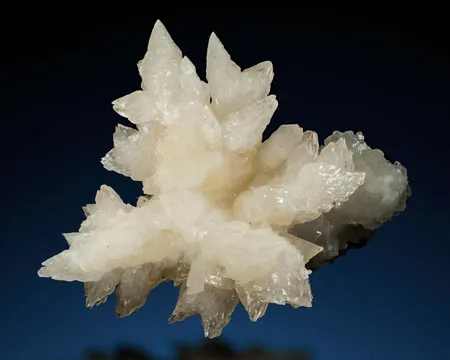
The Buena Tierra Mine and related Buena Tierra Ramp are best known to collectors for distinctive multi-generation calcite. Older “Mariposa” or butterfly calcite specimens show reddish to brown first-generation scalenohedral crystals coated or included with iron oxides, overgrown by later translucent yellow-brown to caramel calcite. Some specimens show sharp internal red-brown phantoms. Later Buena Tierra Ramp finds, especially from the 2019–2021 period, added arborescent cave-style calcites: white dogtooth-prism trunks and branches tipped with more transparent calcite, sometimes associated with hyalite opal.
Mining history at Santa Eulalia reaches back to 1703, when the near-surface oxide ores rich in cerussite, anglesite, and silver halides were exploited. As workings deepened, miners reached sulfide ores that became increasingly important after selective flotation made large-scale treatment practical in the early 20th century. West Camp was historically the principal producing side of the district, and the classic Main Mineral Zone was examined in detail by early and mid-20th-century mine geologists before the modern mineralogical synthesis by Peter Megaw.
Collecting access today should be regarded as closed industrial access, not a recreational rockhounding locality. West Camp workings are mine property, old workings are hazardous, and the deepest levels have been reported as progressively flooding. Modern specimens reach the market through miners, old collections, deaccessions, and occasional pockets encountered during mine or ramp work. Labels with mine, level, orebody, and pocket information matter greatly here: “Potosí Mine, Main Silicate Orebody, 10th Level” communicates much more than a generic “Santa Eulalia” label, and the specimen’s mineral associations often support or challenge the label.
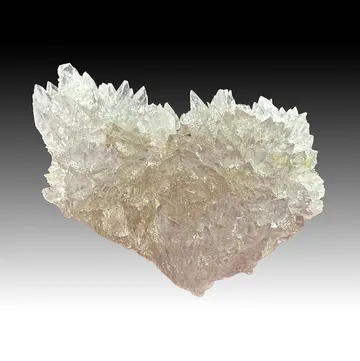
West Camp creedite is one of the locality’s signature collector minerals, especially the amethystine to purple sprays and clusters from the early 1980s finds, with individual crystals commonly around 1–1.7 cm and clusters in the miniature to small-cabinet range. The finest pieces show bright luster, transparent to gemmy terminations, well-separated radial crystal groups, and minimal bruising; ordinary examples tend to be paler, more crowded, or partially contacted. Good West Camp labels may simply say Santa Eulalia or West Camp, but Potosí and Inglaterra associations occur in the literature and gallery records, and gypsum, calcite, quartz, fluorite, and oxidized sulfide matrix are natural companions. What separates a top West Camp creedite is the saturated purple color combined with sharp, undamaged, three-dimensional sprays rather than flat crusts or dull aggregates.
West Camp calcite ranges from ordinary white cave-style material to superb Buena Tierra “Mariposa” and phantom calcite, and the latter is the form collectors most strongly associate with the camp. Classic examples show two generations: reddish-brown scalenohedral calcite, often stained or included by hematite and iron oxides, overgrown by translucent yellow, amber, brown, or colorless rhombohedral to dogtooth forms that preserve red-brown internal phantoms. Buena Tierra specimens may be small-cabinet to very large cabinet pieces, with individual crystals to several centimeters; later Buena Tierra Ramp calcites form branching arborescent groups, commonly with white first-generation dogtooth “trunks” and more transparent terminal crystals. Top pieces have strong architecture, sharp terminations, visible phantoms, and limited edge chatter, because cleaved tips and rubbed crystal edges are common on this material.
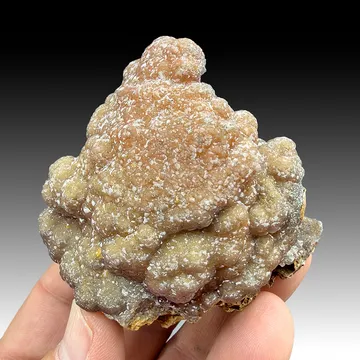
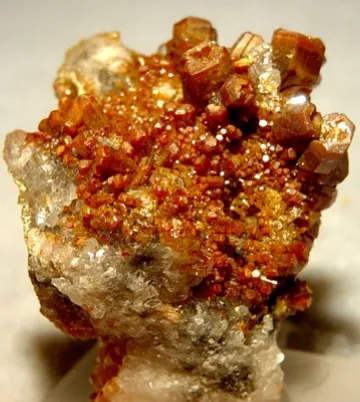
All well-documented West Camp rhodochrosite comes from the Potosí Mine, especially the main silicate orebody between the 8th/9th and 11th levels, and it is one of the district’s great specialties. Its habits are unusually varied: pale pink botryoidal crusts, sparkling mammillary aggregates, simple rhombohedra, elongated scalenohedra with rhombohedral terminations, cherry-red prismatic crystals, and complex satiny crystals on gossan, quartz, fluorite, pyrrhotite, sphalerite, galena, hisingerite, or hematite-rich matrix. Many classic crystals are thumbnails to miniatures, with crystals from a few millimeters to about 1–1.6 cm, while larger matrix pieces are substantially rarer. The best specimens combine saturated pink to red color, complete exposed crystals, clean terminations, and meaningful matrix contrast; pale botryoidal crusts are attractive, but the sharply terminated red scalenohedra and well-composed rhodochrosite-on-quartz or rhodochrosite-on-pyrrhotite pieces are the elite West Camp look.
Santa Eulalia is a classic Mexican source of fine ludlamite, and West Camp-labeled examples should be evaluated carefully because the best-published district material is often tied to San Antonio in the East Camp, while some older labels use broad “Santa Eulalia” wording. Fine Santa Eulalia ludlamite occurs as sharp, translucent, apple-green to dark green monoclinic crystals, commonly on limonite or oxidized matrix and sometimes with siderite and pyrite; crystals around 6 mm to more than 1 cm are significant, and a published specimen photographed in the 2018 Mineralogical Record Santa Eulalia issue carries a 1.3 cm main crystal. For a West Camp-attributed specimen, the premium is not only color and luster but documentation: mine-level provenance, an old collection label, or a pedigree that explains why the piece belongs to West Camp rather than the more commonly cited San Antonio material.
The Potosí Mine is world-class for pyrrhotite, especially stout brassy-brown pseudohexagonal prismatic crystals and parallel aggregates from the main silicate orebody, historically collected in quantity during active exploitation of the 1960s and 1970s. Crystals may sit on massive pyrrhotite or occur with galena, sphalerite, quartz, calcite, siderite, dolomite, pyrite, and rhodochrosite; specimens with bright metallic luster, strong crystal definition, and sculptural three-dimensional form are far superior to dull ore chunks. Individual crystals to several centimeters are known, including parallel pyrrhotite crystals described to 6 cm on quartz-calcite matrix, but many excellent pieces are smaller and prized for form. Replacement is part of the West Camp story: upward in the system, pyrrhotite gives way to pyrite and pyrite-after-pyrrhotite aggregates, so a sharp crystal with partial pyrite replacement can be a geological narrative as well as an aesthetic specimen.
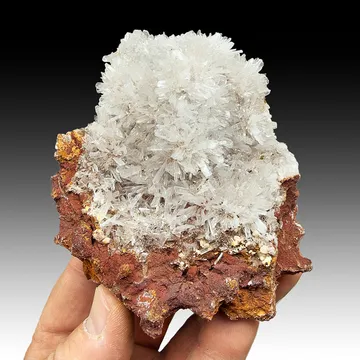
West Camp hemimorphite is documented from the Potosí Mine and sits among the best-known hemimorphite productions of the broader Santa Eulalia district. The finest examples are lustrous, vitreous, white to colorless prismatic groups on gossan, sometimes lightly dusted with red hematite, with individual crystals reaching several centimeters; one noted Potosí specimen carries sharp groups to about 4.6 cm on gossan matrix. Typical associations include calcite, mimetite, quartz, hematite, goethite, smithsonite, and oxidized zinc-lead minerals. The collector grade depends on sparkle, translucency, crystal separation, and intact terminations; heavily bruised, chalky, or massive white crusts lack the wet, glassy look that makes the best Potosí hemimorphite so desirable.
Quartz from West Camp is important less as a stand-alone species than as a structural and aesthetic partner to the Potosí Mine’s silicate-ore mineralization. Main Silicate Orebody quartz may show multi-stage growth: earlier milky to colorless elongated crystals overgrown by later smaller, gemmy smoky to citrine-tinted crystals at high angles, producing a bristling “pincushion” or mace-like surface. It occurs with rhodochrosite, calcite, pyrrhotite, sphalerite, fluorite, ilvaite, siderite, galena, goethite, hematite, and pyrite, and transparent quartz on pink rhodochrosite is one of the more attractive combinations. Fine pieces have sharply defined secondary overgrowths and open, readable form; ordinary quartz from the camp can be drusy or massive, but the multistage Potosí examples are the ones that tell the deposit story.
West Camp mimetite is an oxidized-zone species documented from Potosí, Buena Tierra, Santo Domingo, and historically from Inglaterra, though the Inglaterra report has been corrected in modern locality notes because the mimetite cavity was actually in Potosí workings. The best pieces show yellow to yellow-brown acicular crystals clustered into near-spherical aggregates or coatings on aragonite, calcite, dolomite, goethite, chalcophanite, and other oxidized matrix; some older specimens were labeled as pyromorphite or hedyphane-variety material and later reinterpreted. Crystal sizes are generally millimetric, but dense spherical sprays on contrasting white carbonate matrix make very attractive miniatures. Quality rests on vivid yellow color, discrete radial structure, clean contrast, and reliable identification, because the mimetite-hedyphane-pyromorphite labeling problem is real in this district.
West Camp smithsonite occurs in the oxidized zinc-rich parts of the system, especially in Potosí and Buena Tierra associations, and is usually collected as botryoidal to crustiform material rather than the big freestanding crystals of some other Mexican localities. Colors include white, pale greenish, yellowish, and brownish tones, with associations including calcite, mimetite, hemimorphite, goethite, limonite, pyrite, and rare native selenium-bearing material in at least some Potosí-style assemblages. The best pieces are those where smithsonite contributes color and surface texture to a well-balanced assemblage—greenish botryoids under or beside contrasting arsenates, carbonates, or sulfides—rather than featureless crusts. Because Santa Eulalia has produced smithsonite across the district, precise mine provenance is valuable when assigning a specimen specifically to West Camp.
Pyrite in West Camp is both a primary sulfide and, in many collector specimens, a replacement product after pyrrhotite. In the Potosí and Inglaterra context it may occur as bright metallic crystals, granular masses, or pseudomorphic pyrite after earlier pyrrhotite, reflecting the upward transition in iron-sulfide species from pyrrhotite-dominant deeper levels to pyrite-rich upper zones. Associations include pyrrhotite, galena, sphalerite, quartz, calcite, siderite, and rhodochrosite, and pyrite can be an important accent in rhodochrosite-quartz matrix pieces. The best West Camp pyrite specimens are those with crisp replacement texture, sharp metallic faces, or aesthetic contrast with carbonates; common massive pyrite is far less collectible unless it preserves a clear pyrrhotite habit or pocket context.
Sphalerite is one of the principal ore minerals of West Camp’s lead-silver-zinc system and is especially important in Potosí sulfide and silicate-ore specimens. It occurs with galena, pyrrhotite, pyrite, quartz, calcite, siderite, dolomite, fluorite, and rhodochrosite, often as dark brown to black crystals or coatings on pyrrhotite faces and parting lines. In collector terms, West Camp sphalerite is usually a strong association mineral rather than the showiest species on the piece, but it can add excellent contrast to pink rhodochrosite, brassy pyrrhotite, or pale quartz. Better specimens have visible discrete crystals, lustrous surfaces, and a clear paragenetic role; dull black patches on broken ore are common and should not carry the same value.
West Camp adamite is a prized Potosí oxidized-zone specialty, particularly the green spherical aggregates on white aragonite from a narrow aragonite-lined fissure mined in the summer of 1995 between the 8th and 9th levels on the Q-Trend. The best known pieces show intensely sparkling, translucent, light mint-green to “daiquiri” colored adamite balls, with aggregates reported to about 1.4 cm across, aesthetically perched on sprays of white aragonite. This material is quite distinct in look from the more abundant Ojuela adamite familiar to most collectors. Top examples have saturated pastel green color, bright luster, intact spherical aggregates, and open placement on aragonite; ordinary pieces may be sparse, colorless to pale, or damaged in the fragile aragonite support.
Siderite from West Camp is most attractive as an association mineral on Potosí sulfide and quartz specimens, where tan to brown rhombohedra or rosettes contrast against brassy pyrrhotite, silvery galena, dark sphalerite, and white quartz or calcite. It commonly appears with pyrrhotite, quartz, galena, sphalerite, calcite, and dolomite; in better pieces the siderite forms distinct rosettes or rhombohedral accents rather than massive carbonate. Collectors should value well-placed siderite that improves the composition of a pyrrhotite or sulfide specimen, especially when the crystals are clean and not simply iron-stained crust. Fine siderite is not the main reason most collectors seek West Camp material, but in the right association it helps define the classic Potosí orebody aesthetic.
Other documented West Camp minerals include galena, fluorite, gypsum, aragonite, dolomite, goethite, hematite, limonite, ilvaite, hedenbergite, manganoan fayalite, chlorite-group minerals, hisingerite, hübnerite, chalcophanite, natanite, hedyphane, wulfenite, descloizite, cerussite, anglesite, hydrozincite, willemite, and several rare uranium-bearing secondary minerals from oxidized pockets. The district is exceptionally rich mineralogically, with roughly 200 species recorded from Santa Eulalia as a whole, but modern summaries emphasize that no species is currently unique to the district. For West Camp collectors, the rarities most likely to sharpen a specimen’s importance are not type-locality status but precise mine-level provenance, reliable analytical confirmation, and a clear connection to the Potosí Main Silicate Orebody or a named Buena Tierra or Potosí pocket.
West Camp is a label-sensitive locality. “Santa Eulalia” alone may be perfectly traditional, but it is not precise; serious collectors should look for West Camp, Potosí Mine, Buena Tierra Mine, Inglaterra Mine, Santo Domingo Mine, level, orebody, or pocket details when available. Potosí Main Silicate Orebody labels are especially important for rhodochrosite, quartz, pyrrhotite, and associated rare species. Buena Tierra labels are key for the red-brown phantom calcites. Inglaterra labels deserve scrutiny for mimetite, because modern locality notes correct at least one historical mimetite attribution to Potosí workings.
Mislabelling is more common than outright fakery. Yellow West Camp arsenate specimens may have been sold as pyromorphite, mimetite, or hedyphane depending on era and dealer; analytical confirmation is valuable for better pieces. Hisingerite, a waxy brown to black alteration mineral associated with Potosí rhodochrosite, has been mistaken for a surprising range of materials, even “coal” on old or casual labels. Broad Santa Eulalia ludlamite labels may refer to San Antonio in the East Camp rather than West Camp, so West Camp-attributed ludlamite should be bought with provenance in mind.
Condition issues are predictable. Creedite sprays chip easily at terminations and outer needles. Rhodochrosite scalenohedra and botryoidal crusts can be bruised on high points, and repaired pyrrhotite or rhodochrosite matrix pieces are not unusual in older stock. Buena Tierra calcite commonly shows small cleaves, edge chatter, and abraded tips; these should be judged relative to the size and complexity of the specimen rather than treated as automatic disqualifiers. Hemimorphite and aragonite-adamite combinations are fragile, with broken aragonite needles and bruised adamite balls reducing value sharply.
Pyrrhotite deserves storage awareness. Well-crystallized Potosí pyrrhotite has a reputation for being stable when kept dry and properly housed, but iron sulfides should never be stored in damp conditions. Avoid sealed humid boxes, temperature swings, and contact with acidic or sulfur-reactive storage materials. Some West Camp pyrrhotite specimens show pyrite replacement, which is natural and collectible; unstable decomposition, powdering, or sulfurous odor is a different matter and should be treated as a conservation concern.
Fluorescence can add interest, especially in calcite and hyalite opal associations. Some Santa Eulalia calcites fluoresce under ultraviolet light, and Buena Tierra Ramp calcite with hyalite opal may show a bright green response from the opal. As always, do not infer locality solely from fluorescence; use it as an added observation, not proof.
Market availability is uneven. Common calcite, mimetite, and sulfide association pieces appear regularly, but top-grade West Camp creedite from the early 1980s, sharp red Potosí rhodochrosite, large lustrous pyrrhotite crystals, prime Buena Tierra phantom calcite, and green 1995 adamite-on-aragonite are all much more selective purchases. The best specimens usually come from old collections, documented dealer archives, and deaccessions rather than steady new production.
The Potosí Mine’s main silicate orebody is the heart of West Camp’s most memorable collector story. In mining terms it was a calcic-iron skarn and silicate orebody; in collector terms it was the chamber where Santa Eulalia rhodochrosite learned every trick it knows. The body extended from between the 8th and 9th levels down to the 11th, with principal access on the 10th level. There, prograde manganoan hedenbergite and manganoan fayalite were later hydrated and altered to chlorite, quartz, ilvaite, and rhodochrosite. That retrograde change opened voids, and those voids became tiny display cases underground: pink botryoids on dark waxy hisingerite, red scalenohedra on gossan, rhodochrosite with quartz, fluorite, hübnerite, pyrrhotite, sphalerite, galena, and rare species. The range is so broad that two genuine Potosí rhodochrosites can look as if they came from different districts entirely—one a pale sparkling crust, another a single cherry-red scalenohedral “obelisk” with stepped faces.
The creedite story belongs to the early 1980s. Dealers and collectors still speak of the 1982–1984 production as a brief, extraordinary event, one described in old specimen records as the “best creedite find ever.” The finest examples were not colorless sprays but saturated purple to amethystine clusters, with gemmy crystals around a centimeter or more and enough matrix to hold them in elegant relief. Many passed through important collections, including Lloyd Tate material and classic dealer stock, and they remain benchmarks for the species: purple, sharp, sparkling, and instantly Mexican.
The Buena Tierra calcites tell a quieter but visually obvious story: two generations of growth frozen inside one another. The earlier crystals grew as scalenohedra and were stained or coated reddish brown by iron oxides. Later, more translucent calcite enveloped them, turning the first generation into internal red-brown phantoms. Collectors call many of these pieces “Mariposa” or butterfly calcite because the crystal architecture and phantoms produce a distinctly layered, winged, amber-brown look. Decades after the classic early-1980s phantom calcites, the Buena Tierra Ramp yielded a different style between 2019 and 2021: branching cave-like forms, white dogtooth calcite forming the trunks and limbs, with clearer terminal crystals and, on some specimens, neon-green fluorescent hyalite opal.
One of the most charming West Camp pockets was not huge in size but was unforgettable in color. In the summer of 1995, a narrow aragonite-lined fissure in the oxidized zone of the Potosí Mine, between the 8th and 9th levels on the Q-Trend, produced green adamite on white aragonite. The best cabinet-size specimen was later recorded from the John Barlow Collection and featured in his 1996 book. The visual formula was simple and perfect: sparkling white aragonite needles supporting mint-green adamite balls, some aggregates around 1.4 cm across. For collectors used to Ojuela adamite, the Potosí material has its own personality—cooler, paler, more airy, and far less commonly encountered.
.jpg)