






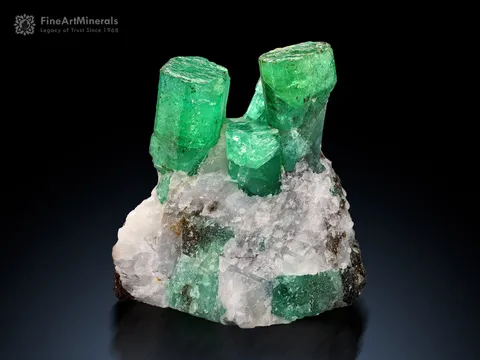
Pakistan - alpine pegmatites yield icy aquamarine on muscovite, Stak Nala tourmaline, and emeralds from Swat, offering dramatic, collectible mineral specimens.
Key facts
For mineral collectors, Pakistan is less a single locality than a chain of high mountain specimen provinces strung along the collision zone of India with Asia. Its fame rests above all on the granitic pegmatites and alpine-type clefts of Gilgit-Baltistan—Shigar, Braldu, Stak Nala, Haramosh, Nagar, Hunza, and neighboring valleys—where beryl, topaz, tourmaline, fluorite, apatite, feldspar, quartz, mica, garnet, titanite, and epidote-group minerals occur in dramatic, display-ready combinations. These deposits sit in some of the youngest, highest, and most tectonically active mountains on Earth, where leucogranites, gneisses, suture-zone rocks, and rapidly exhumed metamorphic terranes have been cut by gem-bearing veins and miarolitic pegmatites.
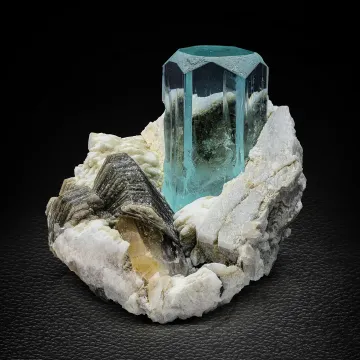
The country’s best specimens have a recognizable “Pakistani” look: icy blue aquamarine perched on silvery muscovite books; gem-green to pink-zoned Stak Nala tourmaline rising from snow-white cleavelandite; pale, sharp topaz on albite or smoky quartz; bubblegum-pink fluorapatite and red-pink fluorite from Chumar Bakhoor; lustrous epidote and titanite from Alchuri alpine clefts; and intense, small but saturated emerald crystals from the Swat Valley. A fine Pakistani specimen is rarely just one mineral—it is usually an architectural arrangement of contrasting textures: transparent prism, bladed feldspar, mica rosette, quartz point, and accessory color all locked into a pocket-built sculpture.
Historically, Pakistan emerged onto the modern international mineral market in the late twentieth century. Swat emeralds were introduced to the gem trade in the early 1980s, Stak Nala tourmalines became classics of the 1980s, and the Shigar–Skardu and Nagar pegmatite fields transformed expectations for aquamarine and combination pegmatite specimens. Peshawar’s Namak Mandi market became the great trading stage where material from Pakistan, Afghanistan, and the wider region passed from miners and brokers to dealers, gem cutters, museums, and collectors worldwide.
Regional View
Country View
Pakistan’s importance also comes from range. Few countries offer so many collector-grade styles in one national label: pegmatite minerals from Gilgit-Baltistan, emerald from Swat, pink topaz from Katlang, peridot from Sapat Gali, brookite and included quartz from Balochistan, rare-earth minerals from Zagi Mountain, and fluorite from both pegmatite and carbonate settings. For advanced collectors, the locality wording on a Pakistani label matters enormously; “Pakistan” alone is almost never enough. The country contains many distinct deposits, and a specimen labeled only by nation may hide critical value differences between Shigar Valley, Chumar Bakhoor, Stak Nala, Alchuri, Swat, Sapat Gali, Katlang, Kharan, and Zagi Mountain.

Photo: Wikimedia Commons

Photo: Wikimedia Commons
Search for specimens: View all specimens from Pakistan
Pakistan’s collectible mineral deposits fall into several main geological families. The best-known are granitic pegmatites and alpine-type clefts of Gilgit-Baltistan, especially in the Shigar Valley, Braldu Valley, Haramosh area, Stak Nala, Nagar, Hunza, and related districts around Skardu and Gilgit. These deposits are tied to Himalayan–Karakoram tectonics: crustal melting, leucogranite emplacement, high-grade metamorphic rocks, and late-stage volatile-rich fluids that opened pockets and miarolitic cavities. In the Shigar Valley, gem-bearing pegmatites intrude gneissic and metamorphic rocks and are famous for aquamarine, colorless to yellow topaz, fluorite, schorl, garnet, fluorapatite, morganite, goshenite, epidote, and quartz. At Stak Nala, symmetrically zoned miarolitic pegmatite sills in the Nanga Parbat–Haramosh Massif produced the country’s classic color-zoned tourmaline, with quartz, feldspar, cleavelandite, schorl, and accessory rare oxides.
The best pegmatite ore bodies are not broad industrial ore deposits in the usual sense. They are pocket systems: pegmatite dikes and sills with coarse feldspar–quartz–mica zones, local albite-rich replacement zones, and miarolitic cavities where crystals grew into open space. In the field, miners pursue these structures by following pegmatite outcrops into steep mountain slopes, sometimes tunneling along mineralized zones and sometimes opening isolated pockets from cliffs and high ridges. Productive pockets may yield only broken feldspar and quartz, or they may reveal a small suite of freestanding aquamarine, topaz, tourmaline, fluorite, apatite, and mica specimens. Because many localities are high, remote, and seasonal, pockets are often recovered by small local teams rather than large mechanized operations.
Swat emerald belongs to a different geological story. The Swat Valley deposits occur along the Indus suture zone and Main Mantle Thrust, where altered ultramafic and mafic rocks, carbonate-talc-magnesite assemblages, graphite-bearing metasediments, and quartz veins provided the right chemical contrasts for emerald. The major Swat emerald mines include Mingora, Gujar Killi, Charbagh, Makhad, and Shamozai. Mingora was the earliest modern emerald mine, discovered in 1958, and Swat emerald reached the world market at Tucson in 1981. The finest Swat emerald is typically small but intensely colored, and the locality is mineralogically distinctive for chromium-rich emerald hosted with talc, magnesite, dolomite, graphite, pyrite, quartz, and related suture-zone minerals.
Katlang, near Mardan in Khyber Pakhtunkhwa, is Pakistan’s classic pink topaz locality. Its topaz is not a granitic pegmatite product in the same style as Shigar or Stak Nala. The documented occurrence is in calcite veins, with or without milky quartz, cutting calcareous rocks near Katlang. Colorless, purple, and pink topaz occur there with transparent quartz; complete euhedral crystals are uncommon because tectonic movement fractured much of the material before or during incorporation into later vein calcite. Good Katlang specimens are valued for natural pink to violet-pink color, luster, and the survival of slender crystals on matrix.
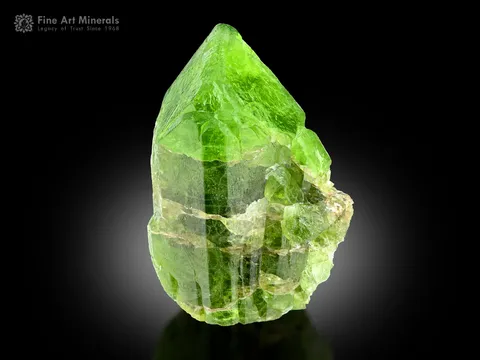
Sapat Gali, in the Naran–Kaghan area of Khyber Pakhtunkhwa, is Pakistan’s great peridot locality. There, gem forsterite occurs in the Sapat mafic-ultramafic complex of the Kohistan arc, hosted by dunite and related ultramafic rocks near the Indus suture and Main Mantle Thrust region. The finest specimens are euhedral to subhedral lime-green peridot crystals, sometimes on dark matrix and sometimes with characteristic black needle-like inclusions often attributed to ludwigite or related borate/oxide phases. Unlike loose faceting rough, the most collectible Sapat Gali pieces preserve natural crystal faces, terminations, associations, and matrix relationships.
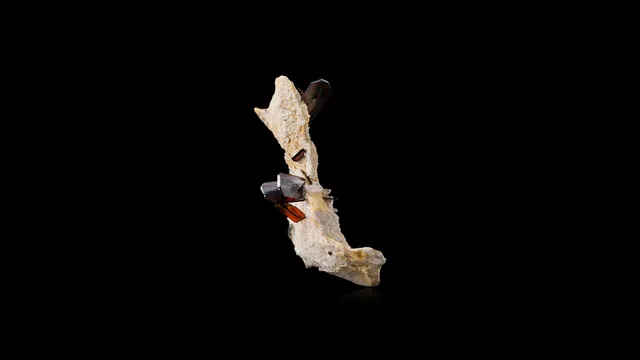
Balochistan adds another major style: quartz, brookite, anatase, calcite, aragonite, brucite, and related minerals from arid mountain districts such as Kharan and the Ras Koh Range. Kharan brookite on quartz has become a modern classic: reddish-brown to nearly black lustrous blades on clear quartz, often in alpine-looking arrangements. Balochistan is also the source of much trade material sold as faden quartz, petroleum-inclusion quartz, calcite, aragonite, and colorful carbonate specimens, though labels in this part of the trade can be especially loose and should be checked carefully.
Mining history varies sharply by province and mineral. The Gemstone Corporation of Pakistan played a significant historical role in Swat emerald and Stak Nala tourmaline, especially from the late 1970s through the 1980s and early 1990s, but much modern specimen recovery is artisanal or small-scale, driven by local miners, village groups, brokers, and private leaseholders. In Gilgit-Baltistan, current gemstone mining is regulated through provincial mineral-title and gemstone-permit systems; practical collecting access is therefore not a matter of casual field collecting but of legal mineral rights, permissions, local ownership, safety, and security. Serious collectors should assume that specimens are obtained through the trade, not by visiting and collecting independently.
Notable specimen finds include the Shigar Valley aquamarines on albite, muscovite, quartz, and orthoclase; Chumar Bakhoor aquamarine with pink fluorapatite and fluorite; Stak Nala bi- and tri-colored tourmaline on cleavelandite and quartz; Alchuri epidote, clinozoisite, zoisite, and titanite from alpine-type clefts; Katlang natural pink topaz in calcite vein material; Sapat Gali peridot; Swat emerald, including trapiche-type material from the Mingora area; and Zagi Mountain rare-earth minerals, especially bastnäsite-(Ce), xenotime, gadolinite-group minerals, and the type-locality mineral hingganite-(Nd).
Pakistani aquamarine is the emblematic mineral of the Shigar–Skardu, Nagar, and Haramosh pegmatite fields, where pale to medium icy blue beryl crystals occur in zoned pegmatites and miarolitic cavities with albite, cleavelandite, muscovite, quartz, smoky quartz, schorl, microcline, orthoclase, topaz, fluorapatite, fluorite, and occasional morganite or goshenite. The best pieces are not merely blue beryl crystals but complete pocket compositions: glassy hexagonal prisms with sharp terminations, undamaged faces, attractive color zoning or blue saturation, and a clean perch on mica books or white albite. Chumar Bakhoor and Shigar Valley pieces are especially prized when aquamarine rises upright from muscovite or feldspar with pink fluorapatite, pink or green fluorite, or well-placed quartz, while ordinary examples tend to be pale, contacted, rehealed, or detached crystals without matrix presence.
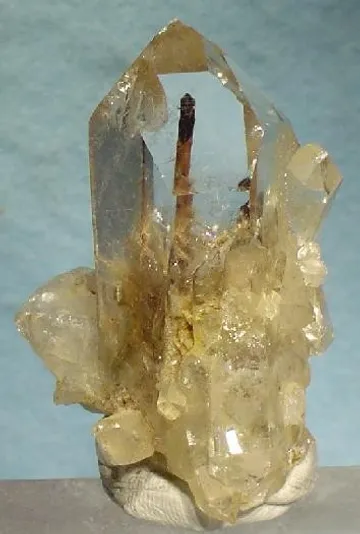
Pakistan produces several collector-important quartz styles rather than one uniform quartz habit: clear to smoky pegmatite quartz with aquamarine, topaz, feldspar, mica, and tourmaline from Gilgit-Baltistan; faden quartz from Balochistan; petroleum-inclusion quartz from Baluchistan trade sources; and quartz hosting brookite, rutile, or anatase from Kharan and the Ras Koh region. In the Shigar and Stak Nala pegmatites, quartz commonly forms clear prisms, smoky crystals, pocket linings, or large support crystals for aquamarine, topaz, and tourmaline. The finest Pakistani quartz specimens have transparency, undistorted terminations, strong association value, and undamaged included or attached minerals; ordinary pieces are common because quartz is abundant, so locality precision, inclusion interest, and aesthetics determine value.
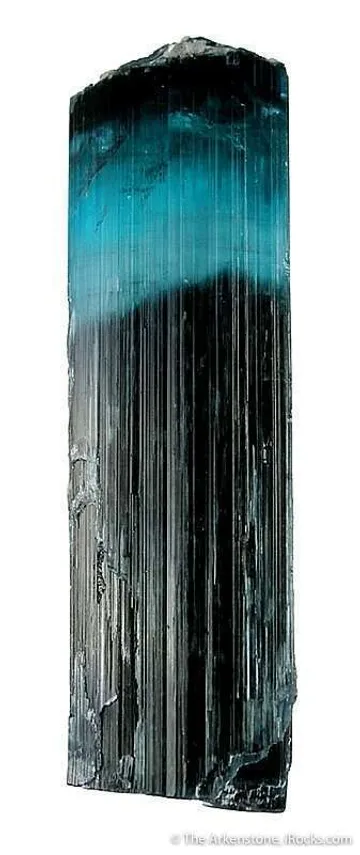
Pakistan’s tourmaline reputation rests chiefly on Stak Nala, where bi- and tri-colored elbaite crystals from miarolitic pegmatite pockets became modern classics, and on schorl-rich pegmatites in Shigar, Haramosh, Chumar Bakhoor, and related districts; Swat also hosts chemically distinctive chromium-rich magnesian tourmalines associated with emerald-bearing altered ultramafic rocks. Fine Stak Nala pieces show lustrous, doubly terminated or sharply terminated prisms with green bodies, pink caps, blue-green zones, or watermelon-style color changes on white cleavelandite or quartz. Top examples are balanced, unrepaired or minimally repaired, and display strong color contrast without heavy abrasion; lesser pieces may be broken singles, etched fragments, dark schorl sprays, or poorly documented Pakistan/Afghanistan trade material lacking a precise mine attribution.
Feldspar is the structural stage on which many Pakistani pegmatite specimens perform: albite and cleavelandite form white bladed matrices, microcline and orthoclase make buff to cream blocky supports, and feldspar-rich wall zones host aquamarine, topaz, schorl, fluorite, fluorapatite, muscovite, and garnet in Shigar, Chumar Bakhoor, Stak Nala, and Haramosh pockets. Collectors value feldspar here less as an isolated species and more as the aesthetic matrix that preserves pocket architecture. The best feldspar specimens show crisp bladed or blocky forms, clean contrast with colored accessory crystals, and minimal bruising; ordinary feldspar matrices are common, but a well-composed feldspar base can make an aquamarine, tourmaline, or topaz specimen far more important.
Pakistani fluorite is most celebrated from Chumar Bakhoor and neighboring Nagar and Shigar pegmatites, where pink, red-pink, green, and multicolored crystals occur with muscovite, aquamarine, fluorapatite, feldspar, quartz, and calcite. Chumar Bakhoor fluorite can form sharp cubes or modified crystals on silvery mica, and exceptional specimens combine contrasting fluorite color with blue aquamarine or hot-pink fluorapatite in the same pocket assemblage. Good pieces show saturated color, transparency, crisp edges, and secure matrix; ordinary material is paler, contacted, cleaved, or reduced to loose fragments, and fluorite’s perfect cleavage makes condition a central concern in judging Pakistani examples.
Pakistan offers two major topaz styles: colorless to pale yellow pegmatite topaz from Shigar, Haramosh, and related Gilgit-Baltistan localities, and the far rarer natural pink to purple-pink topaz from Katlang near Mardan. Pegmatite topaz occurs with albite, cleavelandite, quartz, smoky quartz, muscovite, fluorite, beryl, schorl, and occasionally elbaite, often as glassy prismatic crystals on white feldspar; Katlang topaz occurs in calcite veins in calcareous rocks with quartz and is prized for its distinctive slender crystals and natural pink tones. The finest Pakistani topaz specimens are complete, lustrous, transparent, and clearly localized; ordinary examples are colorless damaged crystals, loose gem rough, or treated/irradiated material whose color and locality need scrutiny.
Albite is one of the defining matrix minerals of Pakistani pegmatites, especially in Shigar Valley, Stak Nala, Chumar Bakhoor, and Haramosh specimens, where it occurs as white to cream masses, bladed cleavelandite, blocky crystals, and replacement-zone aggregates carrying aquamarine, topaz, tourmaline, muscovite, fluorapatite, fluorite, quartz, and garnet. In top-tier Pakistani pieces, albite provides the clean white contrast that makes blue beryl, green-pink tourmaline, or pink apatite visually pop. Collectible albite specimens have sculptural, undamaged blades and strong associated crystals; average examples are massive feldspar bases or bruised cleavelandite plates with little independent display value.
Garnet from Pakistan is most familiar to collectors as orange to reddish spessartine and almandine-spessartine in the Shigar–Skardu pegmatite district, with additional grossular-andradite and calc-silicate garnets from alpine and metamorphic settings. In the pegmatites, garnet appears with albite, muscovite, quartz, feldspar, aquamarine, topaz, schorl, and fluorapatite, usually as sharp dodecahedral to trapezohedral crystals or small clusters on pale matrix. The best Pakistani garnets are bright, lustrous, well isolated, and aesthetically placed with contrasting feldspar or quartz; ordinary pieces are dark, included, edge-worn, or scattered as minor accessory grains that do not carry the specimen visually.
Pakistan’s apatite is chiefly fluorapatite from the northern pegmatites, with Chumar Bakhoor famous for vivid pink crystals on muscovite and Shigar Valley producing purple, pink, and greenish apatite associated with albite, muscovite, quartz, microcline, schorl, aquamarine, fluorite, and topaz. Good Pakistani apatite specimens show glassy luster, saturated pink to purple color, sharp hexagonal form, and harmonious association—especially with aquamarine or fluorite. Ordinary apatite is often small, contacted, loose, or partially dissolved, and because apatite is relatively brittle and lower in hardness than many associated pegmatite minerals, edge bruising and cleaved contacts should be expected and carefully evaluated.
Pakistani peridot is the gem forsterite of Sapat Gali in the Naran–Kaghan region, where crystals occur in dunite of the Sapat mafic-ultramafic complex rather than in the granitic pegmatites that produce much of the country’s aquamarine and tourmaline. The best Sapat Gali specimens show bright lime to grassy green color, real transparency, natural crystal faces, and terminations, sometimes with dark matrix and fine black needle inclusions. Most peridot in commerce is loose gem rough or partial crystals, so collector-grade pieces with undamaged euhedral form, matrix, and provenance to Sapat Gali stand apart from ordinary broken, abraded, or overly included material.
Schorl is widespread in Pakistan’s granitic pegmatites and is particularly common in Shigar, Chumar Bakhoor, Haramosh, and Stak Nala assemblages, where black tourmaline prisms accompany aquamarine, albite, cleavelandite, muscovite, quartz, topaz, fluorapatite, microcline, and fluorite. It may form lustrous black sprays, stout prisms, included rods in quartz or beryl, or dramatic contrast pieces with pale feldspar and mica. Good schorl specimens from Pakistan are sharp, lustrous, complete, and compositionally important to the display; ordinary examples are abundant black rods in feldspar, damaged sprays, or overly dark combinations where the schorl overwhelms the more delicate pegmatite minerals.
Smoky quartz from Pakistan is best appreciated as a pegmatite companion mineral in Shigar and related Gilgit-Baltistan pockets, where transparent gray to brown crystals occur with aquamarine, topaz, orthoclase, albite, muscovite, feldspar, and schorl. The most desirable specimens show clean, glassy smoky crystals that frame or elevate aquamarine or topaz rather than simply filling space, and some classic pieces place blue beryl directly on smoky quartz with pale feldspar. Fine Pakistani smoky quartz is judged by luster, clarity, undamaged terminations, balanced association, and absence of distracting contacts; plain, dark, chipped, or massive quartz has much lower collector interest.
Calcite in Pakistan occurs across several settings, from late-stage pegmatite and alpine-type pockets in Chumar Bakhoor and Shigar to carbonate veins such as those at Katlang and broader carbonate deposits in Balochistan. In specimen terms, calcite is most important where it is part of a known assemblage: associated with pink fluorite and muscovite at Chumar Bakhoor, with topaz and quartz at Katlang, or with alpine cleft minerals such as titanite and epidote around Alchuri. Good calcite from Pakistan is sharp, transparent to translucent, well positioned, and locality-specific; ordinary calcite is abundant and often confused with aragonite or trade-name carbonate material unless supported by habit, testing, or provenance.
Mica is central to the visual identity of Pakistani pegmatites, especially the silver muscovite books and rosettes that host aquamarine, fluorapatite, fluorite, topaz, schorl, albite, and feldspar from Shigar Valley, Chumar Bakhoor, Haramosh, and related districts. In fine specimens, mica is not background clutter but a reflective pedestal that gives the piece height, sparkle, and contrast against blue, pink, green, or colorless crystals. Collector-quality mica combinations preserve crisp books or radiating plates without crushing, staining, or excessive trimming; ordinary mica-rich specimens can look busy or fragile, and the mica commonly hides contacts, repairs, or instability in the matrix.
Pakistan’s emerald specimens come chiefly from the Swat Valley deposits of Khyber Pakhtunkhwa, especially Mingora and Gujar Killi, with additional occurrences documented at Charbagh, Makhad, Shamozai, Barang, Gandao, and Khaltaro. Swat emerald is typically small but can be intensely saturated, chromium-rich, and distinctive in matrix of magnesite, talc, dolomite, graphite, quartz, pyrite, and altered ultramafic rock. The finest specimens show sharp hexagonal crystals with vivid green color and intact matrix context; ordinary pieces are heavily fractured, pale, coated, or loose cutting rough, and trapiche-type Swat emeralds are a special modern rarity when documented by origin and structure.
Aragonite from Pakistan is best known to collectors through carbonate specimens from Balochistan and through less common occurrences in the Skardu–Shigar region, including records from Alchuri and broader Skardu-area localities. Much Pakistani aragonite in the decorative trade appears as banded, blue, white, tan, or orange carbonate material, and not all pieces sold under fashionable trade names are reliably separated from calcite without testing. The better collector examples have clear locality, recognizable crystal habit or tested identity, attractive color, and stable, undamaged surfaces; ordinary material is often massive carbonate, mislabeled “calcite/aragonite,” dyed or polished decorative stock, or too vaguely localized to be mineralogically useful.
Orthoclase is a frequent feldspar component in Pakistan’s granitic pegmatites, especially on Shigar Valley aquamarine and smoky quartz specimens, where cream to buff feldspar crystals form the matrix for blue beryl, quartz, muscovite, schorl, topaz, and albite. Collectors usually encounter Pakistani orthoclase as part of combination pieces rather than as isolated crystals, but a clean feldspar block with sharp faces can add geometry and color warmth to an aquamarine specimen. The best pieces show crisp feldspar forms, strong contrast, and undamaged associated minerals; ordinary orthoclase is massive, stained, or simply the trimmed support for a more valuable pegmatite crystal.
Muscovite from Pakistan is most collectible as a bright, silvery matrix mineral in Shigar, Chumar Bakhoor, Haramosh, and Stak Nala pegmatites, where it forms books, rosettes, and bladed aggregates with aquamarine, fluorapatite, fluorite, topaz, albite, quartz, schorl, and feldspar. Chumar Bakhoor muscovite is especially important because it carries some of the most attractive aquamarine–fluorapatite–fluorite combinations from Pakistan. Good muscovite specimens have sparkling, intact plates and a role in the specimen’s architecture; average pieces are flaky, damaged, rusty, or used merely as a base, and careless handling can quickly reduce a clean mica surface to a powdery, bent, or shed-prone matrix.
Pakistani epidote is most closely associated with Alchuri and nearby alpine-type clefts in the Shigar Valley, where epidote, clinozoisite, zoisite, titanite, calcite, quartz, albite, chlorite, actinolite, prehnite, and diopside occur in mountain-cleft assemblages distinct from the gem pegmatites. Fine Alchuri epidote can show lustrous green to brown-green prismatic crystals, sometimes faden-like or tabular, with a classic alpine aesthetic reminiscent of older European cleft localities. The best specimens are sharp, freestanding, undamaged, and accurately distinguished from clinozoisite or zoisite; ordinary material is dull, bruised, massive, or loosely labeled as “epidote group” without analytical certainty.
Cleavelandite, the bladed albite variety, is one of the signature matrix minerals of Pakistani pegmatites, especially at Stak Nala, Shigar, Chumar Bakhoor, and Haramosh, where it hosts tourmaline, aquamarine, topaz, fluorapatite, fluorite, schorl, quartz, mica, and garnet. In the finest Stak Nala tourmaline specimens, white cleavelandite blades create the visual contrast that makes green and pink tourmaline crystals appear to float. Collector-grade cleavelandite is clean, bright, sharp, and structurally supportive; ordinary cleavelandite matrices are crushed, stained, over-trimmed, or so fragile that the attached gem crystals are at risk during shipping and handling.
Hematite is documented in Pakistan’s Shigar Valley pegmatites and in several metamorphic and rare-earth-bearing settings, and it is also important as an inclusion or accessory mineral in Swat emerald and Zagi Mountain assemblages. In collector specimens from the northern pegmatite province, hematite may appear as metallic blades, plates, coatings, or inclusions with quartz, rutile, feldspar, and other pocket minerals. The best Pakistani hematite pieces are lustrous, sharply formed, and clearly localized—especially when paired with rutile, quartz, or feldspar—while ordinary examples are dark iron staining, unattractive coatings, or accessory material whose identity and locality add little value without documentation.
Sphene, now formally titanite, is a notable Pakistani alpine-type mineral from Alchuri and nearby Shigar Valley clefts, where it occurs with calcite, epidote, clinochlore, albite, quartz, amphibole/byssolite, prehnite, grossular, clinozoisite, diopside, rutile, and adularia. Fine specimens show lustrous wedge-shaped crystals, typically greenish, yellow-brown, or brown, with sharp edges and high dispersion when transparent enough to transmit light. Top Pakistani sphene pieces are sharply perched and undamaged, often with calcite or epidote; ordinary examples are chipped wedges, dull grains, or poorly labeled “titanite/sphene” from broad Pakistan trade lots without a specific Alchuri or Shigar attribution.
Spessartine from Pakistan is a pegmatite garnet of the Shigar–Skardu district, where orange to reddish crystals occur with albite, cleavelandite, quartz, muscovite, microcline, aquamarine, schorl, fluorapatite, fluorite, and topaz. Crystals are usually small to miniature-scale but can be bright and sharply isolated on pale feldspar, making them effective accent minerals in combination pieces. The best spessartine specimens have saturated orange color, glassy luster, sharp form, and a clean white or smoky quartz matrix; ordinary examples are dark, included, scattered, or sold simply as “garnet from Pakistan” without the chemical and locality clarity that serious collectors prefer.
Fluorapatite is one of the great accessory minerals of the Pakistani pegmatites, with Chumar Bakhoor producing famous hot-pink crystals on muscovite and Shigar Valley producing pink, purple, and greenish crystals on albite, microcline, quartz, and mica. The finest examples are sharply hexagonal, lustrous, and saturated, especially when associated with aquamarine or fluorite in a balanced matrix specimen. Ordinary Pakistani fluorapatite is often small, edge-worn, contacted, or detached, and the species’ relative softness and brittleness mean that even otherwise attractive crystals should be examined carefully for bruised edges, cleavages, and reattached terminations.
Beryl in Pakistan includes aquamarine, goshenite, morganite, and emerald, but the mineral’s broad identity is most visible in the northern pegmatites of Shigar, Chumar Bakhoor, Haramosh, and related areas, where colorless, blue, and pink beryl crystals occur with feldspar, albite, muscovite, schorl, quartz, topaz, fluorite, and fluorapatite. Good non-varietal beryl specimens are valued when they show sharp hexagonal form, transparency, unusual color transitions, or meaningful association rather than simply being pale beryl crystals. Ordinary beryl from Pakistan is common as broken aquamarine or goshenite rough, and specimen value rises sharply when the piece has intact terminations, matrix, and a precise valley or mine attribution.
Goshenite, colorless beryl, occurs in Pakistan’s evolved pegmatites, especially in Shigar Valley and neighboring Gilgit-Baltistan localities where it may be found with albite, cleavelandite, muscovite, quartz, schorl, topaz, fluorapatite, fluorite, microcline, and aquamarine. Because colorless beryl lacks the immediate visual appeal of aquamarine or morganite, collector-grade Pakistani goshenite depends on crystal perfection, glassy transparency, sharp terminations, and attractive matrix. The best pieces can be elegant, water-clear hexagonal prisms on albite or mica; ordinary material is easily overlooked as pale beryl, broken rough, or misdescribed aquamarine with too little color.
Morganite from Pakistan is a scarcer pink beryl component of evolved pegmatites in Shigar Valley and related northern districts, typically associated with albite, muscovite, quartz, feldspar, schorl, topaz, aquamarine, and fluorapatite. Pakistani morganite tends to be pale peach to pink rather than deeply saturated, so the best specimens rely on clean form, gemminess, and association with contrasting matrix minerals. Fine examples are complete, lustrous, and clearly localized; ordinary pieces may be faintly pink beryl, broken gem rough, or ambiguous color-variety material where lighting, photography, or trade description exaggerates the morganite identity.
Other documented minerals from Pakistan deepen the country’s appeal for systematic collectors. Zagi Mountain near Peshawar is a major rare-earth and rare-species locality, known for bastnäsite-(Ce), xenotime-(Y), gadolinite-group minerals, astrophyllite, aegirine, riebeckite, zircon, monazite, parisite-type material, and hingganite-(Nd), for which Zagi Mountain is the type locality. Stak Nala is the type locality for billwiseite, ideally Sb5(Nb,Ta)3WO18, a rare antimony-niobium-tantalum-tungsten oxide described from the pegmatite. Balochistan has supplied world-class brookite on quartz and included quartz from Kharan and the Ras Koh Range, while the broader northern region has produced clinozoisite, zoisite, axinite, vesuvianite, diopside, rutile, anatase, pollucite, microlite-group minerals, columbite-tantalite species, cassiterite, zircon, and rare phosphate and oxide minerals from pegmatite and alpine settings.
Locality precision is the first rule with Pakistani specimens. “Pakistan” is too broad for serious valuation. A label reading “Shigar Valley,” “Chumar Bakhoor,” “Stak Nala,” “Alchuri,” “Swat Valley,” “Mingora,” “Gujar Killi,” “Katlang,” “Sapat Gali,” “Kharan,” or “Zagi Mountain” carries far more meaning than a national label alone. Older labels may use “Northern Areas,” “Skardu District,” “Baltistan,” “NWFP,” “Baluchistan,” “FATA,” or older spellings such as Chumar Bakor, Chumar Bakur, Soppat, Suppat, or Zegi Mountain. These historical names are not necessarily wrong, but they should be reconciled with modern administrative geography where possible.
Mislabelling between Pakistan and Afghanistan is common in the trade, especially for tourmaline, spodumene, aquamarine, beryl, and some pegmatite combinations. Peshawar has long been a major regional market, so Afghan material can acquire Pakistani trade labels and Pakistani material can be sold through Afghan or mixed Central Asian channels. Stak Nala tourmaline has a recognizable style, but not every green-pink tourmaline on cleavelandite is safely Stak Nala without provenance. Likewise, elbaite attributed broadly to Shigar Valley deserves caution, because some gallery and trade material historically assigned to Shigar has been questioned as possible Afghan material.
Topaz requires special attention. Katlang pink topaz is naturally famous, but topaz is one of the gem materials most often affected by irradiation and other color treatments worldwide. Treated Pakistani topaz and misrepresented pink or sherry-colored material have been discussed in collector circles for years. Natural Katlang crystals have a distinctive slender habit and calcite-vein geological context, whereas much pegmatite topaz from northern Pakistan is colorless, pale yellow, or sherry-toned and may occur with albite or cleavelandite. Demand documentation for high-value pink crystals, especially if the color is unusually saturated, zoned, or unsupported by a credible Katlang-style matrix.
Aquamarine and tourmaline specimens often show repairs, fills, or restorations. This is not unique to Pakistan, but the country’s best pieces are commonly delicate combinations recovered from blasted or hand-worked pegmatite pockets. Large aquamarine crystals on mica or feldspar should be examined for reattached bases, restored terminations, glued accessory crystals, dyed or stabilized matrix, and concealed breaks under mica. Stak Nala tourmalines are frequently highly exposed on cleavelandite, so repairs are common in older and larger specimens; an honest repair is not necessarily disqualifying, but it must be disclosed and reflected in price.
Fluorite from Chumar Bakhoor is vulnerable to cleavage damage, edge bruising, and cleaved contacts. Pink and red fluorite cubes can look excellent from the front while showing cleaved backs or repaired attachment points. Fluorapatite is softer and more brittle than its bright color suggests; check crystal edges and terminations under magnification. Muscovite-rich matrices shed easily, and mica books can hide glue, trimming, or unstable attachment. Cleavelandite matrices are attractive but fragile, so shipping damage is a real risk.
Swat emerald specimens should be separated from faceting rough. Fine matrix emeralds are typically small, and vivid color is valued, but many Swat crystals are fractured. Oils and fillers are common in emerald as a gem material, and matrix specimens may also have surface oils, resin, or luster-enhancing treatment. Trapiche-type Swat emerald should be treated as a specialized purchase requiring strong documentation; the pattern alone is not enough.
Peridot from Sapat Gali is often sold as faceting rough, partial crystals, or loose fragments. True specimen-grade peridot with natural faces, terminations, and matrix is much less common. The best crystals can contain dark needle inclusions, and these may add character if they do not overwhelm transparency. Be alert for polished, oiled, or broken crystals represented as complete natural specimens.
Carbonate material from Pakistan, especially blue, white, banded, orange, or decorative pieces sold as aragonite, calcite, “Caribbean calcite,” or related trade names, should be handled skeptically unless tested. Some is attractive lapidary material, but it does not always meet the standards of a locality-specific mineral specimen. Simple acid reaction, hardness, habit, fluorescence, and analytical testing can help distinguish calcite from aragonite and identify dyed or polished stock.
Zagi Mountain rare-earth minerals deserve radiation and identity awareness. Bastnäsite, monazite, xenotime, thorite, and related REE minerals can contain thorium or uranium in trace to minor amounts. Most thumbnail and miniature specimens pose little practical concern under normal handling, but they should not be ground, cut, kept loose in pockets, or stored unlabeled. Analytical confirmation is important for rare-earth species because visual identification alone can be unreliable.
The romance of Pakistan’s mineral country begins with the absurdity of access. Chumar Bakhoor, one of the great modern names in aquamarine, fluorite, and pink fluorapatite, sits high in the Sumayar Valley of Nagar. Published locality accounts place the mining area at about 5,520 meters, with pegmatites cropping out above 4,000 meters and a four- to five-hour trek required to reach them. The discovery story has the simplicity of folklore: in 1984, local hunter Muhammad Shah is credited with finding the deposits that would become Nagar’s “treasure trove.” Within a few years, specimens from this exposed high-altitude field were moving into major collections: aquamarine on muscovite, pink apatite like candy set in mica, and fluorite crystals ranging from green to red-pink.
One Chumar Bakhoor specimen has become especially famous in collector literature: a 16.5 cm aquamarine with fluorapatite, collected in 1989 when the locality was still new. The piece combined hot pink apatite crystals with a blue aquamarine cluster on muscovite, and it passed from local specimen miners to Tahir Iqbal and Wayne Thompson in Nagar. It remained in Wayne Thompson’s collection before later entering the Gene and Roz Meieran collection. In print it has been described as the finest known aquamarine/apatite combination, a statement that captures what Chumar Bakhoor can do at its best: not just produce good crystals, but make colors and species meet in a way that looks almost designed.
Stak Nala’s story is rougher. The pegmatites of the valley produced the green, pink, and multicolored tourmalines that collectors now regard as classics, but field accounts describe a difficult mining landscape above Tookla village, with Kaska and Zoa Lungma among the mining areas. One account says an outside company stayed in Tookla for more than a year in the 1980s, built a temporary zigzag road toward Kaska, and relied on local people to move machinery and supplies. Tunnels were reportedly driven 100 to 300 feet into the mountain, with openings only 3 to 8 feet high and wide. Afterward, the hillside was described as being punctured by “hundreds of holes,” giving the impression of a beehive cut into rock.
A later field report added a harder afterword: the Gemstone Corporation of Pakistan had worked Stak Nala systematically in the 1980s and, when it left, blasted its tunnels closed. Only one tunnel was said to have been open again at the time of that report, apparently reopened by local miners. The same account described the hazards of blasting in long tunnels and letting them air overnight. That context explains why large, intact, older Stak Nala tourmaline matrix specimens are so coveted. Their beauty—the green body, the pink cap, the white cleavelandite—is also a record of survival through steep terrain, explosive mining, transport by hand, and decades of collecting history.
Namak Mandi in Peshawar gives Pakistan’s minerals their marketplace theater. Once known as a salt market, it became the country’s pioneering gemstone trading hub in the 1970s and expanded dramatically as Afghan and Pakistani traders brought emerald, aquamarine, topaz, tourmaline, spodumene, quartz, brookite, and other stones into one dense commercial district. GIA writers recorded one of its most memorable local names: Pareshan Chowk, literally the “intersection of anxiety,” where dealers and retailers wait in the late afternoon for buyers and window-shoppers. The name is perfect. Every parcel could be the day’s opportunity or the day’s disappointment; every crystal has already traveled through miners, brokers, family networks, and regional politics before it reaches the hand lens on a market table.
Swat emerald carries a different kind of historical charge. Mingora, Pakistan’s earliest modern emerald mine, was discovered in 1958, and by 1981 Swat emeralds had appeared at the Tucson Gem and Mineral Show. Modern work has documented the deposit as part of the Indus suture-zone mélange, where altered ultramafic rocks supplied chromium and complex fluids created emerald in magnesite-, talc-, dolomite-, graphite-, and quartz-rich rocks. More recently, trapiche-type Swat emeralds added a new chapter: green rims, pale growth zones, colorless cores, and black arms made of hematite and graphite. These are not the large emerald crystals of romantic museum fantasy; they are small, intense, geologically specific stones from a suture zone where oceanic rocks, continental collision, and human mining all meet.
.jpg)
