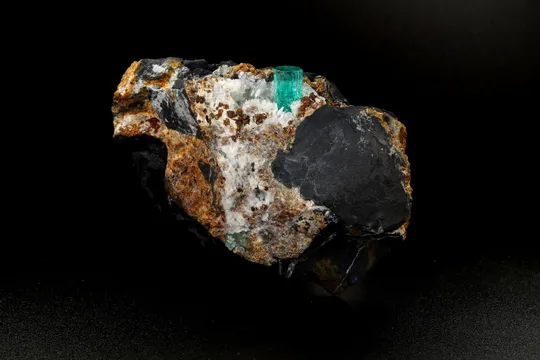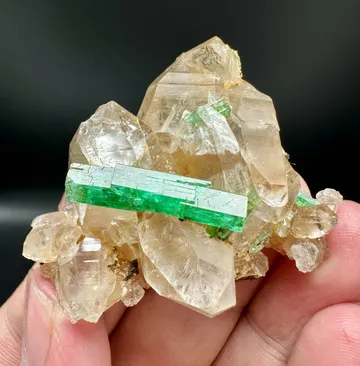
Emerald: iconic green beryl crystals prized for saturated color and rarity of gemmy prisms; legendary localities include Muzo, Chivor, Kagem.
Key facts
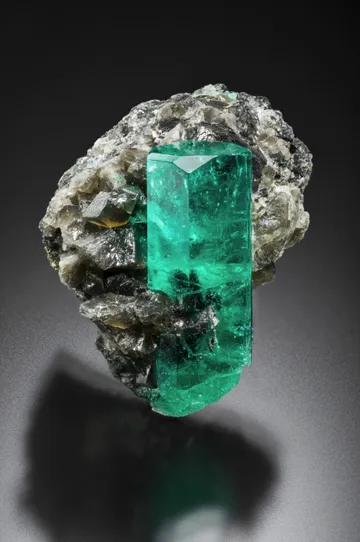
Emerald is the chromium- or vanadium-colored green variety of beryl and one of the world’s most storied gem minerals. Fine crystals are a saturated “emerald green” with a slight bluish tint, usually forming as hexagonal prisms with flat or bevelled terminations. Collectible specimens range from sharply terminated singles to dramatic clusters on contrasting matrix—white calcite and pyrite in Colombia, or dark biotite/phlogopite schists in Zambia and Austria. While gem cutting consumes most of the best material, exceptional crystals and matrix pieces are highly coveted by collectors for their color, luster, and romance. Prices vary widely: modest shards or embedded crystals are accessible, but top-color, undamaged, well-terminated crystals or significant matrix pieces can reach six figures, rivaling elite tourmaline and ruby specimens.
Emerald’s mystique spans millennia—from Cleopatra’s famed mines to the modern Colombian giants—making it one of the most recognized and desired minerals on Earth. Its enduring allure combines:
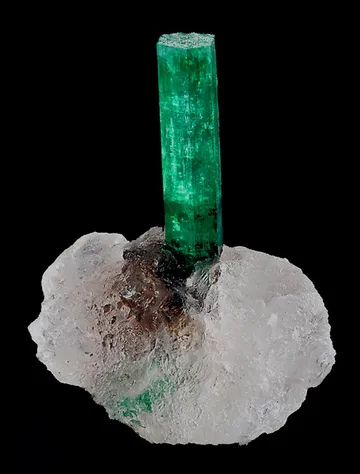
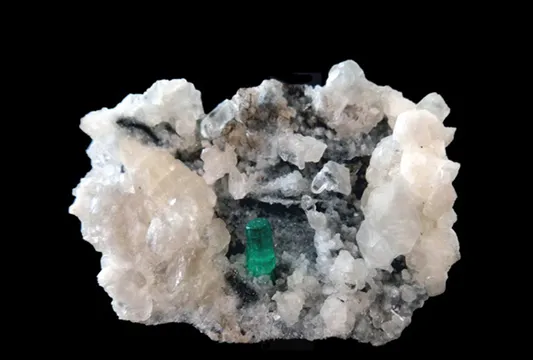
Muzo is the world’s most famous emerald locality, synonymous with deeply saturated “Muzo green.” Specimens often feature gemmy to translucent prisms on white calcite, sometimes with brilliant brass-yellow pyrite for striking contrast. Crystals may be stout or moderately elongated with sharp pinacoid terminations; luster is typically bright and glassy. Classic matrix pieces show emeralds perched in calcite veins cutting black shale and carbonate rocks. Though the best crystals are often sacrificed to the gem market, intact matrix specimens with undamaged, richly colored crystals are crown jewels in mineral collections.
Chivor emeralds are known for slightly lighter, often more bluish-green hues with superb transparency. Crystals tend to be slender, elongate prisms that can be exceptionally gemmy. Matrix pieces commonly include calcite and quartz; pyrite is less frequent than at Muzo. Chivor’s aesthetic hallmark is clarity and brightness—when backlit, fine crystals glow like neon rods. Sharp, undamaged terminations and elegant composition make Chivor matrix specimens highly sought after.
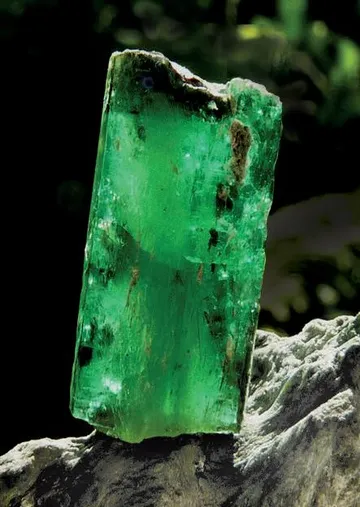
Coscuez has produced some of Colombia’s largest emerald crystals and is also noted for trapiche emeralds—crystals with distinctive six-rayed sector zoning. Specimens often show robust prisms embedded in calcite veins, sometimes with pyrite and dolomite. Colors range from medium to dark rich green; many crystals are internally flawed (as emeralds typically are) but maintain strong aesthetic presence due to size, saturation, and contrast. Fine trapiche cross-sections and rare undamaged clusters are especially prized.
The Kafubu area’s Kagem Mine is the premier African emerald source. Crystals grow in reaction zones between pegmatite and talc-biotite-phlogopite schist, yielding lustrous prisms from centimeters to large cabinet size. Zambian emeralds often show vivid, slightly bluish green with good transparency and fewer fractures than Colombian material. Matrix specimens typically feature dark schist with flakes of biotite/phlogopite and quartz, providing dramatic contrast to the green crystals. Unrepaired, sharp, well-positioned crystals on schist matrix are highly valued.
Panjshir emeralds emerged as modern classics in the late 20th century. They are known for bright, pure green color (often medium to slightly darker tone) and excellent clarity, frequently forming elegant, well-terminated prisms. Matrix associations include calcite, quartz, and schist; single crystals are also common. Top Panjshir pieces combine crisp form, high luster, and clean interiors that glow under light—attributes that make them standouts in contemporary collections.
The classic European emerald locality, Habachtal, yields crystals embedded in dark mica schists and quartz lenses. While typically smaller and more included than Colombian or Zambian material, these pieces have historic cachet and a distinctive alpine look—dark matrix, flecks of mica, and attractive, sometimes smoky-green crystals. Well-exposed crystals with sharp faces and contrasting schist matrix are the benchmarks.
By focusing on saturated color, sharp form, bright luster, and good composition—while being savvy about repairs and treatments—you can confidently assemble an emerald suite that showcases the full beauty and diversity of the world’s most famous green mineral.