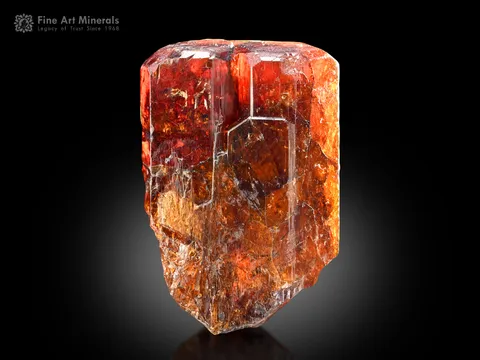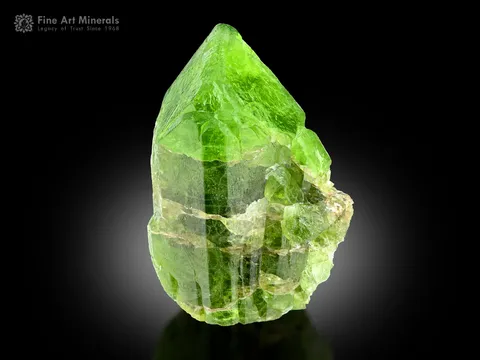
Garam Chashma, Pakistan — emerald locality yielding saturated green Besti crystals on dark mica schist and quartz; prized for specimen-on-matrix prisms.
Key facts
Garam Chashma is one of the young localities that has forced emerald collectors to redraw their mental map of Pakistan. For decades, Pakistani emerald meant primarily Swat and, to a lesser extent, Mohmand and the older Khaltaro material; Chitral’s Lutkho Valley was better known among gem people for deep-blue aquamarine, mica-rich pegmatites, and the rugged road northwest from Chitral town toward the Afghan frontier. The recent Chitral emerald discovery, centred at the Besti emerald deposit in the Garam Chashma region, changed that quickly. It yielded saturated green emerald crystals in a very distinctive specimen style: stout hexagonal prisms, commonly several centimetres long, set in dark mica schist and bright white quartz.
The locality belongs to the high Hindu Kush, within a complicated collision-zone terrane where metasedimentary rocks, migmatites, schists, calc-silicate rocks, tourmalinites, and Miocene leucogranites sit in close association. That geology matters to collectors because the emeralds are not isolated “loose gem” curiosities; the best pieces carry their matrix with them. A good Garam Chashma/Besti specimen reads immediately across the room: green emerald standing proud against black mica and white quartz, with a broad prism, flat termination, and enough translucency at the edges to give the crystal life.
Regional View
Country View
The same district also has an older mineralogical identity independent of emerald. Garam Chashma and adjacent Miniki Gol are tied to scheelite-bearing calc-silicate rocks and tourmalinites of the Arkari Formation, with tungsten mineralisation interpreted as hydrothermal and genetically linked to nearby leucogranite. That pairing—gem beryl on the one hand and boron- and tungsten-bearing hydrothermal rocks on the other—makes the locality more than a pretty emerald occurrence. It is a compact lesson in how evolved granitic fluids, metamorphic host rocks, and deformation structures can focus unusual elements into collectible minerals.

Photo: Wikimedia Commons
Search for specimens: View all specimens from Garam Chashma, Pakistan
Garam Chashma lies in the Lutkho Valley of Lower Chitral, northwest of Chitral town, near the borderland leading toward Afghanistan. The collecting locality most relevant to emerald specimens is the Besti emerald deposit, recorded from a high slope at roughly 4,600 m elevation and accessible only during a short mountain season. The road approach follows the Lutkho River; older geological descriptions of the Garam Chashma–Miniki Gol area describe a 45 km jeep road from Chitral to Garam Chashma, followed by foot access toward Miniki Gol along Murdan Gol. For collectors, that geography explains both the freshness of the material on the market and the recurring difficulty of obtaining complete, undamaged specimens: this is high, seasonal, small-scale mountain mining rather than continuous industrial bench work.
The regional bedrock is part of the Hindu Kush metamorphic and plutonic belt. The Garam Chashma pluton is a post-collisional, peraluminous, two-mica leucogranite, dated in published work at about 20–18 Ma by K-Ar biotite ages, with earlier U-Pb work placing crustal melting near 24 Ma. It intrudes older metamorphic rocks of the Wakhan/Hindu Kush terrane, including schists and migmatites. Petrographic descriptions give quartz, K-feldspar, plagioclase, muscovite, and biotite as the major granite minerals, with subordinate garnet and tourmaline and accessory apatite, zircon, sillimanite, and allanite. Chemically, these granites are S-type in character and compare more closely with Higher Himalayan leucogranites than with many older Trans-Himalayan I-type plutons.
The emerald deposit is described in gemmological work as occurring in veins within quartz- and mica-rich host rocks. Specimens commonly show emerald with mica schist, biotite or phlogopite-rich material, and quartz. The Chitral emeralds have high Li and Cs contents relative to many classic emerald localities, consistent with a pegmatite-related contribution to the mineralising system; at the same time, their spectroscopic behaviour resembles schist-hosted emeralds such as those from Zambia. That combination is important for origin work: visually they may invite comparison with other Pakistani and Afghan emeralds, but chemically and spectroscopically they have their own Chitral signature.
Garam Chashma’s pre-emerald mineral history is closely tied to tungsten. At Miniki Gol, scheelite occurs chiefly in calc-silicate quartzite and subordinately in tourmalinite associated with metapelites of the Arkari Formation. Published descriptions place the leucogranite about 400 m from the scheelite mineralisation and interpret the assemblage—scheelite with clinozoisite, quartz, calcic amphibole, plagioclase, chlorite, biotite, calcite, titanite, garnet, tourmaline, and epidote—as hydrothermal, locally skarn-like, and affected by boron-rich fluids. The scheelite-bearing tourmalinite is especially striking mineralogically because tourmaline may form a very large proportion of the rock, accompanied by spessartine-rich garnet and quartz.
Commercial emerald production is recent. The new Chitral emerald deposit was described scientifically in 2022, after material entered study and trade channels. Mine owner Imran Khan supplied Chitral samples for later comparative research, and published figures report about 130 kg of loose emerald produced in 2021 and more than 300 kg in 2022 after a road was extended from a point below the mine to the workings themselves. That production should not be confused with specimen abundance. Loose emerald weight includes cutting-grade and broken material; undamaged, matrix-supported crystals with strong colour, aesthetic spacing, and flat terminations remain far scarcer.
Aquamarine from Garam Chashma is a separate but important part of the locality’s reputation. Mineral-locality records describe aquamarine from local pegmatitic workings, including material of notably deep blue colour, with different mines at different elevations and the upper workings reportedly producing the deepest blue. Local material has often moved through the trade under the broader “Chitral” label rather than a precise Garam Chashma label, so older specimens may be under-attributed.
Collecting access today should be treated as a mining-rights and safety matter, not as casual field collecting. The emerald workings are high-altitude diggings with seasonal access, private/local control, steep terrain, and the ordinary hazards of underground or slope mining. Serious collectors will usually encounter the locality through local dealers, Peshawar and international trade channels, or specimen marketplaces rather than through self-collecting.
Emerald from Garam Chashma, especially the Besti deposit material, is valued for broad, saturated green hexagonal prisms on dark mica schist and white quartz. The best crystals are not simply small faceting rough: they are true specimen emeralds, commonly stout rather than needle-like, with flat terminations, crisp prism edges, and enough translucency to glow under strong light even when not clean enough for cutting. Published locality records describe emerald prisms up to several centimetres long, and market examples include miniature to cabinet specimens with crystals around 1.5–4.5 cm; exceptional pieces combine multiple crystals, sharp geometry, and undisturbed mica-quartz matrix. Chitral emeralds may carry dark mica inclusions, and gemmological work on deeper-coloured samples identified phlogopite as the characteristic dark inclusion, helping separate this material from visually similar emeralds from other Pakistani and Afghan sources.
Other documented minerals from the Garam Chashma–Lutkho Valley area include aquamarine, beryl, quartz, garnet, mica-group minerals, and tourmaline, with aquamarine being the most collectible non-emerald gem species from Garam Chashma proper. Nearby Miniki Gol adds a more technical mineral assemblage: scheelite in calc-silicate quartzite and tourmalinite, with clinozoisite, epidote, calcic amphibole, plagioclase, chlorite, biotite, calcite, titanite, garnet, tourmaline, quartz, pyrite partly altered to goethite, chalcopyrite, and pyrrhotite reported in the tungsten-bearing system. The tourmalinite and spessartine-rich garnet association is of particular interest to petrologists, even though it has not produced the same level of cabinet-specimen fame as the emerald pockets.
The main authenticity issue is not a wave of documented fake Garam Chashma emerald specimens, but locality precision. “Chitral,” “Garam Chashma,” and “Besti” are not always used consistently in the specimen trade, and broad “Pakistan emerald” labels may conceal material from Swat, Mohmand, Khaltaro, Chitral, or even neighbouring Afghanistan. For high-value crystals, the matrix is one of the best first checks: Garam Chashma/Besti specimen emeralds characteristically occur with dark mica-rich schist and white quartz. A matrix style that looks wrong for this association, or a loose crystal represented as from Garam Chashma without any chain of custody, deserves caution.
Gemological separation from other regional emeralds is possible but not always visual. Chitral emeralds overlap in appearance with some Khaltaro material and with Afghan-Pakistani schist-hosted emeralds, but published analyses show Chitral stones as alkali-rich, with notably high Li and Cs, and with origin-useful UV-Vis-NIR, FTIR, Raman, inclusion, and trace-element characteristics. For faceted or valuable loose stones, a reputable laboratory report is the appropriate standard. For specimens, microscopy can still help: look for natural crystal-surface continuity, undisturbed mica or quartz contacts, and absence of adhesive, dyed filler, or artificially assembled matrix seams.
Condition varies dramatically. Emerald’s hardness is high, but matrix emeralds are prone to contacted terminations, bruised prism edges, and internal fractures from extraction. The very features that make the specimens attractive—emeralds protruding from mica schist and quartz—also make them vulnerable. Mica-rich matrix may shed flakes; quartz contacts can be sharp and stress-producing; and a crystal that is “complete from the front” may still have a damaged back or a repaired base. Use strong side lighting and magnification to inspect terminations, basal contacts, and any suspiciously glossy zones at the matrix junction.
Treatment concerns are different for crystals and cut gems. Emerald cutting rough is commonly clarity-enhanced worldwide with oils or resins, and Chitral stones should not be assumed untreated unless documented. Matrix specimens are less often enhanced throughout the entire crystal, but surface oiling, cleaning, glue repairs, and mounted or reattached crystals are all realistic marketplace risks for valuable emerald specimens. Avoid ultrasonic cleaning, heat, solvents, and prolonged soaking; a soft brush, gentle air, and stable display conditions are safer.
Market availability is active but uneven. Since the 2021–2022 production increase, Garam Chashma/Besti emeralds have become visible in online auctions, dealer inventories, and social media channels, yet top specimen pieces remain genuinely scarce. Ordinary examples show small or opaque green crystals in mica; better examples show one or more well-terminated, saturated crystals on matrix; elite examples combine strong colour, size, translucency, damage-free terminations, and balanced composition. Those are the pieces most likely to be retained by advanced collectors and to disappear quickly when fairly priced.
The modern Chitral emerald story is unusually compressed. In 2021, the deposit was still new enough that gemmologists were treating it as a fresh Pakistani occurrence needing formal comparison with the world’s better-known emerald sources. That year the deposit produced about 130 kg of loose emerald, an impressive figure for a high mountain operation. In 2022, the practical problem was not merely finding emerald; it was reaching it. A road that had previously stopped below the mine was pushed up to the workings, allowing machinery to be transported to the site. Even with the strongest monsoon season in a decade, reported production rose to more than 300 kg.
The altitude gives that production figure its proper weight. Locality records place the Besti emerald workings on a slope at about 4,600 m, and a mine video describes the emerald mine at roughly 4,610 m, or 15,124 ft. At that height, the difference between a hand-carried season and a machine-assisted season is enormous. The same slope that yielded loose production also yielded the specimens collectors now recognise: dark mica and white quartz, with green prisms emerging from the rock rather than anonymous parcels of cutting rough.
Garam Chashma’s older mineral story runs along a different trail. The Miniki Gol scheelite occurrences were approached from Garam Chashma after the road from Chitral, then by a roughly 7 km foot route along the right bank of Murdan Gol. Field accounts and technical studies describe scheelite not as a single continuous ore sheet, but as lenses, stringers, conformable veins, disseminations, and patches in calc-silicate rocks and tourmalinites. The best grade tungsten mineralisation was reported in a 2 km belt near Miniki Gol, with showings extending toward Garam Chashma. In one later summary, a one-ton sample of calc-silicate scheelite ore grading 0.34% WO3 was upgraded by flotation to a concentrate reported at 64.66% WO3 with 70.36% recovery—a reminder that this collector locality also sits inside Pakistan’s broader critical-minerals conversation.
There is also a quiet trade story behind the aquamarine. Garam Chashma aquamarine has been described by locality specialists as deep blue and under-recognised, often sold simply as “Chitral” without the precision that collectors now expect for emerald. In that sense the emerald boom has done the older beryl a favour: it has made the name Garam Chashma visible on labels, and it has encouraged collectors to ask which valley, which mine, which matrix, and which geological setting their Pakistani beryl really comes from.