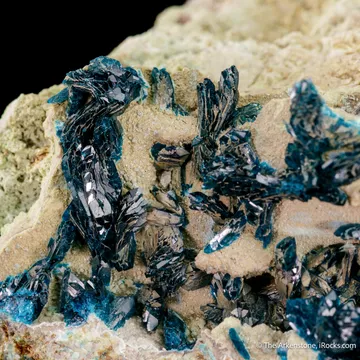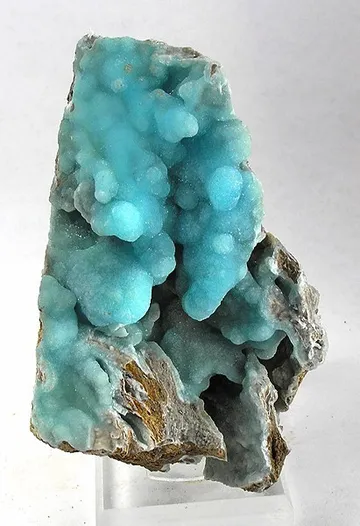
Wenshan, China — collector locality famed for electric blue hemimorphite, blue aragonite, smithsonite with vivid calcite forms from zinc-bearing skarns.
Key facts
Wenshan, in southeastern Yunnan, is not a single tidy collecting locality so much as a collector’s trade name wrapped around a very mineralized frontier province corner: the Wenshan Zhuang and Miao Autonomous Prefecture, the Wenshan zinc-mine material near Wenshan City, the Dulong Sn-Zn-In skarn system of Maguan County, the Dayakou-Saxi emerald and scheelite workings of Malipo County, the Hongsheke bauxite deposit of Yanshan County, and several Sn-W polymetallic bodies around the Laojunshan and Bozhushan granite complexes. For specimen collectors, the name first means blue: electric to robin’s-egg hemimorphite, blue aragonite, blue gibbsite, yellow to golden smithsonite, and occasional pink cobalt-bearing calcite. For economic geologists it means granite-related, skarn, greisen, carbonate-replacement, supergene, and bauxite mineralization packed into a tectonically busy belt near the Vietnam border.
The best Wenshan specimens have a modern Chinese look that is instantly recognizable in a cabinet: rolling blue botryoids with a sugary to wet luster; white aragonite “snow” or spiky sprays on pink and tan carbonate crusts; sharp calcite towers and stalactitic cave-calcite forms with UV response; light sherry topaz on cleavelandite and smoky quartz; and pale to saturated emerald prisms on quartz or mica-rich metamorphic matrix. It is a locality group where the aesthetic appeal is often as strong as the mineralogical complication, and the first obligation of the serious collector is to ask exactly which Wenshan occurrence the label is trying to describe.
Regional View
Country View
The classic Wenshan Mine suite is a secondary zinc assemblage produced in the oxidized parts of zinc-bearing rock: hemimorphite, aragonite, calcite, aurichalcite, and associated smithsonite. Much of the scientific literature nearby, however, concerns the larger primary systems that fed or framed these collector finds: the Dulong Sn-Zn-In polymetallic skarn, the Saxi/Dayakou emerald-bearing quartz and pegmatite veins at the eastern contact of the Yanshannian Laojunshan granite, and the Bozhushan Sn-W polymetallic district.
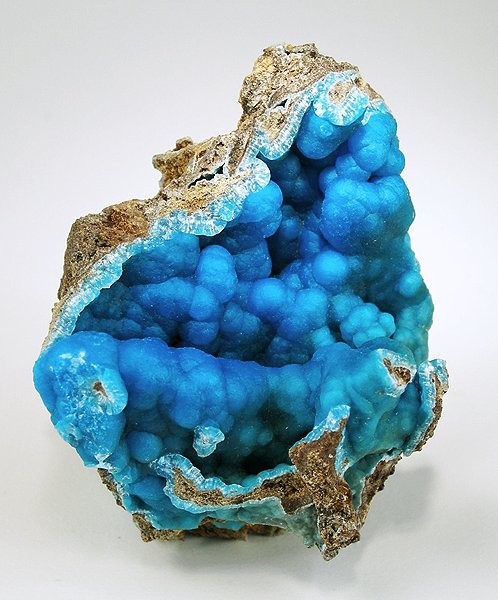
Photo: Wikimedia Commons

Photo: Wikimedia Commons

Photo: Wikimedia Commons
Search for specimens: View all specimens from Wenshan, China
“Wenshan” on a specimen label can mean several different things. The narrowest and most familiar collector label is Wenshan Mine, a zinc mine locality in Wenshan City that is famous for aragonite and, more rarely, world-class deep-blue hemimorphite. Mindat’s locality note treats the mine name cautiously, stating that “Wenshan Mine” is probably a generic name for one or more undisclosed deposits around Wenshan rather than a fully transparent mine name. That caveat matters: identical-looking blue carbonate and zinc-silicate specimens have been sold for years with varying labels including Wenshan Mine, Wenshan zinc mine, Wenshan Prefecture, and Dulong.
The larger metallogenic context is the southeastern Yunnan Sn-W-Zn-In belt, where granitic intrusions, metamorphic carbonate and siliciclastic sequences, major faults, and late hydrothermal overprints produced a cluster of ore districts. The Dulong Sn-Zn-In deposit in Maguan County is a giant magmatic-hydrothermal skarn system with sphalerite, cassiterite, chalcopyrite, pyrrhotite, pyrite, galena, magnetite, garnet, pyroxene, and other skarn minerals. Modern studies emphasize its importance as an indium-rich Sn-Zn system: indium is hosted mainly by sphalerite, cassiterite, and chalcopyrite rather than forming abundant discrete indium minerals. Published reserve figures describe Dulong on the order of 5.0 Mt zinc, 0.4 Mt tin, and about 7 kt indium, placing it among the important Sn-Zn-In deposits of South China.
The celebrated blue Wenshan hemimorphite and related secondary specimens formed much later than the primary skarn ores. In the oxidized, near-surface parts of zinc-bearing systems, acidic and carbonate-bearing waters attacked sphalerite and other sulfides, mobilized zinc and minor copper, and redeposited zinc as hemimorphite and smithsonite in cavities, fractures, and leached zones. The botryoidal textures, stalactitic ridges, and flowstone-like crusts on the finest pieces are supergene cavity linings, not primary skarn crystals.
Mining history is unevenly documented in collector literature. The Dulong region has a long tin history, but modern tin-zinc mining is generally described as beginning in the 1950s, with more substantial production and exploration developing later in the twentieth century. Collector-quality blue hemimorphite reportedly reached Western markets in a first fine wave around 1990–1991, another in 1999, and a further significant occurrence in 2004. Those limited bursts are why truly top Wenshan hemimorphite still carries a premium: the pieces are famous, but they were never common by the standards of Chinese fluorite, pyromorphite, or stibnite production.
A second, quite different Wenshan collector district is Dayakou, the Saxi Scheelite and Emerald Mine area near Mengdong in Malipo County, close to the Vietnam border. This is an active mine locality whose emerald occurs in quartz veins and pegmatite veins cutting Proterozoic metamorphic rocks of the Nanyantian and Saxi units near the eastern contact of the Yanshannian Laojunshan granite. The better-quality emeralds are generally described from quartz veins, whereas pegmatite veins yield larger and more abundant crystals; associated minerals include quartz, feldspar, mica, scheelite, fluorite, calcite, tourmaline, and sulfides.
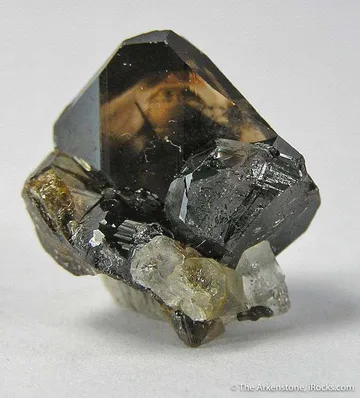
Topaz, albite, smoky quartz, muscovite, and related pegmatite or greisen specimens with Wenshan labels belong to this broader granitic province rather than to the blue hemimorphite mine proper. Some older dealer labels have used confusing locality strings, and a few Wenshan-labeled topaz specimens have been compared visually with Pakistani topaz on albite and smoky quartz. The most responsible way to buy them is to treat the exact mine attribution as part of the specimen’s value: Dayakou, Dongfei, Wazha, Wenshan Prefecture, and old “Wah Tu Wah” labels do not all carry the same level of locality precision.
Collecting access today should be assumed closed unless arranged through mine operators, landholders, and the appropriate authorities. These are not recreational public collecting localities. Active mines, oxidized zinc workings, bauxite pits, and border-region mineral districts carry obvious safety and legal restrictions. Most collector specimens now reach the market through Chinese dealers, show lots, old collections, or mixed export parcels; the buyer’s task is less to plan a field trip than to preserve precise provenance before it disappears into a one-word “Wenshan” label.
Calcite from Wenshan appears in several distinct collector styles: colorless to yellowish crystals and scalenohedral groups from the zinc-mine suite, pink to pastel cobalt-bearing botryoidal calcite associated with aragonite, and stalactitic or cave-form calcite sold from Wenshan zinc-mine finds. Good pieces are architectural rather than merely massive: radiating sprays, tower-like crystal clusters on quartz druse, hollow or stalactitic forms, and two-generation pieces in which pale cobalt-bearing calcite fluoresces pink under UV and later translucent yellowish calcite adds form and contrast. The most admired Wenshan calcites are clean, undamaged, three-dimensional specimens with aragonite accents or a clear generational story; ordinary pieces tend to be bruised carbonate crusts without sharp crystal definition or color contrast.
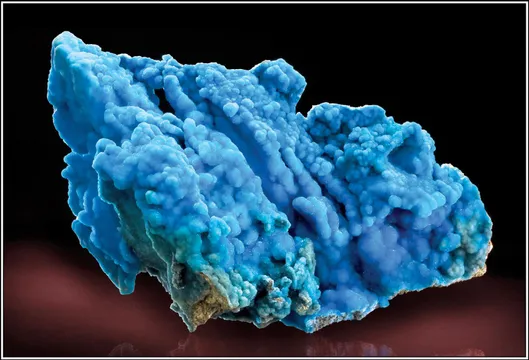
Hemimorphite is the signature collector mineral of Wenshan: deep blue to turquoise, robin’s-egg, and electric-blue botryoidal crusts, stalactitic ridges, bubbly mounds, and pocket linings from oxidized zinc mineralization. The best pieces range from thumbnails to large cabinet specimens, with reported examples well over 15 cm across, and show an even saturated blue, slight translucency at thin edges, a wet to sugary luster, and a fine sparkling surface of minute crystals; white rims, gray zoning, matrix scars, and brown iron staining reduce value. It is commonly associated in the Wenshan suite with aragonite, calcite, aurichalcite, quartz in some photo records, and locally smithsonite, and it is especially prized when the botryoids create sculptural relief rather than a flat blue coating.
Wenshan smithsonite is much less familiar than the hemimorphite but important because it belongs to the same family of oxidized zinc-zone minerals and can be visually confused with blue hemimorphite or aragonite. Documented Wenshan material includes yellow to golden smithsonite, some marketed from the Weinan/Wenshan area and described as a hoarded find from around 2003–2005, along with Wenshan Prefecture examples associated in photo data with calcite, aragonite, quartz, chrysocolla, and conichalcite. Fine pieces show rich translucent yellow, rounded or botryoidal surfaces, good luster, and, in some examples, fluorescence; lesser pieces are pale, chalky, overly massive, or poorly localized to a vague “Yunnan” source.
Wenshan gibbsite is the locality’s most surprising blue mineral after hemimorphite, occurring as sky-blue to aquamarine botryoidal and drusy crusts in vugs and on lightweight weathered matrix, with verified material from the Hongsheke bauxite deposit in Yanshan County as well as dealer and collection pieces labeled more broadly Wenshan. Good examples have saturated blue color, bubbly relief, bright microcrystalline sparkle, and intact fragile surfaces; ordinary pieces are thin crusts, abraded vug linings, or specimens whose blue identity has not been analytically checked. Because blue aluminum hydroxide is unusual and because some Chinese blue botryoidal material has been discussed under names such as evansite, allophane, hemimorphite, or gibbsite, serious Wenshan gibbsite is best bought with analytical confidence or from old, well-documented material.
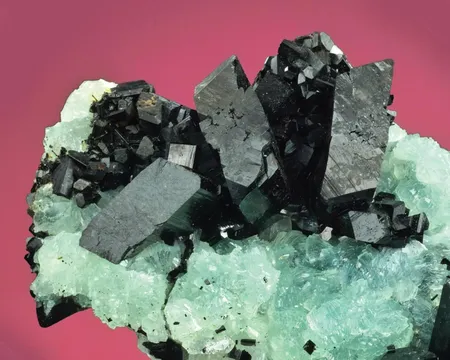
Quartz from Wenshan plays two different collector roles: as sparkling druse and vug lining in carbonate-zinc specimens from the Wenshan Mine suite, and as a major gangue and matrix mineral in the Dayakou emerald veins and the topaz-bearing pegmatite/greisen suite. The most desirable quartz in Wenshan-labeled specimens is not usually collected as a standalone species but as a compositional stage-set: smoky quartz points flanking a topaz on albite, massive to crystalline quartz holding green emerald prisms, or white quartz druse contrasting with calcite, aragonite, or smithsonite. Good pieces have clean, lustrous quartz that frames the featured mineral without overwhelming it; dull milky quartz matrix alone is far less compelling unless it carries a sharp associated crystal.
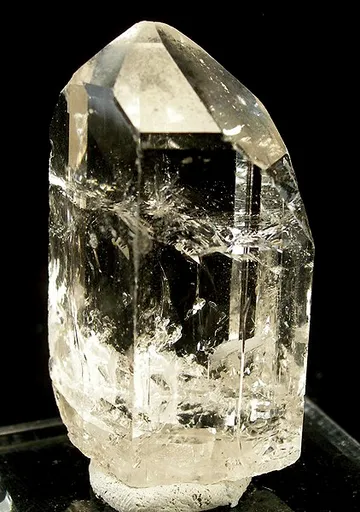
Topaz from Wenshan is a granitic-suite mineral, not part of the blue zinc-carbonate occurrence, and appears as colorless to pale sherry, glassy prismatic crystals associated with albite or cleavelandite, smoky quartz, and muscovite in Wenshan-labeled pegmatite material, with Dongfei W-Sn and broader Wenshan Prefecture records in the literature and databases. Fine examples show transparent, undamaged crystals from about thumbnail size to several centimeters, sharp chisel-like terminations, and attractive placement on albite or smoky quartz matrix; one well-known Wenshan-labeled specimen has a topaz crystal around 4 x 4 x 3.75 cm set between smoky quartz points. The chief collector distinction is provenance: sharp topaz on albite and smoky quartz is a familiar Pakistani look, so confirmed Wenshan attribution and old collection history matter almost as much as the crystal itself.
Emerald from Wenshan is principally associated with the Dayakou/Saxi emerald mine area in Malipo County, where emerald occurs in quartz and pegmatite veins cutting deformed Proterozoic granofels, gneiss, and schist near the Laojunshan granite contact. Crystals are typically pale to medium green, often translucent rather than truly gemmy, and may sit in quartz, mica-rich matrix, or pegmatitic material with associated scheelite, feldspar, mica, calcite, fluorite, tourmaline, and sulfides; quartz-vein emeralds are generally noted for better color and transparency, while pegmatite-vein emeralds tend to be larger and more abundant. Good Wenshan emerald specimens have euhedral hexagonal prisms, crisp faces, saturated green color for the locality, and honest matrix; ordinary pieces are pale, incomplete, oiled-looking, or represented only by massive green beryl fragments with weak crystal form.
Beryl at Wenshan is best understood through the Dayakou emerald deposit, where green beryl ranges from pale beryl to emerald-grade material depending on color, transparency, and chemistry, with vanadium-rich emerald documented from Malipo. Specimens may show isolated hexagonal prisms in quartz, crystals in mica- or feldspar-rich pegmatite, or clusters with scheelite and other granite-related associates; crystal sizes on documented collector specimens include centimeter-scale prisms and larger matrix plates. The best beryl pieces from Wenshan are sharply crystallized and clearly green enough to justify the emerald association, while lesser examples are blocky, pale, heavily included, or merely a locality specimen for the Chinese emerald suite.
Aragonite from Wenshan Mine is abundant relative to hemimorphite and occurs as white to blue, acicular, radial, botryoidal, stalactitic, and cave-calcite-style carbonate growths, commonly associated with calcite and, in some records, cobalt-bearing calcite, aurichalcite, and smithsonite. The finest specimens combine glassy or snowy aragonite sprays with contrasting pink cobalt-bearing calcite or yellow-orange stalactitic carbonate, creating sculptural, multi-generational carbonate pieces; many commercial examples fall in the 2–10 cm range, while large cabinet specimens are known. Good aragonite must be complete and delicate, with intact needles, clean contrast, and no saw-cut face dominating the display; ordinary material is common when it is simply pale, massive, broken “cave calcite” without a strong form.
Albite from Wenshan is most appealing as cleavelandite-like bladed matrix for topaz, smoky quartz, and muscovite in the pegmatite/greisen suite, and it is also recorded from W-bearing systems such as Wazha and Dayakou/Saxi in Malipo County. Collector examples show cream to white platy albite rosettes or bladed feldspar forming a bright base for pale sherry topaz or smoky quartz; in some Fabre and dealer specimens, albite is noted with short-wave UV fluorescence. Good Wenshan albite is clean, three-dimensional, and compositionally useful, giving the associated topaz or quartz a contrasting pedestal; loose feldspar blades or iron-stained cleavelandite without a featured crystal are of more limited interest.
Beyond the minerals featured above, Wenshan Prefecture has a broad documented mineral list reflecting multiple deposit types: aurichalcite and chrysocolla in oxidized zinc-copper zones; scheelite, cassiterite, wolframite-series minerals, fluorite, muscovite, tourmaline, garnet, epidote, diopside, tremolite, actinolite, magnetite, sphalerite, galena, pyrite, chalcopyrite, and pyrrhotite in skarn and granite-related systems; manganese minerals from Yanshan County deposits; realgar and orpiment from Carlin-type or related gold systems in Guangnan County; and specialized trace-element interest in indium-rich sphalerite and cassiterite from Dulong. No verified IMA type-mineral status should be assumed from a “Wenshan” label alone; the locality’s importance lies instead in its combination of world-class blue secondary zinc specimens, Chinese emeralds, and economically important Sn-W-Zn-In mineralization.
Wenshan is a locality where beauty and label ambiguity travel together. The first authenticity issue is not usually a lab-grown fake but a locality problem: “Wenshan Mine,” “Wenshan,” “Dulong,” “Malipo,” “Dayakou,” “Yunnan,” and older dealer names may be used loosely. For hemimorphite, insist on a zinc-mine or Wenshan/Dulong-style provenance if paying a premium. For emerald, look for Dayakou, Saxi Scheelite and Emerald Mine, Mengdong, or Malipo County detail. For gibbsite, Hongsheke bauxite deposit or an analytically supported Wenshan label is preferable to a vague blue-botryoidal Chinese attribution.
Blue Wenshan hemimorphite has a texture that helps separate it from smithsonite and aragonite. Under magnification it should show a microcrystalline, sugary to velvety surface rather than the smoother waxy carbonate surface typical of many smithsonites. Aragonite may be fibrous, acicular, or cave-growth-like; gibbsite can be botryoidal and intensely blue but is generally much lighter-feeling and more fragile. When the identity matters, visual identification is not enough: XRD, Raman, or reputable analytical provenance is appropriate for blue gibbsite, evansite/allophane-like material, and unusually colored smithsonite or aragonite.
Condition is critical. Wenshan hemimorphite botryoids bruise at high points, develop white rubbed spots, and can chip along thin crust margins. Aragonite needles and cave-calcite forms are easily crushed. Blue gibbsite is brittle and can shed small drusy aggregates. Topaz is hard but cleaves perfectly, so apparently “glassy” Wenshan topaz still deserves careful inspection for cleavage bruises, internal cracks, and repaired matrix contacts. Emerald from Dayakou is commonly fractured or included; avoid assuming that all green beryl matrix pieces are gem-grade emerald specimens.
Fluorescence is a real collector feature in parts of the Wenshan carbonate suite. Some calcite and cobalt-bearing calcite examples show pink fluorescence and brief phosphorescence; Wenshan cave-calcite pieces are also sold with short-wave white fluorescence. Hemimorphite from the classic blue finds is commonly reported as non-fluorescent. Albite in some topaz-associated specimens has been noted as short-wave fluorescent. As always, UV response should be treated as a specimen attribute rather than a species proof.
Market availability is strongest for aragonite and cave-calcite forms, moderate for smaller blue hemimorphite, sporadic for blue gibbsite and Wenshan smithsonite, and selective for emerald, topaz, and matrix pegmatite specimens. Top Wenshan hemimorphite remains the prestige mineral: saturated, lustrous, sculptural pieces with old provenance or large size are far less common than the number of small, attractive blue fragments might suggest. The best purchases are those with precise sub-locality, honest condition, and a visual identity that can survive magnification.
The modern Wenshan story begins, for collectors, with a color that looked almost too good to be true. When fine blue hemimorphites began reaching Western markets around 1990 and 1991, they did not resemble the familiar white sprays or bladed crystals from many older zinc localities. They were blue botryoidal crusts — rounded, bubbly, sometimes with a wet sheen, sometimes sugary and sparkling — and they were immediately acclaimed as among the finest of their type. The surprise was not only the color, but the form: instead of a single elegant crystal, Wenshan offered an entire weathered pocket wall turned into a rolling sky-blue surface.
Then the supply went quiet enough to make the first lots legendary. A second comparable wave is recorded in 1999, and another collector-quality occurrence in 2004. That stop-start pattern shaped the market reputation of the locality. Wenshan hemimorphite has always seemed available until one tries to buy a truly great one: the common pieces are small or damaged, while the best specimens combine sculptural botryoidal relief, glowing color, and enough translucency to make the mineral seem almost like blue glass laid over rough country rock.
The Dulong figures behind the blue pockets are enormous by comparison. Exploration described a skarn body roughly 1,000 feet thick, 2,000 feet wide, and 12,000 feet long, with dozens of horizontal ore lenses. Reserve discussions put the deposit among China’s major Sn-Zn-In systems, and recent geochemical work shows that indium is mostly hidden inside familiar ore minerals such as sphalerite, cassiterite, and chalcopyrite rather than parading as showy rare indium species. The irony is pleasing: the economic treasure is largely microscopic and locked in sulfide and oxide lattices, while the collector treasure is a fragile, late, oxidized blue skin on old zinc rock.
Dayakou tells a different Wenshan story. The emerald mine lies near Malipo County and the Vietnam border, at about the scale of a mountain district rather than a single gem pocket. Studies describe dozens of emerald-bearing pegmatite veins across roughly 10 km2, with individual ore bodies only 0.2 to 1.5 m wide and 20 to 280 m long. The better color and transparency generally come from quartz veins; the pegmatite veins offer larger and more abundant crystals. That is exactly the compromise collectors see in the cabinet: Wenshan emerald can have fine crystal presence and honest matrix, but the top gem look remains uncommon.
The most charming Wenshan label stories are often about misrecognition. One famous topaz-on-albite-and-smoky-quartz specimen was described by its dealer as looking Pakistani at first glance, until the termination style and smoky-quartz association argued otherwise. Some Wenshan blue gibbsite was long discussed under other blue secondary-mineral possibilities. Even the Wenshan Mine name itself carries uncertainty, with mineral databases noting that it may be a generic trade locality for undisclosed deposits around Wenshan. In that sense Wenshan is a modern collecting locality in the truest market sense: scientifically real, visually distinctive, but still partly hidden behind export labels, mine confidentiality, and the fast movement of Chinese show material.