






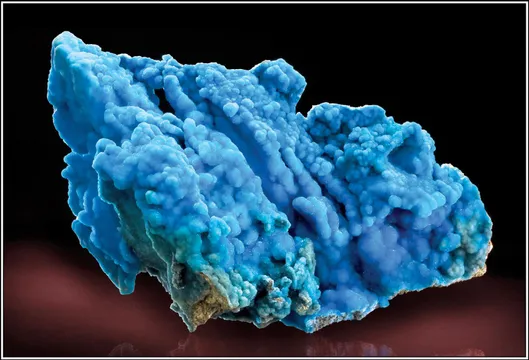
Wenshan Mine, China — blue hemimorphite in botryoidal, sculptural crusts; a key locality in a skarn-rich belt near Vietnam, prized by collectors for color and…
Key facts
Wenshan Mine is one of those modern Chinese locality names every serious collector learns quickly, because its best blue hemimorphites have become a benchmark for the species. The locality is recorded as a zinc mine in Wenshan City, Wenshan Zhuang and Miao Autonomous Prefecture, southeastern Yunnan, but its specimen identity is tied to the broader Wenshan–Dulong tin-zinc mineral belt: a skarn-rich, polymetallic district close to the Vietnam border, where zinc-bearing sulfide ore was later overprinted by supergene oxidation. In collector language, that oxidation zone is the important stage. Sphalerite-rich ore supplied zinc; circulating near-surface water, silica, carbonate chemistry, and open cavities supplied the setting for blue hemimorphite, copper-bearing aragonite, and eccentric calcite forms.
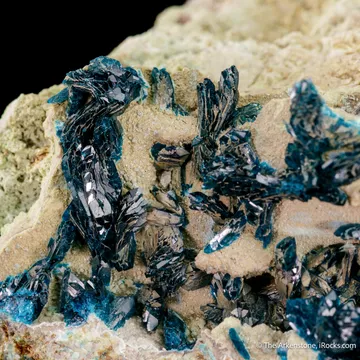
The mine matters because it produced a look that is instantly recognizable: sky-blue to electric-blue hemimorphite as botryoidal crusts, stalactitic ridges, bubbly knobs, and vug linings, usually on brown to tan oxidized matrix. Unlike the older classic hemimorphite localities famous for white, colorless, or glassy bladed crystals, Wenshan is prized for color, continuous coverage, and sculptural surface. The best specimens have a wet, silky, or sugary sparkle over rounded forms, sometimes resembling smithsonite or blue aragonite until magnification and analysis settle the identity. Mindat records the hemimorphite here as confirmed by visual identification and Raman spectroscopy, very rare at the site, and world-class for the species.
Regional View
Country View
There is a necessary caution behind the romance of the name. “Wenshan Mine” has been used in the mineral trade more loosely than a field geologist would like. Mindat explicitly treats the name as probably generic, referring to one or more undisclosed deposits around Wenshan, and market reports have used Wenshan, Dulong, Malipo, and Dayakou for visually related Yunnan material. For collectors, the practical rule is to preserve the exact wording of old labels and not to over-improve a specimen’s locality beyond its documentation.

Photo: Wikimedia Commons
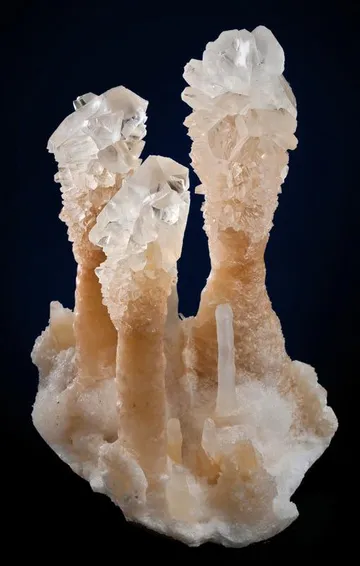
The associated blue aragonite gives Wenshan a second collector identity. These pieces are not merely accessory curiosities: they can be cabinet-sized, coral-like, frothy, botryoidal, stalactitic, and strongly blue from copper content. Fine examples can be confused with pale hemimorphite in photographs, while in hand the carbonate character, softness, and surface texture distinguish them. Calcite adds a third visual mode, especially the “tree” or stalactite-derived forms from the Wenshan karst district and the sharp, sculptural scalenohedra and later overgrowths seen in dealer and museum records.

Photo: Wikimedia Commons
Search for specimens: View all specimens from Wenshan Mine, China
Wenshan Mine is recorded as a zinc mine in Wenshan City, Wenshan Zhuang and Miao Autonomous Prefecture, Yunnan Province, China. The listed coordinates are approximate, with a wide margin of error, and the locality name carries an important collector caveat: it may not represent one precisely disclosed shaft or pit, but rather a trade locality for one or more Wenshan-area deposits that yielded similar blue hemimorphite and aragonite specimens.
The geological frame most useful to collectors is the Dulong Sn-Zn-In skarn system of southeastern Yunnan. Published studies describe Dulong as a major to world-class skarn-type tin-zinc-indium polymetallic deposit associated with the Laojunshan intrusive complex and carbonate-bearing metamorphic host rocks. The primary ore story involves cassiterite, sphalerite or marmatite, pyrrhotite, pyrite, chalcopyrite, galena, magnetite, scheelite, quartz, garnet, pyroxene, amphibole, epidote, and related skarn assemblages. The collector story is later: oxidation of zinc-rich sulfides produced cavities and leached spaces in which secondary zinc silicates and carbonates could crystallize.
Older collector-oriented summaries place the Wenshan zinc operation near the town of Dulong, describe combined open-pit and underground workings, and connect the mine with the Dulong skarn deposit. Those accounts state that modern zinc and tin mining began in the 1950s, when smaller open pits and shallow underground workings were consolidated, and that by the 1980s the mine was producing ore on a substantial daily basis. The ore was treated for sphalerite and cassiterite concentrates, with copper, silver, cadmium, and indium as important accessory metals in the broader system.
Exploration and modern geological work reveal the scale behind these small blue specimens. The Dulong district has been described as containing about 5.0 million tonnes of zinc, 0.4 million tonnes of tin, and roughly 7 kilotonnes of indium. Modern studies divide the ore-forming history into skarn, oxide, sulfide, and carbonate stages, while recent indium studies show that indium is mainly tied to marmatite and associated sulfides. For a specimen collector, that context explains why the Wenshan material is not a simple cave carbonate occurrence: its celebrated blue hemimorphite is the supergene expression of a much larger tin-zinc-indium ore system.
Specimen production appears to have been episodic rather than steady. Fine blue botryoidal hemimorphite reached Western markets around 1990–1991, appeared again in 1999, and was again reported from a 2004 collector-quality occurrence in one contemporary mineral-club distribution account. In early 2009, Thomas P. Moore noted in The Mineralogical Record that bright blue botryoidal hemimorphites had been reaching the market from Yunnan for several years, but with conflicting labels: Dayakou, Dulong, and Wenshan all appeared in dealer usage. John Veevaert’s Trinity Minerals posting of 19 specimens labeled Wenshan Mine was one of the moments that fixed the name in the minds of Western collectors.
Access today should be treated as closed to casual collecting. This is an operating or historically operated mining district, not a public rockhounding site. The realistic path for collectors is the specimen market: old-stock dealer pieces, collection dispersals, auction records, and specimens with labels from established dealers. Any field access would require landholder and mineral-rights permission, current mine or local authority approval, and compliance with Chinese mining and safety regulations.
Hemimorphite is the signature Wenshan mineral and the species by which the locality entered modern collector memory: blue to blue-green, rarely white or green, most famously as botryoidal and stalactitic crusts with a fine spiky to sugary surface that Mindat compares to okenite. Good specimens range from small cabinet pieces around 4.5–9 cm, as noted in early 2009 market reports, to larger cabinet examples over 15 cm when complete pocket sections survived; the best have saturated robin’s-egg to electric blue color, translucent edges, uninterrupted coverage, bright silky or waxy luster, and enough three-dimensional relief to read as a natural cavity lining rather than a flat crust. Associated quartz and occasional aurichalcite are documented in photo data, while brown oxidized matrix and leached vugs are typical visual clues; ordinary pieces are paler, chalkier, abraded on the high points, stained, thinly coated, or visually dominated by sawn backs and broken pocket edges.
Wenshan aragonite is a distinct and important companion to the hemimorphite, typically copper-bearing and pale sky-blue to turquoise-blue, with forms ranging from botryoidal, fuzzy, frothy aggregates to stalactitic and branching flos-ferri or coral-like growths. Documented specimens include cabinet pieces around 7–14 cm and even much larger decorator-scale plates, with calcite, cobalt-bearing calcite, aurichalcite, and rare smithsonite noted in photo associations; the best pieces show strong, even blue color, airy open branching, sparkling fine crystals, and clean three-dimensional form, while lesser pieces fade toward white, have patchy color, broken branch tips, or look too massive and undifferentiated. Because blue aragonite and blue hemimorphite both circulate under Wenshan labels, serious purchases should be judged by habit, hardness, carbonate behavior, and, where value warrants, analytical confirmation rather than color alone.
Calcite from Wenshan and the surrounding Wenshan karst district is valued less for color than for architecture: sharp scalenohedra, transparent to translucent prismatic-scalenohedral crystals, two-generation growths, stalactitic “tree” forms, hollowed or deeply channeled crystals, and calcite perched on or intergrown with aragonite. Documented pieces range from small cabinet specimens around 5–7 cm to large sculptural examples above 15 cm, and some Wenshan calcites are reported as fluorescent under longwave and shortwave ultraviolet light; the best combine glassy luster, undamaged terminations, visible growth history, balanced branching or central channels, and minimal iron staining where clarity is important. A recurring locality issue is that some so-called “Wenshan Mine” calcite trees are almost certainly cave formations from karst terrain rather than products of the zinc mine proper, so collector labels should be preserved but interpreted cautiously.
Emerald specimens sold under broad Wenshan labels require special care, because the verified emerald source in Wenshan Prefecture is the Dayakou or Saxi scheelite-and-emerald mine in Malipo County, not the zinc Wenshan Mine locality that produced the blue hemimorphite; EarthWonders records for Wenshan-labeled emerald material likewise describe Dayakou/Malipo-style specimens. These Chinese emeralds are typically yellowish green to vivid green vanadium-rich beryl crystals in quartz, feldspar, mica-rich, calcite- or pyrite-bearing matrix, commonly as hexagonal prisms with growth striations, internal fractures, and only modest gemminess; published Malipo material includes crystals in matrix with individual emeralds approaching 93 mm, while collector and dealer records mention crystals to about 15 cm in exceptional pieces. The best specimens have well-defined prismatic form, strong color, matrix contrast, unrepaired or clearly disclosed crystals, and credible Dayakou/Malipo provenance; any piece labeled simply “Wenshan Mine emerald” should be treated as a broad-market label unless it is backed by a more precise old label or documentation.
Other minerals documented specifically from Wenshan Mine are few. Mindat’s core list records aragonite, aurichalcite, calcite, and hemimorphite for the mine, with zinc as the commodity. Aurichalcite, (Zn,Cu)5(CO3)2(OH)6, is the notable rarity in the listed assemblage and may occur as blue-green to pale green acicular or fibrous secondary material, the sort of mineral that can complicate quick visual identification on blue specimens. No verified type-locality minerals are presently documented for Wenshan Mine itself; broader Wenshan Prefecture and the Dulong ore field have a much richer regional mineralogy, but that should not be transferred onto Wenshan Mine labels without evidence.
The first authenticity issue is locality precision. “Wenshan Mine” is a recognized and useful collector label, but it is not always a precise mine name in the way “Tsumeb Mine” or “Sweet Home Mine” is. Mindat’s locality note says the name is probably generic, and Thomas P. Moore’s 2009 report documented dealer disagreement between Dayakou, Dulong, and Wenshan for similar blue hemimorphites. Preserve old labels exactly. Do not rewrite “Wenshan, Yunnan” into “Wenshan Mine,” and do not rewrite “Dayakou” emeralds or cave calcites as zinc-mine products without supporting evidence.
The second issue is identification. Blue Wenshan hemimorphite can resemble blue aragonite, especially in online photographs. Aragonite may be softer, carbonate-reactive, and more coral-like or flos-ferri in habit; hemimorphite tends to form botryoidal zinc-silicate crusts with a distinctive fine crystalline sparkle. Acid testing is not recommended on valuable specimens, especially where aragonite, calcite, and hemimorphite may be intergrown or the specimen surface is delicate. Raman spectroscopy, XRD, or provenance from a trusted dealer is the better route for expensive or ambiguous pieces.
The third issue is color. Wenshan’s best hemimorphite is naturally vivid, so intense blue alone is not proof of treatment. But dyed blue hemimorphite from other localities has appeared in the market, and any startlingly saturated specimen deserves close inspection. Natural color should be integral to the botryoidal hemimorphite, not pooled in cracks, glue seams, saw marks, porous matrix, or dust trapped in recesses. A damp swab should not lift blue color. Under magnification, beware of dye concentrated along fractures or around broken edges.
Condition is critical because the most attractive Wenshan surfaces are also the easiest to damage. Botryoidal high points abrade first, leaving dull or whitish rubbed spots. Thin crusts may chip away from friable oxidized matrix. Stalactitic aragonite and calcite branches can be repaired, and blue hemimorphite pocket sections may have sawn backs, trimmed edges, or filled cracks. A sawn or trimmed back is acceptable if disclosed and not visible from the display angle; repairs to display-side ridges, stalactites, or central botryoids matter much more.
Fluorescence is species-dependent. Mindat records Wenshan hemimorphite as non-fluorescent, and a contemporary Wenshan hemimorphite write-up reported no reaction under shortwave or longwave ultraviolet light. Some calcite specimens from Wenshan dealer archives are reported as fluorescent under both longwave and shortwave UV. Aragonite and calcite should be protected from acids, while hemimorphite should be protected from abrasion and prolonged soaking; for all Wenshan pieces, dry dusting with a soft brush and careful display away from vibration is the safest approach.
Market availability is better than “very rare” might suggest because several bursts of material entered the trade and continue to recycle through collections, auction houses, and dealer inventories. Small and modest blue hemimorphites remain obtainable; strong-color, undamaged, three-dimensional cabinet pieces are much harder to replace. Copper-bearing blue aragonite appears periodically, from small cabinet pieces to large, decorative forms. Wenshan calcites are accessible but variable, and good label discipline is important because some pieces are probably Wenshan karst cave material rather than zinc-mine pocket material. Wenshan/Malipo emeralds are a separate market: attractive Chinese emerald matrix specimens exist, but oiling, repairs, and imprecise “Wenshan” labels require careful disclosure.
In January 2009, Thomas P. Moore caught Wenshan at the exact moment when a new Chinese classic was still trying to find its name. Brightly beautiful botryoidal sky-blue hemimorphites had been reaching the mineral market from Yunnan for several years, but the labels were not in agreement. Some dealers said Dayakou in Malipo County. Some said Dulong in Maguan County. John Veevaert, offering 19 fine specimens through Trinity Minerals, said Wenshan Mine. Moore pointed out that Guanghua Liu’s 2006 Fine Minerals of China gave Dulong as the source. The disagreement has never been merely academic; it is the reason careful collectors now keep every old Wenshan-area label rather than forcing all blue Yunnan hemimorphites into one tidier name.
The same 2009 report gives a charming snapshot of prices before Wenshan became fully institutionalized as a modern classic. Veevaert’s 19 specimens ranged from 4.5 to 9 cm and showed baby-blue to deeper “royal” blue botryoidal coatings in vugs and veins. Moore compared them to the old blue hemimorphites from Sardinia, then went further: the Yunnan pieces exceeded all but the finest Italian antiques in both size and color intensity. None of the 19 specimens cost more than $200, and many were under $100. Those figures now read like a postcard from another collecting era.
The mining scale behind the specimens is almost comically larger than the delicate blue crusts suggest. One contemporary Wenshan hemimorphite account described the mine as neither large nor modern by global standards, yet the Dulong system beneath the label had been tested by roughly 300,000 feet of core drilling — about 56 miles of drill core. The skarn was described as approximately 1,000 feet thick, 2,000 feet wide, and 12,000 feet long, with tin-zinc mineralization concentrated in 40 horizontal stratiform lenses. The specimens collectors hold in one hand are the oxidized afterthought of that immense system.
The Fersman Mineralogical Museum’s 2009–2010 acquisition review described Wenshan hemimorphite without dealer poetry, and that is part of its beauty. The museum noted “bright-blue crusts of bud-like aggregates” incrusting leaching cavities in rock. That short phrase does more work than many sales descriptions: blue buds, hollow spaces, and leached ore. It places the specimen exactly where it belongs, not as a mysterious decorative blue surface but as a supergene mineral grown in the voids left by weathering.
Calcite adds a different Wenshan story. In his August 2012 What’s New report, Moore discussed strange calcite “trees” from caves in the karst terrain of Wenshan Autonomous Prefecture. According to Berthold Ottens, the forms began as stalactites, then later calcite crystals were deposited symmetrically, perpendicular to the stalactites’ long axes. Brian Kosnar of Mineral Classics was offering ten such pieces ranging from 3.2 to 16.2 cm, collected about a year earlier. Moore admired them, but he also objected to calling the locality “Wenshan Mine” in a strict sense: they were almost certainly cave formations. It is a perfect Wenshan lesson — beautiful specimens, real locality appeal, and a label that must be read critically.
_1_(33993573012).jpg)

.jpg)
_3.jpg)