A collector's guide to Yunnan, China: its geology, mining history and notable minerals, illustrated with the 67 specimens documented from this locality on EarthWonders.
Key facts
Yunnan is not a single specimen locality so much as a mineral province: a folded, faulted, deeply varied corner of southwest China where tin granites, zinc skarns, copper-bearing sandstones, pegmatites and gem-bearing metamorphic belts all crowd into the same provincial name. For collectors, that breadth is precisely the attraction. A label reading “Yunnan, China” may point to a colorless giant topaz from the pegmatites of the Nu River and Gaoligong Mountains; a sharp, honey-brown cassiterite from Amo or Yunling; an electric-blue botryoidal hemimorphite from the Wenshan–Dulong zinc-tin district; or a rare blue phosphate from the oxidized copper deposits of Dongchuan or Laochang.
The geological engine behind many of Yunnan’s best-known specimens is granite-related mineralization along major tectonic belts. In southeastern Yunnan, the Gejiu tin-polymetallic district is a world-class Sn-Cu-Pb-Zn system developed around Cretaceous granitic intrusions in carbonate country rock, with skarn, greisen, quartz-vein and stratabound ore styles. In western Yunnan, pegmatites of the Gaoligongshan–Ailaoshan region have yielded excellent topaz and aquamarine. Farther south and west, the Changning-Menglian belt includes the Yunling and Amo cassiterite localities, where transparent cassiterite crystals and cuttable material occur in greisenized granite and fissure veins. In the northeast, Dongchuan is a historic copper district whose supergene oxidation zones have become a modern source of exceptional rare arsenate-phosphate species.
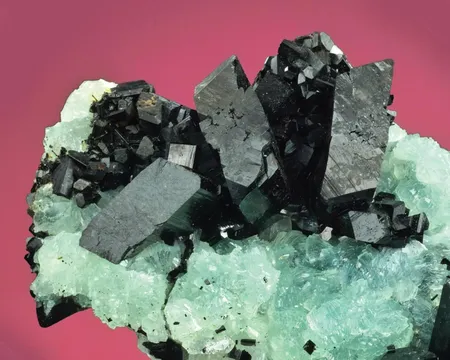
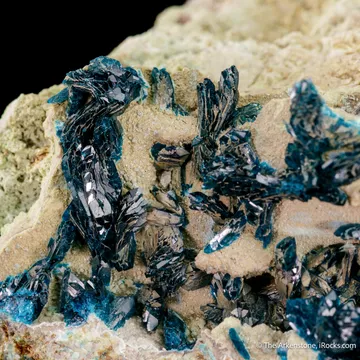
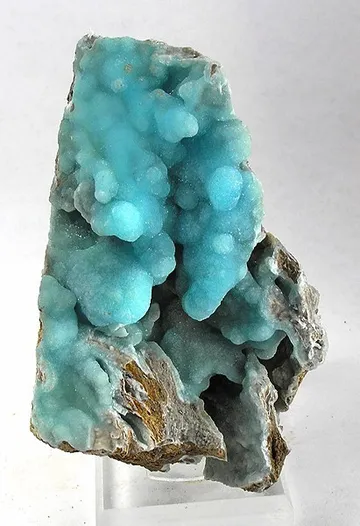
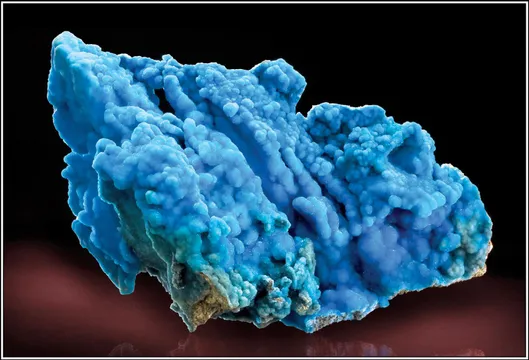
The best Yunnan specimens tend to be boldly visual. The topaz is usually water-clear to pale champagne, often in unusually large, well-formed crystals. The cassiterite can be glassy and transparent enough to glow amber-brown through thick crystal faces. Wenshan hemimorphite appears as rounded, rolling, blue botryoids with a luster that can seem almost wet. Yunnan veszelyite is valued for saturated royal-blue to teal crystals perched on pale hemimorphite or quartz, a combination that gives small specimens an outsized presence in a case.
Regional View
Country View
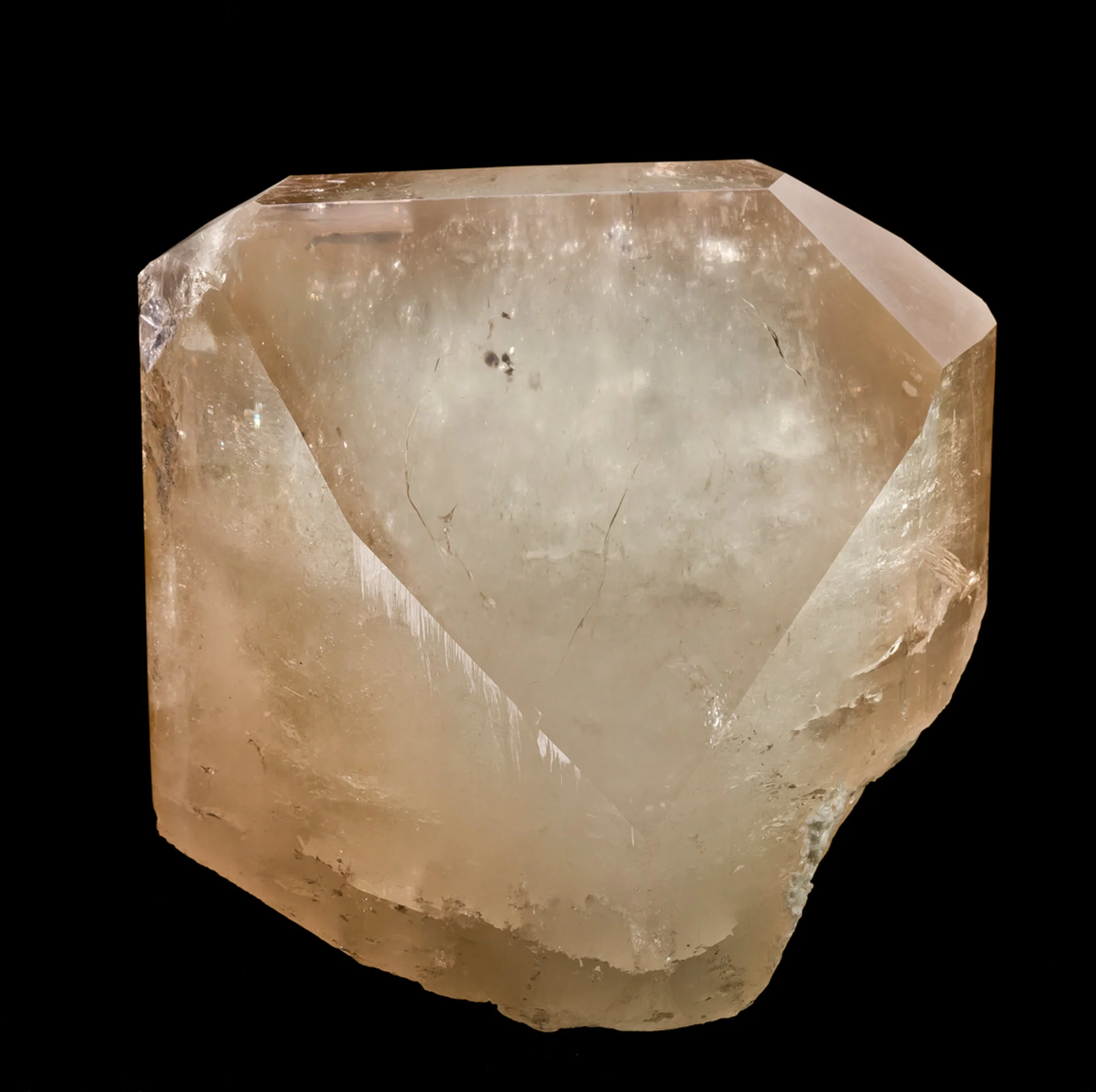
Photo: Crystalline Treasures
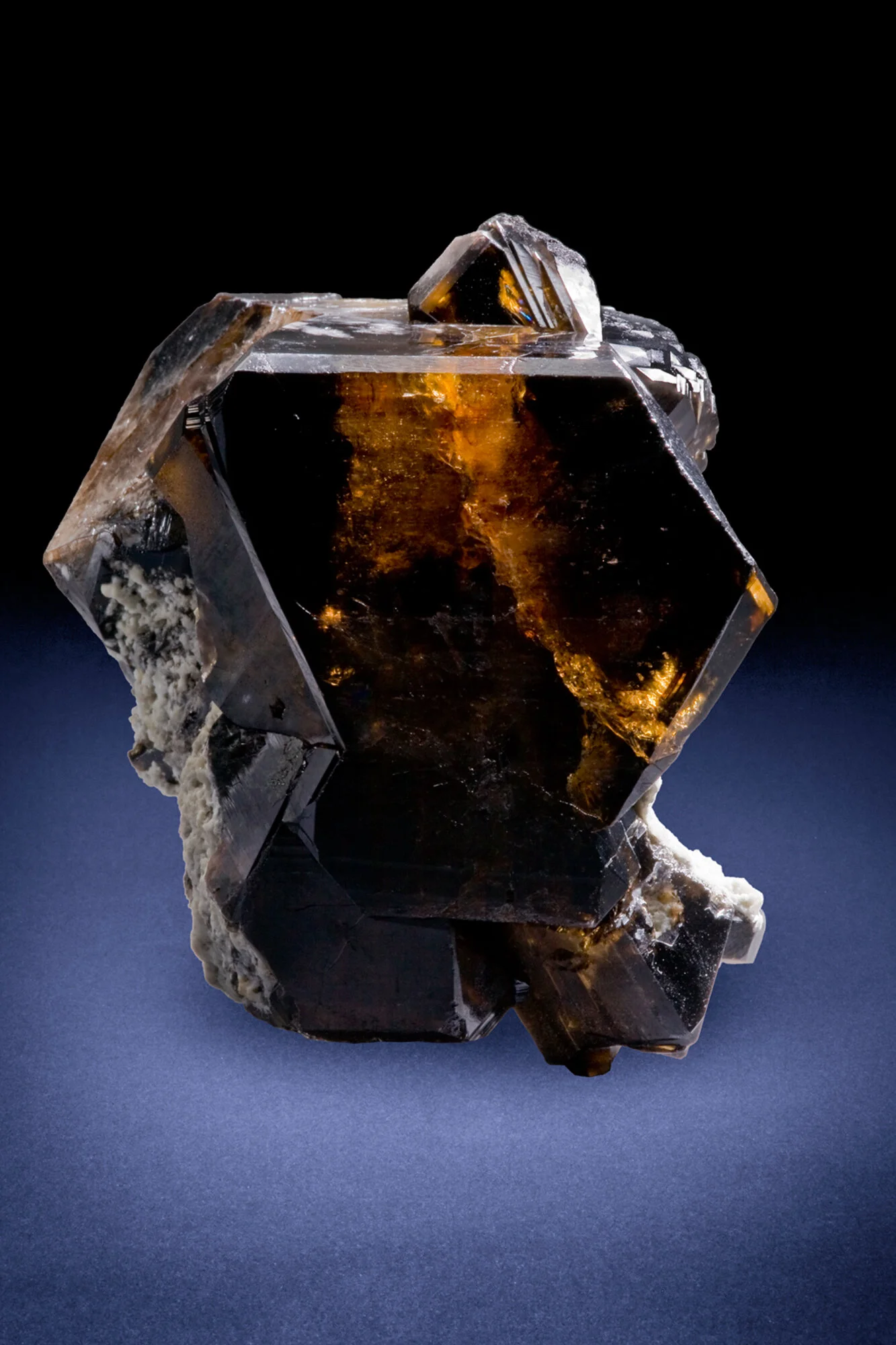
Photo: Crystalline Treasures
What gives Yunnan unusual collecting depth is the way specimen production comes from very different mining cultures. Gejiu is an ancient tin district, worked intermittently for more than two millennia and modernized into one of the great industrial tin centers of Asia. Wenshan and Dulong are zinc-tin skarn operations whose oxidized zones periodically yielded blue hemimorphite. Dongchuan, historically a copper source important enough to be associated with coinage metal, is now better known among advanced collectors for tiny but scientifically important supergene minerals. The province therefore appeals both to display collectors and to systematic collectors: one cabinet can hold dramatic cabinet-size pieces and type-locality micro-minerals from the same political region.
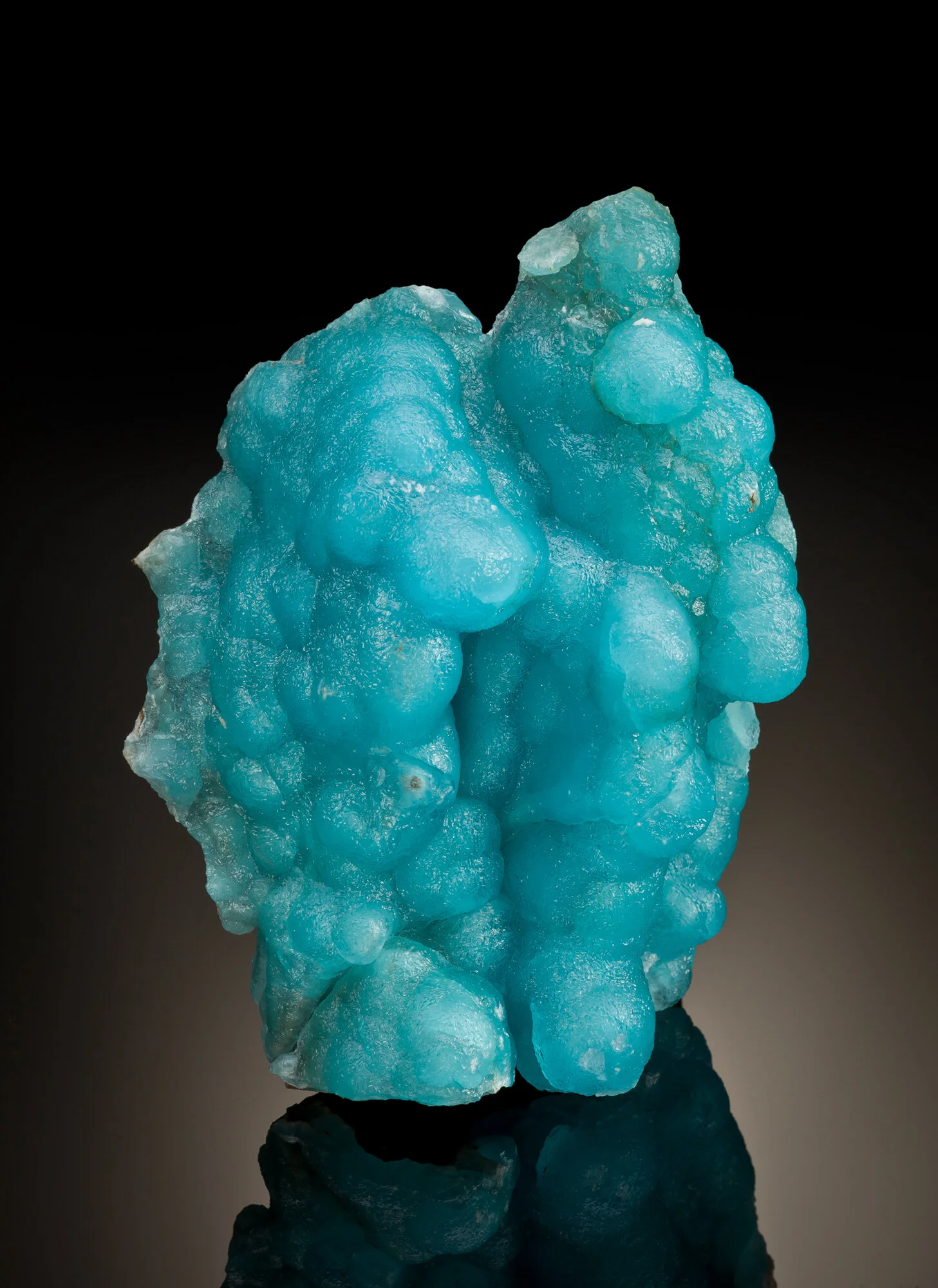
Photo: Crystalline Treasures
Search for specimens: View all specimens from Yunnan, China
Yunnan’s collectible minerals come from several distinct geological settings rather than from one mine. The province lies at the meeting of major tectonic domains affected by the collision of the Indian and Eurasian plates, and its mineral districts record repeated magmatism, metamorphism, hydrothermal alteration and supergene weathering. For specimen purposes, the most important environments are granite-related tin-polymetallic systems, Be-bearing granitic pegmatites, skarn zinc-tin deposits, sediment-hosted copper districts and their oxidized zones.
The Gejiu tin-polymetallic district in southeastern Yunnan is the province’s great mining name. It is built around several major ore fields—Malage, Songshujiao, Gaosong, Laochang and Kafang—and the district is famous for Sn-Cu-Pb-Zn mineralization associated with granitic intrusions and Triassic carbonate rocks. Ore styles include skarn ores at granite-carbonate contacts, greisen and quartz-tourmaline vein mineralization, and stratiform to lens-shaped bodies in carbonate and sedimentary rocks. Cassiterite, chalcopyrite, sphalerite, galena, scheelite, arsenopyrite, pyrrhotite, pyrite and magnetite are among the main ore minerals, while quartz, fluorite, tourmaline, garnet, diopside, epidote, actinolite, chlorite, sericite and calcite form much of the gangue. Laochang is especially important to collectors because blue veszelyite with hemimorphite entered the market under that name after earlier misattribution to Wenshan.
Gejiu’s mining history reaches far beyond modern specimen collecting. Scholarly treatments describe intermittent mining from the Han dynasty onward, and historical accounts of the tin industry place organized tin production in the region by the early eighteenth century, with local miners and tin-forge owners forming guild structures by the 1750s. In the late Qing and Republican periods, Gejiu tin became a strategic export commodity. Modern Yunnan Tin Company operations and related smelting at Gejiu made the city synonymous with tin, while specimen collectors encountered only a tiny by-product of a huge industrial system.
West and northwest of the Gejiu tin country, the Gaoligongshan–Ailaoshan pegmatite belt is the source of Yunnan’s best topaz and aquamarine. These are granitic pegmatites related to Yanshanian tectono-magmatic activity, with quartz, feldspar, albite, mica, topaz, beryl and tourmaline associations. Topaz from the Ailaoshan and Gaoligongshan-Fugong region is chiefly colorless, well shaped and highly transparent, with relatively few inclusions. Aquamarine from Ailaoshan and Gaoligongshan occurs in pegmatitic pockets and cavities; good crystals are pale blue to stronger blue, usually prismatic, and often associated with smoky quartz, albite or muscovite. The ore bodies and pegmatite shoots are small by mining standards, so supply has always been episodic.
The Yunling and Amo cassiterite localities in western Yunnan are another specimen story entirely. At Yunling, near Yunling village in Yongde County, cassiterite occurs mainly in biotite monzogranite and greisenized granite of the Changning-Menglian belt. The main tin orebodies at Yunling include V10, V12 and V17, with V17 described as the largest and extending roughly a kilometer along strike. Collectible cassiterite occurs in cassiterite-mica-quartz-pyrite veins and in greisen-type mineralization, with some gem-quality crystals reported from miarolitic cavities. The fine material ranges from small transparent crystals to large, lustrous, amber-brown twins; the best matrix pieces show cassiterite in relief with quartz and mica rather than embedded as ore.
Wenshan and nearby Dulong belong to the zinc-tin skarn tradition. Blue botryoidal hemimorphite from the Wenshan Mine and Malipo area is a supergene product of oxidized zinc mineralization. The Dulong tin-zinc deposit is described as a skarn developed in metamorphosed carbonate-bearing rocks affected by granitic intrusion and later oxidation. Sphalerite and cassiterite are the economic minerals, but collectors prize the secondary hemimorphite crusts that formed when zinc released from sulfides recombined with silica-bearing waters in the oxidized zone. These specimens reached Western markets in notable waves, including early 1990s material and later finds around 1999 and 2004.
Dongchuan, north of Kunming, is a historic copper district and one of the most scientifically exciting Yunnan specimen sources of the twenty-first century. The important collector material comes from supergene oxidation zones around Cu-Pb-Zn sulfide mineralization, especially in the Sanguozhuang area near Tangdan Town. Small fractures and cavities in sandstone and gossan produced quartz, hemimorphite, veszelyite, kipushite, tyrolite, bayldonite, theisite, tangdanite and several new species of the dongchuanite group. Most Dongchuan rarities are microscopic to thumbnail-scale, but the associated blue veszelyite crystals can be strikingly sharp and saturated for the species.
Collecting access today should be treated as effectively closed unless arranged through mine owners, local authorities or established commercial channels. Many of the relevant sources are active or formerly active industrial mines, old underground workings, high-elevation abandoned shafts, open pits or controlled exploration zones. The collector market is supplied mainly by miners, local villagers, regional dealers and established international dealers who acquired lots when pockets or ore-zone exposures were encountered. A provincial label without mine-level provenance is common, but the better specimens deserve more precise labeling: Gaoligongshan or Nujiang Valley for topaz and aquamarine, Amo or Yunling for cassiterite, Wenshan/Malipo/Dulong for blue hemimorphite, Laochang or Dongchuan/Sanguozhuang for veszelyite and associated rare phosphates.
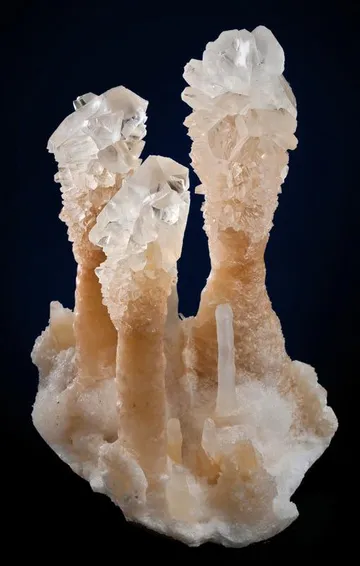
Yunnan topaz is best known from the granitic pegmatites of the Gaoligongshan–Fugong and broader Nu River region, where crystals are typically colorless to very pale champagne, sharply prismatic, highly transparent and associated with albite, muscovite, quartz and feldspar. The province is notable for unusually large topaz: documented display specimens include a 21 cm, 8 kg crystal from pegmatites along the Nu River in the Gaoligong Mountains, while smaller cabinet specimens may show several clear crystals rising from albite and mica. Quality here is judged less by color than by architecture—complete terminations, glassy faces, internal brightness, minimal cleavage bruising and attractive pegmatite matrix make the difference between a geological curiosity and a serious Chinese topaz specimen.
Yunnan has become one of the essential modern sources for collector-grade veszelyite, first through Laochang in the Gejiu tin-polymetallic district and later through Dongchuan-area material, especially Sanguozhuang. Laochang specimens are famous for deep blue to royal-blue crystals, sprays or crusts on pale blue-green to white botryoidal hemimorphite; some early pieces were sold as Wenshan before the locality was corrected to Laochang. Dongchuan specimens add a sharper supergene copper-phosphate context, with tabular to elongated teal-blue crystals on quartz, hemimorphite, galena-bearing matrix and associated rare phosphates. Fine pieces require visible, well-defined crystals rather than mere blue staining, saturated color under ordinary light, contrast with the hemimorphite or quartz, and minimal rubbing on the exposed crystal edges.
Quartz is the great supporting actor of Yunnan specimens, occurring in the pegmatites, greisens, skarns and supergene cavities that produced the province’s more famous species. In the Gaoligongshan and Da Li pegmatite associations it may appear as smoky quartz paired with aquamarine; in Yunling and Amo cassiterite pieces, clear to milky quartz forms the matrix for transparent cassiterite; at Dongchuan and Sanguozhuang, quartz is a common host for blue veszelyite, hemimorphite and rare arsenate-phosphate minerals. The best Yunnan quartz pieces are usually combination specimens rather than stand-alone quartz clusters: collectors look for clean, undamaged quartz that frames cassiterite, beryl or blue secondary minerals without overwhelming them.
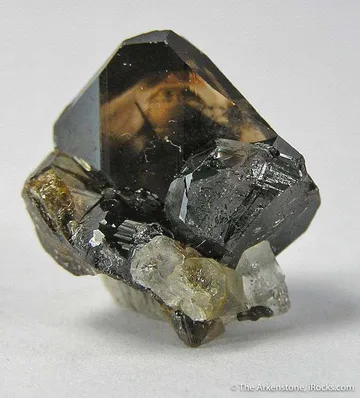
Cassiterite is Yunnan’s signature ore mineral and one of its finest specimen minerals, with major collector production from the Amo deposit in Ximeng County and the Yunling area of Yongde County, as well as abundant ore-mineral occurrences in the great Gejiu district. Yunling cassiterite occurs in greisenized granite and cassiterite-mica-quartz-pyrite veins, with crystals commonly millimetric in ore but locally reaching 10–20 mm or larger and, in exceptional cases, gem quality; studied material includes faceted stones from 0.54 to 2.14 ct and rough crystals from 10 to 38 ct in near-colorless, gray, light brown, brownish pink, red, brown and black groups. Amo is prized by collectors for larger, lustrous, transparent brown crystals, including cabinet pieces where cassiterite stands on quartz or mica matrix. Top specimens show bright luster, transparency through the body, sharp tetragonal form or geniculate twinning, and enough matrix to distinguish them from loose ore crystals.
Yunnan aquamarine comes chiefly from granitic pegmatites and pegmatitic cavities in the Gaoligongshan–Ailaoshan region, with Nujiang Valley and Da Li labels appearing on notable collector pieces. The crystals are usually pale blue to blue-green, prismatic, transparent to translucent and associated with muscovite, albite, feldspar, quartz, smoky quartz and occasionally tourmaline. Published surveys describe good Ailaoshan aquamarine as occurring in the cores of pegmatite cavities, while Gaoligongshan grains are noted as large and good quality but derived from small-scale bodies only a few to tens of meters long and roughly 0.5 to 5 m wide. The most desirable specimens balance color, transparency and setting: a clean blue crystal attached to smoky quartz or mica has far more collector appeal than a loose, abraded prism with only a broad provincial label.
Yunnan hemimorphite is anchored by the celebrated blue botryoidal material from the Wenshan/Malipo/Dulong zinc-tin district and by pale blue to greenish coatings associated with veszelyite at Laochang and Dongchuan. Wenshan pieces are typically rounded, bubbly, turquoise-blue to sky-blue crusts with sparkling microcrystalline surfaces; the color is strongest in the best specimens and is commonly linked to minor copper in the structure. At Laochang and Dongchuan, hemimorphite forms pale botryoidal or drusy matrices that make an ideal visual ground for deep blue veszelyite. Fine hemimorphite from Yunnan should have saturated natural blue color, undamaged rounded surfaces, lively sparkle under bright light and enough relief to avoid looking like a flat dyed crust; locality distinction matters because Wenshan hemimorphite and Laochang/Dongchuan hemimorphite-with-veszelyite belong to different collecting categories.
Beyond these market staples, Yunnan is rich in species of high systematic value. Dongchuan is especially important: tangdanite, Ca2Cu9(AsO4)4(SO4)0.5(OH)9·9H2O, was described from the Tangdan and Nanniping mines in the Dongchuan copper mining district, and later work from Sanguozhuang described dongchuanite, cuprodongchuanite, zheshengite and cuprozheshengite as members of a new structural family of supergene lead-zinc-copper arsenate-phosphate minerals. Arsenoveszelyite, the arsenic analogue of veszelyite, is also tied to the Dongchuan copper ore field. Elsewhere in the province, Dayakou in Malipo County produced emeralds in pegmatite and hydrothermal settings; the Ailaoshan region is known for ruby occurrences in marble and placer deposits; Maguan has produced pyrope from basaltic volcanic settings; and the broader Gejiu-Dulong-Wenshan belt adds scheelite, fluorite, garnet, diopside, sphalerite, galena, chalcopyrite, arsenopyrite, pyrrhotite, pyrite, calcite and numerous secondary copper and zinc minerals to the collector record.
Yunnan labels demand scrutiny. Because the province is large and specimen production is scattered, older labels often stop at “Yunnan, China,” even when the mineral style strongly suggests a more precise source. For topaz and aquamarine, try to separate Gaoligongshan/Nujiang/Fugong/Ailaoshan pegmatite material from generic Chinese pegmatite specimens; good provenance adds real value. For cassiterite, Amo, Yunling and Gejiu are not interchangeable labels: Amo and Yunling are prized for gemmy crystals, while Gejiu is primarily the great ore-field name.
The most important documented mislabeling issue concerns Yunnan veszelyite. Early blue veszelyite on hemimorphite was sold by some dealers as Wenshan, but later information corrected at least part of that material to the Laochang ore field in the Gejiu district. More recent Dongchuan/Sanguozhuang specimens are a separate production, often associated with quartz, hemimorphite and rare supergene phosphates. A good label should therefore distinguish Laochang, Gejiu from Dongchuan or Sanguozhuang, and it should not use “Wenshan” loosely for every blue Yunnan zinc-copper specimen.
Blue hemimorphite from Wenshan and Malipo is visually distinctive but should still be examined carefully. Natural specimens show botryoidal to sparkling microcrystalline surfaces, color zoning that follows growth and cavity form, and a feel consistent with hemimorphite rather than dyed carbonate. In the wider market, bright blue botryoidal pieces from China can be confused with aragonite, smithsonite, chrysocolla-coated quartz, dyed materials or vaguely labeled “blue mineral” specimens. For high-end Wenshan hemimorphite, look for reputable provenance, natural surface continuity and no telltale dye concentration in cracks or damaged areas.
Condition issues vary by species. Topaz has perfect basal cleavage and large Yunnan crystals often show internal cleavage cracks, bruised corners or rehealed-looking veils; complete terminations and undamaged edges are premium traits. Aquamarine is tougher but prone to edge wear, etched faces and repaired matrix attachments, especially on sculptural pegmatite pieces. Cassiterite is dense and brittle; check exposed crystal corners, twin edges and matrix contact points. Veszelyite and associated supergene phosphates are small and delicate, so rubbing, broken sprays and overzealous cleaning can drastically reduce appeal. Botryoidal hemimorphite can chip at high spots and may show sawed or trimmed backs on display pieces.
Fluorescence is not usually a primary selling point for the main Yunnan suite. Published observations on Wenshan hemimorphite and tangdanite report no meaningful long-wave or short-wave ultraviolet reaction. Handle supergene arsenate-bearing material from Dongchuan with normal mineral hygiene: avoid inhaling dust, do not trim indoors without controls, and wash hands after handling friable gossan or powdery secondary minerals. Specimens containing arsenates such as tangdanite, theisite, bayldonite or arsenoveszelyite belong in closed boxes or stable mounts rather than in children’s handling trays.
Market availability is uneven. Blue Wenshan hemimorphite is still seen, but the best early material with saturated color and sculptural botryoids is increasingly selective and expensive. Veszelyite from Laochang and Dongchuan appears in thumbnails and miniatures, with large, sharp, freestanding crystals rare and strongly contested. Yunnan topaz is available from time to time, but large, clear, undamaged matrix pieces are not common. Fine Amo and Yunling cassiterite remains desirable because it serves both mineral collectors and gem-minded collectors; matrix examples with transparent crystals are far scarcer than loose or massive cassiterite.
The Gejiu tin story reads like economic geology colliding with geopolitics. By the early eighteenth century, miners and tin-forge owners around Gejiu had turned local cassiterite into an organized industry; by the 1750s, guild structures were already important enough to regulate buying, smelting and shipping. Later, as French Indochina expanded its influence and the Yunnan railway opened the province to global trade, Yunnan’s tin became more than ore. It was leverage.
The reformer at the center of the modern Gejiu story was Miao Yuntai, a Yunnan native trained in mining in the United States. Returning to China in 1919, he examined the Gejiu tin industry and found a business rich in ore but poor in control: old washing methods, inadequate smelting, idle imported equipment, weak banks and profits lost to middlemen. One of the most striking figures in accounts of his reforms is that roughly 80 percent of Gejiu tin was being sold in New York or London, yet insufficient purity meant that a large share of its value was surrendered to Hong Kong re-smelters. Miao’s answer was not just better mining; it was better refining, finance and transport. The Yunnan Tin Refinery, established in the early 1930s, produced tin of higher purity than the best Hong Kong smelters then handling the trade. In one comparison, the highest Hong Kong tin grade was reported at 99.343 percent purity, while the Yunnan refinery reached 99.87 percent.
That industrial narrative rarely appears on a mineral label, but it is the background to every Gejiu specimen. A small Laochang veszelyite on hemimorphite carries the name of an ore field embedded in a tin district that once shaped railway politics, provincial finance and foreign influence in southwest China. The cabinet piece may be blue and delicate, but the ground beneath it was built by ore trains, smelters, guilds, provincial banks and decades of struggle over who would profit from Yunnan metal.
Wenshan hemimorphite had a different kind of arrival: not as an ancient ore commodity, but as a color shock. The Wenshan Mine at Dulong was a working zinc-tin operation, and it is uncertain whether fine specimens were recovered before the late 1980s. Then blue botryoidal hemimorphite began reaching Western markets around 1990 and 1991. Collectors who were used to white, colorless or pale hemimorphite suddenly saw saturated sky-blue to turquoise botryoids with sparkling surfaces, and the material was quickly treated as among the finest of its type. Similar finds followed in 1999, and another collector-quality occurrence was encountered in 2004. The best pieces have a rolling, frozen-foam surface; under strong light, the innumerable tiny faces on the botryoids glitter rather than merely shine.
At Yunling, the cassiterite story is quieter but equally collector-rich. The mine near Yunling village in Yongde County was initially worked for tin ore in the early 1980s, not for gem crystals. Later, some cassiterite proved transparent enough to be saved as specimen and gem material. A mining company explored the tin ore from 2006 until mining rights expired in 2013, and recent studies describe local villagers hired to recover cassiterite from orebody V17 and nearby small veins east-southeast and northeast of the village. The studied rough was modest in hand—10 to 38 carats—but scientifically revealing: transparent to translucent crystals carrying healed fissures, three-phase fluid inclusions, beryl and mica inclusions, and color groups ranging from near-colorless and gray to brownish pink, red, brown and black.
Dongchuan adds the modern type-mineral chapter. Near Sanguozhuang, in old and abandoned workings above 3000 m elevation, oxidation of copper, lead and zinc sulfides produced a miniature chemical laboratory on sandstone fractures. Lamellar crystals only micrometers thick aggregated into tiny spheres; blue veszelyite sat with quartz, hemimorphite, kipushite and theisite; and researchers recognized not just new species but an entirely new structural family. It is a reminder that important mineral collecting is not always about size. In Yunnan, a cabinet may hold an 8 kg topaz and, beside it, a mounted speck from Dongchuan that represents a mineral no one had formally known before.