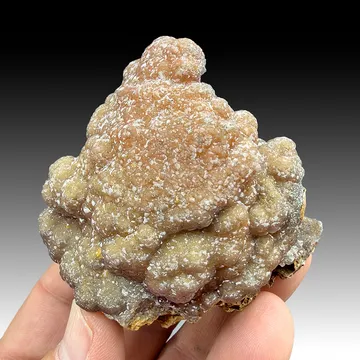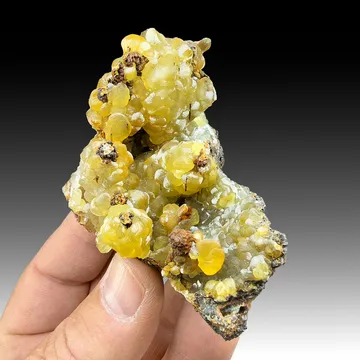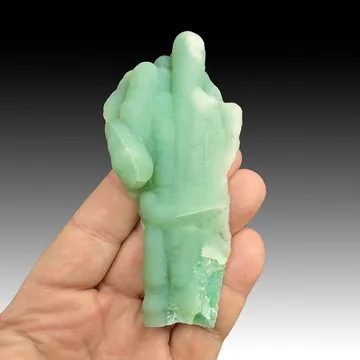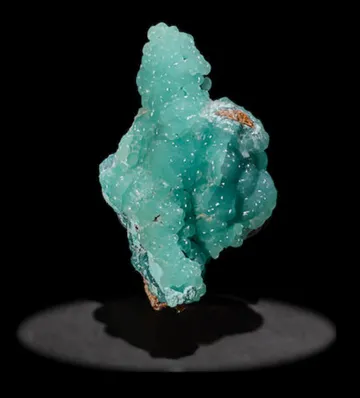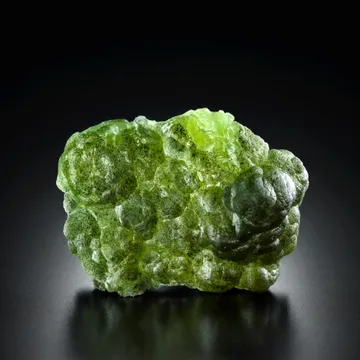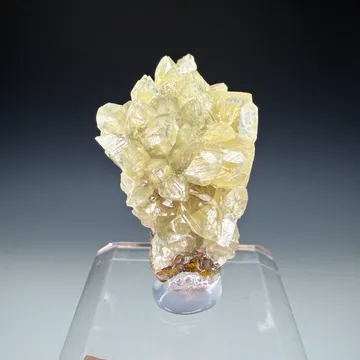
Smithsonite: ZnCO3 with botryoidal and crystalline forms, silky to vitreous luster, pastel hues from cobalt to yellow; localities boost collecting appeal.
Key facts
Smithsonite (ZnCO3) is a beloved secondary zinc carbonate famed for its soothing palette and sculptural forms. It most often occurs as botryoidal “grape-like” masses and stalactites with a silky to vitreous, wet-looking luster, though sharp rhombohedral crystals also occur at select localities. Color is a highlight: pure smithsonite is typically white to gray, but trace elements produce exquisite pastels and jewel tones—copper yields sky-blue to teal, cobalt gives pink to purplish hues, cadmium creates canary yellow (“turkey fat”), and iron adds greens to browns. Translucency and internal glow can be superb, giving top material an almost gemmy, agate-like quality on the shelf.
Aesthetic smithsonite ranges from delicate, drusy coatings to thick cascading stalactites and seamless botryoidal blankets over gossan matrix. Classic associations include aurichalcite, hemimorphite, galena, cerussite, malachite, limonite, and calcite. The species sits at the nexus of color, form, and history—Tsumeb’s kaleidoscope of hues, Kelly Mine’s iconic “Kelly blue,” Lavrion’s sea-foam stalactites, Sardinia’s bright cadmian yellows, and Mexico’s velvety greens.
Smithsonite has enduring appeal for both beginners and advanced collectors. It rewards a modest budget with attractive smaller specimens while offering elite masterpieces from classic deposits that anchor major collections. The species’ soft luster and peaceful colors display beautifully under LED case lights, and its diversity invites focused specialization—by color chemistry (cobaltian pinks, cadmian yellows), by habit (stalactitic, botryoidal, crystalline), or by classic district (Tsumeb, Lavrion, Kelly, Ojuela).
Historically important finds—such as Tsumeb’s multi-hued bonanza, the Kelly Mine’s copper-bearing blues, Lavrion’s stalactites, Santa Eulalia’s sweeping blankets, Sardinia’s vibrant cadmian “turkey fat,” and Arizona’s 79 Mine pastel stalactites—set benchmarks for quality. Many pockets have been long exhausted, so fine older pieces appreciate over time, and well-preserved, unrepaired examples are hotly pursued. With its combination of broad availability, color-driven aesthetics, and storied provenance, smithsonite remains a cornerstone display species.
Tsumeb is the gold standard for smithsonite variety and quality. The polymetallic orebody and multiple oxidation zones produced smithsonite in a spectrum of colors—apple-green, teal-blue, cobalt-pink, cadmian yellow, tan, white, and even multicolored banding. Habits range from velvety botryoidal blankets and stalactitic cascades to lustrous rhombohedral crystals and striking pseudomorphs after calcite. Associations with dioptase, wulfenite, cerussite, and malachite elevate the aesthetics further. Many pieces show exceptional translucency and that coveted “wet ice” luster. Unrepaired, sharp, vividly colored pieces on contrasting matrix are world-class and highly prized.
The Kelly Mine (Magdalena District, Socorro County) is synonymous with “Kelly blue” smithsonite—a copper-rich, robin’s-egg to turquoise-blue botryoidal habit with a soft satiny glow. Classic pieces drape over iron-oxide gossan, sometimes forming stalactitic draperies or layered banding. The finest show uniform, unpitted surfaces, vivid even color, and an internal translucence that lights up when backlit. Kelly specimens are quintessential Americana and remain among the most recognizable smithsonites in the hobby.
Lavrion’s ancient lead-zinc mines continue to delight collectors with sea-foam blue to apple-green smithsonite, often stalactitic or botryoidal with silky to vitreous luster. Many pieces form delicate cascades with banding or concentric growth, draping over ocher gossan or contrasting white quartz. Charming associations with aurichalcite, hemimorphite, and aragonite add color and texture. While abundant at small sizes, truly pristine, thick stalactites or large, uniformly lustrous blankets are much scarcer and command strong interest.
The Ojuela Mine (Mapimí, Durango) is a prolific smithsonite source, especially for velvety green to blue-green botryoidal coatings. Surfaces can be micro-crystalline and sparkling, or smooth and satiny, often with distinctive, banded stalactites. Rich limonite matrix and associations with aurichalcite and hemimorphite are common. While production has been intermittent for over a century, top pieces—uniformly colored, glowing, and undamaged—remain in high demand and serve as centerpiece specimens even at modest size.
Santa Eulalia, Chihuahua, produced elegant smithsonite in whites, creams, and pastels—botryoidal blankets, stalactites, and occasionally curved rhombohedral crystals. Large, undulating surfaces with a glossy luster are characteristic. The best examples have a porcelain-like smoothness and show attractive interplay with limonite and galena. Though generally subtler in color than Ojuela or Kelly, Santa Eulalia pieces often excel in form, scale, and display presence.
The 79 Mine (Gila County) is beloved for delicate stalactitic and botryoidal smithsonite in soft blues and greens, frequently showing attractive banding and silky luster. Classic associations with aurichalcite and hemimorphite create pastel palettes and micro-drusy sparkle. While many are smaller cabinet to thumbnail pieces, the best are gemmy, highly translucent, and exquisitely sculptural—ideal for single-color or Arizona-focused displays.
With mindful selection and care, smithsonite rewards collectors with serene color, luminous luster, and timeless aesthetics—equally at home as a first fine piece or as a highlight in a mature suite.