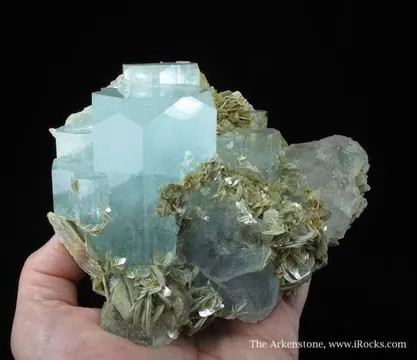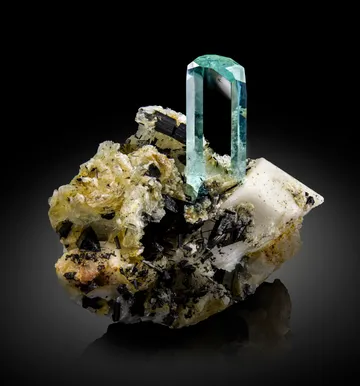
A collector's guide to Skardu District, Pakistan: its geology, mining history and notable minerals, illustrated with the 593 specimens documented from this locality on EarthWonders.
Key facts
For mineral collectors, “Skardu District” is less a single mine than a famous trade and historical collecting label for the high Karakoram pegmatite and alpine-cleft country centered on Skardu, Shigar, Braldu, Basha, Roundu, Shengus, Stak Nala, Tormiq, Alchuri, Hashupa, and their tributary valleys. Modern administrative boundaries have changed, and many classic “Skardu District” labels now fall in Shigar or Roundu districts; the collector meaning remains the older Skardu mineral province. Its importance rests on a remarkable combination of miarolitic granitic pegmatites and metamorphic clefts: pale to richly blue aquamarine on brilliant white albite, colorless to yellowish topaz, lustrous black schorl, gemmy multicolored elbaite, pink apatite, green fluorite, almandine–spessartine garnet, rare phosphates, and, from the cleft deposits, superb epidote-group minerals, titanite, axinite and faden quartz.
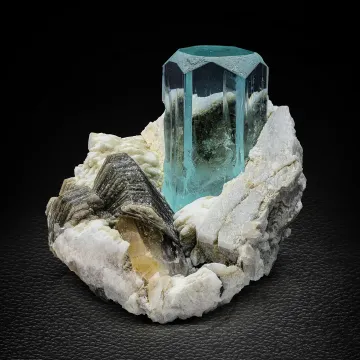
The best Skardu-labeled specimens have a clarity of design that collectors recognize instantly. Aquamarine stands upright as long hexagonal prisms from snow-white feldspar; schorl forms jet-black, ribbed architectural accents; topaz appears as glassy, colorless prisms on albite-quartz-muscovite matrix; and Stak Nala tourmalines pass from dark schorl or green elbaite into pale pink, blue, or colorless caps. The district’s geological story is equally compelling: gem minerals formed in zoned pegmatite bodies intruded into high-grade metamorphic rocks, while separate alpine-type clefts opened in metamorphosed calc-silicate and amphibolitic rocks to grow epidote, clinozoisite, zoisite, titanite, axinite and quartz.
Regional View
Country View
Historically, the great specimen localities were opened and worked by local miners, village groups, the Gemstone Corporation of Pakistan, and later artisanal miners and dealer-miner networks supplying Peshawar, Skardu, Tucson and the wider international market. Early published accounts brought the Shingus-Dusso and Stak Nala pegmatites to collectors’ attention; later work on the Shigar Valley and Alchuri clefts refined the mineralogy and paragenesis. The result is one of Asia’s most recognizable specimen provinces: not a mass-production district in the industrial sense, but a rugged mountain source where small pockets can yield world-class, highly aesthetic minerals.
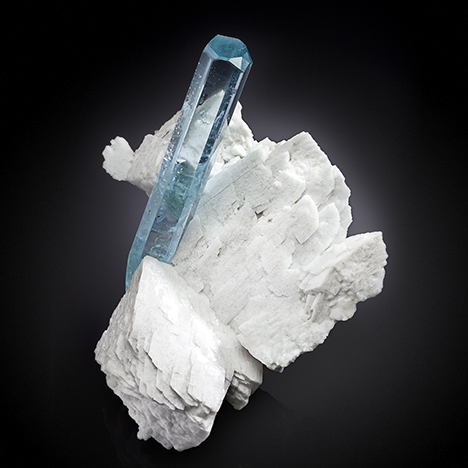
Photo: GIA Gems & Gemology
The specimen above captures the classic Skardu-Shigar style: a long, transparent blue aquamarine set sharply against pale feldspar. The finest pieces are not simply large; they are balanced, undamaged, naturally attached, and mineralogically coherent, with the beryl emerging convincingly from albite, muscovite, quartz or schorl rather than sitting awkwardly on matrix.
Search for specimens: View all specimens from Skardu District, Pakistan
The collector locality “Skardu District” should be read with care. In older mineral literature and specimen labels, Skardu District covered the broader Baltistan pegmatite province, including areas that are now administratively separated into Shigar District and Roundu District. That older usage is the one behind many aquamarine, topaz, tourmaline, albite, apatite and cleft-mineral labels. Current political Skardu District is much smaller, and some databases now segregate Skardu Area, Shigar District and Roundu District. For collectors, the essential point is provenance: a label reading “Skardu, Pakistan” may refer to the old district, to the trading hub, or to a more precise mine or valley such as Shigar, Braldu, Dassu, Nyet Bruk, Yuno, Kashmol, Goyungo, Shengus, Stak Nala, Tormiq, Alchuri or Hashupa.
The principal specimen deposits are granitic pegmatites, many of them complex and zoned. In the Shigar Valley, pegmatite dikes and veins intrude metasedimentary and meta-igneous rocks of the Karakoram Metamorphic Complex and are regarded as part of the broader Karakoram Axial Batholith system. The gem-bearing bodies typically show fine-grained border zones, coarser intermediate zones and blocky central zones. Productive pockets occur mainly in the central parts of the intermediate zone or at the core-margin zone, where late magmatic-hydrothermal fluids opened rounded to ovoid cavities. These cavities may be packed with crystals and clayey material, often pinkish or white, and their size strongly influences the maximum crystal size inside.
In the Stak Nala area of the Nanga Parbat–Haramosh Massif, the pegmatites are miarolitic, symmetrically zoned and famous for schorl-to-elbaite tourmaline. The bodies are sills in gneissic host rock, with outer feldspar-quartz zones, schorl-bearing wall zones, blocky K-feldspar and quartz in the core, and pockets containing albite, quartz, K-feldspar, schorl, elbaite, muscovite or lepidolite, topaz and rare accessory minerals. Economically important colored tourmaline formed where late fluids were trapped near favorable structural highs, after earlier crystallization of schorl had depleted parts of the system in iron.
Shigar Valley mineralization is more varied from pocket to pocket. Yuno, Kashmol, Dassu, Nyet Bruk and Goyungo are repeatedly associated with beryl, topaz, fluorite, apatite, garnet and schorl. Aquamarine and goshenite occur in vugs and cavities, commonly with albite, muscovite and tourmaline. Topaz is known in colorless and light yellow crystals, usually on albite-quartz-muscovite matrix. Fluorite is typically pale to darker green and associated with beryl, quartz, topaz, tourmaline and muscovite. Garnets in studied Shigar material are dominantly almandine with significant spessartine component, especially toward some crystal rims. Pink to light pink apatite is another signature Shigar mineral, particularly attractive when grouped with green fluorite, reddish garnet and mica books.
Separate from the pegmatite pockets are the alpine-type clefts of Alchuri, Hashupa and nearby localities. These have produced epidote-group and calc-silicate assemblages that collectors often place alongside classic Alpine material. Alchuri is celebrated for zoisite, clinozoisite, epidote, titanite, chromium-rich diopside, axinite, quartz and repeated faden habits. Unlike the pegmatite beryl-topaz-tourmaline suite, these cleft minerals formed in metamorphic rocks, veins and fracture systems, not in lithium-rich pegmatite pockets.
Mining has been overwhelmingly small-scale and difficult. Some workings were investigated or systematized by the Gemstone Corporation of Pakistan, especially at Stak Nala in the 1980s, but most production has come from artisanal miners working short seasonal windows, high cliffs and narrow tunnels. In the Shigar, Braldu and Basha valleys, workings are scattered over a broad mountainous pegmatite swarm; some mines are accessible only by foot trails, rope work or steep climbs from river level. Good pockets are irregular and unpredictable. One tunnel may yield flawless quartz and topaz in the dump, another only barren feldspar and mica, and another a single pocket with aquamarine, schorl and albite that becomes a benchmark specimen find.
Collecting access today is not casual field collecting. Many sites are village-owned, actively claimed, dangerous, seasonal, or reached through terrain requiring mountaineering competence. Outsiders should not assume that a historical locality name means open access. The practical collector’s route is through reputable Pakistani and international dealers who can provide precise locality information, disclosure of repairs, and a credible chain of custody. Labels with only “Skardu” can be acceptable for older material, but finer specimens deserve the most specific locality available: Shigar Valley, Braldu Valley, Dassu, Yuno, Kashmol, Stak Nala, Tormiq, Alchuri or Hashupa.
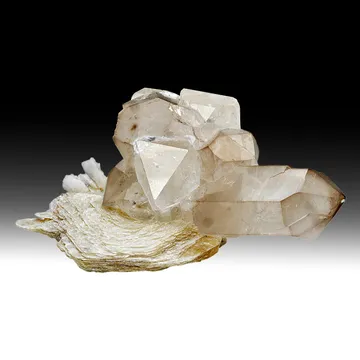
Quartz from the Skardu mineral province is both a pocket mineral of the pegmatites and a cleft mineral of the metamorphic zones, so its style varies from clear rock-crystal groups with aquamarine, topaz, albite and muscovite to faden crystals from Alchuri, Hashupa and related alpine-type clefts. In the pegmatites, the best quartz is clean, sharply terminated and compositionally useful rather than merely present: it frames blue aquamarine, supports colorless topaz, or contrasts with black schorl and white albite. In the clefts, collectors prize tension-grown faden forms and bright, transparent crystals associated with epidote-group minerals, titanite, fluorapatite and calcite. Ordinary pieces are milky, bruised or shapeless; good Skardu quartz has either specimen architecture or a diagnostic association that ties it to a real pocket environment.
Aquamarine is the flagship mineral of the Skardu-Shigar collecting tradition, occurring as pale greenish blue to blue hexagonal beryl prisms in zoned pegmatite cavities, especially in the Shigar, Braldu and Dassu systems. Historic accounts record transparent light-blue crystals from Dassu in the 5–15 cm length range and larger crystals in major collections, while modern specimen material includes long prismatic “pencils,” stout gem crystals, double-terminated floaters and matrix pieces on albite, muscovite, quartz or schorl. The color is commonly delicate rather than saturated; the highest-value specimens compensate with glassy luster, strong termination, transparency, natural attachment and graceful contrast against snowy feldspar. A crystal merely glued to mica is not a Skardu classic; a crystal rooted in albite with schorl accents is.
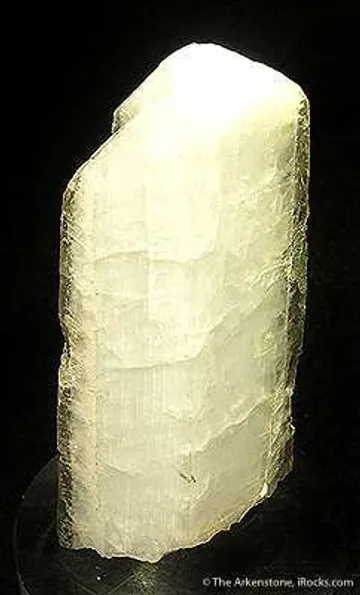
Topaz from the Skardu district label is best documented from Shigar Valley pegmatites at Yuno, Kashmol, Dassu, Nyet Bruk and Goyungo, where colorless and light yellow crystals occur in miarolitic pockets. Studied examples from Kashmol, Yuno and Goyungo were colorless crystals around 1 x 3 cm and were typically associated with albite, quartz and muscovite; larger and more aesthetic matrix pieces have circulated through the specimen market. Good pieces are water-clear, lustrous, sharply terminated and naturally perched with aquamarine, quartz or albite. Because color-enhanced and mounted topaz specimens appear in the broader Pakistani trade, Skardu topaz should be evaluated for natural attachment, plausible pocket relationships and unaltered color.
Albite is the great stage on which many Skardu specimens perform. In the pegmatite pockets it appears as white blocky to bladed feldspar, and in its cleavelandite habit it forms the sparkling, platy matrix that makes aquamarine, schorl, elbaite, topaz and quartz specimens display so well. The best albite is not an afterthought: it is crisp, bright, undamaged and three-dimensional, giving blue beryl or dark tourmaline a clean visual field. In Alchuri-type clefts, albite also appears with epidote-group minerals and quartz, but the classic market look remains white albite beneath aquamarine or tourmaline from Shigar, Braldu, Shengus and Stak Nala.
Beryl in the Skardu province includes aquamarine, goshenite and less common colored varieties such as morganite or heliodor reported from the broader old-district pegmatite suite. In the Shigar Valley, gem-quality beryl ranges from colorless goshenite to light or darker blue aquamarine, with crystals concentrated mainly in cavity-bearing core-margin zones and occasionally in coarse intermediate zones. Good beryl specimens show complete hexagonal form, transparency, smooth faces, unabraded terminations and natural matrix contact with albite, muscovite or schorl. Colorless goshenite can be attractive, but it is often confused with pale aquamarine in poor light; serious collectors value accurate labeling of variety as much as size.
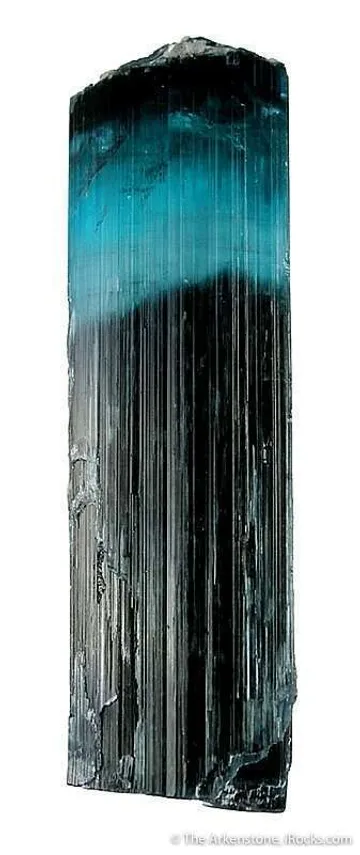
Schorl is widespread in the Skardu pegmatite systems and is especially important at Shigar and Stak Nala. In the Shigar Valley it is scattered through pegmatite groundmass and concentrated near core-margin or border zones; a studied Kashmol crystal measured about 4 x 1 cm, was black, trigonal, and strongly striated parallel to the prism. At Stak Nala, radiating sprays and dark schorl zones are part of the internal pegmatite architecture, and some specimens grade into colored elbaite. The best schorl pieces are lustrous, sharply terminated, undamaged, well separated on albite or quartz, or aesthetically associated with aquamarine; ordinary material is fractured, massive or buried in matrix.
Feldspar is fundamental to the Skardu district’s specimen character, from albite and cleavelandite in open pockets to blocky K-feldspar and microcline in pegmatite cores. At Stak Nala, feldspar-quartz border and wall zones pass inward to coarser K-feldspar, quartz and albite-rich pocket assemblages; in Shigar pegmatites, feldspar is the common host and matrix for aquamarine, topaz, fluorite, apatite, garnet and tourmaline. Collectors should look for feldspar that is crystallized rather than merely massive: sharp albite blades, well-defined cleavelandite plates, or blocky microcline providing structure and contrast. The best feldspar matrix makes the specimen read as a natural pocket, not as a random base.
Muscovite is common in the Skardu pegmatites and is particularly attractive where it forms large books or silvery sheets with aquamarine, schorl, quartz, topaz, fluorite, apatite and garnet. A classic Shigar association from Yuno includes light pink apatite, green fluorite, reddish garnet and large muscovite books, showing how mica can be an essential part of the specimen rather than background material. In Stak Nala, muscovite or lepidolite appears in pocket assemblages, and rare oxide minerals such as billwiseite may be partly mantled by boron-rich muscovite. The best muscovite is lustrous, well stacked and undisturbed around the crystals; broken, scraped mica at an aquamarine base is a warning sign for possible assembly.
Tourmaline from Skardu-labeled localities ranges from ubiquitous black schorl in Shigar pegmatites to the celebrated multicolored Stak Nala elbaites. The Stak Nala style is particularly distinctive: crystals may show green, colorless, pink or blue-toned zones, commonly with dark schorl or very dark green bases, set in albite, quartz, microcline, muscovite or lepidolite. Shigar material includes black tourmaline with aquamarine and albite, and local reports also mention emerald-green to colored tourmaline in the broader valley system. Excellent tourmalines have intact terminations, strong luster, visible color zoning and a natural relationship to cleavelandite or quartz; heavily fractured, restored or base-hidden crystals deserve close inspection.
Smoky quartz is a documented member of the broader Skardu Area mineral suite and appears most plausibly in the granitic pegmatite environment, especially with feldspar-rich pocket assemblages. It is not the district’s most famous quartz style, but smoky crystals can add contrast to albite, microcline, muscovite and tourmaline associations, particularly where their color is even and their faces remain bright. Good Skardu smoky quartz should be judged as a specimen mineral, not a decorative commodity: natural pocket attachment, sharp termination, clean luster and credible association with feldspar or tourmaline matter more than darkness alone. Over-dark, heated-looking or contextless crystals with vague “Skardu” labels should be bought conservatively.
Apatite from the Skardu-Shigar province is prized for light pink to pink gemmy crystals in pegmatite pockets, especially at Yuno and Kashmol, and for fluorapatite in the Alchuri cleft assemblages. Studied Shigar apatites include manganese-rich material from Kashmol, and Yuno specimens show the classic association of pink apatite with green fluorite, reddish garnet and large muscovite books. Fine pieces have glassy luster, clean color, distinct crystal form and an undamaged relationship to feldspar, quartz or mica; the fragile nature of apatite means edge bruises and broken terminations are common. Cleft apatite may also show faden habits, making it mineralogically distinct from the pegmatite pocket crystals.
Mica is one of the most common but most diagnostic materials in Skardu specimens because it records the pocket environment and often reveals whether an association is natural. Muscovite dominates many Shigar aquamarine and topaz pieces, while lithium-rich pegmatites in the Stak Nala and Shengus-Shingus systems may include lepidolite with elbaite, feldspar and quartz. Good mica matrix is coherent: books and plates grow around the primary crystals without scraped seats, glue-filled gaps or loose flakes arranged to hide a break. On high-end aquamarine and tourmaline specimens, the mica deserves the same scrutiny as the main crystal because fake or reconstructed Pakistani matrix pieces commonly use mica to disguise artificial attachment.
Garnet from Skardu-labeled pegmatites is best documented in the Shigar Valley, especially at Yuno and Dassu, where gem-quality but generally small euhedral crystals occur with other pocket minerals. Studied crystals are reddish brown and dominantly almandine with significant spessartine component; Dassu material shows increasing manganese from core to rim, suggesting a stronger spessartine component toward the outside of some crystals. In specimens, garnet is most attractive as a bright red to orange-red accent with aquamarine, apatite, fluorite, albite, quartz or muscovite. Large clean garnets are not typical; the best collector pieces are balanced combinations where small garnets sharpen the color contrast without overwhelming the pegmatite association.
Scheelite is a documented but secondary mineral in the broader Skardu Area suite, particularly in old-district locality records that include Braldu, Basha, Tormiq and related mineralized systems. It is not a common display species from the famous aquamarine pockets, so well-crystallized Skardu scheelite should be treated as unusual and locality-sensitive. The most convincing pieces are those with plausible calc-silicate or pegmatite-associated matrix and clear provenance, rather than isolated heavy crystals sold under only a broad Pakistan label. As with scheelite generally, shortwave ultraviolet fluorescence can be useful for confirmation, but fluorescence alone does not establish a precise Skardu origin.
Axinite from the Skardu-Shigar province belongs mainly to the alpine-cleft and metamorphic vein story, not the aquamarine pegmatite story. At Alchuri and Hashupa it occurs as light pink to brown crystals in veins within greenschist to epidote-amphibolite facies metamorphic rocks, commonly in the same broad cleft environment that produced epidote, clinozoisite, zoisite, quartz and titanite. Good specimens show sharp bladed crystals with glassy luster and a convincing metamorphic matrix; brown, translucent, well-formed crystals are far more desirable than massive or chipped material. Because axinite is often visually close to other brown silicates in poor photos, precise locality and reliable identification are important.
Epidote is one of the great non-pegmatite minerals of the Skardu-Shigar collecting area, with Alchuri, Hashupa and Tormiq producing green, lustrous crystals that stand apart from the district’s beryl-topaz-tourmaline image. Alchuri alpine-type clefts are especially respected for epidote-group minerals, including epidote and clinozoisite, with associations such as quartz, albite, adularia, byssolite, titanite, calcite, prehnite and diopside. Good epidote is sharply terminated, transparent to translucent at the edges, richly green and naturally perched; ordinary pieces are dark, opaque, broken or flattened into unattractive aggregates. The finest examples compare visually with classic Alpine cleft material while retaining a distinctly Pakistani association suite.
Cleavelandite, the platy variety of albite, is one of the visual signatures of Skardu-labeled pegmatite specimens. It forms white, bladed to rosette-like matrices beneath aquamarine, schorl, elbaite, topaz and quartz, especially in the Stak Nala and Shigar-Braldu pegmatite systems. The best cleavelandite is bright, sharply bladed and spatially integrated with the main crystal, giving the piece a clean snowy base and a natural pocket geometry. Collectors should inspect cleavelandite carefully: broken blades around a beryl base, glossy adhesive between plates, or mica and albite flakes arranged like camouflage can indicate repair or full reconstruction.
Spessartine in the Skardu province is best understood through the almandine–spessartine garnets of the Shigar Valley pegmatites, where reddish brown to orange-red crystals occur in pockets at Yuno, Dassu and related localities. Chemical work on Shigar garnets shows manganese enrichment in some Dassu rims, and locality records list spessartine from the old Skardu Area suite. Fine specimens are typically small but colorful, adding warm red-orange points to aquamarine, albite, muscovite, apatite or fluorite combinations. A large isolated orange garnet with only a broad “Skardu” label is less convincing than a modest, sharp crystal naturally embedded in the correct pegmatite matrix.
Fluorite from Skardu-labeled Shigar pegmatites is typically pale to dark green and is documented from Yuno, Mungo, Kashmol, Baha and Nyet Bruk. Studied crystals averaged around 2 x 3 cm and occurred in cavities with tourmaline, beryl, quartz, topaz and muscovite; Yuno material is known in attractive combinations with pink apatite, reddish garnet and mica books. The best pieces have saturated but natural green color, glassy faces, good transparency and balanced association with other pocket minerals. Massive green fluorite fragments are common enough to be decorative, but fine Skardu fluorite is most desirable when it clearly belongs to a multi-species pegmatite pocket.
Microcline is a key K-feldspar in the Skardu pegmatite systems, especially in blocky core zones and pocket assemblages where it occurs with albite, quartz, schorl, elbaite, muscovite or lepidolite. At Stak Nala, intermediate microcline appears in the feldspar-rich core architecture, and broader northern Pakistan pegmatite records include green microcline among collectible feldspar specimens. Good microcline from this district provides sculptural mass and color contrast, particularly when sharp albite, quartz or tourmaline is attached. The most collectible pieces are crystallized and aesthetically useful; plain blocky feldspar with no associated gem mineral is far less important unless it carries rare accessory species.
Calcite is an accessory but locally attractive mineral in the Skardu district label, appearing in both current Skardu records and the older Shigar-Alchuri suite. In Shigar pegmatite material, yellowish white calcite aggregates are documented with reddish brown garnet from the Yuno pegmatite mine, while in Alchuri clefts calcite occurs with epidote-group and calc-silicate minerals. Near Skardu airport, older specimen notes mention colorless to pale gray scalenohedral calcite to small cabinet size. Good pieces are clean, lustrous and clearly associated; calcite alone rarely carries the locality’s market weight unless it is well crystallized, from an older collection, or accompanied by epidote, garnet, quartz or other diagnostic minerals.
Elbaite is the colored tourmaline that made Stak Nala famous within the broader Skardu collecting label. The classic crystals are color-zoned, commonly green through colorless to pale pink, with some blue or indicolite-toned zones, and they occur in pockets with albite, quartz, K-feldspar, muscovite, lepidolite, topaz and rare accessory minerals. The finest specimens are double-terminated or sharply capped, lustrous, transparent in the colored zones and perched on white cleavelandite or quartz. Stak Nala elbaite is often internally fractured, so condition and disclosure matter; a complete, naturally attached crystal with clean color transition is far superior to a bright but repaired or remounted crystal.
Rhodochrosite is a minor and much less fully documented species under the Skardu District and old Skardu Area labels, known from collector and database records rather than from the classic published pegmatite descriptions. It should therefore be treated as a rarity or accessory occurrence, not a major locality specialty like aquamarine or tourmaline. The best candidates are small pink to rose carbonate crystals or aggregates with credible Skardu provenance and supporting matrix context; broad, unsupported labels deserve caution because rhodochrosite is far more famous from other world localities. For serious collectors, verification and a precise source history are more important than size.
Sphene, now formally titanite, is one of the notable calc-silicate minerals of the Skardu-Shigar and Tormiq cleft-mineral suite. Alchuri is known for fine green to butterscotch titanite associated with epidote-group minerals, quartz, feldspar, diopside and other cleft species, while Tormiq Valley material commonly appears as titanite with epidote in the Haramosh Mountains. Good sphene specimens show sharp wedge-shaped crystals, bright luster and green, yellow-green or butterscotch tones; the best pieces are not merely labeled “Pakistan” but tied to Alchuri, Tormiq or another precise cleft locality. Because titanite edges are fragile, intact terminations and undamaged ridges are major value factors.
Lepidolite is a lithium-mica accessory in the Skardu old-district pegmatite province, with published notice of lepidolite from the Shingus-Shengus area and occurrence in Stak Nala pocket assemblages with tourmaline, feldspar, quartz and topaz. It is not usually the dominant display mineral, but it is important mineralogically because it marks the more evolved, lithium-bearing pegmatite environment that also produces colored elbaite and rare phosphates. The best pieces show lilac to pinkish mica aggregates or books in direct association with elbaite, albite, microcline or quartz. Attractive lepidolite matrix can strengthen a Stak Nala tourmaline specimen; isolated mica without a precise locality or associated species is far less significant.
Other documented minerals from the broader Skardu collecting label include goshenite, morganite, heliodor, fluorapatite, clinozoisite, zoisite, diopside, adularia, prehnite, rutile, zircon, herderite, hydroxylherderite, hambergite, beryllonite, pollucite, spodumene, montebrasite, viitaniemiite, väyrynenite, tantalite, columbite, stibiotantalite, stibiocolumbite, microlite-group minerals and the type-locality oxide billwiseite from Stak Nala. Billwiseite is a micromineral and not a mainstream display species, but its Stak Nala type-locality status is a reminder that these pegmatites are scientifically important as well as beautiful. Alchuri’s zoisite and clinozoisite, Tormiq’s titanite-epidote style, and Braldu/Shigar rare phosphates add depth to a district too often summarized only as “aquamarine from Pakistan.”
Skardu-labeled specimens require more scrutiny than almost any other modern pegmatite locality because the region has produced both superb natural specimens and a documented trade in reconstructed pieces. The common problem is not fake aquamarine itself, but natural crystals mounted on unrelated mica, albite or quartz matrix to imitate a pocket specimen. GIA has documented recent “Frankenstein” Pakistani specimens assembled with resin-like adhesives, including aquamarines attached to host rock, and older collector discussions specifically mention glued aquamarine or goshenite on Pakistani albite or muscovite matrix. A repaired crystal reattached to its own matrix can be acceptable if fully disclosed; an unrelated crystal glued to an attractive base is a fake specimen.
Inspection should begin at the contact point. Look for a crystal that enters the matrix naturally, with feldspar or mica growing around it rather than packed against it. Warning signs include glossy adhesive in crevices, unnatural clay or resin filler, mica flakes sprinkled around a base, scraped feldspar, mismatched luster, a crystal axis that makes no geological sense, and broken matrix exactly where a main crystal would need support. A long aquamarine sitting on a flat mica book may look dramatic, but the best Skardu pieces have intergrowth: albite blades climbing the beryl, schorl nestled against it, quartz attached convincingly, or muscovite books developed around the pocket.
Condition is a separate issue. Aquamarine is durable but commonly chipped on terminations and prism edges. Topaz has perfect basal cleavage and can pop or cleave if struck, so matrix pieces with exposed colorless topaz must be handled carefully. Apatite bruises easily; clean pink Shigar apatite crystals without edge damage are much scarcer than they first appear. Epidote, titanite and axinite from clefts often have sharp exposed edges and delicate contacts. Cleavelandite matrices shed blades; never grip a specimen by the feldspar rosettes. Schorl and elbaite can be internally fractured, and tourmaline repairs should be assumed possible until inspection proves otherwise.
Treatments also enter the market. Irradiation is used in the broader trade for beryl, topaz and tourmaline, and color-altered topaz has been discussed in relation to Pakistan-labeled specimens. Shigar aquamarine studied by GIA showed iron-related natural aquamarine coloration rather than Maxixe-type irradiation color, but that does not guarantee every blue beryl in the market is untreated. Be especially careful with unusually saturated blue beryl, overly vivid blue topaz, or color that seems inconsistent with the locality’s normal pale to medium palette.
Fluorescence is useful but limited. Shigar aquamarine may show weak bluish white fluorescence under longwave and shortwave ultraviolet, apatite may fluoresce, and scheelite should be checked under shortwave UV when confirmation is needed. Adhesives may also fluoresce, so UV inspection around contacts is valuable. However, fluorescence cannot prove locality, and some glues are subtle. A microscope, acetone swab used only with expert caution, provenance records and comparison with known pocket morphology are more reliable.
Rarity varies sharply by species and quality. Small aquamarines, schorl pieces, albite matrices and common quartz are readily available; top-quality aquamarine on matrix, clean Stak Nala elbaite, natural aquamarine-schorl-albite combinations, pink apatite groups, fine Alchuri epidote or titanite, and rare phosphates are much scarcer. The strongest market demand is for aesthetic, damage-free, natural matrix pieces with precise locality. A specimen labeled simply “Skardu” can still be legitimate, especially if old, but a modern high-priced piece should carry a valley or mine name whenever possible.
The Skardu story is a mountain story before it is a mineral story. Jim Clanin’s 2007 reconnaissance for the International Colored Gemstone Association described a world where prospecting is conducted on near-vertical cliffs rising 3,000 to 4,000 feet or more, where pockets at high elevation are often frozen, engines lose effectiveness, pneumatic equipment may not work, and a mining season can shrink to a few months between snow and winter. In that terrain, a pegmatite pocket is not an orebody waiting for a processing plant. It is a small locked room in a cliff, and the miner has to reach it, open it gently, and hope the crystals survived both nature and blasting.
At Stak Nala, the famous tourmaline locality began with local villagers finding tourmaline in the early 1980s. The Gemstone Corporation of Pakistan explored the area soon afterward and recognized abundant tourmaline mineralization in two pegmatite bodies about half a kilometer apart. Most of the production came not from a large mine but from a single sill only about a meter thick at the main mine; a thicker pegmatite, up to about four meters, lay roughly 500 meters to the south and produced much less. The setting is precise and almost austere: pegmatites on the west side of the Stak Valley, about 13 km north of the Indus River, near 2,800 m elevation, reached from the Gilgit-Skardu road by a rough road to Toghla and then by footpath up the valley wall.
By the time Clanin visited, locals said the Stak Nala mines belonged to Tookla village, though outsiders were also digging. They counted about 40 mines in the area. The Gemstone Corporation had worked Stak Nala systematically in the 1980s and, when it left, blasted its tunnels closed. One tunnel had been reopened by local miners, but each new blast caused more collapse. Clanin’s practical recommendation was not romantic: build rock walls to shore up fractured ground damaged by over-blasting. Behind the pastel caps and textbook color zoning of Stak Nala elbaite lies this rough reality of reopened tunnels, broken rock and villagers trying to recover value from a narrow pegmatite body.
Along the Indus near Shingus and Bulachi, Clanin saw active pegmatites for about 7 km on the opposite bank from the road. Workings dotted both sides of the river where rockfall would not hit the road. The pegmatites produced aquamarine, black tourmaline, topaz, apatite and garnet, but access was punishing. There were reported to be hundreds of pegmatites, many on near-vertical mountain faces, and miners had to rappel down on ropes to reach them. Four villages owned the pegmatites on the south side of the Indus, and roughly 400 to 500 miners had reportedly been working the area for 14 or 15 years.
The Dassu morning is one of the vivid moments in the literature. In the Shigar-Braldu-Basha pegmatite swarm, spread over about 150 square kilometers, Clanin woke in Dassu to the sound of blasting all over the mountains on both sides of the river. The blasts began around 6:30 in the morning and continued all day. Dumps rose from river level to the top of mountains about 3,000 meters overhead; some mines appeared as mere holes in the mountainside, with no visible dump because the slope was nearly vertical. Officials of the Baltistan Gem and Mineral Association in Skardu told him that a 2003 survey had found 4,500 households involved in mining in the region, each with three to ten people directly engaged.
The miners at Dassu told an even more sobering story underground. There were said to be 200 groups of men working year-round, some in tunnels 150 to 180 meters deep. In longer tunnels they would blast once and then stop for the day so the workings could air out overnight. Elsewhere in northern Pakistan, miners using gasoline-powered drills underground described stopping only when they could no longer light a fuse because of oxygen depletion or air pollution. Clanin reported that the approximately 40,000 miners in northern Pakistan complained of lung problems from silicosis and carbon monoxide poisoning, while the leading causes of death in the high mountain workings were rockfall and falls from sheer cliff perches.
One small episode near Haramosh captures the unpredictability of specimen mining. At Shah Toot, locals allowed Clanin to see only a shallow open pit in a vertical pegmatite. The dump showed no sign that pockets had ever been found, yet the miners said that the small hole had produced goods worth 1.5 million Pakistani rupees, about $25,000 at the time. They also said there were more than 200 mines in their region and that they had been working them for about 20 years. In ordinary ore mining that would be a poor basis for prediction; in gem pegmatites, it is the business model. A nearly barren-looking hole can pay, and a promising pegmatite can die without producing a single display specimen.
Muhammad Hassan Agheem, Mohammad Tahir Shah, Tahseenullah Khan, Mamoru Murata, Muhammad Arif and Humaira Dars, “Shigar valley gemstones, their chemical composition and origin, Skardu, Gilgit-Baltistan, Pakistan,” Arabian Journal of Geosciences, 7, 3801–3814, 2014. The key modern mineral-chemistry paper on Shigar beryl, tourmaline, garnet, apatite, topaz, fluorite, zoisite, clinozoisite and axinite.
M. Hassan Agheem, M. Tahir Shah and Tahseenullah Khan, “Gems and gem-bearing pegmatites of the Shigar valley, Skardu, Northern Pakistan,” Geological Bulletin, University of Peshawar, 37(1), 167–178, 2004. Concise geological and mineralogical summary of the Shigar Valley pegmatite gemstone suite.
B. M. Laurs, J. H. Dilles, Y. Wairrach, A. B. Kausar and L. W. Snee, “Geological setting and petrogenesis of symmetrically zoned, miarolitic granitic pegmatites at Stak Nala, Nanga Parbat–Haramosh Massif, northern Pakistan,” The Canadian Mineralogist, 36, 1–47, 1998. Essential technical treatment of Stak Nala pegmatite zoning, pocket mineralogy and tourmaline genesis.
Ali H. Kazmi, Joseph J. Peters and Herbert P. Obodda, “Gem Pegmatites of the Shingus-Dusso Area, Gilgit, Pakistan,” The Mineralogical Record, 16(5), 393–411, 1985. Classic collector-era publication that helped establish the Shingus-Dusso pegmatites in the international mineral literature.
F. C. Hawthorne, M. A. Cooper, N. A. Ball, Y. A. Abdu, P. Černý, F. Cámara and B. M. Laurs, “Billwiseite, ideally Sb3+5(Nb,Ta)3WO18, a new oxide mineral species from the Stak Nala pegmatite, Nanga Parbat–Haramosh Massif, Pakistan: description and crystal structure,” The Canadian Mineralogist, 50(4), 805–814, 2012. Type-mineral description for billwiseite, with detailed Stak Nala occurrence data.
Billwiseite mineral page, Mindat. Summary page for the Stak Nala type-locality mineral, including formula, physical properties and type-locality note.
Dudley Blauwet, “Famous mineral localities: Alchuri, Shigar Valley, Northern Areas, Pakistan,” The Mineralogical Record, 37(6), 513–540, 2006. Foundational collector reference for Alchuri alpine-type cleft minerals, cited in the Alchuri locality record.
Wendell E. Wilson, “Minerals from Alchuri,” The Mineralogical Record, 37(6), 534–536, 2006. Short Mineralogical Record article associated with Alchuri species records.
Yang Hu and Ren Lu, “Aquamarine from Pakistan,” Gems & Gemology, Spring 2018. Gemological study of Shigar Valley aquamarine, including habit, inclusions, chemistry, fluorescence and associations.
“Discovery of lepidolite from Shingus area, Gilgit, Pakistan,” Geological Bulletin of the Punjab University, 22, 153, 1987. Publication record documenting lepidolite from the Shingus-Shengus pegmatite area.
“How do they Dig Gem Stones Mines in Shigar District Skardu” — Travel With Wah Yar Wah. Field-style video visiting and interviewing a gemstone mine owner in the Shigar-Skardu mining area.
“aquamarine garnet Minerals mining in shigar valley” — Pak Minerals & Gems. Recent video focused on aquamarine and garnet mining around Shigar Valley.
“Gems and minerals Aquamarine mines in Skardu Pakistan” — Dailymotion user Teacher. Older short video showing aquamarine mine context in the Skardu-Shigar area.
“DMB0762 TOURMALINE with ALBITE, Stak Nala, Pakistan” — Crystal Classics. Specimen video of Stak Nala tourmaline with albite.
Mindat: Skardu Area, Gilgit-Baltistan, Pakistan — Broad old-district-style locality page covering the historical Skardu collecting area and its extensive species list.
Mindat: current Skardu District, Gilgit-Baltistan, Pakistan — Useful for understanding modern administrative boundaries and why many older “Skardu District” minerals now fall in Shigar or Roundu.
Mindat: Shigar Valley, Shigar District, Gilgit-Baltistan, Pakistan — Core locality page for the aquamarine-topaz-fluorite-apatite-garnet pegmatite province historically labeled Skardu.
Mindat: Alchuri alpine-type clefts, Shigar Valley — Essential locality entry for Alchuri’s epidote-group, zoisite, titanite, axinite and faden assemblages.
Mindat: Tormiq Valley, Haramosh Mountains — Locality record for the Tormiq cleft and calc-silicate specimen suite, including titanite, epidote and scheelite records.
GIA: Aquamarine from Pakistan — Gemological analysis of Shigar aquamarine and one of the best illustrated short references for collectors.
Pala International: Gemstone and Mineral Mining in Pakistan’s Mountains — Field report with valuable firsthand detail on Skardu, Shigar, Stak Nala, mining logistics, safety and local mining organization.
Pakistan Science Abstracts: Gems and gem-bearing pegmatites of the Shigar valley, Skardu, Northern Pakistan — Abstract and publication data for the 2004 Geological Bulletin paper.
ResearchGate: Shigar valley gemstones, their chemical composition and origin — Detailed mineralogical paper on Shigar gemstone chemistry and occurrence.
RRUFF: Billwiseite description and crystal structure — Full technical paper for the Stak Nala type-locality mineral billwiseite.
Eurekamag: Gem pegmatites of the Shingus-Dusso area, Gilgit, Pakistan — Bibliographic record for the classic 1985 Mineralogical Record article.
Eurekamag: Discovery of lepidolite from Shingus area, Gilgit, Pakistan — Publication record documenting lepidolite from the Shingus pegmatites.