Hashupa, Pakistan: alpine-type clefts in greenschist to epidote-amphibolite rocks yield long, lustrous epidote-group crystals with quartz; prized by collectors.
Key facts
Hashupa, also seen on labels as Hashupi or Hachupa, is one of the Shigar Valley localities that taught collectors to look beyond Pakistan’s great granitic pegmatites. The village itself sits on an alluvial fan on the left margin of the Shigar River, but the collectible minerals come from alpine-type clefts and related epidote-group workings in the hillside to the north. These are not classic pocket pegmatites packed with aquamarine and tourmaline; the best-studied Hashupa material is tied to fractures, veins, and open fissures in metamorphosed rocks of greenschist to epidote-amphibolite facies, a setting deformed by the major tectonic architecture of the Karakoram region. That distinction matters, because it explains the locality’s signature look: long, lustrous, striated, often gemmy epidote-group crystals, with quartz, adularia, byssolite, diopside, titanite, rutile, calcite, vesuvianite, and other cleft minerals rather than a typical lithium-pegmatite suite.
Hashupa’s collecting importance rests first on epidote, clinozoisite, and zoisite. In the 1990s and early 2000s, material from Hashupa and nearby Alchuri put Pakistan’s alpine-type clefts into the same collector conversation as the great European Alpine fissures. The best pieces are lean, architectural specimens: deep olive to golden-brown or coffee-brown prisms, glassy faces, crisp chisel-like terminations, delicate lengthwise striations, and enough transparency that a backlight can turn a dark crystal suddenly alive. Fine examples can reach miniature to cabinet scale, with individual crystals reported to around 10 cm, but the exceptional pieces are not merely large; they are complete, lustrous, undamaged at the termination, and balanced on matrix or in sculptural stacks.
Regional View
Country View
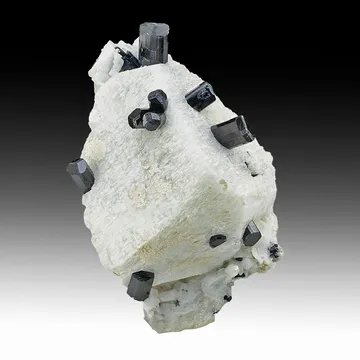
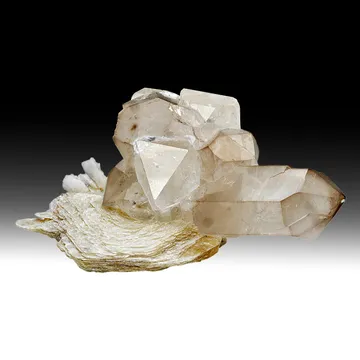
For feldspar collectors, Hashupa has a second, more complicated reputation. Microcline-labelled pieces from “Hashupa, Shigar Valley” have circulated for years, especially stark white feldspar crystals with a thin glassy overgrowth and albite-style twinning, photographed and sold internationally before 2010. At the same time, the alpine epidote occurrence north of the village is not a normal pegmatite occurrence, and modern locality databases flag some microcline attributions specifically to the epidote occurrence as erroneous or at least in need of label discipline. In practice, a Hashupa label should be read carefully: “Hashupa alpine-type clefts” may encompass more than one cleft-style occurrence, while “Hashupa epidote occurrence” is the calcium-silicate cleft locality collectors chiefly know for epidote-group minerals.


Search for specimens: View all specimens from Hashupa, Pakistan
Hashupa is a village locality in the Shigar Valley of Shigar District, Gilgit-Baltistan, northeast of Skardu. The productive mineral ground is not within the cultivated village area itself, but in alpine-type clefts and a named epidote occurrence on the slopes above it. The locality has also appeared as Hashupi or Hachupa on older labels, and older political geography may read Skardu District, Baltistan, or Northern Areas rather than present-day Shigar District, Gilgit-Baltistan.
The deposit type is best described as alpine-type cleft mineralization, with the Hashupa epidote occurrence representing an epidote-group cleft system rather than a feldspar-beryl pegmatite mine. Regional geochemical work on the Shigar Valley separates the valley’s granitic, zoned, gemstone-bearing pegmatites from the Alchuri-Hashupa style of zoisite, clinozoisite, epidote, and axinite mineralization. The latter is described as vein and fracture mineralization in metamorphic rocks, particularly greenschist to epidote-amphibolite facies rocks of the Bauma-Harel formation, affected by deformation associated with the Northern Suture or Main Karakoram Thrust. In collector terms, that means Hashupa should not be lumped uncritically with the miarolitic pegmatite pockets of Dassu, Yuno, Nyet Bruk, Kashmal, or other Shigar-Braldu localities.
There is no documented conventional ore body here in the mining-engineering sense. The productive zones are narrow clefts, veins, joints, and fracture fillings where hot fluids interacted with calcium-rich metamorphic host rocks and opened space for crystals. Epidote and clinozoisite occur as prismatic crystals and clustered growths, commonly with byssolite, quartz, calcite, adularia or other K feldspar, fluorapatite, diopside, titanite, rutile, siderite, vesuvianite, clinochlore, hematite, and actinolite-group material. The mineralization is specimen-oriented: the value is in free-standing crystals, transparency, luster, completeness, and association, not tonnage.
Mining has been small-scale and local, as with many northern Pakistan specimen localities. Literature and market records show Hashupa material entering the international mineral trade by the 1990s, with the locality subsequently treated in the broader collecting literature on the Northern Areas and the Shigar-Braldu-Basha valleys. Dealers and field buyers such as Dudley Blauwet played an important role in bringing the material to Western collections, and pieces from well-known collections—including suites assembled by Bill and Carol Smith, Herb Obodda, Rich Kosnar, and others—continue to define the market’s memory of the best production.
Production appears to have been episodic. The 1990s are repeatedly cited in specimen records as a key period for excellent epidote and clinozoisite, while later pieces have entered the market through collections and occasional new supply. By the 2020s, fine Hashupa epidote-group crystals were still appearing in auctions and dealer inventories, but usually as isolated specimens, collection dispersals, or small parcels rather than as a flood of fresh production. The best examples are now modern classics rather than common current finds.
Access today should be treated conservatively. The locality is in steep mountain terrain, the productive workings are not public recreational collecting sites, and permission, local guidance, and safety planning are essential. The safest and most realistic route for most collectors is the specimen market, where the challenge is not reaching the cleft but reading the label correctly: Hashupa village, Hashupa alpine-type clefts, Hashupa epidote occurrence, nearby Alchuri, and broad “Shigar Valley” labels have all been used with varying precision.
Notable pockets are not consistently named in the literature available to collectors, but market descriptions preserve the character of the best finds. Exceptional epidote/clinozoisite pieces include slender 6 cm transparent coffee-brown crystals, 8 cm-plus double-terminated epidote prisms on sculptural clusters, and robust 10 cm-class epidote/clinozoisite crystals that remain translucent or gemmy when backlit. Microcline-labelled Hashupa specimens from older dealer stock show white, lustrous, albite-style twinned crystals from thumbnail to small-cabinet size, commonly with a glassy overgrowth over a white core.
Microcline from Hashupa is represented in the collector market by sharp white to off-white K-feldspar crystals, commonly described as albite-style twinned, with a distinctive thick white core and a thin glassy overgrowth; published specimen photographs show miniatures around 5.2 x 4.5 x 3.5 cm and small-cabinet pieces up to about 7.6 cm across, including freestanding crystals of roughly 4–6 cm perched on smaller feldspar crystals. The best examples are sculptural, lustrous, complete, and well terminated, with the glassy outer skin clearly visible rather than chalky or bruised. Labels need scrutiny: microcline is recorded for the broader Hashupa alpine-type clefts, but microcline attributed specifically to the Hashupa epidote occurrence has been flagged as an erroneous or doubtful report, because that occurrence is an alpine cleft epidote-group locality rather than a pegmatite pocket.
Other documented Hashupa minerals make the locality far richer than a feldspar name alone suggests. Epidote is the great collector species here, occurring as highly lustrous prismatic crystals and crystal clusters, locally reaching about 10 cm and sometimes showing striking olive, golden, brown, or coffee tones in transmitted light. Clinozoisite is important and, because the epidote-clinozoisite series cannot be separated reliably by appearance alone, analytical confirmation is valuable for precise labels. Zoisite is documented from the Hashupa alpine-type clefts as light brown prismatic material, and gemological studies of the Alchuri-Hashupa district emphasize how easily local trade names such as “tanzanite” or “zabarjad” can obscure the actual epidote-group identity. Adularia, quartz, byssolite, diopside, fluorapatite, rutile including sagenitic forms, titanite, vesuvianite, calcite, siderite, baryte, clinochlore, hematite, and actinolite complete the verified cleft assemblage. No type-locality mineral is established for Hashupa in the verified references consulted; its significance is as a world-class alpine-type specimen locality, not as a type-mineral locality.
The first authenticity issue is locality precision. Hashupa, Hashupi, and Hachupa are spelling variants; Skardu, Baltistan, Northern Areas, Shigar Valley, and Shigar District may all appear on older labels. These labels are not automatically wrong, but they differ in precision. A specimen labelled simply “Skardu” or “Shigar Valley” may be from Hashupa, Alchuri, Tormiq, a pegmatite mine, or another district locality entirely. For serious locality suites, keep older labels but add a modern note distinguishing Hashupa village, Hashupa alpine-type clefts, and Hashupa epidote occurrence when the evidence supports it.
The second issue is species identity within the epidote-group minerals. Epidote, clinozoisite, and zoisite overlap visually at Hashupa: slender brown to greenish-brown crystals may be called epidote, clinozoisite, or even zoisite in the trade, while local gem terminology has included names that do not match mineralogical nomenclature. For high-value pieces, especially gemmy pale green, yellowish, or brown crystals, XRD, Raman, or other analytical work is preferable to a visual call. Many excellent collection pieces are honestly labelled “epidote/clinozoisite” when the exact species has not been tested.
Microcline labels need special attention. Older Hashupa microclines are real in the collector market and are well represented by photographed specimens, but microcline specifically tied to the Hashupa epidote occurrence is disputed in modern locality records. If a specimen is a white feldspar with no epidote-group association, “Hashupa alpine-type clefts” or a broader historic Hashupa label may be more plausible than “Hashupa epidote occurrence.” Conversely, a dark prismatic epidote-group specimen on byssolite or calc-silicate matrix should not be assumed to have anything to do with pegmatitic microcline pockets.
No well-documented, locality-specific program of fakes, artificial coloring, or routine treatment is established for Hashupa specimens in the sources reviewed. The practical concerns are ordinary but important: repaired epidote-group prisms, glued terminations, hidden contacts on the back side, and edge bruising on long striated crystals. Slender cleft crystals can be naturally contacted where they grew against the wall of the fissure, so a contacted back is not unusual; the premium lies in an undamaged display face, sharp termination, good luster, and visible internal translucency. Microcline pieces should be checked for bruised edges, scuffed glassy overgrowths, rehealed-looking contacts, and any restoration along isolated freestanding crystals.
Fluorescence is not the basis on which Hashupa specimens are bought or identified. Instead, use morphology, association, locality history, and—where value justifies it—analysis. Epidote-group crystals are robust enough chemically for normal cabinet care, but mechanically vulnerable because of their elongate form and cleavage; handle by the matrix or base, not the termination. Good Hashupa epidote and clinozoisite remain available, but fine older 1990s-quality pieces with size, gemminess, and complete terminations are noticeably scarcer than ordinary small crystals. The best microcline-labelled Hashupa specimens are also not common, and precise old labels or provenance to established dealers can add real collector value.
One of the most telling Hashupa stories is not a dramatic mine accident or a named bonanza pocket, but the way the locality passed from remote cleft to curated cabinet. Bill and Carol Smith built a notably comprehensive suite of Pakistani minerals, and dealer records describe how they would visit Dudley Blauwet of Mountain Minerals after his buying trips to Pakistan, hoping to secure unusual species and habits for their collection. A Hashupa epidote from that suite—a 10.5 x 7 x 5 cm specimen later offered by Dave Bunk Minerals—captures the route by which many northern Pakistan minerals entered serious Western collections: local miners working difficult ground, travelling buyers selecting the best pieces, and collectors who understood that the unusual habit mattered as much as the species name. That particular piece was described as a stalactitic, faden-like growth of epidote with a larger crystal jutting from the side, a form that separates Hashupa’s alpine-cleft material from anonymous green epidote clusters.
Another strand of the Hashupa story lies in the trade names that followed the epidote-group minerals out of the mountains. Researchers working on Shigar Valley gemstones recorded that pale to light-green epidote-group material from the area could be called “tanzanite” by local miners and gem dealers, while epidote-group material was also known locally as “Zabarjad.” X-ray diffraction work corrected the romance of those names: the material being tested was zoisite or clinozoisite, not Tanzanian tanzanite and not some vague green gem. For collectors, that is the appeal and the warning of Hashupa in miniature—beautiful crystals, real gem potential, and a label tradition that has to be translated back into mineralogical language.
The market has preserved a vivid memory of the best 1990s Hashupa material. One old specimen description notes a 12.0 x 2.5 x 1.0 cm clinozoisite/epidote from Hashupa and states that a number of specimens of that size and quality came from a pocket in the 1990s, only occasionally returning to the market afterward. Another auctioned Rich Kosnar collection piece measured 10.4 x 2.5 x 1.5 cm and weighed 122.10 grams, described as unusually stout and still gemmy when backlit—exactly the kind of object that made collectors compare Pakistan’s alpine-type clefts with the European Alps rather than treating them as a footnote to pegmatite collecting.