A collector's guide to Basha Valley, Pakistan: its geology, mining history and notable minerals, illustrated with the 40 specimens documented from this locality on EarthWonders.
Key facts
Basha Valley is one of the more quietly important names in the Shigar mineral province: less famous in the popular market than Dassu or Chumar Bakhoor, but indispensable to collectors who pay attention to exact Pakistani localities. The valley is a northern tributary system of the Shigar River in Gilgit-Baltistan, fed by meltwater from the Chogo Lungma Glacier and descending from Arondu toward Tisar, where the Basha and Braldu rivers join to form the Shigar. In collecting terms, Basha is not a single mine but a rugged high-mountain mineral belt: complex granitic pegmatites yield aquamarine, topaz, albite, muscovite, schorl, lepidolite, microcline, orthoclase and smoky quartz, while alpine-type metamorphic fissures around Arondu and Niaslo add a second personality of adularia, titanite, rutile, actinolite-tremolite minerals, apatite and rare chevkinite-(Ce).
The best Basha specimens have the visual grammar collectors expect from the upper Indus–Shigar pegmatite country: glassy pale blue aquamarine pencils, colorless to pale sherry topaz, smoky or transparent quartz, white cleavelandite blades, black schorl, mica books and blocky feldspar. What separates Basha from a broad “Skardu” label is the mix of pegmatite and alpine-cleft material. Niaslo orthoclase and apatite, Arondu titanite and chevkinite-(Ce), Doko emerald-bearing schist or pegmatite material, Dogoro smoky quartz, and Bisil topaz-bearing pegmatites are all part of the same valley name, but they do not represent the same geological setting or collector niche.
Regional View
Country View
Basha’s importance is partly historical. The larger Shigar–Braldu–Basha pegmatite province became a major supplier of fine Pakistani specimens after international gem and mineral dealers began working the Northern Areas in the 1970s. By the late 1990s and early 2000s, Dudley Blauwet, Bill Smith and Carol Smith had placed Basha localities firmly into the collector literature, and the valley was treated alongside Shigar and Braldu in the influential extraLapis volume Pakistan: Minerals, Mountains & Majesty. Since then, newer sublocality labels—especially Doko, Niaslo, Dogoro and Bisil—have become increasingly meaningful because so much Pakistani material is otherwise sold under broad commercial names such as “Skardu,” “Shigar Valley,” or simply “Northern Pakistan.”

Photo: Wikimedia Commons

Photo: Wikimedia Commons
Search for specimens: View all specimens from Basha Valley, Pakistan
Basha Valley lies in Shigar District, Gilgit-Baltistan, in the high Karakoram mineral belt north of Skardu. Older labels may read “Skardu District,” “Baltistan,” “Northern Areas,” “Basha Nala,” or “Basna.” The valley is commonly described as a northern tributary of the Shigar River system: meltwater from the Chogo Lungma Glacier descends from Arondu through the valley for roughly 40 km to Tisar, where the Basha joins the Braldu to form the Shigar River. Important named sublocalities include Arondu, Bisil, Chu Tran or Chutran, Dogoro, Doko, Niaslo, Bien Sla and Phuldo.
The collector minerals come from two related but distinct environments. The first is the pegmatite suite, part of the broader Shigar–Braldu–Basha complex of granitic pegmatites. Regional studies of Shigar Valley pegmatites describe zoned miarolitic bodies intruded into metasedimentary and meta-igneous rocks of the Karakoram Metamorphic Complex, with gemstone pockets concentrated in coarse-grained zones, especially near core-margin and intermediate zones. These pegmatites are generally peraluminous and granitic in character, and many specimen pockets are small, irregular, and discontinuous. The typical pocket assemblage is quartz, feldspar, muscovite, albite, schorl, beryl and topaz, with local lepidolite, microlite-group minerals and other accessories.
The second environment is alpine-cleft or alpine-type metamorphic mineralization, best represented around Arondu and Niaslo on the north-facing side of the Haramosh Mountains. These fissures produce a different aesthetic from the pegmatites: sharp feldspar, adularia or orthoclase, quartz, titanite, rutile, tremolite-actinolite minerals, apatite and rare chevkinite-(Ce). Niaslo is especially known among collectors for attractive apatite in green, grey-blue and smoky tones, gemmy green titanite, and transparent to translucent orthoclase. Arondu is one of the Pakistani names that matters for chevkinite-(Ce), titanite and adularia-type alpine material.
Basha has not been a large mechanized mining district in the sense of a single named company mine with continuous production. The documented pattern is small-scale, seasonal, pocket-driven work by local miners and village-based prospectors. That matters for collectors: pockets may produce a handful of fine pieces and then disappear from the market, while the exact village source can be lost as stones move from miners to local dealers in Skardu, Peshawar and international shows. The best labels name the valley and the village—Doko, Dogoro, Niaslo, Arondu, Bisil, Bien Sla or Phuldo—rather than stopping at “Skardu.”
Production has been episodic. Northern Pakistan’s modern gem and specimen trade took hold after dealers began visiting the area in the early 1970s, while Basha localities were already important enough to be incorporated into collector guides by the 1990s and early 2000s. Doko became notable for very green beryl/emerald material in mica-rich matrix, although the emerald designation has been questioned in some locality databases because not all reports are supported by the older Blauwet records. Bisil is a newer name in the literature: specimen-producing complex granitic pegmatites were reported near the village from the summer of 2008, and the same village area is also known for limited marble-hosted ruby occurrences discovered in the 2000s.
Several sublocalities deserve separate treatment on labels. Dogoro, a lower Basha village north of Chutran, is documented for aquamarine-bearing beryl and smoky quartz. Doko is documented for albite, aquamarine beryl, schorl, quartz, stibnite and questioned topaz and emerald; it is the source of small green beryl/emerald specimens associated with black schorl and white albite or mica-rich matrix. Bien Sla is documented for aquamarine and topaz. Phuldo is a topaz locality. Bisil produced topaz with albite, muscovite, lepidolite and microcline, and is also known in gemological literature for ruby-bearing marble deposits near the village. Niaslo is primarily an alpine-type locality for apatite, orthoclase/adularia, quartz, schorl and tremolite. Arondu adds the rare-element alpine assemblage of chevkinite-(Ce), titanite, rutile, quartz, adularia-type feldspar and calcite.
Access for casual collecting should not be assumed. The valley is remote, seasonal, and governed by local land, mining and security realities. Roads, bridges and tracks in the upper Shigar region are vulnerable to weather, landslides, stream crossings and glacial meltwater. Serious collectors should treat Basha specimens as market-sourced unless they are working with established local partners and current permissions. As with many Gilgit-Baltistan localities, the safest and most ethical route is to buy from reputable dealers who can explain the chain of custody and the sublocality.
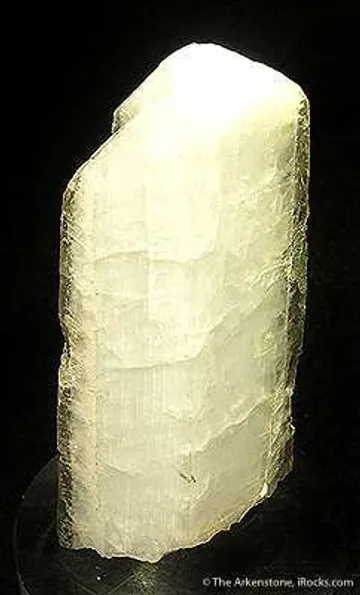
Basha Valley topaz is a pegmatite-pocket mineral rather than a broad alluvial gem commodity, and the strongest documented labels include Bien Sla, Phuldo, Bisil and, more cautiously, Doko. The color range seen in documented specimens runs from colorless and silvery white to pale sherry or pale blue-green; crystals are commonly prismatic, lustrous and transparent to translucent, with albite/cleavelandite, muscovite, schorl, lepidolite, microcline and quartz as the principal collector associations. Bisil produced clusters of pale blue-green topaz crystals to about 4.5 cm on cleavelandite and muscovite, and lepidolite-topaz-albite plates with colorless topaz to about 1.5 cm; a Doko specimen has been described as a large, colorless to silvery topaz termination over 10 cm high, exposed through feldspar and silica coating. The best Basha pieces show clean terminations, glassy luster, convincing natural seating in albite or mica, and a balanced pegmatite association; ordinary examples tend to be etched, cleaved, chipped, or isolated from their pocket context.
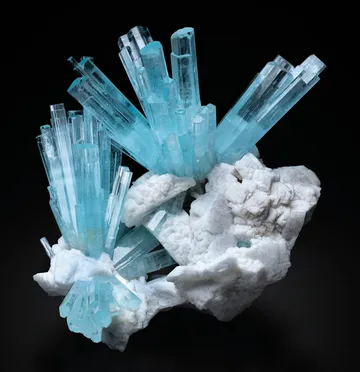
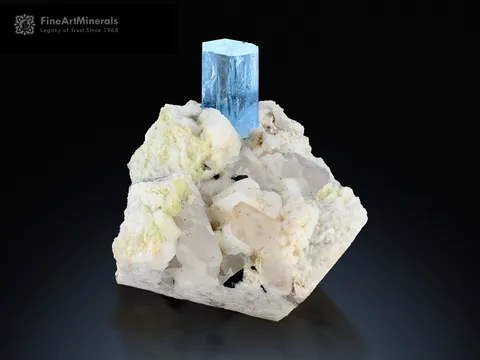
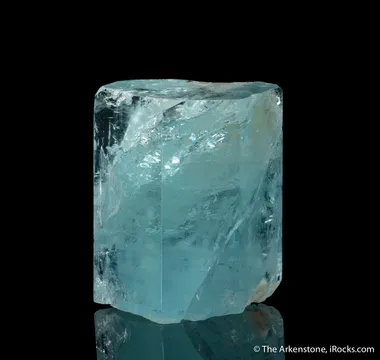
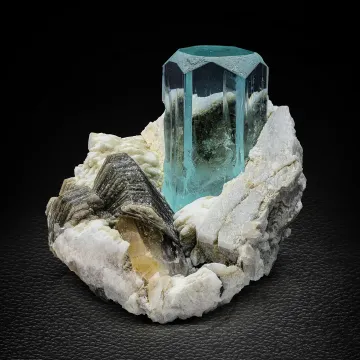
Beryl from Basha Valley is best known as aquamarine from pegmatite pockets, with documented occurrences at Bien Sla, Dogoro and Doko, plus broader Basha Valley references in the Shigar–Braldu–Basha pegmatite province. The typical collector form is a slender to prismatic hexagonal crystal in pale blue, blue-green, or nearly colorless tones, commonly on or with albite, feldspar, muscovite, schorl and quartz. A Bien Sla aquamarine documented on Mindat measured 7.8 cm long but only about 0.6 cm thick, a sharp doubly terminated “pencil” with soft blue color and glassy luster; that pencil-like habit is exactly the kind of piece that makes a precise Basha label desirable. Doko adds an important complication: small vivid green beryls, often sold or discussed as emerald, occur with schorl and albite or mica-rich matrix, but some database entries flag the emerald assignment as questioned because the older Blauwet reports did not list emerald from Doko. Top-quality Basha beryl combines sharp prism faces, undamaged terminations, attractive color for the size, and an undisturbed contact with its matrix; pale loose crystals and poorly documented “Skardu aquamarines” are much less compelling.
Quartz is both a pegmatite gangue mineral and a specimen species in Basha Valley, appearing as transparent rock crystal, slightly smoky crystals, smoky quartz from Dogoro, and quartz in alpine-cleft associations at Niaslo and Arondu. Dogoro is the key documented smoky-quartz sublocality, while Doko has produced transparent to slightly smoky prismatic quartz and a notable large, perfectly doubly terminated transparent crystal with a girdle-like crown of smaller quartz crystals around its middle. In the pegmatite setting, quartz may occur with aquamarine, topaz, albite, schorl and feldspar; in the alpine-cleft setting it may accompany adularia or orthoclase, titanite, rutile, chloritic coatings and related metamorphic fissure minerals. Fine Basha quartz is judged less by size alone than by clarity, completeness, termination quality, smoky zoning, and association—especially when the crystal is naturally integrated with topaz, schorl, beryl or alpine adularia. Broken points, rehealed bases, heavy iron staining and ambiguous broad “Shigar” labels all reduce collector value.
Beyond topaz, beryl and quartz, Basha Valley has a varied documented suite. Albite, muscovite, schorl, microcline, orthoclase, lepidolite and microlite-group minerals belong mainly to the pegmatite assemblage, while Niaslo and Arondu add alpine-cleft apatite/fluorapatite, adularia-type feldspar, titanite, rutile, tremolite, actinolite-related minerals, calcite and rare chevkinite-(Ce). Bisil is mineralogically notable for both topaz-bearing pegmatites and limited ruby occurrences in the surrounding marble terrain. Doko is notable for its questioned emerald/green beryl association with schorl and albite, as well as stibnite. Basha is not primarily a type-locality story; its rarities matter because they broaden the Pakistani collector palette beyond aquamarine and topaz into alpine-cleft titanite, orthoclase, apatite and rare-earth titanosilicates.
The first collecting issue with Basha Valley specimens is locality precision. In the international trade, exact village names are often lost beneath broad commercial labels: “Skardu,” “Shigar,” “Shigar Valley,” “Northern Areas,” or “Gilgit-Baltistan.” Those labels are not automatically wrong, but they are not equivalent to “Basha Valley,” and still less to “Doko,” “Dogoro,” “Niaslo,” “Arondu,” “Bisil,” “Bien Sla” or “Phuldo.” For serious collectors, a Basha piece should ideally come with an older dealer label, a sublocality, or a seller who can explain why the specimen is not from nearby Braldu, Dassu, Yuno, Alchuri, Chumar Bakhoor or another Pakistani pegmatite field.
The second issue is construction and repair. Pakistani pegmatite specimens, especially aquamarine-on-matrix and topaz-on-matrix pieces, have a documented problem with glued, reconstructed or artificially assembled specimens in the broader regional trade. This is not unique to Basha, but it applies directly to any high-value Basha-labeled aquamarine, topaz, beryl or combination specimen. Inspect crystal bases under magnification. Natural seating should show intergrowth, pressure marks, cleavelandite blades, mica relationships or feldspar contacts that make geological sense. Warning signs include glossy adhesive in protected crevices, mica flakes packed suspiciously around a crystal base, a crystal perched on matrix without penetration, discontinuous striations across a break, resin-like filler, unnaturally clean contact zones, or multiple “perfect” crystals arranged too decoratively.
Topaz from Basha should be checked for cleavage. Even attractive crystals may have internal cleaves, bruised edges or chipped terminations, and a clean face can hide a healed or repaired base. Beryl and quartz are tougher in normal handling, but slender aquamarine pencils from Bien Sla-style material can be fragile at the terminations and along old breaks. Lepidolite, muscovite and cleavelandite matrices are easily crushed; do not overclean Pakistani pegmatite matrix specimens. Avoid acids unless the mineral assemblage is fully understood, because carbonate, mica and iron-stained pocket residues can respond unpredictably.
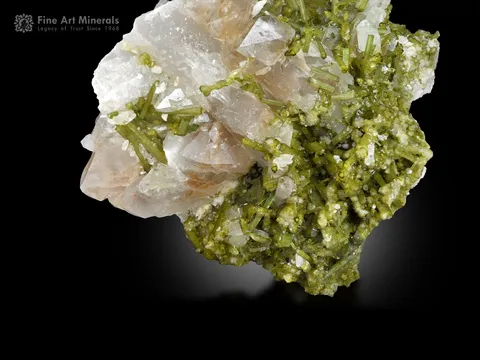
For the Doko green beryl/emerald material, species naming deserves special care. Some collector and gemological sources refer to emerald from Doko, but locality databases also flag the occurrence as questioned or not listed in older Blauwet reports. A vivid green hexagonal beryl from Doko may be a legitimate and desirable specimen, but the name “emerald” should be supported by color, provenance and, for valuable examples, testing or an expert opinion. The presence of schorl, albite or mica matrix is consistent with documented Doko material, but it does not by itself prove either emerald identity or natural attachment.
Rarity varies sharply by sublocality and species. Broad Basha Valley quartz, feldspar, muscovite and schorl are not inherently rare. Good aquamarine and topaz with precise Basha labels are scarcer, and fine matrix pieces are much scarcer than loose crystals. Niaslo orthoclase/adularia and apatite are specialist collector pieces rather than mass-market minerals. Arondu chevkinite-(Ce) is genuinely uncommon and should be treated as a rare-species purchase, ideally with analytical confidence or a strong provenance. Market availability is intermittent: small Pakistani specimens continue to circulate, but important Basha pieces usually appear pocket by pocket, estate by estate, or through dealers who maintain long-standing relationships in Skardu and the upper Shigar valleys.
Dudley Blauwet’s 2005 travel memoir gives one of the clearest glimpses into how Basha specimens reached serious collectors. On a buying trip through the Northern Areas, Chutron in the Basha Valley served as a practical base camp: a two-room government rest house beside the hot springs, run by a retired military man named Akmad. From there the upper valleys were reachable by jeep when roads, streams and security allowed. The account is full of the kind of logistical details that never make it onto a specimen label—swinging wooden barriers at army posts, registration near restricted upper valleys, and the constant calculation of whether daylight, weather and road conditions would permit one more village stop.
The most Basha-specific episode concerns Doko. Blauwet writes that Doko, about an hour by jeep above the hot springs of Chutron, had been producing very green emerald crystals in mica schist, but the crystals he had seen before were all small or shattered. Because reliable local sources told him mining had stopped, he did not even detour to the occurrence while he was nearby. Later, in a dealer’s room, he was shown something entirely different: a richly colored green beryl/emerald “the size of my thumb” standing vertically on matrix. It was the sort of specimen that rewrites a locality in a collector’s memory. He bought it quickly after a short negotiation, packed it into a cloth handbag, and noted that Bill and Carol Smith added the piece to their Northern Areas collection.
The same memoir also captures the broader reality behind Basha and Shigar collecting. One day’s clear weather melted enough snow high on the Haramosh Range to turn a stream at Tisar into a raging crossing; a tractor pulling an empty cart became stuck in the middle and blocked the route. The party had to improvise around darkness and water levels, and the driver eventually slept in the jeep to guard mineral purchases. At about 3:30 a.m., he found that the water had dropped enough to squeeze the vehicle past the stranded tractor. That is the landscape behind many old “Skardu” labels: a specimen might have moved from a pocket to a village room, then to a jeep, then around a flood crossing before it ever reached a dealer tray.
The same travel account also names the shadow side of the trade. Blauwet describes a dealer known for manufactured specimens and mentions that collectors sometimes asked him to examine purchases to determine whether they had been glued. That detail remains relevant today. Pakistani pegmatite minerals are among the world’s most beautiful matrix specimens, but the very qualities that make them desirable—aquamarine on mica, topaz on albite, gem crystals perched on contrasting matrix—also make them vulnerable to reconstruction. A good Basha specimen should carry the look of a pocket, not a workshop.