A collector's guide to Bulochi, Pakistan: its geology, mining history and notable minerals, illustrated with the 46 specimens documented from this locality on EarthWonders.
Key facts
Bulochi is one of the small but mineralogically outsized pegmatite localities of the Drot Valley, in Astore District, Gilgit-Baltistan. It sits in the high Indus country south of the river, near the better-known Shengus area, where young Himalayan granitic pegmatites cut metamorphic rocks of the Nanga Parbat-Haramosh massif. For collectors, Bulochi matters because it is not merely another Pakistani aquamarine pegmatite: its best pieces show a distinctive, high-contrast pocket assemblage of black schorl or dark green elbaite, white cleavelandite and feldspar, clear to frosted quartz, pale aquamarine or topaz, and—most unexpectedly—bright pink rhodochrosite or vivid green fluorite.
The locality entered the collector literature as part of the great late-20th-century recognition of northern Pakistan’s pegmatite fields. Early published lists emphasized beryl, cassiterite, microcline, muscovite, and topaz; later collecting and documentation expanded the picture to include fluorite, elbaite, schorl, hydroxylherderite, beryllonite, pollucite, tantalite-(Mn), helvine, spodumene, and other pegmatite rarities. Its visual identity is crisp and architectural: jet-black tourmaline prisms standing out against snow-white albite rosettes, mint-green fluorite tucked into quartz, and rare pink rhodochrosite blades scattered across pocket feldspar and schorl.
Regional View
Country View
Bulochi specimens are usually best understood as pocket specimens rather than ore specimens. The collector-grade pieces came from cavities in complex granitic pegmatites, where late-stage fluids deposited beryl, tourmaline, topaz, fluorite, phosphates, and manganese-bearing minerals on albite, microcline, muscovite, and quartz. The most compelling examples look less like mass-mined gem rough and more like intact slices of pocket architecture: a quartz crystal acting as the main sculptural support, feldspar and cleavelandite providing a pale matrix, and one or two bright accessory species giving the piece its identity.

Photo: Wikimedia Commons
Search for specimens: View all specimens from Bulochi, Pakistan
Bulochi, also seen on labels as Balochi, Balche, Bulache, Bulachi, or Drot Balachi, is a small hamlet in the Drot Valley, approximately 4 km south of the Indus River and about 7 km southeast of Shengus. The broader Drot Valley is a secondary valley on the south side of the Indus between Sassi and Shengus, and the district’s older locality labels can be confusing because specimens from Drot Valley have often moved through the trade under the better-known name “Shengus.” For a collector, the most precise modern label is “Bulochi, Drot Valley, Astore District, Gilgit-Baltistan, Pakistan.”
The deposit type is complex granitic pegmatite. These pegmatites belong to the young Himalayan pegmatite systems of northern Pakistan, developed in high-grade metamorphic terrane associated with the Nanga Parbat-Haramosh region. Published geological summaries describe the northern Pakistani pegmatites as occurring in amphibolite- to granulite-facies schists, gneisses, and amphibolites; in the Bulochi-Shengus sector the host rocks include Nanga Parbat gneiss and Haramosh schist, with associated amphibole-biotite gneiss, biotite gneiss, and quartzite. The pegmatites commonly form dykes, lenses, and sills, and at Drot they are reported as reaching substantial lengths. They are young by pegmatite standards, and that youth helps explain why deeply radiation-induced colors in topaz and beryl are not expected as a normal primary feature of the district.
There is no single famous named mine at Bulochi in the way there is for many classic metal-mining districts. The productive “ore bodies” for collectors are individual pocket-bearing pegmatites, vugs, and fissures within a swarm of granitic pegmatites. The working style is small-scale and specimen/gem oriented, with pockets opened for aquamarine, topaz, tourmaline, fluorite, feldspar, quartz, and rarer phosphate or tantalum minerals. The better Bulochi specimens show late pocket growth rather than massive industrial ore: schorl and elbaite prisms, blocky or bladed feldspar, muscovite books, cleavelandite rosettes, topaz, beryl, and clear quartz, locally overgrown or accompanied by rhodochrosite and fluorite.
Mining and collecting in this part of Gilgit-Baltistan are controlled as much by terrain as by mineralogy. The Bulachi/Bulochi area lies in steep mountain country near the Indus corridor, where pegmatite workings may be visible across the river or perched high on near-vertical slopes. Reports from the region describe village-based ownership and labor, with hundreds of miners active in the broader south-bank pegmatite belt. The work is seasonal at higher elevations, constrained by snow, access, and the ability to haul supplies and specimens from difficult faces. Bulochi material that reaches the collector market is therefore the product of intermittent pocket mining rather than steady industrial production.
The older collecting record is anchored by the 1997 Mineralogical Record guide to northern Pakistan, which documented Bulochi for beryl, cassiterite, microcline, muscovite, and topaz. The 2004 extraLapis issue on Pakistan broadened the locality’s standing, and later Mindat documentation and dealer records show additional confirmed or reported species. Two collecting moments stand out in recent market history. Around 2006-2007, a small find produced vivid green fluorite specimens with quartz, schorl or tourmaline, albite, and muscovite; these pieces remain highly recognizable and have not been widely matched in quantity or color. In 2021, a surprising rhodochrosite pocket produced bright pink bladed crystals on a pegmatite matrix with schorl, topaz, albite, microcline, quartz, and beryl, giving Bulochi a genuine “freak locality” claim among Pakistani pegmatites.
Access today should be treated as local, private, and hazardous. Bulochi is not a casual roadcut collecting stop. The pegmatites are worked by local miners and land or village interests, and any visit requires permission from the appropriate local and mineral-rights holders. The terrain is steep, the workings may be unstable, and the best pockets occur in hard pegmatite where over-blasting can destroy the very specimens being sought.
Bulochi rhodochrosite is rare, highly distinctive Pakistani pegmatite material rather than the massive, banded, or hydrothermal-vein style familiar from many manganese deposits. The documented 2021 pocket produced bright pink flattened rhombohedra and bladed, disc-like crystals, commonly in the 5 mm to 2 cm range, scattered across a pegmatite vug with schorl, topaz, albite, microcline, quartz, aquamarine, and cleavelandite. The best pieces show lively color, real crystal form, and an intact pocket association: pink rhodochrosite against black schorl and white feldspar is the classic Bulochi look. Ordinary examples lose much of the locality’s character when the rhodochrosite is sparse, dull, rubbed, or separated from the contrasting pegmatite matrix; the strongest specimens preserve both the pink carbonate and the earlier silicate framework of the pocket.
Bulochi fluorite is best known as saturated green crystals in pegmatite combinations, especially the limited 2006-2007 find that produced translucent to gemmy green fluorite with quartz, schorl or tourmaline, albite, muscovite, and locally smoky quartz. The finest documented pieces show octahedral or cuboctahedral fluorite, sometimes several centimeters across, set into or beside colorless to lightly frosted quartz and dark tourmaline; a particularly representative cabinet specimen measured 12.9 x 6.8 x 6.4 cm and carried mint-green fluorite octahedra partly tucked behind black-green tourmaline crystals to 4.7 cm on a terminated quartz crystal. Better examples have strong green color saturation, undisturbed crystal edges, and an aesthetic relationship to quartz and tourmaline. Some Bulochi fluorite has been reported with yellow shortwave UV fluorescence and tenebrescence, which adds collector interest but also makes proper lighting notes useful when comparing specimens.
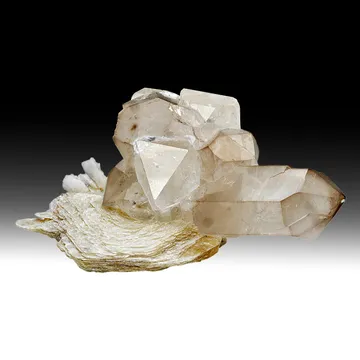
Quartz at Bulochi is both a primary display species and the structural stage on which the locality’s more colorful minerals perform. Documented specimens include colorless, translucent to water-clear crystals, lightly frosted terminated crystals, doubly terminated crystals, and smoky quartz as an associated variety; quartz occurs with schorl, elbaite, albite/cleavelandite, fluorite, topaz, beryl, hydroxylherderite, and tantalite-(Mn). The best quartz-bearing Bulochi pieces are not necessarily the largest quartz crystals, but the specimens where quartz is sharp, glassy, and well placed with contrasting black tourmaline, green fluorite, or pale blue aquamarine. Damage to terminations and contact marks where crystals were attached to the pocket wall are common limiting factors, so an undamaged, well-positioned quartz crystal can lift an otherwise standard schorl-albite specimen into cabinet quality.
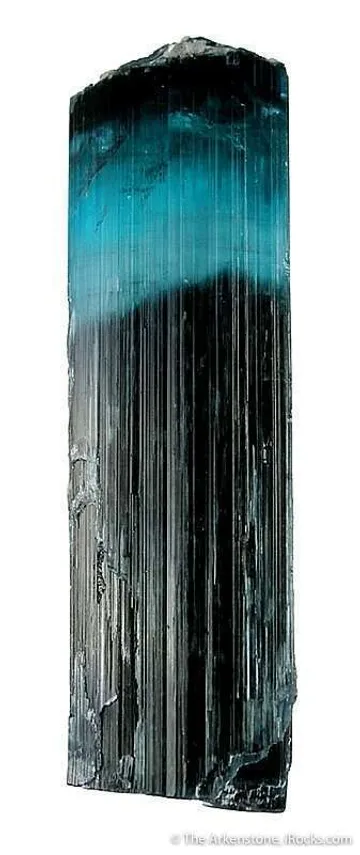
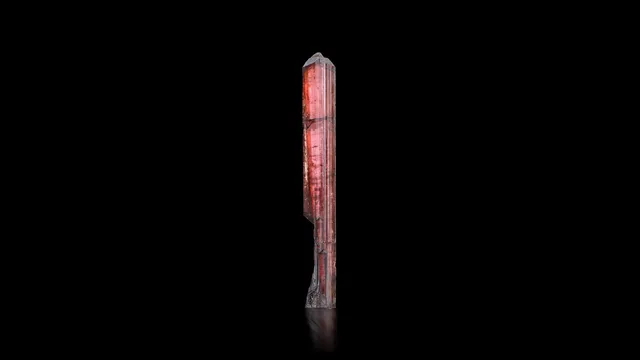
Tourmaline is central to Bulochi’s collector identity, with schorl far more characteristic than brightly colored gem elbaite, though elbaite is also documented. Bulochi schorl occurs as lustrous black, striated prisms, commonly several centimeters long, with shallow pyramidal terminations, set in albite rosettes, cleavelandite, quartz, and feldspar; documented examples include single 5 cm crystals, paired 2 cm and 5 cm crystals, and groups with quartz and albite, while elbaite examples include dark crystals with green to light blue translucent terminations. The best tourmaline specimens from Bulochi are cleanly terminated, upright, lustrous, and balanced against white albite or clear quartz; common pieces are more likely to have broken or contacted terminations, partially buried prisms, or too little contrast in the matrix to show the crystals well.
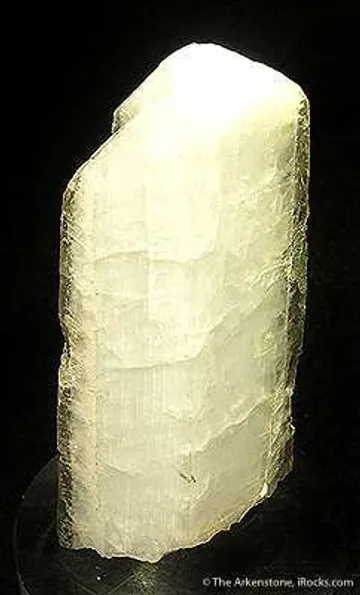
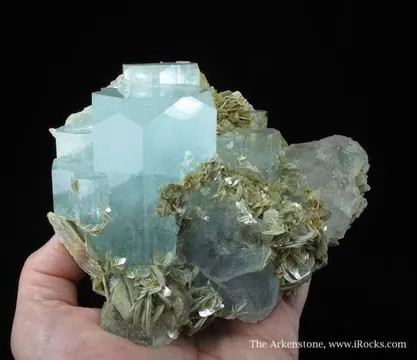
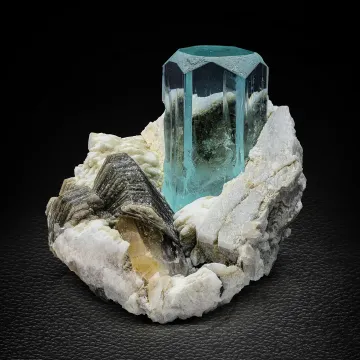
Other documented Bulochi minerals broaden the locality from attractive pegmatite combinations into a genuinely serious systematic locality. Albite, including cleavelandite, microcline, muscovite, beryl varieties aquamarine, goshenite, and morganite, topaz, fluorapatite, hydroxylherderite, cassiterite, helvine, spodumene, tantalite-(Mn), beryllonite, and pollucite are all part of the recorded suite, with hambergite and “lepidolite” treated more cautiously in the literature. Beryllonite and pollucite are particularly notable rarities in museum and systematic collections, while tantalite-(Mn), hydroxylherderite, helvine, and cassiterite underline the chemically evolved character of the pegmatites. No type-mineral status is needed for Bulochi to be important: its strength is the combination of attractive cabinet specimens and a rare-element pegmatite mineral list.
The most important authenticity issue for Bulochi is locality precision. Older labels may say Shengus, Shingus, Balachi, Bulachi, Astor Valley, Astore Valley, or simply “Northern Areas, Pakistan.” Some of those labels may be historically understandable, but they are not equally precise. Because Drot Valley specimens have been traded under the broader Shengus name, a serious collector should preserve old labels but add a modern locality note when the specimen can be tied to Bulochi/Drot Valley through provenance, published photos, or dealer records.
No well-established pattern of fabricated Bulochi rhodochrosite or fluorite specimens is prominent in the published collector record, but the locality’s rarity invites careful scrutiny. Rhodochrosite from Bulochi should make mineralogical sense as a pegmatite-pocket association: pink bladed or flattened rhombohedral crystals on feldspar, quartz, albite, schorl, topaz, and related pegmatite minerals. Suspiciously isolated pink carbonate without locality-consistent matrix, or pieces labeled from Bulochi but visually resembling common hydrothermal rhodochrosite from unrelated manganese deposits, deserve skepticism.
Condition matters enormously. Schorl commonly has contacted or broken terminations, fluorite may show edge wear on exposed octahedra or cuboctahedra, rhodochrosite blades can be bruised or abraded, and quartz terminations often record pocket-wall contact. Bulochi pieces are frequently complex, three-dimensional pegmatite specimens, so damage should be assessed in the round rather than from a single display face. A small, crisp miniature with undamaged tourmaline, fluorite, and quartz is usually more desirable than a larger but battered pocket fragment.
Collectors should also be cautious with color expectations. Pakistan’s young pegmatites are not the normal source of deeply irradiated-looking blue topaz or strong orange topaz, so unusually intense topaz colors on a Bulochi label should be evaluated carefully. Fluorite from the better Bulochi find can be intensely green, and at least some specimens show unusual shortwave UV response and tenebrescence; keep such pieces out of prolonged strong light when testing reversible color behavior, and document the lighting conditions under which any fluorescence or tenebrescence is observed.
Market availability is limited and episodic. Schorl-albite-quartz combinations are the most obtainable Bulochi specimens, while fine green fluorite combinations, good elbaite, clean topaz, aquamarine matrix pieces, hydroxylherderite, tantalite-(Mn), beryllonite, pollucite, and especially rhodochrosite are much scarcer. The finest rhodochrosite and fluorite pieces tend to appear as individual dealer or auction specimens tied to specific pockets rather than as a steady supply.
The drama of Bulochi is inseparable from the Indus-side pegmatite belt. In the Bulachi area, pegmatites were described as lying between Shengus and Astak along the Gilgit-Skardu road, with workings visible across the Indus for roughly 7 km east of Shingus. A few workings were placed on the road side of the river, but deliberately positioned so falling rock would not strike the road. Across the river and up the mountain, the pegmatites produced the classic field suite: aquamarine, black tourmaline, topaz, apatite, and garnet, with Bulochi’s later collector fame built on the rarer and more aesthetic pocket combinations.
The mining numbers from the broader Bulachi belt are striking. Reports describe hundreds of pegmatites, many on near-vertical faces, and miners gaining access by rappelling down ropes. Four villages were said to own the pegmatites on the south side of the Indus, with 400 to 500 miners working the area for 14 to 15 years by the time of that field account. This is not the image of a tidy bench quarry or a mechanized gem mine. It is a landscape of small teams, rope access, hand sorting, blasting, and luck, with a single intact pocket potentially feeding specimens into the international market for years.
The danger is not abstract. In the same regional account, miners in northern Pakistan were described using gasoline-powered drills on surface and underground workings, often without ventilation. Work stopped only when a fuse could no longer be lit because oxygen was too low or fumes too heavy. The leading causes of death in that mountain-mining environment were not subtle occupational hazards but rock falls and falls from sheer cliff faces. In pegmatite mining, the paradox is cruel: the rock must be opened gently enough to preserve a pocket, but the terrain and tools often force miners toward rough methods that damage specimens and endanger lives.
The 2021 rhodochrosite pocket is the modern collector story that turned Bulochi from a respected pegmatite locality into something stranger. A large cabinet specimen from that pocket measured 18.0 x 16.3 x 9.8 cm, roughly “half a volleyball” in the dealer’s memorable comparison, and carried at least three dozen bright pink rhodochrosite crystals. The rhodochrosite occurred as flattened, disc-like rhombohedra from 5 mm to 2 cm across, many interconnected, with triangular growth features on some broad faces. The pocket also contained microcline, quartz, albite, aquamarine, tourmaline, cleavelandite, and later small transparent quartz crystals perched on cleavelandite. For a Pakistani pegmatite, a large cabinet specimen dominated by rhodochrosite was startling enough that the piece sold at auction in February 2022 for $3,625.
The green fluorite find has its own quieter legend. A Bulochi fluorite-quartz-schorl specimen from the small 2006-2007 find was described as having green color saturation unequaled by later production, with robust, gemmy translucent crystals to about 6 cm. Another fluorite combination from the same general find showed 3.5 cm tall green fluorite with a 4.7 cm terminated quartz crystal on muscovite and albite, and was specifically noted for yellow shortwave UV fluorescence and tenebrescence. That is the kind of pocket that defines a locality out of proportion to its volume: not tons of production, but a handful of pieces whose look becomes instantly recognizable.
Smith, Bill; Smith, Carol; Blauwet, Dudley. “A Guide to the Mineral Localities of the Northern Areas, Pakistan.” The Mineralogical Record, Vol. 28, No. 3, 1997, pp. 183-200. This is the key early collector guide that records Bulochi for beryl, cassiterite, microcline, muscovite, and topaz.
Blauwet, Dudley; Smith, Bill; Smith, Carol. “Table of Mineral Localities of the Northern Areas of Pakistan and Other Selected Sites.” In Pakistan: Minerals, Mountains & Majesty, extraLapis English No. 6, Lapis International, 2004, pp. 86-93. The extraLapis table is an important later locality reference for Bulochi and the broader northern Pakistan pegmatite province.
Hammer, Vera; Muhammad, Shafiee. “Picking Pegmatite Pockets: The Road from Gilgit to Skardu.” In Pakistan: Minerals, Mountains & Majesty, extraLapis English No. 6, Lapis International, 2004. A useful field-oriented reference cited for the Bulochi locality.
Lyckberg, Peter. “Gem Pegmatites of Ukraine, Russia, Afghanistan, and Pakistan: An Update on Recent World-Class Finds.” Gems & Gemology, Fall 2018, Sixth International Gemological Symposium speaker presentations. Places the Shengus-Bulochi area in the context of young Karakorum pegmatites and rare-species production.
Geological Survey of Pakistan. Gems and Gemmology in Pakistan, 2010. Provides a geological overview of northern Pakistan aquamarine-bearing pegmatites, including Balachi/Bulochi and Drot.
MIM Museum collection reference on Mindat. Records Bulochi specimens of beryllonite and pollucite in a notable museum context.
Rhodochrosite, Schorl, Topaz and Albite — Mineralauctions.com A specimen video of the large 2021 Bulochi rhodochrosite pocket piece.
Fluorite, Quartz, Muscovite & Albite (rare combo) — Mineralauctions.com A video record of a green fluorite-quartz-albite-muscovite specimen from the small Bulochi fluorite find.
Mindat: Bulochi, Drot Valley, Astore District, Gilgit-Baltistan, Pakistan — The central locality page, with coordinates, alternate names, mineral list, references, and photo records.
Mindat: Drot Valley, Astore District, Gilgit-Baltistan, Pakistan — Useful for understanding the broader valley context and the Shengus/Drot labeling issue.
Wikimedia Commons: Fluorite-Tourmaline-Quartz-232965.jpg — Verified image and description of a representative Bulochi fluorite-tourmaline-quartz cabinet specimen.
Pala International: Clanin Pakistan field notes — A field account with practical observations on Bulachi-area pegmatite mining, village ownership, access, and mining hazards.
MineralAuctions: Rhodochrosite with Schorl, Topaz and Albite — Detailed auction record for the large 2021 Bulochi rhodochrosite pocket specimen.
MineralAuctions: Fluorite, Quartz, Muscovite & Albite — Detailed auction record for a green Bulochi fluorite combination from the 2006-2007 find.
MineralAuctions: Octahedral Fluorite and Tourmaline on Quartz — Earlier auction record for a classic Bulochi cabinet specimen with mint-green fluorite, black-green tourmaline, and quartz.
GIA: Fall 2018 Gems & Gemology — Includes Peter Lyckberg’s symposium summary on young Pakistan pegmatites and the rare-species significance of the Shengus-Bulochi area.
The Mineralogical Record Vol. 28, No. 3, 1997 — Back issue containing “A Guide to the Mineral Localities of the Northern Areas, Pakistan.”