India Deccan Traps basalts yield peach stilbite, green apophyllite, cavansite, powellite; famed for large cabinet-quality specimens and deep collector heritage.
Key facts
For mineral collectors, “India” most often means the great secondary-mineral province of the Deccan Traps of western India, especially the basalt quarries, road cuts, wells, tunnels, and construction sites of Maharashtra. This is not a conventional ore-field locality in the usual collector sense, but a vast flood-basalt province whose vesicles, amygdales, flow-top breccias, and larger cavities became miniature hydrothermal laboratories. Low-temperature fluids moved through glassy and fractured basalt, first altering cavity walls to green celadonite, delessite, chlorite, and related minerals, then depositing silica, zeolites, apophyllite, calcite, and a remarkable cast of rarities. The result is one of the most instantly recognizable specimen suites in the world: peach and salmon stilbite sheaves, glassy green apophyllite prisms, lustrous heulandite plates, sprays of scolecite and mesolite, stalactitic chalcedony, late calcite, golden powellite, snow-white mordenite, and electric-blue cavansite and pentagonite.
Historically, Indian zeolites have a deep nineteenth-century pedigree, with early attention drawn by railway works and engineering cuts in the Western Ghats. Their modern collecting fame, however, rests on the explosion of quarry-produced material in the late twentieth century. Pune, Nashik, Jalgaon, Mumbai-Salsette, Ahmednagar, Aurangabad, and related districts supplied a steady stream of specimens that changed the standards for several species. India did not merely provide “good” stilbite and apophyllite; it made large, aesthetic, affordable, cabinet-quality examples common enough to define those minerals for generations of collectors. At the connoisseur level, the same province produced pieces of real rarity: powellite from the Pandulena Hills, world-class goosecreekite from Maharashtra, large Pashan mesolite, Malad Ca-Fe silicate associations, and Wagholi cavansite.
Regional View
Country View
The best Indian Deccan pieces have a painterly restraint that separates them from the overloaded, sugary “zeolite plate” stereotype. Fine specimens are about contrast and timing: a single green apophyllite crystal on salmon stilbite; blue cavansite rosettes perched like enamel on pale heulandite; transparent scolecite sprays rising cleanly from apophyllite; or chalcedony stalactites carrying later quartz and calcite. Because many pieces were liberated by blasting in active aggregate quarries, complete, undamaged, well-balanced specimens with honest locality detail are far less common than the sheer market volume suggests.

Photo: Wikimedia Commons

Photo: Wikimedia Commons
Search for specimens: View all specimens from India
India is a country-scale locality, but the collector mineralogy represented most strongly in modern specimen collections is overwhelmingly tied to the Deccan Volcanic Province, especially Maharashtra. The Deccan Traps are a large igneous province of stacked basaltic lava flows across west-central India. In the principal collector districts, secondary minerals formed in gas cavities, amygdales, vesicular flow tops, breccias, veins, and inter-pillow voids rather than in a mined orebody. These cavities were opened by later quarrying for road metal, building stone, and aggregate, which is why the great Indian zeolite trade is inseparable from ordinary industrial basalt extraction.
Classic geological work recognized broad secondary-mineral zones in the Western Deccan Traps: a lower laumontite zone, a middle scolecite zone, and an upper heulandite zone. Later work has refined, challenged, and complicated any simple zonal model, but the field pattern remains useful to collectors. Coastal Mumbai-Salsette material can include laumontite, prehnite, quartz, calcite, okenite, gyrolite, natrolite, and Ca-Fe silicates, while higher plateau quarries around Pune and Nashik are famous for heulandite, stilbite, apophyllite, scolecite, mesolite, mordenite, chalcedony, and quartz. In individual pockets, the crystallization sequence is often legible: dark green alteration minerals on basalt walls, a chalcedony or agate lining, zeolites such as heulandite, stilbite, scolecite, mesolite, or mordenite, and then late apophyllite, calcite, gyrolite, or okenite.
There is no single “India mine” behind these specimens. The names most encountered on labels include Pune, Pashan, Wagholi, Lonavala, Chinchwad, Nashik, Pandulena Hills, Mahodari, Dindori, Jalgaon, Savda, Shendurni, Sakur, Momin Akhada, Rahuri, Malad, Bombay Quarry, and Salsette Island. Many old labels use colonial or older spellings—Poona for Pune, Bombay for Mumbai, Nasik for Nashik, Aurangabad for Chhatrapati Sambhajinagar—and locality precision varies sharply. Some labels are quarry-specific; many are district-level; others simply say “India” or “Deccan Traps.” This is partly because quarrying was fast, pockets were episodic, exporters consolidated lots, and many specimens entered the international trade through dealers rather than through scientific collecting.
Mining history here is really quarrying history. Basalt was worked for construction material, and mineral pockets were a byproduct. Railway cuttings and tunnels in the Western Ghats produced some of the first notable nineteenth-century specimens. Later, urban growth around Pune, Mumbai, Nashik, Jalgaon, and other districts created a changing network of quarries and road cuts. Productive cavities could be destroyed in a blast before collectors saw them, or opened just long enough for workers and local collectors to remove a pocket. Pashan, once a famous Pune-area source, is now described as flooded or built over. Wagholi remains the storied name for cavansite and pentagonite, but it was and is an industrial quarrying district, not a casual public collecting site. Collecting access today depends on ownership, safety rules, permissions, quarry status, and local regulation; serious collectors should treat most classic Indian material as market material rather than expect open field access.
The “pockets” themselves range from small hand-sized vesicles to cavities large enough for a person to enter. In the best cavities, mineral growth was open enough for freestanding crystals and delicate sprays to survive until extraction. The Pandulena Hills near Nashik are central to the famous powellite story and also produced important stilbite, apophyllite, heulandite, laumontite, quartz, and amethyst. Mahodari is especially associated with unusual botryoidal or spheroidal fluorite on quartz and with apophyllite-stilbite pocket mineralization. Pashan became a standard name for large ball-like mesolite sprays and dark green apophyllite. Jalgaon is one of the great names for scolecite, goosecreekite, apophyllite, stilbite, and heulandite. Malad and other Mumbai-Salsette quarries are essential for okenite, gyrolite, natrolite, julgoldite, pumpellyite, ilvaite, prehnite, and related low-temperature assemblages.
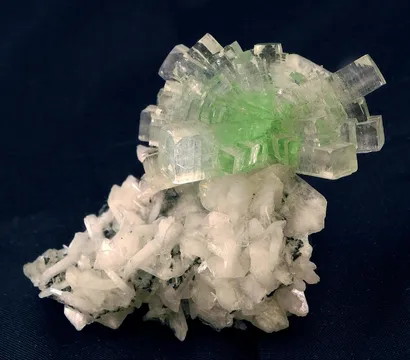
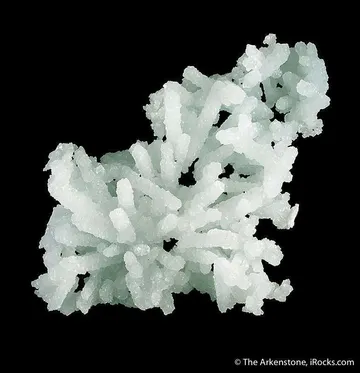
Indian stilbite, chiefly stilbite-Ca from the Deccan Traps, is one of the defining zeolites of the world specimen market: white, cream, beige, peach, pink, salmon, and locally orange sheaves, bow ties, sprays, spherical aggregates, and bladed crusts from basalt cavities around Pune, Nashik, Jalgaon, Ahmednagar, and related districts. Fine pieces are judged by luster, freshness, symmetry of the sheaves, lack of bruising on blade edges, and the quality of the association—especially pale green fluorapophyllite, lustrous heulandite, quartz or chalcedony, scolecite, mordenite, calcite, and, in the Pandulena Hills suite, powellite. Ordinary Indian stilbite is abundant and often massive or bruised; top specimens have sharp individual blades, open architecture, attractive pastel color, and enough matrix or associated mineral contrast to keep the composition from becoming a monotone mound of zeolite.
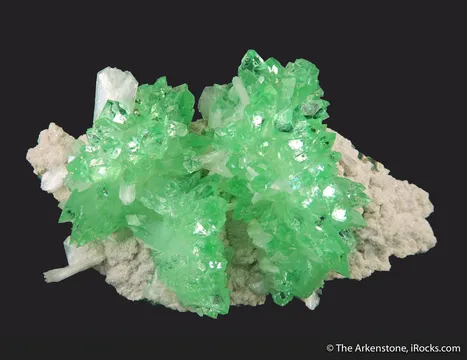
Indian apophyllite—most collector material being fluorapophyllite-(K), though older labels commonly say simply “apophyllite”—forms glassy tetragonal crystals, square pyramids, tabular forms, blocky prisms, and sparkling druses in Deccan cavities, with colors ranging from colorless and white through pale sea-green to saturated celadonite-included green. Nashik, Jalgaon, Pune, Pashan, Mahodari, Momin Akhada, Rahuri, and Wagholi have all supplied memorable material, commonly with stilbite, heulandite, scolecite, mesolite, quartz, chalcedony, calcite, mordenite, cavansite, or pentagonite. Good Indian apophyllite is not merely green: the best pieces have undamaged glassy faces, sharp terminations, transparency, lively color distribution, and an association that sets the crystals off; lower-grade pieces may be colorless, cleaved, etched, dinged from quarry handling, or mounted on an indiscriminate zeolite mass.
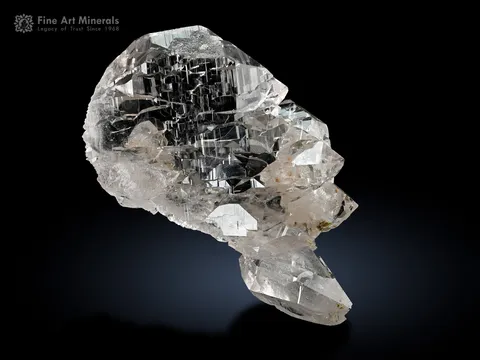
Quartz in Indian Deccan specimens is a cavity mineral that appears as drusy linings, clear rock-crystal points, smoky quartz, amethyst, and later crusts over chalcedony, and it is especially important because it records the silica-rich stages of pocket development. Nashik quarries, Pandulena Hills, Jalgaon, Dindori, Mahodari, and many other Maharashtra localities produce quartz as matrix and accent rather than as the solitary Alpine-style focal mineral. Fine quartz pieces from India are usually valued for context: sharp clear or amethystine crystals under or around stilbite, heulandite, apophyllite, calcite, fluorite, goosecreekite, or mordenite. Ordinary quartz druse is common, but specimens with crisp undamaged points, attractive chalcedony stalactites, later zeolite overgrowths, or a clean association with botryoidal Mahodari fluorite or Nashik powellite are much more collectible.
Indian scolecite is famous for white to colorless sprays of slender prismatic to acicular crystals, but the best Jalgaon and Nashik pieces can be surprisingly robust, gemmy, and euhedral rather than merely hairlike. It occurs in the middle zeolite assemblages of the Deccan basalts and is commonly found with apophyllite, stilbite, heulandite, calcite, quartz, chalcedony, and related zeolites; specimen-quality pieces are known from Jalgaon, Nashik, Pune-area localities, and other Maharashtra districts. The collector distinction is condition: a perfect radial spray or upright cluster with intact tips and no compression is far rarer than the apparent market volume suggests. Colorless luster, undamaged terminations, and a clean perch on green apophyllite or pale stilbite can elevate a scolecite from decorative to serious.
Heulandite-Ca from India is a staple Deccan zeolite, forming pearly bladed, tabular, sheaflike, and sometimes sculptural aggregates in cream, peach, salmon, pink, colorless, and green-included hues. Nashik and Pune-area material is especially well known, with heulandite occupying the upper zeolite assemblage and serving as both the main display mineral and the elegant matrix for apophyllite, stilbite, scolecite, mordenite, calcite, cavansite, and pentagonite. The best specimens show discrete, lustrous blades with a silky to pearly glow, rhythmic architecture, and attractive color zoning or association; mediocre examples are dull, clay-coated, massive, or difficult to distinguish from stilbite without careful habit, cleavage, and, for important pieces, analytical confirmation.
Indian fluorite in the Deccan suite is much less common than the zeolites and is most distinctively represented by Mahodari Quarry near Sinnar in Nashik District, where translucent yellow, buff, greenish-yellow, and golden spheroidal or botryoidal fluorite occurs with quartz and the broader basalt-cavity assemblage. This habit is unusual for fluorite globally and makes Mahodari pieces instantly recognizable when the label and matrix are right. Fine specimens show rounded fluorite forms sitting cleanly on quartz or basalt without abrasion, with enough translucency and color to separate them from common silica or calcite coatings. Because fluorite is not what most collectors expect from Indian trap-rock quarries, locality accuracy, old labels, and association details matter heavily.
Chalcedony is one of the foundational silica phases in Deccan cavities, commonly lining vesicles before later zeolites, quartz, apophyllite, calcite, or rarer minerals grew into the open space. Indian chalcedony occurs as botryoidal crusts, stalactites, agate linings, pale blue to gray druse, white coatings, and banded cavity fill from Jalgaon, Nashik, Dindori, Aurangabad-Jalna, Pune, and other Maharashtra localities. As a collector mineral, it is strongest when it is sculptural and paragenetic: chalcedony stalactites tipped or coated by quartz, mordenite, stilbite, calcite, or apophyllite are more desirable than simple sawed agate or massive cavity lining. Good pieces preserve delicate surface texture and display the sequence of mineralization rather than just color.
Indian amethyst from the Deccan Traps is a basalt-cavity quartz variety, generally appearing as pale to medium purple druses, points, and linings associated with chalcedony, stilbite, heulandite, apophyllite, calcite, and, in the Nashik Pandulena Hills suite, powellite-bearing assemblages. It is documented from Nashik-area quarries, the Pandulena Hills, Vani-Dindori, Mahodari, Savda, Gunjale, and other Maharashtra localities. The best pieces have evenly colored, sharp, undamaged crystals and a locality-specific association that gives them more interest than anonymous amethyst geodes; ordinary examples can be pale, chipped, or visually overwhelmed by zeolite masses. Collectors should prize intact Deccan context over saturated color alone.
Thomsonite from India is far less abundant in the collector market than stilbite, heulandite, or scolecite, but it is recorded from Deccan localities including Shendurni in Jalgaon District, Chinchwad in Pune District, and Deshgaon in Madhya Pradesh. Specimens tend to be appreciated for compact radiating aggregates, pale fibrous crusts, and unusual zeolite associations rather than for large isolated crystals. Good Indian thomsonite requires stronger documentation than common zeolites because pale fibrous aggregates from the Deccan can easily be confused with natrolite, mesolite, scolecite, mordenite, or altered zeolite coatings. The best pieces are those with reliable locality, distinctive habit, attractive contrast on basalt or other zeolites, and minimal bruising to fibrous surfaces.
Calcite is a late and widespread Deccan cavity mineral, occurring as colorless, white, honey, yellow, amber, and sometimes more unusual crystals over earlier silica and zeolite assemblages. Mumbai-Salsette, Nashik, Pune, Jalgaon, and many other districts have produced calcite with apophyllite, stilbite, heulandite, laumontite, quartz, chalcedony, okenite, gyrolite, cavansite, and mordenite. Fine Indian calcite specimens are valued for sharp rhombohedra, scalenohedra, twinned forms, clarity, luster, and placement on attractive zeolite matrix; common pieces are often cleaved, etched, bruised, or visually subordinate. Because calcite commonly represents a late stage, specimens where it clearly overgrows earlier zeolites can be especially instructive and attractive.
Indian powellite is one of the great rarities of the Deccan collector suite, centered on the Pandulena Hills near Nashik, especially the Aurora and Jagoda quarry material described from the late 1970s and early 1980s. It occurs as lustrous, gemmy to translucent golden, amber, or yellow pseudo-octahedral crystals, commonly with stilbite and in a broader association that may include laumontite, apophyllite, heulandite, quartz, and amethyst. Good pieces are dramatically different from ordinary Deccan zeolite plates: a sharp, isolated powellite crystal set cleanly in or on pastel stilbite is the classic look. Size, sharpness, brilliance, freedom from edge damage, and verified Pandulena provenance are decisive, and older labels from the discovery period carry real collecting weight.
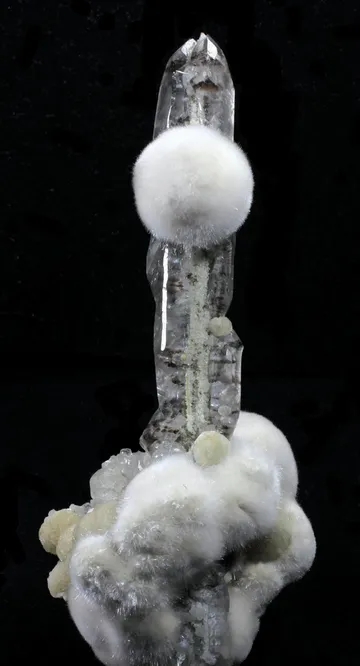
Mordenite in the Indian Deccan suite forms white to snowy fibrous sprays, silky crusts, tufts, and drusy masses, often in silica-rich cavities and commonly with chalcedony, heulandite, stilbite, apophyllite, calcite, and, at Wagholi, blue cavansite and pentagonite. Chakan, Chinchwad, Sakur, Wagholi, Aurangabad-Jalna, Jalgaon, and Nashik-area localities are among those represented in records and collections. Fine mordenite pieces have a clean, silky, undamaged surface and a strong association—especially cavansite rosettes on white mordenite or chalcedony-coated fibrous growths that preserve the delicate original texture. Common material can appear cottony, dirty, compressed, or visually indistinct from okenite, mesolite, or other fibrous zeolites without careful inspection.
Indian mesolite is particularly celebrated from Pashan in Pune District, where large ball-shaped sprays of long, delicate needles developed in heulandite-rich cavities with stilbite and apophyllite. The material ranges from white and colorless to orange-tinted aggregates, and some clusters are among the most impressive known for the species. The best Pashan mesolite is airy, radial, balanced, and intact, with needle tips preserved and enough matrix support to protect the spray. Ordinary or damaged pieces quickly lose value because the crystals are extremely brittle; repaired, compressed, or broken sprays are common enough that pristine condition and stable mounting are essential collector criteria.
Although goosecreekite was named from Virginia, some of the finest known specimens come from Maharashtra, especially Jalgaon District and Nashik-area localities such as Mahodari and the Pandulena Hills. Indian goosecreekite occurs as white to colorless, lustrous, often blocky or radiating zeolite crystals on quartz, heulandite, or other Deccan cavity minerals. It is rare enough that a well-formed Indian specimen is never just another zeolite plate; it demands close attention to identification, habit, and locality. The best examples show discrete, clean, undamaged crystals with quartz or heulandite contrast, while ordinary pale zeolite lumps or misidentified stilbite/heulandite pieces should be treated with caution unless supported by expert provenance or analysis.
Indian stellerite is recorded from Deccan Trap localities including Jalgaon, Sakur, Wagholi, Chinchwad, and Malad, but it is a collector’s cautionary species because it can be difficult to distinguish from stilbite-Ca by appearance alone. Specimens may show radiating, sheaflike, or bladed aggregates in pale zeolite colors, often within the same basalt-cavity associations that produce stilbite, heulandite, apophyllite, quartz, and related minerals. Good Indian stellerite is valued when the habit is distinct, the specimen is fresh and undamaged, and the identification is backed by reliable locality history or analysis. A label reading “stellerite” on a typical salmon Deccan sheaf is not enough; for significant purchases, assume the stilbite-stellerite distinction needs scrutiny.
Julgoldite-(Fe2+) and related julgoldite-subgroup material from India are best known in the Deccan context from Malad Quarry on Salsette Island in the Mumbai region, where Ca-Fe silicate minerals occur in basalt cavities with zeolites and associated low-grade secondary minerals. Unlike the pastel zeolite showpieces, julgoldite specimens are usually darker, rarer, and more mineralogically specialized, occurring with assemblages that may include ilvaite, pumpellyite, babingtonite, prehnite, chlorite, and other Ca-Fe phases. Good Indian julgoldite is collected for confirmed identity and association rather than sheer beauty; the most desirable pieces have visible, well-formed crystals, reliable Malad or Mumbai-Salsette provenance, and an assemblage that documents the unusual chemistry of the locality.
Cavansite from Wagholi in Pune District transformed the species from a rare curiosity into a world-famous collector mineral. It occurs as saturated blue to teal-blue rosettes, balls, sprays, crusts, and rarer stalactitic aggregates of tiny prismatic crystals, typically on heulandite, stilbite, mordenite, calcite, quartz, or basalt in localized mineralized zones of the Wagholi quarry complex. The best specimens combine intense natural color, complete spherical or rosette habit, sparkling luster, and strong contrast against pale matrix; mediocre pieces are tiny, rubbed, buried in matrix, or confused with pentagonite. Cavansite remains available on the market compared with many rarities, but truly elite, undamaged, well-centered Wagholi examples are far scarcer than the number of blue Indian specimens might suggest.
Indian natrolite is documented from Deccan localities including Malad Quarry and Bombay Quarry in the Mumbai-Salsette region, as well as Nashik-area occurrences, and is part of the fibrous zeolite problem that makes careful identification important. It forms white to colorless slender prisms, needles, sprays, and cavity linings with minerals such as scolecite, mesolite, laumontite, calcite, apophyllite, quartz, okenite, gyrolite, and related zeolites. Good Indian natrolite has sharp, lustrous, discrete acicular crystals and a reliable locality; ordinary material may be visually inseparable from scolecite or mesolite without testing. Collectors should be cautious with generic “scolecite/natrolite” labels on Indian sprays, especially where the piece lacks a specific quarry or district.
India’s documented mineral wealth extends far beyond the Deccan zeolite trade. Within the broader Deccan-region records are type-locality or historically important minerals from manganese deposits and related occurrences, including hollandite, ferrihollandite, ferri-leakeite, and mangani-dellaventuraite; the country also includes classic ore, gem, pegmatite, carbonatite, meteorite, and metamorphic localities that are outside the usual zeolite-market shorthand. For Deccan collectors, additional important species include okenite, gyrolite, laumontite, prehnite, epistilbite, yugawaralite, pentagonite, hydroxyapophyllite-(K), fluorapophyllite-(K), cavansite-associated native copper and djurleite at Wagholi, and the distinctive Malad assemblage of ilvaite, pumpellyite, babingtonite, julgoldite, and other Ca-Fe silicates. These rarities are where country-level “India” labels become least satisfactory: the mineral name may be less important than whether the specimen can be tied to Jalgaon, Wagholi, Pashan, Malad, Pandulena Hills, Mahodari, or another precise locality.
Indian Deccan specimens are abundant in the market, but abundance is deceptive. Low to mid-grade stilbite, apophyllite, heulandite, and scolecite are readily available; excellent examples with sharp crystals, intact terminations, strong contrast, and reliable locality data are much more selective. The largest market problem is not usually outright fabrication but imprecision: “India,” “Maharashtra,” “Poona,” “Nasik,” and “Jalgaon” labels are often used broadly, and older dealer labels may preserve spellings that no longer match modern maps. For serious collections, keep every old label, note alternate spellings, and avoid upgrading a district label into a quarry-specific attribution unless the evidence is real.
Mislabelling within the zeolite suite is common. Stilbite, stellerite, and heulandite can be confused; scolecite, mesolite, natrolite, mordenite, and okenite can all be misread when fibrous or acicular; and cavansite is often confused with pentagonite. In the blue Wagholi minerals, the habit is critical: cavansite commonly forms compact balls, rosettes, and sprays, while pentagonite more often shows more open sprays, divergent clusters, and characteristic forms that experienced collectors recognize, but color alone is not a safe guide. For high-value stellerite, goosecreekite, pentagonite, julgoldite, or unusual natrolite purchases, analytical confirmation or excellent provenance is worth the premium.
Condition is the second major issue. These specimens were commonly recovered from blasting and quarry rubble, so bruised crystal edges, contacted terminations, rehealed-looking breaks, and trimmed margins are normal. Scolecite, mesolite, natrolite, mordenite, and okenite are especially vulnerable to crushing and matting. Apophyllite cleaves and chips easily despite its glassy look. Stilbite and heulandite blades bruise along edges and can lose their pearly surface if scrubbed aggressively. Calcite can cleave during extraction or cleaning. A specimen that looks “too perfect” may simply be excellent, but on delicate sprays it is wise to look for glue, reattached clusters, concealed support, or cosmetic trimming.
Cleaning should be conservative. Dust can often be removed with a gentle air bulb, soft brush, or careful water rinse, but prolonged soaking, acids, ultrasonic cleaners, or aggressive detergents can damage delicate zeolites, loosen pocket clay, dissolve or etch calcite, and destabilize friable fibrous minerals. Powellite is valued partly for its fluorescence and should be kept clean, but its rarity argues against experiments. Many Indian specimens benefit from low-angle display lighting that reveals luster and transparency; strong UV is useful for checking fluorescence in calcite and powellite, but it should not substitute for good visible-light examination.
Treatments and cosmetic enhancements exist in the wider decorative market, especially on inexpensive Indian material, but the most important authenticity concerns for serious collectors are repaired sprays, dyed or artificially colored decorative stones sold under vague metaphysical names, and enhanced locality claims. Natural green apophyllite and blue cavansite can look improbably vivid, so color alone is not evidence of treatment. Conversely, vague labels and theatrical sales language should not be allowed to turn a common Deccan zeolite into a rare quarry-specific specimen.
The first great story of Indian zeolites is not a romantic mine discovery but the sound of picks, drills, and blasting along the nineteenth-century railway works of western India. In 1851, and again in 1862–1863, the construction of the Great Indian Peninsula Railway cut into the basalt country between Pune and Mumbai and exposed mineralized cavities in the ghats. The specimens that came out of those cuts were not yet part of the modern commercial flood of Indian zeolites. They were occasional, almost accidental survivals: a few carried away by engineers, geologists, military men, or scientifically minded travelers, while the vast majority of pockets must have been broken, discarded, or buried as construction spoil. The great irony is that some of the world’s future classic zeolite country was first opened not by specimen miners but by railway builders trying to cross difficult basalt terrain.
A very different chapter unfolded at Wagholi, east of Pune. Before the blue mineral made the town famous, Wagholi was a farming village; accounts describe farmers pedaling toward Pune in the morning with milk cans and sacks of vegetables hanging from bicycles. Then quarrying expanded with Pune’s growth, and the basalt landscape became an industrial field of building-stone operations. The breakthrough came in the late 1980s, when abundant cavansite mineralization was found in a horizon that had no value to the quarrymen as building stone: andesitic material below the workable basalt. To the quarry, it was a nuisance or waste horizon. To mineral collectors, it became one of the most important blue-mineral sources ever opened.
The Wagholi discovery had the strange rhythm typical of specimen localities that depend on industrial quarrying. Cavansite did not occur everywhere; only certain pockets and mineralized zones mattered. A productive cavity could appear unpredictably in a quarry face, floor, or breccia zone, and then be gone. Collectors and workers learned to recognize the signs and salvage material during the brief window between exposure and destruction. The best pieces were not mined from a tidy mineral vein but rescued from irregular spaces in a working stone operation. That history explains both the abundance and the frustration of Wagholi material: there were enough discoveries to put cavansite into museums and markets around the world, yet truly undamaged, superbly composed specimens still feel like lucky survivals.
One Pune story captures how completely Wagholi cavansite entered the international imagination. A Pune writer visiting the Natural History Museum in London encountered a turquoise-blue crystal specimen displayed near the entrance with a label identifying it as beautiful cavansite from Wagholi quarry, Pune, India. For local collectors, that moment has special force: a mineral born in basalt on the outskirts of their city had become a calling card in one of the world’s great museums. It is not an imperial gemstone story like diamond or ruby; it is the story of an industrial quarry mineral, found in cavities in black rock, becoming a global emblem of Pune’s deep geological past.
Pashan tells another version of the same transformation. The quarries there were opened for road and building stone, yet collectors remember them for dark green apophyllite and some of the great mesolite sprays of the Deccan suite. Cavities in the basalt could be large enough to enter, and within heulandite-rich pockets grew radiating balls of mesolite needles—beautiful, fragile, and maddening to extract intact. Today the classic Pashan quarry locality is described as flooded or built over, a reminder that many Indian zeolite localities were never protected specimen mines. They were temporary intersections between urban growth, quarry economics, and lucky mineralization.