Himachal Pradesh, India — Himalayan quartz from Kullu Valley, glassy colorless to smoky crystals with chlorite, rutile and anatase; prized pocket minerals.
Key facts
Himachal Pradesh matters to collectors less as a single mine than as a rugged Himalayan province whose best specimens come from alpine-style openings in a young, intensely deformed mountain belt. The name most collectors now associate with the state is Kullu: clear to pale smoky quartz from the Kullu-Manali, Parvati, Sainj, Garsa, Manihar and Bhuntar-Dhara area, often carrying green chlorite, golden rutile, mica and small anatase. These are not industrial quartz pieces in the usual sense, but pocket minerals from fissures, quartzites, schists and gneisses—high-relief country where tectonic uplift, metamorphism and late fluids made room for bright, sharply terminated crystals.
Regional View
Country View
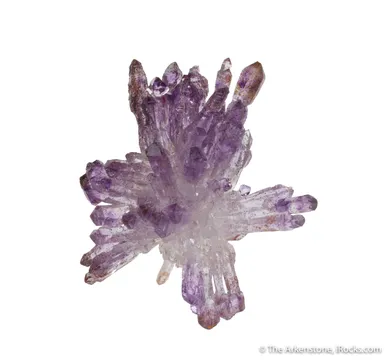
The finest Himachal quartz has a look that is immediately recognizable when handled: glassy, colorless to smoky crystals, sometimes doubly terminated, sometimes tabular or lightly etched, with the most desirable pieces showing a complete miniature landscape inside the quartz—green chlorite floors, floating phantoms, golden rutile needles and glittering anatase. Good examples are display minerals first and “included quartz” second; their value comes from the tension between water-clear prisms and the crisp, undisturbed inclusions suspended within them.

Photo: Fabre Minerals
Himachal Pradesh is also significant beyond cabinet quartz. Its geological record spans Lesser and Higher Himalayan units, the Main Central Thrust system, Proterozoic quartzites and metasediments, gneisses, schists, granitoids, Tethyan successions and Siwalik molasse. The collector mineral record accordingly includes metamorphic species, radioactive and copper-arsenide occurrences in the Romehra area of Hamirpur district, and the historic Dhurmsala meteorite fall in Kangra district. For mineral collectors, however, the modern fame of the state rests on its Himalayan quartz pockets: the “Manihar” and Kullu Valley material that entered international trade in quantity during the last two decades and quickly became one of India’s most distinctive non-Deccan specimen styles.

Photo: Wikimedia Commons
Search for specimens: View all specimens from Himachal Pradesh, India
The specimen locality most important to collectors is Kullu District, particularly the broad Kullu Valley and its associated side valleys and local names: Dhara near Bhuntar, Sainj Valley, Manihar Valley, Garsa Valley, the Parvati-Manikaran area and the greater Manali region. Mindat treats Kullu District as a source of quartz and associated minerals in alpine-type clefts and quartzites, and this matches the look of the specimens: free-grown crystals on chloritic or micaceous matrix, open-space terminations, occasional doubly terminated individuals, and inclusions that record successive stages of growth inside the crystals.
Geologically, the Kullu area lies within a complex Himalayan stack where Lesser Himalayan and Higher Himalayan rocks are juxtaposed by major thrusting. The Kullu-Kinnaur region includes the Larji-Kullu-Rampur Window, one of the larger tectonic windows of the northwestern Himalaya, exposing Proterozoic meta-quartzites, shales, dolomites and meta-igneous rocks, along with crystalline gneissic units. In the Kullu Valley corridor itself, published hydrogeological and geological descriptions record gneisses, granites and migmatites of the Rohtang Gneissic Complex in the upper Beas basin, with slates, garnetiferous schists, quartzites and limestones of the Jutogh Group in the middle and gorge sections. District survey descriptions also note quartz-schist, quartz-chlorite schist, chlorite schist, gneiss, limestone and quartzite, with quartz lenses and boudinage structures along schistosity. This is exactly the sort of country in which alpine fissures, tension gashes and late silica-bearing fluids can generate collectible quartz pockets.
The quartz occurrences should not be imagined as one continuous “mine” in the way a lead-zinc or copper deposit might be. For collectors, Himachal Pradesh is a province of scattered pocket occurrences, many of them steep, seasonal, and tied to local access rather than formal, public collecting sites. Commercial mining in the state is a separate story: Himachal Pradesh’s extractive industry is dominated by limestone, shale, building stone, sand, bajri, boulders, slate, rock salt and related construction or industrial minerals. The state Geological Wing was established in 1964–65 within the Department of Industries to explore mineral wealth and regulate its exploitation, and modern mineral concessions are handled under the state’s mining rules and mineral policy. Those official structures are important for access and legality, but the aesthetic Kullu quartz trade has been driven by small-scale extraction and dealer networks rather than by a single specimen mine with a long published production ledger.
Collectors can trace the modern history of the Kullu quartz trade through publication and show records. Berthold Ottens wrote on rock crystals from the Indian Himalaya in Lapis in 2010, and Kullu quartz was already notable enough for Mindat and private collections to show clear rock crystal, smoky quartz, chlorite-included pieces and anatase-bearing material. By 2017, dealer specimens from Sainj Valley and Manihar Valley were being documented with precise dimensions, including clusters around 9 cm across with main crystals near 6 cm. Friends of Minerals Forum show reports called quartz with anatase and chlorite from Sainj Valley a Tucson 2018 novelty, and later Tucson/Pueblo reporting in 2020 noted rutilated quartz from Manihar Valley appearing at the Cristalli booth. Since then, the best chlorite-and-rutile included pieces have moved steadily through fine-mineral dealers, crystal dealers and online marketplaces.
Important finds include clear rock crystal groups from Kullu Valley, water-clear quartz from Dhara near Bhuntar, chlorite- and hematite-included quartz from Kullu District, quartz with chlorite phantoms from Manihar, quartz with rutile and mica from Sainj-Manihar, and showy anatase-bearing clusters. The most memorable large documented show-style example found in public records is a quartz with anatase and chlorite inclusion specimen from Sainj Valley measuring 20 × 11.3 × 8.3 cm, with a main crystal listed at 15.5 × 6.8 cm. Smaller but finer examples are often the ones collectors fight over: palm-sized clusters with undamaged tips, internal rutile sprays placed visibly behind polished-looking natural faces, and chlorite planes that read as crisp phantoms rather than muddy inclusions.
Access today should be treated as restricted unless explicit permission has been obtained. Himachal Pradesh is steep Himalayan terrain with active landslides, river corridors, villages, forest lands, hydropower infrastructure, protected landscapes and regulated mineral concessions. Collectors should not assume that a locality name on a dealer label is an invitation to dig. The safest and most ethical route for most buyers is to acquire specimens through reliable dealers who preserve detailed locality information—especially the distinction between Kullu District, Dhara-Bhuntar, Sainj Valley, Manihar Valley, Garsa Valley, Parvati Valley and Manikaran.
Quartz from Himachal Pradesh is best known from Kullu District, where alpine-style fissures and quartzites have yielded colorless to pale smoky rock crystal, clear clusters, tabular and doubly terminated crystals, scepter-like forms, etched or frosted faces, chlorite phantoms and included specimens with rutile, mica, hematite and anatase; documented collector pieces range from 5 cm singles and small-cabinet clusters to large show specimens with main crystals over 15 cm, but the best examples are not simply the largest—they are the ones with clean, unworn terminations, high transparency, balanced crystal architecture and inclusions placed so that the chlorite “floor,” golden rutile sprays or anatase sparkle can be seen clearly through natural crystal faces.
Rutile from Himachal Pradesh is chiefly a Kullu District collector mineral, most often admired as golden to bronze needles enclosed in quartz from Manihar Valley, Sainj Valley and related Kullu localities; the needles may appear as sparse sprays, dense internal bundles, hairlike threads rising from chloritic zones, or brighter isolated acicular crystals visible through clear quartz, and top specimens keep those fragile inclusions undisturbed inside unpolished crystals with strong clarity, while ordinary pieces are cloudy, bruised, over-included, poorly localized, or so polished and commercialized that the natural pocket character is lost.
Chlorite in Himachal Pradesh specimens is most familiar as the green companion to Kullu quartz: it forms mossy coatings, internal phantoms, included layers, green matrix beneath clear crystal groups and visual “landscapes” inside the quartz, especially in Manihar, Sainj and Dhara-Bhuntar material; desirable pieces show chlorite as crisp, saturated green inclusions or well-defined phantoms that contrast with transparent quartz and golden rutile, whereas lesser examples have dull, muddy, pervasive chlorite that obscures the quartz or sits as unattractive surface dirt rather than a sharp growth feature.
Other documented minerals from Himachal Pradesh broaden the locality well beyond the quartz trade. Kullu District records include anatase, andalusite, biotite, chlorite group minerals, limonite, pyrite, rock crystal, smoky quartz, rutile, siderite and sillimanite, while the broader state record includes kyanite from the Shimla area and Bhabeh. Romehra in Hamirpur district is a particularly important rarity locality, with uraniferous Lower Siwalik sandstones carrying domeykite, koutekite, malachite, azurite, uraninite, pitchblende, uranophane and zeunerite. Kangra district adds an entirely different mineralogical category through the Dhurmsala meteorite, an LL6 ordinary chondrite fall whose recorded mineral list includes chromite, diopside, olivine-series minerals, ilmenite, isocubanite, mackinawite, merrillite, native copper, kamacite, taenite and troilite.
The first authenticity issue with Himachal Pradesh specimens is locality precision. “Himalayan quartz” is a marketing phrase, not a locality. Serious labels should ideally say Himachal Pradesh, Kullu District, and then, when known, Dhara/Bhuntar, Sainj Valley, Manihar Valley, Garsa Valley, Parvati Valley, Manikaran or another specific place. Older and casual trade labels may blur India, Nepal and Pakistan, and the Kullu material has a documented history of confusion: clear Kullu Valley quartz has been reported with labels such as “Korur, Indian Nepal,” and similar material has even been compared with quartz once represented as Arkansas. A collector should treat unsupported labels with caution, especially when the specimen is just clear quartz without distinctive chlorite, rutile, anatase, habit or old documentation.
The second issue is polishing and reshaping. Natural Kullu quartz is common enough in unpolished crystals that polished points, spheres and “garden quartz” carvings should not be evaluated the same way as mineral specimens. Polished included quartz from Himachal can be attractive, but it is no substitute for an undamaged natural crystal group with original faces, terminations and matrix. In included quartz, ask whether the rutile and chlorite are actually enclosed in the crystal or merely stuck in fractures, surface-reaching seams or later-filled cracks. Artificially colored “Himalayan” quartz, dyed crackle material and generic included quartz from other countries can circulate under broad metaphysical trade names; the safest defense is a combination of dealer reputation, detailed locality, natural terminations and mineralogical plausibility.
Condition is a serious concern. Himachal quartz commonly has sharp tips, step growth, etched areas, contact zones, small bruises along prism edges and chlorite-bearing surfaces that can hide impact marks. Internal veils and growth tubes are normal and may add character; fresh edge chips, abraded terminations and broken companion crystals reduce value sharply. Rutile-included pieces should be checked under a strong light from several angles, because a specimen that photographs dramatically may have only one good viewing window. Chlorite-rich pieces should be cleaned conservatively; aggressive chemical cleaning can remove iron staining that gives context, disturb friable matrix, or make a once-natural surface look processed.
Fluorescence is not the selling point here. Quartz itself is generally collected for clarity, habit and inclusions, not for ultraviolet response. Uranium-bearing Romehra specimens are a different category entirely: uraninite, pitchblende, uranophane and zeunerite require radiation-aware handling, labeling, storage and legal compliance. Such pieces are rarities for systematic collections, not casual display minerals.
Market availability is uneven. Small to miniature Himachal quartz with chlorite is readily obtainable, but sharp, undamaged, transparent clusters with attractive internal rutile are much scarcer. The best Manihar and Sainj pieces occupy a hybrid market: fine-mineral collectors want natural aesthetics and locality accuracy, while crystal buyers also pursue the “Himalayan” and “garden quartz” look. That dual demand means top examples can disappear quickly even when ordinary included quartz remains abundant online.
One of the more revealing stories in the Himachal quartz trade is a label mystery. A collector studying clear rock crystal groups from Kullu Valley encountered specimens that had been sold under confusing or impossible names, including “Korur, Indian Nepal.” After comparing the crystals with material handled by Indian dealers and with pieces known to collectors who had visited the area, the conclusion was that the crystals were Kullu Valley quartz. The habit helped tell the story: elongated, matt x-faces and a look unlike typical Arkansas quartz. It is a small episode, but it captures the problem with Himalayan quartz perfectly. The crystal may be superb, but without disciplined locality work, the label can wander hundreds or thousands of kilometers.
At Tucson 2018, quartz with anatase and chlorite inclusions from Sainj Valley, Manihar Valley, Kullu District appeared in show reporting as a novelty. The recorded specimen was not a vague “Himalayan” point but a major cabinet piece: 20 × 11.3 × 8.3 cm overall, with a main crystal of 15.5 × 6.8 cm. The description emphasized transparent, bright crystals, cavernous faces, a scepter-like individual, chlorite inclusions and small anatase crystals on the surfaces. That is the moment many collectors began to recognize Himachal not merely as another source of clear quartz, but as a locality capable of producing complex, characterful alpine specimens.
The rutilated Manihar material had its own show-floor moment. In 2020, Tucson/Pueblo coverage showed rutile-in-quartz specimens from Manihar Valley at the Cristalli booth, with the observer noting that these appeared to be “new” rutilated quartzes from India. That first impression was accurate in the market sense: the locality’s golden rutile in clear quartz, commonly with chlorite, soon became one of the most recognizable Indian specimen styles of the decade. The best pieces looked less like standard rutilated quartz and more like sealed alpine pockets—needles protected inside crystal, green growth zones beneath, and just enough transparency to make the interior readable.
Himachal Pradesh also owns one of India’s great meteorite stories. On July 14, 1860, between about 2:00 and 2:30 in the afternoon, Dhurmsala was shaken by a terrifying series of reports. Contemporary accounts compared the first blast to something louder than artillery; people imagined blasting, an earthquake or a landslip, and some ran from their houses expecting them to fall. Witnesses described multiple reports and reverberations, the ground trembling, and a fiery object crossing above the station. Stones buried themselves a foot or more into the ground and raised dust where they struck. The most memorable detail—repeated for more than a century—was that men who picked up fragments quickly dropped them because they felt intensely cold. Later writers debated the interpretation of that coldness, but the fall itself remains historic: Dhurmsala is an official LL6 chondrite from Kangra district, and fragments entered major institutional collections.