Himalaya Mine, USA — classic tourmaline pegmatite in San Diego County; famed for vivid elbaite crystals and rare-element minerals prized by collectors.
Key facts
The Himalaya Mine is the classic American tourmaline pegmatite: a thin, extraordinarily productive, miarolitic LCT-type pegmatite-aplite dike system on Gem Hill in the Mesa Grande Mining District of San Diego County, California. It is not famous because it is large in the way a quarry is large. Its fame comes from the opposite fact: a comparatively slender, pocket-bearing dike, mined underground along its strike, produced immense quantities of gem and specimen tourmaline and a suite of lithium-, boron-, beryllium-, tantalum-, niobium-, tin-, and cesium-bearing minerals that made it one of the most important rare-element pegmatites in North America.
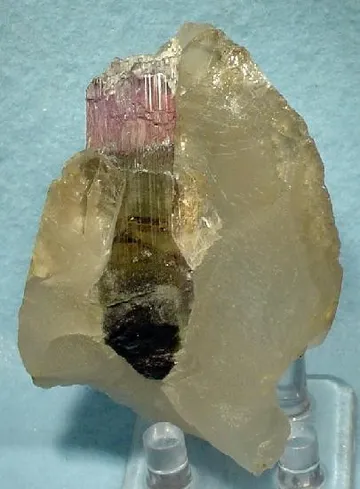
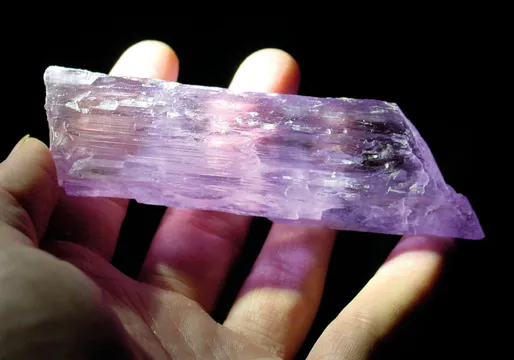
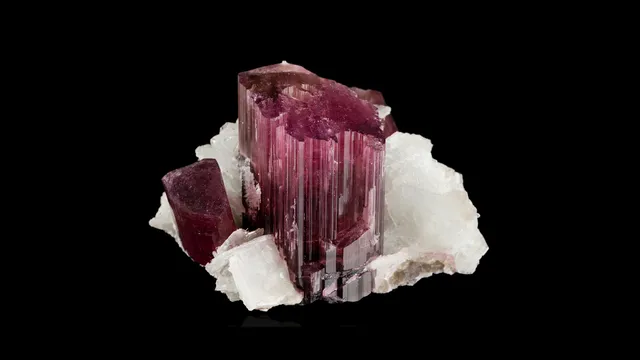
For collectors, “Himalaya” means vivid and often unmistakable elbaite: pink to cranberry-red rubellite, olive-green to grass-green zones, bicolored and watermelon crystals, and older crystals with black or dark roots passing into gemmy colored caps. The best specimens have the dry, sculptural authority of pocket minerals removed from clay—striated tourmaline prisms with flat or healed terminations, crystals perched in white albite or cleavelandite, lavender lepidolite clustered around the base or termination, smoky or clear quartz as a companion, and occasional microcline, beryl, apatite, hambergite, or stibiotantalite adding mineralogical depth.
The geological setting is the southern California gem-pegmatite province of the Peninsular Ranges. At Mesa Grande, the productive pegmatites are tabular dikes emplaced in mafic country rock and internally zoned into fine aplitic layers, graphic pegmatite, feldspar-quartz zones, and central pocket zones. At Himalaya, the pockets were the treasure: clay-filled cavities in which tourmaline, quartz, albite, lepidolite, and rarities grew with enough open space to form collectible crystals. Scientific work on Himalaya tourmaline has made the locality more than a gem mine; it is also a reference point for understanding how chemical zoning in tourmaline records pocket evolution in rare-element pegmatites.
Regional View
Country View
Historically, the mine stands at the center of the early-20th-century California tourmaline boom. Pink tourmaline from San Diego County found an eager market in China, and the Himalaya Mine became the district’s great producer. Early accounts describe tons of elbaite shipped east for gems, carvings, and specimens, while later miners and collectors reopened older workings, chased the dike at depth, and recovered new pockets long after the first boom had collapsed. That continuity—commercial gem mining, scientific study, specimen collecting, and public tailings digs—gives Himalaya specimens a particularly rich collecting context.

Photo: Wikimedia Commons

Photo: Wikimedia Commons
Search for specimens: View all specimens from Himalaya Mine, USA
The formal locality is Himalaya Mine, Gem Hill, Mesa Grande Mining District, San Diego County, California, USA. It lies near Mesa Grande, Santa Ysabel, and Lake Henshaw, in the mountainous interior of northern San Diego County. The mine is commonly associated with the Himalaya pegmatite or Himalaya dike system, part of the Mesa Grande group of gem-bearing rare-element pegmatites.
The deposit is a miarolitic LCT-type granitic pegmatite-aplite system. “LCT” is the important collector’s shorthand here: lithium, cesium, and tantalum enrichment helped produce elbaite, lepidolite, pollucite, beryl, hambergite, stibiotantalite, stibiocolumbite, rynersonite, and other rare-element minerals. The Himalaya dike system has been described as two principal subparallel pegmatite-aplite dikes, with additional branches, rather than a single broad pegmatite mass. Published descriptions give the combined thickness of the main dikes as less than 0.5 m to about 2 m, with the two main dikes locally separated by several meters and traceable along strike for about 915 m. The upper dike was the principal source of gem-quality tourmaline at the Himalaya Mine and along strike at the San Diego Mine.
Internally, the dikes show the classic San Diego County pegmatite architecture: a fine-grained aplitic footwall zone, layered “line rock,” feldspar-quartz pegmatite, a pocket zone, and a hanging-wall graphic pegmatite zone. Early California State Mining Bureau descriptions noted hard blue diorite wall rock, a pegmatite ledge dipping southwest, lithia- and manganese-stained upper pegmatite, large masses of lepidolite, and pockets filled with talc-like and hydrous micaceous clay minerals. For the collector, those geological words translate into the familiar look of Himalaya specimens: colored tourmaline freed from sticky pocket clay, often on feldspar, quartz, lepidolite, or cleavelandite.
The mine’s first documented development belongs to the turn of the 20th century, but local knowledge of crystals on Gem Hill seems older. Historical accounts describe Indigenous children and settler children bringing home colorful crystals from the hillside before commercial mining began. Charles Orcutt claimed the northern end of the vein in 1899, while other claims and overstakings followed quickly. The property’s early history includes the Sancho Pancho claims, Archibald Edward Heighway Jr., Lippman Tannenbaum and the Himalaya Mining Company, lawsuits, royalty disputes, and finally a major commercial operation whose peak came around 1910. After Tannenbaum’s bankruptcy in 1913, mining declined but did not end.
Later operators kept the locality alive. The George Ah Quin Company, Thomas Ah Quin Jr., Henry Quin, Fred Rynerson, Ed Over, Arthur Montgomery, Ralph Potter, Himalaya Gem Mines, Inc., and William “Bill” Larson all figure in the mine’s long specimen history. Larson’s period was especially important for modern collectors. After obtaining a lease in 1977, he reopened the mine and drove a new, lower adit to reach less weathered pockets beneath earlier workings. Pala Properties International later purchased the mine and operated it successfully into the 1990s. In the late 1990s and early 2000s, Chris Rose was associated with the Lohrer Claim and with the public-facing Himalaya dig material.
Production figures vary by source and period, but all point in the same direction: Himalaya was a giant among American tourmaline mines. George F. Kunz wrote in 1905 that about six tons of elbaite had been shipped to New York as gems, carving material, and specimens. Later summaries cite far larger combined estimates for elbaite and beryl, and subsequent Larson-era production added still more specimen material. A Gems & Gemology report from the early 1980s recorded four new pockets found after 14 months and 715 feet of tunneling, yielding pink, green, and bicolored tourmaline and sizable mineral specimens, with less than one percent of the material considered facetable.
Access today must be understood carefully. The underground mine and surrounding claims are not an open public rockhounding locality. The well-known public activity has been a fee dig or screening operation using Himalaya mine material brought to the Lake Henshaw/Santa Ysabel area, rather than casual collecting inside the underground workings. Operator pages and club notices have reported changing status, including periods when the dig was closed while mail-order ore buckets or limited material remained available. Serious collectors should verify access directly with the operator before traveling, should not assume mine access, and should treat the workings and dumps as private or controlled property unless explicit permission is granted.
Notable Himalaya finds include the early production that supplied the China trade, the Larson-era pockets reached after deep tunneling, the 1980s pockets that produced exceptional matrix specimens, and unusual pocket material with healed or smoothed tourmaline terminations. Dealers and museum labels commonly identify old Himalaya crystals by their color zoning, striated prisms, clay-pocket etching, and associations with lavender lepidolite, white albite-cleavelandite, smoky quartz, or microcline.
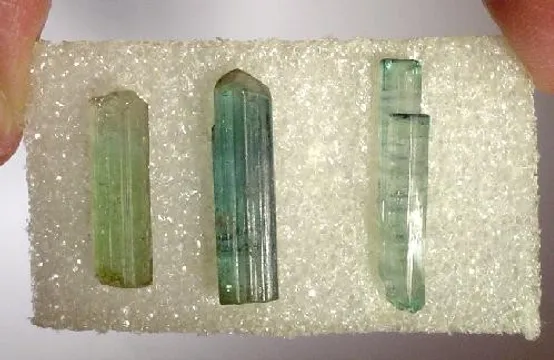
Elbaite is the defining Himalaya species, occurring as striated prismatic crystals in pink, red, green, blue-green, olive, colorless to pale zones, and complex bicolored or watermelon patterns, commonly with black schorl- or oxy-schorl-like roots in the pegmatite grading into colored pocket growth; fine crystals range from small “pencil” fragments and thumbnails to multi-centimeter cabinet crystals, with documented gem-pocket crystals studied chemically for dramatic core-to-rim changes in Li, Ca, Mn, Fe, F, OH, and oxidation state. Associations with lepidolite, albite or cleavelandite, quartz, smoky quartz, microcline, and pocket clays are classic. Good Himalaya elbaites show saturated color, translucency to transparency, sharp or attractively healed terminations, balanced zoning, and either undamaged single-crystal form or natural matrix; ordinary pieces are typically broken fragments, abraded pocket floaters, pale or muddy crystals, or crystals with heavy clay alteration and little termination.
Tourmaline at Himalaya includes elbaite as the collector species, dark schorl to oxy-schorl in roots and wall-zone material, and chemically complex elbaite–schorl-series compositions that record the transition from Fe-rich outer pegmatite growth to Li-rich pocket-stage tourmaline. The mine’s most recognizable tourmalines are long, vertically striated prisms with pink bodies, green caps, black or olive bases, and occasional pale straw or colorless zones, often in albite, cleavelandite, lepidolite, quartz, smoky quartz, or microcline. The finest pieces are not merely colorful: they have locality character—sharp ribbed prism faces, natural clay-pocket surfaces, elegant color transitions, and a complete termination or visually satisfying healed end—while common tourmaline from the dumps may be small, chipped, opaque, or dark.
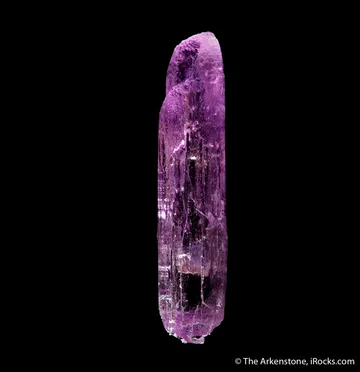
Lepidolite is one of the key visual and geological companions to Himalaya tourmaline, occurring as lavender, lilac, pinkish, or purplish micaceous books, granular masses, and small sparkling clusters in and around pocket zones. Early descriptions specifically noted large masses of lepidolite associated with tourmaline, and later tourmaline studies observed a chemical response in tourmaline when lepidolite began crystallizing during pocket evolution. Collectors prize lepidolite here when it is fresh, purple, and crystallized rather than massive and crumbly, especially where it accents pink-green elbaite, fills space around cleavelandite blades, or forms attractive lavender clusters on quartz or microcline; pale, friable, mica-rich matrix without strong tourmaline or quartz association is much more common.
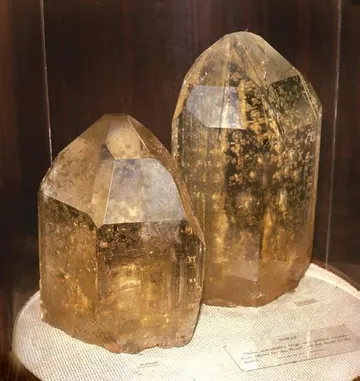
Quartz from the Himalaya Mine occurs as clear to milky crystals, smoky crystals, massive core-zone quartz, and pocket crystals associated with elbaite, lepidolite, albite, cleavelandite, microcline, and rare accessory minerals. Early accounts remarked on large, transparent quartz crystals, and field collectors have long noted that clear Himalaya quartz pieces can be gemmy even when the tourmaline is fragmentary. The most desirable quartz specimens from the locality are those that carry or frame tourmaline—pink-green elbaite leaning against a glassy crystal, smoky quartz with lepidolite and rubellite, or matrix plates where quartz preserves the spatial feel of a pocket—whereas loose, plain quartz fragments need unusual clarity, form, or association to compete with the mine’s tourmaline-centered specimens.
Albite is a fundamental Himalaya matrix mineral, present as white feldspar, cleavelandite-like platy aggregates, and crystalline pocket linings that contrast strongly with pink and green elbaite. In good specimens it provides both structure and color contrast: a clean white albite base can lift a rubellite crystal visually, protect its lower termination, and anchor associated lepidolite or quartz. Ordinary albite-rich pieces are abundant as broken feldspar matrix or pale pegmatite chunks, but collectible albite specimens from Himalaya show sharp crystallization, clean surfaces, and well-positioned tourmaline, lepidolite, apatite, or quartz rather than simply being feldspar host rock.
Cleavelandite, the platy habit of albite, is one of the most attractive matrix habits at Himalaya, forming white to translucent bladed sprays and stacked plates in pocket material. It is especially important on specimens where the tourmaline is not freestanding: a fan of cleavelandite can cradle pink elbaite, separate lepidolite clusters, or add bright texture against smoky quartz and microcline. Fine examples have lustrous, undamaged blades and an open architecture that makes the tourmaline look naturally placed; lesser examples are chalky, crushed, iron-stained, or so massive that they lose the delicate bladed character that collectors want from cleavelandite at a tourmaline pegmatite.
Stilbite is a subordinate but documented zeolite-group presence in Himalaya pocket material, far removed from the mine’s headline tourmaline fame but important to collectors who appreciate late-stage alteration assemblages. It occurs in small pale, whitish, cream, or peachy zeolitic coatings and aggregates associated with pocket cavities, feldspar, quartz, and other secondary minerals rather than as large standalone display specimens. The best Himalaya stilbite pieces are those that remain clean and identifiable while sharing matrix with elbaite, quartz, or feldspar; ordinary examples are minor coatings easily overlooked, confused with other pale zeolites, or damaged during cleaning of clay-filled pocket specimens.
Feldspar is the structural backbone of the Himalaya pegmatite, appearing as albite, cleavelandite, microcline, and broader feldspar-rich pegmatite masses in the dike’s wall, graphic, and pocket zones. For specimen collectors, feldspar matters because it is the stage on which the gem minerals sit: pale feldspar matrix gives contrast to rubellite, green elbaite, lepidolite, smoky quartz, hambergite, and apatite. Good feldspar-associated Himalaya pieces show fresh, lustrous, well-crystallized surfaces and balanced composition; lesser pieces are merely chunks of pegmatite with broken tourmaline remnants or stained, massive feldspar that adds weight without aesthetics.
Microcline occurs as blocky feldspar crystals and etched grayish to pale crystals in Himalaya pocket specimens, commonly with elbaite, lepidolite, quartz, smoky quartz, and cleavelandite. It is not the mine’s flashiest species, but it can make a specimen: large, sculptural microcline sections provide scale and architectural contrast to slender tourmaline prisms, and etched crystal faces can give Himalaya matrix pieces the rugged, pocket-grown texture collectors value. The best microcline specimens are clean, crystallized, and compositionally integrated with tourmaline or lepidolite; ordinary material is massive feldspar matrix with little crystal definition or poor display balance.
Hambergite is one of the desirable beryllium-borate accessories from the Himalaya Mine, occurring as small colorless to pale, vitreous crystals in the evolved pocket assemblage with albite, quartz, tourmaline, beryl, apatite, and feldspar minerals. Himalaya hambergite is valued less for size than for locality significance and association: a sharp, transparent crystal perched in cleavelandite or near colored elbaite carries far more appeal than an isolated or damaged fragment. Because the crystals are typically small and pale, quality hinges on luster, transparency, termination, and clear placement on matrix, and confirmed identification is important because pale pocket minerals in San Diego pegmatites can be visually deceptive.
Apatite at Himalaya, generally represented in collector material as fluorapatite, occurs as small accessory crystals in the pocket assemblage with elbaite, albite, cleavelandite, lepidolite, quartz, and other evolved pegmatite minerals. Pieces are most attractive when the apatite is sharp, glassy, and visibly set into a classic Himalaya matrix rather than lost among pale feldspar and mica. Because apatite from the locality is much scarcer in fine specimens than tourmaline, even modest crystals can be worthwhile when well documented; ordinary or poorly exposed grains require caution, as small apatite can be easy to miss or confuse without magnification.
Rubellite is the collector’s romantic name for Himalaya’s pink to red elbaite, and it is the material that tied the mine to the China trade and to the great era of California tourmaline mining. It occurs as cranberry, rose, raspberry, and deeper red zones in striated elbaite crystals, sometimes as pink bodies with green caps, sometimes as watermelon crystals, and often with albite, cleavelandite, lepidolite, quartz, smoky quartz, or microcline. The best rubellites from Himalaya have saturated color, translucency or gemminess, an intact or naturally healed termination, and minimal bruising along prism edges; common examples are broken pink fragments, pale pieces from screening operations, or crystals whose color is good but whose condition is heavily compromised.
Stibiotantalite is one of the great rarities that gives Himalaya its mineralogical stature beyond tourmaline, occurring as brown to yellow-brown, lustrous, dense crystals in the rare-element pocket assemblage, commonly associated with lepidolite, quartz, feldspar, and tourmaline-bearing matrix. The locality is widely regarded as a premier source for collector-quality stibiotantalite crystals, with specimens reaching thumbnail to small-cabinet significance rather than the large sizes expected of common species. The best Himalaya stibiotantalites are sharp, complete, lustrous, and visibly crystallized on matrix; ordinary pieces are small grains, partial crystals, or poorly documented brown oxides that require confirmation because tantalate-niobate species are not reliably identified by appearance alone.
Beryl is documented from the Himalaya Mine as colorless goshenite, pale blue aquamarine, yellow heliodor, and pink morganite, though it is much less abundant in iconic specimens than elbaite. Early accounts recorded pink and aquamarine beryl, and later production estimates grouped beryl with tourmaline as part of the mine’s important gem output. Collectible Himalaya beryl is strongest when it is clearly crystallized, gemmy, and associated with the classic pegmatite suite—albite, quartz, lepidolite, and tourmaline—while massive or etched beryl without color, transparency, or matrix context is mostly of locality interest.
Calcite is a minor late-stage or secondary mineral at Himalaya, appearing in small amounts in altered pocket and cavity assemblages rather than as a principal gem-pocket species. Its collector value is contextual: calcite can help document late fluids and secondary mineralization in the pegmatite, especially where it occurs with quartz, feldspar, zeolites, or pocket-clay minerals. Good Himalaya calcite specimens are uncommon and should show clear crystal form or association; ordinary calcite is pale, small, or easily overlooked, and it should be handled and cleaned more cautiously than tourmaline or quartz because it is softer and acid-sensitive.
Smoky quartz from Himalaya is a desirable companion mineral when it appears as glassy brown to gray crystals with rubellite, green elbaite, lepidolite, microcline, or cleavelandite. The finest examples give depth and contrast to the brighter tourmalines: a smoky prism or cluster can turn a simple elbaite specimen into a full pocket scene. Quality depends on transparency, undamaged terminations, and placement; plain smoky quartz without tourmaline, lepidolite, or feldspar association is less distinctive, while specimens showing lepidolite included in or against smoky quartz have special appeal because they capture the interplay of pocket minerals at this locality.
Fluorapatite is a scarce accessory in Himalaya pocket specimens, occurring as small glassy crystals within the evolved boron-lithium pegmatite assemblage. It is typically collected for rarity and association rather than dramatic size, and the most appealing pieces show discrete crystals on albite or cleavelandite with nearby elbaite, lepidolite, or quartz. Because small fluorapatite can be confused with other pale or colored accessory minerals, well-labeled specimens from older collections or documented pocket lots are preferable; damage, partial burial in clay, and poor exposure are the usual limitations.
Morganite, the pink variety of beryl, is documented from the Himalaya Mine but is far rarer in notable specimens than the mine’s pink tourmaline. Its appeal lies in its association with the same lithium-rich pocket environment that produced rubellite, lepidolite, albite, quartz, and other gem minerals. Good Himalaya morganite should show recognizable beryl form, pleasing pink color, and clear locality association; pale, etched, or massive beryl is much less desirable unless accompanied by tourmaline or by strong historical documentation from the mine.
Laumontite is a minor zeolite reported from the Himalaya Mine’s secondary assemblage, and it should be approached as a locality and paragenesis mineral rather than a showy main-stage pegmatite species. Where present, it occurs as pale, delicate cavity or fracture mineralization associated with altered feldspar, quartz, and other late minerals. The best examples are cleanly preserved, well labeled, and protected from drying and abrasion; ordinary laumontite is fragile, chalky, and easily damaged, and collectors should be aware that laumontite can dehydrate or deteriorate if kept in very dry conditions.
Other documented minerals from the Himalaya Mine and dike system include amblygonite, muscovite, schorl, oxy-schorl, fluor-elbaite, beryl varieties including aquamarine, goshenite, heliodor, and morganite, spessartine, spodumene, pollucite, topaz, herderite, gahnite, columbite-(Mn), stibiocolumbite, rynersonite, stokesite, kaolinite, palygorskite, heulandite-subgroup minerals, thomsonite-subgroup minerals, beyerite, thorite, thorogummite, todorokite, zircon, xenotime-(Y), and related microlite-group or tantalate-niobate species. Stibiocolumbite is especially important as a type-locality mineral from the Himalaya Mine, and rynersonite is a San Diego County rare tantalate closely tied to Himalaya material in the literature. These species matter because they show how chemically evolved the pegmatite became, but most are specialist minerals; for the broader specimen market, elbaite, lepidolite, albite-cleavelandite, quartz, and the best stibiotantalite remain the visual heart of the locality.
Himalaya Mine specimens are abundant in the market compared with most historic American pegmatites, but quality is sharply stratified. Small broken tourmaline fragments, pale rubellite pieces, feldspar chunks with tourmaline remnants, and screening-dig finds are common. Complete old crystals, matrix specimens, strongly bicolored or watermelon crystals, fine rubellite, and documented Larson-era pocket specimens are much scarcer. The best pieces often carry old collection provenance—Pala Properties, Bill Larson, Richard Kosnar, Ben De Wit, Wayne Sorensen, Chuck Houser, or other California pegmatite collectors—and that history can be as important as the specimen’s appearance.
The chief authenticity issue is not that Himalaya tourmaline is routinely faked, but that southern California tourmalines are frequently mislabeled. Himalaya, San Diego Mine, Mesa Grande, Tourmaline Queen, Stewart, Tourmaline King, Pala Chief, Oceanview, and other San Diego County mines all produced colored elbaite, and older labels can be vague, optimistic, or swapped. Himalaya crystals often have a distinctive look—pink to olive-green zoning, striated prisms, flat or healed terminations, lepidolite-albite-quartz associations—but appearance alone is not proof. Be cautious with labels that say only “Pala,” “San Diego Co.,” “California tourmaline,” or “Himalaya/Pala,” because the Himalaya Mine is at Mesa Grande, not in the Pala Mining District, even though Pala dealers and operators handled much Himalaya material.
Repairs are common enough to check carefully. Tourmaline crystals from clay pockets can break cleanly across the prism, and matrix pieces with projecting crystals may have repairs at the base. Use a loupe and strong side lighting to inspect for glue lines, mismatched luster, filled fractures, and improbable contacts between tourmaline and matrix. Some old broken crystals were trimmed or polished for gem rough; these can still be collectible, but they should not be priced as complete crystals. The terminations are especially important: Himalaya crystals may have natural healed, etched, or smoothed terminations, so do not mistake every irregular termination for damage, but distinguish natural rehealing from fresh breaks or restorations.
Condition issues are strongly tied to pocket clay and mining method. Prism edges bruise easily, terminations chip, lepidolite flakes, cleavelandite blades snap, and quartz points can be bruised during removal or later cleaning. Pocket clay may remain in crevices; aggressive cleaning can strip context, loosen mica, or expose repairs. Avoid acid cleaning on specimens containing calcite or delicate secondary minerals, and avoid prolonged soaking or harsh ultrasonic cleaning on matrix pieces with lepidolite, laumontite, stilbite, or fragile clay alteration.
Fluorescence is not the main buying criterion for Himalaya material. Some associated minerals may respond under UV, but collectors should evaluate the locality primarily by crystal form, color zoning, matrix, damage, and provenance. Laumontite-bearing pieces deserve stable storage; very dry conditions can promote dehydration in laumontite, while damp storage can harm labels and encourage clay breakdown.
For market availability, loose tourmaline fragments and small dig finds remain obtainable, and modest cabinet specimens appear regularly. Fine, undamaged crystals with strong color zoning and old provenance command a premium. Matrix specimens with multiple well-placed species—elbaite with lepidolite, cleavelandite, quartz or smoky quartz, and microcline—are much harder to replace. Stibiotantalite, hambergite, fluorapatite, and other rare accessories should be purchased only with good labels and, where possible, analytical or collection history.
The earliest Himalaya story reads almost too perfect for a gem district: before companies, lawsuits, and tunnels, there were children picking up bright crystals after storms. Accounts describe Indian and settler children at Mesa Grande bringing home colorful six-sided crystals, trading them, or selling the finer ones to a schoolteacher or to tourists staying at Rancho Cereza Loma. Heavy rains washed sand and clay from the hillside and exposed the “baubles.” Some were clear quartz. Others were pink, red, blue, or green tourmaline. Long before the locality became a mining company property, its specimens were already moving through local hands as curiosities.
Then came the claim rush. Charles Orcutt claimed the northern end of the vein on November 16, 1899, worked it, and publicized the discoveries. The ground was soon tangled in overlapping claims and business maneuvers. D. L. Hoover, C. E. McGary, and Frank F. and Frank N. Wright—shoe retailers by trade—became connected with the Sancho Pancho claims. Archibald Edward Heighway Jr., remembered in the historical literature as the “Cincinnati giant,” took an option in 1901, mined, failed to keep up royalty payments, and overstaked the claims. He then sold the property to Lippman Tannenbaum. Litigation followed, and the mess was settled in December 1903 when Tannenbaum paid the Sancho Pancho owners $6,000. It is hard to imagine a more Californian gem-mine beginning: schoolchildren, rain-washed crystals, over-staking, New York capital, and a courtroom shadow behind the first boom.
Tannenbaum’s years made the mine famous. Surface or bench digging gave way to underground work as the overburden became too costly and dangerous, especially with rainy-season slides and cave-ins. Early writers described an adit driven several hundred feet into the hill, with branches following the gem-bearing vein. The dike was no cavernous ore body: it was a comparatively thin pegmatite ledge between hard dark wall rocks, dipping southwest, with pocket clay hiding the prize. The miners were not simply blasting rock for tonnage; they were chasing signs—lithia staining, manganese oxides, lepidolite, clearer quartz, clay, alteration—that hinted a pocket might be near.
The Chinese market gave the mine its first great economic engine. Pink tourmaline from San Diego County was prized for carving and ornaments, and Himalaya production became part of the larger story of California tourmaline flowing east. The best-known historical figures vary by account, but the collector’s image is consistent: barrels, sacks, and parcels of rose and red tourmaline traveling from a dry California mountain to New York buyers and onward to the China trade. By 1910, Tannenbaum’s activity had peaked. By April 1913, he was bankrupt. The crystals endured; the business did not.
The Larson era added a second modern chapter. After decades of intermittent work and collecting, Bill Larson reopened the mine in the late 1970s. One Gems & Gemology report records the stubborn arithmetic of that effort: four new pockets after 14 months and 715 feet of tunneling. The reward was pink, green, and bicolored tourmaline, including sizable specimens, but the gem cutter’s verdict was sobering—less than one percent was considered suitable for faceting. That ratio explains much about Himalaya collecting: the mine produced masses of beautiful mineral material, but truly clean gem rough and undamaged display crystals were always a selective fraction.
Pocket work at Himalaya could be delicate to the point of ritual. A field note from the Pegmatite Page shows the method: the white dike running diagonally through the working face, the pocket extending several feet, and bamboo skewers used to probe sticky mud and ease crystals out without damage. Removed crystals were wrapped and placed in plastic bags. In another view, a hydraulic jack was set beneath the dike to remove a portion of the pocket wall. That combination—bamboo skewers and hydraulic jack—captures the strange scale of pegmatite mining, where the same pocket may require both brute force and the patience of a surgeon.
A 2004 field trip report gives the later collector’s version of the Himalaya experience. Jay Bates drove eight and a half hours from the San Francisco Bay area, camped near the mine in drizzle after a week of warm weather, and joined a San Francisco Gem and Mineral Society outing led by Harry and Mary White. The road was rough enough that four-wheel drive was recommended for the last half mile, and the caravan had to be limited because the route passed through the Mesa Grande Indian Reservation near homes. The group paid $50 each and worked old mine dumps that had already been commercially sifted twice. Even so, tourmaline remained. Aaron Lerer found a watermelon crystal a couple of inches long and about an inch in diameter with a nice termination. Bates himself found a small tourmaline-and-quartz twin, several facetable tourmaline pieces, and reverse watermelon crystals—green inside, pink outside. When rain began pouring around 2:00 p.m., some collectors slipped and slid out on the slick road; those who stayed found “roadkill” tourmalines exposed in the road and dump piles by the rain.
The old stories and the modern ones have the same rhythm: rain reveals crystals, clay hides crystals, and patience wins. Himalaya is not merely a locality name on a label. It is a dike followed for generations, a chain of pockets opened by hand, a marketplace that ran from Mesa Grande to New York to China, and a mine where a collector might still remember the exact sound of wet tailings on a screen.
Foord, Eugene E. (1977). “Famous Mineral Localities: the Himalaya Dike System, Mesa Grande District, San Diego County, California.” The Mineralogical Record, 8(6), 461–474. A foundational locality article for the Himalaya dike system and its mineral suite.
Fisher, Jesse; Foord, Eugene E.; and Bricker, Garth A. (1998). “The Geology, Mineralogy, and History of the Himalaya Mine, Mesa Grande, San Diego County, California.” Rocks & Minerals, 73(3), 156–180. The major modern synthesis of the mine’s geology, history, and specimen mineralogy.
Fisher, J.; Foord, E. E.; and Bricker, G. A. (1999). “The geology, mineralogy, and history of the Himalaya mine, Mesa Grande, San Diego County, California.” California Geology, 52(1), 3–18. A closely related state-geology treatment frequently cited in locality databases and mineral records.
Ertl, Andreas; Rossman, George R.; Hughes, John M.; London, David; Wang, Ying; O’Leary, Julie A.; Dyar, M. Darby; Prowatke, Stefan; Ludwig, Thomas; and Tillmanns, Ekkehart (2010). “Tourmaline of the elbaite-schorl series from the Himalaya Mine, Mesa Grande, California: A detailed investigation.” American Mineralogist, 95(1), 24–40. Detailed chemical, structural, spectroscopic, and optical study of Himalaya tourmaline from gem pockets.
Webber, Karen L.; Simmons, William B.; Falster, Alexander U.; and Foord, Eugene E. (1999). “Cooling rates and crystallization dynamics of shallow level pegmatite-aplite dikes, San Diego County, California.” American Mineralogist, 84(5–6), 708–717. Important pegmatite-crystallization paper including the Himalaya dike as a modeled example.
Foord, E. E.; Starkey, H. C.; and Taggart, J. E., Jr. (1986). “Mineralogy and paragenesis of ‘pocket’ clays and associated minerals in complex granitic pegmatites, San Diego, California.” American Mineralogist, 71, 428–439. Key work for understanding the clay-filled pocket environment that preserved and complicated many Himalaya specimens.
Foord, E. E. and Mrose, M. E. (1978). “Rynersonite, Ca(Ta,Nb)2O6, a new mineral from San Diego County, California.” American Mineralogist, 63, 709–714. New-mineral paper for rynersonite, one of the rare tantalate species tied to the San Diego County pegmatite suite.
Mindat — Stibiocolumbite mineral page. Records the Himalaya Mine as the type locality for stibiocolumbite and notes the associated type-locality minerals beryl, lepidolite, and tourmaline.
Wikimedia Commons — Stibiotantalite from the Himalaya Mine. A documented photographed example of one of the locality’s important rare tantalate species.

Photo: Wikimedia Commons
“Exploring the Himalaya Tourmaline Mine” — Jewelcutter — Underground video with Chris Rose and Gary Kratochvil showing a tourmaline pocket being uncovered.
“Hunt for tourmaline near San Diego!” — Home Grown Fun Family — Family-oriented video of screening Himalaya Mine tailings in San Diego County.
“Tourmaline - Himalaya mine, CA, USA” — The Arkenstone / iRocks.com — Short specimen video focused on a Himalaya Mine tourmaline.
“Cash & Treasures,” Season 2, Episode 5, “Tourmaline” — Travel Channel — Episode listing for Kirsten Gum’s visit to the Himalaya Mine at Mesa Grande to hunt for tourmaline.
“Removing Gem Tourmalines from a Crystal Pocket at the Himalaya Mine” — The Pegmatite Page — Illustrated field note showing careful pocket extraction with bamboo skewers and a hydraulic jack.
Mindat — Himalaya Mine, Gem Hill, Mesa Grande Mining District, San Diego County, California, USA — Core locality database record for coordinates, mineral list, synonyms, photos, and references.
Wikimedia Commons — Category: Himalaya Mine, Gem Hill — Large photo archive of Himalaya Mine minerals, including tourmaline, albite, lepidolite, apatite, stibiotantalite, and related species.
Mark Ivan Jacobson — “The Himalaya Pegmatite Mine, San Diego County, California: History and Minerals” — Concise historical abstract from the 41st New Mexico Mineral Symposium with names, dates, operators, and production notes.
PalaMinerals — Early account of Mesa Grande and the Himalaya tourmaline mine — Historical text covering discovery stories, early access, geology, and the “Kimberley of America” reputation.
San Diego Natural History Museum — Gems and mineral finds in San Diego County — Museum overview of the regional gem-mining context and the China-market tourmaline boom.
San Diego County General Plan Update EIR — Mineral Resources — County planning document listing active gem and specimen mineral mines and summarizing Himalaya as a miarolitic LCT pegmatite.
Western Mining History — Himalaya Mine — USGS MRDS-derived mine record with location, elevation, commodity, and production status.
High Desert Gems & Minerals — Himalaya Mine Dig — Operator page for the public screening operation and ore buckets; useful for checking access status before travel.
The Pegmatite Page — Removing Gem Tourmalines from a Crystal Pocket at the Himalaya Mine — Short but vivid pocket-extraction field note.
Jay Bates — Himalaya Mine Field Trip, April 2–4, 2004 — Collector field report describing road access, tailings screening, rain, and finds.
GIA — Gem Granitic Pegmatites — Broad pegmatite overview with San Diego County examples and useful explanations of pocket formation and mining indicators.
GIA — Spring 1982 Gems & Gemology PDF — Includes the report on four new Himalaya pockets found after 14 months and 715 feet of tunneling.