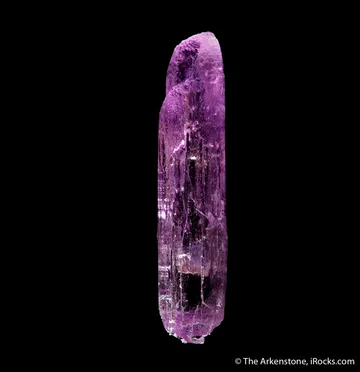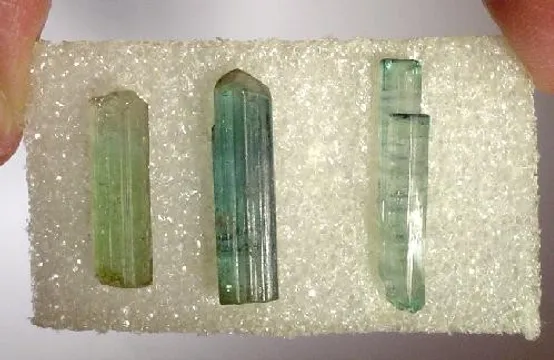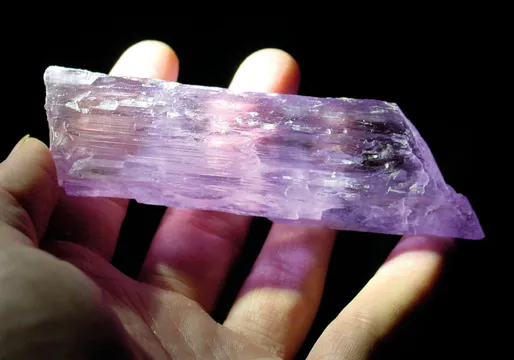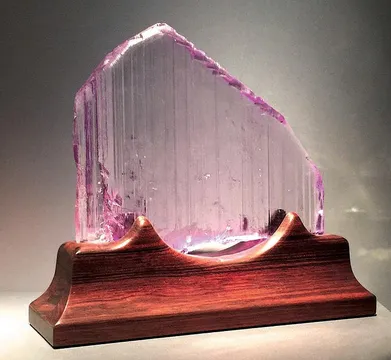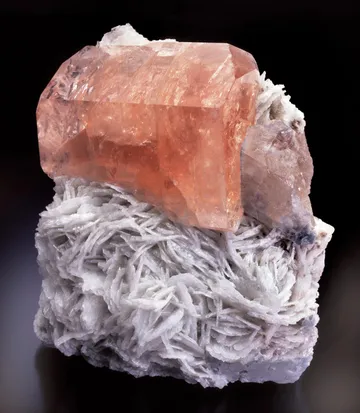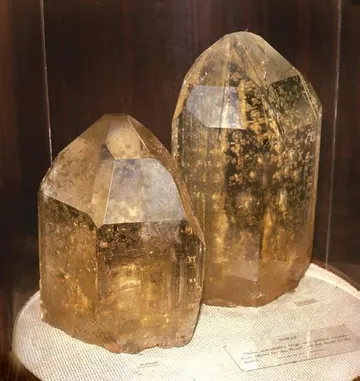
San Diego County, USA - gem-pegmatite locality yielding pink/green elbaite tourmaline, kunzite, aquamarine, and smoky quartz, highly prized by collectors.
Key facts
San Diego County is one of the great North American gem-pegmatite provinces: a dry, rugged belt of Cretaceous rare-element granitic pegmatites cutting the Peninsular Ranges batholith from Pala through Ramona, Mesa Grande, Warner Springs, and related districts. To collectors, the county means much more than “California tourmaline.” It is a constellation of pocket-bearing dikes that produced pink and green elbaite, rubellite, blue-cap tourmaline, kunzite, morganite, aquamarine, smoky quartz, cleavelandite, lepidolite, blue topaz, orange spessartine, rare phosphates, tantalum-niobium oxides, and a small handful of minerals and gem varieties whose histories are inseparable from the place.
The classic San Diego County specimen look is sharply graphic: colored prisms rising from white bladed albite, smoky or colorless quartz, pale feldspar, lilac lepidolite, or compact pocket clay. At the Himalaya Mine near Mesa Grande, the visual signature is lustrous pink to red elbaite—often as single prismatic crystals, sometimes in complex color zoning. At the Pala mines, the best tourmalines can show the celebrated blue-cap habit, with rose-pink shafts tipped in blue or green and set against quartz and feldspar. At Ramona’s Little Three Mine, the collector’s eye shifts to smoky quartz, cleavelandite, blue topaz, dark tourmaline, and orange spessartine: a cooler, sharper, more architectural pegmatite style.
Regional View
Country View
Historically, San Diego County was one of the first American gem districts to become internationally famous on the strength of specimen-quality pocket minerals rather than ore metals. Mining began with lithium mica and expanded into colored tourmaline, spodumene, beryl, topaz, and garnet. The region’s boom years around 1900–1912 linked local miners, New York gem dealers, Tiffany & Co., and the Chinese imperial court; then later revivals in the 1960s, 1970s, and 2000s returned Pala, Mesa Grande, and Ramona to the front of American specimen collecting.

Photo: Wikimedia Commons


Photo: Wikimedia Commons
Search for specimens: View all specimens from San Diego County, USA
San Diego County’s collector minerals are chiefly from granitic, lithium-cesium-tantalum rare-element pegmatites emplaced late in the evolution of the Peninsular Ranges batholith. The most famous districts—Pala, Mesa Grande, and Ramona—occupy the northern and north-central part of the county. The pegmatites cut gabbroic, tonalitic, and granodioritic host rocks and commonly occur as dikes, swarms, rolls, bulges, and composite bodies rather than as simple, uniform veins. The productive pockets were not random cavities in ordinary granite; they were late-stage, fluid-rich zones where albite, quartz, feldspar, lepidolite, muscovite, tourmaline, beryl, spodumene, phosphates, topaz, and rare-element oxides concentrated and grew as euhedral crystals.
The Pala district lies around Chief Mountain, Hiriart Mountain, Tourmaline Queen Mountain, and related ground north and northeast of the San Luis Rey River. Richard H. Jahns and Lauren A. Wright described the district as exposing hundreds of pegmatite dikes in a compact area, many trending roughly northward and dipping westward, with some thick bulges approaching large mineable bodies. The “pocket pegmatite” of Pala is the key collector rock: an assemblage of quartz, albite, orthoclase, microcline, muscovite, lepidolite, and tourmaline, locally clay-filled and gem-bearing. The Stewart Mine was first important as a lithium-mica producer, with masses of lepidolite and later gem pockets; the Pala Chief became central to the history of kunzite; and the Tourmaline Queen produced some of California’s most celebrated elbaite-morganite combinations.
The Mesa Grande district, east of Ramona and near the Lake Henshaw country, is dominated in collector memory by the Himalaya Mine. Its pegmatite system was one of North America’s greatest sources of gem and specimen-grade tourmaline, especially pink, rose, red, green, blue, and parti-colored crystals from clay-rich pockets. The mineralization there is a classic late-stage pegmatite assemblage: quartz, albite, feldspar, lepidolite, muscovite, amblygonite, spodumene, beryl, garnet, and tourmaline, with the tourmaline commonly recovered from decomposed pocket fillings. Historically, the Himalaya’s output supplied both faceting material and cabinet specimens, and its name still carries strong premium value on a tourmaline label.
The Ramona district, especially the Little Three Mine area, is geologically and visually distinct. The pegmatites are comparatively narrow but exceptionally complex, with dikes known by workings such as the Main dike, Spessartine dike, and Swamp dike. Studies of the district describe layered aplite, graphic granite, quartz-perthite zones, albite-quartz rock, pocket pegmatite, and late corrosion/replacement events. In collector terms, the result is a mineral suite with superb natural blue topaz, smoky quartz, cleavelandite, elbaite, schorl, spessartine, lepidolite, hambergite, danburite, axinite-group minerals, and tantalum-niobium phases. Little Three specimens can look deceptively simple until one recognizes the balance of glassy smoky quartz, bright albite blades, black tourmaline, pale topaz, and saturated orange garnet.
Mining history in the county has several overlapping chapters. Formal operations in the Pala district began in the 1870s, with lepidolite and lithium minerals first drawing sustained attention before the colored-gem boom. In the 1890s and early 1900s, the discovery and marketing of tourmaline, kunzite, and beryl turned the region into an American gem field of international importance. Between roughly 1902 and 1910, the Chinese demand for pink tourmaline—channeled through major gem firms—drove a remarkable export trade. After 1911, with the fall of the Qing dynasty and changes in the gem market, many operations declined sharply. The Depression and World War II years further quieted much of the district.
The mid- and late twentieth century brought collector-driven revivals. Ralph Potter, Louis Spaulding, Ed Swoboda, Bill Larson, and others reopened or reworked mines and helped shift the market from gem rough alone toward high-quality matrix specimens. The Tourmaline Queen’s famous 1972 Blue Cap Pocket, the Stewart Mine’s later hot-pink tourmaline, Little Three’s important pocket work in the 1960s–1990s, and renewed Pala mining in the 2000s all belong to this second life of the district. Modern production is intermittent and pocket-dependent; a mine may be famous for a single extraordinary pocket and then remain quiet for years.
Collecting access today is tightly controlled. Most historic workings are private property, active claims, closed mines, or hazardous abandoned workings, and the rugged chaparral hills add their own risks. The Oceanview Mine and related Pala Chief dig programs have offered fee collecting by reservation under mine supervision, with Oceanview known for public screening of mine material and Pala Chief access handled separately as scheduled special digs. Serious collectors should not treat old San Diego County mine names as invitations to trespass. The ethical route is owner permission, organized field trips, club access, or purchase of well-provenanced specimens from older collections and reputable dealers.
Quartz is both a structural mineral and a specimen mineral in San Diego County pegmatites: it occurs as massive core quartz, graphic intergrowths with feldspar, fracture-filling quartz, and pocket crystals associated with albite, microcline, muscovite, lepidolite, beryl, topaz, spessartine, and tourmaline. The best collector pieces are not merely “quartz from Pala,” but quartz with a district signature—clear to smoky crystals perched on bladed cleavelandite at Little Three, quartz “hulls” carrying rose-pink and green elbaite at Tourmaline King and Tourmaline Queen, or quartz matrix supporting rubellite from Mesa Grande. Size varies from thumbnail pocket crystals to cabinet groups, but quality depends on transparency, sharp termination, undamaged matrix placement, and association; ordinary milky quartz is common, while glassy, aesthetic quartz with tourmaline, topaz, albite, or spessartine is the material collectors compete for.
Tourmaline is the mineral family that made San Diego County famous, and older labels may simply say “tourmaline” even where modern work would distinguish elbaite, fluor-elbaite, schorl, foitite, or intermediate compositions. The county’s classic tourmalines occur as striated prismatic crystals in pegmatite pockets, from black schorl rods in quartz-feldspar rock to gemmy pink, red, green, blue, and parti-colored crystals from Pala and Mesa Grande. Himalaya Mine material is prized for saturated pink to red rubellite and color zoning; Pala specimens are famous for watermelon and blue-cap habits, and Ramona tourmaline is often darker, more matrix-bound, and associated with smoky quartz, cleavelandite, topaz, and spessartine. Good San Diego County tourmaline is judged by locality-specific color, termination quality, luster, lack of distracting repairs, and whether it sits naturally on quartz-albite-lepidolite matrix rather than appearing as a loose broken prism.
Elbaite is the collector’s colored tourmaline of San Diego County: lithium-rich, pocket-grown, and historically mined for both gems and specimens. At the Himalaya Mine it forms rich pink to red rubellite prisms, sometimes with green or blue color zones; at the Tourmaline Queen and related Pala mines it appears in the celebrated pink, green, watermelon, and blue-cap combinations; and at Little Three it may be dark green to nearly black on cleavelandite and quartz, with some large but uncommon matrix pieces. Crystals range from small pencils and broken gem fragments to cabinet-scale prisms, with the finest examples showing strong color in transmitted light, undamaged terminations, natural matrix, and crisp contrast against white albite, smoky quartz, or lilac lepidolite. Because the county’s elbaite history spans early Chinese carving rough, Tiffany-era gems, and modern specimen mining, provenance can matter almost as much as beauty.
Albite, especially the bladed variety cleavelandite, is the essential stage on which many San Diego County pegmatite specimens perform. In Pala and Ramona pockets it forms pearly white to cream plates, blades, fans, rosettes, and curved cleavelandite masses with smoky quartz, elbaite, schorl, topaz, spessartine, lepidolite, and beryl. In the Ramona pegmatites, albite-quartz rocks and late albite-rich replacement zones are geologically important, and the cleavelandite can be highly sculptural, making otherwise modest quartz or tourmaline specimens far more desirable. The best albite pieces here are not judged by purity alone; they need fresh pearly luster, undamaged blades, contrast with colored species, and a matrix architecture that reads instantly as a San Diego County pegmatite rather than anonymous feldspar.
Smoky quartz from San Diego County is most strongly associated with the Ramona pegmatites, especially the Little Three Mine, where pocket pegmatite commonly includes smoky quartz with cleavelandite and topaz. Crystals are typically pale gray-brown to honey-smoky rather than inky black, and the finest examples show glassy transparency, sharp hexagonal terminations, stepped growth, and attractive placement on bladed albite, sometimes with schorl, spessartine, lepidolite, or colorless to pale blue topaz. Miniatures and small cabinet specimens are more often seen than large, flawless display pieces, and genuinely transparent crystals in the 5–10 cm range are much scarcer than massive or fractured quartz. A good Little Three smoky quartz should look crisp, three-dimensional, and natural on matrix; a detached point without association loses much of the locality’s appeal.
Beyond the headline minerals, San Diego County is loaded with locality-specific rarities and historically important species. Little Three is one of North America’s classic natural blue topaz localities and a famous source of orange spessartine on cleavelandite and smoky quartz; it also records hambergite, danburite, axinite-group minerals, boromuscovite, bismuthian stibiotantalite, microlite-group minerals, and other rare pegmatite phases. Pala is inseparable from kunzite, the lilac to pink gem variety of spodumene first made famous from the district, and from morganite and aquamarine beryl at mines such as Tourmaline Queen, Elizabeth R, Pala Chief, and related workings. The Stewart Mine is especially important for lithium phosphates and alteration minerals, including stewartite and jahnsite-(MnMnMn) as type-locality species. The county also gave mineralogy rynersonite, a calcium tantalate-niobate named for the California gem-mining figure Frederick H. Rynerson.
San Diego County specimens demand careful locality discipline. “Pala,” “San Diego County,” “Mesa Grande,” and “California tourmaline” are not interchangeable labels. A Himalaya rubellite, a Tourmaline Queen blue-cap, a Stewart Mine lepidolite-rubellite specimen, a Pala Chief kunzite, an Oceanview morganite, and a Little Three smoky quartz-topaz-cleavelandite group each belongs to a different collecting story. Older labels may use broad names, and some mine names changed or overlapped through claim groups, but serious buyers should still ask for the most specific provenance available.
The most important authenticity issue is repair and reconstruction, not outright synthetic material. Tourmaline crystals from pocket clay commonly broke during pocket opening or extraction, and many classic San Diego County elbaites have repaired terminations, reattached sections, or stabilized contacts. Repairs are not automatically disqualifying—many important cabinet specimens would not exist without them—but they must be disclosed. Watch especially for elbaite prisms that seem too perfectly perched on quartz or albite, for mismatched luster across joins, for glue in cleavelandite, and for tourmaline sections assembled from different crystals.
Mislabelling is also common. Dark tourmaline from Ramona may be called elbaite, schorl, or simply tourmaline without analysis; older Pala labels may call all pink material “rubellite” regardless of modern species designation. Spessartine labeled “Little Three” may actually come from the adjacent Hercules/Spessartine dike system, a distinction that matters to specialists even though the properties are closely associated. “Blue-cap” should not be used loosely for any bicolored tourmaline; the term has a very specific California cachet and is most meaningful when tied to known Pala pockets and old provenance.
Condition is the great separator. Cleavelandite blades chip easily and shed from matrix. Lepidolite can be crumbly. Pocket clays may leave hidden fractures, etched surfaces, or unstable feldspar contacts. Smoky quartz and topaz can look excellent from one angle and heavily contacted from another. Kunzite and some pale spodumene should be protected from strong sunlight because color can fade. Topaz is hard but has perfect basal cleavage, so even a gemmy crystal can part suddenly if mishandled. Many old San Diego County specimens were cleaned aggressively; overly bright, acid-stripped matrix may lack the soft, natural pocket character collectors prefer.
Fluorescence is species-dependent rather than a universal locality trait. Some Little Three topaz is noted by collectors for fluorescence, and some feldspars or alteration products may respond, but San Diego County is collected primarily for crystal aesthetics, color, matrix, and provenance rather than fluorescent display. For storage and handling, treat elbaite, topaz, and kunzite as gem crystals on fragile pegmatite matrix: keep them dry, padded, out of direct sun, and away from vibration.
Market availability is uneven. Loose Himalaya rubellite and broken Pala tourmaline fragments are still seen, and modern Oceanview/Pala material continues to appear from fee digs and mine-run parcels. Fine matrix specimens from the classic pockets—especially Tourmaline Queen blue-caps, Himalaya rubellite on matrix, Little Three topaz-smoky-cleavelandite groups, and large unrepaired spessartine on albite—are scarce and increasingly collection-bound. The best old pieces often carry names such as Larson, Swoboda, Bancroft, Sinkankas, Spaulding, or Pala International in their provenance; those labels can add real value when the specimen itself supports the story.
The most famous San Diego County mineral story begins not in a mine office but in the courtly tastes of late Qing China. Pink tourmaline from Southern California found an astonishing market because Empress Dowager Cixi favored the stone for carvings and ornament. Orders passed through high-end gem channels, including Tiffany-linked buyers, and miners in Pala and Mesa Grande supplied the material. The flow of pink tourmaline to China became one of the defining episodes of American gem mining: a remote chaparral district above San Diego connected by pack animals, wagons, rail, and New York dealers to imperial workshops across the Pacific. When the dynasty fell and Cixi was gone, the market collapsed almost as dramatically as it had risen.
At Mesa Grande, early accounts make the Himalaya story feel almost folkloric. Beautiful crystals were reportedly found after rains, when sand and clay washed away and left bright objects shining on the ground. Schoolchildren picked up blue, pink, red, green, and clear crystals; some were quartz, some were tourmaline, and some passed from local hands to teachers, tourists, and eventually people who understood their gem value. Once the claim was located and developed, the casual hillside collecting gave way to one of the world’s great tourmaline mines. The old descriptions are vivid: a pegmatite ledge in hard blue diorite, pockets filled with talc, hydrous mica, and clay, and gem crystals hidden in material that had to be washed and hand-sorted.
The Little Three Mine has its own perfect origin scene. In May 1903, a Ramona woman named McIntosh was walking along Hatfield Creek when she noticed crystals in the water. She took them home, they were identified as tourmaline, and her son Dan and two partners bought the property. Their modest name for the venture—Little Three—became one of the best-known labels in American pegmatite collecting. Louis Spaulding later told the best version of what happened next: the early partners found garnets, ran a tunnel, locked the door, and prepared to sell the showing at a profit. But each partner had a key. One by one, they went in and cleaned out the pocket. The land finally sold for about what they had paid.
The Spaulding era at Little Three is one of the great collector-miner portraits. Louis Spaulding’s father bought into a mine that had lain quiet for decades and worked it with a schedule so exact that neighbors could set their clocks by him. Every afternoon at one he went to the mine; because he was also a volunteer weather observer, he returned in time for the 4:30 p.m. readings. His creed was wonderfully severe: “If I can’t make a living at it in three hours, I’m not going to do it.” He mined into old age, selling fine garnet gem rough at prices that later collectors would find almost unbelievable, and worked to within a month of his death.
Then there is the Tourmaline Queen’s 1972 Blue Cap Pocket, a pocket so famous that it still defines the highest romance of California tourmaline. The mine, reopened by Pala Properties International, produced rose-pink elbaite crystals capped in blue and green, some with morganite attached. The specimens were not merely gem rough; they were complete mineral sculptures, balanced on quartz and feldspar, with a color arrangement that seemed designed for display. Vince Manson of the American Museum of Natural History famously called it the “find of the century,” and for many collectors that phrase still feels justified when a genuine old Blue Cap Pocket specimen appears.
Modern San Diego County collecting has its own gentler drama. At Oceanview and Pala Chief digs, the scene is not a solitary miner breaking into a virgin pocket by candlelight; it is a line of collectors screening pegmatite material under the dry sun, hoping that a flash of pink tourmaline, aquamarine, kunzite, smoky quartz, lepidolite, or morganite survives among the feldspar and mica. The finds are usually small, but the continuity is real. The same hills that sent tourmaline to China and produced museum specimens still put colored crystals into collectors’ hands—now by reservation, under supervision, and with far more attention to access and safety than the old miners ever knew.