Oceanview Mine, USA — Pala pegmatite locality in California, a gem mine renowned for fresh beryl, kunzite, and elbaite specimens prized by collectors.
Key facts
Oceanview Mine is one of the defining modern specimen localities of the Pala pegmatite district of northern San Diego County, California: an active, collector-facing underground gem mine on Chief Mountain that has repeatedly reminded collectors that the old California lithium pegmatites are not merely historical. The mine works a complex LCT-type pegmatite system in gabbroic country rock on Chief Mountain, in the same celebrated district that made Pala synonymous with tourmaline, lepidolite, beryl and kunzite in the early twentieth century. What makes Oceanview especially important is not just the species list, but the quality and freshness of named-pocket material recovered in the twenty-first century: pale-to-saturated beryl from the 49er Pocket, intensely pleochroic kunzite from the Big Kahuna and Big Kahuna II zones, elbaite in cranberry, green, pink and bicolored crystals, smoky-citrine quartz, cleavelandite albite, lepidolite and a scatter of rare bismuth, niobium-tantalum and phosphate minerals.
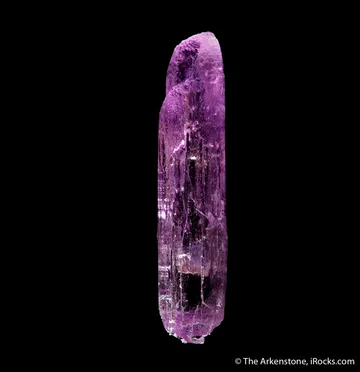
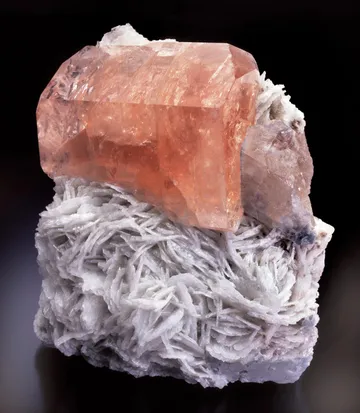
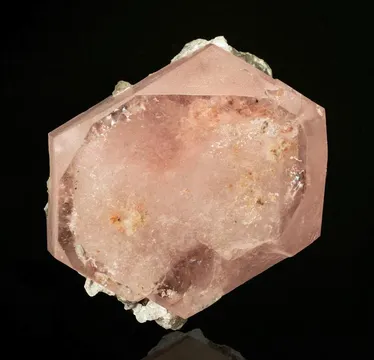
The best Oceanview specimens have a look that is distinctly Pala but recognizably their own. Beryl specimens from the 49er Pocket commonly show blocky, well-terminated hexagonal crystals of morganite, aquamarine or bicolor beryl perched on white bladed cleavelandite and quartz; the finest pieces have open composition, glassy terminations and gentle color zoning rather than sheer saturation. The kunzites, by contrast, can be dramatic blades and laths with strong pleochroism: green in one direction, lavender to deep purple in another, sometimes grading to pink or bluish-purple under different light. Oceanview’s best elbaites are usually smaller than the grand classic Pala tourmalines from Tourmaline Queen, but they can be exquisitely colored and well associated, particularly where cranberry-red or blue-capped crystals sit in albite-lepidolite matrix.
Regional View
Country View
Oceanview’s modern reputation rests on a rare combination: commercial underground work, published mineralogical documentation, and public collecting access. Serious collectors recognize the mine through named finds—the 49er Pocket of 2007, the December 2009 kunzite pocket, the Big Kahuna Zone of 2010, and the Big Kahuna II Zone on the Baker Boulevard level. These pockets produced cabinet-quality specimens, faceting rough, and study material that links the mine directly to the broader scientific debate over the origin and evolution of southern California’s gem pegmatites.


Search for specimens: View all specimens from Oceanview Mine, USA
Oceanview Mine is on Chief Mountain near Pala in the Pala Mining District of San Diego County, California, in the northern Peninsular Ranges. The district’s gem pegmatites occur in a terrain dominated by gabbroic and related batholithic rocks, with the important lithium-bearing dikes concentrated on the low hills around Pala: Tourmaline Queen Mountain, Chief Mountain and Hiriart Hill. The pegmatites are complex, internally zoned, lithium-rich bodies of the LCT family—enriched in lithium, cesium and tantalum—and at Oceanview the collector assemblage is governed by the classic Pala sequence of albite, quartz, feldspar, lepidolite, spodumene, beryl, tourmaline and late rare accessories.
The broader Pala pegmatite model is essential to understanding Oceanview specimens. Jahns and Wright described the Pala lithium pegmatites as tabular dikes that commonly strike northwest and dip southwest, with comparatively gentle dips near the outcrop that steepen at depth. In the gem-bearing dikes, the lower part may include banded garnet-albite aplite—the “line rock” of the miners—while the upper part is commonly graphic granite with quartz, feldspar and schorl. The valued mineralization lies in the pay streak between these units, where lithium minerals and pocket assemblages concentrate. Later pocket pegmatite and replacement processes introduced open-space crystals, corrosion textures, albite, quartz, beryl, tourmaline, spodumene, phosphates and rare bismuth minerals into a system that was already chemically evolved.
Modern work at Oceanview began around September 2000, when Jeff Swanger developed the main adit that became the lower underground haulage level. The workings first ran east for about 60 feet, then followed the Oceanview pegmatite laterally along strike for more than 400 feet as the dike meandered south to southwest. Oceanview was not an isolated modern discovery; it is part of the Chief Mountain mining complex, close to the Elizabeth R and Pala Chief workings, and much of the modern exploration strategy was guided by the success of Roland Reed’s Elizabeth R work higher in the same pegmatite system. Swanger’s crew—associated in published accounts with Phil Osborn, Steve Carter, Mark Baker, Peter Renwick and Mark Mauthner—pushed drifts, declines and stopes along the lithia mineralization in search of productive pocket ground.
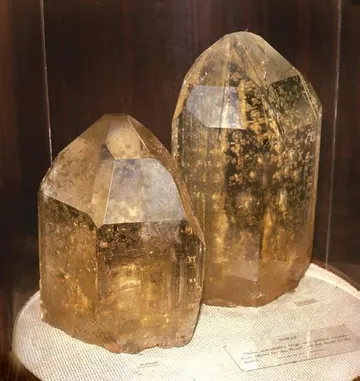
The first great modern Oceanview specimen success was the 49er Pocket, discovered on September 22, 2007. The find lay up-dip about midway along the haulage drift and required months to excavate. It produced fine pastel pink, blue and bicolor beryl—morganite and aquamarine—typically as tea-cup-sized single crystals and smaller clusters, many associated with dark tourmaline and displayed on cleavelandite. The same zone also yielded smoky-citrine quartz, some as large points and clusters, with individual clusters described as weighing up to several hundred pounds. The 49er Pocket is the reason many collectors think first of Oceanview when they see Pala beryl in soft pink-and-blue zoning on clean white albite.
The next phase shifted the mine’s reputation toward spodumene. A second portal, completed around November 2009 about 200 feet south of the first adit, improved waste removal and ventilation. On December 3, 2009, miners broke into a small but highly significant kunzite pocket. It produced deep purple and lavender kunzite, including a doubly terminated crystal approximately 7.4 cm wide, along with gem-quality green and bicolored spodumene laths and shards. Nearly all of the recovered kunzite showed strong green-to-purple trichroism, a diagnostic visual character of the best Oceanview material.
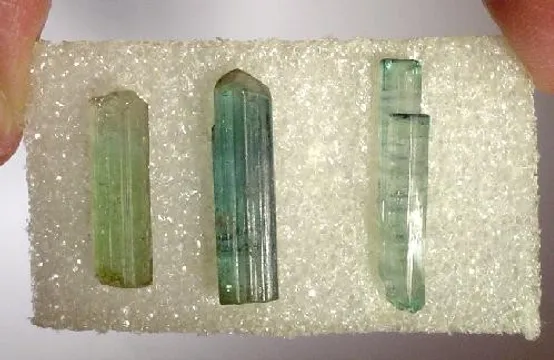
Further work in spring 2010 led into the Big Kahuna Zone, named for Jeff Swanger’s father. This became the largest kunzite-producing zone then known at Oceanview. Published descriptions record hundreds of kilograms of gem spodumene from the Big Kahuna workings, including a large crystal lathe about 21 cm tall and nearly one kilogram in weight. The zone also produced minor but important tourmaline, including green, blue, pink and bicolored pencils, plus rare beryl; one reported tabular morganite crystal measured about 7 cm across and was associated with a small blue-cap pink tourmaline. Big Kahuna material is prized because it is both mineralogically rich and visually distinctive: kunzite, tourmaline, albite, lepidolite and pocket quartz in a matrix context that preserves the character of the producing zone.
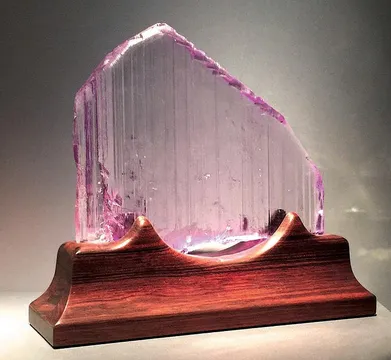
In December 2010 the Big Kahuna II Zone was found down-dip from the original Big Kahuna. It was less voluminous than the first zone, but the spodumene was generally more deeply saturated, with strong pleochroism. Big Kahuna II also yielded deep pink to cranberry-red color-zoned tourmaline, some on albite and rich purple lepidolite matrix, along with smoky quartz and citrine from adjacent satellite pockets. One of the mine’s great trophy crystals, the “Big Kahuna” kunzite from Big Kahuna II on the Baker Boulevard level, measures 28 x 15.6 x 2 cm and weighs 2.2 kg; it has been described by Oceanview sources as perhaps the largest extant U.S.-origin kunzite crystal.
Collecting access today is unusually visible for a serious underground pegmatite mine. Oceanview operates as a reservation-based public dig through DigForGems, with visitors screening mine material using provided buckets, shovels, screens and water. The standard Oceanview experience is not a free-for-all underground pocket dig; guests work a prepared pile of material brought from the mining operation, receive orientation, screen and wash for several hours, and may keep what they find. The operator’s current public information states that material from the mine is sometimes supplemented with other worldwide gems to improve the visitor experience, a fact serious locality collectors should keep in mind when evaluating fee-dig finds without documentation.
Kunzite is Oceanview’s signature modern mineral, especially from the December 2009 pocket, the spring 2010 Big Kahuna Zone and the December 2010 Big Kahuna II Zone on the Baker Boulevard level. Crystals occur as blades, laths, fragments and occasional unusually complete crystals, with the best pieces showing strong pleochroism from green or bluish-green through lavender, bluish-purple, pink or deep purple depending on orientation and lighting. Published accounts describe the December 2009 pocket as small but rich, with a doubly terminated crystal about 7.4 cm wide, while the Big Kahuna workings yielded hundreds of kilograms of spodumene and the Big Kahuna II Zone produced more saturated purple material, including the celebrated 28 x 15.6 x 2 cm, 2.2 kg “Big Kahuna” crystal. Top collector pieces from Oceanview are sharply formed, lustrous, intensely pleochroic, minimally cleaved, and either clean enough to show gem transparency or attractively associated with albite, lepidolite, quartz or tourmaline; ordinary pieces are far more often broken cleavage fragments, pale shards or bruised blades lacking termination.
Spodumene at Oceanview includes kunzite as well as green, colorless to pale green, and bicolored material recovered from the lithia-rich pocket zones below and down-dip from earlier beryl workings. The most important production came after miners traced pale kunzite below the 49er stope and then encountered the December 2009 and Big Kahuna spodumene pockets; published gemological sources describe Oceanview’s post-2000 production as roughly one tonne of spodumene, alongside smaller quantities of tourmaline and beryl. Oceanview spodumene commonly shows the physical liabilities of the species—perfect cleavage, lath-like habit, splintering and bruised surfaces—so the premium goes to complete crystals or thick blades with intact terminations, vivid pleochroic color, and clear association to Big Kahuna, Big Kahuna II or the December 2009 zone rather than generic “Pala” provenance.
Elbaite from Oceanview is best known from the Big Kahuna and Big Kahuna II zones, where it appears as pink, green, blue-green, cranberry-red and bicolored crystals, commonly smaller than the classic Tourmaline Queen giants but highly desirable when well-formed and on matrix. The Big Kahuna Zone produced gem-quality bicolored tourmaline pencils and a notable green-to-blue elbaite crystal reported as 9.5 cm tall, with additional pieces found days later that would have extended the crystal to more than 15 cm; Big Kahuna II yielded deep cranberry-red tourmalines on albite-lepidolite matrix and color-zoned crystals with darker cores and pink to red rims or caps. Fine Oceanview elbaite is judged by undamaged terminations, saturated zoning, gemmy translucency, association with cleavelandite or purple lepidolite, and pocket-specific provenance; lesser pieces are black schorl or fractured colored sections without a coherent display.
Beryl at Oceanview is most celebrated from the 49er Pocket, where stout, commonly well-terminated hexagonal crystals of aquamarine, morganite and bicolor beryl occurred with cleavelandite albite, quartz and dark tourmaline. Oceanview beryl specimens can show basal pinacoids and pyramidal modifications, blocky crystals in the 4–7 cm range, and visually memorable color zoning, including crystals with pink centers and blue rinds or paired aquamarine and morganite on a single matrix. The best beryl specimens from this mine have glassy faces, sharp terminations, open placement on white albite, and unmistakable 49er Pocket character; average material tends to be pale, etched, opaque, chipped or isolated from matrix, which greatly reduces collector impact even when the color variety is attractive.
Morganite from Oceanview is the pink-to-peach member of the mine’s beryl suite, most notably from the 49er Pocket and in smaller occurrences from later zones including Big Kahuna. The classic Oceanview look is a pale to orange-pink, stout hexagonal crystal on white cleavelandite, sometimes paired or intergrown with aquamarine, and in the best cases showing transparent to translucent body color beneath lustrous faces. Published 49er Pocket descriptions record morganite crystals around 4–5.5 cm and a later tabular morganite about 7 cm across associated with blue-cap pink tourmaline; the finest pieces are not merely pink beryl chunks but complete crystals or bicolor compositions with graceful matrix, whereas opaque pink fragments from fee-dig material are commoner and far less important.
Aquamarine from Oceanview is usually pale blue to blue-green, with the most important collector specimens coming from the 49er Pocket as blocky to tabular crystals on cleavelandite, sometimes with schorl and sometimes in direct association or zoning with morganite. Documented examples include 4.5 cm tall and 5.5 cm across crystals from the 49er Pocket, and one Journal of Gemmology study examined a 6 cm pale blue aquamarine on albite from Oceanview that contained sharp monoclinic spodumene inclusions—an unusually locality-specific internal feature. Top Oceanview aquamarines combine clear color, preserved crystal form, matrix context and pocket provenance; deep blue fragments are often more opaque and cabochon-grade, while gemmy material is typically paler but more elegant.
Albite, particularly the bladed cleavelandite habit, is one of the essential display minerals at Oceanview because it forms the white, platy matrix that sets off beryl, tourmaline, quartz and some spodumene specimens. In the 49er Pocket it supported aquamarine and morganite crystals, including the bicolor beryl pieces that define the mine’s best beryl aesthetic; in Big Kahuna and Big Kahuna II material it appears with elbaite, lepidolite, smoky quartz and rare accessories such as pucherite. Good albite specimens from Oceanview are not usually collected as isolated feldspar pieces unless unusually sculptural; their value lies in crisp, clean, snow-white to bluish-white cleavelandite blades that create contrast without overwhelming the associated gem crystal.
Beyond the headline gems, Oceanview has documented quartz in colorless, smoky and smoky-citrine habits; microcline and orthoclase; muscovite, lithium-rich purple-rimmed muscovite and lepidolite; schorl; garnet likely in the spessartine-rich Pala tradition; columbite-group minerals including analyzed columbite-(Mn); amblygonite-montebrasite masses; lithiophilite-triphylite phosphate nodules and alteration products including hureaulite and jahnsite-series material; pyrite; monazite; native bismuth blebs and nodules; bismuth alteration products; clinobisvanite; and pucherite coatings in the Big Kahuna II zone. Pucherite has historic type-locality significance in the Chief Mountain/Pala Chief context and is especially interesting at Oceanview when it survives as drab olive coatings on tourmaline-lepidolite-albite assemblages rather than being cleaned away for the underlying gem tourmaline.
The most important Oceanview authenticity issue is not a famous fake specimen scandal, but provenance precision. The Oceanview, Elizabeth R and Pala Chief workings are closely related physically, historically and commercially, and material from Chief Mountain may be loosely sold as “Pala,” “Oceanview,” “Pala Chief,” or “Oceanview/Pala Chief.” For high-value specimens, a label should ideally name the mine and, where possible, the pocket or zone: 49er Pocket for beryl, December 2009 pocket for early kunzite, Big Kahuna Zone, Big Kahuna II Zone, Baker Boulevard level, Carter Court level, or a documented satellite pocket. Specimens accompanied by old Oceanview Mines, Mark Mauthner, Jeff Swanger, Pala International, GIA-related, museum, or well-known collector provenance are much stronger than generic commercial labels.
Fee-dig material requires special caution. Oceanview’s current public dig information states that visitors screen mine material and may keep what they find, but it also states that material is sometimes supplemented with worldwide gems for the visitor experience. That does not invalidate well-documented Oceanview specimens, and the operator specifically distinguishes long-term high-end local material, but it does mean that a loose, colorful stone found in a public screening pile should not automatically be treated as a rigorous Oceanview locality specimen without documentation. Serious collectors should be particularly cautious with loose tourmaline, aquamarine, quartz, and generic gem fragments from recent visitor digs if the goal is locality purity.
Condition is a major value divider. Spodumene has perfect cleavage, and Oceanview kunzite is frequently represented by broken laths, shards or partial crystals; intact terminations, lack of bruising, and thick, transparent sections are exceptional. Beryl is more durable but often pale, etched or internally fractured, and the best pieces should be inspected for repaired crystals, glued matrix contact, and over-cleaning of clay or iron oxides. Elbaite from Big Kahuna and Big Kahuna II can be small, included or broken; pristine terminations and matrix attachment matter disproportionately. Cleavelandite matrix is attractive but fragile, and heavy cleaning can strip away the soft, pockety character that helps make Oceanview specimens recognizable.
Kunzite from Oceanview deserves careful light handling. Published observations on Big Kahuna material note that green and deep purple colors viewed along certain axes can shift toward pink under ultraviolet exposure, including some LED lighting, while not necessarily losing intensity in the way some kunzite from Afghanistan or Brazil may fade. Even so, the collector’s best practice is conservative: display Oceanview kunzite away from strong sunlight and intense UV-rich lighting, rotate display periods, and store important pieces in the dark when not being shown. The pleochroism is part of the locality’s appeal, so evaluate crystals from multiple directions before judging color.
Market availability is better than for many classic closed California mines because Oceanview has had modern production and public access, but truly fine specimens are not common. Small kunzite fragments, cleavelandite, lepidolite, quartz, schorl and modest beryl pieces can appear regularly. Well-documented 49er Pocket beryl, intact Big Kahuna kunzite, good Big Kahuna II elbaite on matrix, and rare accessory specimens with pucherite, clinobisvanite, bismuth minerals or analyzed columbite-(Mn) are much more selective purchases. For serious collections, an Oceanview suite should ideally include at least one 49er Pocket beryl, one pleochroic kunzite from Big Kahuna or Big Kahuna II, and one tourmaline-bearing albite-lepidolite specimen that shows the mine’s late-stage pocket assemblage.
The 49er Pocket began as the kind of calculated risk that defines modern Pala mining. Jeff Swanger had taken over Oceanview after important morganite-bearing pockets had already been found higher in the same pegmatite at the Elizabeth R, so the logic was simple and tantalizing: if the pegmatite had paid above, it might pay below. By 2007 his crew had driven a 400-foot main tunnel with branches searching upward toward the productive ground. On September 22, 2007—Swanger’s 49th birthday—the miners broke into the first part of a large pocket. The name “49er” was irresistible, honoring both the birthday and the old California treasure-hunting spirit.
What came out was not a single showpiece but a sustained pocket system that took months to remove. The 49er Pocket produced blue, pink and bicolor beryl, gemmy quartz, cleavelandite matrix, schorl, and large smoky-citrine quartz clusters. One bicolor beryl was described as half morganite and half aquamarine, set on a cleavelandite-quartz matrix, with a bubble visible through a glassy termination. Another beryl had a pink center and blue rind under complex glassy faces. One named specimen, “Pinky and Blue Boy,” paired aquamarine and morganite in a visual joke that only a mineral collector could love: a Gainsborough reference translated into Pala pegmatite.
The pocket was physically dramatic as well as mineralogically rich. A later photograph caption described the 49er Pocket forty feet up the stope, with scaffolding needed to enter it; at times, the pocket was large enough that a miner could climb inside. In November 2007, Bill Larson and his son Carl visited while the same rich zone was still being mined. The pocket continued to yield beryl, smoky quartz on feldspar, large citrine clusters and dark purple tourmaline. In a district where many famous finds are known only from old labels and collector lore, the 49er Pocket has the advantage of being photographed, published and remembered by the people who were there.
The December 3, 2009 find changed Oceanview’s identity. Until then, the mine’s modern fame rested heavily on beryl, but that day Jeff Swanger, Steve Carter and Mark Mauthner extracted a small basketball-sized pocket with deep purple and lavender kunzite. The largest crystal was about 7.4 cm wide and doubly terminated, and the pocket yielded gem-quality green and bicolored spodumene laths and shards. The surprise was not merely that Oceanview had spodumene; it was the intensity of the pleochroism. Many pieces showed a vivid green-to-purple directional color change, the kind of optical behavior that makes a crystal come alive in the hand.
Then came the Big Kahuna. In spring 2010, continuing along the lithia pay streak, miners opened a much larger spodumene-bearing zone named in honor of Swanger’s father. This was the pocket system that made Oceanview kunzite internationally recognizable. It produced hundreds of kilograms of gem spodumene, including a large crystal lathe about 21 cm tall and nearly one kilogram in weight. Photographic documentation shows spodumene still exposed in the pocket, miners holding newly extracted crystals, and groups of kunzite to 11 cm. The zone also yielded bicolored elbaite pencils, green-to-blue elbaite, pink elbaite, and bicolored tourmaline segments—a reminder that Oceanview’s richest pockets were not single-species events but late-stage pegmatite chambers where lithium, boron, beryllium, phosphorus and rare metals all left their mark.
Big Kahuna II, discovered down-dip in December 2010, was not simply a sequel. It produced less material overall, but the color could be deeper and more dramatic. The zone became known for rich purple kunzite and cranberry-red tourmalines on albite-lepidolite matrix, with lepidolite described as having a fine granular texture and a strong purple color. From this zone came the mine’s trophy “Big Kahuna” kunzite, 28 x 15.6 x 2 cm and 2.2 kg, a blade-like crystal celebrated by Oceanview as perhaps the largest extant kunzite crystal of U.S. origin. That combination—named pocket, precise level, photographed specimen, and American locality—makes it one of the anchor objects of modern California pegmatite collecting.