






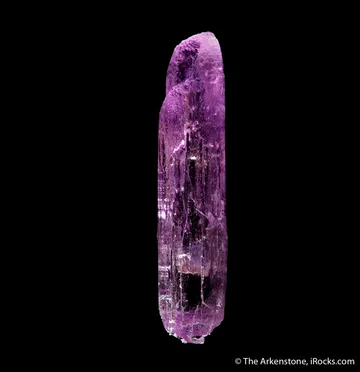
Tourmaline King Mine, USA — classic Pala district locality famed for rubellite and multicolored elbaite, rare-element pegmatites, and historic specimens.
Key facts
The Tourmaline King mine is one of the classic gem-pegmatite names of the Pala district of northern San Diego County, California: a hard-rock source of pink, red, bicolored, blue-zoned and green tourmaline from the lithium-rich pegmatite belt that made southern California famous in the first decade of the twentieth century. It lies on Tourmaline Queen Mountain near Pala, in the same small cluster of historic mines as the Tourmaline Queen and Stewart Lithia workings. For collectors, its importance is not merely that it produced cutting rough; it produced identifiable, locality-rich specimens—rubellite and multicolored elbaite crystals, crystals on cleavelandite and quartz, schorl-bearing pegmatite plates, and the celebrated “Steamboat” elbaite group now in the Smithsonian collection.
Geologically, the mine belongs to the Pala district’s rare-element granitic pegmatites, emplaced into the Peninsular Ranges crystalline complex. The best gem pockets developed in the mineralized central zones of the pegmatite, where albite cleavelandite, quartz, mica, beryl and tourmaline could crystallize into open cavities rather than remain locked in massive pegmatite. The classic Tourmaline King look is compact and intensely Californian: rose-pink to cranberry rubellite prisms, commonly striated, sometimes with blue or pale caps, occasionally in quartz or albite matrix rather than as loose cutting fragments.
Regional View
Country View
The mine’s collector identity rests on two separated eras. The first was the Schuyler period of the early 1900s, when an immense pink tourmaline pocket yielded tons of material for the Chinese carving trade and a few elite specimen pieces. The second is the modern reopening, when work in the old Wilke adit and new bypass drifting led to the January 2022 Pastel Pocket—the first important Tourmaline King tourmaline find in more than a century.
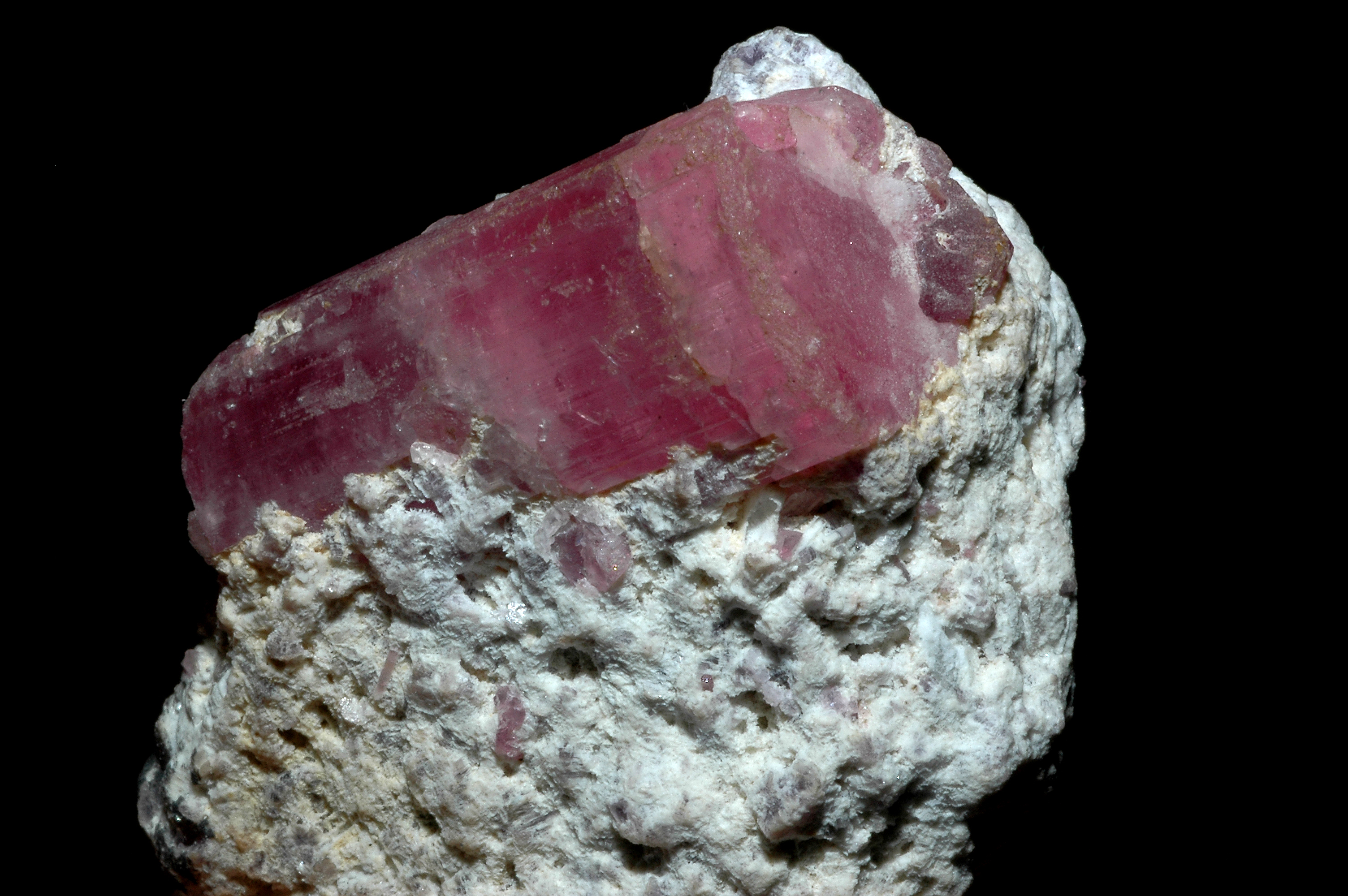
Photo: Wikimedia Commons
Search for specimens: View all specimens from Tourmaline King Mine, USA
The Tourmaline King mine is on Tourmaline Queen Mountain, north of Pala in San Diego County, California. Historical descriptions place it several hundred yards below the summit, on the north side of the mountain, within the western part of the Pala mineral belt. The mine has also appeared under related names including King mine, Gem claim, Schuyler mine and Wilke mine, a tangle of nomenclature that matters when tracing old labels.
The deposit is a lithium- and gem-bearing granitic pegmatite, part of the Pala district’s swarm of pegmatite dikes exposed in an area only a few miles across. These dikes cut older gabbroic and related crystalline rocks of the southern California batholith. In the district, the productive pegmatites are typically zoned: coarse graphic granite and quartz-feldspar masses toward one side, garnet-bearing albite aplite or “line rock” toward another, and a lithium-rich pay streak in the middle. It is that pay streak, and the cavities developed within it, that generated the collector-grade tourmaline, quartz, cleavelandite, mica and beryl assemblage.
Early descriptions of the Tourmaline King vein record a gently southwest-dipping pegmatite, only several feet thick on average but broken and locally pocketed. The surrounding rock was described historically as dioritic to gabbroic country rock, and the pegmatite showed evidence of crushing—an important detail, because later mining repeatedly ran into unstable ground and shear zones. These structural complications helped make the mine both productive and difficult: the pegmatite could host spectacular cavities, but following it underground was never straightforward.
The mine was located in March 1903 by Frank Barlow Schuyler and D. G. Harrington. Underground work began shortly afterward, with a drift driven under the surface discovery. Within a few years the workings reached a major tourmaline-bearing zone, reported as a large pocket or connected pocket zone roughly 30 feet long, about 10 feet wide, and continuing about 30 feet down dip. That single zone is credited with producing about eight tons of pink tourmaline—mostly carving rough rather than mineral specimens as collectors would define them today. Much of it fed the Chinese market for pink and red tourmaline carvings, a trade that collapsed after the fall of the Qing imperial government in 1911.
The finest early Tourmaline King specimens are therefore rare survivors. Most production was broken, sorted and sold as rough, while intact crystals and matrix pieces had to survive mining, transport, cutting demand and later collection turnover. The best early pieces show thick pink to red prisms, silky or complex terminations, pale to blue-zoned caps, and in the most prized examples, association with quartz and albite rather than a loose single-crystal presentation.
After Schuyler, the mine was acquired and explored by R. M. Wilke, a California mineralogist and dealer. Wilke drove a lower adit in hopes of intersecting more gem-bearing pegmatite at depth. The attempt was serious and costly, but the lower workings encountered dangerous sheared ground and roof failure. By about 1922 formal mining had effectively stopped. Through the middle decades of the twentieth century, the Tourmaline King was largely a rugged, remote old working, visited by determined local collectors who screened dumps and probed old rooms and pillars.
The modern story began when Gary and Sheila Martin acquired the mine in 2002 and partnered with Scott Ritchie. Later work by Ritchie and Kiel Snyder cleared collapsed workings and drove new bypass drifts around the unstable ground that had defeated earlier miners. The modern operators pushed far deeper into the mountain than the old workings had reached, following the pegmatite beyond the Wilke-era obstacle. Small quartz and black tourmaline pockets came first, then encouraging green tourmalines and pink beryl, and finally the January 12, 2022 Pastel Pocket at a depth reported as 476 feet, or about 145 meters.
The Pastel Pocket measured about 46 × 38 × 38 cm and produced roughly 50 kg of gem and specimen material. Its contents included pastel pink tourmaline as loose crystals and as matrix specimens with smoky quartz and cleavelandite, plus numerous gem “pencils” and well-crystallized morganite specimens. Some individual tourmalines approached 1 kg, and documented crystals from the production include pieces in the 30.0–34.3 mm range as well as a 37.7 g chatoyant crystal. Cabochons cut from chatoyant material ranged from under 1 ct to more than 9 ct, their cat’s-eye effect caused by fine growth tubes parallel to the c-axis. Continued work in 2022 and 2023 produced additional pockets, including darker pink tourmaline, red rubellite rough suitable for cabbing and carving, and uncommon transparent green tourmaline that yielded faceted stones around 17 ct.
Collecting access should be understood as private-mine access, not open public collecting. The Tourmaline King is an active or intermittently active hard-rock mining property, and underground access is controlled by the owners and operators. Old labels from dump finds do exist, but modern specimen-quality material is chiefly associated with organized mining and later commercial release, especially through Pala International. Collectors should avoid assuming that “Pala tourmaline” or “Tourmaline Queen Mountain” automatically means Tourmaline King; the neighboring Tourmaline Queen, Stewart, Pala Chief, Elizabeth R/Oceanview area and other district mines each have their own histories and specimen styles.
Elbaite is the signature collector species of the Tourmaline King mine: early specimens tend toward rose-pink, rubellite-red and bicolored crystals, with some classic pieces showing pale, greenish or bluish caps, while modern production from the Pastel Pocket added pastel pink crystals, pencils, smoky-quartz-and-cleavelandite matrix pieces, and some chatoyant material; documented modern crystals include 30.0–34.3 mm gem pieces and a 37.7 g cat’s-eye crystal, while older cabinet specimens in major collections and on Wikimedia-documented pages range to several centimeters and more, including a 9.4 × 4.9 × 2.8 cm early crystal and the Smithsonian’s “Steamboat,” whose rose-pink, green-tipped elbaite “stacks” rise from a quartz-and-albite base. The best Tourmaline King elbaites are not merely pink; they carry credible old or modern mine provenance, sharp striated prism faces, intact terminations, strong color zoning or cap contrast, translucency to transparency, and—most desirable of all—an undisturbed association with quartz, albite cleavelandite, lepidolite or beryl that places the crystal unmistakably in the Pala pegmatite environment.
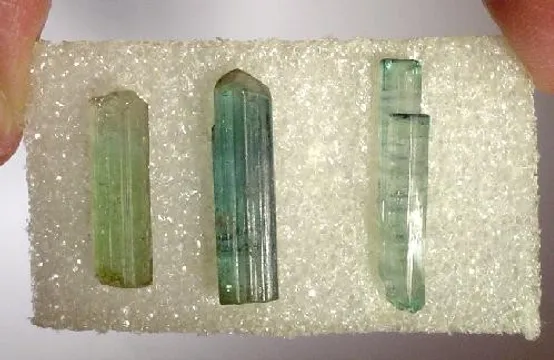
“Tourmaline” appears on many old Tourmaline King labels because earlier collectors and dealers used the group name before modern species-level naming became routine; at this locality the label may cover elbaite/rubellite, verdelite, indicolite-style blue to blue-green zones, watermelon color zoning, schorl in the more ordinary pegmatite assemblage, and possibly species assignments that require analysis rather than visual naming. Collector pieces range from black schorl with smoky quartz, microcline, muscovite and cleavelandite to gem colored crystals in pink, red, green and blue-zoned habits, with the mine particularly valued for early 1900s pink-to-blue-capped crystals and for the 2022–2023 reactivation material that included pastel pink, darker pink, red rubellite and uncommon transparent green tourmaline. Good Tourmaline King “tourmaline” specimens are those with more than a color name: they show strong form, preserved terminations, documented recovery era, and associations that separate them from generic Pala or southern California tourmaline.
Quartz at Tourmaline King is most important as a pocket matrix and specimen partner rather than as a standalone species: the mine’s famous “Steamboat” is essentially a quartz “hull” carrying green-tipped rose-pink elbaite, while the 2022 Pastel Pocket produced tourmaline on smoky quartz and cleavelandite and later work was noted for a very large terminated quartz crystal recovered as a collector specimen. Quartz also occurs in the schorl-bearing pegmatite assemblage, commonly with albite, microcline and muscovite, and the more attractive pieces preserve the pocket relationship—tourmaline emerging from or perched on quartz—rather than simply presenting massive white vein quartz or broken pegmatite fragments. For collectors, the quartz becomes valuable when it provides architecture, contrast and locality context for the tourmaline.
Other minerals documented from the Tourmaline King mine and its associated prospects include albite, especially cleavelandite, microcline, muscovite, lepidolite, beryl including pink beryl/morganite, spessartine, smoky quartz, schorl, indicolite, verdelite, montmorillonite, clinozoisite and very rare microlite-group minerals. The microlite-group material is a true accessory rarity here: small pale honey-yellow to very dark octahedral and dodecahedral crystals in pocket aggregates with quartz, lepidolite, muscovite, albite and tourmaline, rarely more than about 1/16 inch across. The mine is not best known as a type-locality occurrence; its mineralogical weight comes from classic and modern gem-pocket elbaite, the survival of early California rubellite specimens, and a rare-element pegmatite accessory suite that rewards careful labels and close inspection.
The first authenticity issue is locality precision. “Pala,” “Tourmaline Queen Mountain,” “Pala district,” “King mine,” “Tourmaline Queen,” “Stewart” and “Tourmaline King” are not interchangeable labels. The mines are close enough that vague older labeling is common, and many commercial specimens were historically sold simply as Pala tourmaline. A strong Tourmaline King attribution should rest on an old collection label, a recognized dealer or museum record, direct modern mine provenance, or specimen style supported by documentation.
Published reports do not point to a famous Tourmaline King fake-production scandal in the way some localities acquire a known counterfeit problem. The real danger is softer: over-specific labels on otherwise genuine Pala or San Diego County tourmalines, relabeling of generic rubellite as Tourmaline King, or romantic claims of “Chinese Empress” provenance attached to any pink crystal from the district. The Chinese trade history is real, but it should not be treated as proof that a given crystal passed through that market.
Condition is central. Tourmaline King crystals were commonly recovered from clayey or broken pocket ground, old stopes, dumps, or tight pegmatite, so look closely for repaired terminations, rehealed-looking but actually broken contacts, bruised prism edges, cleaved bases, and discreet stabilization at the matrix contact. Pink and red elbaite can look deceptively fine in photographs even when edge wear is significant. The most desirable examples have sharp, undamaged terminations, clear zoning, lively translucency, and minimal abrasion on prism ridges.
For modern material, buyers should distinguish specimen-grade crystals from cutting or cabbing rough. Some 2022–2023 production produced cat’s-eye material and included red rubellite suitable for cabochons and carving rather than faceting. Fine growth tubes, internal veils and color zoning can make wonderful collector crystals but may reduce faceting value. Conversely, transparent green tourmaline from the new pockets is notable because green facetable material is comparatively uncommon for the Pala district.
Fluorescence is not a major selling point for Tourmaline King tourmaline specimens. Handling concerns are the ordinary but serious ones for gem pegmatite specimens: elbaite is hard but brittle, terminations and matrix attachments are vulnerable, lepidolite is soft and cleavable, and cleavelandite blades can be fragile. Avoid ultrasonic cleaning for matrix specimens, avoid thermal shock, and do not soak clay-filled pocket pieces without first understanding whether the matrix contains soft mica, friable albite or old repairs.
Market availability is uneven. Small modern fragments, cabochon-grade rough and modest crystals appear periodically, especially since the renewed mining beginning in the 2020s. Fine old Tourmaline King elbaite—especially early 1900s pink to blue-capped crystals, intact matrix pieces, or specimens with William Larson/Pala International, Smithsonian-related, or other strong provenance—remains genuinely scarce. The gap between a pleasant Pala pink tourmaline and a top Tourmaline King specimen is large, and provenance often accounts for as much value as color.
In March 1903, Frank Barlow Schuyler and D. G. Harrington were prospecting the pegmatite country near Pala when they came upon the deposit that became the Tourmaline King. It was not a romantic mine at first; it was a rugged pegmatite exposure several hundred yards below the summit, with broken ground and a gently dipping vein. Schuyler and Harrington started underground work in 1904, driving beneath the surface showing. About 60 feet in, the mountain opened into one of the great gem events of early California mining: a huge tourmaline pocket zone, reported as nearly 30 feet long, about 10 feet wide, and continuing another 30 feet down dip. From that one zone came roughly eight tons of pink tourmaline.
The timing could hardly have been better—or worse. The Chinese imperial court and carving trade wanted pink and red tourmaline, and southern California miners had learned that Pala’s pegmatites could satisfy that appetite. Much of the Tourmaline King production went not into mineral cabinets but into the rough trade, reportedly at $187.50 per pound for selected material. That figure is staggering for a mine story from the early 1900s, but it also explains why so few of the finest crystals survived uncut. The best material was valuable as carving rough, and a terminated crystal was not necessarily treated as a specimen first.
Out of that early pocket came the locality’s most famous survivor: the “Steamboat.” Collected by Schuyler in 1907, it is an unmistakable specimen, with rose-pink elbaite crystals rising like smokestacks from a quartz-and-albite base. Schuyler sold it to Washington A. Roebling, and it later entered the Smithsonian through the Roebling collection. Its fame is partly visual—few mineral nicknames are so instantly legible—but also historical. It is one of the rare Tourmaline King objects that connects the first mining boom, an identifiable collector, a named owner, and a public museum display.
The mine’s next chapter was Wilke’s gamble. R. M. Wilke acquired the property after the Schuyler period and tried to do what every pegmatite miner dreams of doing: find the next pocket at depth. He drove a lower adit beneath the old workings, aiming to intercept the pegmatite where it might again swell, open, and pay. Instead, the adit entered treacherous sheared ground. The roof collapsed in the unstable zone, and the work was abandoned by about 1922. In one sense, Wilke failed. In another, he left the clue that later miners would spend a century trying to solve: the pegmatite continued, but the direct path to it was blocked by dangerous ground.
For decades, the Tourmaline King was a hard climb and a collector’s rumor. Young southern California mineral enthusiasts hiked up to screen the dumps, hoping for the pink flash of tourmaline among old pegmatite debris. Some dug in collapsed rooms and pillars, not in a polished fee-dig setting but in old workings where silt, rubble and history had accumulated together. The mine’s remoteness helped preserve it. By the late twentieth century many other Pala mines had seen renewed work, yet the Tourmaline King remained stubbornly difficult.
The 2011 fire on Tourmaline Queen Mountain added a different kind of mining story. On August 29, Erik Cordova of San Diego Mining Company received word from Blue Sheppard of the Stewart mine that a large fire was burning out of control on the mountain that held the Stewart, Tourmaline Queen and Tourmaline King workings. Cordova and Scott Ritchie drove toward Pala through visible smoke, then opened mine gates so fire crews could use the mine road. At one point they were within a few hundred feet of flames and thick smoke near the Tourmaline Queen property. When they heard an aircraft approaching, they realized what was coming and ran for the Land Cruiser just before fire retardant dropped, coating the vehicle orange. The mine road then became part of the firefighting effort, with dozens of trucks using it as access. The Queen’s vegetation was badly burned; the King was largely spared.
The modern breakthrough came only after persistence that sounds excessive until one remembers the value of a single pegmatite pocket. By 2017, Scott Ritchie and Kiel Snyder were clearing collapsed historic workings filled with silt and debris. The old unstable shear zone still defeated a direct approach. Instead of quitting, they drove a bypass through country rock for nearly 200 feet. For nearly two years the work advanced intermittently. They found small pockets of quartz and black tourmaline—encouraging, but not the prize. More than 400 feet back, the work was becoming exhausting, but small green tourmalines and pink beryls appeared. The pegmatite was improving.
On January 12, 2022, at 476 feet in, the miners hit the Pastel Pocket. Text photos went out to Bill, Carl and Will Larson showing pastel tourmaline crystals with size. One single was described as almost a kilo. When the Larsons visited, the largest tourmalines had already been removed, but they still recovered numerous pencils and several fine small morganite crystals. The pocket ultimately yielded about 50 kg of material and became the first important Tourmaline King tourmaline find in more than 100 years.
The story continued almost immediately. GIA reported that the new pockets produced about 3 kg of fine-color rubellite rough, a 16.96 ct emerald-cut green tourmaline from rough found near the 2022 pocket, and, in January 2023, a pocket of richly colored red rubellite too included for faceting but suitable for cabbing and carving. Carl Larson described the excitement simply: after a century of vacancy, an active southern California mine was again putting new Tourmaline King material into the world.
Richard H. Jahns and Lauren A. Wright, “Gem- and Lithium-bearing Pegmatites of the Pala District, San Diego County, California,” California Division of Mines Special Report 7-A, 1951 — The foundational geological treatment of the Pala district pegmatites, including regional geology, district production, pegmatite structure, and descriptions of selected mines.
George F. Kunz, “Gems, Jewelers’ Materials, and Ornamental Stones of California,” California State Mining Bureau Bulletin 37, 1905 — Early primary account of California gem localities, including the Tourmaline King mine soon after its discovery.
Brendan M. Laurs, “Gem Notes: New Finds at the Tourmaline King Mine, Pala, California, USA,” The Journal of Gemmology, Vol. 38, No. 3, 2022, pp. 221–222 — Concise professional report on the 2022 Pastel Pocket, including pocket dimensions, depth, mineral associations, crystal sizes, chatoyancy and early market release.
Erin Hogarth, “New Tourmaline Pockets in San Diego County’s Pala District,” Gems & Gemology, Spring 2023 — GIA report on the 2022–2023 Tourmaline King pockets, including green facetable tourmaline, rubellite rough and the modern mining bypass around Wilke’s collapsed shear zone.
Smithsonian National Museum of Natural History, “Elbaite steamboat” / The Steamboat, NMNH R51 — Museum record for the famous “Steamboat” specimen from the Tourmaline King mine: elbaite with quartz and albite, one of the iconic California tourmalines.
Smithsonian Collection Object Record, “The Steamboat (Catalog Number: R51)” — Collection entry documenting mineral species, public-domain image rights, and specimen metadata.
The Mineralogical Record General Index, California entries — Index references to Tourmaline King coverage in The Mineralogical Record, including the note for huge crystals and the “Steamboat” specimen in Vol. 33.
United States Faceters Guild Newsletter, Vol. 32, No. 2, June 2022 — Includes Bill Larson’s “Long Live the King!” account of the modern Tourmaline King reopening and the Pastel Pocket.
Mindat: Tourmaline King Mine, Pala Mining District — Locality hierarchy, mineral list, photographs and references for the mine.
Wikimedia Commons: Category Tourmaline King Mine — Open image files of Tourmaline King elbaite and rubellite specimens, many tied to Mindat photo records.
PalaMinerals: Pegmatites of the Pala District — Web presentation of the classic Jahns and Wright Pala pegmatite report, useful for mine descriptions and district geology.
GIA: Historical Reading List — Tourmaline and other Gem Minerals from Southern California — Curated bibliography for southern California tourmaline, kunzite, beryl and related pegmatite gem literature.
GIA: Tourmaline History and Lore — Useful context for the Chinese market, Dowager Empress Cixi and the collapse of early California tourmaline demand.
GIA: New Tourmaline Pockets in San Diego County’s Pala District — Modern report on renewed Tourmaline King production and 2022–2023 pockets.
The Journal of Gemmology, Vol. 38, No. 3, 2022 — Contains Brendan Laurs’s gem note on new Tourmaline King finds.
Smithsonian: Elbaite steamboat — Public museum page for the iconic Tourmaline King “Steamboat” specimen.
PalaMinerals: Tourmaline Queen Mountain Fire, 2011 — Eyewitness account involving Tourmaline King operators during the 2011 wildfire on Tourmaline Queen Mountain.
San Diego County General Plan Update EIR, Mineral Resources section — County-level listing of San Diego gem and specimen mines, including Tourmaline King’s early production and later ownership status.
.jpg)