






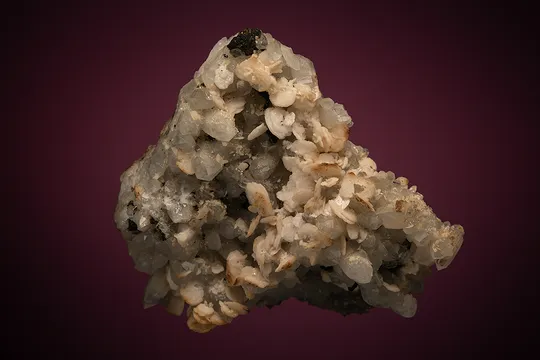
A collector's guide to Colorado, USA: its geology, mining history and notable minerals, illustrated with the 294 specimens documented from this locality on EarthWonders.
Key facts
Colorado is not a single mineral locality so much as a mineral province: a high, faulted, intruded, and repeatedly mineralized state whose specimens come from sharply different geologic worlds. Along the Front Range and central mountains, the Colorado Mineral Belt threads a northeast-trending chain of precious- and base-metal districts through Precambrian crystalline basement, Paleozoic carbonate rocks, and younger igneous centers. Farther south and west, the San Juan volcanic field, the Cripple Creek alkalic complex, Summitville’s vuggy silica and copper-gold system, and the Colorado Plateau uranium-vanadium sandstones add another layer of chemical variety. For collectors, that range is the point: Colorado supplies not only ore-suite classics but also some of the most recognizable cabinet specimens in American mineralogy.
The state’s specimen identity rests on several great visual signatures. From the Pikes Peak batholith come blue-green amazonite crystals locked with nearly black smoky quartz, often with albite, fluorite, goethite, hematite, zircon, and rare NYF-pegmatite accessories. From Mount Antero and nearby alpine pegmatites come aquamarine, topaz, phenakite, fluorite, and quartz from miarolitic cavities exposed above timberline. From the Sweet Home Mine near Alma come cherry-red rhodochrosite rhombs on quartz, tetrahedrite, sphalerite, fluorite, chalcopyrite, and pyrite—specimens that changed the modern rhodochrosite market. From Stoneham come translucent blue barite crystals, among the most beloved American sulfate specimens. From Breckenridge and Aspen come native gold and silver with the directness and romance of the nineteenth-century mining frontier.
Regional View
Country View
Historically, Colorado matters because its specimens sit at the intersection of mining history and deliberate specimen recovery. Early discoveries fed gold camps, silver booms, smelters, and railroad towns; later, collectors, claim holders, museum curators, and commercial specimen miners learned to read pockets as carefully as ore. The Sweet Home Mine is the emblem of that transition: a modest silver mine transformed, through geology, marketing, and careful underground work, into the world’s premier source of fine rhodochrosite. The Pikes Peak batholith tells the same story in a different key, where hand-dug pegmatite pockets have supplied amazonite-smoky quartz combinations since the late nineteenth century and continue to define the Colorado aesthetic.
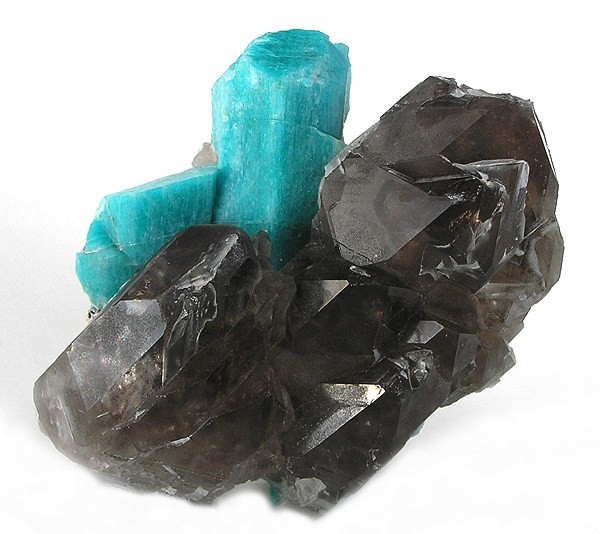
Photo: Wikimedia Commons
The best Colorado specimens tend to be sculptural rather than merely large. A great Pikes Peak piece balances saturated blue-green microcline against lustrous smoky quartz. A great Sweet Home rhodochrosite has transparent cherry-red color, sharp rhombohedral form, and a matrix that tells the pocket story rather than hiding it. A great Stoneham barite has open, gemmy, ice-blue crystals with clean terminations and minimal bruising. Even the ore specimens—Camp Bird sulfides, Gilman sphalerite-galena-chalcopyrite, Summitville covellite, Aspen silver, Breckenridge gold—are strongest when they preserve crystal form, association, and old provenance.

Photo: Wikimedia Commons
Search for specimens: View all specimens from Colorado, USA
Colorado specimen localities fall into several major geologic families. The Pikes Peak batholith is a Mesoproterozoic granitic complex famous for miarolitic cavities in pegmatites and related coarse granite, where open space allowed amazonite, smoky quartz, topaz, fluorite, phenakite, zircon, goethite, hematite, and other accessories to crystallize as display specimens. The classic collecting areas include Crystal Peak, Florissant, Lake George, Devil’s Head, Crystal Park, Sentinel Rock, and St. Peters Dome, each with its own balance of smoky quartz, microcline, amazonite color, and accessory species.
The Colorado Mineral Belt, by contrast, is primarily an ore province. It includes precious- and base-metal districts developed in veins, replacement bodies, stockworks, and skarns related to Laramide and younger igneous activity. Leadville and Gilman are important for carbonate-hosted lead-zinc-silver replacement ores and massive sulfide assemblages; Central City, Idaho Springs, Breckenridge, Telluride, Ouray, Silverton, Alma, and Creede are classic vein districts; Climax and Henderson represent world-famous molybdenum systems with quartz, fluorite, pyrite, topaz, sericite, and molybdenite mineralization. In the San Juan Mountains, epithermal and volcanic-related systems yielded gold, silver, copper, lead, zinc, tellurides, sulfides, rhodochrosite, fluorite, barite, and quartz in bewildering combinations.
Cripple Creek is a special case. It lies outside the main Colorado Mineral Belt and is built around an alkalic volcanic-intrusive center whose ore is famous for gold tellurides rather than showy free gold. The district’s mineralogy includes calaverite, sylvanite, krennerite, petzite, hessite, coloradoite, fluorite, quartz, pyrite, galena, sphalerite, and carbonate gangue. For hand-specimen collectors, Cripple Creek is more important as a telluride and ore-suite locality than as a producer of dramatic crystallized native gold.
Colorado’s mining history began in earnest with the late-1850s gold rush. Placer work expanded along Clear Creek, Boulder Creek, South Park, and the upper Arkansas drainage, followed by lode discoveries and the growth of districts such as Central City, Idaho Springs, Breckenridge, and Leadville. Leadville’s California Gulch placer discoveries in the early 1860s were followed by a huge carbonate-hosted silver-lead-zinc boom. Aspen rose around exceptionally rich silver ores on Smuggler Mountain and nearby mines. Creede became a major silver camp after discoveries in the late 1880s and early 1890s. Cripple Creek, discovered later, became Colorado’s most productive gold district. These camps left behind both ore specimens and a collecting culture that prized labels, mine names, and district-level paragenesis.
Several operators and specimen-mining efforts are central to the modern collector record. The Sweet Home Mine, founded in the 1870s as a silver mine, became famous after Collector’s Edge reopened and worked it for rhodochrosite specimens from the early 1990s into the early 2000s, producing named pockets such as Good Luck, Rainbow, Hedgehog, Blueberry, Museum, Red & Blue, and others. The Bulldog Mountain Mine in the Creede district, worked as a major silver producer in the late twentieth century, is remembered by collectors for extremely rich native silver and acanthite-bearing ore. The Stoneham barite locality northeast of the village of Stoneham has seen intermittent specimen-oriented digging rather than conventional ore mining. The Crystal Peak and Lake George pegmatite claims—especially claims worked by modern Colorado miners such as the Smoky Hawk operation—continue the long Pikes Peak tradition of hand-mined amazonite and smoky quartz pockets.
Collecting access in Colorado is highly variable. Some classic sites are private, patented, actively claimed, reclaimed, exhausted, or dangerous; others lie on National Forest or BLM land where small-scale personal collecting may be allowed only if there is no active claim, no special closure, no commercial removal, and no mechanical disturbance beyond what regulations permit. Claim status can change, old adits and stopes are hazardous, and many of the best specimen-producing zones are either privately controlled or known through club trips and claim-holder permission. For serious collectors, provenance is often more realistic than self-collecting: the label history—mine, claim, pocket, collector, and date—may be as important as the specimen itself.

Photo: Wikimedia Commons
Colorado quartz is most prized when it carries a precise locality story: jet-black smoky quartz from the Pikes Peak batholith with amazonite or albite; clear to milky quartz sprays from Sweet Home Mine pockets with rhodochrosite, fluorite, tetrahedrite, sphalerite, and chalcopyrite; quartz gangue from ore districts such as Creede, Ouray, Telluride, Leadville, and Cripple Creek; and pocket quartz from Mount Antero with topaz, aquamarine, phenakite, fluorite, and feldspar. In the Pikes Peak region, crystals range from small sharp singles to large cabinet groups, with the best pieces showing glossy faces, undamaged terminations, strong smoky color, and a natural three-dimensional relationship to amazonite rather than a flat “assembled-looking” plate. Ordinary Colorado quartz is abundant, but fine locality pieces stand out by association, luster, contrast, and documentation.
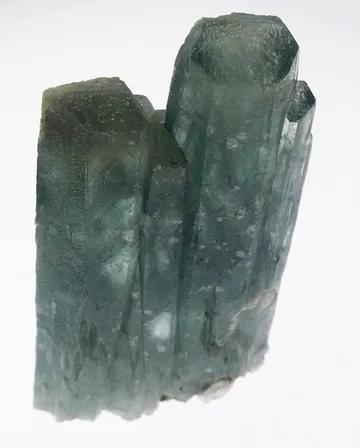
Colorado barite is synonymous for many collectors with Stoneham, Weld County, where translucent blue, prismatic orthorhombic crystals occur in clay-rich seams and pockets on the high plains northeast of Denver, commonly with calcite and locally with opal coatings or sand-calcite associations. Classic Stoneham specimens range from thumbnails to hand-size plates, with individual crystals commonly in the centimeter range and exceptional crystals reaching several centimeters; the most desirable examples are open clusters of blue to blue-gray gemmy crystals with sharp chisel-like terminations, bright luster, and little clay staining or edge bruising. Barite also occurs in Colorado ore districts, including Creede and other silver-base-metal environments, but Stoneham’s cool blue color and distinctive habit are what give Colorado barite its international collector identity.
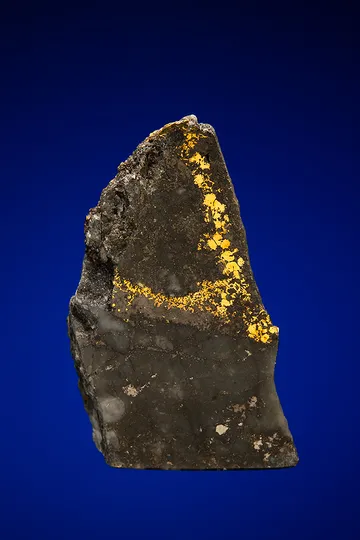
Colorado gold specimens range from placer nuggets and grains to rare crystallized wires, leaves, and plates, with the Breckenridge district—especially Farncomb Hill and the Wire Patch area—holding a special place for bright wire and leaf gold on or with limonite, calcite, shale, and oxidized matrix. Cripple Creek, Central City, Telluride, Leadville, Sneffels, Silverton, Breckenridge, Idaho Springs, and Summitville were all major historical gold districts, but most produced gold as ore rather than as dramatic crystallized display specimens. The best collector pieces are native gold with visible crystalline form, old mine or district labels, and minimal flattening or cleaning; loose placer grains from Colorado are attractive, but wire gold from Farncomb Hill and well-documented lode pieces carry the greatest locality value.
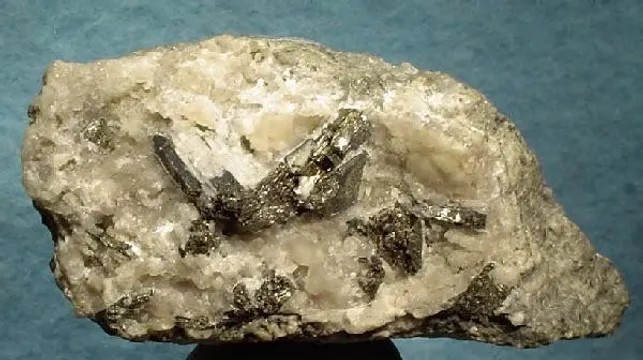
Colorado native silver is most famous from Aspen’s Smuggler Mine and from the Creede district, particularly Bulldog Mountain, where rich silver ores could include massive native silver, acanthite, barite, and carbonate gangue. The Aspen silver specimens may be dense, ropey, wire-like, tarnished gray, or massive, and their appeal is bound to the district’s extraordinary late-nineteenth-century silver history, including the famous enormous native-silver mass from the Smuggler Mine. Creede pieces tend to be more ore-like, sometimes as cut or broken masses with visible metallic silver and acanthite in barite-rich material. Fine Colorado silver is scarcer than ordinary ore samples; the strongest pieces combine obvious native silver, undisturbed texture, and mine-level provenance rather than a vague “Colorado silver” label.
Colorado covellite is best known to collectors from Summitville in Rio Grande County and from copper-bearing localities such as the Sedalia Copper Mine in Chaffee County, where it occurs as metallic blue to purple secondary copper sulfide, commonly massive, foliated, platy, or as thin hexagonal/tabular crystal aggregates with chalcopyrite or other copper minerals. Summitville material is especially valued because the district’s oxidized and supergene zones produced vuggy quartz rock in which secondary covellite could line cavities or replace earlier copper sulfides, giving specimens an iridescent peacock-blue flash rather than simply black ore. The best Colorado covellite pieces show crystalline surfaces, strong blue-purple color, and old Summitville or Sedalia provenance; massive dull material is much less desirable.
Colorado topaz comes chiefly from miarolitic pegmatites and granitic pockets, especially Mount Antero, Devil’s Head, the Pikes Peak batholith, Crystal Park, Crystal Peak, and related Front Range localities, where it occurs with quartz, microcline, albite, fluorite, phenakite, aquamarine, muscovite, and other pegmatite minerals. Mount Antero is famous primarily for aquamarine, but rare gemmy sherry-colored topaz crystals from alpine pockets have been regarded as among the finest Colorado examples; Devil’s Head is an older classic source for gem topaz, and the Pikes Peak area yields both colorless and pale crystals with smoky quartz and amazonite. Good Colorado topaz is sharp, transparent, lustrous, and damage-free, but because the mineral cleaves easily, many finds are fragments or healed pieces; complete terminated crystals with reliable locality data are far more collectible than faceted or tumbled “Colorado topaz” without context.
Baryte is the same mineral species widely sold in the United States as barite, and Colorado baryte specimens again center on Stoneham’s blue crystals, with additional occurrences in silver-lead-zinc districts where Ba-rich hydrothermal fluids deposited baryte as gangue. Stoneham baryte is distinctive because its best crystals are transparent to translucent, pale blue to blue-gray, elongated, and arranged as elegant freestanding clusters rather than heavy tabular plates; calcite is the most familiar associate, and old 1970s–1980s pieces remain especially desirable. A superior Stoneham baryte specimen has saturated color for the locality, crisp terminations, good separation between crystals, and minimal abrasion along the long prism edges.
Colorado pyrite is widespread in hydrothermal ore districts, molybdenum systems, and rhodochrosite pockets, but its collector importance lies in associations rather than isolated cubes. At Sweet Home, pyrite occurs with rhodochrosite, quartz, tetrahedrite, sphalerite, chalcopyrite, fluorite, and other vein minerals, often adding brassy contrast to red carbonate; at Climax and Henderson-type molybdenum systems it belongs to quartz-fluorite-sericite-topaz-molybdenite stockwork and greisen assemblages; at Leadville, Gilman, Ouray, Silverton, Creede, and Cripple Creek it is part of complex sulfide and telluride ores. The best pieces show bright, stable crystals or attractive pyrite dusting that enhances another Colorado species, while massive pyritic ore without definition is common and comparatively ordinary.
Colorado microcline is famous in its blue-green amazonite variety, but ordinary pink, cream, and white microcline also occurs broadly in pegmatites and granitic rocks of the Pikes Peak batholith and related Front Range localities. At Crystal Peak, Florissant, Lake George, Devil’s Head, Crystal Park, and adjacent collecting areas, blocky triclinic microcline crystals line miarolitic cavities with smoky quartz, albite, fluorite, topaz, goethite, hematite, and zircon; some pockets yield pale feldspar with only weak amazonite color, while others produce saturated turquoise-blue crystals. The best Colorado microcline pieces have sharp form, lustrous faces, rich amazonite color when present, and an undamaged relationship to smoky quartz or albite; plain feldspar masses are far less desirable unless unusually large, well crystallized, or historically labeled.
Colorado rhodochrosite reaches its highest expression at the Sweet Home Mine on Mount Bross near Alma, where cherry-red rhombohedra occur on quartz and sulfide-rich matrix with tetrahedrite, sphalerite, pyrite, chalcopyrite, fluorite, calcite, and related vein minerals. Sweet Home crystals range from small rhombs to world-famous large crystals and matrix plates, including material from named pockets such as Good Luck, Rainbow, Hedgehog, Blueberry, Museum, and others; the best pieces combine saturated transparent red color, sharp rhombohedral faces, bright luster, and a balanced pocket matrix. Rhodochrosite also occurs in other Colorado districts, including Silverton, Ouray, Creede, and Leadville-related veins, but Sweet Home material sets the standard, and pocket name, mining period, and provenance sharply affect value.
Colorado smoky quartz is the dark counterpoint to the state’s amazonite, especially in the Pikes Peak batholith, where miarolitic cavities at Crystal Peak, Lake George, Florissant, Devil’s Head, Crystal Park, and other Front Range localities produce crystals from small sharp points to large cabinet groups. The color ranges from pale smoky brown to nearly black morion-like crystals, commonly associated with blue-green amazonite, microcline, albite, fluorite, topaz, goethite, hematite, and zircon; some crystals show etching, rehealed surfaces, or pocket abrasion from collapse and movement in clay. Fine Colorado smoky quartz is lustrous, sharply terminated, deep in color without being opaque and dull, and best when naturally composed with amazonite rather than simply mounted beside it.
Colorado amazonite is blue-green microcline from the Pikes Peak batholith, and the finest pieces—especially from Crystal Peak, Smoky Hawk, Florissant, Lake George, and related Teller, Park, El Paso, Douglas, and Jefferson County pegmatite areas—are among the defining mineral specimens of the American West. Crystals are blocky to tabular, often with white albite caps or stripes, and occur with smoky quartz, cleavelandite, fluorite, topaz, goethite, hematite, zircon, and rarer NYF-pegmatite minerals; color ranges from pale greenish feldspar to intense robin’s-egg blue. The best Colorado amazonites have saturated color, crisp crystal geometry, glossy faces, clean edges, and a sculptural association with smoky quartz, while repaired pocket groups are common and acceptable when disclosed because many pockets collapse into mud-filled jumbles before recovery.
Colorado chalcopyrite is a common but locally attractive ore mineral in the state’s polymetallic districts, especially in association pieces from Ouray, Silverton, Telluride, Camp Bird, Gilman, Leadville, Creede, and Sweet Home. At Camp Bird and nearby San Juan mines it may occur with galena, sphalerite, quartz, calcite, epidote, and other sulfides; at Gilman it is part of the sphalerite-chalcopyrite-galena ore assemblage; at Sweet Home it adds brassy metallic contrast to rhodochrosite, quartz, fluorite, and sphalerite. Most Colorado chalcopyrite is massive or subordinate, so collector-grade pieces require bright crystals, visible association, and a classic mine label; tarnished brassy smears in ore are abundant but not especially distinguished.
Colorado fluorite occurs in several different collector settings: purple to colorless cubes and octahedral forms from Sweet Home Mine pockets with rhodochrosite and quartz; fluorite from Mount Antero with phenakite, aquamarine, quartz, albite, and topaz; fluorite in Pikes Peak batholith pegmatites with amazonite and smoky quartz; and fluorite gangue in districts such as Cripple Creek and other precious-metal systems. The best pieces are not merely Colorado fluorite but fluorite with context—sharp, lustrous crystals that enhance a Sweet Home rhodochrosite plate, a Mount Antero alpine pocket specimen, or a Pikes Peak pegmatite assemblage. Condition matters heavily because fluorite cleaves and bruises; clean corners, transparency, and association drive quality.
Colorado sphalerite is important in the state’s lead-zinc-silver ore systems, especially Gilman, Leadville, Camp Bird, Ouray, Silverton, Creede, and Sweet Home. In the Gilman district and Eagle Mine environment it forms dark brown to black resinous or metallic-looking crystals and masses with chalcopyrite, galena, pyrite, ankerite, and quartz; at Camp Bird it can appear as lustrous dark crystals with galena, chalcopyrite, quartz, and calcite; at Sweet Home it is a major dark matrix mineral beneath red rhodochrosite. Good Colorado sphalerite specimens show crystal form, luster, and association rather than just ore texture, with Camp Bird and Gilman labels especially desirable when crystals are sharp and displayable.
Colorado galena is a classic ore mineral of Leadville, Gilman, Georgetown-Silver Plume, Ouray, Silverton, Camp Bird, Creede, and many smaller districts, typically associated with sphalerite, chalcopyrite, pyrite, tetrahedrite, quartz, calcite, ankerite, barite, and silver minerals. The Camp Bird Mine is known for attractive association specimens with galena cubes or cuboctahedra on quartz with sphalerite and chalcopyrite, while Gilman and Leadville material is more commonly massive to crystalline ore tied to major lead-zinc-silver production. The best Colorado galena pieces have lustrous, well-separated crystals, limited bruising, and a matrix that shows the ore assemblage; heavy massive ore specimens are common and best kept only when the label or association is exceptional.
Colorado goethite is most familiar to collectors as an accessory in the Pikes Peak batholith pegmatites, where black to brown iron-oxide sprays, radial aggregates, coatings, and pseudomorphic forms occur with smoky quartz, microcline, amazonite, albite, hematite, fluorite, and zircon. It also appears broadly in oxidized zones of ore deposits, including gossans and limonitic material above sulfide veins and replacement bodies. The best Colorado goethite specimens are those in which lustrous black blades or radial sprays add sculptural contrast to amazonite-smoky quartz pocket pieces; unattractive brown iron staining is common and should not be confused with collectible crystallized goethite.
Colorado zircon is a specialty mineral of the Pikes Peak region, especially St. Peters Dome, Cheyenne Mountain, and related pegmatitic and alkaline granitic environments, where brown, reddish-brown, greenish, and metamict cyrtolite-type crystals occur with quartz, blue quartz, fluorite, astrophyllite, riebeckite, microcline, thorite, and rare accessory minerals. St. Peters Dome is especially notable for zircon associated with astrophyllite and other rare pegmatite species, making Colorado zircon more of a systematic collector’s prize than a showy cabinet staple. Fine pieces have sharp pyramidal crystal form, visible luster, and association on matrix; damaged, altered, or radioactive accessory-rich material should be handled thoughtfully and labeled accurately.
Colorado astrophyllite is a St. Peters Dome specialty from the southern Pikes Peak region, where golden-brown to bronze blades and bladed sprays occur in pegmatitic and alkaline granitic rocks with quartz, zircon, riebeckite, fluorite, microcline, thorite, prosopite, rutile, and other rare accessories. Mindat and collector records treat St. Peters Dome astrophyllite as excellent to world-class for the species, with blades reported to impressive lengths and with much of the finest material tied to specific pegmatites and tunnels in the district. The best specimens show lustrous radiating sprays or broad blades on contrasting matrix, while ordinary fragments without spray structure or locality detail lose much of their Colorado significance.
Colorado’s broader mineral list is immense. Type-locality and name-bearing species include creedite from the Creede quadrangle area, coloradoite from Boulder County telluride mines, and rickardite from the Good Hope Mine in the Vulcan district. Cripple Creek and Boulder County telluride districts add calaverite, sylvanite, krennerite, petzite, hessite, altaite, native tellurium, and other rare tellurides. Mount Antero and White Mountain add aquamarine, phenakite, bertrandite, muscovite, albite, garnet, and fluorite. The Colorado Plateau contributes carnotite, tyuyamunite, vanadium minerals, and uranium-bearing specimens that require careful handling. St. Peters Dome and the Pikes Peak batholith supply rare pegmatite and alkaline-granite accessories, including riebeckite, cyrtolite, thorite, columbite-group minerals, cryolite alteration minerals, and fluorides prized by systematic collectors.
Colorado specimens are strongly locality-sensitive. “Pikes Peak” on an old label may mean the mountain, the batholith, a nearby district, or simply a dealer shorthand for amazonite-smoky quartz from the greater region. Crystal Peak, Smoky Hawk, Lake George, Devil’s Head, Crystal Park, St. Peters Dome, and Mount Antero should not be used interchangeably unless the provenance supports it. The same caution applies to Sweet Home Mine pocket names: Good Luck, Rainbow, Hedgehog, Blueberry, Museum, 04-17, and Detroit City Portal labels carry market meaning and should be backed by old tags, collection history, or reliable dealer records.
Repairs are common in Colorado amazonite-smoky quartz specimens. Many Pikes Peak pockets are mud-filled and collapsed; crystals may be found detached, bruised, or jumbled, and careful reassembly has long been part of the specimen-preparation culture. A repaired piece can still be excellent, but undisclosed repair, added crystals, fabricated matrix relationships, or vague “Pikes Peak” upgrades should affect value. For high-end amazonite, look closely for glue lines, mismatched contact surfaces, suspiciously perfect smoky-to-feldspar junctions, and color inconsistency between crystals.
Sweet Home rhodochrosite is another area where provenance, condition, and restoration matter. Rhodochrosite has perfect cleavage, modest hardness, and can chip at exposed rhomb edges; many fine specimens required skilled extraction, trimming, and occasionally reattachment or stabilization. Bright cherry-red color, transparency, sharp rhombs, and balanced sulfide-quartz matrix are the key qualities. Be skeptical of red rhodochrosite labeled only “Alma” or “Colorado” when priced as Sweet Home; Colorado produced rhodochrosite elsewhere, but Sweet Home quality and pocket provenance command a premium.
Stoneham barite is comparatively available, but elite pieces are far scarcer than the market suggests. The usual condition problems are bruised terminations, edge wear along elongated crystals, clay staining, and dull or frosted surfaces. Blue Moroccan barite, English barite, and other pale-blue barites are sometimes visually similar to non-specialists, so old Stoneham labels, typical crystal habit, calcite association, and reputable provenance are useful.
Native silver from Colorado often tarnishes gray to black and should not be aggressively polished. Aspen and Creede silver specimens may be massive or wire-like, and old cut surfaces, saw marks, and smelter-era history are part of the story rather than necessarily defects. Native gold from Breckenridge and other districts is commonly small; avoid over-cleaned pieces, flattened placer grains sold as crystallized gold, or specimens with vague “Colorado gold” labels but no district.
Ore minerals from Colorado may contain lead, arsenic, mercury, tellurium, uranium, or vanadium-bearing phases depending on locality. Galena, coloradoite, tellurides, uranium-vanadium minerals, and altered radioactive accessories should be handled with normal mineral-collection hygiene: do not grind, inhale dust, lick, acid-test casually, or store friable radioactive material where dust can spread. Pyrite-bearing ore should be kept dry, though most Colorado pyrite specimens are stable if protected from humidity. Fluorite and topaz both cleave; rhodochrosite bruises; silver tarnishes; and amazonite-smoky quartz combinations can be heavy, repaired, and mechanically delicate.
In the old literature on Pikes Peak, the wonder is not only that amazonite and smoky quartz were found, but that the pockets could be astonishingly rich. Nineteenth-century observers described drusy, vein-like masses in the granite where open cavities allowed microcline and smoky quartz to form true crystals rather than just rock-forming grains. One cavity was reported to have yielded more than a ton of crystallized Amazon stone, smoky quartz, and related specimens. That single detail explains why the Pikes Peak batholith became embedded in museum culture: the region was not producing isolated curiosities, but whole pocket systems capable of filling drawers, cabinets, and exhibition cases.
The Sweet Home Mine story is more cinematic. A mine opened in the 1870s for silver eventually became famous for something its early miners could not have treated as the main prize: red rhodochrosite. During the modern specimen-mining era from 1991 to 2004, the mine produced thousands of specimens from dozens of named pockets. The pocket names read like chapter titles—Cash Flow, Bad Luck, Good Luck, Rainbow, Museum, Red & Blue, Blueberry, Hedgehog, Butterfly, Clay—and they matter because they preserve the underground geography of a world-class find. In 1992, the mine produced the Alma King from the Rainbow Pocket, a single rhodochrosite crystal nearly six inches across that became one of the most famous mineral specimens in the world. The larger Sweet Home story is not just that beautiful crystals were found, but that geology, ground-penetrating radar, careful blasting, pocket mapping, preparation, and marketing turned a failed or marginal silver mine into a modern specimen legend.
Stoneham is a quieter story but just as Colorado in its contrast. The locality sits not in alpine grandeur but on the high rolling plains northeast of Denver, near a small Weld County village. Collectors know the place for blue barite crystals in seams and pockets, often dug from clay-rich ground rather than hard-rock stopes. In July 2002, a one-week specimen-mining operation was carried out at the famous locality about four miles northeast of Stoneham, a reminder that even a modest plains occurrence can draw organized effort when the crystals have the right color, habit, and reputation. Stoneham’s best pieces feel almost improbable: icy blue, transparent, sharply terminated crystals from a landscape many travelers would pass without guessing it held a classic mineral locality.
Aspen’s Smuggler Mine supplied one of the most memorable native-silver episodes in American mining. In 1894, miners discovered a native-silver mass so large that the surviving photographic record identifies it as weighing 1,840 pounds after trimming for removal, with the notation “Ag - 93% fine.” Most of that extraordinary mass was smelted, as ore was money before it was museum heritage, but the image remains one of the great visual documents of Colorado silver. It is hard to look at that block hanging in chains and not feel the tension between mining and collecting: the collector wants the object preserved; the miner sees metal, payroll, and survival.

Photo: Wikimedia Commons
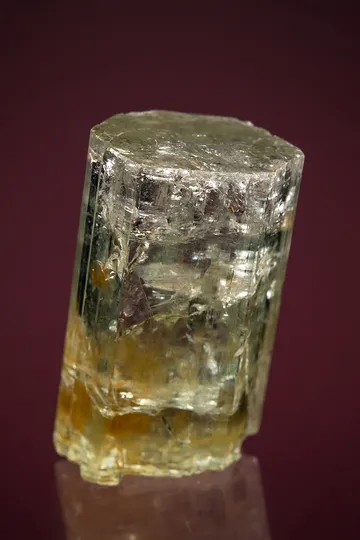
Mount Antero adds the physical drama of altitude. Its aquamarine, topaz, phenakite, fluorite, and quartz pockets occur in a severe alpine setting, with collecting and mining historically focused around high elevations where weather, access, short seasons, active claims, and fragile pocket minerals all complicate recovery. Reports of exceptional topaz from a 2003 surface pocket—only about a dozen gemmy sherry-colored crystals, the largest about 3.3 cm long—show how selective these finds can be. Antero is famous for aquamarine, but a small topaz pocket can still reset expectations for an entire state when the crystals are gemmy, complete, and well documented.


_(Wire_Patch_Placer_Deposit,_Farncomb_Hill,_near_Breckenridge,_Colorado,_USA)_2_(17073034341).jpg)
_1_(17283935251).jpg)
