California Mine, Mt. Baldwin — Chaffee County locality bridging Colorado aquamarine and Be-Mo vein minerals, with blue beryl in quartz-molybdenite contexts.
Key facts
The California Mine is the odd, compelling underground chapter in the Mount Antero aquamarine story. Most collectors think of Antero in terms of alpine miarolitic pegmatites—small, frost-loosened pockets in pale Mount Antero granite yielding aquamarine, smoky quartz, phenakite, bertrandite and fluorite. The California Mine belongs to the same beryllium-rich magmatic system, but it is not just another pocket dig. It is a steep, quartz-rich beryl-molybdenite vein on the southwest side of the Antero-White Mountain region, historically opened for molybdenum and later valued by collectors for beryl, aquamarine and rare accessory mineralization.
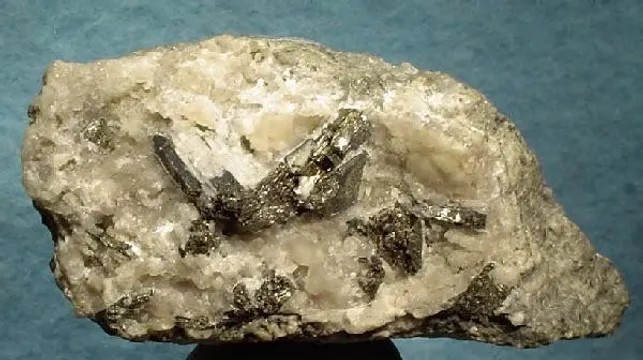
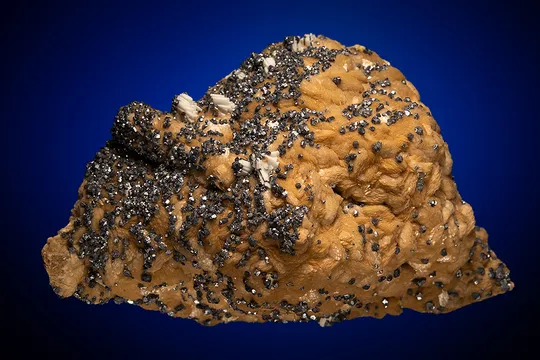
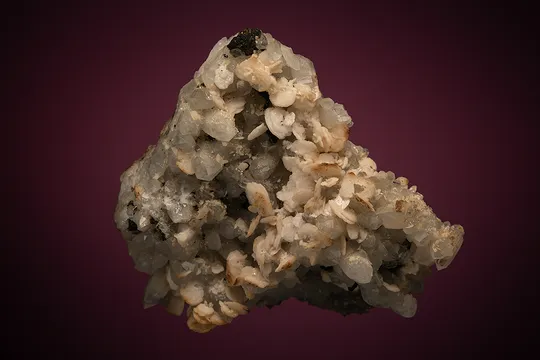
The best California Mine specimens have a different look from the cleanest “classic Antero” pocket pieces. Instead of sharply perched blue prisms on open feldspar-and-smoky-quartz matrices, the California material is commonly vein-bred: beryl embedded in or breaking from massive white quartz, with muscovite, silvery molybdenite, yellow molybdenum oxidation products and dark uranium-titanium oxides in the assemblage. Fine examples are prized precisely because they bridge two collector worlds—Colorado aquamarine and rare, Be-Mo vein mineralogy. A terminated, translucent-to-gemmy blue beryl from this locality, especially one retaining quartz or molybdenite context, carries more locality character than a loose, cleaned, context-free fragment.
Regional View
Country View
The locality sits in the high Sawatch Range mineral belt of Chaffee County, near the classic Mount Antero and Mount White gemstone ground. Early geological work treated the California vein as an important clue that the Mount Antero beryllium system was not restricted to isolated pegmatite pockets: beryl also formed in quartz veins transitional toward hydrothermal mineralization. For collectors, that makes the California Mine a locality to read carefully rather than simply admire—its specimens can record beryl growth contemporaneous with molybdenite, later oxidation to molybdite and ferrimolybdite, and the rare presence of brannerite in the same vein environment.
Search for specimens: View all specimens from California Mine, Mt. Baldwin, Mt. Antero area, Chaffee County, USA
The California Mine is part of the broader Mount Antero beryllium province, but its geology is best understood as a beryl-bearing quartz-molybdenite vein rather than a normal miarolitic pegmatite pocket. The Mount Antero region is underlain by a complex of Tertiary intrusive rocks, including the pale beryllium-rich Mount Antero granite and older quartz monzonitic rocks of the Mount Princeton–Pomeroy intrusive suite. The main Antero gemstone pockets occur chiefly in and near the Mount Antero granite, where small pegmatitic and miarolitic bodies are scattered above timberline. At the California Mine, however, the productive vein was described as lying in quartz monzonite near the mine workings, with a probable relationship to nearby granite and to the late Be-rich fluids that also charged the Antero pegmatite field.
The ore body is the California vein, a steep to nearly vertical quartz vein carrying molybdenite, beryl, muscovite and minor accessory minerals. Historic descriptions give the vein as roughly 1.5 to 3 feet thick where mined, with northeast strike measurements recorded in the N. 55° to N. 75° E. range depending on the observer and exposure. Later summaries describe the vein as intermittently exposed over a long surface trace, in places projected for about a mile, though actual exposure is broken by talus, alpine soil and caved workings. The vein is important mineralogically because beryl is not merely a loose accessory from a pocketed granite body; some of it demonstrably grew during the molybdenite stage, making the California Mine a classic Colorado example of beryl in a molybdenum-bearing quartz vein.
The wall rock alteration is part of the locality’s identity. Reports describe sericitization extending feet into the quartz monzonite along the vein and narrower silicified zones adjacent to the quartz. Dump material and vein fragments show white quartz, muscovite or sericite, coarse metallic molybdenite, beryl and oxidation products. The richest molybdenite was described historically as occurring in streaks and pockets near vein walls, and old accounts mention pockets of molybdenite and molybdenum oxides between beryl and quartz crystals. For collectors this means that matrix is diagnostic: ordinary-looking white quartz with muscovite can carry beryl, molybdenite, molybdite, ferrimolybdite and brannerite in relationships that are far more significant than their hand-specimen glamour might first suggest.
The mine was explored during the World War I molybdenum boom, when molybdenite was valued for alloy steels. Contemporary and later geological sources describe a modest underground operation, not a major mine: an inclined shaft, a crosscut adit and drifts following or seeking the vein. Small lots of hand-sorted molybdenum ore were reportedly shipped or tested, but sustained commercial production did not follow. By the time USGS investigators examined the property in the late 1940s, workings were caved or inaccessible, and appraisal of the beryl resource was necessarily indirect. Their estimate of possible beryl tonnage was based on sparse exposures, dump study and assumptions about beryl content rather than continuous mine sampling.
Modern collecting access must be treated with particular caution. The California Mine is a patented/private property locality, not an open public rockhounding area. Notices associated with the property identify the California Lode, Utah Lode and White Rock Extension Lodes as posted against trespass, and modern reports state that the portal and underground work have been stabilized and explored only under appropriate mine-safety requirements. Surrounding Mount Antero includes a complicated patchwork of claims, private holdings, federal land and heavily collected ground; a label saying “Mt. Antero” or even “California Mine area” should never be read as permission to collect there.
Specimen finds from the California Mine are less numerous on the market than broad-labeled Mount Antero aquamarines, partly because the mine is a specific patented locality and partly because its mineralization is vein-controlled rather than a prolific open-pocket pegmatite field. Historic material includes beryl in quartz with molybdenite and oxidation products; modern reports note recovery of gem-quality aquamarine from the reopened California vein. A separate but important collector anecdote from the California Mine area records a 1991 beryl seam that produced pounds of mostly colorless goshenite and a cut stone large enough to be donated to the Denver Museum of Nature & Science, illustrating how strongly the California-area beryl suite can swing from pale or colorless material to true blue aquamarine.
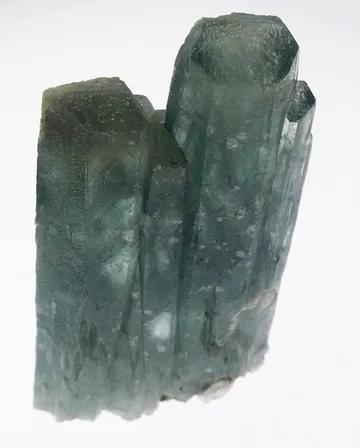
Beryl from the California Mine is locality-defining because it occurs in a quartz-molybdenite vein, not merely in the open miarolitic cavities for which Mount Antero is famous. It ranges from colorless or white goshenite-like material through pale blue to true aquamarine, commonly as prismatic crystals or crystal sections embedded in white quartz, associated with muscovite or sericite, molybdenite, molybdite, ferrimolybdite and brannerite. Historic study of a zoned California Mine crystal showed molybdenite enclosed in beryl, a relationship that separates this locality from ordinary broken Antero blue beryl float. The most desirable pieces preserve that geological context: sharp or partially terminated beryl with convincing quartz-vein matrix, metallic molybdenite or yellow molybdate alteration is far more meaningful than a loose fragment whose only claim is blue color.
Aquamarine from the California Mine is the blue gem variety of the locality’s beryl, typically pale to medium blue and commonly less “open-pocket perfect” than the finest freestanding Mount Antero crystals, but highly collectible when it retains vein associations. Reported California Mine beryl ranges from opaque to translucent and locally gem-quality; crystals and sections may occur in massive quartz with muscovite and molybdenite, and some material grades toward colorless goshenite. Good California Mine aquamarines are judged not only by transparency and saturation but by proof of place: a blue prism with clean faces, a credible California Mine label, and matrix or included molybdenite character is preferable to a brighter but contextless chip. In this locality the blue is part of a molybdenum-beryllium story, and specimens that show that story command the most collector interest.
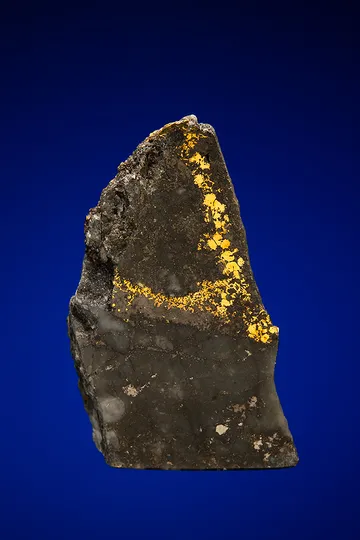
Other documented minerals from the California Mine include quartz, muscovite, sericite, molybdenite, molybdite, ferrimolybdite, brannerite, pyrite, magnetite, topaz, fluorite, orthoclase, biotite, tourmaline, rutile, anatase, jarosite and the columbite-(Fe)-columbite-(Mn) series. The rare-mineral interest is strongest in brannerite and the molybdenum oxidation suite: brannerite is a dark uranium-titanium oxide reported from California Mine dump material, while molybdite and ferrimolybdite can appear as yellow to yellowish coatings or earthy alteration associated with molybdenite. Topaz and fluorite tie the mine back into the broader fluorine-rich Antero pegmatite environment, but the most diagnostic assemblage remains beryl plus molybdenite in quartz.
California Mine labels deserve close scrutiny because “California Mine,” “California Mine area,” “Mt. Antero,” “Mt. Baldwin,” “Upper Browns Creek” and general “Chaffee County” attributions are easily blurred in trade. A broad Mount Antero aquamarine label does not automatically imply California Mine origin. Conversely, a California Mine specimen should ideally show vein context—white quartz, muscovite or sericite, molybdenite, yellow molybdate alteration or brannerite-bearing matrix—unless it has unusually strong provenance from a known collector, miner or old collection.
The chief authenticity concern is not a famous class of manufactured fakes but locality inflation. Mount Antero aquamarine is abundant enough in trade that loose broken crystals, recut gem rough or cleaned fragments are sometimes given more specific labels than the evidence supports. California Mine material should not be confused with typical Antero miarolitic pocket specimens of aquamarine on smoky quartz, feldspar, phenakite, bertrandite and fluorite unless the provenance is clear. A fine Antero aquamarine on smoky quartz may be a superb Colorado specimen, but it is not necessarily a California Mine specimen.
Condition issues are those of both beryl and vein quartz. Beryl crystals from the vein may be fractured, etched, partly opaque, healed internally or broken from massive quartz. Terminations are less common than sections, and many attractive blue pieces are better described as beryl or aquamarine fragments rather than complete crystals. Molybdenite is soft, sectile and can smear on handling; specimens with visible molybdenite should be handled by the matrix and not overcleaned. Yellow molybdite and ferrimolybdite coatings are mineralogically useful but can be powdery or fragile. Brannerite-bearing pieces should be treated with normal radioactive-mineral caution: store sensibly, avoid grinding or inhaling dust, wash hands after handling and do not keep such specimens in prolonged close contact with the body.
California Mine specimens are scarcer than broad-labeled Mount Antero aquamarine because the mine is a specific, private, controlled locality and because much of the historical material was mine-dump or underground vein material rather than large quantities of market-ready pocket specimens. Collector-grade pieces with beryl, quartz and molybdenite are desirable; gemmy, blue, well-formed aquamarine crystals from the mine with solid provenance are substantially more difficult. On the market, expect many more specimens labeled simply “Mt. Antero” than confidently attributable California Mine pieces.
The California Mine’s first story is not a pocket-drama of glittering crystals but a wartime metal story. When molybdenum prices rose during World War I, the high quartz vein southwest of Mount Antero suddenly mattered for steel. Miners drove narrow underground workings by hand-steeling and blasting, chasing coarse molybdenite through hard quartz at roughly 12,500 feet elevation. The work was modest in scale—an inclined shaft, crosscut and drifts rather than a grand camp—but the mineralogy was anything but modest: beryl and molybdenite were intimately intergrown, and early accounts noted rich molybdenite pockets occurring between beryl and quartz.
The most elegant scientific moment came later, when investigators examined the vein material not simply as ore but as a paragenetic puzzle. A small zoned beryl crystal from the California Mine enclosed molybdenite, and the published figure paired the specimen photograph with a sketch labeling colorless beryl, blue cloudy beryl and the molybdenite inclusion at a scale of just 1 millimeter. It is a tiny object with outsized importance: proof in miniature that at least some California Mine beryl formed during molybdenite deposition, not as an unrelated late passenger.
Modern history adds a very different kind of scene. Mark Krivanek—geologist, graduate gemologist, master faceter, jeweler and longtime Mount Antero miner—and Lowell Hicks acquired the California Mine in 2014. Contemporary reporting describes it as Mount Antero’s only underground mine, a 52-acre patented claim with a 220-foot drift following the California vein. After years of idleness, the portal was reopened and stabilized, and the old molybdenum mine again became a source of aquamarine, this time under modern safety requirements rather than the improvised conditions of World War I.
Krivanek’s personal route to the California Mine reads like a collector biography compressed into one life. As a teenager on his first Mount Antero visit in 1977, he reportedly found a terminated 40-carat, gemmy deep-blue aquamarine prism. By age 16 he had won a master’s trophy in gem cutting. Years later, after formal geology training, GIA study, diamond buying and opening a jewelry shop in Salida, he returned to the mountain not as a casual rockhound but as a miner-jeweler who could find, cut, set and explain the same Colorado aquamarine from bedrock to showcase.
A smaller but memorable California-area episode comes from the gemstone trade. In September 1991, a cutter and a friend found a seam of beryl in the California Mine area of Mount Antero and recovered “quite a few pounds” of material over three weekends, most of it colorless goshenite. The largest cut gem from that find reportedly finished at 13 carats and was donated to the Denver Museum of Nature & Science. It is an instructive story for collectors: not every important California-area beryl find is blue, and colorless material with good provenance can still carry serious locality value.