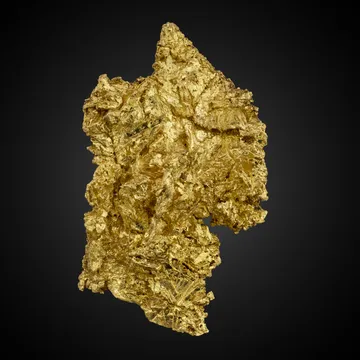
Gold: iconic native metal with sculptural crystals, herringbone leaves, and rich yellow hues; prized by collectors for locality lore, rarity, and striking form.
Key facts
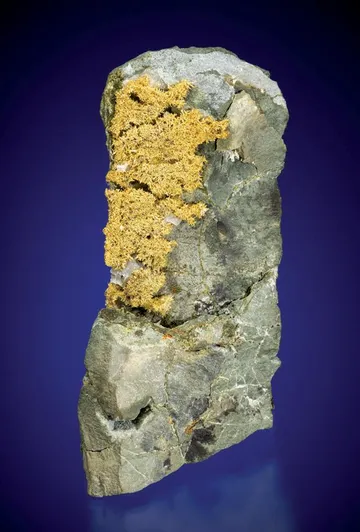
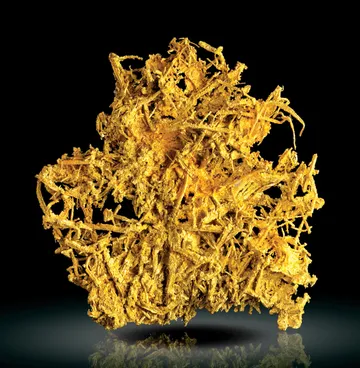
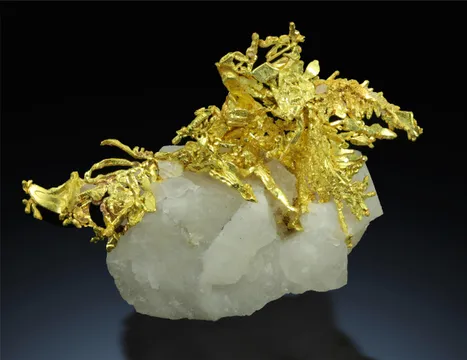
Gold is the quintessential native metal—instantly recognizable, untarnishing, and intensely lustrous. As a collectible mineral, it occurs in a surprising variety of habits: sharp cubic system crystals (octahedra, cubes, trisoctahedra), beautifully reticulated “herringbone” and skeletal leaves, arborescent and dendritic sprays, hoppered growths, and sculptural ribbons and wires. Most classic pieces occur with white milky to glassy quartz, sometimes with calcite, and occasionally with sulfides such as pyrite and arsenopyrite; the color contrast (butter-yellow on white) is one of the great aesthetic combinations in mineral collecting. Composition and color vary subtly with silver content—silver-rich gold (electrum) is paler—while true low-silver gold shows a warm, rich yellow. Because it is malleable (Mohs ~2.5–3) yet visually striking, fine crystallized gold offers rare combinations of sculptural form, historical romance, and instant display appeal. Prices range from accessible small leaf thumbnails to museum-scale California matrix showpieces and Russian classics that are among the mineral world’s most coveted treasures.
From ancient myth to modern museums, gold has captivated people like no other metal. For collectors, its popularity stems from three pillars: iconic beauty, locality lore, and infinite variety of forms. California’s Mother Lode and Alleghany district reign for large, sculptural matrix pieces; Russia’s Urals supplied historic sharp crystals; Australia’s Golden Triangle yields spectacular leafs and nuggets, while Canada’s Red Lake produced elegant leaves in white quartz. The finest specimens can be immediately recognizable to locality—Eagle’s Nest “herringbone” leaves, Alleghany ribbon gold in chalk-white quartz, or classic Ural octahedra. Supply is sporadic: modern commercial gold mining is optimized for recovered metal, not intact crystals, so truly well-preserved pieces are scarce and fiercely contested. This scarcity, coupled with global name recognition and dramatic aesthetics, keeps gold at the top of many collectors’ wish lists.
While gold is mined worldwide, only a handful of districts are renowned for producing exceptional crystallized specimens. Below are important sources with distinct and desirable habits.
California’s Eagle’s Nest Mine is a modern benchmark for sculptural, crystallized gold. Specimens are famous for bold, reticulated “herringbone” to leafy growths and complex spinel-law twinned forms that branch into elegant, three-dimensional clusters. Many sit dramatically on brilliant white quartz, the color and texture contrast elevating even modest pieces to showy specimens. Luster is typically excellent—bright and satiny to mirror-like—with leaves that catch light from across a room. Production has been sporadic and careful extraction is needed; intact, unrepaired matrix specimens are highly sought and command strong prices. For many collectors, an Eagle’s Nest gold is a definitive species reference.
The Mockingbird Mine in Mariposa County produced elegant leaf and arborescent gold, often perched on brilliant white quartz for dramatic contrast. Crystals can show delicate, stepped growth and “fans” of leaves with superb luster. While sizes vary from thumbnails to medium cabinets, the best examples display airy, architectural composition—leaves standing free from the matrix rather than pressed flat. Because of their delicacy, pristine tips and undisturbed leaf edges are uncommon and drive premiums. Mockingbird pieces are beloved for their grace and “bouquet-like” forms.
Ontario’s Red Lake district is a Canadian classic for crystallized gold. Specimens typically feature bright leaf and platy crystals on snowy quartz, sometimes associated with minor sulfides. The best show clean, well-defined edges and a rich butter-yellow color. While many finds were destined for the mill, a number of pockets yielded finely preserved leaves and miniature to small-cabinet showpieces. Collectors value Red Lake gold for its refined aesthetics, balanced branching, and the crisp, elegant geometry often seen in thumbnail to miniature sizes.
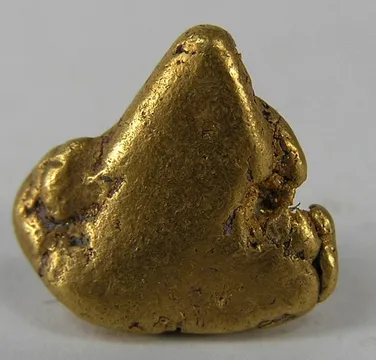
Western Australia’s Eastern Goldfields have long produced iconic gold—both as large, sculptural nuggets and as crystallized leaf and skeletal forms. From quartz-hosted plates to ironstone-backed leaves, top pieces offer bold, architectural masses with a brilliant yellow hue. While the region is famed for nuggets, collectors particularly seek true crystallized examples showing discernible faces, hoppered growth, or leaf habit. Many specimens display rugged, dramatic textures that read well in larger cabinet sizes and make outstanding display centerpieces.
The Berezovsk deposit in the Urals is one of the most historic gold localities, renowned since the 18th century. Classic Russian golds include sharp to skeletal octahedra and richly textured leaves, often on quartz. These pieces are prized for their crisp crystal geometry and historical significance—many early European collections showcased Berezovsk gold as the reference crystallized native metal. Today, fine old pieces are rare, typically ex-museum or with strong provenance, and command premium prices for their sharp form and lore.
Gold is chemically robust but physically soft and malleable. Proper handling preserves edges, luster, and delicate architecture.
By prioritizing sharp form, bright natural luster, balanced composition, and secure provenance, collectors can build a gold suite that is both historically meaningful and visually spectacular.