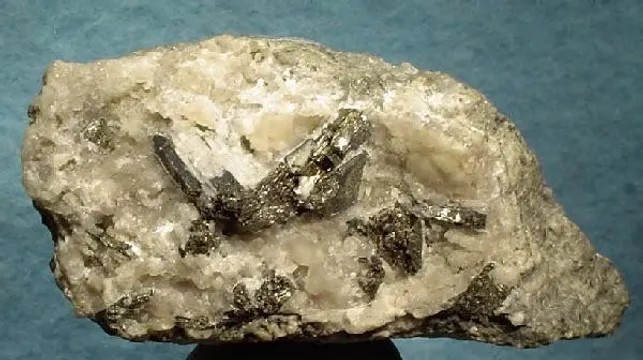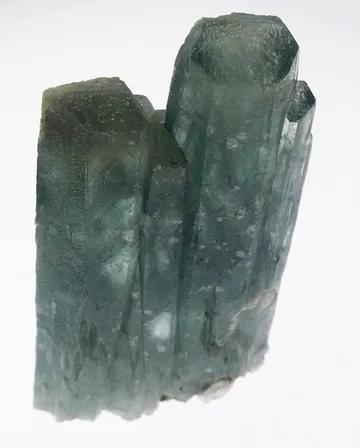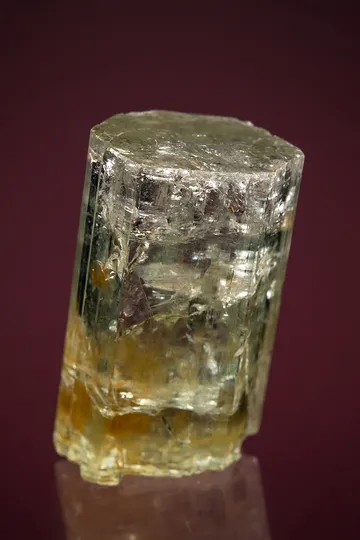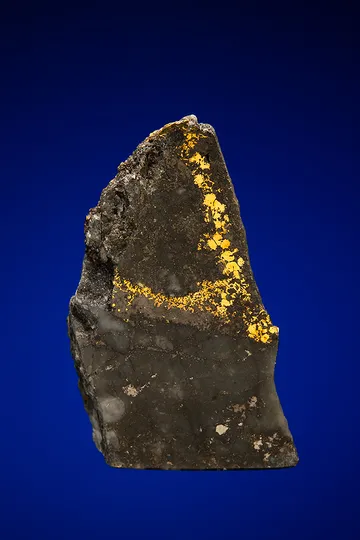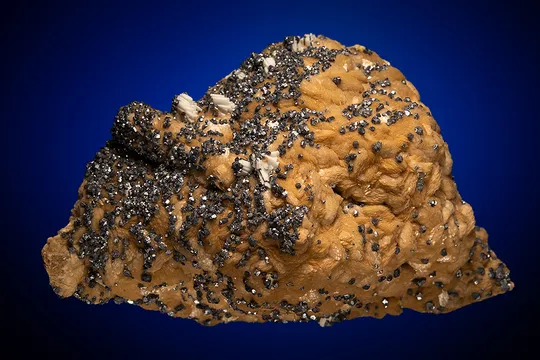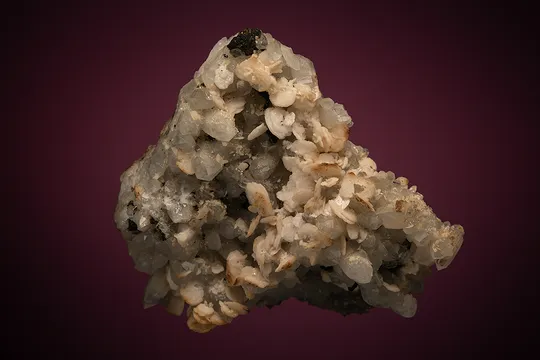
A collector's guide to Osceola Mine, USA: its geology, mining history and notable minerals, illustrated with the 22 specimens documented from this locality on EarthWonders.
Key facts
Osceola is one of the classic names of Michigan’s Copper Country: a native-copper mine on the Keweenaw Peninsula near Calumet, Houghton County, worked in the great tilted volcanic-and-sedimentary pile of the Midcontinent Rift. For collectors, its importance is not simply that it produced copper, but that it produced copper in the unmistakable Keweenaw style: metallic red-brown wires, spinel-twinned elongate crystals, hackly masses, and copper-in-cavity specimens set with pale prehnite, calcite, epidote, quartz, native silver, and secondary copper minerals. Its best specimens have a rugged, old-mining aesthetic—dense, dark basalt or amygdaloid matrix broken by bright copper, greenish prehnite, sparkling quartz, and the occasional silver accent—rather than the polished float-copper look that dominates tourist material from the region.
The mine’s geological story is a neat Copper Country lesson. Early work began on the Calumet Conglomerate, the famous copper-bearing conglomerate exploited so magnificently to the north by Calumet & Hecla. At Osceola the conglomerate soon disappointed, but an amygdaloid copper lode was found a short distance away in 1877. That Osceola Amygdaloid became the economic heart of the mine. The lode was wide enough to be impressive—reported historically in the range of roughly six to thirty feet—but it was also broken, contorted, pockety, and unevenly mineralized, a character that mattered both to miners and to specimen collectors. Where open amygdules, breccia, and copper-rich pockets intersected, the mine could produce compact but visually complex pieces with the associations that now make Osceola labels desirable.
Regional View
Country View
Historically, Osceola also belongs to the big corporate and engineering narrative of the Lake Superior copper district. The Osceola Mining Company was organized in 1873; the property became Osceola Consolidated after merger with Opechee in 1879; it expanded into Kearsarge ground in 1897; and it eventually came under the Calumet & Hecla orbit, with later work and rehabilitation extending the story into the mid-twentieth century. The surviving Osceola No. 13 surface plant is one of the familiar industrial silhouettes of the Calumet-Laurium area, a reminder that the collectible mineral specimens came out of an enormous underground system, not a small hand-dug prospect.
Search for specimens: View all specimens from Osceola Mine, USA
Osceola Mine is in the Calumet-Laurium part of Houghton County, Michigan, in the central Keweenaw native-copper district. The deposit belongs to the classic Lake Superior native-copper system, where copper occurs in permeable horizons within a thick, tilted Keweenawan volcanic pile: amygdaloidal basalt flow tops, breccias, conglomerates, and associated openings that were later mineralized by copper-bearing hydrothermal fluids. At Osceola, the crucial collecting and mining setting is the Osceola Amygdaloid, an amygdaloidal copper lode lying near the celebrated Calumet Conglomerate trend.
The mine was not a simple fissure-vein operation. Historical descriptions emphasize that the economic copper occupied the cupriferous portion of a bedded amygdaloid rather than a true vein, with irregular ore boundaries controlled by original flow-top porosity, brecciation, and local permeability. The result was an orebody that could be rich in one place and barren nearby. That unevenness explains the specimen character: attractive pieces tend to come from pockets, brecciated zones, and vuggy amygdaloid where copper had open space to grow or could be preserved with later minerals, rather than from massive, crushed mill rock.
The principal specimen assemblage is native copper with calcite, prehnite, quartz, epidote, native silver, tenorite, datolite, chlorite-group minerals, feldspar including adularia and microcline, laumontite, analcime, natrolite, stilbite-group and thomsonite-group zeolites, pumpellyite-subgroup minerals, malachite, chalcocite, chrysocolla, paratacamite, spertiniite, vaterite, albite, and kinoite. The best-known collector pieces are not large cabinet masses but sculptural miniature to small-cabinet specimens: copper wires emerging from calcite and prehnite, metallic copper nestled in green prehnite and epidote, and old-time assemblages carrying copper, silver, prehnite, tenorite, and quartz together.
Mining began in 1873 under the Osceola Mining Company, with Ed Hulbert connected to the opening work and Boston capital behind the enterprise. The first target was the Calumet Conglomerate, but that ground did not maintain the richness seen farther north. The turning point came in 1877, when the mine shifted attention to an amygdaloid lode about 800 feet east of the disappointing conglomerate belt. In the following years additional shafts were sunk on the amygdaloid, and the mine quickly became profitable enough to pay dividends.
Osceola merged with the Opechee Mining Company in 1879 to form Osceola Consolidated Mining Company. In 1897, Osceola Consolidated acquired the Kearsarge and Tamarack Junior properties, along with the lesser-known Iroquois property, giving the company nearly 2,000 acres of mineral lands. The Kearsarge operations became a major component of the company’s later strength, but the Osceola name remained tied to the amygdaloid lode that had rescued the original venture. By the early twentieth century, Osceola Consolidated ranked among the important Michigan copper producers, reaching the number-three position in 1903 and the number-two position behind Calumet & Hecla in 1904, 1905, and 1906.
Calumet & Hecla began acquiring interests in neighboring mines in the first decade of the twentieth century and eventually brought Osceola into its consolidated system. Osceola was worked until closure during the Depression era, then was part of the remarkable mid-century dewatering and rehabilitation program associated with renewed Calumet & Hecla operations. The mine was reopened in the 1950s, worked again, and finally closed with the 1968 labor strike that ended Calumet & Hecla’s Copper Country mining operations.
Specimen-producing material is documented from the Osceola Mine generally and from specific shafts, especially No. 3 and No. 4 in mineral records. No. 4 Shaft material is particularly important for collectors because documented finds from its poor-rock piles produced native copper wires with calcite and prehnite. In the early 2000s, collectors broke promising boulders from the old dumps and recovered attractive small specimens with copper wires, calcite, and prehnite; one described specimen had a field of view of about 1.5 cm and wires around 5 mm across. Another documented Osceola wire specimen, 2.5 x 2.2 x 0.8 cm, was described as two copper wires penetrating calcite rhombs and terminating near one another as they emerged from the same calcite crystal.
Collecting access should be treated conservatively. The Osceola No. 13 site is widely visited as an open historical location near Laurium, but historical-site access is not the same thing as collecting permission. Much of the Copper Country is a patchwork of private, municipal, corporate, and heritage land; old shafts, stopes, caved ground, rotten timbers, and unstable dump faces are real hazards. Serious collectors should obtain current landowner permission before removing material, avoid entering mine openings under any circumstances, and regard old shaft collars and ruins as industrial archaeology rather than collecting targets. The safest and most legitimate Osceola specimens on today’s market are older collection pieces, well-documented dump finds, and specimens with specific shaft attribution.
Native copper is the signature Osceola species, occurring as hackly masses in amygdaloid and, most distinctively for collectors, as wires and elongated spinel-twinned crystals associated with calcite and prehnite; documented pieces from the No. 4 Shaft poor-rock piles include fine copper wires emerging from calcite-prehnite matrix, and classic Osceola wire specimens are usually small—thumbnail to miniature, occasionally small-cabinet—but highly sculptural. The color ranges from fresh metallic copper-red on cleaned surfaces to deeper brown or blackened patina on old pieces, and the better specimens show discrete, well-separated wires or crystal groups rather than shapeless copper blebs in dark trap rock. Osceola copper is strongest when the metal has architectural form and clear mineral context: copper passing through calcite rhombs, rising from pale green prehnite, or sharing a cavity with quartz, epidote, and native silver.
Prehnite from Osceola is a cavity and amygdule mineral in the altered basalt, generally pale green to greenish-white and most valued when it forms rounded, lustrous, botryoidal to crystalline surfaces in direct association with native copper. The mine is not a source of the large, showy prehnite balls known from some other Keweenaw localities; its appeal is in miniature-scale combinations, especially copper wires or copper crystals set against prehnite with calcite, epidote, K-feldspar, and quartz. Documented Osceola amygdaloidal basalt specimens show pale green prehnite with small olive-green epidote crystals and orange adularia on green-gray basalt matrix, while the No. 4 Shaft wire-copper boulder material places prehnite in the same pocket environment as calcite and native copper. Good pieces show fresh, distinct prehnite as a compositional partner rather than a dull greenish coating hidden by iron staining or copper oxide.
Quartz at Osceola is part of the amygdaloid and vein-rock assemblage rather than the main show species, but it matters because it gives many copper specimens their sparkle and paragenetic depth. Historical ore descriptions from Osceola include vein rock made essentially of epidote and quartz with calcite and free copper, and mineral records place quartz at the mine generally and at No. 3 and No. 4 shafts. On collectible pieces it is typically small, colorless to milky, and subordinate, occurring with copper, prehnite, epidote, calcite, tenorite, and native silver; the best quartz-bearing Osceola specimens are those where quartz crystals are sharp and clean enough to read as individual crystals rather than merely pale vein filling. Quartz adds value here when it frames native copper or silver in a vuggy association, but ordinary massive quartz with disseminated copper is less desirable than open-space crystallized material.
Other documented Osceola minerals add significantly to the locality’s collector interest. Native silver is the most desirable accessory, especially when present with copper in the classic Michigan association. Tenorite, malachite, chalcocite, chrysocolla, paratacamite, and spertiniite represent copper oxidation or secondary copper chemistry on a small scale. Datolite, epidote, calcite, feldspar, chlorite, pumpellyite-group minerals, and zeolites such as laumontite, analcime, natrolite, stilbite-group, and thomsonite-group minerals record the low-temperature alteration and cavity-filling history of the amygdaloid. Kinoite from the No. 3 Shaft is a noteworthy rarity in the list, while vaterite is an unusual carbonate entry that should be treated carefully on labels unless supported by reliable analytical or collection documentation.
Osceola specimens are bought first on locality, then on form. Native copper from the Keweenaw Peninsula is abundant in a broad sense, but sharp Osceola-attributed wire copper with prehnite, calcite, quartz, or native silver is much less common than generic Michigan copper. Labels matter: “Osceola Mine,” “Osceola No. 4 Shaft,” “No. 3 Shaft,” or “Osceola Amygdaloid” should not be collapsed into vague “Houghton County” or “Copper Country” attribution if better information is available. Conversely, unattributed Michigan copper-in-basalt should not be upgraded to Osceola simply because it looks plausible. Many Keweenaw mines produced native copper, prehnite, calcite, quartz, epidote, and silver associations, so provenance should rest on old labels, collection history, documented finds, or trusted dealer records.
The main authenticity issue is not elaborate forgery but mislabelling, overcleaning, and “improved” appearance. Native copper is routinely acid-cleaned, brightened, oiled, lacquered, or mechanically trimmed; these treatments are common across Michigan copper specimens and can obscure age, pocket surface, and natural patina. Bright salmon-pink copper is not automatically bad, but serious collectors should look for intact crystal surfaces, undamaged wire terminations, and believable matrix contact. Beware of copper wires or masses glued into calcite, prehnite, or basalt matrix; genuine Osceola wire specimens should show natural penetration, embedded contacts, or continuous growth relationships rather than suspicious adhesive halos.
Condition issues are typical for old Keweenaw material. Copper wires bend easily, calcite cleaves and bruises, prehnite can be knocked flat or dulled, and quartz points on small vuggy pieces are easily chipped. Old dump material may carry iron staining, clay, freeze-thaw fractures, and saw or hammer damage from recovery. Specimens with native silver should be protected from sulfur-rich storage materials, rubber, and tarnish-inducing environments; silver wires or blebs are often small and easily overlooked under dark oxide coatings. Laumontite-bearing material, where present, should be kept stable and not repeatedly soaked or dried, as zeolitic components can be condition-sensitive.
Fluorescence is not a primary reason to collect Osceola, though calcite from the broader Keweenaw suite may respond variably under ultraviolet light. Handle specimens as metal-and-matrix objects rather than gemstones: avoid ultrasonic cleaners, avoid aggressive acids unless you are prepared to accept irreversible changes, and do not polish native copper on crystallized specimens. The market availability of Osceola pieces is intermittent. Ordinary copper-in-rock examples and small prehnite-copper associations appear occasionally, but top Osceola wire coppers, old-time copper-silver-prehnite-quartz assemblages, and specifically attributed No. 4 Shaft pieces are far more selective purchases.
Osceola’s founding reads like a Copper Country gamble with a hard geological correction built into it. In 1873, the mine opened about two miles south of Red Jacket under the expectation that another rich conglomerate copper belt had been found. Ed Hulbert, already associated with the discovery of the Calumet Conglomerate, was tied to the opening work, and Boston backers Horatio Bigelow and Joseph Clark had little trouble placing stock. Then the ground gave its answer. The supposed new lode proved to be the southern extension of the Calumet Conglomerate, and as work pushed south the rock softened, became friable, and lost copper. The company that had begun in excitement appeared nearly doomed.
The rescue came from a lode only about 800 feet away. In 1877, Osceola shifted to an amygdaloid copper bed east of the poor conglomerate ground. A preliminary shaft went down, and within three years three more shafts followed. The new lode was not an easy miner’s dream: it was six to thirty feet wide but broken, contorted, twisted, and uneven. One state description compared its course to a stream “meandering its tortuous way through the meadow.” That line is more than picturesque; it explains why the mine could be both rich and frustrating, and why collectors prize specimens from pockets and open cavities rather than uniform ore. In 1878 Osceola produced just short of 3,000,000 pounds of copper, produced a similar amount the following year, and paid a $40,000 dividend. By 1910, annual refined copper production reached slightly over 25,000,000 pounds.
The mine also created a settlement. The Osceola Mine Location grew as the company built employee houses from logs cut in the surrounding forest. Bush Street began as a long, narrow lane lined with simple houses that were occupied as soon as they were finished. Early homes lacked rock foundations, pantries, and closets; a cubbyhole under the stairs became the catch-all, and shelves along a wall held the dishes. Rhoda Donald’s remembered domestic details are vivid: heavy wooden washtubs whose hoops could crack in winter ice or fail in summer heat, weekly ironing with flatirons, bare whitewashed walls, and floors that were scrubbed at the risk of splinters. By 1882, Vivian and Haun had opened a general store and post office, and the village had around 1,200 residents. By 1910, nearly 1,500 people lived there, and Osceola had grown into the Calumet-Laurium urban fabric.
The darkest Osceola story is the fire of September 7, 1895, the deadliest single mining accident in Keweenaw copper history. Around 220 men were underground on the day shift. Smoke was noticed in the No. 3 Shaft area around the 27th level late in the morning; some testimony placed first knowledge of the fire earlier, at 10:45 and 11:05 a.m. At first it did not seem catastrophic. Mine fires were not unknown, and men tried to put this one out with buckets. The location made it deadly. Bad ground had previously been heavily timbered and filled with roughly ten or twelve cords of lagging, apparently one of the few places in the mine where a serious fire could develop. Captain Richard Trembath and men underground fought the flames while Captain Richard Edwards went to the surface for a hose. By the time Edwards tried to return, the draft had reversed, dense smoke was pouring from the shaft, and No. 4 also became impassable.
The rescue choices were terrible. No. 4 skip was kept running slowly so men could jump aboard as it passed, and many who escaped came up the Opechee shaft. Around four o’clock, No. 3 was sealed with planks and dirt to smother the fire, even though some men were still missing, a decision later criticized by many. A search party sent down the Opechee shaft around five o’clock could not get far through the fumes and returned without seeing or hearing anyone. Thirty men and boys died, leaving widows and children in the mining location. Later reports found many bodies in or near No. 4 Shaft, scattered from the fourth to the seventeenth levels, most killed by suffocation rather than flame.
One scene from the shaft mouth distills the human cost. Families waited as miners came up from the mine, watching each load. A reporter noticed two young women, one holding a child by the hand, searching every arriving group. When one young woman finally saw the man she was waiting for, she cried, “There’s papa!” and rushed to him. The other woman’s husband did not come. After waiting until she could bear no more, she fainted and had to be carried home.
Osceola’s twentieth-century engineering story is nearly as dramatic in a different way. After the earlier workings flooded, Calumet & Hecla undertook a mid-century rehabilitation that required removing more than 5 billion gallons of water from the interconnected Osceola and conglomerate workings. Pumping involved deep submersibles, booster stations, heavy saline mine water, and tricky underground hydraulics. At one stage engineers considered opening a bronze valve behind a concrete dam at the 28th level. The plan would lower divers in a man car down the inclined No. 13 shaft from the 25th to the 28th level, a distance of 360 feet, stop exactly at the level, have the diver walk 40 feet into the drift, turn into a narrow crosscut, and continue another 100 feet to attach a special reel to the valve wheel. The attempt was described as potentially the most complex and ambitious dive ever attempted. U.S. Navy divers using helium-oxygen techniques advanced toward the crosscut, and the final dive was nationally televised, but the attempt was abandoned. Engineers then drove a new crosscut from the 24th level of No. 13 to the conglomerate in 25 days, and No. 13 was completely unwatered in April 1955.
For collectors, the most memorable modern specimen story is humbler but satisfying: a boulder on the No. 4 Shaft poor-rock pile. In 2003, collector Paul Brandes documented copper wires coming out of calcite and prehnite from one large boulder at Osceola No. 4. The boulder was broken with a sledgehammer for hours, and several attractive specimens emerged. The field of view on one photographed piece was about 1.5 cm, with wires roughly 5 mm across. That is the scale at which Osceola often rewards patience: not with a museum-size mass, but with a small pocket remnant where copper, calcite, and prehnite tell a far more precise story than a lump of metal ever could.