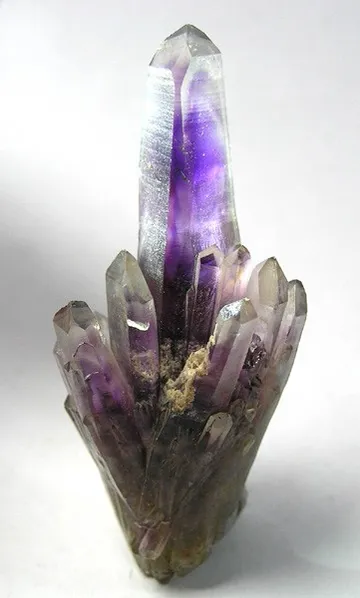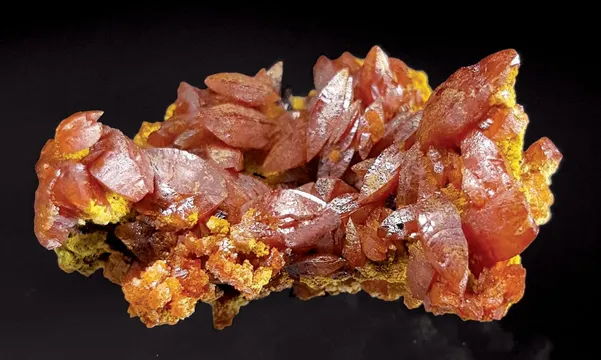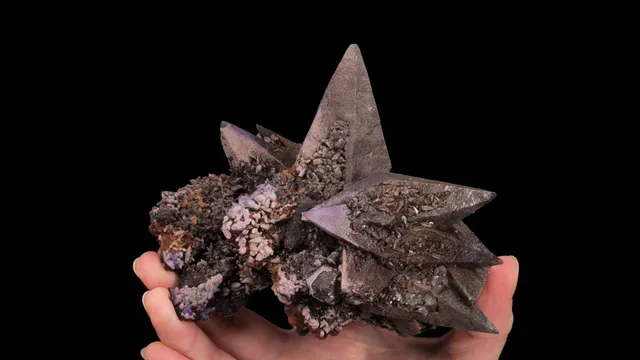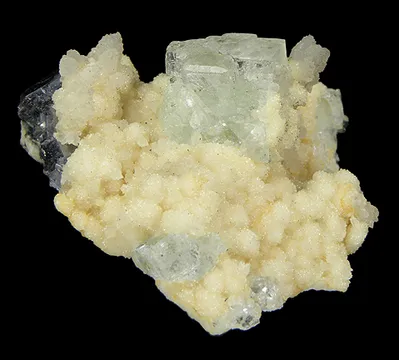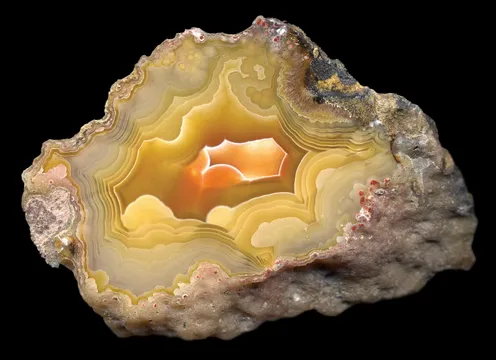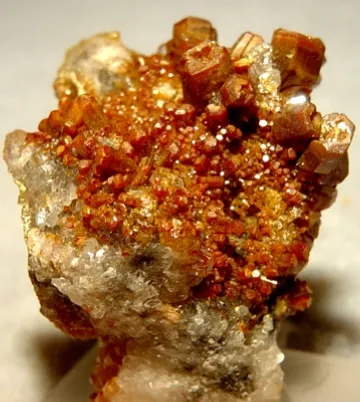
Potosí Mine, Mexico - classic West Camp locality famed for rose-pink rhodochrosite, sharp pyrrhotite, and rich hemimorphite pockets, sought by collectors.
Key facts
Potosí, better known to many older collectors as Mina El Potosí, is one of the classic specimen mines of the West Camp at Santa Eulalia, Chihuahua. It is a silver-lead-zinc mine in Mexico’s largest carbonate replacement district, where mineralizing fluids replaced Cretaceous limestone and dolomite along mantos, chimneys, breccias, and intrusive contacts. For collectors, however, the mine’s importance is more focused and more personal: Potosí is the source of the best West Camp rhodochrosite, one of the world’s great localities for pyrrhotite, and a remarkably productive pocket environment for hemimorphite, calcite, mimetite, willemite, quartz, fluorite, hisingerite, ilvaite, natanite, jeanbandyite, and other rarities.
The specimens that define Potosí have a look that is immediately different from the pastel, sugary rhodochrosites of Colorado or the cleaved, banded material of Argentina. The finest Potosí rhodochrosite is vug-grown, glassy, rose-pink to red, and set in dark sulfide or skarn matrix, often with drusy quartz, fluorite, hisingerite, pyrrhotite, galena, or sphalerite. The best pyrrhotites are sharp, lustrous, bronze, tabular to pseudohexagonal crystals that look almost engineered, while the oxidized assemblages can be airy and delicate: white hemimorphite blades or prisms on brown matrix, colorless calcite, yellow mimetite, botryoidal gray-white willemite, and black manganese oxides. The mine’s best specimens combine the heaviness of a major orebody with the finesse of late-stage crystal growth.
Regional View
Country View
Potosí belongs to the Francisco Portillo, or Santo Domingo, part of the West Camp. This is the massive-sulfide side of Santa Eulalia rather than the more skarn-dominant East Camp around San Antonio. In the West Camp, ore solutions created large replacement bodies in carbonate host rocks, and later oxidation and retrograde alteration opened cavities where collectable crystals could form. That is why a single Potosí specimen may show a story in layers: replacement sulfide ore, silicate skarn, retrograde quartz and rhodochrosite, and finally supergene zinc-lead oxidation minerals.

Photo: Wikimedia Commons

Photo: Wikimedia Commons
Search for specimens: View all specimens from Potosí Mine, Mexico
Potosí Mine is in the West Camp of the Santa Eulalia Mining District, Aquiles Serdán Municipality, Chihuahua, Mexico, near Santo Domingo and just east of Chihuahua City. Santa Eulalia is a carbonate replacement district of unusual scale, with silver-lead-zinc mineralization introduced into carbonate rocks and localized by stratigraphy, fault and fracture trends, breccia bodies, and intrusions. The West Camp is the principal massive-sulfide camp, and Potosí is one of its central mines.
The district lies in Cretaceous carbonate and evaporite strata of the Sierra Santa Eulalia, a broad north-northwest-trending anticline later covered in places by Tertiary volcanic and volcaniclastic rocks. Intrusive dikes and sills were important ore localizers. In the West Camp, the dominant ore style is replacement of limestone by massive sulfide bodies: mantos, chimneys, and breccia-hosted ores composed chiefly of pyrrhotite, sphalerite, galena, and pyrite, with lesser chalcopyrite and arsenopyrite. These bodies are not simple veins. They are three-dimensional replacement systems, and the great specimens came from those parts of the system where later fluids and oxidation created open cavities instead of compact ore.
Potosí’s collector fame is tied especially to the Main Silicate Orebody, a calcic-iron skarn-related body worked around the 8th through 11th levels, with the 10th level repeatedly cited in specimen records. This body is not ordinary West Camp sulfide ore. It includes a manganese-bearing silicate assemblage in which prograde hedenbergite-fayalite-rich material was later hydrated and altered to chlorite-group minerals, cronstedtite, hisingerite, ilvaite, quartz, and rhodochrosite. That retrograde event created the voids that yielded rhodochrosite, fluorite, quartz, hübnerite, and microminerals such as natanite and jeanbandyite.
Mining at Santa Eulalia is very old by North American standards. The district has recorded production over more than three centuries and has ranked among Mexico’s great silver and base-metal camps. Published summaries put historic district-scale production and reserves in the tens of millions of tonnes, with very large silver output and substantial lead and zinc. Potosí and Buena Tierra are repeatedly identified as principal West Camp producers.
Modern activity has been intermittent. The West Camp declined in the late twentieth century, and by the early 1990s much of it was dormant. Later technical and company reports described renewed evaluation of Potosí workings, including levels 2 to 4 in the Tunel body and levels 6 and 9 to 11 in the Santo Domingo or Main Silicate body. The mine is not a casual collecting locality. It is underground, private, and historically industrial; collector material has reached the market through miners, mine access arrangements, old collections, and dealer dispersals, not open public collecting.
The notable specimen-producing zones are the Main Silicate Orebody for rhodochrosite, pyrrhotite, quartz, fluorite, ilvaite, and rare tin-bearing microminerals; the oxidized zinc zones for hemimorphite, willemite, calcite, mimetite, smithsonite, chalcophanite, and related species; and specific shaft or level areas such as the Potosí No. 5 shaft and level 16 material cited in old specimen accounts. The best Potosí finds were not broad, uniform productions. They were pocketed, level-specific, and often came in small lots, which is why fine examples with precise old labels carry far more weight than generic “Santa Eulalia” pieces.
Potosí rhodochrosite is the signature collector mineral of the mine and the key rhodochrosite of the Santa Eulalia West Camp. It came chiefly from the Main Silicate Orebody between about the 8th or 9th level and the 11th level, especially material accessed on the 10th level, where retrograde alteration of a manganoan hedenbergite-fayalite skarn created vugs lined by MnCO3. Habits range from pale pink botryoidal crusts on glossy brown to black hisingerite or cronstedtite-rich matrix, through simple rhombs, to elongated scalenohedra and complex modified crystals; fine examples show glassy luster, strong rose-pink to red color, translucency, and crisp vug presentation rather than merely sugary coatings. Common associations include quartz, fluorite, galena, pyrrhotite, sphalerite, pyrite, hematite, goethite, hisingerite, caryopilite, natanite, and occasional hübnerite; top pieces are judged by undamaged vug crystals, color saturation, sparkle, contrast against dark matrix, and the presence of attractive quartz or fluorite without overwhelming the rhodochrosite.
Calcite from Potosí is a major gangue and pocket mineral rather than a single uniform “look,” and it appears in both sulfide-related and oxidized assemblages. Collector pieces range from colorless, water-clear crystals with hemimorphite and willemite to manganese-bearing calcite and calcite associated with mimetite, hematite, quartz, pyrrhotite, siderite, goethite, fluorite, smithsonite, wulfenite, and rhodochrosite. Good Potosí calcite specimens stand out when the crystals are transparent, bright, undamaged, and spatially open, or when they provide a pale platform for yellow mimetite, white hemimorphite, or dark ore minerals; ordinary pieces tend to be massive, etched, iron-stained, or visually subordinate to the more colorful secondary minerals. Because calcite is widespread in the district, a precise Potosí label matters, especially for pieces tied to the Potosí No. 5 shaft, level 16 hemimorphite-associated material, or the Main Silicate body.
Potosí hemimorphite is one of the mine’s most attractive oxidized-zone products, usually appearing as white to colorless, lustrous bladed or prismatic crystals on brown gossanous matrix, calcite, mimetite, chalcophanite, smithsonite, willemite, or hematite-rich surfaces. Old accounts and surviving specimens document level-specific finds, including level 16 material, and the finest pieces can show transparent to translucent hemimorphite crystals to several centimeters on sparkly hematite-tinted willemite; these are much scarcer than the more common white crusts and broken sprays. The best examples have upright, glassy, well-terminated crystals with clean separation and minimal bruising at the tips, while lesser specimens are chalky, crowded, or damaged. Potosí hemimorphite should be evaluated with its matrix: a sharp hemimorphite group on botryoidal willemite or black chalcophanite is a much more distinctive mine specimen than generic white hemimorphite on limonite.
Potosí is a classic pyrrhotite locality and belongs in the conversation with the world’s best localities for display-quality Fe1-xS crystals. The mine’s pyrrhotite occurs in the massive sulfide and Main Silicate Orebody assemblages with galena, quartz, rhodochrosite, calcite, sphalerite, siderite, pyrite, dolomite, fluorite, and gypsum. The desirable crystals are bright bronze to brassy, metallic, tabular to pseudohexagonal, and sharply developed, sometimes as singles and sometimes rising from ore matrix with calcite, quartz, or siderite; Smithsonian field accounts from the late 1920s singled out complete individuals around two inches across and one inch thick, and later specimen records note strong 1980s material from the 10th level. Good pieces need freshness of luster and clean edges, because pyrrhotite can tarnish and abrade; the best Potosí examples have an architectural, textbook crystal form that makes them immediately recognizable.
Potosí mimetite is an oxidized lead-arsenate species from the mine’s supergene assemblage, typically appearing as yellow to orange-yellow, resinous to subadamantine crystals on calcite, hemimorphite, goethite, wulfenite-bearing material, fluorite, dolomite, smithsonite, limonite, or hematite. It is not the mine’s volume leader, but it is important because it can bridge the West Camp’s ore-mineral heritage with attractive oxidized display pieces: yellow mimetite on pale calcite or white hemimorphite gives the color contrast collectors want from Santa Eulalia. The better Potosí examples show discrete, lustrous, undamaged crystals rather than dusty coatings, and locality precision is important because mimetite is also known from other Santa Eulalia mines, including San Antonio, Buena Tierra, and Santo Domingo. Under ultraviolet light, reported El Potosí mimetite-calcite combinations may show orange and white responses, making verified labels and species confirmation useful for advanced collectors.
Quartz from Potosí is most desirable when it is part of the Main Silicate Orebody story rather than an isolated species: drusy quartz over rhodochrosite in sulfide matrix, clear quartz with selenite and pink rhodochrosite, quartz with pyrrhotite, or quartz with fluorite, siderite, galena, sphalerite, ilvaite, hematite, goethite, and calcite. Documented pieces show colorless to milky first-generation crystals, locally several centimeters long, followed by smaller gemmy smoky to citrine-colored quartz in second-generation overgrowths; this two-stage growth can produce a bright “pincushion” texture over larger crystals. The best Potosí quartz specimens are those that frame or enhance the mine’s signature minerals—especially rhodochrosite, pyrrhotite, fluorite, and ilvaite—while ordinary pieces are simply pale crusts or broken vein quartz lacking the mine-specific paragenesis.
Pyrite at Potosí is both ore mineral and collector accessory, part of the massive sulfide assemblage with pyrrhotite, galena, sphalerite, quartz, calcite, rhodochrosite, dolomite, and creedite. It is rarely the reason a specimen is famous, but it can give a Potosí piece much of its visual bite: brassy pyrite in dark ore matrix beneath pink rhodochrosite, pyrite with pyrrhotite, or small sparkling crystals accenting calcite and quartz. Better examples are fresh, metallic, and structurally supportive of the specimen’s composition, whereas dull, oxidized, or granular pyrite is more a locality clue than a display feature. On Potosí labels, pyrite should be read in context; pieces combining pyrite with rhodochrosite or pyrrhotite from the Main Silicate Orebody are far more interesting than massive sulfide fragments.
Willemite from Potosí is a distinctive and comparatively uncommon zinc silicate in the mine’s oxidized assemblage, especially noted from material associated with the Potosí No. 5 shaft and with hemimorphite-bearing pockets. It occurs as gray-white to colorless microcrystalline crusts, botryoidal aggregates, and unusual stalactitic, stalagmitic, or tentacle-like forms, sometimes coated by sparkling microcrystals and accompanied by hemimorphite, calcite, hematite, chalcophanite, and manganese oxides. The finest specimens are sculptural rather than merely crustose: upright or botryoidal willemite providing a sparkling base for transparent hemimorphite, or matrix pockets lined by terminated willemite-coated stalactites. Because willemite is not a mineral most collectors associate first with Mexico, a good Potosí specimen with strong form, association, and label history has considerably more locality interest than a visually similar generic zinc-oxide-zone crust.
Potosí’s broader mineral list is one of the reasons serious collectors keep returning to the mine. Along with galena, sphalerite, chalcopyrite, fluorite, siderite, dolomite, gypsum var. selenite, goethite, hematite, limonite, smithsonite, wulfenite, ilvaite, fayalite, hedenbergite, rhodonite, cronstedtite, hisingerite, caryopilite, hübnerite, and helvine, the Main Silicate Orebody is noted for rare tin-bearing microminerals including natanite and jeanbandyite, commonly in association with ilvaite, fluorite, siderite, quartz, pyrrhotite, and rhodochrosite. Natanite is not a Potosí type-locality mineral; the confirmed type locality is in Central Asia, but Potosí produced important collector micromount material, including yellow-orange to brown octahedral crystals on dark ilvaite-rich matrix. For advanced collectors, the rare-species appeal of Potosí is inseparable from the same retrograde skarn environment that produced its rhodochrosite.
The main authenticity issue for Potosí is not artificial treatment but locality precision. Many specimens are simply labeled “Santa Eulalia,” and that can be too broad for serious collecting. Hemimorphite, calcite, mimetite, pyrrhotite, and even rhodochrosite may be attributed loosely to the district, while better labels specify Potosí Mine, West Camp, Francisco Portillo or Santo Domingo, and sometimes the level, shaft, or orebody. For rhodochrosite, a Potosí attribution is especially important because good West Camp rhodochrosite is tied to this mine, but generic “Santa Eulalia rhodochrosite” should still be checked against habit, matrix, and provenance.
Mislabelling is common around the dark matrix minerals. Glossy brown to black hisingerite or cronstedtite-rich material beneath rhodochrosite has been confused with other species; collectors should not assume every black, resinous, or earthy matrix component is a named rare mineral. Likewise, natanite, jeanbandyite, wickmanite, jacobsite, chalcophanite, and similar micromineral labels require analytical confidence if the specimen is being valued for the rare species rather than for aesthetics.
Condition issues are species-specific. Potosí rhodochrosite commonly lines vugs, so edge damage at the outside of the cavity is normal, but broken central crystals materially reduce value. Hemimorphite blades and prisms are brittle and easily chipped; inspect terminations closely. Mimetite and wulfenite-bearing oxidized pieces can shed tiny crystals from friable gossan. Pyrrhotite deserves special care: keep specimens dry, stable, and away from humidity swings, and watch for tarnish or degradation on old pieces. Pyrite-rich matrix can also oxidize if stored badly, though many old Potosí specimens have survived well.
Fluorescence can add interest but should not substitute for identification. Reported El Potosí mimetite-calcite combinations may respond orange and white under ultraviolet light, and willemite is a species collectors often test, but visual fluorescence varies with impurities, coatings, and intergrowths. Handle arsenate-bearing mimetite and lead-bearing galena, wulfenite, and mimetite with normal mineral-collector hygiene: do not grind or inhale dust, wash hands after handling, and keep delicate oxidized specimens away from children.
On the market, Potosí material appears regularly enough that patient collectors can find examples, but truly fine pieces are not common. Rhodochrosite with good color and intact vug crystals, sharp pyrrhotite singles or matrix groups, large transparent hemimorphite on willemite, and rare-species micromounts with documented Main Silicate Orebody provenance are the pieces to pursue. Many lesser Potosí specimens are affordable because they are small, oxidized, or visually subtle; the best examples sell on the strength of provenance, association, and unmistakable mine character.
In the late 1920s, a Smithsonian field party moved through Mexico’s great mineral districts with an itinerary that reads today like a collector’s fever dream: Guanajuato, Zacatecas, Ojuela, Naica, and then Santa Eulalia. At Naica, they arranged permission through Peñoles officials to remove spectacular gypsum groups from the Maravilla Mine, including a museum exhibit group with fifteen crystals, the smallest three feet long and the largest five feet long. Then came Santa Eulalia. The account describes arriving at the “old and famous camp” and, by “rare good luck,” collecting at the Potosí Mine unique pyrrhotite specimens: complete single crystals about two inches across and an inch thick, along with matrix specimens considered unmatched at the time. That episode helps explain why Potosí pyrrhotite has a stature beyond ordinary ore-mineral collecting. It was recognized early, by museum collectors in the field, as exceptional.
Decades later, another kind of Potosí story unfolded in the collector market: the rediscovery and renewed working of the Main Silicate Orebody. Peter Megaw reported in 2013 that after lying dormant for more than twenty years, the Main Silicate Orebody between the 8th and 11th levels was back in production through an arrangement involving Grupo México, owner of Buena Tierra, and MINAMEX, owner of Potosí. The specimens that emerged were not anonymous mine-run rock. Megaw described thumbnails to small-cabinet rhodochrosites, a 4 cm specimen with a gemmy 1.5 cm rhodochrosite crystal, a true 2.5 cm thumbnail with a “fairy ring” of rhodochrosite crystals on cronstedtite matrix, yellow-orange 2 mm natanite crystals in a 1 cm field of view with rhodochrosite, and a 6 x 5 cm vug lined with 6 mm gemmy red rhodochrosite crystals. For a mine already considered classic, the report felt like a door reopening into the old pocket system rather than a new locality being born.
Collectors who handled late twentieth-century oxidized material remember a different Potosí mood: less red and metallic, more white, gray, brown, and glassy. A Mineral of the Month Club note recalled Potosí hemimorphite specimens from level 16, mostly white bladed crystals on earthy brown matrix, accompanied by rare clear hemimorphite crystals, water-clear calcite, gray willemite crusts, and black chalcophanite balls and dendrites. The tone of the account is nostalgic: a time when “a flood of amazing mineral specimens” was coming out of the Santa Eulalia district, later reduced to “barely a trickle.” That shift is familiar to collectors of Mexican classics. Potosí never stopped being important, but the flow of good specimens became episodic, dependent on working faces, access, old collections, and luck.