






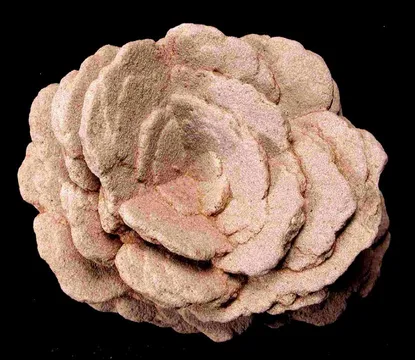
Picher Field, USA - premier lead-zinc locality in the Tri-State District; resinous sphalerite on chert, sharp galena, and prized paragenesis for collectors.
Key facts
Picher Field is one of the great American lead-zinc localities: not a single mine, but a broad mining field straddling Ottawa County, Oklahoma, and Cherokee County, Kansas, at the western end of the Tri-State Mining District. For collectors, its importance rests on a rare combination of industrial scale and specimen quality. The ore was a Mississippi Valley-type replacement system in Mississippian carbonate rocks, especially the cherty Boone Formation, where hydrothermal fluids used breccias, joints, solution openings, and favorable limestone beds to deposit sphalerite and galena with dolomite, calcite, chalcopyrite, marcasite, pyrite, jasperoid, and a suite of minor copper-arsenic and supergene minerals.
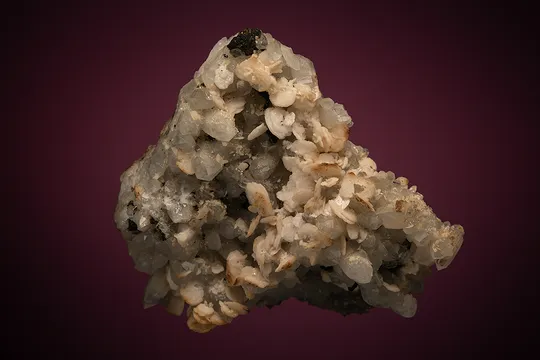
The best Picher specimens have a look that experienced collectors recognize instantly: resinous to wet-looking “ruby jack” sphalerite on pale chert; black jack sphalerite with flecks or small brassy crystals of chalcopyrite; sharp cubic and octahedral galena, sometimes with later epitaxial overgrowths that produce “fortification” patterns; and pale pink saddle dolomite supporting small golden chalcopyrite. Calcite can be merely late white or amber gangue, but it can also be a commanding cave mineral, with large scalenohedra and flattened rhombohedra from the late stages of the system. Ordinary pieces are abundant; great pieces are sharply crystallized, undamaged, and carry enough matrix or association to show the paragenesis rather than just a loose ore fragment.
Regional View
Country View
Historically, the Picher boom was immense. The town of Picher, Oklahoma, grew after the great ore discovery of 1913, incorporated in 1918, and by the mid-1920s stood at the center of one of the world’s most productive zinc-lead fields. The scale that made the district famous also made it geologically legible: thousands of shafts, drill holes, stopes, mills, and maps exposed an ore system in unusual detail. For modern collectors, that history gives Picher specimens a double value: they are classic sulfides from a major ore province, and they are survivors from a landscape now defined by environmental remediation, subsidence hazards, and the disappearance of the mining town itself.

Photo: James St. John / Wikimedia Commons

Search for specimens: View all specimens from Picher Field, USA
Picher Field occupies roughly 350 square kilometers at the Oklahoma-Kansas border, a few miles west of Missouri, and forms the western, most productive part of the Tri-State lead-zinc region. The host sequence is Mississippian carbonate and chert, especially the Boone Formation, which in the Picher area includes ore-bearing limestone, fossiliferous dolomite, cotton rock, nodular chert, and brecciated chert-limestone intervals. The ore is not vein mining in the narrow hard-rock sense; it is chiefly replacement and open-space filling. Sphalerite and galena replaced limestone in favorable horizons and also crystallized in vugs, caves, fracture seams, and chert breccias. The typical Picher specimen is therefore not a single vein slice but a piece of replaced carbonate-chert terrain: chert or jasperoid matrix, pink or gray dolomite, dark sphalerite, steel-gray galena, brassy chalcopyrite or marcasite, and late calcite.
The ore bodies were organized into “runs,” irregular curvilinear zones that followed joints, solution channels, and structural trends. In places, two or more ore-bearing beds lay one above another and merged into thick ore runs; elsewhere the system broadened into low-grade blanket or “sheet-ground” deposits, especially in the Grand Falls Chert Member of the Boone Formation. Rich mineralization developed around altered dolomite cores. In dolomite-bearing ground, dolomite could form crude circular or irregular replacement masses hundreds of feet across, bordered outward by jasperoid and then by open chert rubble known as boulder ground. The richest stopes tended to follow the margin of the dolomite: sphalerite was most concentrated just inside the dolomite edge, galena just outside it, while black jack sphalerite and the copper-arsenic minerals chalcopyrite, enargite, and luzonite belonged especially to the inner dolomite side.
The main commercial ore minerals were sphalerite and galena, with zinc strongly dominant over lead in production. Chalcopyrite, enargite, and luzonite were mineralogically important but economically minor; copper was not a normal recovered product from Picher ore. Gangue and alteration minerals included dolomite, jasperoid, calcite, minor quartz and barite, marcasite, pyrite, and a suite of oxidized or secondary species near the surface and in weathered mine waste. The broad paragenetic order recognized in the classic USGS work begins with dolomite and jasperoid, then sphalerite, chalcopyrite, cubic galena, marcasite and pyrite, dissolution and renewed galena growth, later octahedral galena, enargite and luzonite, calcite and late chalcopyrite, and finally flat rhombohedral calcite.
The boom locality owes its origin story to late 1913, when a Picher Lead Company drill rig became stuck in mud during a thunderstorm on Quapaw land. Rather than dismantle it immediately, O. S. Picher suggested drilling where it sat; the hole struck rich lead-zinc ore and triggered a rush of further discoveries. Picher town developed around the strike on Harry Crawfish’s allotment and took its name from O. S. Picher, owner of the Picher Lead Company. By 1915 the discovery had led to many additional strikes, and by 1918 Picher was incorporated. During the high-production years, the town and field became a dense industrial landscape of shafts, mills, rail lines, drill holes, chat piles, and service businesses.
Operators and properties changed over time, but Eagle-Picher became the name most closely tied to the field. The Picher Lead Company and Eagle interests formally merged in the 1910s, and Eagle-Picher later became the dominant corporate presence as smaller operators declined or consolidated. In 1927, 248 mills were operating in the Picher Field, reflecting the lease pattern in which mills were built on individual forty-acre tracts; later centralized milling reduced that sprawl. Production peaked during the world-war and interwar decades, and wartime demand gave the field national importance. By the 1950s, lower grades, depleted reserves, pumping costs, and declining economics forced contraction. Eagle-Picher shut down in 1958 pending better conditions, resumed at a reduced rate in 1960, and most significant Picher-area lead-zinc mining was finished by the late 1960s, with district records and related activity extending into the 1970s.
Specimen recovery came from working stopes, vugs, ore caves, and mine dumps rather than modern organized collecting. Important named mines and areas include Cardin and Commerce on the Oklahoma side, Baxter Springs and Treece on the Kansas side, and properties such as the Eagle Picher, Golden Hawk, Woodchuck, Mid-Continent, Grace Walker, John Beaver, Webber, Barr, Admiralty, Bendelari, Boska, and Dobson mines or tracts. Many older labels simply say “Picher,” “Picher Field,” “Tri-State District,” “Ottawa Co., Oklahoma,” or “Cherokee Co., Kansas,” and that level of precision is common for authentic historic pieces. Mine-specific labels are desirable, but because ore runs and collecting habits crossed property names, a credible old Picher Field label is often more realistic than a newly over-precise attribution.
Collecting access today is fundamentally different from the historical situation. Picher and neighboring mining lands are tied to the Tar Creek Superfund site, and the landscape contains contaminated chat, unstable mine workings, mine shafts, sinkholes, and ongoing remediation areas. The former town of Picher was disincorporated in 2009 after buyouts and evacuation, and remaining lands may be tribal, federal, private, restricted, or active cleanup areas. Modern collectors should regard Picher as a historic specimen locality, not a casual field-collecting destination. Legal permission, safety restrictions, and contamination concerns are decisive. The specimens on the market now are overwhelmingly from old mine production, old collections, dealer inventories, and estate material.
Sphalerite is the defining Picher mineral, occurring as replacement ore, disseminated grains, and abundant open-space crystals in vugs and ore caves; crystals commonly range from small fractions of an inch to 4 or 5 inches across, with exceptional crystals reported at more than a foot. Collectors prize three classic looks: rosin-brown “rosin jack,” red to deep reddish brown “ruby jack,” and black “black jack,” the last especially associated with dolomite-bearing ground and commonly accompanied by chalcopyrite. The strongest pieces show sharp, lustrous crystals rather than massive ore, preferably on chert, jasperoid, dolomite, calcite, or galena, and the most desirable ruby-jack specimens combine translucency, red internal fire, and undamaged faces; ordinary pieces are dark, cleaved, massive, or so removed from matrix that they lose the Picher paragenetic story.
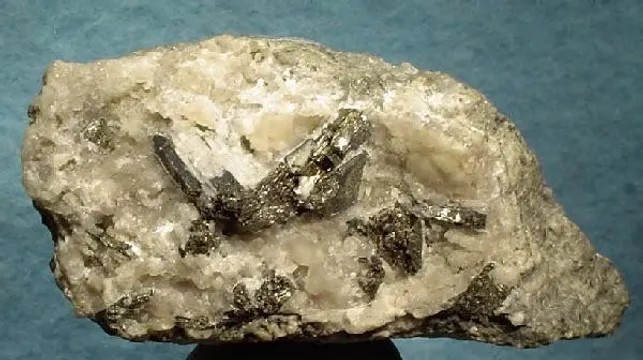
Galena from Picher Field occurs as replacement masses, disseminated grains, and well-formed crystals in open spaces, with cubic crystals generally from tiny sizes to about 3 inches and exceptional cubes to around 8 inches; later octahedral crystals are less common, usually smaller, and mineralogically later than the cubes. The best collector pieces show sharp cubic, octahedral, cuboctahedral, hoppered, or epitaxial “fortification” growth with metallic gray luster, ideally set on chert or sprinkled with ruby-jack sphalerite, marcasite, calcite, or dolomite. Because Picher galena commonly records etching, resorption, and renewed growth, excellent pieces may have complex, stepped, skeletal, or overgrown surfaces rather than simple textbook cubes; poor examples are heavily bruised, dull, cleaved, or massive without attractive form.
Chalcopyrite is a minor but highly characteristic Picher associate, mostly confined to dolomite-bearing ground, where it occurs as small brassy crystals on earlier sphalerite, dolomite, galena, or other vug minerals and less commonly as minute inclusions in sphalerite. Typical crystals are small, often only a few millimeters, with reported crystals commonly to about 1/4 inch and rare examples to about 3/4 inch, but their collector importance is disproportionate because they mark the inner dolomite side of the system and can appear as bright golden flashes across black jack sphalerite or pale pink saddle dolomite. Good specimens have sharp brassy crystals with clean contrast and minimal tarnish; ordinary examples are microscopic specks, dark altered coatings, or chalcopyrite lost visually against massive sulfide.
Dolomite at Picher is both a gangue mineral and a guide to the best ore zoning, occurring as gray spar replacement of limestone and as pink spar crystals lining vugs and veinlets. The collector form is the pale pink to cream, translucent to pearly, saddle-shaped rhomb, often curved and stacked on chert or sulfide matrix, with tiny chalcopyrite, sphalerite, galena, marcasite, or calcite giving the piece its locality character. Fine Picher dolomite is not judged merely by crystal size, but by crisp saddle habit, pleasing color, sulfide association, and intact vug texture; plain gray spar replacement or broken massive dolomite is far more common and far less collectible.
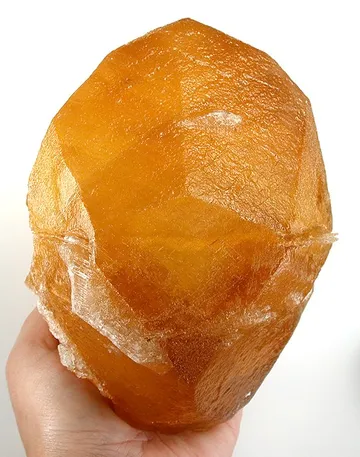
Calcite is a late-stage Picher mineral that fills veinlets and lines vugs and caves, and it can range from small colorless to amber crystals on sulfides to spectacular cave linings with scalenohedral crystals reported as much as 4 feet long. In specimen scale, collectors most often encounter pale, honey, grayish, or whitish calcite associated with sphalerite, galena, marcasite, chalcopyrite, dolomite, or chert; later flat rhombohedral calcite belongs to the final recognized stages of the mineral sequence. Good Picher calcites are clean, lustrous, undamaged, and attached to a meaningful sulfide-dolomite matrix, while ordinary pieces are cleaved, chalky, stained, or visually indistinct from abundant late carbonate gangue.
Quartz is not the collector headline at Picher, but silica is central to the locality because much of the ore system involved jasperoid, a pale brown to blackish microcrystalline quartz replacement of limestone or gray spar dolomite. True collectible quartz is uncommon compared with sphalerite, galena, calcite, and dolomite, and it appears most often as small drusy or crystalline silica associated with chert, sphalerite, galena, marcasite, or secondary minerals. The best Picher quartz specimens matter when they preserve the replacement texture or provide a clean sparkling ground for sulfides; quartz-only pieces from this field are much less diagnostic and should be valued cautiously unless the label and associations are strong.
Marcasite is a common Picher associate, forming crystals in openings, disseminations in jasperoid, replacements after earlier chalcopyrite, and preferential coatings on galena. On specimens it is most attractive as sharp brassy crystals or cockscomb-like aggregates on metallic galena, calcite, chert, or sphalerite, giving a warm contrast to gray and black sulfides. Good pieces have bright, sharp, stable-looking marcasite with no powdering or sulfurous decay; average examples are dull coatings, fine grains, or unstable pyritic-marcasitic crusts that are more important paragenetically than aesthetically.
Other documented Picher minerals include pyrite, enargite, luzonite, barite, anglesite, smithsonite, cerussite, aragonite, malachite, aurichalcite, hydrozincite, covellite, greenockite, cuprite, caledonite, linarite, hydroniumjarosite, plumbojarosite, native sulfur, and arsenopyrite. Enargite and luzonite are the most important rarities for advanced collectors: enargite occurs as small bright tabular, lath-shaped, or prismatic crystals, commonly on chalcopyrite, pink dolomite, or sphalerite, while luzonite is a more delicate and uncommon Cu3AsS4 polymorph associated with the same copper-rich inner-zone assemblage. Plumbojarosite, anglesite, smithsonite, calamine in the old broad sense, hydrozincite, and other secondary minerals reflect oxidation and post-mining weathering rather than the main specimen-forming sulfide stage. Picher is not primarily collected as a type-locality district; its fame rests on world-class sphalerite-galena-dolomite-calcite assemblages and on unusually well-documented MVT paragenesis.
The main authenticity issue with Picher specimens is not fakery so much as label precision. Old pieces are frequently labeled simply “Picher,” “Picher Field,” “Tri-State,” “Ottawa County,” “Kansas,” or “Oklahoma,” and many legitimate specimens cannot be assigned confidently to a single mine. Conversely, a modern label that names a specific mine without old supporting documentation should be treated as an attribution, not proof. The Oklahoma and Kansas sides share the same field, and many specimens entered commerce through dealers who used Picher as the recognizable locality even when the exact property was Cardin, Treece, Baxter Springs, Commerce, or another mine within the field.
Misidentification is also common. Enargite from Picher has been mislabeled as arsenopyrite on older institutional or dealer labels, and small dark coatings on chalcopyrite, marcasite, galena, or sphalerite can be difficult to identify by sight. “Calamine” on old labels should be read historically rather than as a modern species name; in this region it commonly refers to weathered zinc carbonate/silicate material such as smithsonite and hemimorphite rather than a current valid mineral species. “Ruby jack,” “rosin jack,” and “black jack” are variety or miners’ terms for sphalerite color and appearance, not separate species.
Condition is crucial. Galena is soft, heavy, and perfectly cleavable, so edge bruising, cleaved corners, and contact scars are routine; pristine octahedra, sharp cubes, and epitaxial overgrowths command a premium. Sphalerite cleaves easily and can show broken tips, chipped edges, or resinous faces dulled by handling. Calcite is easily bruised or cleaved, and large late crystals are often contacted. Marcasite-bearing pieces require extra caution: keep them dry, stable, and away from high humidity, because marcasite and some pyrite can decay, producing acidic residues that damage labels, boxes, and neighboring specimens.
Handling and storage should reflect the chemistry of the field. These are lead- and zinc-sulfide ores from a contaminated mining district; do not grind, saw, lick, acid-clean casually, or allow children to handle friable material. Wash hands after handling galena, dusty chert matrix, oxidized coatings, or chat-derived material. Avoid aggressive chemical cleaning, especially on specimens with calcite, dolomite, marcasite, or secondary lead and zinc minerals. Simple dry brushing, compressed air used judiciously, and careful mechanical trimming are usually safer than acid or water-soaking.
Market availability remains good for small to medium galena, sphalerite, and mixed sulfide specimens, because the field was enormous and many pieces were saved during mining. Choice cabinet specimens, large ruby-jack sphalerites, undamaged galena epitaxy, sharp galena on sparkling sphalerite-covered chert, and attractive dolomite-chalcopyrite combinations are much scarcer. Pieces with strong old provenance—Feist, Wulff, New York State Museum, California Academy of Sciences, or well-documented mine labels—are especially desirable. The locality is closed in the practical collecting sense, so the best specimens are finite historical material rather than renewable production.
The great Picher strike has the improbable shape of a campfire story, except that it built an industrial city. In late 1913, the Picher Lead Company was moving a drill rig across Quapaw land during a thunderstorm when the rig stuck in five feet of mud. Rather than take it apart at once, O. S. Picher told the crew to drill where the machine had bogged down. The hole cut rich lead-zinc ore. By 1915, that accident had produced twenty more strikes, and the empty prairie around the discovery was no longer empty. The town that formed on Harry Crawfish’s allotment took Picher’s name, and newspapers described it as having appeared almost overnight.
At its height, Picher was not a quiet mining camp but a busy industrial organism. The population reached 9,726 in 1920 and peaked at 14,252 in 1926, when mining was at full roar. More than fourteen thousand men worked in the mines, and another four thousand worked in roughly fifteen hundred mining-service businesses. An electric trolley system carried workers across the district as far as Carthage, Missouri. In 1927, 248 mills operated in the Picher Field, a landscape of headframes, ore bins, concentrating tables, rail sidings, and chat piles. The specimens collectors now prize—ruby sphalerite on chert, galena cubes, pink dolomite, brassy chalcopyrite—came out of a place that was also producing wartime metal on a national scale.
The prosperity had a peculiar geometry: forty-acre leases, each with its own mill; underground runs that followed rock structure rather than street plans; and, eventually, cavities beneath the town itself. By the time mining had finished, the field held roughly 1,500 shafts and more than 100,000 boreholes. Later mapping work compiled more than 400 historical underground maps into a single digital map of the workings, and even that was considered a minimum reconstruction because so many mine maps were incomplete, lost, or abandoned when companies left. What collectors see as matrix—chert, dolomite, jasperoid, calcite, sulfide—was once the wall of a stope, the roof of a cave, or the broken edge of a run.
The environmental ending was as dramatic as the beginning. After pumping stopped, the abandoned workings filled with mine water, and by the early 1970s contaminated water began escaping into the Tar Creek drainage. The gray-white chat piles that had looked like part of the town became a toxic landscape of lead, zinc, cadmium, acid drainage, and dust. Picher entered the Superfund story, then the buyout story, and finally the ghost-town story. An F4 tornado struck in spring 2008, damaging or destroying many homes and killing six people; the following year, Picher’s incorporated status was canceled. The mining field that once helped arm the country in wartime became a place where a town name remained on mineral labels after the town itself had effectively vanished.
Even the surviving public memory has been fragile. The Tri-State Zinc and Lead Ore Producers Association Office, listed on the National Register of Historic Places in 1997, later housed the Picher Mining Field Museum; it was destroyed by fire in 2015. Today, the strongest physical witnesses are not municipal buildings but specimens, maps, photographs, and the altered ground itself. A fine Picher galena or ruby-jack sphalerite is not just a sulfide collectible—it is a crystalline remnant of a boomtown, a war-metal district, a Quapaw-land mineral rush, and one of the most consequential mining landscapes in American environmental history.
Edwin T. McKnight and Richard P. Fischer, “Geology and Ore Deposits of the Picher Field, Oklahoma and Kansas,” U.S. Geological Survey Professional Paper 588, 1970 — The indispensable monograph for Picher geology, ore controls, mineral zoning, paragenesis, and species descriptions.
U.S. Geological Survey Publications Warehouse entry for Professional Paper 588 — Official USGS record for McKnight and Fischer’s 165-page Picher Field report.
Samuel Weidman, “The Miami-Picher Zinc-Lead District, Oklahoma,” Oklahoma Geological Survey Bulletin 56, 1932 — Early district-scale treatment of geology, mining methods, milling, production, and ore occurrence.
Samuel Weidman, “Miami-Picher Zinc-lead District,” Google Books record — Bibliographic view of the 1932 Oklahoma Geological Survey bulletin with searchable terms relevant to beds, mines, ores, and minerals.
Richard A. Schmidt, “Temperatures of mineral formation in the Miami-Picher District as indicated by liquid inclusions,” Economic Geology, 57(1), 1–20, 1962 — Key fluid-inclusion paper on formation temperatures for Miami-Picher sphalerite, pink dolomite, and calcite.
Nicholas L. Shepherd, Ed Keheley, Russell C. Dutnell, Carlton A. Folz, Brandon Holzbauer-Schweitzer, and Robert W. Nairn, “Picher field underground mine workings of the abandoned Tri-State Lead-Zinc Mining District in the United States,” Journal of Maps, 18(2), 331–341, 2022 — Modern digital mapping study compiling hundreds of historic maps and estimating the minimum extent and volume of underground workings.
DOAJ record for Shepherd et al., 2022 — Open-access bibliographic entry listing the authors and objectives of the modern underground-workings map.
KGS bibliography entry for Miami-Picher and Tri-State zinc-lead publications — Useful index to classic district literature, including Weidman, Tarr, Fowler and Lyden, Schmidt, and later geochemical work.
Wikimedia Commons: “Galena-249298.jpg” — Documented Picher Field galena specimen showing classic epitaxial “fortification” style.
Wikimedia Commons: “Galena-Sphalerite-252544.jpg” — Old Picher specimen of galena octahedra on silicified limestone dusted with ruby-jack sphalerite, ex. New York State Museum and George Feist Collection.
“The Town of Silent Poison (Documentary) - How Picher, OK Became the Most Toxic Town in America,” Keep Curious Co., YouTube — Long-form documentary on Picher’s mining boom, contamination, Superfund history, buyouts, tornado, and remaining landscape.
“The Creek Runs Red,” Independent Lens / PBS — Documentary portrait of Picher and Tar Creek residents confronting the health and environmental legacy of the mining field.
“Tar Creek,” Bullfrog Films / Jump the Fence Productions — Matt Myers documentary on the Tar Creek Superfund site and the human consequences of the Picher-area lead-zinc mines.
“About Tar Creek Documentary,” Tar Creek Film — Background page for the documentary, with production context and the filmmaker’s connection to the site.
“Closer look: Tar Creek Superfund Site in 2026,” 2 News Oklahoma / KJRH — Current video-news look at the remaining Picher landscape, chat mitigation, and long-term cleanup status.
Mindat: Picher Field, Tri-State Mining District, USA — Core locality page with coordinates, locality hierarchy, mineral list, photos, and references.
Mindat photo gallery: Picher Field, Tri-State Mining District — Large visual archive of Picher Field specimen and locality photographs.
Wikimedia Commons category: Picher Field, Tri-State District — Freely licensed photographs of Picher minerals, including galena, sphalerite, calcite, chalcopyrite, and historical images.
Oklahoma Historical Society: “Picher” — Concise historical overview of Picher town, mining boom, production significance, mills, decline, Superfund legacy, tornado, and disincorporation.
USGS / UNT Digital Library: “Geology and Ore Deposits of the Picher Field, Oklahoma and Kansas” — Best single source for geological and mineralogical depth.
USGS Scientific Investigations Report 2004-5043: “Hydrology and Ground-Water Quality in the Mine Workings within the Picher Mining District, Northeastern Oklahoma, 2002–03” — Technical hydrology and mine-water study relevant to the post-mining environment.
USGS Water-Resources Investigations Report 03-4248 — Comparison of 1976–77 and 2002 mine-shaft water quality in the Picher mining district.
USGS Scientific Investigations Report 2009-5032 — Study of selected metals in sediments and streams in the Oklahoma part of the Tri-State Mining District.
EPA Tar Creek Superfund Site profile — Federal cleanup profile for the Superfund site that includes the Picher area.
EPA Record of Decision: Tar Creek Superfund Site, Operable Unit 4 — Detailed decision document for chat piles, mine and mill waste, and smelter waste.
National Geologic Map Database entry for Weidman’s 1932 Miami-Picher bulletin — Bibliographic and download portal for the classic Oklahoma Geological Survey report.
National Geologic Map Database entry for McKnight and Fischer’s Professional Paper 588 — Official map and report catalog entry for the definitive Picher Field publication.
KGS: The Mineral Industry in Kansas in 1960 — Snapshot of late-stage Kansas-side lead-zinc operators and mines in the Picher Field area.
“Picher field underground mine workings of the abandoned Tri-State Lead-Zinc Mining District in the United States,” Journal of Maps — Modern open-access mapping and volumetric study of the underground workings.
_1.jpg)

