






A collector's guide to Oklahoma, USA: its geology, mining history and notable minerals, illustrated with the 45 specimens documented from this locality on EarthWonders.
Key facts
Oklahoma is a state-level collecting locality in the best old sense: not a single mine, but a set of sharply contrasting geological provinces that have each given collectors something unmistakable. Central Oklahoma’s Permian Garber Sandstone produced the state’s iconic barite roses—heavy, sand-rich BaSO4 rosettes whose red-brown color comes from iron-stained sandstone and hematite. Northwestern Oklahoma’s evaporite country, especially Great Salt Plains National Wildlife Refuge near Jet and Cherokee, produces the famous hourglass selenite crystals: clear to honey-brown gypsum blades and clusters with brown sand-and-clay inclusions trapped in the form of an hourglass. Northeastern Oklahoma, in Ottawa County, was part of the Tri-State lead-zinc district, the source of old-time galena, sphalerite, marcasite, pyrite, calcite, and dolomite specimens from the Picher-Cardin-Commerce mining camps. In the southwest, the Wichita Mountains and Granite Mountains add a rarer hard-rock note, including zircon and accessory minerals from Cambrian granites, pegmatites, gabbros, and related intrusions.
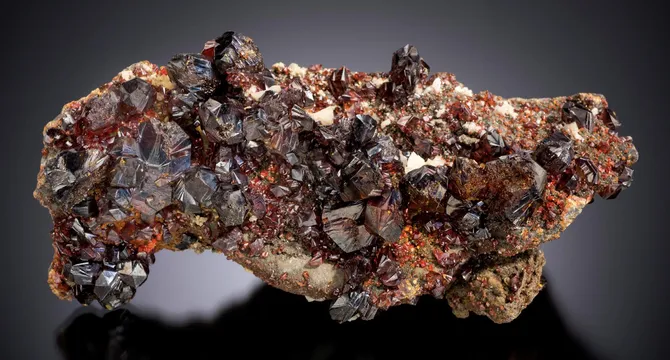
The best Oklahoma specimens have a look that is difficult to confuse with anything else. Fine barite roses show concentric, flower-like sprays of rounded tabular blades, not merely lumpy sandstone concretions; the most aesthetic pieces have crisp petal separation, rich red-brown color, and a sculptural balance between individual roses and clustered sprays. Great Salt Plains selenite is prized for transparent gypsum blades in which the brown hourglass inclusion is centered, symmetrical, and plainly visible. Old Tri-State material from Oklahoma is valued less for novelty than for pedigree: metallic galena cubes, resinous sphalerite, brassy pyrite or marcasite, and pale calcite from a mining field that is now largely inaccessible and historically burdened by environmental damage.
Regional View
Country View
Oklahoma’s specimen identity is tied to sedimentary fluids. The barite roses formed after the Garber Sandstone was lithified, when barium-bearing groundwater met sulfate-producing conditions in pore spaces and along porous horizons. The Great Salt Plains crystals are even more visibly active: saline groundwater dissolves Permian salt and gypsum-bearing strata, rises into the playa, evaporates under the Oklahoma sun, leaves halite at the surface, and grows gypsum just below the crust. That combination—ancient Permian evaporites and modern evaporation—makes the state a living classroom for sulfate mineral formation.

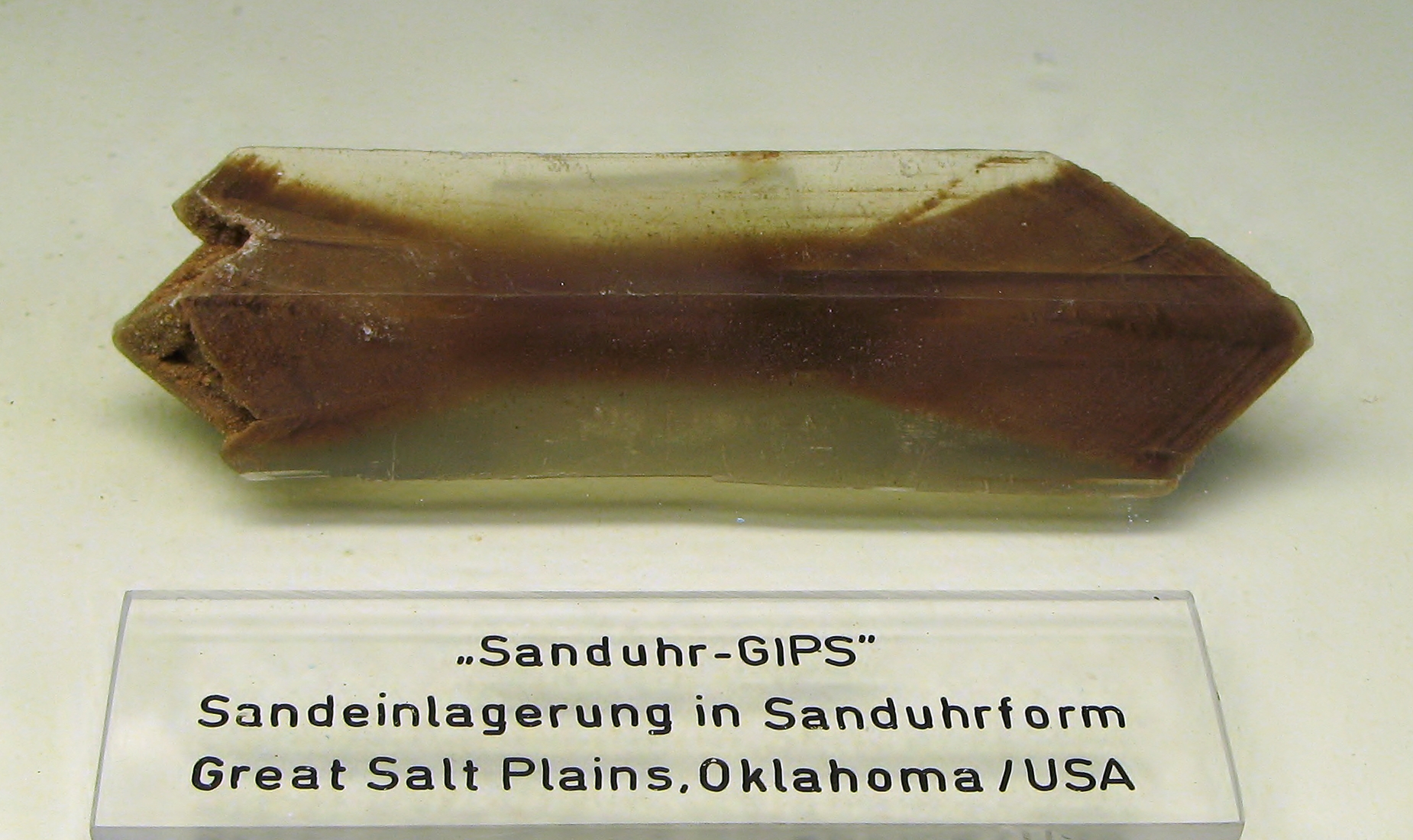
Photo: Ra'ike via Wikimedia Commons
Search for specimens: View all specimens from Oklahoma, USA
Oklahoma’s collectible minerals come from several deposit types rather than one district. The central Oklahoma barite roses are diagenetic to epigenetic sulfate mineral growths in the Permian Garber Sandstone outcrop belt, particularly from the broad Norman–Noble–Lake Thunderbird–Stanley Draper Lake region and related exposures through parts of Cleveland, Oklahoma, Lincoln, McClain, and Garvin counties. They are not vein-cavity barites in the classic mining sense; they grew in sandstone pore spaces, incorporating angular quartz sand as the barite blades developed. The red color is inherited from the iron-rich red-bed host, so a fresh broken rose reveals the intimate mixture of barite, sand, and iron-stained sediment.
The Great Salt Plains occurrence in Alfalfa County is a modern evaporite collecting locality superimposed on a deep Permian evaporite system. Brines created by dissolution of buried salt beds migrate to the surface near Great Salt Plains Lake and the Salt Fork of the Arkansas River. Halite crusts the flats, while gypsum crystallizes in the wet sand and silt just beneath the salt-encrusted surface. The diagnostic hourglass pattern forms as sand and clay particles are captured in the growing gypsum crystal. These crystals are not ancient pocket specimens pried from bedrock; they form and dissolve on human time scales, controlled by brine chemistry, evaporation, moisture, and temperature.
Western Oklahoma also contains immense bedded gypsum resources, chiefly in Permian evaporite units such as the Blaine Formation and Cloud Chief Formation. These produce the gypsum escarpments, gypsum caves, alabaster, satin spar, selenite, and commercial quarry rock for which the state is known. The Southard and Watonga quarry areas in Blaine County are notable not only for gypsum but also for associated evaporite and borate minerals recorded from quarry environments, including celestine, ulexite, probertite, priceite, anhydrite, and thenardite. Alabaster Caverns in Woodward County is the classic public example of Oklahoma gypsum karst, with selenite, white and pink gypsum, and rare black alabaster described from the cave system, though collecting in state-park cave environments is not a specimen source for modern commerce.
Northeastern Oklahoma’s mining history belongs to the Tri-State lead-zinc district, one of the great Mississippi Valley-type ore provinces of North America. In Ottawa County the principal ore minerals were galena and sphalerite, with abundant pyrite, marcasite, dolomite, calcite, and local secondary lead-zinc-copper species. The ore-bearing zone was hosted mainly in cherty Mississippian carbonate rocks of the Boone Formation. Commercial mining began in the Oklahoma portion near Peoria in 1891, expanded around Quapaw, Miami, Commerce, Picher, and Cardin in the early twentieth century, and reached extraordinary scale after the 1913 ore strike on Harry Crawfish’s allotment at Picher. By the 1920s Ottawa County was among the world’s great lead-zinc producers, with hundreds of mills in the field and major operators including Eagle-Picher, Commerce Mining and Royalty Company, Federal Mining and Smelting Company, Childers Mining Company, LaClede Lead and Zinc Company, and American Lead and Zinc Company. Mining declined after the exhaustion of high-grade ore, temporary shutdowns in 1959–1960, and the growing cost of pumping and operation; the field closed permanently in 1970.
The Picher-Cardin area is not a casual collecting ground. Much of the district is within the Tar Creek Superfund landscape, with chat piles, subsidence hazards, contaminated sediment, unstable shafts, and restricted or privately controlled land. Fine Oklahoma Tri-State specimens are therefore usually old collection pieces, mine-run material saved decades ago, or specimens with older labels from named mines such as the Anna Beaver, John Beaver, Admiralty, Golden Hawk, Scott, Van Pool, and related Ottawa County workings.
South-central and southwestern Oklahoma add a smaller but important suite of red-bed copper and igneous localities. Around Paoli in Garvin County, sediment-hosted copper-silver mineralization yielded chalcocite, digenite, anilite, covellite, bornite, chalcopyrite, native copper, native silver, cuprite, brochantite, malachite, azurite, chrysocolla, chalcanthite, calcite, aragonite, hematite, and goethite. At Creta in Jackson County, the Eagle Picher Mine worked shale-hosted copper-silver mineralization beginning in the mid-1960s and closing in 1975; it is noted by collectors for secondary copper species including brochantite, botallackite, callaghanite, malachite, and associated sulfides and oxides. The Wichita Mountains and Granite Mountains, by contrast, are hard-rock collecting country, with zircon, ilmenite, magnetite, apatite, feldspar, quartz, zeolitic minerals, and unusual mafic-to-felsic intrusive assemblages tied to the Cambrian Southern Oklahoma aulacogen.
Modern collecting access is highly locality-dependent. The Great Salt Plains crystal digging area is the best-known legal public mineral-collecting site in the state, but collecting is limited to the designated area and season, with daily personal-use limits and a no-sale rule. Barite roses are mostly found on private land, construction exposures, road cuts, driveways, and eroding red-bed outcrops; permission and local ordinances matter. Commercial gypsum quarries, old lead-zinc mines, copper prospects, and Wichita Mountains refuge lands are not open-access collecting sites, and serious collectors should rely on documented older specimens, organized club access where legitimate, or material from reputable dealers with precise locality labels.
Barite is the mineral that made Oklahoma instantly recognizable to collectors: the state rock is the barite rose, a rosette of rounded tabular BaSO4 blades grown in the Garber Sandstone and packed with red quartz sand. Typical roses are small cabinet to miniature-size pieces, commonly in the 1–10 cm range, though clusters can be much larger and the largest known single rose has been measured at roughly half a meter across and well over 100 kg. The finest pieces from the Norman–Noble–Lake Thunderbird–Stanley Draper Lake belt show distinct “petals,” strong radial growth, good red-brown color, and minimal abrasion; ordinary pieces are dull sandy nodules with only vague rosette form. The best Oklahoma barite roses are judged as sculptural specimens as much as mineralogical ones: sharp petal outlines, balanced clusters, and a clean, unbroken display face matter more than sheer size.
Baryte is the formal mineral name often used in international cataloging for the same BaSO4 species that American labels commonly call barite, and Oklahoma material is most often catalogued as baryte var. baryte rose or simply “rose rock.” These specimens are not free-grown transparent tabular barytes from open cavities; they are sand-bearing, red-bed rosettes whose blades grew through sandstone pores and inherited both texture and color from the Garber host. In collector terms, a good Oklahoma baryte specimen should be recognizably floral, heavy for its size, and composed of real crystal blades rather than rounded concretionary lumps. Pieces with multiple attached roses, contrasting red and tan zoning, and little modern glue or oiling are preferable to tourist-polished or repaired clusters.
Gypsum is Oklahoma’s great evaporite mineral, present both as massive bedded deposits in the Permian gypsum country of the west and as collectible crystals at Great Salt Plains. Western Oklahoma’s Blaine and Cloud Chief gypsum beds form escarpments, mesas, caves, alabaster masses, satin spar seams, and quarry exposures, while Great Salt Plains produces modern gypsum crystals from brine-saturated sand just below the salt crust. Collectible gypsum from Oklahoma ranges from white and pink alabaster to satin spar and selenite, but for mineral-specimen collectors the prime pieces are complete bladed or swallowtail-type crystal groups with sharp terminations, strong translucency, and minimal dehydration, bruising, or cleavage damage. Quarry-associated gypsum specimens with celestine or borate minerals are much less common on the market than Great Salt Plains crystals or mass-market alabaster.
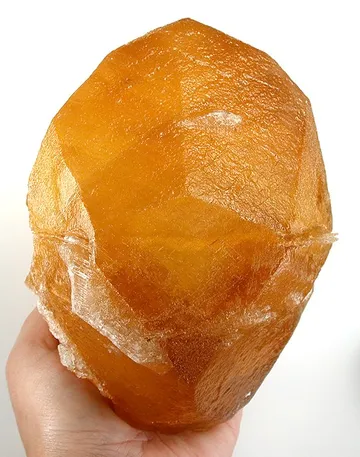
Selenite from Oklahoma means, above all, hourglass selenite from Great Salt Plains National Wildlife Refuge in Alfalfa County. The crystals are gypsum blades and clusters that form in the top wet subsurface of the salt flat; sand and clay, colored brown by iron oxides and other sedimentary material, are trapped in the otherwise clearer crystal as an hourglass-shaped inclusion. Most collector examples are finger-length blades to small clusters, but larger blades in the 8–10 inch range and broad hand-sized clusters have been reported, with exceptional finds approaching two feet across. Fine specimens have a centered, symmetrical hourglass, transparent margins, intact terminations, and natural cluster architecture; lesser pieces are cloudy, etched, broken, or merely sandy gypsum without the diagnostic inclusion.
Oklahoma zircon is a specialist’s mineral, best associated with the Wichita Mountains and Granite Mountains rather than the state’s better-known evaporites. The historic Crystal King Zircon mine, also called the Ashton location, in the Wichita Mountains of Comanche County is the classic specimen source, with old reports describing reddish-brown, yellowish, and nearly colorless crystals in pegmatitic rock and later collector material showing sharp brownish-red crystals around miniature size. Zircon is also recorded from the Granite Mountains near Lugert, Mount Scott granite occurrences, Indiahoma, and related igneous localities. Good Oklahoma zircon specimens are rare compared with barite roses or selenite; the desirable pieces are well-formed tetragonal crystals with glossy faces, deep red-brown color, and credible old labels tying them to the Crystal King or nearby Wichita Mountains localities.
Other Oklahoma minerals of collector interest include Tri-State galena, sphalerite, marcasite, pyrite, calcite, dolomite, cerussite, anglesite, and enargite from Ottawa County; red-bed copper minerals such as native copper, native silver, chalcocite, digenite, anilite, covellite, bornite, brochantite, malachite, azurite, chrysocolla, cuprite, and chalcanthite from Paoli and nearby Garvin County localities; botallackite and callaghanite from the Creta copper mine; celestine, ulexite, probertite, priceite, thenardite, anhydrite, and gypsum from the Southard gypsum quarries; zeolitic analcime and natrolite from Wichita Mountains intrusive rocks; coesite from the Ames impact structure; native sulfur and unusual sulfur-system minerals from Zodletone Spring; and Oklahoma meteorite minerals including taenite, kamacite, tetrataenite, troilite, chromite, diopside, and rare meteoritic diamond records.
The most common authenticity problem with Oklahoma material is not synthetic manufacture but loose labeling. “Oklahoma rose rock” should be barite, not gypsum desert rose, and it should have the characteristic sandy red-bed texture and heft. Gypsum desert roses from North Africa, Mexico, and other evaporite basins are sometimes casually confused with Oklahoma barite roses; they are softer, lighter, and often paler, with more bladed gypsum habits rather than dense barite rosettes. True Oklahoma barite roses are heavy for their size, commonly red-brown to tan, and made of rounded tabular barite blades packed with quartz sand.
Tourist-market rose rocks may be oiled, sprayed, glued to bases, or assembled into clusters. Repairs are not automatically disqualifying on large rosette groups, because the material can be friable and sandy, but repairs should be disclosed. Watch for artificially enhanced color, varnish gloss, and clusters that look too symmetrical or are built from unrelated roses. The best natural specimens retain a matte to slightly satiny surface, visible sand grains, and irregular but coherent growth geometry.
Great Salt Plains selenite requires special ethical attention. Under current U.S. Fish & Wildlife Service rules, visitors may collect only in the designated crystal digging area during the April 1 to October 15 season, each person may take up to ten pounds and one large cluster per day, and selling the crystals is not allowed. Any modern commercial specimen labeled from the refuge should therefore be treated cautiously unless it has a legitimate older collection history or other clear documentation. For personal collection, Salt Plains crystals should be dried carefully and handled as fragile gypsum: they cleave, bruise, and scratch easily, and repeated soaking or aggressive washing can dull surfaces and loosen included sediment. They should not be cleaned with acids.
Oklahoma Tri-State lead-zinc specimens need the same cautions as comparable material from Missouri and Kansas, plus added locality scrutiny. “Tri-State District” is often used broadly, and pieces labeled only Tri-State may not be from Oklahoma. For Oklahoma attribution, collectors should prefer labels naming Picher, Cardin, Commerce, Quapaw, Miami, Ottawa County, or a specific mine. Galena and sphalerite from this district can be heavy, sharp, and attractive, but marcasite-rich pieces may deteriorate in humid storage; keep suspect marcasite dry, isolated, and monitored for sulfur odor or efflorescence. Lead-bearing specimens should be handled with normal hygiene precautions and kept away from children.
Zircon from Oklahoma is rare enough that locality labels matter greatly. A loose brown zircon crystal without a Crystal King, Ashton, Wichita Mountains, Lugert, Mount Scott, or Indiahoma provenance is hard to value as Oklahoma material. Collectors should also distinguish true zircon from titanite, garnet, rutile, iron oxides, and weathered feldspar or quartz fragments in granitic matrix.
In the market, barite roses remain the most available Oklahoma mineral specimens, ranging from inexpensive singles to much better old clusters with strong form. Great Salt Plains hourglass selenite is common in personal collections but ethically problematic in commerce under current refuge rules. Old Oklahoma Tri-State sulfides and carbonates are obtainable but much less abundant than Missouri and Kansas material. Paoli and Creta copper minerals, Southard quarry borates, and Wichita Mountains zircon are genuinely specialist pieces; when well labeled, they deserve more respect than their modest size or visual flash might initially suggest.
The barite rose has a folklore shadow nearly as persistent as the mineral itself. A widely repeated story says the roses formed from the tears of Cherokee women and the blood of Cherokee men during the forced removal from Georgia in 1838–1839. The tale is powerful, but it is not a Cherokee explanation of the mineral. Representatives of the Cherokee Nation have disavowed it, and geologically the point is plain: the classic rose-rock belt does not occur on lands granted to the Cherokee. For collectors, that matters. Oklahoma’s rose rocks are already remarkable without borrowed tragedy; they are Permian red-bed minerals shaped by groundwater chemistry, not relics of a myth imposed after the fact.
The state embraced the rose rock with unusual enthusiasm. In 1968, Oklahoma House Bill 1277 made the barite rose the official state rock. Fifteen years later, Noble became the official rose rock capital of Oklahoma—and, by local pride and mineralogical implication, “of the world”—through an emergency act of the Oklahoma House of Representatives. The humor in that legislative flourish is part of the locality’s charm: few mineral specimens have been so thoroughly adopted by a state’s civic imagination. Around Noble and Norman, the rose rock moved from field curiosity to souvenir counter, school lesson, lapidary object, and cabinet specimen.
The scale of the largest roses gives the Oklahoma occurrence a different kind of drama. Ordinary collectors think in centimeters: a neat 5 cm rose, a 10 cm cluster, a hand-sized group. The biggest known single rose measured about 51 x 56 x 53 cm and weighed about 135 kg; the largest clusters have been described in the hundreds of kilograms. Those giants are not delicate sprays from a pocket wall but dense, sand-heavy masses—mineral flowers with the weight of small boulders.
At Great Salt Plains, the collecting ritual is almost the opposite of hard-rock mining. The ground can look like a pale, empty planet until a shovel breaks the crust. Families drive through the gate near Cherokee, follow the bright orange signs to the annual dig area, and work shallow holes no more than two feet deep. Rain may reveal crystals in old spoil piles; dry heat may crust the surface; wind can turn salt into grit against skin and eyes. The best technique is not force but patience: open a shallow pit, let briny water seep in, wash the walls by hand, and feel for the rigid geometry of gypsum blades in the mud.
One of the most unexpected stories at Salt Plains is that digging, carefully limited, can help wildlife. The refuge is managed for birds as well as people, and the crystal season is closed through winter and early spring to reduce disturbance to migratory waterbirds, including whooping cranes. Yet the very holes and spoil mounds left by crystal diggers can benefit snowy plovers: mounded spoil gives the birds higher nesting sites above flood-prone flats, and the holes provide habitat for brine flies, an important food source. In a mineral-collecting world often framed as extraction versus preservation, Salt Plains is a rare place where regulated collecting and habitat management can work together.
The Picher story is darker. The town rose almost overnight after the 1913 lead-zinc strike on Harry Crawfish’s allotment, took its name from O. S. Picher of the Picher Lead Company, incorporated in 1918, and by 1926 had a population above 14,000. In its boom years the Picher field helped supply more than half of the lead and zinc used by the United States during World War I, and Ottawa County’s mines made Oklahoma a world zinc leader through much of the early twentieth century. Then the same ore field that made the towns rich left them surrounded by chat piles, undermined ground, contaminated water, and abandoned workings. For collectors holding an old Picher galena or sphalerite, the label carries more than locality value; it is a survivor from one of America’s most productive and most damaged mining landscapes.
_5.jpg)
