A collector's guide to Pala Chief Mine, USA: its geology, mining history and notable minerals, illustrated with the 91 specimens documented from this locality on EarthWonders.
Key facts
The Pala Chief Mine is one of the classic American gem-pegmatite localities: a steep, sun-struck network of open cuts, dumps, short tunnels, and old pocket zones on Chief Mountain above Pala in northern San Diego County, California. For collectors, its name is tied above all to kunzite—the lilac to pink gem variety of spodumene—and to the broader early-20th-century flowering of the Pala district, when southern California suddenly became one of the world’s essential sources of gem tourmaline, spodumene, lepidolite, beryl, and quartz. The mine is part of the lithium-rich, rare-element pegmatite province of the Peninsular Ranges batholith, with complex granitic pegmatite dikes hosted largely by gabbroic rocks. Its productive zones are not broad ore shoots in the metallic-mining sense, but thin, discontinuous pocket-bearing pegmatite seams along and within quartz-spodumene core segments.
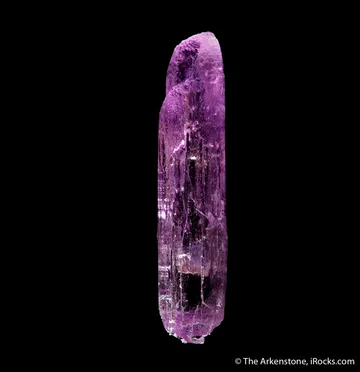
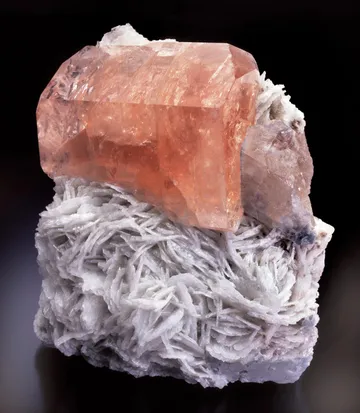
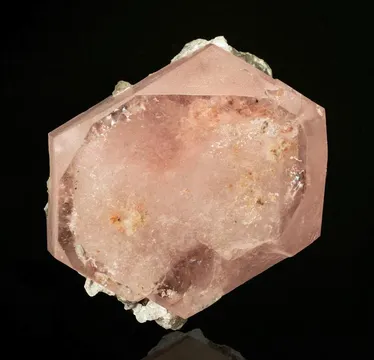
The finest Pala Chief specimens have the unmistakable look of true pocket pegmatite: glassy, etched spodumene blades; pastel lilac kunzite with strong pleochroic color down the long axis; straw-yellow triphane; stout pink and blue-gray tourmalines on quartz and cleavelandite; smoky to citrine quartz floaters; purple lepidolite; albite; muscovite; and beryl varieties including aquamarine and morganite. The mine’s historical importance is unusually concentrated. Its gem deposits were located in May 1903, just after the first recognition of lilac spodumene in the district, and Pala Chief quickly became the source that gave the new gem its public stature: large, transparent, richly colored crystals, many cut for Tiffany & Co. and promoted by George Frederick Kunz.
Regional View
Country View
The geology rewards careful study because the mine does not behave like a simple single vein. Jahns and Wright described the main pegmatite as part of a braided system of branching and rejoining dikes, with rolls and warps in the contacts, a gently dipping “blanket” exposure near the old workings, and a more complicated structure as the dike steepens southwestward. The gem zones occur where quartz-spodumene core segments and pocket pegmatite meet: places rich in lepidolite, albite, alkali tourmaline, quartz, spodumene, beryl, coarse potash feldspar, and rarer accessory minerals. In the central and northwestern workings, tourmaline was especially abundant; toward the southeast, spodumene became the dominant gem mineral.

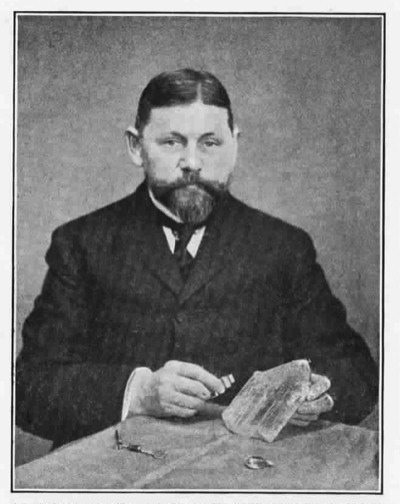
Photo: Pala Chief Mine
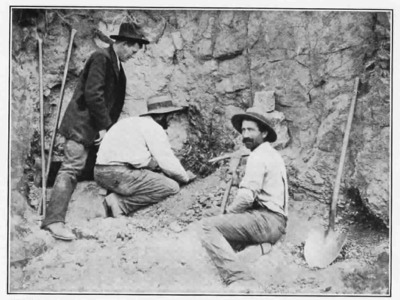
Photo: Pala Chief Mine
Search for specimens: View all specimens from Pala Chief Mine, USA
Pala Chief is a gemstone and specimen mine in an LCT-type granitic pegmatite system on Chief Mountain, about two miles northeast of Pala, in the Pala mining district of San Diego County. The district’s pegmatites were emplaced in the final stages of the southern California batholith and are exposed as hundreds of dikes across roughly thirteen square miles. The Chief Mountain bodies belong to the lithium-cesium-tantalum family of rare-element pegmatites, which explains the mine’s characteristic suite: spodumene, lepidolite and other lithium micas, tourmaline, beryl, albite, quartz, feldspar, and rare accessory phosphates, oxides, and vanadates.
The main Pala Chief pegmatite is a thick, persistent dike, historically described as 16 feet to at least 33 feet thick, traceable for nearly 2,000 feet south of the mine area and about 1,200 feet westward toward Salmons Creek before passing under alluvium. It trends roughly north-northwest to northwest and dips southwest at variable angles. Its upper part contains coarse graphic granite with subordinate albite and muscovite; the lower part is fine-grained quartz-albite-perthite-garnet “line rock,” locally well layered and locally sugary and massive. Between these units, and especially around discoidal quartz-spodumene core segments in the southeastern mine area, the pocket pegmatite developed.
This internal structure matters directly to specimen quality. The pocket-bearing unit is commonly only one to three feet thick, not a massive continuous ore band. Where it is best developed, it is a composite of lepidolite, albite, tourmaline, quartz, spodumene, beryl, coarse potash feldspar, and rarities. Some spodumene crystals were embedded as unaltered clear remnants of much larger lath-shaped crystals enclosed in massive quartz; others projected into clay-filled cavities with quartz crystals and scaly lepidolite. Much of the quartz shows a milky outer zone that gives the crystal surface a white, enamel-like appearance.
The original gem deposits were located in May 1903 by John Giddens, Frank A. Salmon or Salmons, Bernardo Hiriart, and Pedro Peiletch. Early work was concentrated in surface cuts, where pocket zones could be followed on the face of the pegmatite. Jahns and Wright later described the principal open cut as about 280 feet long, 20 to 65 feet wide, and locally as much as 25 feet deep at the face, with irregular tunnels and inclines extending northeastward from the cuts. Early descriptions by Kunz noted open cuts, a short tunnel, a layered pegmatite ledge, lithia-bearing mica along the pocket line, and pockets carrying quartz crystals with pink and white spodumene.
The mine was most intensively worked from 1903 to about 1914. Its early production included tourmaline, much of it sold into the China carving trade, and significant quantities of gem-quality kunzite, some of which went to Tiffany & Co. for cutting. The old operation also produced quartz crystals, beryl, lepidolite, and associated pegmatite minerals. After 1914, mining became sporadic. Bob Bartsch worked the mine for several months in the mid-1960s and found triphane and kunzite. Pala International worked it in the early 1970s, reportedly with minor finds. Bob Dawson owned the mine from the 1980s until 2011 and made several important discoveries, including notable tourmaline-in-matrix specimens. In 2011 the mine passed to Oceanview Mines, LLC.
Several named finds give Pala Chief its collector mythology. The early mine is remembered for the “Bridal Chamber,” a large pocket encountered during the first period of mining. In November 2000, Bob Dawson drove a short tunnel and, after only about 3 meters of pegmatite, hit a pocket roughly 1 meter long, 0.5 meter wide, and 0.3 meter thick. It produced five well-formed pink tourmaline crystals with flat pale blue-gray terminations, the largest measured 8.4 x 6.2 cm, along with deeply etched pink kunzite crystals to 10.7 x 2.7 cm. A later Pala Chief triphane pocket, reported from December 2011, yielded nearly half a ton of mostly gemmy straw-yellow spodumene, with only a few pale lilac kunzites and about fifteen sharply formed specimens showing good terminations and striated prism faces.
Collecting access today is controlled and should not be confused with casual public land rockhounding. Pala Chief is private property under Oceanview Mines, LLC, and is not generally open except for scheduled fee digs. The official Chief digs are self-serve, reservation-only events on old dumps and nearby prospect material, separate from the more structured Oceanview screening operation. Participants bring their own tools, work dumps and exposed pegmatite faces, and may find tourmaline, aquamarine, morganite, triphane, kunzite, smoky to citrine quartz, clear quartz, feldspar, cleavelandite, mica, and occasional garnet. The material is less processed than the Oceanview fee-dig pile, so it offers a more authentic and physically demanding experience, with better odds for matrix pieces but no guarantee of gem pockets.
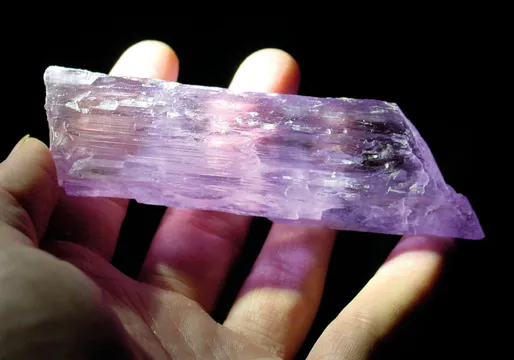
Pala Chief kunzite is the locality’s signature mineral: lilac to pink spodumene, usually as bladed, etched, strongly cleaved crystals and fragments rather than perfectly pristine textbook prisms. Historic crystals were large enough to establish southern California kunzite as a world-class gem material, and the mine supplied some of the most important early gem crystals after the 1902 recognition of lilac spodumene in the Pala district. The best Pala Chief examples show good transparency, a saturated pink to lilac color when viewed down the c-axis, lustrous etched faces, and enough termination or pocket surface to distinguish them from ordinary cleavage fragments. They occur with quartz, lepidolite, albite or cleavelandite, beryl, and tourmaline in the thin pocket-bearing unit around quartz-spodumene core segments. Bob Dawson’s November 2000 pocket produced deeply etched lustrous pink crystals to 10.7 x 2.7 cm, and the December 2011 triphane pocket yielded only a few pale lilac kunzites among a much larger mass of yellow spodumene, making well-formed Pala Chief kunzite with reliable pocket provenance considerably scarcer than loose, pale, abraded pieces from the dumps.
Spodumene at Pala Chief includes kunzite, triphane, greenish and colorless material, and larger altered lath-shaped masses in quartz. In the pegmatite, unaltered gem spodumene is confined to core and pocket-core environments; some crystals survive as clear portions enclosed by massive quartz and lepidolite, while others grew into clay-filled pockets with quartz crystals and scaly mica. The non-kunzite material is especially important for serious collectors because the mine’s December 2011 Triphane pocket produced nearly half a ton of gemmy straw-yellow spodumene, of which only a small number of pieces became sharp specimens with developed terminal faces and striated prism faces. Ordinary spodumene from the locality may be cleaved, etched, pale, or fragmentary; good Pala Chief pieces combine transparency, strong luster, recognizable bladed form, natural etch sculpture, and associations such as lepidolite, quartz, albite, or beryl that tie the crystal to the pocket pegmatite rather than to anonymous Pala district rough.
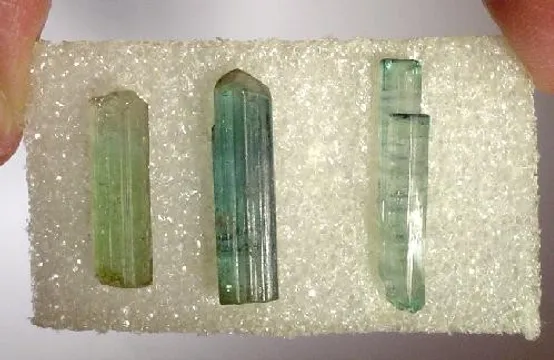
Tourmaline from Pala Chief ranges from black schorl to colored lithium tourmalines in pink, red, blue-gray, green, and bicolored crystals, with the best specimens coming from pocket zones rather than from massive graphic granite. Jahns and Wright noted that gem tourmaline was especially abundant in the central and northwestern parts of the mine, whereas the southeastern zones were richer in spodumene. Historic production supplied carving material and gem rough, while Bob Dawson’s November 2000 pocket gave modern collectors a benchmark suite: stout pink crystals with flat pale blue-gray terminations, including a 6.3 cm crystal on quartz and cleavelandite and a well-formed 8.4 x 6.2 cm crystal. Fine Pala Chief tourmaline is judged by color seen in transmitted light, termination quality, lack of excessive rehealed fracturing, and matrix composition; an outwardly dark crystal may prove pink, purple, green, or blue-capped when properly backlit, while common schorl fragments and opaque broken rods are abundant and much less desirable.
Elbaite at Pala Chief represents the colored tourmaline that gives the mine much of its cabinet appeal: pink, red, blue-gray, blue-capped, green, and bicolored crystals, commonly associated with quartz, cleavelandite, lepidolite, and other pocket minerals. The finest documented Pala Chief elbaites are not long, slender, Himalaya-style pencil crystals, but stout, gemmy to translucent prisms and matrix specimens. The November 2000 Dawson pocket is especially important because it produced pink crystals with pale blue-gray caps in a pegmatite core zone near purple lepidolite, including several well-formed specimens of notable size. Good examples are those that keep their termination, show strong body color under transmitted light, and retain convincing matrix; less desirable pieces are isolated bruised fragments, black-appearing rods with no backlit color, or specimens labeled only “Pala” without a mine-specific provenance.
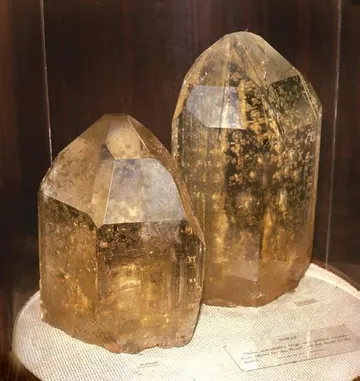
Quartz is both a specimen mineral and a structural host at Pala Chief. It forms massive core material, pocket crystals, and the enclosing matrix around spodumene, tourmaline, beryl, albite, and lepidolite. Many Pala Chief quartz crystals have milky outer zones that give them a white, enameled look; others are clear, smoky, citrine-toned, or intermediate smoky-citrine pieces, and current dig information notes that optical-grade clear quartz can also be found in the dumps. The best quartz specimens from this mine are lustrous, well terminated, and associated with unmistakable Pala pocket minerals—tourmaline rods, cleavelandite blades, lepidolite, or spodumene—rather than merely being loose common quartz. Condition matters sharply: chips at the termination, pocket clay trapped in damage, and bruising along exposed edges are common, while clean matrix plates and aesthetic smoky or citrine floaters are much more collectible.
Other documented Pala Chief and Chief Mountain minerals include beryl varieties aquamarine, morganite, and goshenite; albite and cleavelandite; microcline and orthoclase; muscovite and lithium-rich mica; lepidolite or members of the polylithionite-trilithionite series; schorl; foitite reported from associated Chief Extension material; gahnite; spessartine-rich garnet; monazite; molybdenite flakes in quartz; phosphosiderite or possibly strengite in phosphate nodules on the second level; pyrite; and rare bismuth-vanadate material including pucherite. Older museum and literature labels also preserve now-problematic names such as palaite or palalite, salmonsite, and sicklerite. These names are historically important but must be treated with modern caution: salmonsite has been discredited as a mixture, and sicklerite and ferrisicklerite have been reinterpreted as intermediate alteration compositions in the lithiophilite-triphylite to heterosite-purpurite weathering sequence.
Pala Chief specimens should be bought and cataloged with precise provenance. “Pala” alone may mean the Pala district, Chief Mountain, Queen Mountain, Hiriart Mountain, Oceanview, Elizabeth R, Tourmaline Queen, Stewart, Katerina, White Queen, or mixed fee-dig material. A specimen labeled “Pala Chief Mine” carries more weight when it has an old label, a known pocket association, a Bob Dawson, Pala International, Bill Larson, Ed Swoboda, Oceanview Mines, or other credible chain of ownership, or matrix that matches the mine’s quartz-cleavelandite-lepidolite-spodumene pocket assemblage. For modern self-collected pieces, the strongest labels state whether they came from a Pala Chief scheduled dig, an old dump, an exposed pegmatite face, or a named pocket.
Condition is the main practical issue. Spodumene has excellent cleavage, and Pala Chief kunzite and triphane are frequently etched, cleaved, healed, or broken at the ends. A cleanly cleaved face is not automatically “damage” if it is part of the way the crystal survived removal, but top-value specimens need either a natural termination, a doubly terminated habit, a fine etched surface, or a compelling matrix association. Quartz can protect spodumene in matrix, but it can also hide breaks. Pala Chief matrix is commonly friable: lepidolite, clay, cleavelandite, and altered feldspar can shed under careless washing, so avoid ultrasonic cleaning and aggressive acid treatment unless a competent preparator has examined the piece.
Kunzite color deserves special handling. Pala and Chief Mountain spodumene is prized for pleochroic pink, lilac, violet, greenish, and straw tones, but color is directional and lighting-sensitive. Rotate crystals before judging them. Some green to purple Pala spodumene has been reported to shift toward pink under ultraviolet exposure, including from some LED sources, and collectors should store valuable kunzite away from prolonged strong sunlight. Displaying fine pieces under low-UV, low-heat lighting is prudent. For the December 2011 triphane material, lighting can strongly alter the apparent hue, with pieces appearing nearly colorless under some LED light but straw-yellow to greenish yellow under daylight, incandescent, or compact fluorescent light.
Tourmaline should be inspected with a strong backlight. Many dark Pala Chief crystals that appear black in hand specimen may show red, purple, green, or blue zones in transmitted light. Conversely, some black-looking material is simply schorl, and locality value drops sharply when a specimen is an opaque broken rod with no aesthetic matrix. Blue-capped pink elbaite, deep red elbaite, and matrix specimens on quartz and cleavelandite are the most desirable; fractured but richly colored crystals can still be valuable if they are complete and naturally terminated.
Mislabelling is common in a softer, non-fraudulent sense: old dealer stock may say “Pala Chief” when it is actually from the broader Pala district, and modern tourist material may be labeled by the attraction rather than by the precise pocket or mine source. Internet rumors occasionally allege salting or added foreign minerals in southern California fee-dig settings; for Pala Chief, the official description of the Chief digs emphasizes access to old dumps and nearby prospect material rather than a seeded bucket experience. Still, serious collectors should treat any loose, exotic-looking stone without matrix, field context, or credible provenance skeptically. Pala Chief material should look like San Diego County LCT pegmatite material: spodumene, tourmaline, beryl, quartz, albite or cleavelandite, lepidolite, mica, feldspar, garnet, and rare accessories—not unrelated tumbled gems or obviously foreign species.
Market availability is uneven. Small quartz, schorl, lepidolite, cleavelandite, beryl fragments, and pale spodumene from modern digs appear regularly. Good kunzite, triphane, and colored elbaite with sharp form and mine-specific provenance are much scarcer. Historic Pala Chief kunzite and Bob Dawson-era tourmaline-in-matrix pieces are collector-grade American classics and should be expected to trade as provenance specimens, not merely as gem rough.
The early Pala Chief story begins with a scramble of prospectors, jewelers, and scientists trying to understand a gem that did not yet have a stable name. Lilac spodumene was first recognized in the Pala district on Hiriart Mountain in 1902, but Pala Chief, opened in May 1903, became the mine that supplied the large, clean, impressive crystals that made the new gem famous. George Frederick Kunz, the Tiffany mineralogist whose name would become attached to the gem, was photographed with a large Pala Chief crystal around 1903 or 1904; the crystal later entered Bill Larson’s collection. Early mine photographs show Frank Salmons, Bernardo Hiriart, Pedro Peiletch, and others seated against the pegmatite face, working a pocket by hand with shovels and the simplest tools. The best pockets were close enough to daylight that the first period of mining was largely surface work, following exposed pocket zones across the scar of the dike.
Kunz’s 1905 description gives a vivid sense of how the miners saw the ledge. Above the lower fine-grained “line rock” lay coarser pegmatite, then a mica-rich pocket line where the best crystals were hidden in clay. The pocket interiors were only about 8 to 10 inches wide in his account, but they contained numerous large quartz crystals with pink and white spodumene. The list of minerals reads like the inventory of an American pegmatite cabinet: pink, lavender, and white spodumene; blue, green, and red tourmaline; orthoclase, albite, graphic granite, lepidolite in pink, green, and lavender, muscovite, quartz crystals, steatite, and other clays. Yet the work was never easy. Kunz noted that giant powder was the only satisfactory explosive, that two men had worked nearly all the time, and that in the preceding six months very few precious stones had rewarded the labor. There was no water or timber on the property, and the nearest water was about a mile away.
One pocket acquired a name that still has the ring of mining folklore: the “Bridal Chamber.” The sources do not preserve enough detail to reconstruct the entire find, but its survival in the mine’s oral and written history says much about Pala Chief’s early reputation. The mine was not merely producing faceting rough; it was producing rooms, seams, and clay-filled cavities memorable enough to be named. Those early pockets fed a public fascination with California gems that reached far beyond San Diego County. By 1915, the Panama-California Exposition in San Diego included a reproduction of the Pala Chief Mine called “The Gem Mine,” built with timbers and red pocket-line mud brought from Pala Mountain to Balboa Park so visitors could experience tunnels and gem pockets modeled after the real tourmaline, beryl, and kunzite pockets of Pala Chief.
The modern revival has its own sharp episode. In October 2000, Bob Dawson began extending one of the short tunnels. After drilling and blasting only about 3 meters of pegmatite, he hit a clay pocket in early November. It was not vast—roughly 1 meter long, half a meter wide, and 0.3 meter thick—but it produced five stout pink tourmalines with flat pale blue-gray terminations, plus pink kunzite. One tourmaline measured 8.4 x 6.2 cm; another 6.3 cm crystal sat on quartz and cleavelandite attached to the pocket roof. The kunzites reached 10.7 x 2.7 cm and were lustrous, deeply etched crystals. It was the kind of pocket that proves why a mine can disappoint for decades and then suddenly justify the faith of everyone who kept looking.
The December 2011 Triphane pocket added a different chapter. Instead of a small run of pink kunzite, it yielded almost half a ton of spodumene, mostly gemmy straw-yellow triphane. The great bulk of material was not automatically fine specimen stock; only about fifteen specimens were sharply formed with good terminal faces and striated prism faces. Their etched surfaces were unusually intricate, more complex than most of the celebrated Oceanview kunzites from the Big Kahuna zones. Under different light sources, the color could change dramatically: practically colorless in LED light, straw-yellow in daylight or incandescent light, and lemon to greenish yellow under compact fluorescent bulbs. For a collector, that pocket is a reminder that “spodumene from Pala Chief” is not a single look, but a family of appearances governed by chemistry, orientation, light, and preservation.
Recent field-collecting accounts from organized digs show another side of the mine: not world-record pockets, but the rough joy of working an old pegmatite hillside. Club reports describe groups turned loose on a hillside larger than a city block, digging old dumps, sifting and washing dirt, hammering exposed pegmatite, hiking roads, and picking up pieces from the surface. Finds have included aquamarine, tourmaline, kunzite, morganite, smoky quartz, graphic granite, muscovite, cleavelandite, lepidolite, schorl, possible petalite or hambergite, and pale gemmy spodumene. One San Diego Mineral & Gem Society trip report notes a pale pink kunzite floater measuring 53 x 19 x 7 mm, described as gemmy and undamaged except for surface etching. Such finds are modest compared with the great historical pockets, but they are exactly what keeps Pala Chief alive in the collecting imagination: an old American classic where, on the right morning after rain, a sharp eye can still see color on the ground.