Mt. White — high-alpine pocket locality yielding premier aquamarine and related beryllium minerals; prized by collectors for rarity and precise Mt. White label…
Key facts
Mt. White is the immediately southern neighbor of Mt. Antero in Colorado’s Sawatch Range, and for collectors the two mountains are best understood as one high-alpine mineral province: the Mount Antero–White Mountain gem field. The locality’s importance rests on a rare-element granitic system in which beryllium- and fluorine-rich late fluids formed small pegmatites, miarolitic cavities, hydrothermal veins, and greisen-like zones in and around evolved Mount Antero granite. It is not a conventional mine locality with steady ore production; it is a pocket locality, famous because erratic cavities above timberline have yielded some of the finest American aquamarine, along with phenakite, bertrandite, fluorite, smoky quartz, microcline, muscovite, topaz, and rarer beryllium species.
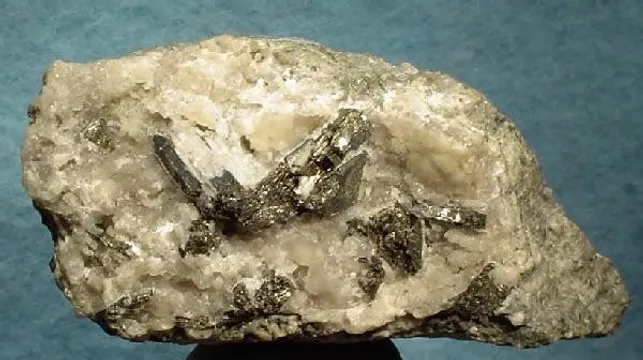
The appeal is inseparable from altitude. The productive ground lies on exposed alpine slopes around 13,000 to 14,000 feet, where short field seasons, snowfields, lightning, tundra restrictions, and claim boundaries have shaped every period of collecting. Mt. White itself is listed as a mountain locality south of Mt. Antero, in the San Isabel National Forest, with comparable geology and a recorded suite that includes albite, bazzite, bertrandite, beryl including aquamarine, brannerite, calcite, fluorite, magnetite, microcline, muscovite, phenakite, smoky quartz, rutile, stellerite, titanite, and topaz. Specimens with precise Mt. White labels are distinctly desirable because so much material from the broader massif has historically been sold under the simpler “Mt. Antero” name.
Historically, the Antero–White area entered mineralogical literature in the 1880s through aquamarine and associated beryllium minerals. Nelson “Nels” Wanemaker’s early specimens reached leading American mineralogists and dealers, and the locality quickly became known not for gold or silver but for blue beryl, phenakite, bertrandite, fluorite, and topaz. Later, the strategic value of beryllium brought U.S. Geological Survey study and mid-century attempts to mine beryl more systematically, but the deposits were too small and irregular for a sustained bulk-mining operation. That economic failure preserved the place as a specimen and gem locality.
The best pieces have a look that is instantly Colorado: glassy pale- to medium-blue aquamarine prisms, sometimes on white microcline or smoky quartz, with colorless phenakite or bertrandite and, more rarely, violet, green, or colorless fluorite. Many pockets are decomposed, clayey, or disrupted by frost and slope movement, so complete crystals on matrix are far rarer than loose fragments. A small, sharp, lustrous, well-provenanced Mt. White or Antero aquamarine can outrank a larger but bruised or anonymous piece; an undamaged association specimen from a named pocket is in another class altogether.
Regional View
Country View

Photo: Wikimedia Commons

Photo: Wikimedia Commons
Search for specimens: View all specimens from Mt. White, Mt. Antero area, Chaffee County, USA
The Mt. White locality belongs to the Mount Antero–White Mountain beryllium-gem district of central Chaffee County, Colorado, on high ground between the Arkansas Valley and the upper Browns Creek–Chalk Creek country. The geologic foundation is the Mount Princeton batholithic complex and related Tertiary intrusive and volcanic rocks. The specimen-producing system is tied particularly to evolved leucogranitic phases of the Mount Antero granite, including highly light-colored, peraluminous granite bodies whose late-stage fluids concentrated beryllium, fluorine, silica, alkalis, water, and minor rare elements.
The deposits are best described as small NYF-style rare-element miarolitic pegmatites and related hydrothermal veins rather than large zoned pegmatite bodies. Early workers emphasized that the pegmatites are typically small, locally disk- or pod-like, and commonly only a few feet across. Their mineralogical importance is not volume but chemistry and open space: pockets and vugs allowed beryl, smoky quartz, microcline, albite, muscovite, phenakite, bertrandite, fluorite, and topaz to crystallize as collectible specimens. In the broader area, beryl also occurs in quartz veins, notably around the California mine, where beryl and molybdenite drew economic-geologic attention during the beryllium era.
The ore story is therefore split. For collectors, “ore” means pockets: clay-filled cavities, vuggy pegmatite pods, feldspar-quartz masses, and broken miarolitic zones weathering into talus. For mid-twentieth-century miners and government geologists, the attraction was beryllium as a strategic metal. John W. Adams’s USGS work examined beryllium deposits in the Mount Antero region, including pegmatites and veins around Mount Antero and White Mountain, while W. N. Sharp’s later USGS map treated both beryllium and molybdenum occurrences. Commercial beryl mining never matched the romance of the gem pockets; the beryl was too erratic and too dispersed to support a durable bulk-mining business at that elevation.
The first great collecting period began in the 1880s. Nelson D. Wanemaker’s aquamarines from Mount Antero and Mount White were introduced to the mineralogical community through correspondence involving Roselle T. Cross and George F. Kunz, while J. Alden Smith had reportedly seen aquamarines from Mount Antero in 1882. Between the early 1880s and the early 1890s, Wanemaker supplied specimens to prominent mineralogists, dealers, and collectors, including figures associated with early American mineral commerce and academia. The recognition of aquamarine was quickly followed by phenakite, bertrandite, fluorite, and topaz.
After Wanemaker, mining and collecting were more intermittent. James D. Endicott documented success before the late 1920s. From 1928 to 1949, Ed Over, often associated with Arthur Montgomery, recovered and distributed important specimens to museums and private collections. Their work helped keep the locality alive in the specimen world long before the modern market for American gem crystals matured.
A second phase came when beryllium prices and federal interest rose in the early 1950s. John King of Salida and Grady Cardwell of Texas pursued the possibility of mining beryl for beryllium while recovering aquamarine as a by-product. In 1956 the first dirt road was pushed up Mount Antero and Mount White, an event that changed the collecting history of the entire district. The road did not make the mountain easy, but it transformed access from a punishing foot approach into a difficult high-clearance four-wheel-drive objective. The California molybdenum mine adit was also reopened for evaluation around 1960.
By 1962, the commercial beryl ventures had failed and claims had lapsed. In 1969, Grady Cardwell formed North American Beryllium Corporation and reclaimed the south knob of Mount Antero, again focusing on beryllium rather than specimen mining. The existence of road access, together with limited interference with hand collectors in some areas during that period, led to a productive collector era from the 1970s through the 1990s. Numerous prospectors and collectors made finds across Mount Antero and Mount White, including Chuck Barnes, Eldon Bright, Bill Chirnside, Bob and Doris Drisgill, Jim Grika, Pete McCrery, John Melby, Horace “Rosy” O’Donnell, Curtis Abbott, Cliff Nicholson, Andrew Taylor, Eldon Hunewell, George Fisher, and George Robertson.
Mt. White saw a marked increase in activity and mining claims from the mid-1990s onward. Claims and collecting areas associated with the broader Mt. White–Antero ground have produced aquamarine, smoky quartz, microcline, fluorite, topaz, and phenakite, with named modern operations and claims appearing in dealer, collector, and local accounts. The Chip ’n’ Dale claim on Mount White, staked in 1998 by Mark and Dale Krivanek, is one modern example of how small claim-based operations replaced the older notion of generalized open collecting.
The most famous modern pocket story from the Antero side is Steve Brancato’s Diane’s Pocket, recovered after 2001 on the side of Antero facing Mt. White. Its aquamarine, smoky quartz, microcline, and muscovite matrix pieces are regarded as among the finest American aquamarine matrix specimens. The find mattered because it overturned a long-standing assumption that the area was largely exhausted: even after a century of collecting, pockets of museum significance remained possible.
Access today must be approached as a legal and safety problem before it is a collecting plan. The area is largely within National Forest lands, but productive zones are heavily affected by patented and unpatented mining claims. It is the collector’s responsibility to know the exact land and claim status before touching material; collecting, prospecting, or even surface collecting on an active claim without permission is claim jumping. Current access is also governed by seasonal road conditions, motorized-use rules, alpine tundra protection, and weather. The road system is steep, rocky, exposed, and suitable only for properly equipped high-clearance four-wheel-drive travel; many collectors still hike substantial distances above timberline. Afternoon thunderstorms, lightning, altitude sickness, hypothermia, unstable talus, and old workings are not background inconveniences here—they are central facts of the locality.
Fluorite from the Mt. White–Mt. Antero area is a collector’s accessory of real consequence rather than a mere gangue mineral, occurring in the same evolved pegmatitic and hydrothermal environment as aquamarine, smoky quartz, phenakite, bertrandite, feldspar, and muscovite. The classic habit is octahedral, with violet, green, colorless, and variegated crystals reported from pocket material; documented finds include sharp violet fluorite from the Snowpatch area and octahedral fluorite on matrix from “Quartz Corner” below the main peak. Most specimens are small, but the best pieces are sharply formed, lustrous, richly colored, and attached to smoky quartz or feldspar, ideally with beryl or phenakite association and a precise sublocality or pocket history; loose, pale, bruised octahedra without context are far more ordinary here.
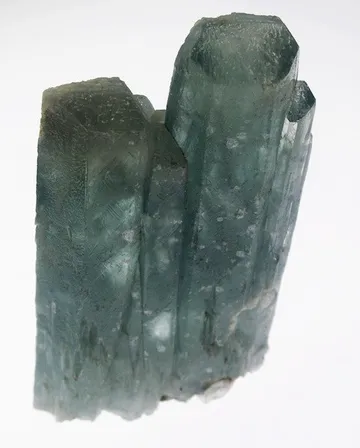
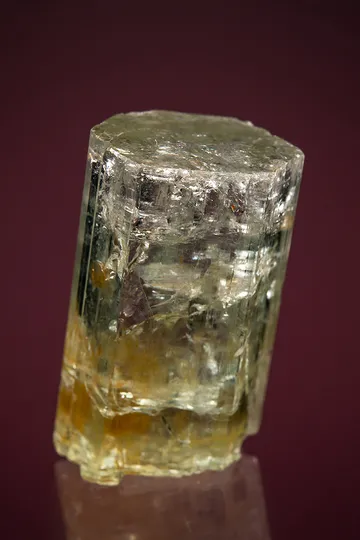
Beryl at Mt. White and adjacent Mt. Antero occurs as colorless goshenite, pale blue to deeper blue aquamarine, and rare reported color variants, in small miarolitic pegmatites, vuggy granite, and related veins. The crystals are typically hexagonal prisms, from small chips and thumbnails to uncommon crystals several centimeters long; large, complete, lustrous crystals are much scarcer than broken pieces or gem rough. Associations with microcline, smoky quartz, muscovite, phenakite, bertrandite, fluorite, albite, and topaz are the signature of the locality. Good beryl specimens here are judged by completeness, glassy luster, undamaged terminations, visible color zoning or attractive pale blue color, and especially by matrix association; “jackstraw” goshenite clusters and beryl perched on feldspar or smoky quartz tell the Mt. White–Antero story better than anonymous loose fragments.
Aquamarine is the defining mineral of the Mt. White–Mt. Antero area: sky-blue to blue-green beryl crystallized in small pockets and miarolitic cavities high above timberline, commonly with smoky quartz, white feldspar, muscovite, phenakite, bertrandite, fluorite, and locally topaz. The color ranges from nearly colorless through pale blue to uncommon darker blue, with individual crystals capable of zoning; many crystals show growth zoning, internal veils, etching, or breakage from pocket collapse and weathering. Most recoveries are small, loose crystals or fragments, while complete gemmy prisms and matrix specimens are genuinely scarce. The elite pieces combine fine transparency, saturated natural blue color, sharp hexagonal form, bright luster, and undamaged terminations; an aquamarine on original microcline-smoky quartz matrix, or with phenakite or bertrandite attached, is far more important than a larger but isolated bit of rough.
Calcite is a documented but subordinate member of the Mt. White–Mt. Antero mineral suite, part of the late-stage evolution of the gem pegmatites rather than a headline species. Fluid-inclusion work on the Antero gem pegmatites places calcite among the latest minerals, crystallizing with late quartz from very dilute solutions after the main aquamarine, smoky quartz, phenakite, and fluorite stages. For collectors, calcite from this locality is most meaningful when it remains attached to unmistakable Antero–White matrix or accompanies the characteristic Be-fluorine assemblage; otherwise colorless to white late carbonate is easily overlooked and can be difficult to separate from far more common Colorado calcite labels. The desirable examples are small but well-provenanced, cleanly crystallized, and demonstrably part of the alpine pegmatite pocket assemblage rather than stray carbonate from unrelated Chaffee County occurrences.
Microcline is one of the essential architecture minerals of Mt. White–Mt. Antero specimens: white to pale feldspar forming blocky crystals and matrix masses in the small pegmatitic pockets that also produced aquamarine, smoky quartz, muscovite, phenakite, bertrandite, and fluorite. It is common as matrix but uncommon as a fine display species in its own right, because many pockets are shattered, decomposed, or dug for blue beryl rather than feldspar aesthetics. The best microcline pieces are not merely feldspar chunks; they are sculptural pocket matrix specimens with clean, lustrous feldspar faces, smoky quartz contrast, attached aquamarine or fluorite, and enough undisturbed surface to preserve the original cavity geometry. On strong Mt. White–Antero aquamarine specimens, microcline often provides the white, high-relief stage that makes the blue beryl visually and genetically legible.
Beyond the five EarthWonders species highlighted here, Mt. White and the adjacent Antero ground are especially important for beryllium minerals and rarities. Phenakite is one of the great associated species, occurring as colorless to sherry or pale tan crystals that can be mistaken by beginners for quartz but are far scarcer and more significant. Bertrandite appears as small colorless blades or tabular crystals, commonly tied to beryl alteration or late-stage Be-rich fluids, and old aquamarine-bertrandite combinations are classic American thumbnails. Bazzite, Be3Sc2(Si6O18), gives Mt. White particular rarity interest, and the recorded Mt. White list also includes brannerite, rutile, titanite, stellerite, magnetite, native sulphur, epidote, topaz, smoky quartz, albite, muscovite, and garnet-group minerals. On the broader Mount Antero locality, additional notable minerals include helvine, cassiterite, euclase, fluorapatite, molybdenite, pyrite, monazite-group minerals, gadolinite-group material, wolframite-series minerals, triplite, zircon varieties, and rare Nb-Ta-Ti oxides.
The principal authenticity issue for Mt. White–Mt. Antero specimens is not a notorious epidemic of outright fake minerals, but provenance, repair, reconstruction, and sublocality precision. “Mt. Antero” has long been used commercially as a broad label for material from the Antero massif, including Mt. White, Carbonate Ridge, the California mine area, Snowpatch, Quartz Corner, and named claims. A specimen labeled simply “Mt. Antero” may be perfectly legitimate but imprecise. A specimen labeled specifically Mt. White should earn that label through an old tag, collector note, claim attribution, or chain of ownership.
Repairs are common and not automatically disqualifying. Large pegmatite matrix specimens from this district may have been naturally broken in pocket clay or talus before recovery, then stabilized or reassembled by preparators. Diane’s Pocket material famously required reconstruction of some matrix pieces, and that fact is part of the locality’s modern history. For serious purchases, ask whether aquamarines have been reattached, whether smoky quartz or feldspar matrix has been rebuilt, whether clay has been removed chemically or mechanically, and whether any fills, epoxies, or added supports are present. A cleanly disclosed repair on an important matrix specimen is very different from a concealed assembly.
Condition is the great separator. Mt. White–Antero aquamarine is frequently etched, veiled, internally crazed, chipped, or broken free from matrix; terminated, undamaged, lustrous crystals are much less common than the number of small blue fragments on the market suggests. Fluorite octahedra can be edge-worn, bruised, or detached. Phenakite is hard but easily confused with quartz when small and colorless, so analytical confidence or experienced provenance matters. Bertrandite blades are delicate and can be damaged by rough cleaning. Calcite, where present, is vulnerable to acids; do not clean mixed specimens casually.
Color and treatment deserve caution. Mt. White–Antero aquamarine naturally ranges from very pale blue and blue-green to richer blue, but much material is light. Rich color should be welcomed but also scrutinized for provenance, lighting, photography, and cutting history. Faceted aquamarines from the district are known, and cutting rough may produce attractive stones, but terminated crystals and matrix groups are usually more collectible as specimens. Heating is a general aquamarine-market issue, though locality specimens are valued primarily for natural crystal form, association, and documentation.
Radioactivity is a minor but real handling consideration for certain rarities. Brannerite and some uranium-, thorium-, or rare-earth-bearing accessory minerals from the broader district should be stored and handled with normal radioactive-mineral precautions: label them accurately, avoid grinding or inhaling dust, wash hands after handling, and keep small radioactive specimens away from prolonged close contact. For the typical aquamarine, fluorite, smoky quartz, feldspar, phenakite, or bertrandite specimen, standard mineral handling is sufficient.
Market availability is highly grade-dependent. Small pale aquamarine fragments, modest beryl crystals, smoky quartz, and feldspar matrix pieces appear regularly from old collections and modern claim work. Fine complete aquamarines are much scarcer. True Mt. White-labeled specimens, old Wanemaker/Over/Montgomery-era pieces, fine phenakite or bertrandite combinations, fluorite associations, and matrix aquamarine specimens from named pockets or claims are genuinely competitive. The best pieces usually sell by provenance and story as much as by species.
The first act of the Mt. White–Mt. Antero story has the feel of the American mineral trade discovering, almost by accident, that a Colorado fourteener held a blue gem field above timberline. Prospectors went into the Sawatch Range looking for the usual nineteenth-century prizes—gold, silver, metallic ore—but the material that captured mineralogists was aquamarine. Nelson “Nels” Wanemaker’s specimens, gathered from Mount Antero and Mount White, moved from the mountain to the desks of men who shaped American mineralogy. Roselle T. Cross wrote to George F. Kunz in 1885, and J. Alden Smith had already been shown Antero aquamarines in 1882. From 1882 to 1893, Wanemaker sold specimens to leading collectors and mineralogists; George L. English called him his Colorado collector. In those few years, a remote alpine pocket locality became part of the national mineral conversation.
The mountain then entered a quieter but decisive collector period. James D. Endicott of Canon City found enough to document success before 1928, but the names that loom over the interwar and wartime years are Ed Over and Arthur Montgomery. From 1928 to 1949, their work moved Mt. Antero–White Mountain aquamarine, phenakite, bertrandite, and smoky quartz into prominent museums and private collections. These men were not operating a glamorous gem mine; they were working a high, cold, irregular locality where a productive pocket might be followed by long frustration. Their specimens gave later researchers and collectors something concrete to study, label, compare, and desire.
The 1950s brought a different motive: beryllium. With prices and federal support rising, John King of Salida and Grady Cardwell of Texas saw the possibility of mining beryl as ore and taking aquamarine as a by-product. The most lasting result was not a profitable beryllium mine but a road. In 1956, the first dirt road was pushed up Mount Antero and Mount White, converting a punishing mountaineer’s approach into one of the roughest and most consequential access roads in American gem collecting. The business ventures failed by 1962, but the road remained in the collecting imagination. It let more people reach the pocket country, and it accelerated both discovery and depletion.
Modern collectors often talk about the mountain in terms of luck, claim boundaries, and weather, but the best pockets show that knowledge matters. Steve Brancato’s story begins with a ride: Robert Spomer recalled first meeting him when Brancato was walking up from the village of Alpine in Chalk Creek, and Spomer gave him a lift in a four-wheel-drive vehicle. A friend of Brancato’s had found a large pocket on the side of Antero facing Mt. White, and Brancato decided to try the same general ground. He soon hit his own pocket, and the reported total was astonishing—around 2,000 aquamarine crystals. Many were long, thin, light-colored, gemmy, and terminated, but the real surprise was matrix: aquamarine with microcline, smoky quartz, and muscovite. For a locality where so many crystals had weathered or broken loose, matrix pieces were rare enough to feel almost foreign. Spomer wrote that some resembled Pakistani matrix specimens, though smaller.
Brancato filed the Claire Mary Ellen No. 1 claim and kept working. One pocket produced some of the finest topaz known from Antero, sherry to orange crystals from a mountain where topaz is a genuine rarity. Then came Diane’s Pocket, the find that became shorthand for the locality’s modern potential. It was described as a large tubular pocket containing major matrix pieces of terminated aquamarine with smoky quartz and feldspar. The pieces were not all found as pristine shelf-ready specimens; some had to be reassembled because the crystals had naturally broken in the pocket, a normal fate for large gem-matrix pieces. Still, the find changed expectations. It proved that after more than a century of collecting, the Antero–White system could still produce American aquamarine matrix specimens of museum rank.
The mountain’s public image changed again in 2013, when the Weather Channel’s Prospectors brought Colorado gem mining to television audiences. Filmed initially in the summer of 2012, the show made the characters, weather, risks, and rewards of high-altitude gem hunting visible far beyond mineral clubs. It also brought exactly the kind of attention serious collectors often dread. Mark Jacobson’s 2014 historical overview called the production a “let’s pretend reality” show and noted that it created unwanted attention, uncertainty, conflict with “wannabe” treasure hunters, and a claiming frenzy across the area. The result was a familiar modern contradiction: the show helped popularize the locality, while making access, claim relations, and regulatory scrutiny more complicated.
E. G. Cross, “Notes on Aquamarine from Mt. Antero,” American Journal of Science, 3rd series, 1887 — Early published notice of the locality’s aquamarine, cited in later historical and USGS treatments.
S. L. Penfield, “Phenakite from Colorado,” American Journal of Science, 1887 — Early crystallographic work on phenakite associated with the Antero mineral field.
S. L. Penfield, “Bertrandite from Mt. Antero,” American Journal of Science, 1888 — Important early description of the locality’s bertrandite.
S. L. Penfield, “Some Observations on the Beryllium Minerals from Mt. Antero,” American Journal of Science, 1890 — Early discussion of the beryl–bertrandite relationship and etched aquamarine crystals.
George Switzer, “Granite Pegmatites of the Mt. Antero Region, Colorado,” American Mineralogist, vol. 24, 1939, pp. 791–809 — The classic pegmatite study behind much later interpretation of the Mount Antero–White Mountain mineral system.
John W. Adams, Beryllium Deposits of the Mount Antero Region, Chaffee County, Colorado, U.S. Geological Survey Trace Elements Investigations Report 126, 1951; also issued as USGS Bulletin 982-D, 1953 — Essential government study of beryllium-bearing pegmatites and veins in the Mount Antero and White Mountain area.
W. N. Sharp, Geologic Map and Details of the Beryllium and Molybdenum Occurrences, Mount Antero, Chaffee County, Colorado, U.S. Geological Survey Miscellaneous Field Studies Map MF-810, 1976 — Key mapped treatment of beryllium and molybdenum occurrences in the district.
Mark I. Jacobson, “Famous Mineral Localities: Mount Antero [Colorado],” The Mineralogical Record, vol. 10, no. 6, 1979, pp. 339–346 — Collector-focused classic article on the locality, its history, and its mineralogy.
Adityamoy Kar, Fluid Inclusion and Trace Element Studies of the Gem Pegmatites of Mt. Antero, Colorado, M.S. thesis, Virginia Tech, 1991 — Detailed thesis on fluid inclusions, trace elements, growth zoning, and formation conditions of the gem pegmatites.
Mark Ivan Jacobson, Antero Aquamarines: Minerals from the Mount Antero–White Mountain Region, Chaffee County, Colorado, L. R. Ream Publishing, 1993 — The dedicated book-length treatment of the locality’s geology, mineral descriptions, finds, history, and collecting.
Bryan K. Lees, “A Spectacular New Aquamarine Find on Mount Antero, Chaffee County, Colorado,” Rocks & Minerals, vol. 80, no. 3, 2005, pp. 198–199 — Short collector note on the major modern aquamarine find associated with Diane’s Pocket.
Mark I. Jacobson, “The Mount Antero Mineral Locality, Chaffee County, Colorado,” Rochester Mineralogical Symposium program notes, 2014 — Concise historical-geological overview including Wanemaker, Over, Cardwell, Brancato, modern claims, and the Prospectors era.
“Dredging and mining for precious gems on Mt. Antero | Mt. Antero Treasures S3:E3,” Mount Antero Treasures Productions — Modern Cardwell-team mining episode showing aquamarine recovery and the logistics of operating on Mt. Antero.
“Treasure hunter Scuba Jake strikes gem-grade aquamarine with the Cardwell team on Mt. Antero,” Mount Antero Treasures Productions — Season-finale style episode centered on late-season aquamarine pocket hunting with the Cardwell operation.
Prospectors, The Weather Channel — Reality series that brought Mount Antero aquamarine mining, including the Busse family and Steve Brancato, to a broad television audience.
Mindat: Mt. White, Chaffee County, Colorado, USA — The key locality database entry for Mt. White, including coordinates and the documented mineral list.
Mindat: Mount Antero, Chaffee County, Colorado, USA — Broader companion locality page for the adjacent Antero mountain and its sublocalities.
USGS Publications Warehouse: John W. Adams, Beryllium Deposits of the Mount Antero Region — Primary government source for beryllium-bearing pegmatites and veins around Mount Antero and White Mountain.
USGS: Sharp, Geologic Map and Details of the Beryllium and Molybdenum Occurrences, Mount Antero — Official map reference for the district’s beryllium and molybdenum occurrences.
Virginia Tech: Kar, Fluid Inclusion and Trace Element Studies of the Gem Pegmatites of Mt. Antero, Colorado — Technical thesis on growth zoning, fluid inclusions, and crystallization conditions.
ResearchGate: Jacobson, Antero Aquamarines — Bibliographic and abstract page for the definitive locality book.
Buena Vista Gem Works: Collecting Mt. Antero Aquamarine — Long-running collector and faceter account with history, access cautions, finds, claims, and modern updates.
Buena Vista Gem Works: Mt. Antero Photos — Useful photo archive of Antero and Mt. White specimens, field views, Snowpatch fluorite, Quartz Corner fluorite, and beryl associations.
Western Mining History: Chaffee County Colorado Mining Districts — District-level historical and geological context for Chaffee County, including the Mount Antero deposits.
Wikimedia Commons: Minerals of Mount Antero — Open image category with aquamarine, phenakite, bertrandite, smoky quartz, and other specimen photographs.
Mount Antero Treasures — Modern Cardwell-family aquamarine mining and media operation, useful for contemporary production context.
Rock & Gem: “Aquamarine Jewelry: Colorado’s Expert” — Collector-friendly article with modern Mount Antero and Mount White claim context, including the Chip ’n’ Dale claim.
USDA Forest Service: Rockhounding, Prospecting, and Fossil Hunting on the Pike–San Isabel National Forests — Land-manager guidance on collecting, claims, permits, and responsible rockhounding on PSICC lands.