A collector's guide to Morocco: its geology, mining history and notable minerals, illustrated with the 178 specimens documented from this locality on EarthWonders.
Key facts
Morocco matters to collectors because it is not a single locality so much as a mineral province: a country where several world-class specimen districts sit within reach of one another across the Atlas ranges, the Anti-Atlas, the Meseta, and the arid eastern lead belts. Its strongest collector identity rests on oxidized base-metal deposits. Mibladen made Morocco synonymous with red vanadinite on bladed baryte; Touissit-Bou Beker gave the market superb azurite, anglesite, cerussite, wulfenite, and bronze to yellow-brown vanadinite from deeply oxidized carbonate-hosted lead-zinc-silver ores; Bou Azzer supplied one of the world’s richest cobalt-arsenide and secondary arsenate suites, including erythrite, roselite, wendwilsonite, cobaltoan calcite, skutterudite, and many rare Co-Ni-As species. Add El Hammam fluorite, Rhar el Anz chalcostibite, Nador baryte, Imiter silver minerals, and younger Moroccan pegmatite finds, and the country becomes one of the few modern specimen sources that can anchor an entire advanced collection.
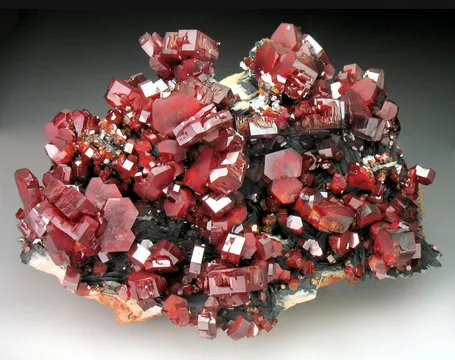
The best Moroccan specimens have a look collectors recognize immediately: scarlet to brick-red vanadinite scattered across white, cream, or manganese-darkened baryte; deep royal-blue Touissit azurite standing on rusty gossan or pale carbonate; lemon to honey-yellow anglesite with galena inclusions; pink cobalt-bearing calcite and roselite from the cobalt belt; transparent green, yellow, or purple fluorite cubes from El Hammam; and lustrous metallic black chalcostibite partly replaced or coated by electric blue azurite. Much of the appeal lies in contrast—red on white, blue on orange-brown, yellow on galena, pink on grey matrix—and in the way Moroccan oxidation zones produced display specimens rather than merely mineralized rock.
Regional View
Country View
The geological variety is unusually broad. The northeastern Touissit-Bou Beker belt is a Mississippi Valley-type lead-zinc system in dolomitized carbonate rocks. The Midelt-Mibladen-Aouli district belongs to the Upper Moulouya lead province, where stratabound galena-baryte ores in Jurassic carbonates yielded one of the great vanadinite specimen traditions. Bou Azzer sits in the central Anti-Atlas along a Pan-African ophiolitic belt where serpentinite contacts and hydrothermal structures localized cobalt-nickel-iron arsenides and later arsenates. El Hammam is a long-lived fluorite mining district in the Central Meseta, while the Casablanca-Settat Rhar el Anz occurrence is famous to collectors because it produced unusually large chalcostibite crystals for a species that is normally represented by small metallic masses.

Photo: Wikimedia Commons
Photo: Wikimedia Commons
Search for specimens: View all specimens from Morocco
Moroccan specimen localities are best understood by district rather than by the country name alone. Mibladen, near Midelt in the High Atlas–Middle Atlas transition, is a lead-baryte district in which galena and baryte were the principal ore minerals, with chalcopyrite and pyrite as lesser primary phases and a celebrated supergene suite developed in the oxidized zone. The collector minerals there are especially tied to cavities, fractures, and residual pockets in carbonate host rocks: vanadinite, cerussite, wulfenite, aragonite, calcite, baryte, manganese oxides, iron oxides, and occasional rarities. Modern Mibladen specimen production has often come not from a large active industrial mine but from small Moroccan teams reopening old workings, sinking shallow shafts, and following vanadinite-bearing zones through hard carbonate and baryte.
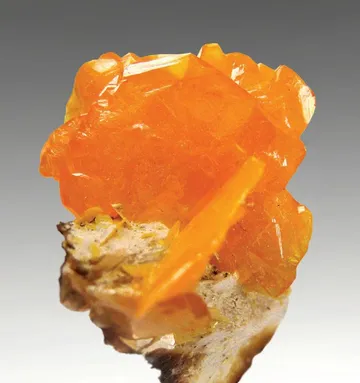
The Touissit-Bou Beker district, in the Oriental Region near the Algerian border, is another pillar of Moroccan collecting. It is a carbonate-hosted Mississippi Valley-type lead-zinc-silver district developed in dolostones and structurally controlled ore zones. Galena and sphalerite were the economic sulfides; weathering produced an oxidized assemblage of anglesite, cerussite, azurite, malachite, wulfenite, vanadinite, mottramite, descloizite, smithsonite, gypsum, aragonite, phosgenite, paralaurionite, nadorite, leadhillite, and other lead-copper-zinc species. The district was mined industrially for decades, and specimen fame rose sharply in the late twentieth century when large, aesthetic secondary-mineral pockets reached European and American collectors. Fine Touissit specimens today are generally classic old stock, old-collection pieces, or carefully sourced newer finds from the broader district rather than predictable fresh production from an open specimen mine.
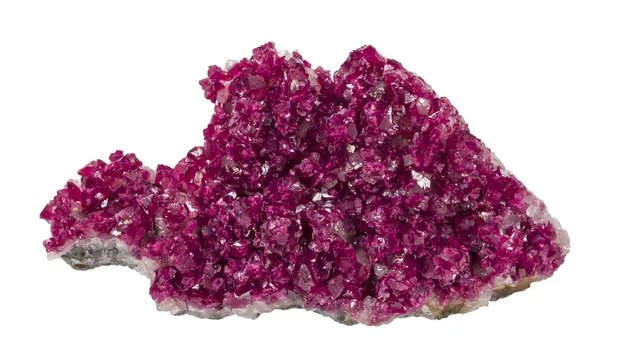
Bou Azzer is different in both geology and collecting character. The district lies roughly south of Ouarzazate in the central Anti-Atlas and is associated with the Bou Azzer–El Graara ophiolitic belt. Cobalt-nickel-iron arsenide mineralization is localized along serpentinite contacts and related hydrothermal structures, producing skutterudite, safflorite, löllingite, nickeline, rammelsbergite, cobaltite, gersdorffite, and related ore minerals, later altered to a rich suite of arsenates, carbonates, and oxides. For collectors, Bou Azzer is the Moroccan district of pink, purple, and red cobalt minerals: erythrite sprays, roselite and wendwilsonite crystals, cobaltoan calcite, spherocobaltite, cobaltaustinite, talmessite, and numerous rare species. It remains an important cobalt mining area under modern operators, but collecting access is not casual; specimens generally enter the market through miners, local dealers, old collections, and limited legitimate recovery from dumps or peripheral workings.
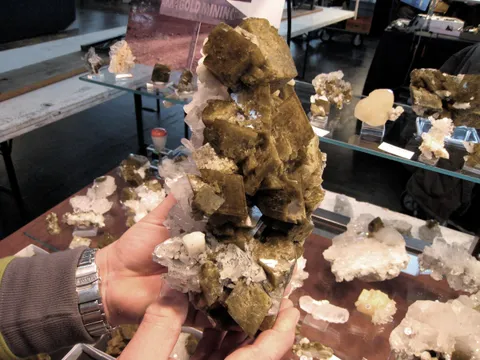
El Hammam, near Khémisset, is Morocco’s classic fluorite producer. It has produced green, yellow, amber, purple, and other fluorite colors, typically as cubic or composite cubic crystals on quartz, pyrite, or sulfide-bearing matrix. Unlike the country’s best-known oxidized lead and cobalt specimens, El Hammam fluorite comes from a fluorspar mining district with a more industrial commodity identity. Fine pieces are valued for transparency, sharp cubic form, color saturation, and association with sparkling pyrite or white quartz.
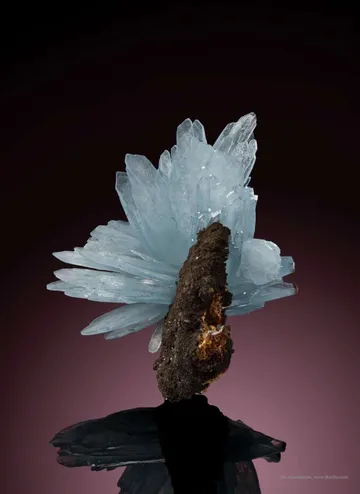
The Nador area, especially material long sold under the Sidi Lahcen name and now often corrected to Jebel Ouichane or the Ouichane Mines area, is important for blue baryte. These specimens typically show tabular to bladed, lustrous baryte crystals in pale blue, silvery blue, or grey-blue tones, commonly associated with iron oxides, limonite, calcite, or siderite. Correct locality labeling matters here because Moroccan blue baryte has been traded under inconsistent mine names.
Rhar el Anz, in the Cherrat Wadi area east of Casablanca, is a small locality by world standards but a major one for chalcostibite. The occurrence produced metallic black CuSbS2 crystals, some partly coated or replaced by azurite and accompanied by malachite. Because chalcostibite is normally rare and inconspicuous, Moroccan pieces from this occurrence have become the reference style for display-quality specimens of the species.
Morocco’s mineral story also includes Imiter, one of the major silver deposits of the Anti-Atlas, operated for silver metal and known mineralogically for native silver, acanthite, and other silver-bearing species; Oumjrane and Alnif-area copper occurrences with azurite, malachite, baryte, and copper secondaries; Enjil and other localities producing satin-spar gypsum; and pegmatite occurrences such as Beni Bouzra and Sidi Bou Othmane, where tourmaline, elbaite, feldspar, quartz, albite, microcline, muscovite, and accessory pegmatite minerals give Morocco a smaller but real pegmatite-specimen dimension.
Industrial mining history is equally varied. Mibladen and Aouli were developed as important lead mines in the early twentieth century, later passing through colonial and Moroccan state mining phases before abandonment as large-scale lead operations. Touissit-Bou Beker was a long-lived lead-zinc-silver district, with its best-known specimen era largely tied to the decades when oxidized zones were accessible and European dealers were bringing out exceptional secondary minerals. Bou Azzer’s cobalt story begins with cobalt arsenate minerals recognized in Marrakech in the late 1920s, followed by industrial development in the 1930s and later operation under companies that eventually became part of Managem’s modern mining structure. Imiter’s silver has a deep history of exploitation and modern production through Société Métallurgique d’Imiter. El Hammam has been worked for fluorspar, and its specimens move through the market intermittently as mining exposes suitable pockets.
Collecting access today should be treated conservatively. Morocco has active industrial mines, abandoned shafts, artisanal workings, private mineral claims, and unstable underground ground. Old workings at Mibladen, Touissit, Bou Beker, Bou Azzer, and similar districts are not open recreational collecting sites in the casual sense; permission, local knowledge, and safety precautions are essential. Serious collectors should also care about label resolution. “Morocco” may be enough for a decorative specimen, but it is not enough for a serious Touissit azurite, ACF Mine vanadinite, Aghbar roselite, Rhar el Anz chalcostibite, El Hammam fluorite, or Nador baryte. The name of the mine, shaft, district, pocket, year, dealer, or former collection can be the difference between an attractive Moroccan piece and a specimen with scientific and historical standing.
Moroccan azurite is led by Touissit-Bou Beker, where the finest specimens show lustrous, deep blue, sharply formed crystals and crystal groups on limonitic gossan, dolomite, baryte, cerussite, malachite, or mixed oxidized lead-copper matrix; Touissit pieces tend to be prismatic, tabular, blocky, or richly terminated rather than the velvety crusts seen from many lesser localities, and fine examples may have dominant crystals in the 1–4 cm range, with rare larger individuals reported from the district. Oumjrane and Alnif-area finds added a different modern Moroccan azurite style, including loose crystal groups several centimeters across with malachite and white baryte accents. What separates good Moroccan azurite from ordinary material is not merely blue color but the combination of sharp form, undamaged terminations, high luster, color depth, strong contrast against pale carbonate or orange-brown gossan, and a precise Touissit, Bou Beker, Shaft IX, Oumjrane, or similar locality label.
Moroccan quartz is widely distributed rather than dominated by one iconic district, and its collector interest usually comes from association: quartz with El Hammam fluorite and pyrite, quartz in Bou Azzer cobalt-arsenide and arsenate veins, quartz in pegmatites with albite, microcline, muscovite, tourmaline, or elbaite, and quartz or chalcedony from the Mibladen and broader Midelt region as gangue and cavity material. The most attractive Moroccan quartz specimens for advanced collectors are not generic clear crystals but pieces that document a named mineralizing environment—fluorite cubes on quartz from El Hammam, cobalt-bearing calcite and arsenates on quartz from Bou Azzer, or pegmatitic quartz with feldspar and tourmaline from Beni Bouzra or Sidi Bou Othmane. Condition and context matter: clean luster, undamaged terminations, and a meaningful association lift Moroccan quartz above the abundant tourist-market material sold simply as “Morocco quartz.”
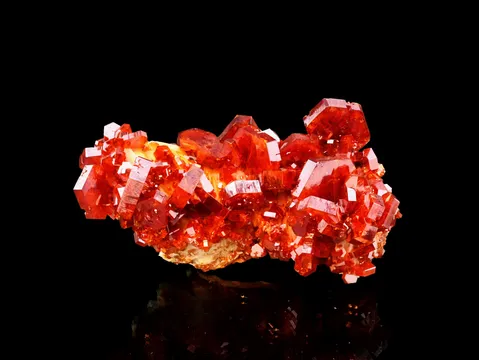
Vanadinite is Morocco’s signature collector mineral, with Mibladen producing the classic scarlet, orange-red, reddish brown, and magenta-red hexagonal crystals on white, cream, pinkish, or manganese-darkened baryte, especially from sectors such as ACF Mine, Coud’a, Bou el Maden, and related workings. Habits range from short hexagonal barrels and thick tabs to prismatic crystals, druses, parallel growths, hopper-like forms, and palisades; cabinet pieces may carry crystals from a few millimeters to around 2 cm, with exceptional Mibladen crystals larger, while Touissit material is often more yellow-brown, bronze, elongated, or endlichite-like in appearance and may sit with mottramite, descloizite, or carbonate matrix. Top Moroccan vanadinite combines saturated color, bright luster, complete crystal faces, attractive spacing or dense coverage, strong contrast on baryte, minimal bruising to exposed crystal edges, and a label that distinguishes Mibladen from Touissit, Taouz, or other Moroccan vanadinite sources.
Morocco’s chalcostibite reputation rests on Rhar el Anz in the Cherrat Wadi area, where this rare copper antimony sulfide, CuSbS2, occurred as lead-grey to metallic black masses and blocky crystals, in some cases reaching roughly centimeter to 2 cm scale and dramatically coated or partly pseudomorphed by azurite, with malachite as a common color accent. The Moroccan pieces are important because chalcostibite is usually a collector rarity represented by small, dull, or massive material; Rhar el Anz gave it visual presence. Good examples show recognizable metallic chalcostibite form beneath or beside vivid blue azurite alteration, a robust matrix or coherent crystal group, and reliable Rhar el Anz provenance, while ordinary pieces may be little more than dark sulfide with uncertain identification or an azurite-rich specimen where the chalcostibite is poorly exposed.
Moroccan malachite is most collectible when it belongs to a named oxidized copper or polymetallic assemblage: green alteration on Touissit azurite, malachite with cerussite and baryte at Bou Beker, botryoidal or fibrous copper-carbonate growths from Oumjrane and Alnif-area copper workings, or green accents in Bou Azzer cobalt-copper associations. It occurs as crusts, velvet coatings, fibrous sprays, replacement after azurite, and botryoidal masses rather than the huge polished stalactitic forms associated with Congo material. Fine Moroccan malachite is judged by texture, freshness, and association—velvety green against deep azurite, clean fibrous sprays with baryte, or well-documented copper-zone pieces—while loose, massive, polished, or vaguely labeled Moroccan malachite is far less significant.
Moroccan baryte appears in several distinct collector styles: the white to cream bladed baryte that gives Mibladen vanadinite its famous red-on-white contrast; pinkish, orange, cream, or manganese-darkened baryte from Mibladen lead workings; baryte associated with Touissit-Bou Beker lead secondaries; and the pale to silvery blue tabular crystals of the Nador-Jebel Ouichane material long sold under the Sidi Lahcen name. Habits include bladed rosettes, cockscomb aggregates, tabular crystals, parallel growths, and plates; the best Nador pieces are lustrous, translucent, and sculptural, often with limonite or iron-oxide association, while the best Mibladen baryte is valuable as matrix for undamaged, brilliant vanadinite. Ordinary Moroccan baryte becomes much less desirable when broken, chalky, stained without aesthetic effect, or mislabeled with vague or obsolete locality names.
Elbaite is not one of Morocco’s old classic species, but recent Moroccan pegmatite material has given collectors a small and intriguing suite, especially from Beni Bouzra in northern Morocco, where elbaite occurs with quartz and porcelain-white albite or feldspar. The most discussed modern style includes aesthetic multicolored to pastel tourmaline crystals from late-2010s pockets, including material marketed from a “Candy Cane” pocket and introduced to collectors around the 2020 Tucson show. Compared with major elbaite sources such as Brazil, Afghanistan, Pakistan, or Madagascar, Moroccan elbaite is scarcer and valued more for locality novelty and association than for large gem crystals; good pieces show attached crystals, honest pegmatitic context, color zoning or pleasing pastel tones, undamaged terminations, and a label that identifies Beni Bouzra rather than merely “Morocco.”
Moroccan gypsum reaches collectors in two very different ways: abundant fibrous satin-spar and selenite from evaporitic or sedimentary settings, including Enjil-area material, and more locality-specific gypsum as an accessory in oxidized lead-zinc districts such as Touissit-Bou Beker and Mibladen. The satin-spar material is typically silky, fibrous, white to orange or honey-colored from iron staining, and sold widely in quantity; it is attractive but seldom rare. More interesting collector pieces are gypsum sprays or clear crystals associated with malachite, dolomite, cerussite, baryte, or other secondary minerals from named Moroccan mines. For serious collecting, the difference is label and context: a clean gypsum spray on Bou Beker matrix or a documented district association has more mineralogical interest than a polished or mass-market satin-spar wand labeled only “Morocco.”
Moroccan feldspar is chiefly important in pegmatite specimens, where albite, microcline, and potassium feldspar form the pale blocky to porcelain-white matrix for quartz, muscovite, tourmaline, and elbaite from localities such as Beni Bouzra, Sidi Bou Othmane, and pegmatitic parts of the Anti-Atlas and Meseta. Geological studies of Moroccan pegmatites record feldspar as one of the dominant phases, commonly with quartz and mica and locally with tourmaline, garnet, zircon, columbite-group minerals, and other accessories. Collector-quality feldspar from Morocco is therefore usually judged as an association mineral rather than a stand-alone species: crisp albite or microcline supporting colored elbaite or tourmaline is desirable, while massive feldspar lacking a fine associated crystal has limited specimen value unless it documents an unusual pegmatite occurrence.
Moroccan calcite has several collector identities: cobalt-bearing pink calcite from Bou Azzer, calcite in Mibladen and Touissit oxidized lead-zinc assemblages, calcite with El Hammam fluorite and pyrite, and more recent “kanonenspat” or sharply formed calcite with quartz from the Imilchil-Jebel Masker area. Bou Azzer calcite is the most distinctive, ranging from pale to vivid pink where cobalt is involved and occurring with roselite, erythrite, wendwilsonite, cobaltaustinite, dolomite, quartz, skutterudite, and related cobalt minerals. Fine Moroccan calcite is judged by color, transparency, crystal definition, and association: undamaged pink crystals on cobalt-matrix from a named Bou Azzer mine, clean calcite perched on fluorite from El Hammam, or unusual sharp calcite from a documented Imilchil find are far superior to dyed, polished, or locality-vague pink carbonate sold in the decorative trade.
El Hammam is the Moroccan fluorite locality collectors know best, producing transparent to translucent cubic fluorite in green, yellow, amber, purple, and related tones, commonly with quartz, pyrite, calcite, or sulfide-bearing matrix. Crystals can be cabinet-scale and may show simple cubes, composite cubic clusters, stepped growth, modified corners, or subtle octahedral orientation; older pieces and selected modern finds can be especially attractive when pyrite microcrystals sparkle across fluorite faces. The best Moroccan fluorite has saturated but natural-looking color, glassy luster, clean faces, minimal bruising on corners, and pleasing matrix balance, while ordinary pieces may be dull, cleaved, overly massive, or sold under imprecise spellings of El Hammam without mine-level clarity.
Moroccan tourmaline occurs principally in pegmatitic settings rather than in the country’s famous lead and cobalt districts, with black tourmaline, schorl-like material, and rarer elbaite-bearing assemblages recorded from pegmatite fields including Beni Bouzra, Sidi Bou Othmane, Zenaga, and related Moroccan inliers. The collector pieces most likely to stand out are tourmaline crystals embedded in or perched on quartz, albite, microcline, or muscovite, and the rare colored elbaite combinations that made recent Beni Bouzra pockets noteworthy. Good Moroccan tourmaline is valued for being complete, attached, well terminated, and supported by clean white feldspar or quartz contrast; broken black prisms in pegmatite are common educational pieces, but precise locality and attractive association are what make Moroccan tourmaline collectible.
Anglesite from Morocco is essentially a Touissit-Bou Beker classic, occurring as colorless, pale yellow, lemon-yellow, honey, amber, or slightly smoky crystals formed by oxidation of galena in the district’s lead-zinc ores. The best specimens show transparent to gemmy orthorhombic crystals, commonly prismatic, wedge-shaped, or richly faced, sometimes with galena inclusions and associated cerussite, galena, azurite, baryte, dolomite, or wulfenite; notable crystals reached multi-centimeter size, and fine Touissit anglesite has been important enough that some material was suitable for faceting. Top pieces have natural internal color, high transparency, complex faces, sharp edges, and undamaged terminations; collectors should be alert to the documented history of color-enhanced or bleached Touissit anglesites and should value old labels, dealer notes, and visible evidence of natural color continuity.
Beyond these headline species, Morocco has an unusually deep roster of documented collector minerals and rarities. Bou Azzer alone has hundreds of recorded species and multiple type-locality minerals, including bouazzerite and wendwilsonite, along with arhbarite, maghrebite, nickelaustinite, irhtemite, and other rare cobalt-arsenate or arsenide-related species. Touissit-Bou Beker adds phosgenite, paralaurionite, nadorite, leadhillite, mottramite, descloizite, wulfenite, cerussite, and tarnowitzite-type aragonite associations. Mibladen is not only vanadinite: cerussite, wulfenite, aragonite, baryte, minium, phosgenite, and manganese oxides all matter there. Imiter contributes silver species; Oumjrane and Bou Nahas add copper secondary minerals including dioptase, cuprite, native copper, linarite, and recently described bounahasite; and Moroccan pegmatites continue to expand the country’s profile with tourmaline, feldspar, quartz, mica, columbite-group minerals, and lithium-bearing assemblages.
Morocco is one of the great modern specimen sources, but it is also one of the markets where label discipline is most important. A specimen labeled only “Morocco” may be perfectly natural yet scientifically weak. For vanadinite, distinguish Mibladen, ACF Mine, Coud’a, Bou el Maden, Taouz, Touissit, and other sources; their habits, matrix, color, and value differ. For blue baryte, be alert to material sold as “Sidi Lahcen” when the more precise or corrected locality may be Jebel Ouichane or the Ouichane Mines area near Nador. For cobalt minerals, “Bou Azzer” covers a large district with many named mines and sectors; Aghbar, Aït Ahmane, Bou Azzer Mine, Oumlil, Bou Azzer East, and other labels carry more value than a broad district name.
The best-known Moroccan fake tradition involves manufactured galena geodes. These have been documented as artificial objects sold as mineral specimens, sometimes made to imitate unusual galena habits known from the Touissit-Bou Beker region. Tourist-market “galena geodes,” dyed geodes, brightly colored sugar quartz, and painted or treated decorative pieces should be approached with skepticism. Serious collectors should examine matrix continuity, glue, saw marks, clay or plaster interiors, unnatural distribution of crystals, and color that pools in cracks or along porous surfaces.
Anglesite from Touissit has a specific treatment concern: some amber to orange-yellow material has been reported as color-enhanced or bleached from paler crystals. Natural lemon-yellow and colorless Touissit anglesite exists, and fine natural specimens are highly desirable, but strong orange or amber color should be evaluated carefully under magnification and, where possible, with provenance. Chips, broken edges, and internal color continuity can help, but old labels from reputable dealers or collections are especially valuable.
Vanadinite is abundant enough that outright synthetic material is not the main problem; condition, repair, stabilization, and locality confusion are more realistic issues. Mibladen vanadinite commonly has exposed crystal edges on fragile baryte, so look closely for rubbed pinacoids, chipped corners, detached crystal scars, glued baryte blades, and concealed repairs. Bright red vanadinite on white baryte is still available, but top pieces with saturated color, undamaged crystals, and elegant spacing are much scarcer than the volume of Moroccan material on the market suggests. Also remember the chemistry: vanadinite contains lead. It is stable as a specimen, but wash hands after handling, avoid dust, and keep it away from children.
Bou Azzer cobalt minerals demand careful identification. Roselite, wendwilsonite, talmessite, erythrite, cobaltaustinite, and cobalt-bearing calcite can overlap visually, especially in pink to purple associations. A vivid pink carbonate may be natural cobaltoan calcite, dyed calcite, or another carbonate; color alone is not proof. High-end arsenates and type-locality rarities should be bought with analytical confidence, old provenance, or a dealer willing to stand behind the identification. Many Bou Azzer species contain arsenic, cobalt, nickel, or heavy metals, so avoid abrasion, inhaling dust, or acid cleaning.
Fluorite from El Hammam can be cleaved and corner-bruised; inspect cube corners and edge transparency. Some specimens fluoresce or show attractive response under ultraviolet light when associated calcite or fluorite is present, but fluorescence is variable and should not be assumed. Gypsum and satin spar are soft and water-sensitive; fibrous satin spar scratches easily and should be kept dry. Azurite and malachite from Touissit, Oumjrane, and Bou Beker should not be cleaned aggressively with acids or soaking methods, as carbonate minerals and porous gossan matrices may be damaged. Chalcostibite from Rhar el Anz is a rare sulfosalt specimen: protect it from abrasion, and do not assume every azurite-coated dark sulfide from Morocco is chalcostibite without reliable provenance or analysis.
Market availability remains strong for Moroccan vanadinite, baryte, gypsum, and many decorative calcites, moderate for El Hammam fluorite and Bou Azzer cobalt minerals, and much thinner for top Touissit azurite, top Touissit anglesite, Rhar el Anz chalcostibite, and old pocket pieces with exact provenance. Morocco continues to produce new material, but the finest classics increasingly trade as collection pieces rather than fresh mine-run stock.
The founding story of Bou Azzer has the quality of mineralogical folklore, but it is preserved in the mining company’s own historical account. In 1928, Jean Epinat was visiting Marrakech when he noticed cobalt arsenate minerals for sale in the traditional stalls of Jemaa el-Fna. The local people of the Bou Azzer region had long used cobalt arsenate minerals such as erythrite for practical household purposes, including insecticide and rat poison. Epinat recognized the strategic value of cobalt and asked to be taken to the source. That led him to the Bou Azzer “boutonnière,” where cobalt-bearing veins cropped out at the surface with oxides, arsenates, carbonates, and arsenides. Within a few years the discovery had moved from market curiosity to industrial cobalt operation.
Mibladen’s story is one of abandonment followed by a second life through specimens. The lead deposits were discovered in 1907, industrial work began in the 1910s, and by the mid-twentieth century the Aouli-Mibladen mining complex had roads, power infrastructure, and ore transport links. When large-scale mining ended, the district did not disappear from mineral history. Instead, old workings and shallow new shafts became specimen ground. Moroccan miners followed baryte and galena zones for vanadinite, cerussite, and wulfenite, sometimes working narrow, difficult pockets that would never matter to an industrial mining engineer but could produce one cabinet specimen worth saving.
One of the most revealing modern vanadinite episodes comes from the Coud’a area of Mibladen in early 2019. Dealers described new material from levels deeper than usual, with short prismatic to thick tabular vanadinite crystals, many doubly terminated, forming palisades, parallel growths, hopper-like clusters, and bright red to magenta-red druses. For collectors who had grown used to seeing Mibladen as an old classic, the 2019 Coud’a finds were a reminder that Moroccan districts are not only museum history; pockets can still reset the market’s sense of what a known locality can do.
Touissit’s late-twentieth-century specimen years feel almost theatrical in retrospect: a lead-zinc mine producing blue azurite, yellow anglesite, glassy cerussite, wulfenite, and rare lead minerals of a quality far beyond ordinary oxidation-zone debris. Old dealer and collection records preserve the names and dates that matter: Shaft IX pieces from around 1980 to 1996, Carles Curto duplicate material from about 1989, Jordi Fabre duplicates bought from Moroccan dealers, and Bou Beker specimens with a distinct look from Touissit proper. One Fabre description of a Touissit azurite stresses sharp crystals, excellent luster, and a white matrix contrast, and adds the human detail that he bought the piece from Hmani Ali at his home in Oujda. That is how many Moroccan classics entered the world market: not as anonymous ore, but hand to hand, town to town, through networks of miners, local dealers, European buyers, and collectors.
Rhar el Anz offers a smaller but memorable story because the locality elevated an obscure sulfosalt into a display mineral. In 2002 a new strike of chalcostibite at the old copper mine near Casablanca produced specimens better than those previously known: blocky metallic black crystals, some brightened by blue azurite coatings and alteration. Chalcostibite is not usually a show mineral. The Moroccan occurrence made it one.