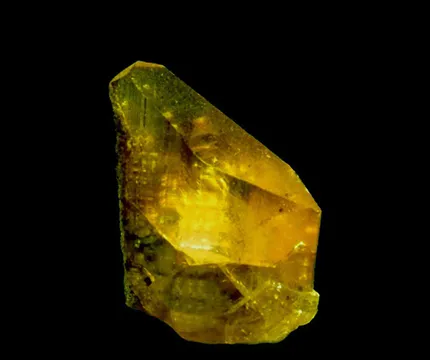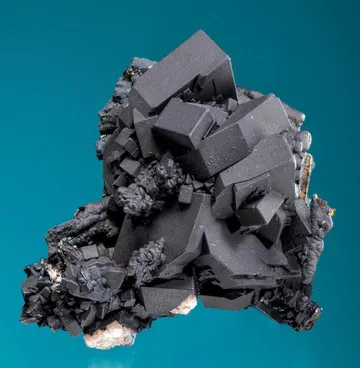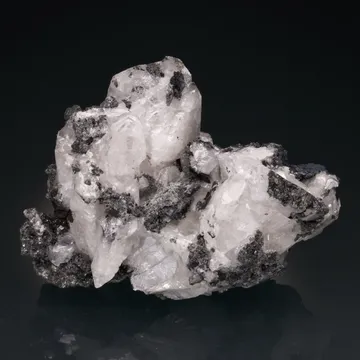
Anglesite: brilliant gemmy PbSO4 crystals with adamantine luster in colors from clear to lemon yellow; prized on matrix from Tsumeb, Monteponi, Broken Hill.
Key facts
Anglesite (PbSO4) is a classic secondary lead mineral formed by oxidation of galena. It is sought after for its high brilliance, adamantine luster, and often gemmy clarity in colors ranging from water-clear and icy white to lemon-yellow, honey, smoky gray, and occasionally greenish or bluish tints. Crystals are orthorhombic and typically present as blocky to thick prismatic or tabular forms; they can be sharply faceted and very lustrous, sometimes in striking contrast on metallic galena or in vugs with cerussite and other lead secondaries.
Despite its sparkling look, anglesite is relatively soft (Mohs ~2.5–3), brittle, and quite dense (specific gravity ~6.3), so pristine, unrepaired matrix specimens are less common than their abundance might suggest. Top pieces combine vivid color, transparency, sharp form, and elegant composition on matrix. Historic finds from Monteponi (Sardinia) and Broken Hill (Australia), together with Tsumeb (Namibia) and Morocco’s Touissit district, set the standard. Prices span from modest for small, well-formed crystals to significant for large, gemmy, undamaged classics with strong provenance.
Collectors have prized anglesite for over a century, particularly for its gemmy yellow to honey crystals and exceptional luster that approaches that of fine gem minerals. Early European collecting culture elevated classic Sardinian and Cornish examples, while 20th-century finds at Broken Hill and Tsumeb added iconic status. Since the late 20th century, Morocco’s Touissit-Bou Beker district has supplied an ongoing stream of attractive specimens, broadening availability while leaving the very best historic pieces firmly in the blue-chip realm.
Anglesite’s appeal lies in the juxtaposition of gem-like optics with a metallic-lead environment—crystals perched on lustrous galena or in oxidized pockets with cerussite and linarite can be irresistibly aesthetic. Its softness and brittleness make perfect specimens genuinely scarce, so high-grade pieces from classic localities maintain strong demand among advanced collectors, while clean miniatures and thumbnails provide great entry points for newcomers.
While anglesite occurs at hundreds of lead deposits worldwide, a handful of localities are notable for producing especially fine or distinctive specimens.
The Touissit–Bou Beker district in eastern Morocco is famed for bright, lemon-yellow to honey-brown anglesite crystals, commonly sharp and glassy, often contrasting on metallic galena or with white to smoky cerussite. Crystals range from pristine thumbnails to several-centimeter single crystals and clusters, frequently with textbook orthorhombic faces and high luster. Production has varied by pocket and era, but the district remains a mainstay for modern anglesite collecting, with a mix of affordable singles and exceptional matrix pieces that can rival historical classics.
Tsumeb yielded anglesite across multiple oxidation zones, producing diverse habits and colors—colorless to pale yellow or smoky, sometimes with delicate zoning. The crystal quality can be superb: lustrous, gemmy, and sharply faceted, often on or with galena, cerussite, mimetite, or smithsonite. While not the most common Tsumeb species, anglesite from here is distinguished by its refinement and associations, and top pieces carry the Tsumeb premium for pedigree, condition, and aesthetics.
Broken Hill is renowned for stout, often smoky-gray to brown anglesite crystals, typically thick prismatic to blocky, and sometimes quite sizable. Classic pieces show striking contrast on massive galena or in open cavities, occasionally with cerussite. Most are older finds; fresh discoveries are rare, so good examples are increasingly prized for their history and characteristic robust style.
Color and clarity:
Luster and terminations:
Crystal form and size:
Matrix and associations:
Condition:
Provenance:
Repairs and reattachments:
Polishing and restoration:
Treatments:
Assembled matrix:
Anglesite is soft, brittle, and lead-bearing; it requires mindful handling and gentle care.
Handling and display:
Environment:
Cleaning:
Storage:
By focusing on luster, clarity, sharp form, and clean terminations—ideally on contrasting matrix from a marquee locality—collectors can build a superb anglesite suite that spans both historic and modern classics.