A collector's guide to Little Three Mine, USA: its geology, mining history and notable minerals, illustrated with the 332 specimens documented from this locality on EarthWonders.
Key facts
Little Three Mine is one of the great San Diego County pegmatite localities: a compact Ramona property whose thin, stubborn dikes have produced a disproportionately important suite of American gem and mineral specimens. Set in the Hatfield Creek valley east-northeast of Ramona, the mine belongs to the Peninsular Ranges pegmatite province, where granitic pegmatite-aplite dikes cut tonalitic and dioritic rocks of the southern California batholith. The dikes are not giant bodies by pegmatite standards; their fame rests instead on sharp internal zoning, miarolitic pockets, and a remarkable separation of mineral assemblages from dike to dike and even from zone to zone within a single dike.
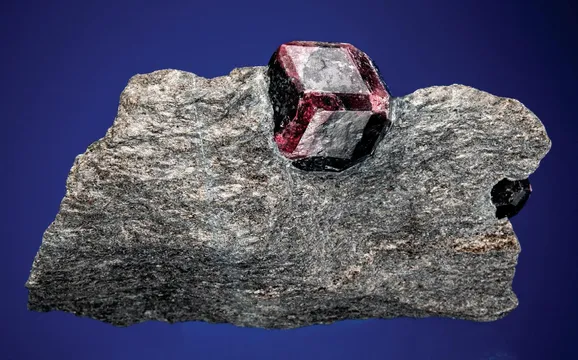
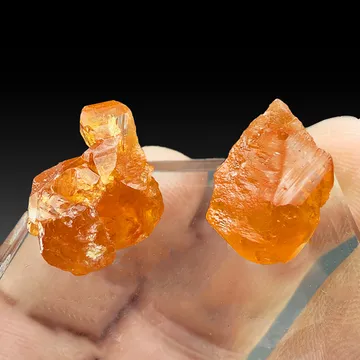
Collectors know the locality first for two visual languages. The first is classic Ramona spessartine: bright orange to yellow-orange garnet, commonly dodecahedral to trapezohedral, sitting against snowy cleavelandite and jet-black schorl, sometimes with smoky quartz. The best examples have a hot ember-like color and the high-contrast matrix that makes Little Three-area spessartine instantly recognizable. The second is the topaz-tourmaline-lepidolite pocket suite of the main Little Three dike: natural blue topaz, green to yellow-green elbaite, lavender lepidolite, smoky quartz, feldspar, hambergite, and late boron-rich mica minerals, including the type-locality species boromuscovite.
Historically, the mine bridges the romantic era of Southern California gem mining and the modern scientific study of pegmatites. Early twentieth-century work recovered topaz, tourmaline, beryl, and garnet from open cuts and tunnels; mid- and late-twentieth-century work under the Spaulding family turned the Little Three property into both a producing mine and a field laboratory. The 1976 New Spaulding Pocket, the 1991 London Pocket, and the spessartine-producing Hercules-Spessartite and Spaulding/Swamp systems made the property central to discussions of miarolitic pocket formation, late-stage corrosion, boron geochemistry, and the conditions that allow manganese-rich but iron-poor garnet to crystallize as fine orange spessartine.
Regional View
Country View
The name “Little Three Mine” needs careful handling on specimen labels. The main Little Three dike is the celebrated source of topaz, elbaite, lepidolite, hambergite, boromuscovite, and related pocket minerals. Much of the finest spessartine traditionally sold as “Little Three” is from adjacent or closely associated spessartine-bearing pegmatites on or near the property, especially the Hercules-Spessartite dike and the Spaulding/Swamp systems. For collectors, that distinction is not pedantry: a label reading simply “Little Three Mine” may be perfectly traditional, but a label that preserves “Hercules-Spessartite dike,” “Spessartite mine,” “Spaulding dike,” “Swamp dike,” “New Spaulding Pocket,” or “1991 London Pocket” carries extra locality value.

Photo: Wikimedia Commons
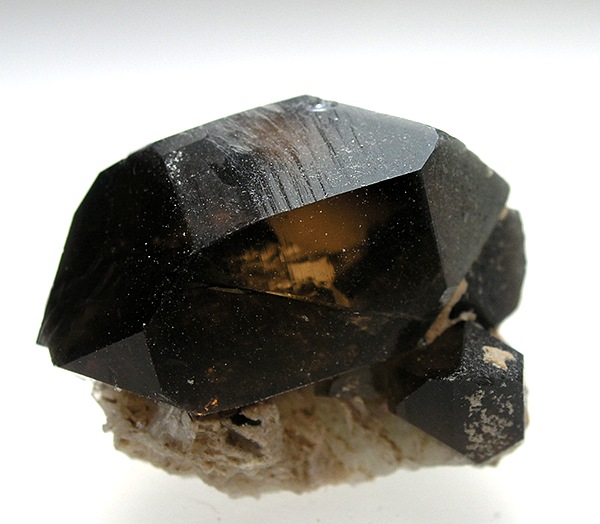
Photo: Wikimedia Commons

Photo: Wikimedia Commons
Search for specimens: View all specimens from Little Three Mine, USA
Little Three Mine lies in the Ramona Mining District of central San Diego County, California, about 7.1 km east-northeast of Ramona and roughly 50 km northeast of metropolitan San Diego. Published accounts place the mine area in the Hatfield Creek valley at roughly 580–700 m elevation, in dry chaparral country where summer temperatures can exceed 105°F. The old workings are mostly shallow open cuts, small tunnels, and surface disturbances on pegmatite outcrops; brush regrowth can quickly hide earlier excavations.
The deposit is a gem-bearing granitic pegmatite-aplite system. The Ramona district consists of northwest-trending pegmatite dikes intruded into tonalite, diorite, and related plutonic rocks of the Peninsular Ranges batholith. In the Little Three area, the pegmatites are generally thin, persistent dikes, commonly less than two meters thick, striking northwest and dipping gently to moderately west or southwest. The pegmatites are asymmetrically layered: a fine-grained sodic aplite footwall below, a coarser graphic granite or quartz-perthite-rich pegmatite above, and a pocket-bearing zone near the contact between them. The aplite carries quartz, sodic plagioclase, K-feldspar, schorl, and almandine-spessartine; the coarser upper zones contain graphic quartz-perthite intergrowths, large feldspar, smoky quartz, cleavelandite, muscovite, schorl, and locally miarolitic cavities.
This zoning controls the collector minerals. The main Little Three dike is the topaz-elbaite-lepidolite system. Its pockets yielded pale to medium blue topaz, green to yellow-green elbaite with scarcer pink and amber tones, lavender lepidolite, smoky quartz, microcline, albite var. cleavelandite, hambergite, stibiotantalite-group minerals, and the late-stage boron-rich mica boromuscovite. In contrast, the best spessartine did not come from the same pocket assemblage. It is tied to smaller, spessartine-bearing dikes and zones—especially the Hercules-Spessartite and Spaulding/Swamp systems—where manganese was concentrated without the late lithium-rich assemblage that tends to sequester manganese into lepidolite and elbaite rather than garnet.
Spessartine mineralization at Ramona is especially associated with corroded, feldspar-rich, vuggy pegmatite that miners called “cottonball spar” or “popcorn rock.” This rock contains irregular cavities and clay-filled openings, and in productive zones it was a field sign worth following. Spessartine occurs in blue-gray clay with tourmaline needles in vugs, fractures, and larger cavities, with albite, potassium feldspar, quartz, and schorl; rarer associations include pale blue to pink beryl and pink apatite. In the productive Spessartite open cut, feldspar-rich rock in the center of the pegmatite was altered to a pink clay layer about 40 cm thick, with garnets effectively floating in the clay. Farther north along the Hercules-Spessartite dike, spessartine occurred in better-formed pockets with less corrosion, producing the classic orange garnet perched on cleavelandite with schorl and smoky quartz.
The mine was discovered in the early 1900s, and the familiar origin story attributes the name to three men associated with the first discovery and acquisition of the ground. By the end of 1903, several mines and prospects had been staked in the Ramona district, including Little Three, A.B.C. or Daggett, and Hercules. Early work recovered topaz, tourmaline, spessartine, and beryl through open cuts and tunnels. Kunz reported more than 10 kg of spessartine from the district during 1903–1905, yielding faceted gems up to 8 ct, but by 1909 the near-surface Little Three workings were considered exhausted. The 1912 collapse of the Chinese tourmaline market, which badly affected Southern California pegmatite mining, led to decades of limited activity.
The modern collecting era began when Louis Spaulding and Louis Spaulding Jr. established claims in the area in 1947. Intensive work resumed in the mid-1950s, and after Louis Spaulding Sr.’s death in 1973, Spaulding Jr. continued mining the Little Three and related dikes with unusual persistence. The Spaulding dike produced about 3,000 carats of faceting spessartine rough from 1956 to 1959, followed by later production under Spaulding Sr. The Hercules-Spessartite dike became the larger spessartine story: the Hercules portion was located in 1903, worked intermittently, mined in part by John Sinkankas and his son in 1965–1966, and later mined unsuccessfully by Bryant Harris and E. “Buzz” Gray until 1984. The southern Spessartite portion, expanded by Spaulding Jr. beginning in 1975, produced the most important late twentieth-century spessartine finds, including large faceting rough and fine matrix specimens during 1987–1990 and again in 1993–1994.
Topaz and tourmaline history centers on the main Little Three dike. A famous topaz-elbaite matrix specimen weighing about 150 pounds was reportedly mined in 1905 from the main dike and displayed for years in San Diego before being crated during World War II and lost. The 1976 New Spaulding Pocket, opened by Spaulding Jr. in the Topaz Ledge area, became the mine’s defining modern pocket for topaz, elbaite, and lepidolite. Scientific descriptions record the New Spaulding Pocket as a large, nearly flat miarolitic cavity with blue and colorless topaz, elbaite, cleavelandite, quartz, microcline, lepidolite, rare-element oxide minerals, hambergite, and late boromuscovite coatings. The 1991 London Pocket, discovered by David London during work with Spaulding, produced large smoky quartz, feldspar, elbaite, blue topaz, and lepidolite specimens and remains one of the great documented modern pockets from the property.
Most historical mining was surface work: “peeling” exposed pegmatite with pry bars, minor blasting, bulldozer and backhoe work, followed by delicate pocket excavation using chisels, ice picks, and wooden tools. Pocket material was commonly cleaned with oxalic acid to remove iron staining. Today the mine is private property under the Little 3 Mining Company, which states that the Gregory family acquired the mine from the Spaulding family in 2022. Free public collecting is not appropriate; access is by owner permission or through scheduled, limited-capacity events. Recent advertised digs have included small groups, waiver requirements, hardrock and tailings access in selected zones, and the ability for participants to keep specimens they personally dig under the operator’s rules.
Little Three-area spessartine is the signature American specimen garnet: bright orangy yellow to yellowish orange, locally brownish orange, in dodecahedral to trapezohedral crystals that may be sharp, etched, partially corroded, or lustrously stepped. Fine crystals reach about 3–4 cm, but size alone is not the point here; the best pieces show transparent orange garnet alive with light, attached naturally to white cleavelandite with black schorl and sometimes smoky quartz. The finest spessartine came especially from the Hercules-Spessartite and Spaulding/Swamp systems rather than the lithium-rich topaz-elbaite pockets of the main dike. Good pieces preserve attachment, contrast, luster, completeness, and pocket context; ordinary examples are loose, incomplete, heavily etched without elegance, or lacking the white-and-black matrix that defines the locality.
At Little Three, albite is both a rock-forming mineral and a collector matrix mineral, with the prized habit being cleavelandite: curved, bladed, snowy to translucent white plates lining pockets and framing the gem species. In the main dike and in spessartine-bearing zones, albite appears in quartz-albite rocks, pocket pegmatite, fracture fillings, and as delicate blades around garnet, schorl, topaz, smoky quartz, and tourmaline. The most desirable albite specimens are not simply feldspar masses but sculptural cleavelandite matrices that set off orange spessartine or blue topaz without crushing, staining, or excessive clay residue; their collector value depends on freshness, contrast, crystal definition, and whether the blades support an important Little Three association.
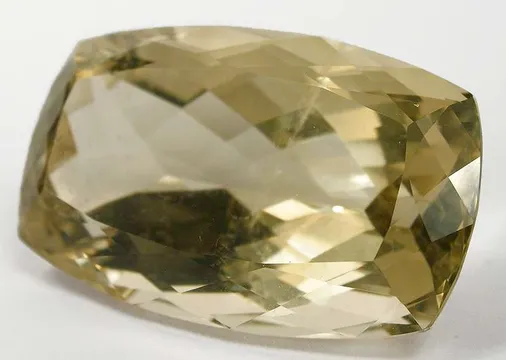
Topaz is the main Little Three dike’s great gem mineral and one reason the mine is regarded as one of North America’s prime natural blue topaz localities. The New Spaulding Pocket yielded pale to medium blue and blue-green crystals, with more than 28 kg of topaz removed as roughly 75 nearly complete crystals in the published study; individual sampled crystals commonly weighed from about 0.06 to 0.6 kg. Large early blue crystals were often microfractured, while much smaller colorless, flawless crystals, only several millimeters across, grew on pocket minerals such as elbaite. Topaz specimens are best when they show natural blue color, glassy luster, clean form, and matrix with microcline, albite/cleavelandite, elbaite, or smoky quartz; fractured loose fragments and repaired crystals are common enough that condition and documentation matter greatly.
Cleavelandite at Little Three is the bladed albite habit that gives the locality’s best specimens their architecture. It occurs as white, curved, sometimes pearly blades and rosettes in pocket zones and albite-quartz rocks, forming the classic snowy base for spessartine, the interrupting blades around blue topaz, and part of the pocket lining with tourmaline, quartz, feldspar, muscovite, and lepidolite. On spessartine specimens, cleavelandite is most prized when it is bright, open, and well balanced around the garnet rather than massive or chalky; on topaz and tourmaline pieces, undamaged blade sprays provide the scale and contrast that separate a true Little Three pocket specimen from a loose gem crystal.
Quartz is fundamental to the Little Three pegmatites, appearing in graphic quartz-perthite intergrowths, pocket pegmatite, late fracture fillings, and as clear to smoky crystals in miarolitic cavities. In collector terms, quartz is most important where it participates in association pieces: smoky quartz with orange spessartine and schorl, quartz with muscovite and microcline, and quartz from the London Pocket suite with feldspar, elbaite, topaz, and lepidolite. Little Three quartz can be lustrous and well terminated, but the best specimens are locality-rich combinations rather than isolated crystals; damage at terminations, healed fractures, and contact marks are common condition points to inspect.
Tourmaline at Little Three spans black schorl in the aplite, hanging-wall pegmatite, and spessartine assemblages, plus elbaite in the main dike pockets. In the New Spaulding Pocket, tourmaline occurred attached to the roof within masses of coarsely bladed cleavelandite, with elbaite prevalent through the pockets and colored mostly dark green to yellow green, with scarcer amber and pink material. In the spessartine-bearing zones, black tourmaline needles and prisms are important both geologically and aesthetically, depleting iron from the system and supplying the black contrast beside orange garnet. The best Little Three tourmaline specimens have intact terminations, clear attachment to cleavelandite or quartz, and meaningful pocket association; broken black rods without matrix are far less desirable unless they carry spessartine or another key mineral.
Schorl is the black tourmaline that anchors the Little Three visual palette. It is present in the aplite footwall, in nonpocket pegmatite and graphic granite, and as a key associate of spessartine in the Hercules-Spessartite and Spaulding/Swamp assemblages. Fine schorl pieces show sharp black prisms or sprays rising from cleavelandite, smoky quartz, or feldspar, ideally with orange spessartine for the classic tri-color association. The most collectible schorl is not judged like isolated Brazilian tourmaline; at Little Three, it earns its place through contrast, completeness, and association. Broken, splintery, or iron-stained crystals are common, while clean black crystals naturally arranged with garnet and albite are much more desirable.
Elbaite belongs chiefly to the main Little Three dike’s lithium-rich pocket assemblage, especially the New Spaulding and London pocket suites. Most documented pocket elbaite is dark green to yellow green, with rarer amber, pink, and raspberry tones; crystals were associated with cleavelandite, topaz, quartz, microcline, lepidolite, hambergite, and late boromuscovite. Unlike Pala or Himalaya tourmalines, Little Three elbaite is not generally collected for long, candy-colored crystals alone; its appeal is as part of a Ramona pocket assemblage, particularly where topaz or lepidolite remains naturally attached. Good specimens show terminations, color, luster, and matrix context, while incomplete green sections without pocket associations are comparatively ordinary.
Smoky quartz from Little Three ranges from small, lustrous, transparent brown crystals to larger pocket crystals associated with albite, muscovite, microcline, elbaite, topaz, and spessartine. A documented 178.42 ct smoky brown quartz crystal, 44.00 mm long, from the John Sinkankas collection hosts a 3.3 mm spessartine inclusion, underscoring how closely quartz and garnet interacted in the pegmatitic system. The best smoky quartz pieces are sharp, lustrous, undamaged, and clearly from the Little Three assemblage—especially on cleavelandite or with schorl/spessartine. Contacts, rehealed fractures, bruised terminations, and iron staining are routine issues, so undamaged miniature and thumbnail examples are surprisingly strong locality specimens.
“Garnet” labels from Little Three usually mean spessartine or an almandine-spessartine member, and older labels may use “spessartite.” The aplite contains almandine-spessartine layers, while the collector garnets are the orange, late-stage spessartine crystals from vugs and pockets in feldspar-rich altered pegmatite. Generic garnet specimens from the locality should be judged by whether they are actually the classic orange spessartine association or a less aesthetic garnet-bearing rock; well-labeled pieces that distinguish almandine-spessartine aplite from gem spessartine pocket material are preferable. The best garnet pieces preserve crystal form, transparency, color, and association with cleavelandite, schorl, smoky quartz, or feldspar.
Muscovite occurs in several Little Three settings, from greenish mica in coarse pegmatite to colorless, silvery-white, or very pale pink mica in pocket-zone associations. It is part of the broader quartz-feldspar-mica assemblage and is also significant because the Little Three main dike produced boron-rich muscovite chemistry culminating in boromuscovite as a separate species. As a collector mineral, ordinary muscovite books are secondary to the more colorful species, but attractive pieces with smoky quartz, feldspar, albite, schorl, spessartine, or lepidolite have real locality character. Good specimens should have fresh, reflective books or sprays and firm matrix; mica edges bruise easily, and pocket micas can delaminate or lose sparkle if overcleaned.
Lepidolite is one of the great surprises of the main Little Three dike, not merely a background lithium mica but at times a specimen mineral in its own right. In the New Spaulding Pocket, coarse euhedral books and blades of fluorine-rich lepidolite lined portions of the pocket floor and occurred with elbaite, blue topaz, quartz, microcline, cleavelandite, hambergite, and boromuscovite coatings. Fine pieces show lavender to lilac, metallic to pearly books, locally several centimeters across, in sculptural clusters or attached to white cleavelandite. The best lepidolite specimens have rich color, large defined crystals, bright luster, and provenance to the New Spaulding-era pocket material; worn mica masses or dull, crushed plates are far less compelling.
Axinite-group minerals are documented from the Little Three property, especially in the thinner Swamp and Spessartine dike systems where the pocket mineralogy includes foitite, spessartine, muscovite, axinite, danburite, and rare beryl. Collector references record sharp, translucent brown Little Three axinite crystals to several centimeters, making them an uncommon but important Ramona rarity rather than a routine accessory. Good examples should show the thin wedge-like crystal form, translucency, and unambiguous locality documentation, ideally with pegmatite matrix or associated schorl, muscovite, feldspar, or spessartine. Because axinite is much less familiar from Little Three than garnet or topaz, precise labels and, for high-value pieces, analytical confidence are especially important.
Feldspar at Little Three is not a single collector story but a framework for the entire pegmatite: albite and cleavelandite, microcline, orthoclase with adularia habit, perthitic feldspar, graphic quartz-perthite, and large pocket crystals all occur in the dike system. In the main dike, microcline and albite are essential companions to topaz, elbaite, lepidolite, quartz, and hambergite; in spessartine zones, feldspar-rich altered rock and clay after feldspar helped localize garnet. The most desirable feldspar specimens are sharply crystallized microcline or albite/cleavelandite pieces with significant associations—blue topaz, smoky quartz, spessartine, schorl, or tourmaline—rather than plain blocky feldspar. Twinning, clean faces, and naturally attached gem minerals lift a feldspar specimen well above a structural matrix piece.
Other documented Little Three minerals include almandine, hambergite, kaolinite, laumontite, microcline, microlite-group minerals, monazite-group minerals, montmorillonite, native bismuth, orthoclase, pollucite, pucherite, stibiocolumbite, stibiotantalite including bismuth-bearing material, stilbite-Ca, todorokite, vermiculite, zircon var. cyrtolite, and rare boron- and tantalum-bearing pocket phases. The locality’s most important rare-species distinction is boromuscovite, whose type locality is the New Spaulding Pocket of the main Little Three dike; it occurs as a white to cream, snowlike to porcelaneous late-stage coating on earlier pocket minerals rather than as showy crystals. The 2016 Foord Pegmatite Symposium and later boron isotope work also emphasize danburite, foitite, cryolite, and other rare phases from the Main, Swamp, and Spessartine dikes, making Little Three a locality where small, unattractive coatings or matrix pieces can have genuine scientific weight.
The chief authenticity issue is locality precision. “Little Three Mine” is widely and historically used for Ramona spessartine, but much of the finest garnet came from the Hercules-Spessartite and Spaulding/Swamp systems associated with the property rather than from the main topaz-elbaite Little Three dike. A specimen labeled simply “Little Three” may be traditional, but better labels preserve the dike, pocket, and owner history when known. Conversely, topaz, elbaite, lepidolite, hambergite, and boromuscovite should generally make one think of the main dike and its named pockets, especially New Spaulding and London.
No widespread, well-documented fake industry is tied specifically to Little Three specimens, but repair, reattachment, acid cleaning, and locality drift are realistic concerns. Spessartine crystals on cleavelandite can detach easily, and fine old pieces may have old repairs that are difficult to see among albite blades. Topaz crystals from the New Spaulding and London suites may be fractured, reattached to bases, or represented by loose fragments; large blue topaz especially should be inspected under magnification for filled fractures, glued contacts, and repaired cleavages. Oxalic acid cleaning was part of normal pocket preparation at the mine, so a clean Little Three specimen is not automatically suspicious, but overly bright feldspar with dissolved clay textures and weakened mica warrants careful handling.
Condition matters strongly. Spessartine should be checked for bruised edges, broken backs, internal fracture networks, missing attachment points, and whether the garnet is naturally seated in cleavelandite or merely tucked onto matrix. Cleavelandite blades are fragile and often chipped. Schorl commonly breaks across prisms. Lepidolite books can peel, abrade, or lose sharp edges. Topaz has perfect basal cleavage, so drops and pressure can produce serious damage. Smoky quartz may have contact marks or repaired terminations. Hambergite and boromuscovite-bearing material should be treated conservatively; boromuscovite is a fine-grained coating of scientific interest, not a mineral to scrub.
Little Three topaz is famous for natural blue color. As with any topaz locality, collectors should distinguish natural color, stable color, and irradiation-treated material when buying loose gems or crystals without provenance. Published Little Three pocket material is notable specifically because the blue topaz is natural, and that provenance is part of the value. Spessartine from Ramona is not valued for treatment; its appeal is natural orange color, transparency, and locality.
Market availability is uneven. Small loose spessartines and minor matrix pieces appear regularly, but sharp, undamaged orange crystals on cleavelandite with schorl are scarce and strongly competed for. Topaz, elbaite, and lepidolite from the named Little Three pockets are even more provenance-sensitive, and the best specimens tend to reside in old collections, museums, or advanced San Diego County suites. Recent owner-operated mining and limited digs have brought new material and renewed attention, but classic specimens from the Spaulding era remain the benchmark.
The mine’s origin story is pure Southern California gem-country folklore: three men, a lost cow, and gemstones lying on the ground in Ramona chaparral. The details vary in retelling, but the core is persistent enough to have become part of the mine’s public identity. In one version, the three men were searching for the cow when they noticed gem crystals scattered at the surface, bought the land, and gave the Little Three its name. It is a fitting beginning for a mine whose best specimens often came from improbable-looking, brush-covered hillsides rather than from the large underground workings collectors might imagine.
One of the earliest Little Three legends is the missing 150-pound topaz-elbaite specimen. Around 1905, miners reportedly recovered a very fine matrix piece from the main dike—topaz and elbaite together, large enough to weigh about 150 pounds. It went on display for years at the San Diego Chamber of Commerce, then was moved to the newly opened Natural History Museum. During World War II, when the Navy took over the museum, displays were crated and stored. The great specimen disappeared from view. Later accounts say it may have ended its life not in a mineral hall but on a junk barge, dumped into the ocean with wartime discard. Whether every turn of the story can be reconstructed or not, the image is hard to forget: one of San Diego County’s historic pegmatite showpieces lost not to theft or fire, but to bureaucratic oblivion.
The Spaulding era changed the mine from a romantic old locality into a modern collecting landmark. Louis Spaulding and his son Louis Spaulding Jr. entered the district after World War II, and by the mid-1950s serious work had resumed. Spaulding Jr. eventually became the defining figure of the property, working multiple dikes through heat, brush, hard rock, and long dry spells. The mining was not glamorous. Productive ground might mean peeling a pegmatite outcrop with equipment, then slowing to pocket work with chisels, ice picks, and wooden sticks. The old miners had to read subtle signs: clay seams, vuggy feldspar, “popcorn rock,” and the way a thin dike rolled under the hillside.
The spessartine story is full of small numbers that explain the rarity of great specimens. Fine crystals could reach 3–4 cm, but only a tiny fraction of the pocket garnet was facetable. Spaulding Jr. estimated that only about 1% of pocket spessartine made faceting grade. Much of the best material stayed as mineral specimens because an orange garnet naturally perched on cleavelandite with schorl was worth more as a crystal than as a cut stone. In August 1987, Spaulding Jr. recovered a 72.5 ct piece of spessartine rough that Buzz Gray cut into a 39.63 ct gemstone, the largest cut Ramona spessartine known in the GIA study. The same late-1980s to mid-1990s period yielded large crystals and matrix pieces from the Spessartite mine, including material that fed both high-end collections and jewelry.
The New Spaulding Pocket of 1976 is the main dike’s masterpiece. Spaulding Jr. opened it in the Topaz Ledge area while mining for gem and specimen topaz and tourmaline. Scientific descriptions record a low, irregular cavity of about 2.2 m3, with a floor and roof crowded by pocket minerals. Coarse lepidolite books lined parts of the floor. Tourmaline crystals clung to the roof in masses of bladed cleavelandite. Blue topaz came from the sides and floor, and small colorless topaz grew on elbaite. Late in the pocket’s life, boron-rich fluids coated earlier minerals with a white to cream, porcelaneous substance that would become boromuscovite, a new mica-group mineral. The pocket was therefore not only beautiful; it was chemically strange enough to become a type locality.
The 1991 London Pocket is the collector’s version of a detective story. David London was working with Louis Spaulding Jr. and following a line of small miarolitic pockets along a steep roll in the main dike. Instead of continuing straight along the expected trend, London probed shattered pegmatite at a right angle with a screwdriver. About 20 cm east of that line, he broke into the pocket that Spaulding named for him. The cavity measured roughly 4 m by 3 m by 1 m in some accounts, and photographs show a cache of crystals from its opening: smoky quartz, feldspar, green elbaite, raspberry and yellow tourmaline, blue topaz, and lavender lepidolite clusters. A large topaz crystal near the camera lens in one documented photograph was later reattached to its natural base and entered the Natural History Museum of Los Angeles County collection. The pocket is a reminder that at Little Three, a few inches and the right hunch could separate barren pegmatite from a world-class find.
The mine’s modern chapter began when the Gregory family acquired Little Three from the Spauldings in 2022. That transition matters because many classic California pegmatites have become inaccessible, reclaimed, or lost beneath development. Little Three instead reentered public mineral consciousness through small-scale mining, specimen sales, and tightly limited collecting experiences. Recent accounts describe renewed work on the Topaz Ledge, the Spessartine Ledge, the Swamp dike, and named modern pockets such as the Gema Pocket and Pencil Pocket. The tone is different from the old Spaulding years—more visible, more connected to collectors online—but the old problem remains unchanged: thin dikes, hard rock, and the hope that the next seam of clay will widen into a pocket.