A collector's guide to Audrey Lynne Mine, USA: its geology, mining history and notable minerals, illustrated with the 20 specimens documented from this locality on EarthWonders.
Key facts
The Audrey Lynne Mine—more commonly spelled Audrey Lynn in mineralogical records—is a small but unusually rewarding gem-pegmatite locality on the north side of Little Cahuilla Mountain in the Cahuilla Mining District of Riverside County, California. It belongs to the southern California pegmatite province, the same broad Peninsular Ranges batholith setting that made San Diego and Riverside Counties famous for tourmaline, beryl, feldspar, quartz, garnet, and rare-element accessory minerals. Audrey Lynne is not a large industrial mine; its importance to collectors comes from a series of compact, gem-bearing pockets in a northwest-striking, southwest-dipping granitic pegmatite that produced aquamarine, smoky to citrine quartz, schorl-dravite tourmaline, red garnet, feldspar, mica, axinite-(Fe), and a remarkable cassiterite rarity.
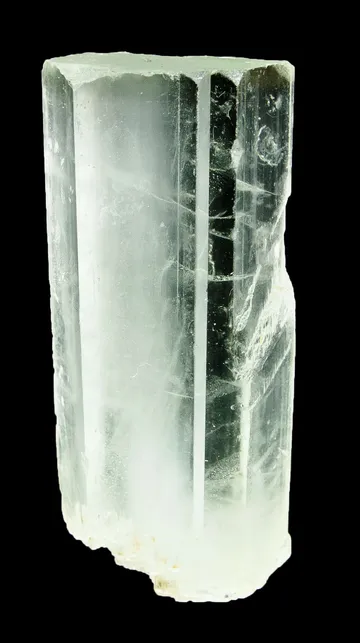
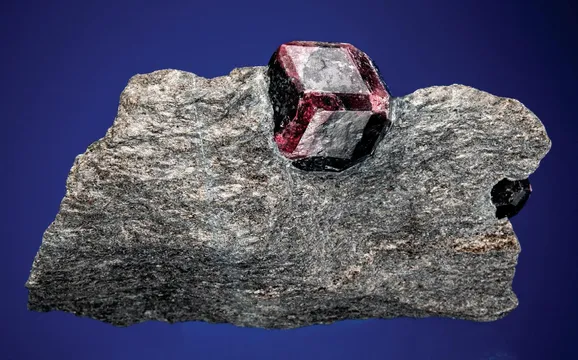
Its best specimens have a distinctly southern California pegmatite look: pale blue-green aquamarine prisms with frosted sides and glassy interiors; smoky quartz crystals with warm gray-brown to honey-citrine body color; black, striated schorl crystals perched on feldspar or quartz; and matrix pieces where cherry-red spessartine flashes against pale albite and quartz. The mine’s reputation rests especially on two moments: the 1953 road-blasting discovery of the large “Hilton” pocket, and Phil Osborn’s early 1990s work that opened additional pockets rich enough to place Audrey Lynne firmly among the better documented Riverside County gem localities.
Regional View
Country View
The locality sits near Forest Development Road 6S22, roughly north of Little Cahuilla Mountain and west of Red Mountain, in a rugged chaparral-covered belt where individual pegmatite ledges can be productive in one exposure and nearly barren a short distance away. That pockety character is exactly why Audrey Lynne specimens are so uneven in availability: the mine produced important pieces from a handful of discrete finds rather than a steady stream of commercial production.

Photo: Rob Lavinsky / iRocks.com, via Wikimedia Commons


Search for specimens: View all specimens from Audrey Lynne Mine, USA
Audrey Lynne is a gem-bearing granitic pegmatite locality in the Little Cahuilla Mountain area of Riverside County, California. The recorded mine position is in the NW¼SE¼ of section 30, T6S, R2E, San Bernardino meridian, about 0.7 mile north of Little Cahuilla Mountain and roughly 11.2 km north-northwest of the community of Cahuilla. The workings are on National Forest land in an area historically held as lode claims, and the principal productive pegmatite is described as northwest-striking, southwest-dipping, and averaging about 15 feet in thickness.
The deposit is best understood as a pocket-bearing pegmatite rather than a continuous ore body. Its commercial and collector value came from miarolitic cavities and clay-filled seams within feldspar-quartz-mica pegmatite. The common pocket gangue is albite, including cleavelandite, microcline, muscovite, quartz, and black tourmaline; the collector-grade minerals include aquamarine and goshenite beryl, smoky quartz and citrine-like quartz, schorl-to-dravite tourmaline, almandine and spessartine garnet, cassiterite, axinite-(Fe), fluorapatite, monazite-(Ce), xenotime-(Y), and columbite-group material. That assemblage marks the mine as a chemically interesting pegmatite despite its modest size.
The earliest claim history in the immediate area goes back to 1929, when gem-bearing pegmatites producing radio-grade quartz and blue to blue-green beryl led to the location of the Beryl Crystal and Silica Beryl claims, known as the Schindler group. Old pits and a small adit in the Audrey Lynne area have been attributed to this early phase of prospecting, although the exact identity of each working is not always certain in later records. The same ground, or adjacent ground, was later known under the Jumping Joe claims during the long period from the mid-1950s to the early 1990s.
The first famous pocket was not found by careful underground mining but by road work. In 1953, blasting during construction of the road toward Red Mountain broke into a large quartz-and-aquamarine pocket northwest of Little Cahuilla Mountain. The pocket was later called the “Hilton,” a joking but apt name based on its size. Documented Hilton-pocket aquamarines are now particularly desirable because they predate the modern Audrey Lynne claim name and are tied to one of the locality’s defining discoveries.
The modern name dates to March 1992, when Phil Osborn of Hemet found aquamarine north of the road and west of the Hilton pocket. He staked the lode and named it Audrey Lynn after his daughter. During the summer of 1992, Osborn, assisted by Larry Houg, excavated several small pockets. In 1993, mechanized grading along the south edge of the forest road cut exposed another section of pegmatite. Hand work began in an iron-stained clay seam near the footwall, where small quartz crystals first appeared, and the work eventually opened a large pocket zone measuring up to about 12 feet across and about 50 feet down dip.
That 1993 pocket zone is the great Audrey Lynne collector episode. It produced quartz, feldspar, muscovite, schorl, aquamarine to pale greenish-yellow beryl, and several kilos of bright red spessartine as both gem nodules and formed crystals, including matrix combinations with quartz and albite. Osborn worked the pocket with Otto Komarek and Byron Weege of Pala using the traditional small-mine methods of drilling, minor blasting, rock-bar scaling, hammer-and-chisel work, and bucket mucking. The largest reported beryl crystals from this pocket reached about 3/4 inch wide by 4 inches tall.
Quartz from the same zone could be spectacular. The largest reported quartz crystal was described as grayish to brownish yellow, citrine-like, near flawless, optically clear, hexagonal, about 14 by 14 inches, and approximately 96 pounds. It was reportedly sold to a rock shop in Beaumont, California, with enough clean material to have made a superior-quality 10-inch sphere or “crystal ball.” Other fine pieces from the Audrey Lynne production entered important southern California hands, including the William F. Larson circle, and some were displayed at The Collector in Fallbrook.
In 1994, Otto Komarek found another pocket on the northeast side of the claim, low in the canyon. This pocket measured about 10 by 10 feet when extracted and became known as the “Garnet Pit.” It produced almandine crystals, with the largest described as walnut-sized. Subsequent work in 1996 yielded axinite-(Fe), additional red garnet, and tourmaline-bearing specimens. Analytical work on some tourmalines showed compositions in the dravite-schorl series, including hair-like dravite needles on schorl. Cassiterite from this phase made the mine famous far beyond the normal audience for Riverside County pegmatites: a shattered crystal reportedly weighed about 12 pounds, and a surviving crystal specimen of roughly 9 pounds and 12.4 x 9.1 x 7 cm became widely cited as the largest known single cassiterite crystal from California.
Later prospecting continued to show that the pegmatite system still held small productive zones. In 2001, work northeast of the large road pocket produced light grayish-greenish-blue beryl crystals to about 18 mm. In February 2006, another mineralized zone yielded pounds of schorl, quartz, and feldspar, including a schorl crystal over 8 inches tall and tabular quartz crystals reported to 12 inches or more.
Audrey Lynne is not a public fee-digging locality. It lies in National Forest country where claim status, access roads, Forest Service rules, and private mining rights have changed or may change over time. Collectors should treat the mine and its immediate workings as a permission-only locality and verify current claim status, land-management rules, road access, and safety conditions before considering any field visit.
Quartz from Audrey Lynne ranges from smoky gray-brown through warm citrine-like yellow-brown to paler transparent crystals, and the best pieces are valued for unusually strong internal brilliance rather than sheer abundance. Cabinet-size smoky crystals are known, including sharp, lustrous examples with muscovite and cleavelandite accents, while the 1993 pocket zone reportedly yielded a huge near-optical-quality citrine-colored crystal weighing about 96 pounds. Collectors prize crystals with clean transparency, rich uniform smoky-to-honey color, sharp terminations, good luster, and intact edges; ordinary pieces are more likely to show pocket-wall contacts, basal bruising, healed or frosted tips, and the minor nicks typical of pegmatite-pocket extraction. Matrix combinations with albite, muscovite, schorl, dravite, epidote, aquamarine, and spessartine give the locality its most distinctive look, especially the rarer quartz columns studded with deep red garnets and black tourmaline.
Other minerals documented from Audrey Lynne give the locality far more depth than its small size suggests. Beryl occurs as aquamarine and goshenite, with the most desirable aquamarines being pale icy blue to blue-green hexagonal prisms, often gemmy inside but frosted on prism faces. Schorl and dravite form black to dark brown tourmalines, including lustrous striated crystals and dravite-schorl intergrowths. Garnet is represented by almandine and spessartine, the latter occurring as bright red gem nodules and crystals, sometimes on quartz and albite. Axinite-(Fe) is recorded as small grayish to greenish-brown crystals, and the rare-element accessory suite includes cassiterite, fluorapatite, monazite-(Ce), xenotime-(Y), and columbite-(Fe)-columbite-(Mn) series material. No IMA type-locality mineral is known from Audrey Lynne, but its cassiterite-on-schorl specimen record and documented dravite-schorl chemistry make it one of the more mineralogically interesting small pegmatite claims in the Cahuilla district.
Audrey Lynne specimens are most often encountered under one of several label forms: “Audrey Lynn Mine,” “Audrey Lynne Mine,” “Audrey Lynn claim,” “Jumping Joe claims,” “Hilton pocket,” “Little Cahuilla Mountain,” or simply “Cahuilla Mountain.” Serious collectors should preserve old labels carefully and, when possible, distinguish Hilton-pocket material from later 1992–2006 Audrey Lynne production. The distinction matters: a 1953 Hilton aquamarine, a Phil Osborn 1990s smoky quartz, and a later schorl-feldspar specimen may all be legitimate Audrey Lynne-area pieces, but they are not equivalent in provenance.
No documented, locality-specific fake industry is known for Audrey Lynne. The more realistic problems are mislabeling and over-attribution. Pale California aquamarines from the broader Cahuilla district, smoky quartz from other Little Cahuilla pegmatites, and black tourmaline from nearby Riverside or San Diego County pegmatites can resemble Audrey Lynne material if detached from labels. Good provenance is therefore unusually important. A Bill Larson, Pala Properties, Phil Osborn, Cal Graeber, Otto Komarek, Tim Sherburn, or well-documented iRocks/Mindat chain can add real confidence.
Condition is the main collecting issue. Many aquamarines have frosted prism faces, side contacts, incomplete back or underside surfaces where they detached from the pocket wall, or small bruises on basal edges. Smoky quartz commonly shows nicks, healed tips, clay-pocket etching, or contact marks, although the best crystals compensate with excellent color and internal clarity. Schorl may have repair, especially in larger matrix specimens, and repaired tourmaline can be less visually obvious when it is partly hidden behind cassiterite or feldspar. Cassiterite specimens should be evaluated both as display objects and as mineralogical records; the most important known example is not a beauty in the usual gem-pegmatite sense, but its size and California significance make it a landmark specimen.
Fluorescence is not a primary selling point for Audrey Lynne material, and most collector specimens are chosen for crystal form, color, transparency, matrix association, and provenance. Rare-element accessories such as monazite-(Ce) and xenotime-(Y) are generally minor and of interest mainly to systematic collectors. As with all pegmatite material, avoid aggressive cleaning that could loosen cleavelandite blades, mica books, repaired tourmaline, or clay-fractured quartz.
Market availability is intermittent. Small Audrey Lynne smoky quartz, schorl, aquamarine, and spessartine combinations appear occasionally as older collection pieces, often ex Bill Larson or Pala Properties. Prices vary widely with provenance, species, and condition: modest smoky quartz specimens have appeared at auction in the low hundreds of dollars, while a documented Hilton-pocket aquamarine sold for substantially more. Top aquamarine, clean large smoky quartz, matrix spessartine, major schorl, and any credible cassiterite association should be considered scarce to rare.
The Audrey Lynne story begins before it had a modern name. In 1929, prospectors working the north side of Little Cahuilla Mountain located gem-bearing pegmatites that produced radio-grade quartz and blue to blue-green beryl. Those workings became associated with the Schindler group of claims, and later observers found old pits and a small adit in the same general area. The country was remote, brushy, and hard to reach; even by southern California pegmatite standards, Little Cahuilla Mountain kept its pockets hidden.
Then came the road. In 1953, crews were building access toward Red Mountain, and the work required drilling and blasting through pegmatite-bearing rock. One blast opened a large pocket of quartz and aquamarine. The cavity was eventually nicknamed the “Hilton,” not for luxury but for scale. That road-cut accident produced several kilos of blue-green aquamarine and pounds of large smoky quartz crystals, and it gave the later mine its first famous collecting horizon. Decades later, Hilton-pocket aquamarines still carried a special aura because they were not just Audrey Lynne specimens; they were survivors from the pocket that announced the ground’s potential.
Phil Osborn’s 1992 discovery gave the mine its name. Working north of the roadway and west of the Hilton pocket, Osborn found aquamarine and staked the lode, naming it Audrey Lynn after his daughter. That detail matters because the common marketplace spelling “Audrey Lynne” is a later variant, while the recorded locality name honors Audrey Lynn Osborn. During the summer, Osborn and Larry Houg opened several small pockets, the kind of finds that encourage a pegmatite miner to keep following seams when everyone else sees only granite, feldspar, and chaparral.
The big work came in 1993, after grading along the forest road exposed pegmatite south of the first Osborn discovery. The first clue was modest: several small quartz crystals from a thin, iron-stained clay seam near the footwall. The seam widened into something much more serious, a pocket zone eventually measured at up to 12 feet across and about 50 feet down dip. Osborn, Otto Komarek, and Byron Weege removed the contents by hand-intensive methods—minor drilling and blasting, rock bars, hammer and chisel, and bucket mucking. From that pocket came the mine’s classic palette: schorl, cleavelandite, microcline, quartz, muscovite, aquamarine, pale greenish-yellow beryl, and several kilos of bright red spessartine.
The largest quartz crystal from that zone became one of the locality’s great lost showpieces. It was described as grayish to brownish yellow, essentially citrine in appearance, near flawless, optically clear, hexagonal, about 14 by 14 inches, and weighing around 96 pounds. Rather than becoming a famous museum crystal, it reportedly went to a rock shop in Beaumont, California, where it was considered good enough to cut into a superior 10-inch sphere or crystal ball. For a collector, that is both thrilling and painful: a giant Audrey Lynne quartz survived the pocket, only to be valued as lapidary material because its clarity was so high.
The Garnet Pit followed in 1994, when Otto Komarek found a pocket low in the canyon on the northeast side of the claim. When emptied, it measured roughly 10 by 10 feet and produced almandine crystals, including pieces described as walnut-sized. In 1996, further prospecting in the northeast mine area added axinite-(Fe), more red garnet, and tourmaline. Some black tourmaline crystals approached 10 cm, with slightly etched, cat’s-eye-like basal pyramidal terminations, and some were associated with deep orange-red almandine crystals. Chemical work later showed that at least some tourmalines belonged to the dravite-schorl series, including hair-like dravite needles on schorl.
The most improbable Audrey Lynne object was cassiterite. Southern California pegmatites can be full of surprises, but a massive California cassiterite crystal is not something collectors expect from a small Riverside County claim. The largest cassiterite reportedly shattered and weighed about 12 pounds. A surviving, more complete crystal specimen—associated with albite and schorl—was acquired by Cal Graeber and later passed to Dr. Rob Lavinsky. At about 9 pounds and 12.4 x 9.1 x 7 cm, it became widely cited as the largest known single cassiterite crystal from California. It is the kind of specimen whose importance is not merely aesthetic; it changes how a small locality is remembered.