A collector's guide to Dara-e-Pech District, Afghanistan: its geology, mining history and notable minerals, illustrated with the 431 specimens documented from this locality on EarthWonders.
Key facts
Dara-e-Pech is one of the essential names in the Afghan pegmatite story: a rugged Pech Valley district in Kunar Province where rare-metal granitic pegmatites have supplied cabinet-class tourmaline, morganite, kunzite, spodumene, cleavelandite and quartz combinations since the second half of the twentieth century. The field belongs to the great northeastern Afghanistan pegmatite province, an intensely mineralized belt on the southern side of the Hindu Kush–Pamir–Himalayan collision zone. In collector language, Dara-e-Pech is best known for the pastel-to-saturated palette that made Afghan pegmatites famous: blue to blue-green elbaite “pencils,” salmon-pink morganite plates and tablets, pale lavender to lilac spodumene, sparkling quartz, white cleavelandite sprays, lepidolite and occasional tantalum, cesium and phosphate rarities.
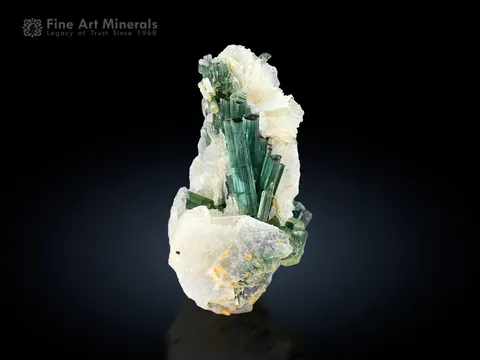
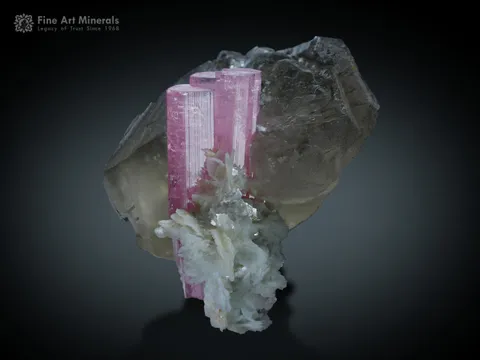
The best Dara-e-Pech specimens have a look that is immediately recognizable: clean, open pegmatite-pocket architecture, often with a single dominant gem crystal poised on a snow-white albite or cleavelandite matrix. The finest morganites may be broad, lustrous tablets with aquamarine-colored cores, perched with quartz, lepidolite, cleavelandite or tourmaline. The finest tourmalines are slimmer and more architectural: glassy, blue-green to indigo elbaite crystals, sometimes bicolored, sometimes in sprays, and commonly set against quartz or albite. Kunzite and other spodumene specimens range from sharp, flattened crystal blades to large lilac crystals on quartz; many owe their impact to scale, color delicacy and the survival of fragile terminations in a mining and trading chain that has not always been kind to matrix specimens.
Regional View
Country View
The locality appears in the literature under several spellings—Pech, Peech, Dara-i-Pech, Darra-i-Pech, Darrah Pech, Darrahe Pec and related variants—and older mineral labels may place the field in Chapa Dara, Kunar, “Konar,” or simply “Pech Valley.” Serious collectors should preserve old labels but interpret them cautiously: the historic collecting and trading geography of northeastern Afghanistan is complex, and many pieces passed through Kabul, Landi Kotal, Peshawar, European shows and Tucson before receiving their final Western labels.
Dara-e-Pech is a rare-metal pegmatite district rather than a single mine. The productive bodies are granitic pegmatite veins and lenses enriched in lithium, beryllium, cesium, tantalum, niobium, rubidium and tin, with gem pockets occurring where late-stage fluids created open cavities and coarse albite, quartz, microcline, mica, spodumene, beryl and tourmaline crystallized under favorable conditions. Recent and Soviet-derived work describes four broad pegmatite types across the field: relatively simple plagioclase-microcline pegmatites with biotite and muscovite; microcline-albite pegmatites with beryl, schorl, columbite-tantalite, kunzite and polychrome tourmaline; albite pegmatites with rarer spodumene and disseminated beryl; and albite-spodumene pegmatites carrying columbite-tantalite, cassiterite, cleavelandite, lepidolite, kunzite and polychrome tourmaline. For specimen collectors, the last two groups are the critical ones.
The geological setting is a steep, structurally complicated part of northeastern Afghanistan where metamorphic rocks of the Nuristan and Kashmund successions are intruded by igneous complexes and cut by pegmatites. Published interpretations differ in emphasis: USGS and Soviet-derived summaries connect the rare-metal pegmatites genetically with fertile two-mica granites of the Laghman intrusive complex, while a recent apatite U-Pb study on Dara-e-Pech purple apatite reported an Early Cretaceous age of about 135.8 ± 6.9 Ma and linked the studied material to magmatic-hydrothermal activity associated with the Nilau igneous complex. The practical collecting implication is the same in either model: Dara-e-Pech is an evolved rare-metal pegmatite system with distinct vertical and internal zoning, not a simple quartz-feldspar quarry.
Individual pegmatite bodies vary widely in scale. Recent field-based work documented more than 20 pegmatite bodies in the Darai Pech valley area, with vein lengths ranging from hundreds of meters to about 2.5 km and thicknesses from roughly 1 m to 25 m. The largest albite-spodumene bodies are the principal rare-metal hosts; one described vein was composed chiefly of albite and quartz, with substantial spodumene and microcline, plus minor muscovite and tourmaline and accessory garnet, apatite, beryl, columbite-tantalite and cassiterite. In the zoned bodies, collector-quality pocket minerals are most closely tied to the late albite, cleavelandite, lepidolite, blocky feldspar and quartz-rich parts of the pegmatites.
The most productive named parts of the field include Kala, Goh Salak or Gulsalak, Voradesh or Vora Desh, Kanakana, Gamata, Kantiwa and Bigal or Digal. The spelling varies from source to source and from label to label. Kala and Goh Salak are central to the discovery history; Kanakana is repeatedly cited for major spodumene, indicolite and morganite pockets; Gamata is remembered for slender blue indicolite crystals; Kantiwa produced notable green elbaite and later color-sensitive blue spodumene; Bigal produced exceptional morganite and indicolite-bearing matrix pieces in the early 2010s.
Mining has always been dominated by local, small-scale work rather than a single modern industrial operator. In the 1960s and 1970s, villagers collected and mined gem pockets, often under legal conditions that formally reserved mineral exploitation to the state. Soviet geologists mapped and evaluated the pegmatites, and Afghan and Russian geologists continued to describe the field in technical literature. Specimens moved through Kabul street markets in the early 1970s, then reached European and American shows in greater volume beginning in the mid-1980s. By the early 1990s, multicolored elbaite, blue gem rough, pink carving material, morganite, kunzite and combination specimens from the Pech Valley had become familiar to international dealers.
Several documented pockets define the modern collector reputation of the district. Kanakana produced a major 2015 spodumene pocket reportedly containing 260 kg of bi-colored purple and pale green spodumene; 40 kg of that material consisted of particularly sharp, flawless crystals, many around 20 cm long, with still larger crystals reaching 40 cm and several kilograms. The same pegmatite produced pockets with morganite crystals 8–10 cm across on cleavelandite, quartz and elbaite, and in January 2016 a specimen with quartz, a 20 cm morganite, two kunzite crystals and a bicolored tourmaline. At Bigal, one 2012 specimen carried a 12 cm gem morganite standing vertically on quartz, microcline and cleavelandite; in 2013, the mine produced morganite with a gemmy red tantalite-(Mn), a 20 cm morganite with a pale aquamarine core on lepidolite, green elbaite pencils to 14 cm and green gem rough.
Collecting access today should be regarded as non-public and highly restricted. This is an active mining district in a politically sensitive part of eastern Afghanistan, not a fee-collecting locality or a safe field-trip destination. Published satellite analysis through April 2022 showed continued activity at the south Dara-e-Pech mine area, with growing spoil piles, new infrastructure and nearby village expansion, but outside collectors should not interpret that activity as permission or practical access. Ethical acquisition is through reputable dealers who can discuss chain of custody, old collection history, repairs and treatment disclosure.
Tourmaline is the signature collector mineral of Dara-e-Pech, especially as elbaite in blue-green, deep indigo, green, bicolored and occasionally rubellite-toned crystals. The best pieces are gemmy, lustrous and sharply terminated, sometimes as slender “pencil” crystals, sometimes as divergent sprays, and most memorably on white cleavelandite, quartz, smoky quartz, morganite, lepidolite or spodumene. Gamata is known for blue indicolite pencils from small pockets, while Kanakana and Bigal produced larger pocket associations with kunzite and morganite. Ordinary Dara-e-Pech tourmalines may be broken, contacted, rehealed, repaired, heavily etched or lacking matrix; top specimens combine saturated color, transparency, complex terminations, undamaged tips and honest matrix relationships.
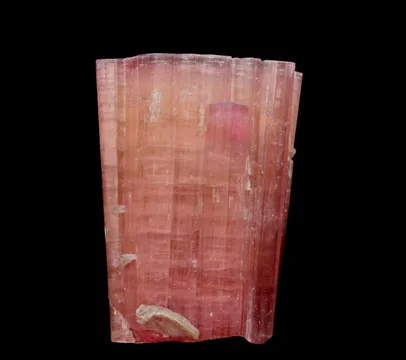
Morganite from Dara-e-Pech is one of the field’s great achievements: semitransparent to transparent cream, peach, salmon and pink beryl crystals that may be equant, tabular or broad-plated, commonly with cleavelandite, quartz, elbaite, lepidolite, spodumene and locally pale aquamarine-colored cores. Published accounts describe Dara-e-Pech morganite to about 25 cm, with notable Pech Valley specimens in the 12–20 cm range and a famous 23 cm morganite-kunzite-quartz-cleavelandite combination now in the MIM Museum in Beirut. Good pieces here are not merely pink beryl; they have open composition, attractive core zoning or color saturation, undamaged crystal edges, clean feldspar or quartz matrix and, ideally, companion tourmaline or kunzite that makes the specimen unmistakably Pech Valley.
Dara-e-Pech kunzite occurs as spodumene in pale pink, lavender, lilac, purple and locally greenish or bluish crystals, often flattened and striated, with quartz, cleavelandite, morganite, elbaite and lepidolite. Kanakana is especially important, with the 2015 pocket of abundant bicolored purple and pale green spodumene and additional finds of kunzite with morganite and tourmaline; older Pech Valley pieces also include matrix combinations that helped establish the locality in Western collections. The best kunzites are sharp, glassy, evenly colored and not excessively cleaved, with protected terminations and balanced matrix; ordinary examples suffer from the normal spodumene problems of basal cleavage, bruised edges, fading color and awkward fragments trimmed from much larger crystals.
Elbaite is the dominant tourmaline species represented by Dara-e-Pech gem tourmalines, and the field is especially prized for second-generation green to blue, gemmy crystals reaching about 20 cm. Collector accounts contrast these with larger first-generation, translucent deep-pink crystals used more often as carving-grade material. Dara-e-Pech elbaite can be more delicate in color than Paprok material, with blue-green and deep indigo pencils regarded among the most desirable Afghan tourmalines. The strongest specimens show transparency through the length of the crystal, rich but not muddy color, intact terminations, natural association with quartz or cleavelandite and minimal repair; the weakest are isolated broken crystals from gem parcels.
Quartz at Dara-e-Pech is both a principal pegmatite mineral and the staging ground for the field’s best combination specimens. It appears as colorless, milky and smoky crystals, massive quartz zones, and sparkling pocket quartz with morganite, kunzite, elbaite, cleavelandite, lepidolite, microcline and rare tantalum minerals. Some of the most important morganite and tourmaline specimens owe their composition to clean quartz crystal groups that lift the colored minerals off the matrix; there are also quartz pieces with blue elbaite inclusions. Collectors should favor lustrous, undamaged quartz that genuinely supports the colored species, and be cautious of unusually dark smoky quartz in Afghan kunzite associations where irradiation of pale quartz and pale kunzite has been documented in the regional trade.
Spodumene is one of the economic and specimen anchors of Dara-e-Pech, occurring as lithium-rich pegmatite masses and as collectible crystals in kunzite, blue, green and pale varieties. The major albite-spodumene veins are the largest rare-metal hosts in the field, and documented collector pieces include Pech Valley spodumene specimens around 18, 22, 28, 31.4 and 37.6 cm, commonly with quartz or smoky quartz. Kanakana’s 2015 production showed how large and sharp these crystals can be; Kantiwa produced etched blue spodumene that turns lilac in light. The best specimens have sharp form, translucency, appealing color and intact cleaved ends; careless handling quickly converts a major spodumene into a collection of bright but ordinary cleavage fragments.
Cleavelandite, the platy albite variety, is the white architectural fabric of many Dara-e-Pech pockets. It forms bladed, book-like and rosette aggregates that surround or support morganite, elbaite, kunzite, quartz, topaz, lepidolite and tantalum minerals, and it becomes more abundant in the more evolved pegmatite zones. Its collector value here is usually compositional rather than as a stand-alone species: fine cleavelandite gives visual contrast to pastel Afghan colors, protects pocket minerals, and confirms the specimen’s late-stage pegmatite setting. Good pieces show crisp, fresh blades and airy matrix; common ones are chalky, bruised, iron-stained or so compact that the colored crystals appear buried rather than displayed.
Scapolite from Dara-e-Pech is a collector rarity rather than a common show mineral, documented in the field’s rare-metal assemblage and specifically reported as marialite, the sodium-chlorine end member, occurring with tourmaline, kunzite and morganite-type beryl. In Dara-e-Pech terms, scapolite belongs to the complex late pegmatite environment where volatile-rich fluids and unusual chemistry produced not only the major gem species but also less expected silicates. Worthwhile specimens require reliable analytical or at least very strong locality documentation, because pale prismatic scapolite can be overlooked or confused with feldspar, beryl or quartz in mixed Afghan pegmatite matrices; the best examples are identifiable, well-formed crystals in clear association rather than anonymous pale grains.
Albite is abundant at Dara-e-Pech and is central to both the geology and the specimen aesthetic. In the pegmatites it occurs as massive albite-rich zones, saccharoidal albite, coarse albite and cleavelandite, with the more evolved albite and albite-spodumene bodies carrying the lithium, beryllium, tantalum and gem-mineral assemblages collectors seek. Albite matrices commonly host morganite, quartz, elbaite, lepidolite, muscovite and spodumene; as a result, a clean white albite base can turn a loose gem crystal into a locality-defining specimen. The best albite pieces are fresh, lustrous and structurally open; poor ones are friable, stained, over-trimmed or visually dead beneath better minerals.
Aquamarine is present in Dara-e-Pech but is less celebrated than the district’s morganite and elbaite, partly because comparable aquamarine specimens from northern Pakistan are abundant on the market. Near Goh Salak and the Field mines, an aquamarine mine is recorded, and Pech Valley morganites may contain pale aquamarine-colored cores or appear in association with aquamarine-colored beryl. The best Dara-e-Pech aquamarine specimens are attractive because of context: pale blue beryl perched on or growing with morganite, cleavelandite or quartz from a recognized Pech Valley pocket. Ordinary loose crystals without matrix or old labels are easily lost in the broader Afghanistan-Pakistan beryl trade and need careful provenance.
Lepidolite at Dara-e-Pech occurs in evolved lithium-rich zones and pockets, usually as lilac to pink micaceous masses, plates or fine-grained aggregates with cleavelandite, spodumene, elbaite, morganite, quartz and rare tantalum or cesium minerals. Its importance is partly mineralogical—marking highly fractionated pegmatite environments—and partly aesthetic, because a lepidolite base can heighten the pastel contrast of morganite or blue-green tourmaline. Strong Dara-e-Pech lepidolite specimens are those in which the mica is fresh, colorful and integral to the composition, as in morganite or tourmaline combinations; ordinary material is soft, crumbly, bruised or merely a purple background with no sharp crystal interest.
Beryl is widespread in Dara-e-Pech pegmatites as morganite, aquamarine, goshenite and less gemmy beryl, and it is one of the main ore and specimen minerals used to understand the field’s evolution. Recent trace-element work on beryl from the Chambalak and Digal deposits in the Darai Pech pegmatite field found sector zoning in a Chambalak crystal and showed that the melt system was moderately fractionated, consistent with early to intermediate stages of rare-metal pegmatite evolution. In the field, beryl may be coarse and mineable, finely disseminated, or beautifully crystallized in pocket zones. The best collector beryl is transparent, lustrous and well-zoned, especially pink morganite or pale blue aquamarine on cleavelandite, quartz or lepidolite; less desirable pieces are opaque blocky beryl without form or association.
Rose quartz is documented from the broader northeastern Afghan pegmatite assemblage and appears in collector labels associated with the region, but Dara-e-Pech is not primarily a rose-quartz locality in the way it is a morganite, elbaite and spodumene locality. When encountered from Dara-e-Pech, it should be evaluated as part of a lithium-rich pegmatite association rather than as a massive quartz color specimen: association with albite, lepidolite, spodumene, tourmaline or beryl matters, and so does reliable provenance. The best examples would show attractive pink color, translucency and natural connection to the Pech Valley pocket assemblage; massive, unlabeled pink quartz from Afghanistan is too easy to misattribute.
Indicolite is the blue to blue-green elbaite variety that gives Dara-e-Pech much of its prestige. The Pech Valley produced gemmy blue and deep indigo pencil-like crystals, with Gamata famous for 17–25 cm blue indicolite crystals from small pockets during the 1970s through the mid-1990s, and Kanakana producing remarkable blue indicolite elbaite in later finds. Fine examples may occur on quartz, cleavelandite, lepidolite or with morganite and kunzite; the very best have rich blue color, high transparency and clean terminations. Because many early crystals were broken from matrix for faceting, undamaged matrix indicolite from Dara-e-Pech is significantly more desirable than loose, contacted or recut-looking crystals.
Muscovite is a common accessory and rock-forming mica in Dara-e-Pech pegmatites and related granites, becoming more significant in the evolved pegmatite sequence as biotite decreases and muscovite and cleavelandite increase. It appears as silvery to pale books, plates and micaceous aggregates with quartz, feldspar, beryl, tourmaline and spodumene, and it helps indicate the pocket and wall-zone environment of a specimen. As a collector mineral from Dara-e-Pech it is usually subordinate, but good muscovite can add sparkle and texture to morganite, elbaite or spodumene combinations. Stand-alone muscovite specimens need exceptional size, sharpness or association to rise above common accessory status.
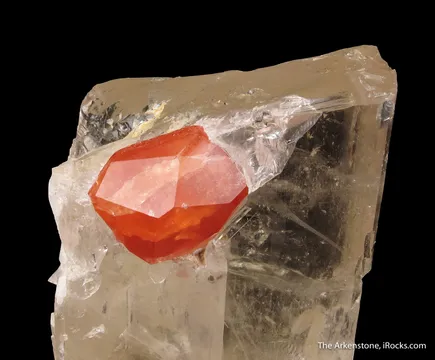
Spessartine occurs in the Dara-e-Pech pegmatite assemblage as a manganese garnet associated with lithium-rich pegmatite minerals, and a documented Pech Valley specimen shows spessartine crystals on spodumene. The species is not the district’s main attraction, but it is important because it completes the classic evolved pegmatite suite of garnet, albite, quartz, spodumene, beryl, tourmaline and mica. Collectible spessartine from Dara-e-Pech should be sharply crystallized, orange to reddish, visibly associated with spodumene, albite or quartz, and preferably accompanied by old or analytical documentation. Small brown garnets in Afghan pegmatite matrix are easy to overlook and should not be over-valued without strong aesthetics.
Other documented Dara-e-Pech minerals include schorl, microcline, cassiterite, columbite-(Fe), columbite-(Mn), tantalite-(Mn), tantalowodginite, wodginite, topaz, fluorapatite, hydroxylherderite, bavenite, beryllonite, grossular, pollucite, pezzottaite-(Cs), fluornatromicrolite, viitaniemiite, tungstibite and zircon. The locality is especially interesting to advanced collectors because it is not merely a gem-crystal source: it is a rare-metal pegmatite system with tantalum oxides, cesium minerals, phosphate and beryllium species, and occasional minerals that require analytical confirmation. The rarest labels should be treated with healthy skepticism unless tied to a reliable collection, analysis or publication.
Dara-e-Pech specimens carry the same strengths and hazards as the best Afghan pegmatite minerals: magnificent color, fragile crystals, complicated trading routes and frequent condition issues. Spodumene and kunzite require particular care. They cleave readily, bruise along edges, and many colored spodumenes are light-sensitive. Kantiwa blue spodumene is specifically known for changing to deep pinkish lilac in sunlight, so blue, greenish or delicate lilac spodumene from the Pech Valley should be stored out of direct light and displayed under low-UV, low-heat conditions.
Treatment and enhancement concerns are real. Afghan kunzite and associated quartz have been documented in the regional trade as being irradiated in Lahore and then placed in sunlight so that pale quartz becomes smoky and pale kunzite takes on an unnatural orange-pink color. An unusually dark smoky quartz association on an Afghan kunzite specimen is a warning sign, especially if paired with over-bright or odd spodumene color. Such pieces may still be attractive, but they should be disclosed as treated or at least suspicious.
Repairs are common on significant Dara-e-Pech tourmaline, morganite and spodumene specimens. Long tourmaline crystals break during extraction and transport; broad morganite plates chip on edges and corners; spodumene may cleave cleanly and be reattached; cleavelandite matrices can shed or crumble. A repaired specimen is not automatically undesirable—many important Afghan pieces have some stabilization or restoration—but the difference between an honest repair, a disguised composite and an outright constructed specimen matters greatly at this locality. Ask for UV inspection, close photographs of contact points, and disclosure of glue, fills, added matrix or rebuilt terminations.
Mislabelling is persistent. Older labels may say Kunar, Pech Valley, Dara-i-Pech, Chapa Dara, Nuristan, Afghanistan, or even Pakistan trade localities such as Peshawar. Some of these are historically understandable; others blur distinct pegmatite fields. Dara-e-Pech should not be confused with Paprok, Mawi, Nilaw-Kolum, Parun, Stak Nala or Pakistani localities. The most convincing Pech Valley specimens have either old collection provenance, distinctive associations, or alignment with documented sublocalities such as Goh Salak, Kanakana, Gamata, Kantiwa, Bigal/Digal or Vora Desh.
Market availability is uneven. Small tourmalines, kunzites, morganites and cleavelandite combinations appear regularly, but genuinely great Dara-e-Pech matrix specimens are scarce and expensive. Demand is strongest for blue to blue-green elbaite, indicolite with matrix, morganite with aquamarine zoning, morganite-kunzite-elbaite combinations, and sharp large spodumene crystals with minimal cleavage damage. Common fragments and loose crystals are plentiful; intact, balanced, well-provenanced pocket specimens are not.
The Dara-e-Pech story begins not with a geological survey crew but with a sheepherder. In 1959, Djan Gul found gem elbaite and matrix specimens of kunzite and elbaite near Goh Salak, south of Kala in the western Pech Valley. When he brought the crystals back and showed them to people in Kala, the discovery spread through the village. In the 1960s, local farmers plowing with oxen on the south bank of the Pech River and along the bordering mountain slope also found gem elbaite. By the early 1970s, crystals from the valley were appearing in Kabul street markets, sold to tourists as bright souvenirs from a mineral province the West barely knew.
The legal situation made the early mining feel like a night operation. Afghan law at the time reserved geological resources to the Ministry of Mines, so villagers mined the pegmatites after dark, then buried the treasures until they could be taken to Kabul. The mines closest to Kala became known as the Field mines because they began just beyond the cultivated fields. At Goh Salak, the largest working was called Lohi Maden, the “Big mine.” The image is wonderfully Afghan and wonderfully pegmatitic: fields, oxen, mountain slopes, secret pockets and crystals hidden in the ground until the next journey to market.
The route to the high-ridge mines could be as memorable as the crystals themselves. Some Pech Valley workings sit near villages on the valley floor, but others are on ridges reached only by dangerous footpaths. One described path was only a few inches wide, with a vertical drop of 500 meters immediately beside it. For a collector looking at a delicate blue-green tourmaline on cleavelandite in a glass case, that detail matters. It explains why so many specimens arrived broken, why repairs are normal, and why an intact matrix piece from Dara-e-Pech is more than a pretty object: it is a survivor.
By the mid-1980s, Pech Valley specimens began arriving in quantity at European and American mineral shows. In the early 1990s, dealers saw very gemmy multicolored elbaite, blue gem rough and pink carving material. Faisal Umar Shinwari, an expert tourmaline dealer, coined a memorable phrase for the gem parcels: “every parcel of gem rough has a king and a queen.” In other words, hidden among ordinary pieces were the two stones that made the lot worth fighting for. The same logic governs the specimen trade from Dara-e-Pech: one pocket may produce many broken fragments, a few good crystals, and a single specimen that defines the whole find.
One painful episode concerns the Gamata indicolites. During the 1970s, the small Gamata mine near the village of the same name produced gemmy blue elbaite pencils 17 to 25 cm long. The pockets were only half a meter to a meter wide, and the crystals were superb. But sellers believed matrix reduced value, so they broke the indicolites off their quartz. When mineral dealer Rock Currier saw sacks full of broken-off crystals brought to Landi Kotal, he was furious. In the late 1970s, Currier became, after Herb Obodda, one of the early Westerners who tried to teach local dealers how to wrap and preserve specimens rather than treat every crystal as gem rough. He wrote long letters to Asmat Umar Shinwari explaining how to safeguard, wrap, carry, pack and ship minerals, and he helped the Shinwari family with a $500 loan when they were starting their mineral business.
The most famous Pech Valley morganite story reads like a specimen thriller. A major morganite-kunzite combination was brought from Waygal by a man named Manidullah and sold to Malem Haji, who worked with the German-based Afghan gem dealer Daoud Wafa. Negotiations between Malem and Daoud stretched through 1987 and 1988, and the specimen remained hidden until their business relationship ended. In Tucson in 1990, Daoud pulled the still-uncleaned specimen from its hiding place under his bed at the Executive Inn and showed it to Peter Lyckberg. The asking price was $80,000. Lyckberg suggested cleaning before selling. Wayne Thompson, Gene Meieran and Karl Kempf eventually bought it for $54,000; after Thompson cleaned and trimmed it, the piece was exhibited at the Tucson Gem and Mineral Show the following year. Its value was then estimated at $250,000, and the specimen later entered the MIM Museum in Beirut.
Kanakana added a modern chapter in 2015. A giant pocket produced 260 kg of spodumene in bicolored purple and pale green crystals. Forty kilograms of that production consisted of the best crystals—flawless, razor-sharp pieces, many around 20 cm long and 12 cm wide, with even larger crystals reaching 40 cm and 5 to 8 kg. Then came another pocket with about a dozen specimens carrying morganite crystals 8 to 10 cm across on cleavelandite, quartz and elbaite, followed by a larger quantity of kunzite. The material did not flood the market at once; it trickled into Peshawar over many months, the way important Afghan pockets often do.
Bigal produced its own run of celebrated specimens. In 2012, from one of roughly 20 tunnels—some up to 300 meters long—came a specimen with colorless quartz on large microcline, white cleavelandite blades, and a totally gemmy morganite 12 cm across standing vertically. The same year brought 150 kg specimens with large blue indicolite elbaites. In 2013, a tunnel produced a specimen with a 6 cm morganite and a 2.5 cm gemmy red tantalite-(Mn) on quartz, feldspar, lepidolite and cleavelandite, plus a lustrous 20 cm morganite with a pale aquamarine-colored core on a 25 cm block of fine lepidolite. It was the sort of sequence that reminds collectors why, even after decades of production, Dara-e-Pech remains a locality capable of surprise.