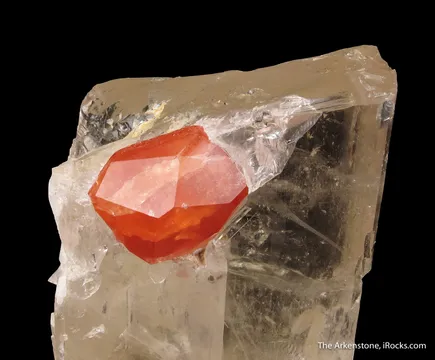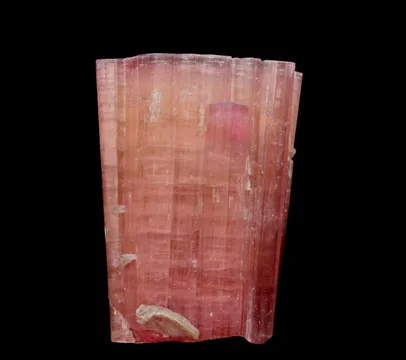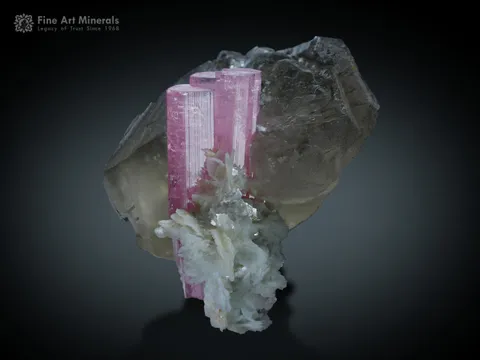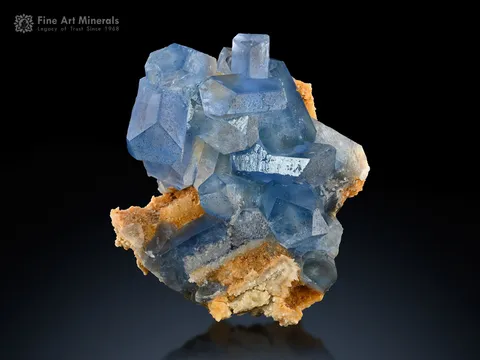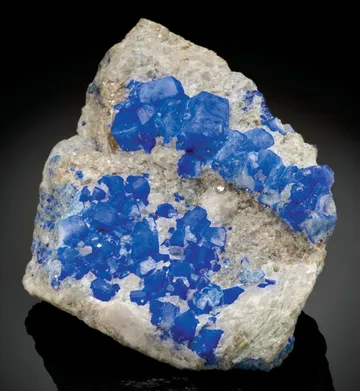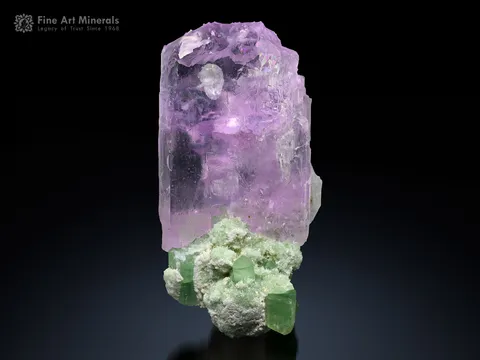
Kunar, Afghanistan — Dara-e-Pech pegmatites, a Nuristan district yielding kunzite, elbaite, morganite, aquamarine and rare crystals prized by collectors.
Key facts
Kunar matters to collectors because the province contains one of the classic specimen districts of the eastern Afghan pegmatite belt: the Dara-e-Pech, or Pech Valley, pegmatite field. In the collector’s cabinet the name usually means gem pegmatites rather than ore in the conventional sense—miarolitic and highly evolved rare-element bodies that have yielded kunzite, elbaite, morganite, aquamarine, albite var. cleavelandite, quartz, fluorapatite, topaz, pollucite, beryllonite, tantalite-group species, and other pegmatite rarities. The best pieces are not merely colorful crystals; they are architectural combinations: purple spodumene blades rising from white cleavelandite, morganite crystals perched on blocky quartz and feldspar, green-to-blue elbaite pencils with glassy terminations, and matrix specimens that preserve the pocket setting rather than reducing it to gem rough.
Geologically, Kunar’s celebrated material belongs to the Nuristan rare-metal pegmatite province of the Hindu Kush–Pamir–Himalayan system. The Dara-e-Pech pegmatites lie in and around the Nilau igneous complex, a Cretaceous suite of gabbro, monzonite, diorite, and granodiorite intruding older metamorphic rocks. Modern work on Dara-e-Pech apatite has dated magmatic–hydrothermal activity at about 135 Ma, tying at least part of the field to Early Cretaceous pegmatite evolution. Later collector literature has often folded Pech into “Nuristan” in the old geographic sense, but administratively the classic Dara-e-Pech localities are in Kunar Province.
Regional View
Country View
The collector history is unusually vivid. Gem elbaite and matrix specimens of kunzite with elbaite were first reported from the Pech Valley in 1959, and by the early 1970s crystals were appearing in Kabul street markets. Large numbers of Pech Valley specimens began reaching European and American shows in the mid-1980s, when the Western collector market was just beginning to understand how fine Afghan pegmatite specimens could be. The 2010–2016 period produced several of the locality’s most discussed modern finds, including major morganite, kunzite, and indicolite-bearing pieces from Kanakana and Bigal.

Photo: Wikimedia Commons

Photo: Wikimedia Commons
Search for specimens: View all specimens from Kunar, Afghanistan
For collectors, “Kunar, Afghanistan” is usually a broad label covering specimen-producing pegmatites of the Pech Valley, especially the Dara-e-Pech field and its better-known mine areas such as Kala, Goh Salak or Ghursalak, Voradesh, Kanakana, Gamata, Kantiwa, Bigal, Awlaghal, Awraghal, and related workings. Older literature and specimen labels can be confusing: Konar, Kunar, Konarh, Dara-i-Pech, Darra-i-Pech, Darrahe Pech, Pech, and even “Nuristan” have all appeared on labels, with “Nuristan” sometimes used in the older regional sense rather than the modern provincial one. As a result, an old “Nuristan” label on a Pech specimen is not automatically wrong, but it is incomplete by modern locality standards.
The deposit type is rare-element granitic pegmatite, enriched in Li, Be, Cs, Ta, Nb, Rb, Sn, B, and related volatile components. The Dara-e-Pech field contains several pegmatite types, ranging from relatively barren oligoclase–microcline bodies with schorl, biotite, and muscovite, through albitized microcline pegmatites with coarse beryl, to the highly sought spodumene–microcline–albite and albite-spodumene assemblages. The collector pockets occur in the fractionated zones where quartz, albite-cleavelandite, lepidolite, microcline, spodumene, beryl, and tourmaline could grow into open cavities. The most successful specimens preserve this zonation in miniature: blades of cleavelandite as a white nest, quartz or microcline as structural matrix, and one or more gem species perched freely rather than broken into cutting rough.
The ore and specimen bodies are pegmatite veins and dikes rather than a single mineable lode. Modern summaries describe Pech Valley mineralization as bodies containing beryl, spodumene, pollucite, tantalite, columbite-tantalite, cassiterite, and associated gem species. Soviet and later work recognized vertical and lateral changes in the pegmatites: biotite-rich feldspar-mica pegmatites give way, in the more evolved parts of the system, to muscovite-, cleavelandite-, spodumene-, lepidolite-, and tourmaline-bearing zones. That mineralogical progression is important for collectors because the finest pockets are not randomly distributed; they are tied to the most evolved, volatile-rich portions of the pegmatites.
Mining began as small-scale local collecting. In 1959 the sheepherder Djan Gul found gem elbaite and matrix specimens near Goh Salak, south of Kala, and the news spread through nearby villages. In the 1960s villagers plowing fields on the south bank of the Pech River and working the adjacent mountain slopes also found gem elbaite. Because official Afghan policy at the time reserved exploitation of geological resources to the Ministry of Mines, locals reportedly worked some pegmatites at night and hid their finds until they could be taken to Kabul. By the early 1970s crystals had reached Kabul tourist markets; by the mid-1980s Pech specimens were moving into the larger European and American collector circuit.
There is no single long-lived industrial operator behind the classic specimens. Production has chiefly been artisanal, family- and village-based, and highly episodic, with mining controlled by access, security, weather, explosives, local rights, and the chance discovery of pockets. Some mine areas are near the valley floor; others lie on high ridges reached by hazardous footpaths. Reports describe Pech mining areas with numerous tunnels, some extending hundreds of meters. Modern satellite-based analysis has documented continuing activity around the north and south Dara-e-Pech mine areas, with growing spoil piles, mine buildings, and nearby village expansion visible between 2017 and 2022. Specimens typically reach international buyers through Afghan and Pakistani dealer networks, historically centered on Peshawar, and then onward to Tucson, Munich, Sainte-Marie-aux-Mines, online marketplaces, and private collector channels.
Several named finds define the locality’s collecting reputation. Kanakana is one of the great Afghan gem pegmatites and has produced blue indicolite elbaite, kunzite, and morganite. A major 2015 pocket there reportedly contained 260 kg of spodumene in bicolored, purple, and pale green crystals, including about 40 kg of especially sharp, flawless crystals; many were around 20 cm long, and larger crystals reached about 40 cm and 5–8 kg. Another Kanakana pocket produced a dozen specimens with morganite crystals 8–10 cm across on cleavelandite, quartz, and elbaite, while a January 2016 pocket produced a major quartz specimen with a 20 cm morganite, two kunzite crystals, and a bicolored green-red tourmaline.
Bigal, south of Kala, has also produced exceptional combination material. A 2012 Bigal specimen was described as quartz on large microcline, with white cleavelandite and a vertical gemmy morganite crystal about 12 cm across. The same locality produced large indicolite-bearing specimens, and in 2013 a Bigal tunnel yielded a specimen with a 6 cm morganite and a 2.5 cm gemmy red tantalite-(Mn) on quartz, feldspar, lepidolite, and cleavelandite, as well as a lustrous 20 cm morganite with a pale aquamarine-colored core on lepidolite. Gamata is remembered for small pockets, commonly half a meter to a meter wide, that yielded superb blue indicolite elbaite pencil crystals in the 17–25 cm range during the 1970s through mid-1990s. Kantiwa is especially notable for blue spodumene that changes to deep pinkish lilac in sunlight, along with green and yellow spodumene, morganite, and nearby gem-quality orange grossular from metamorphic rocks close to the pegmatite.
Kunar tourmaline is best represented by elbaite-rich, polychrome pegmatite material from the Pech Valley, with crystals ranging from small gem “pencils” to substantial cabinet specimens on quartz, albite-cleavelandite, and morganite; the prized look is sharp, lustrous zoning rather than merely bright color, especially green-to-blue indicolite, green-red bicolors, and pink-to-green crystals with clean terminations. First-generation tourmalines may be larger, more translucent, and flatter terminated, while the finest second-generation crystals are glassier, more delicate, and more saturated, the best Pech greens and indigo-blue crystals ranking with classic Brazilian elbaites. Ordinary pieces are broken singles, cloudy segments, or poorly repaired pocket debris; good Kunar pieces show undamaged terminations, strong color separation, gemminess along the length, and, ideally, natural placement on cleavelandite, quartz, or beryl matrix.
Spodumene from Kunar is the locality’s great lithium-silicate showpiece: bladed to prismatic LiAlSi2O6 crystals in pink, lilac, purple, pale green, yellowish, and locally blue material, commonly associated with cleavelandite, quartz, elbaite, lepidolite, microcline, and morganite. The major Pech pockets have produced crystals from hand-size to tens of centimeters, with the 2015 Kanakana pocket especially famous for bicolored, purple, and pale green crystals, including sharp crystals around 20 cm and larger examples to about 40 cm. The best specimens combine transparency, strong longitudinal color, intact chisel-like terminations, and a sense of pocket growth; lower-tier pieces are etched, cleaved, faded, repaired, or reduced to isolated blades without matrix context.
Elbaite is the tourmaline species that made Pech famous, appearing as lustrous gem crystals in green, blue, indigo, pink, and bicolored combinations, with especially admired “pencil” crystals from Goh Salak, Gamata, Kanakana, and nearby Pech workings. The finest pieces are second-generation pocket crystals: slender, glassy, vividly zoned, and sharply terminated, sometimes on quartz, albite, or morganite rather than detached for cutting. Pech elbaite is much less abundant on the market than Paprok tourmaline and has a different aesthetic—more delicate color, slimmer growth, and a high premium for original matrix and undamaged tips; ordinary pieces tend to be broken gem rough, repaired shafts, or dull first-generation crystals that lack the crisp, glassy finish of the best specimens.
Kunzite, the pink to lilac-purple variety of spodumene, occurs in Kunar as flattened prismatic crystals and larger bladed forms, from small thumbnails and miniatures to major cabinet crystals well over 20 cm, often with albite-cleavelandite, quartz, elbaite, lepidolite, and morganite. Pech kunzite is prized when it retains a saturated lilac or purple body color, crisp termination, good translucency to gemminess, and matrix placement that shows the pocket rather than a cleaved loose crystal. Kantiwa blue spodumene that shifts toward lilac-pink in sunlight is an important handling and labeling concern here: color can be unstable, and the best collector pieces should be protected from prolonged light exposure, especially if described as blue or unusually intense.
Albite from Kunar is usually valued less as a standalone species than as the essential matrix for the district’s great gem combinations, particularly in the bladed cleavelandite habit that forms white to pale bluish books and rosettes beneath morganite, kunzite, elbaite, quartz, and tantalite-group crystals. In the evolved albite-spodumene and microcline-albite pegmatite zones, cleavelandite signals the right pocket chemistry for many of the locality’s most desirable species, and a clean, undamaged albite matrix can make the difference between a merely fine loose gem crystal and a world-class specimen. Collectors should inspect for glued repairs along the feldspar blades, missing support under heavy crystals, and bruising on the fragile cleavelandite edges.
Kunar morganite is one of the district’s signature minerals, occurring as pink to rose beryl crystals from pegmatite pockets, especially in the Dara-e-Pech field and Ghursalak/Goh Salak–Bigal–Kanakana area, with associations that include cleavelandite, quartz, lepidolite, elbaite, kunzite, and tantalite-(Mn). Published descriptions include morganite crystals to 25 cm from Dara-i-Pech and major pocket specimens with 8–10 cm crystals, 12 cm gemmy crystals on cleavelandite, and 20 cm crystals with pale aquamarine-colored cores. The best Kunar morganites are lustrous, glassy, and architecturally perched rather than massive or milky; lesser pieces are pale, internally fractured, heavily etched, or detached from the matrix that once gave them their specimen value.
Quartz in Kunar is primarily the structural and aesthetic framework of the pegmatite pockets, occurring as colorless to smoky crystals, blocky quartz cores, and crystal groups supporting spodumene, morganite, elbaite, albite, microcline, lepidolite, and rarer tantalum minerals. Pech quartz is especially desirable when it forms undamaged, transparent-to-translucent crystals that visibly support the gem species without overwhelming them; the great combination specimens depend on quartz as much as on the colored mineral. Deeply dark smoky quartz should be evaluated critically on Afghan and Himalayan-system labels because collector literature has warned that very dark smoke is not typical of these relatively young pegmatites and may indicate irradiation or mislabeling.
Aquamarine from Kunar is documented from Ghursalak and the Dara-e-Pech field as delicate pale blue to blue-green beryl in pegmatite pockets, much less commercially dominant than the province’s morganite, kunzite, and elbaite specimens. Studied Ghursalak aquamarines were described as transparent to translucent hexagonal prisms with growth zoning, fissures, and tiny two-phase gas-liquid inclusions, and they were inert under both short-wave and long-wave ultraviolet light. The best collector aquamarines from Kunar are clean, sharply hexagonal, and naturally associated with albite, quartz, or other Pech pegmatite minerals; ordinary examples are pale, cracked, or easily confused in the market with more abundant aquamarine from Pakistan’s Skardu district.
Beryl is both a gem species and an ore indicator in Kunar’s pegmatites, occurring as morganite, aquamarine, goshenite, and reported heliodor and emerald from different Kunar localities, with coarse beryl especially characteristic of albitized microcline pegmatites. The classic collector beryls are not uniform: Ghursalak aquamarine behaves like relatively low-alkali beryl, while Ghursalak morganite is alkali-rich and lithium-bearing, reflecting the evolved chemistry of the pegmatite system. Good beryl specimens from Kunar show clean hexagonal form, attractive color, and pocket association with cleavelandite, quartz, elbaite, or spodumene; less desirable pieces are massive, etched, cloudy, or simply labeled “Afghanistan” without a more precise provenance.
Cleavelandite, the platy variety of albite, is the classic white matrix of the Pech Valley pockets, forming bladed books, sheaves, and rosettes around the gem crystals in the most evolved albite-spodumene zones. Its collector value lies in contrast and context: white cleavelandite throws pink morganite, lilac kunzite, and green-blue elbaite into relief, while also recording the late-stage albitization that accompanied Li-Be-Ta mineralization. The best Kunar cleavelandite is fresh, snowy to faintly bluish, sharply bladed, and supportive of undamaged gem crystals; common defects include crushed blade edges, clay staining, concealed glue, and destabilized matrix where a heavy spodumene or beryl crystal has been reattached.
Beyond the major display species, Kunar’s Dara-e-Pech suite includes bavenite, beryllonite, cassiterite, chloritoid, columbite-(Fe), columbite-(Mn), fluorapatite, fluornatromicrolite, grossular, hydroxylherderite, lepidolite, microcline, muscovite, pezzottaite-(Cs), pollucite, schorl, spessartine, tantalite-(Mn), tantalowodginite, topaz, tungstibite, viitaniemiite, and reported zircon. Fluorapatite is particularly noteworthy because recent study of purple Dara-e-Pech apatite used gemology, trace chemistry, and U–Pb dating to constrain the field’s magmatic–hydrothermal history. Tantalite-(Mn), pollucite, beryllonite, viitaniemiite, fluornatromicrolite, pezzottaite-(Cs), and tantalowodginite are the species that turn a Pech assemblage from attractive gem pegmatite into a serious mineralogical locality.
The first authenticity problem is locality precision. Many specimens have entered the market as simply “Afghanistan,” “Nuristan,” “Konar,” “Kunar,” “Pech,” or “Dara-i-Pech,” and those names do not always mean the same thing. “Nuristan” on an old label may refer to the older cultural-geographic region of northeastern Afghanistan rather than present-day Nuristan Province; conversely, a specimen sold as “Dara-i-Pech” may have come from another Pech Valley working rather than the strict pegmatite field. Serious collectors should preserve every old label, ask for the dealer chain, and be cautious about upgrading a broad “Afghanistan” label to Kunar unless there is a credible chain of evidence.
Repairs are common and not automatically disqualifying, but they must be disclosed. Kunar pegmatite specimens often combine heavy crystals on fragile feldspar blades: spodumene cleaves readily, morganite can detach at its base, quartz groups break at contact points, and cleavelandite matrix crushes along thin plates. The best specimens should be inspected under magnification for glue at the base of spodumene blades, across tourmaline shafts, along morganite-matrix contacts, and through feldspar supports. A clean, old, honestly repaired Pech specimen can still be important; an undisclosed reconstruction should be priced very differently.
Spodumene color stability is a major handling concern. Kantiwa and other Afghan blue spodumene has been specifically reported to shift toward lilac or pinkish tones in sunlight, and kunzite in general is vulnerable to fading or color change under strong light. Store blue, lilac, and pink spodumene in the dark, avoid display in direct sun, and do not judge a specimen’s original color only from dealer photos. Long-term cabinet lighting should be gentle and preferably intermittent.
Treatment and misrepresentation concerns are most relevant for color. Dark smoky quartz on Afghan pegmatite matrix deserves skepticism, because very dark smoke is atypical of the young Himalayan-system pegmatites and may reflect irradiation or a wrong locality. Intensely colored beryl, especially unusual heliodor-like yellow or odd green material sold with Afghan/Pakistani labels, also merits caution. For morganite and aquamarine, clarity and color can be improved in the gem trade by cutting, cleaning, or selection, but for specimens the larger issues are not formal gemstone treatment so much as cleaning, trimming, assembly, irradiation claims, and vague provenance.
Fluorescence is not a universal field mark. Studied Ghursalak aquamarine was inert under short- and long-wave UV, while Ghursalak morganite was reported as pale violet under both short- and long-wave UV. Such responses are useful observations but not proof of origin; they should be treated as supporting data alongside habit, association, label history, and, for important pieces, analytical work.
Market availability is uneven. Small loose elbaites, kunzite blades, morganites, and albite-associated pieces appear regularly, but the truly fine Kunar specimens—sharp matrix kunzites, gem morganite on cleavelandite, and blue-green Pech elbaite pencils—are much scarcer than generic “Afghanistan pegmatite” material. Prices rise steeply for natural matrix, unrepaired terminations, strong color, and precise provenance. The highest-end pieces are often already in major private collections or museums, and new supply depends on sporadic pocket discoveries rather than steady mine production.
The Pech Valley story begins, fittingly, with a sheepherder. In 1959, Djan Gul found gem elbaite and matrix pieces of kunzite with elbaite near Goh Salak, south of Kala village in the western Pech Valley. When he showed the crystals in Kala, the discovery became local knowledge almost immediately. By the 1960s, villagers plowing with oxen along the south bank of the Pech River and working the slopes behind their fields were also finding elbaite. The mines closest to Kala became known as the Field mines for a simple reason: they began just beyond the cultivated land.
Those first years were not the romantic free-for-all imagined by collectors looking backward. Afghan law at the time reserved mineral exploitation to the Ministry of Mines, so farmers and villagers around Kala reportedly mined after dark, buried their crystals, and waited for a chance to take them to Kabul. By the early 1970s those crystals were visible in Kabul street markets, sold to tourists as souvenirs before the Western specimen market had fully recognized what Pech was producing.
A single phrase from the Pech gem trade captures the rough-parcel economy better than any price table. Faisal Umar Shinwari, a tourmaline dealer deeply connected to the Afghan-Pakistani trade, said that “every parcel of gem rough has a king and a queen.” In practical terms, that meant two standout stones in a parcel could make the profit. The rest might be attractive, useful, even gemmy—but the king and queen were what everyone remembered.
The great tragedy of the early trade is how many specimens were sacrificed before the market learned to value matrix. At Gamata, small pockets only half a meter to a meter wide yielded blue indicolite elbaite pencils 17 to 25 cm long during the 1970s. The crystals were often broken off their quartz matrixes for faceting, because sellers believed the matrix reduced value. When Rock Currier saw sacks of broken-off crystals brought to Landi Kotal, he was furious. Currier and Herb Obodda were among the early Westerners who taught local dealers that an intact specimen could be worth more than gem rough. Currier later wrote long letters to Asmat Umar Shinwari explaining how to safeguard, wrap, carry, pack, and ship mineral specimens. He also lent the family $500 in the 1970s as they were starting their mineral business—a small sum by the standards of later Pech masterpieces, but a memorable act in the formation of the modern Afghan specimen trade.
One of the most famous Pech combination specimens had a life like a smuggled painting. A man named Manidullah brought it from Waygal village and sold it to Malem Haji, who worked with the German-based Afghan gem dealer Daoud Wafa. Through 1987 and 1988, negotiation dragged on. The specimen was hidden until Malem and Daoud separated their businesses. In Tucson in 1990, Daoud pulled the still-uncleaned specimen from under his bed in his room at the Executive Inn and showed it with an asking price of $80,000. It was eventually bought by Wayne Thompson, Gene Meieran, and Karl Kempf for $54,000. Thompson cleaned and trimmed it. The next year, displayed at the Tucson Gem and Mineral Show, it looked so transformed that its earlier custodian was reportedly surprised. Its value was then estimated at $250,000, and it later entered the Mim Museum in Beirut.
The 2015 Kanakana pocket has the scale of an ore story but the delicacy of a collector find. It yielded about 260 kg of spodumene in bicolored, purple, and pale green crystals. Of that, roughly 40 kg consisted of especially fine, flawless, razor-sharp crystals; many were about 20 cm long and 12 cm wide, while larger crystals reached about 40 cm and 5 to 8 kg. A second Kanakana find produced a dozen specimens with morganite crystals 8–10 cm across on cleavelandite, quartz, and elbaite. A third produced still more kunzite. The material did not flood the market all at once; it trickled into Peshawar over many months, the way great Afghan finds often do.
Bigal produced its own sequence of memorable pieces. In 2012, one of roughly 20 mine tunnels there yielded a specimen described as colorless quartz crystals on large microcline, with white cleavelandite and a vertical, totally gemmy morganite about 12 cm across. In the same period, large blue indicolite-bearing specimens appeared, including 150 kg pieces with large elbaites. In 2013, another Bigal tunnel produced a specimen carrying a 6 cm morganite beside a 2.5 cm gemmy red tantalite-(Mn) on quartz, feldspar, lepidolite, and cleavelandite. Another piece from that season carried a lustrous 20 cm morganite with a pale aquamarine-colored core on a 25 cm block of fine lepidolite. Two green gemmy elbaite pencils to 14 cm and a few kilograms of green gem rough were also recovered before political problems again slowed or stopped work.
Even the paths have become part of the locality’s legend. Numerous Pech mines sit near the valley floor, but others are on high ridges reached only by dangerous footpaths. One reported path was only a few inches wide with a vertical drop of 500 meters just off its edge. That single detail explains much of the condition profile of Kunar specimens: the breaks, the repairs, the lost matrix, the rough packing, the opportunistic mining, and the premium for any piece that survived the route from pocket to village, village to Peshawar, and Peshawar to a collector’s cabinet with its original architecture intact.
Lyckberg, Peter. 2017. “Gem Pegmatites of Northeastern Afghanistan.” The Mineralogical Record 48(5): 610–675. The key modern collector-mineralogical article, with detailed treatment of Pech, Kanakana, Bigal, Gamata, Kantiwa, market history, pocket accounts, and museum-level specimens.
Lai, Biying, Bo Xu, and Yi Zhao. 2024. “U–Pb Dating, Gemology, and Chemical Composition of Apatite from Dara-e-Pech, Afghanistan.” Crystals 14(1): 34. Reports gem-quality purple fluorapatite from Dara-e-Pech and gives a lower-intercept U–Pb age of 135.8 ± 6.9 Ma for the apatite-bearing pegmatitic system.
Evdokimov, A. N., A. Yosufzai, and A. Mosazai. 2024. “Internal structure and patterns of distribution of mineral types of rare metal pegmatites in the Darai Pech valley (Kunar province, Afghanistan).” Izvestiâ Komi naučnogo centra Uralʹskogo otdeleniâ Rossijskoj akademii nauk, No. 3: 52–62. Describes more than 20 studied pegmatite bodies and recognizes four pegmatite vein types with systematic mineralogical changes away from the parental intrusion.
Natkaniec-Nowak, Lucyna. 2008. “Afghan beryl varieties.” The Journal of Gemmology 31(1/2): 31–38. Includes studied aquamarine and morganite from the Ghursalak pegmatite in Konar/Kunar Province, with optical, chemical, XRD, IR, and UV observations.
Orris, G. J., and J. D. Bliss. 2002. Mines and Mineral Occurrences of Afghanistan. U.S. Geological Survey Open-File Report 02-110. A foundational USGS locality and commodity compilation that includes Dara-i-Pech pegmatite entries with beryl, spodumene, microcline, columbite-tantalite, cassiterite, muscovite, and albite.
Peters, S. G., T. V. V. King, T. J. Mack, and M. P. Chornack, eds. 2011. Summaries of Important Areas for Mineral Investment and Production Opportunities of Nonfuel Minerals in Afghanistan, Chapter 24A. U.S. Geological Survey Open-File Report 2011-1204. Summarizes the Nuristan rare-metal pegmatite area and lists Dara-i-Pech and related pegmatite commodities and mineral assemblages.
Peters, S. G., T. V. V. King, T. J. Mack, and M. P. Chornack, eds. 2011. Summaries of Important Areas for Mineral Investment and Production Opportunities of Nonfuel Minerals in Afghanistan, Chapter 24B. U.S. Geological Survey Open-File Report 2011-1204. Provides maps and spatial context for the Nuristan-Kunar pegmatite area, including place names important for interpreting older labels.
Rossovskiy, L. N., V. M. Chmyrev, and A. S. Salakh. 1976. “New fields and belts of rare-metal pegmatites in the Hindu Kush (Eastern Afghanistan).” International Geology Review 18(11): 1339–1342. One of the Soviet-era geological papers that framed the Hindu Kush rare-metal pegmatite belts for later work.
Rossovskiy, L. N., and S. I. Konovalenko. 1979. “Features of the formation of the rare-metal pegmatites under conditions of compression and tension, as exemplified by the Hindu Kush region.” International Geology Review 21(7): 755–764. Discusses the tectonic and structural setting of rare-metal pegmatite formation in the Hindu Kush region.
Mindat: Kunar, Afghanistan — The broad regional mineral list and locality index for Kunar Province, useful for checking species and subordinate localities.
Mindat: Dara-e-Pech pegmatite field — The most important locality page for Pech Valley collector specimens, with mineral list, synonyms, and locality notes.
Gemdat: Dara-e-Pech pegmatite field — A gem-focused companion entry for the Dara-e-Pech locality.
Wikimedia Commons: Quartz and silicates from Dara-I-Pech — Museum display photograph showing the classic Dara-i-Pech combination aesthetic: quartz, morganite, elbaite, kunzite, and albite.
Wikimedia Commons: Tourmaline from Konar/Kunar Province — Useful visual reference for Pech-style pink-green tourmaline zoning.
Wikimedia Commons: Spodumene var. kunzite with tourmaline from Konar Valley — A specimen photograph documenting the kunzite-tourmaline-albite association.
Tearline: Geospatial Analysis of Afghanistan Gemstone Production Under the Taliban — Open-source satellite-imagery analysis of Afghan gem mining areas, including Dara-e-Pech activity, mine buildings, spoil piles, and recent infrastructure changes.
Lyckberg 2017, The Mineralogical Record: Gem Pegmatites of Northeastern Afghanistan — The essential collector reference for Pech, Mawi, Paprok, Parun, and related northeastern Afghan pegmatites.
Lai, Xu & Zhao 2024, Crystals: U–Pb Dating, Gemology, and Chemical Composition of Apatite from Dara-e-Pech — The most focused recent analytical paper on Dara-e-Pech mineral chemistry and age constraints.
Evdokimov, Yosufzai & Mosazai 2024: Internal structure of rare-metal pegmatites in the Darai Pech valley — Recent petrographic and structural study of Darai Pech pegmatite bodies and mineral zoning.
USGS OFR 2002-110: Mines and Mineral Occurrences of Afghanistan — Baseline USGS locality database for Afghan mineral occurrences.
USGS OFR 2011-1204, Chapter 24A: Nuristan Rare-Metal Pegmatite Area of Interest — Government summary of rare-metal pegmatite resources and mineral assemblages in the Nuristan-Kunar region.
USGS OFR 2011-1204, Chapter 24B: Nuristan Rare-Metal Pegmatite Area Map Figures — Map-focused supplement for interpreting locality names and geographic relationships.
Natkaniec-Nowak 2008, The Journal of Gemmology: Afghan beryl varieties — Analytical study of Afghan aquamarine, morganite, and emerald, including Ghursalak material from Konar/Kunar Province.