






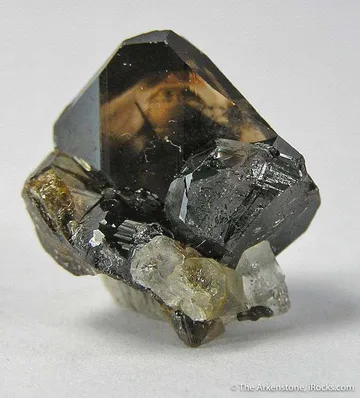
China Locality Guide — a mineral province yielding blue/purple fluorite, stibnite, scheelite, and hemimorphite; prized for by-product crystals and pockets.
Key facts
China is not a single mineral locality in the usual collector sense; it is a continent-scale mineral province whose best specimens have reshaped the modern market. Since the late twentieth century, Chinese mines have supplied a remarkable run of classic and contemporary material: blue, purple, and color-zoned fluorite from the tungsten-tin systems of Hunan; pyromorphite and plumbogummite-related specimens from the lead-zinc workings of Guangxi; electric-blue hemimorphite and copper-bearing aragonite from Yunnan; stibnite from the giant Xikuangshan antimony field; orange scheelite, cassiterite, muscovite, and beryl from the high-altitude pegmatitic and hydrothermal systems of Sichuan; and a complex skarn suite from Huanggang in Inner Mongolia. Few countries offer such a broad spread of specimen styles, from lustrous metallic sulfides to transparent gem crystals, from cave-like carbonate growths to sharp skarn minerals on contrasting matrix.
China matters to collectors because many of its finest specimens are not isolated curiosities from small hand-worked pockets. They are often the crystallized by-products of major ore systems: W-Sn greisens and quartz veins, Sn-Fe skarns, Pb-Zn oxidation zones, Sb carbonate-hosted deposits, fluorite districts, rare-earth carbonatite-related deposits, and old copper-iron skarn mines. That industrial scale explains both the abundance of certain Chinese specimens on the market and the suddenness with which individual pockets appear and disappear. A pocket at Yaogangxian, a batch from Huanggang, a blue carbonate find at Wenshan, or a plumbogummite discovery in Guangxi may define the appearance of a species for years, then vanish into old-stock trays.
Regional View
Country View
At their best, Chinese specimens have a recognizable theatricality: glassy fluorite cubes perched on quartz; black ilvaite or magnetite contrasted with pale calcite; blue hemimorphite as glossy botryoidal skins; stibnite in spear-like metallic blades; scheelite glowing under shortwave ultraviolet; pyromorphite in saturated green crusts and barrel-like prisms. The finest pieces are rarely just large. They are balanced, sharply crystallized, fully terminated, and on matrix, with the mineral associations preserved well enough to tell the story of the ore body.

Photo: Wikimedia Commons

Photo: Wikimedia Commons
Search for specimens: View all specimens from China
For collectors, “China” is best understood as a portfolio of mineralized provinces. In South China’s Nanling belt, granite-related tungsten and tin systems created famous hydrothermal vein and skarn deposits such as Yaogangxian and Xianghualing in Hunan. Yaogangxian is especially important: Late Jurassic granite intruded older sedimentary rocks, contact metamorphism and hydrothermal fracturing developed economically important tungsten-tin mineralization, and successive vein stages introduced wolframite, cassiterite, quartz, sulfides, fluorite, carbonate, and accessory species. In specimen terms, that means fluorite, quartz, calcite, arsenopyrite, ferberite-hübnerite series minerals, cassiterite, scheelite, chalcopyrite, pyrite, beryl, rhodochrosite, and sulfosalts can occur together in highly aesthetic combinations.
Huanggang, or Huanggangliang, in Hexigten Banner, Inner Mongolia, is a very different kind of Chinese classic: a large Fe-Sn skarn system in the southern Great Xing’an Range. Its mineralization is tied to granitic intrusions, skarn development in carbonate host rocks, oxide-stage magnetite, tin mineralization, and later sulfide and vein assemblages. Collectors know the district for ilvaite, fluorite, quartz, calcite, magnetite, arsenopyrite, löllingite, sphalerite, scheelite, hedenbergite or amphibole-group associations, helvine-group minerals, and borates. Multiple mine numbers and shafts entered the market under the broad Huanggang name, and the locality’s specimen identity grew quickly after fine ilvaite appeared around 2010, followed by a succession of other minerals that made Huanggang one of the great modern skarn localities.
Guangxi provides the classic Chinese pyromorphite story. The Daoping and Yangshuo lead-zinc workings became famous for vivid green pyromorphite, while the Laohuan area east of Guilin later proved crucial for the sky-blue plumbogummite pseudomorphs after pyromorphite that were long misattributed in the trade. These are oxidized-zone minerals from lead-bearing systems, not primary ore minerals from deep unaltered sulfide. Their collector value lies in color, crystal habit, replacement texture, and the ability of a specimen to preserve the original pyromorphite form while carrying a blue plumbogummite surface or partial replacement.
Yunnan’s Wenshan material comes from zinc-rich mineralization in the Wenshan-Dulong region, where secondary minerals formed in oxidized cavities, fractures, and cave-like openings. The saturated blue hemimorphite, copper-bearing blue aragonite, calcite helictites, aurichalcite, and related carbonate-silicate assemblages show a very different Chinese aesthetic: botryoidal skins, stalactitic forms, hollow tubes, cave-growth textures, and delicate color that can be confused in the trade if labels are vague or identifications are not verified.
Hunan’s Xikuangshan antimony deposit is among the essential stibnite localities of the world. It is a carbonate-hosted antimony system in central Hunan, with stibnite as the principal ore mineral and quartz, calcite, fluorite, and barite among the important gangue minerals. The great collector pieces are metallic, striated, bladed stibnite groups, sometimes associated with calcite or preserved as stibiconite pseudomorphs after stibnite. The same province also hosts other tungsten, tin, fluorite, lead-zinc, and polymetallic systems, which is why “Hunan, China” is common on labels but often too broad to be satisfying for a serious collection.
Sichuan’s Mount Xuebaoding and related Pingwu-area workings add another signature suite: orange to yellow scheelite, black cassiterite, muscovite, beryl, quartz, feldspar, and associated rare minerals. These specimens are prized for large, isolated, euhedral crystals on pale micaceous matrix. They sit at the intersection of ore geology and alpine-style collecting appeal, and they show why Chinese specimens cannot be reduced to one look or one mining district.
Most Chinese collector specimens reached the market through active mines, miners, local buyers, wholesalers, and international dealers rather than through open recreational collecting. Today, serious collecting access is generally not a realistic public option at the major localities. Many are active or former industrial mines, underground workings, specimen pits, or private and state-controlled operations where permission, mine safety rules, land rights, and Chinese regulations control access. For most collectors, the practical route is documented old stock, established dealers, auction archives, and specimens with precise mine-level labels rather than broad provincial tags.
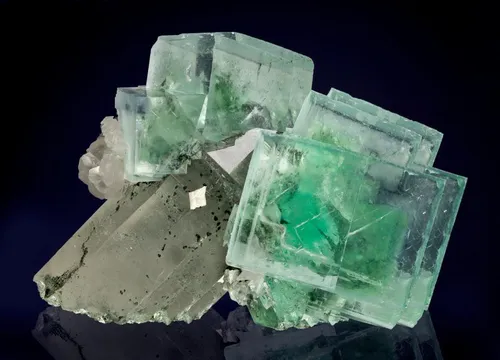
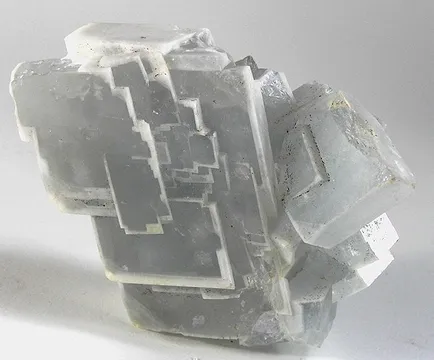
Chinese fluorite ranges from small, jewel-like thumbnails to large cabinet specimens, but the country’s reputation rests especially on Hunan and Inner Mongolia: Yaogangxian and Shangbao for blue, purple, green, color-zoned cubes and combinations with quartz, calcite, arsenopyrite, dolomite, pyrite, chalcopyrite, sphalerite, and tungsten minerals; Xianghualing for notably transparent crystals; Huanggang for octahedral, botryoidal “blueberry,” color-change, and skarn-associated fluorite with quartz, calcite, mica, sphalerite, ilvaite, magnetite, and other skarn minerals. The best Chinese fluorites show sharp, lustrous faces, attractive phantoms or edge zoning, good transparency without distracting cleavage, and a natural matrix position that proves the specimen was not simply a cleaved crystal salvaged from ore.
Chinese quartz is important less as a generic species than as the architectural host for celebrated combinations: milky to clear prismatic quartz at Yaogangxian carrying fluorite cubes, arsenopyrite, pyrite, chalcopyrite, scheelite, ferberite, cassiterite, and sulfosalts; Huanggang quartz in skarn pockets with fluorite, hematite, sphalerite, calcite, ilvaite, magnetite, and included green acicular material; and Xuebaoding quartz as part of the muscovite-beryl-scheelite-cassiterite suite. Fine Chinese quartz pieces have sharp terminations, visible phantoms or included growth zones where present, and, most importantly, a composition in which quartz acts as the stage for the ore minerals rather than as a damaged or over-trimmed afterthought.
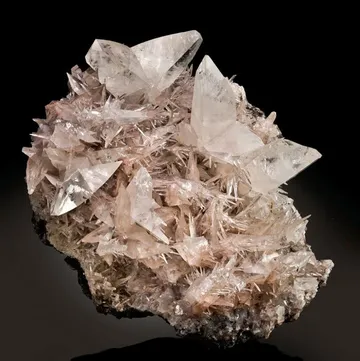
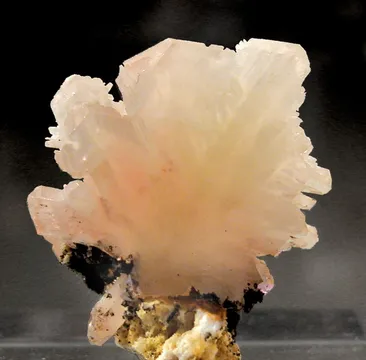
Chinese calcite is extraordinarily varied by locality: Yaogangxian gives white to pale pink poker-chip aggregates, bladed rosettes, flattened rhombohedra, scalenohedra, and clear twins on fluorite, quartz, ferberite, scheelite, pyrite, chalcopyrite, and muscovite; Huanggang contributes pale, pinkish, spherical, paper-thin, and skarn-related calcites with quartz, siderite, fluorite, hematite, and magnetite; Wenshan produces cave-like calcite helictites, stalactitic forms, and associations with blue aragonite and hemimorphite; Xikuangshan provides calcite with stibnite in the antimony assemblage. Strong Chinese calcites are judged by sculptural form, undamaged edges, freedom from bruising and acid dulling, and the quality of their contrast with the associated metallic or colored mineral.
Chinese pyrite occurs across many of the country’s skarn, vein, and polymetallic systems, but collectible material is especially familiar from Hubei’s Daye-Fengjiashan district and from Hunan localities such as Shangbao and Yaogangxian, where it accompanies quartz, fluorite, calcite, chalcopyrite, dolomite, arsenopyrite, and other ore minerals. The best pieces are bright, brassy, sharply crystallized cubes or modified cubes, well placed on contrasting carbonate or quartz matrix, while ordinary pieces are common granular sulfide masses, tarnished coatings, or fragments with little crystal definition; because pyrite is abundant in many Chinese ore systems, locality precision and aesthetics matter more than species rarity.
China’s pyromorphite fame is centered on the Guangxi lead-zinc localities around Daoping, Yangshuo, and Laohuan, where oxidized lead mineralization produced green to yellow-green hexagonal prisms, barrel-shaped crystals, skeletal terminations, divergent clusters, crusts, and specimens partly coated or replaced by pale to sky-blue plumbogummite. Daoping material is prized for saturated grassy to darker green color and sharp crystal coverage on matrix; Yangshuo-Laohuan material is important both for pyromorphite and for the later blue pseudomorph story. The best Chinese pyromorphites combine intense color, distinct individual crystals, open composition, minimal bruising on terminations, and an honest label that separates Daoping, Yangshuo, and Laohuan material where possible.
Chinese hemimorphite is dominated in collectors’ minds by Wenshan, Yunnan, where the species occurs as deep sky-blue to electric-blue botryoidal crusts, bubbly pocket linings, stalactitic ridges, and sparkling microcrystalline skins on brown matrix, locally associated with quartz, aurichalcite, aragonite, and calcite. This is not the older white bladed hemimorphite look familiar from many zinc localities; Wenshan’s appeal is saturated color, glossy texture, and sculptural flowstone-like form. The finest pieces show strong blue color throughout, lustrous surfaces, pleasing cavities or rolling botryoids, and verified identification, since pale blue aragonite and other Wenshan carbonates can be confused with hemimorphite in poorly documented trade material.
Chinese aragonite of serious collector interest is best represented by Wenshan, Yunnan, where copper-bearing blue material occurs as coral-like, stalactitic, cave-growth, and two-generation specimens associated with calcite, cobalt-bearing calcite, aurichalcite, smithsonite, and sometimes hemimorphite in the same broader zinc-oxidation environment. The best examples have a clear pastel to sky-blue color, branching or sculptural open form, intact tips, and a natural relationship to calcite matrix; lesser pieces are chalky, broken stalactite fragments or mislabeled blue carbonate material. Because Wenshan also produced blue hemimorphite, aragonite specimens deserve closer scrutiny than ordinary aragonite, particularly when sold under vague “blue hemimorphite” or “Wenshan blue” labels.
China’s cassiterite specimens come from several important tin-bearing systems, with Xuebaoding in Sichuan and Yaogangxian in Hunan especially relevant to collectors: Xuebaoding gives black to brown-black, lustrous tetragonal crystals and clusters on muscovite, quartz, feldspar, beryl, and scheelite matrix, while Yaogangxian produces cassiterite within the tungsten-tin vein assemblage, commonly with quartz and occasionally with fluorite or other ore minerals. Fine pieces have sharp bipyramidal or prismatic cassiterite form, high luster, visible striations or twinning where present, and attractive contrast against pale mica or quartz; ordinary pieces are dense, dark tin-ore fragments with little crystal form or weak composition.
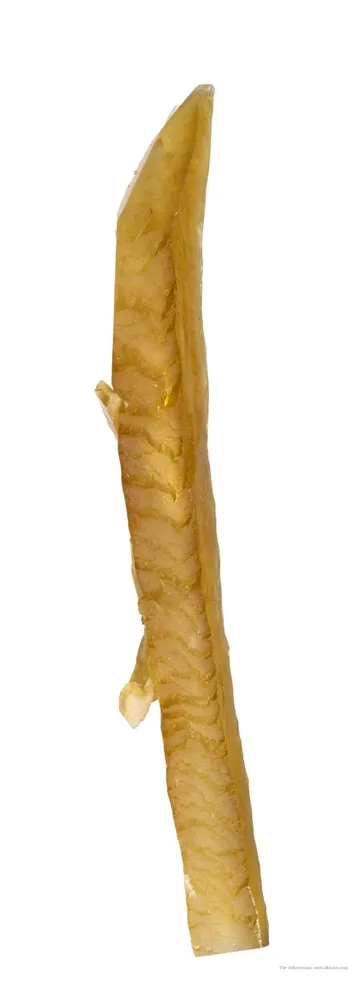
China’s premier stibnite locality is Xikuangshan in Lengshuijiang, Hunan, the giant antimony deposit whose collector specimens show steel-gray to silver-black bladed crystals, striated prisms, sprays, arcing groups, and stibnite-calcite combinations from a carbonate-hosted Sb system with quartz, calcite, fluorite, and barite gangue. The best pieces have bright metallic luster, complete spear-like terminations, open three-dimensional form, and minimal bending or bruising; stibnite is soft and brittle, so damage is common, and many ordinary examples are ore chunks, broken blades, or dull oxidized pieces rather than display-quality crystals. Stibiconite pseudomorphs after stibnite from the district add a second collecting category, preserving the original blade habit in altered material.
Chinese chalcopyrite is an accessory in many ore systems but becomes collectible where it is sharp, bright, iridescent, or visually central: Yaogangxian has produced golden to multicolored chalcopyrite with quartz, calcite, fluorite, ferberite, jamesonite, pyrite, and arsenopyrite, while Hubei’s Fengjiashan-Daye district records chalcopyrite as an important copper ore mineral associated with quartz, hubeite, pyrite, dolomite, hematite, inesite, apophyllite-group minerals, chalcocite, sphalerite, and calcite. Fine specimens show discrete lustrous crystals or sparkling coatings in balanced association, not merely brassy sulfide smears; the best Yaogangxian pieces are especially attractive when chalcopyrite adds metallic contrast to pale calcite or quartz without overwhelming the specimen.
Chinese scheelite has two major collector identities: Xuebaoding, Sichuan, where orange to yellow, transparent to translucent bipyramidal crystals occur with muscovite, quartz, beryl, cassiterite, feldspar, and calcite, and Yaogangxian or Huanggang, where scheelite belongs to tungsten-tin or skarn-related ore assemblages and may be associated with fluorite, calcite, magnetite, molybdenite, dolomite, quartz, and sulfides. Xuebaoding supplies the iconic display pieces, commonly 3–10 cm crystals on mica-rich matrix, while Huanggang and Yaogangxian add geological depth through complex ore associations. The best scheelites have saturated warm color, sharp bipyramidal form, transparency or internal glow, secure matrix attachment, and strong shortwave ultraviolet fluorescence; bruised tips, repaired crystals, and unstable matrix are the usual concerns.
Beyond the species above, China is one of the great countries for type-locality and rarity collecting. Hsianghualite was described from Xianghualing in Hunan, in a beryllium-bearing environment with fluorite and other rare minerals. Hubeite comes from the Fengjiashan-Daye area of Hubei, a locality already valued for skarn and copper-iron assemblages. Bayan Obo in Inner Mongolia is a globally important rare-earth, iron, niobium, and fluorite deposit and the type area for minerals such as baotite and huanghoite-(Ce), with a broader suite including bastnäsite, monazite, aegirine, barite, fluorite, magnetite, hematite, columbite, aeschynite, fergusonite, and other REE-Nb minerals. These rarities are usually thumbnail to reference-grade rather than aesthetic cabinet specimens, but they are central to China’s scientific mineralogical importance.
The first rule with Chinese specimens is locality precision. A label reading only “China” or even “Hunan, China” is often inadequate for serious collecting, because Yaogangxian, Shangbao, Xianghualing, Huanggang, Xikuangshan, Wenshan, Daoping, Yangshuo, Laohuan, Xuebaoding, and Fengjiashan each carry different value, mineral associations, and authenticity questions. Whenever possible, preserve old dealer labels, mine numbers, pocket notes, purchase dates, and analytical paperwork.
Mislabeling is especially important in Guangxi pyromorphite and plumbogummite-related specimens. The blue plumbogummite pseudomorphs after pyromorphite widely sold for years as Daoping or Yangshuo are now more tightly associated with Laohuan, and strong modern labels should reflect that distinction when known. Likewise, “Wenshan blue” material needs identification discipline: blue hemimorphite, copper-bearing aragonite, calcite, smithsonite, and aurichalcite can all occur in the broader Wenshan trade stream, and color alone is not enough.
Condition is the other major issue. Fluorite from Yaogangxian, Shangbao, Xianghualing, and Huanggang commonly shows cleavage, corner bruises, internal fractures, repairs, or detached crystals reattached to matrix. Transparent fluorites should be checked under strong side light for repaired corners, oiling, filled cleavages, or misleading photography. Quartz points can be chipped, calcite edges bruised, pyromorphite terminations rubbed, and stibnite blades bent or broken. Stibnite is soft and fragile; it should be handled by matrix only, kept dry, and stored where the metallic blades cannot contact harder minerals.
Scheelite is worth checking under shortwave ultraviolet, but fluorescence should not be treated as a substitute for locality, crystal quality, or condition. Xuebaoding scheelite can be spectacular under UV, yet the market value still depends on crystal form, color, transparency, size, and whether the piece sits naturally on muscovite or quartz matrix. Fluorite fluorescence varies by locality and impurity chemistry and is interesting but secondary to display quality for most Chinese fluorites.
Market availability is broad but uneven. Yaogangxian fluorite, quartz, calcite, and mixed sulfide pieces are still widely encountered, though top examples with old labels and undamaged crystals are increasingly competitive. Huanggang material remains available in waves by species and mine area, with better ilvaite, fluorite, sphalerite, scheelite, magnetite, and unusual skarn combinations commanding premiums. Wenshan hemimorphite and blue aragonite are common enough to collect but rare in top color and condition. Fine Xikuangshan stibnite, Xuebaoding scheelite, and sharply crystallized Daoping pyromorphite are classic Chinese trophy categories, and the best examples should be treated as mature-market specimens rather than inexpensive “recent China” material.
The modern Chinese specimen story is full of sudden corrections, and few are better than the Laohuan case. For years, collectors admired blue plumbogummite pseudomorphs after pyromorphite under Daoping or Yangshuo labels. The pieces looked unmistakable: sky-blue coatings preserving the form of hexagonal pyromorphite crystals, sometimes with yellow-green pyromorphite still visible at the ends. Then the geography sharpened. The correct source was identified as Laohuan, “Old Tiger Hill,” on Haiyang Mountain east of Guilin, with the famous Daoping and Yangshuo workings lying well to the south. The correction did not diminish the specimens; it made them better. It gave collectors a real hill, a real cluster of artisanal adits, and a clearer history of miners who had once worked low-grade lead-zinc-silver-barite ore and later discovered that crystals could be worth more than ore.
Laohuan is also one of the rare Chinese stories in which specimen mining itself became the center of the enterprise. The ore was not rich enough to sustain ordinary commercial mining for long, but pyromorphite, plumbogummite, cerussite, malachite, and sparse wulfenite gave local miners another path. The main tunnel area was eventually mined out, and work became intermittent, with abandoned holes and a few small excavations still representing the hope of another pocket. The visual memory of the locality is not a large open pit or a mechanized mill but a hillside punched with small workings, each one a possible source of blue pseudomorphs that would travel into collections under corrected labels.
Yaogangxian tells a different story: not a specimen pit, but a working tungsten-tin mine whose mineral beauty emerged from an industrial maze. Published accounts and collector summaries describe more than 200 tungsten-quartz veins, with adits, drifts, crosscuts, winzes, raises, and inclines developed into a large underground system. At its peak modern industrial scale, the mine, mill, and related facilities employed thousands of workers. For a collector, that image matters. A fine Yaogangxian fluorite on quartz is not an alpine pocket casually opened by a hobbyist; it is a survivor from a vast ore operation where trained miners and local specimen channels learned how to remove delicate crystals from tungsten-bearing veins.
Huanggang arrived in the collector world with the feel of a mineral rush. Around 2010, fine ilvaite from Inner Mongolia reached the market and forced collectors to learn a new Chinese name. Then the district kept expanding: fluorite, quartz, arsenopyrite, calcite, sphalerite, scheelite, magnetite, helvine-group minerals, borates, and other skarn species came through different mine numbers and pockets. The locality became famous partly because no single species exhausted it. A collector could begin with ilvaite, then encounter octahedral fluorite, then transparent yellow sphalerite, then magnetite on calcite, then scheelite in a skarn association, each specimen adding another page to the same geological system.
Wenshan’s story is quieter and more cave-like. The blue hemimorphite that reached collectors from Yunnan did not resemble the white sprays many older collections had filed under the species. It came as glossy blue botryoidal skins, hollow cavities, bubbly ridges, and stalactitic forms—more like mineralized flowstone than a textbook silicate crystal group. The same district complicated the market by producing blue aragonite and unusual calcite forms, including helictitic, hollow-tube growths. That made Wenshan both desirable and treacherous: the color was unforgettable, but the label and identification needed to be earned.
Wen-Sheng Li, Pei Ni, Jun-Yi Pan, Guo-Guang Wang, Li-Li Chen, Yu-Long Yang, and Jun-Ying Ding, “Fluid inclusion characteristics as an indicator for tungsten mineralization in the Mesozoic Yaogangxian tungsten deposit, central Nanling district, South China,” Journal of Geochemical Exploration, 2018 — Important modern paper describing Yaogangxian as a major tungsten deposit with wolframite-quartz vein and scheelite-skarn mineralization, including successive vein stages relevant to the specimen assemblage.
Ming Xiao, Hua-Ning Qiu, Yue Cai, Ying-De Jiang, Wan-Feng Zhang, and Yuan Fang, “Microthermometric results, gas/liquid compositions of fluid inclusions and S-H-O isotopes of minerals in the Yaogangxian tungsten deposit, South China,” PANGAEA dataset, 2021 — Data publication tied to fluid-inclusion and isotope work on wolframite, cassiterite, quartz, and related minerals from Yaogangxian.
Xin-Tong Liu et al., “Features of ore-forming magma and fluid revealed by apatite and zircon geochemistry: A case study from the Huanggang skarn Fe-Sn deposit, NE China,” Ore Geology Reviews 171, 106182, 2024 — Open-access study of Huanggang’s ore-related magmatism, zircon and apatite geochemistry, and skarn mineralization.
Wang et al., “Skarns and Genesis of the Huanggang Fe-Sn Deposit, Inner Mongolia, China,” Resource Geology, 2001 — Classic geological treatment of Huanggang skarns, ore bodies, intrusive relationships, and mineral distribution, including the contrast between fluorite-rich proximal skarn and calcite-rich distal skarn.
“Ore genesis and hydrothermal evolution of the Huanggang skarn iron–tin polymetallic deposit, southern Great Xing’an Range: Evidence from fluid inclusions and isotope analyses,” Ore Geology Reviews, 2014 — Study of the skarn, oxide, and sulfide stages that created the broader Huanggang mineral assemblage.
Wendell E. Wilson and Thomas P. Moore, “The Laohuan Mine, Gongcheng, Zhuang, Guangxi, China,” The Mineralogical Record 53, 2022 — Essential publication clarifying the Laohuan source of famous blue plumbogummite pseudomorphs after pyromorphite and distinguishing it from Daoping and Yangshuo.
“Fluid inclusions and ore precipitation mechanism in the giant Xikuangshan mesothermal antimony deposit, South China,” Ore Geology Reviews 95, 2018 — Documents Xikuangshan as the world’s largest antimony deposit and describes its quartz-stibnite, fluorite-quartz-stibnite, barite-quartz-stibnite, and calcite-stibnite assemblages.
“Antimony vein deposits of China,” Ore Geology Reviews 8, 1993 — Broad geological and economic context for Chinese antimony deposits, including Xikuangshan as the type example of the pure stibnite deposit group.
Qinyuan Cao, Miao Shi, Ye Yuan, Shiyu Ma, and Haoyu Lu, “Mineralogy and Geochemical Characteristics of Scheelite Deposit at Xuebaoding in Pingwu, Sichuan Province, China,” Minerals 14(1), 38, 2024 — Recent open-access study of the mineralogical and geochemical characteristics of the Xuebaoding scheelite deposit.
Bruce Cairncross, “The Where of Mineral Names: Hubeite, Fengjiashan Mine, Daye County, Huangshi Hubei, China,” Rocks & Minerals 100(6), 2025 — Recent locality-focused article on hubeite and its type locality in the Daye-Fengjiashan mining district.
F. C. Hawthorne, M. A. Cooper, J. D. Grice, A. C. Roberts, W. R. Cook, and R. J. Lauf, “Hubeite, a new mineral from the Daye mine near Huangshi, Hubei Province, China,” The Mineralogical Record 33, 465–471, 2002 — Type-mineral description for hubeite, one of China’s notable collector rarities.
U.S. Geological Survey Bulletin 2143, “The Sedimentary Carbonate-Hosted Giant Bayan Obo REE-Fe-Nb Ore Deposit of Inner Mongolia, China,” 1996 — Authoritative geological overview of Bayan Obo, including REE, Fe, Nb, and fluorite mineralogy.
Ling et al., “Formation of the world’s largest REE deposit through protracted fluxing of carbonatite by subduction-derived fluids,” Nature Communications, 2013 — Open-access research on the origin of Bayan Obo’s rare-earth mineralization.
Handbook of Mineralogy: Hsianghualite — Mineral data and type-locality reference for hsianghualite from Hsianghua Ridge, Hunan.
“World Famous Yaogangxian Mine - Zhouping Guo - 2025 Dallas Mineral Collecting Symposium,” Dallas Mineral Collecting Symposium, Vimeo — Lecture-format presentation by Zhouping Guo focused on the Yaogangxian Mine and its role in the Chinese specimen trade.
“Chinese mineral specimen: Fluorite from Yaogangxian, Yizhang county, Chenzhou city, Hunan, China,” YouTube — Short specimen video showing a large fluorite and smoky quartz specimen from Yaogangxian.
“Stibnite, Xikuangshan Antimony Mine, Shao Yang, Hunan, China,” YouTube — Specimen video featuring stibnite from the Xikuangshan antimony mine.
Mindat: China — Broad database entry for Chinese mineral localities, mineral lists, type-locality status, and references.
Mindat: Yaogangxian Mine, Hunan — Core locality reference for one of China’s most important tungsten-tin specimen mines.
Mindat: Wenshan Mine, Yunnan — Locality record for Wenshan blue hemimorphite, aragonite, calcite, and associated secondary minerals.
Mindat: Hemimorphite from Wenshan Mine — Species-specific entry documenting Wenshan hemimorphite habit, color, rarity, confirmation, and associations.
Mindat: Aragonite from Wenshan Mine — Species-specific entry useful for separating Wenshan aragonite from blue hemimorphite material.
Mindat: Chalcopyrite from Fengjiashan Mine, Hubei — Occurrence record for chalcopyrite and its associated minerals in the Daye-Fengjiashan district.
Mindat: Chalcopyrite from Yaogangxian Mine — Occurrence and gallery reference for chalcopyrite in the Yaogangxian assemblage.
Fabre Minerals: Reference Specimens from China — Dealer archive with detailed specimen descriptions, measurements, analyses, and publication notes for notable Chinese minerals.
Fabre Minerals: China Mineral Specimens — Useful market archive for comparing locality labels, mineral associations, and specimen styles.
Geology365: Huanggang Specimens — Visual reference for Huanggang fluorite, quartz, calcite, hematite, scheelite, magnetite, and skarn associations.
Wikimedia Commons: Fluorite from Yaogangxian — Freely licensed photograph of color-zoned Yaogangxian fluorite with geological notes.
Wikimedia Commons: Hemimorphite from Wenshan — Freely licensed photograph of blue Wenshan hemimorphite.
Wikimedia Commons: Aragonite from Wenshan — Rob Lavinsky photograph of copper-bearing sky-blue Wenshan aragonite.
Wikimedia Commons: Stibnite from Xikuangshan — Freely licensed image showing the long striated habit of Xikuangshan stibnite.
The Mineralogical Record: The Laohuan Mine — Essential source for the corrected Laohuan locality and the history of Guangxi plumbogummite-pyromorphite specimens.
U.S. Geological Survey: Bayan Obo Iron-Rare-Earth-Niobium Deposits — Geological reference for one of China’s most important rare-earth and type-mineral districts.
_2_(34176709430).jpg)
_1_(33993573012).jpg)

_6.jpg)