Dongposhan Mine, China: Hunan locality famed for green-to-purple fluorite with calcite and quartz, distinct cube forms, and rich paragenesis for collectors.
Key facts
Dongposhan Mine is a southern Hunan locality that rewards collectors who look beyond the better-known names of Yaogangxian, Xianghualing, and Shizhuyuan. It sits in the Dongpo ore field of Yizhang County, within the Chenzhou mining region, an intensely mineralized part of the Nanling metallogenic belt where Devonian carbonate rocks, Yanshanian granitic intrusions, folding, and faulting produced overlapping skarn, greisen, vein, and stratabound lead-zinc systems. In specimen terms, Dongposhan is admired chiefly for fluorite-calcite-quartz combinations: green to purple fluorite cubes and modified cubes, sometimes gemmy, sometimes with a soft silky surface, on quartz or with sharp white calcite. The mine is also geologically significant because its recorded assemblage bridges attractive collector minerals with a skarn and polymetallic ore environment: fluorite and calcite occur alongside quartz, dolomite, galena, sphalerite, scheelite, and calc-silicates such as andradite, diopside, hedenbergite, epidote, plagioclase, and hornblende-group amphibole.
Regional View
Country View
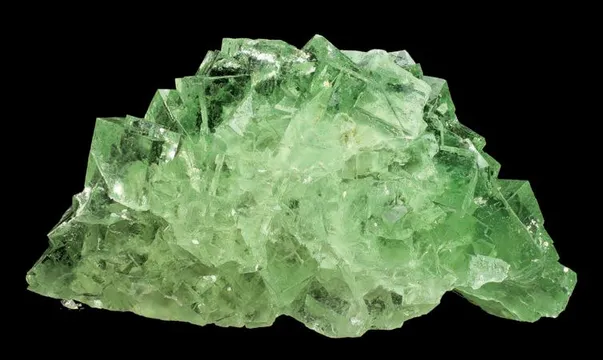
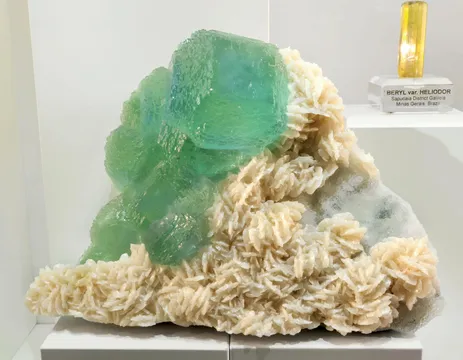
The best Dongposhan pieces have a look distinct from the flood of anonymous “Hunan fluorite” on the market. Older green fluorites from the 1990s are described by dealers as having a recognizable style: mint-green, translucent to gemmy cubes, occasionally perched in airy clusters, with a gentle purple fluorescence. The later and rarer purple fluorite combinations are more dramatic: sharp, lustrous crystals with cubic and dodecahedral faces, commonly around miniature to small-cabinet size as collected specimens, with white calcite blades or scalenohedra and pale gray quartz. For the specialist, the attraction is not just color but paragenesis—the visible record of carbonate, silica, fluorine, and sulfide-rich fluids moving through a complex ore field.
Search for specimens: View all specimens from Dongposhan Mine, China
Dongposhan Mine is recorded in the Dongpo ore field, Yizhang County, Chenzhou, Hunan Province, China. The locality coordinates commonly given in mineral databases are approximate, reflecting the broader mining district rather than a visitor-ready collecting site. The Dongpo ore field occupies an important position around the Qianlishan granite complex, in the northern raised part of the Dongpo-Yuemei compound syncline between the Xishan and Wugaishan anticlines. The ore field is structurally busy: folds and multiple generations of faults helped localize mineralization, while Devonian carbonates and clastic-carbonate transition beds supplied the reactive host rocks for skarn and carbonate-replacement styles.
In the wider Dongpo system, the geological setting is a classic South China polymetallic story. Yanshanian granitic magmatism intruded Devonian strata and drove hydrothermal alteration and mineralization. Published work on the Dongpo tungsten skarn describes scheelite-bearing skarn at the contact of biotite granite and Devonian marble, with garnet-pyroxene skarn, fluorite, scheelite, epidote, hornblende, sulfides, and later veins. Other Dongpo lead-zinc studies emphasize stratabound and structurally controlled Pb-Zn mineralization in Devonian carbonate sequences, with later hydrothermal overprinting related to the Qianlishan magmatic system. Dongposhan, as a named mine within that field, should therefore be understood as part of a district-scale polymetallic environment rather than as an isolated fluorite occurrence.
The documented Dongposhan mineral suite is concise but informative. Galena and sphalerite point to its lead-zinc identity; scheelite, andradite, diopside, hedenbergite, epidote, plagioclase, and hornblende-group minerals point to skarn influence; fluorite, calcite, dolomite, and quartz represent the later open-space and vein minerals that matter most to collectors. The fluorite-photo associations recorded for Dongposhan are dominated by quartz and calcite, with baryte also appearing in photo-derived association data. Calcite photo associations are chiefly fluorite, quartz, and minor pyrite. That matches what collectors actually see: the saleable specimens are not ore chunks but open-space crystallizations from late fractures and pockets in a mineralized carbonate-skarn setting.
The mining history of the Dongpo ore field is long and layered. Chinese accounts describe the area as an old mining district with more than four centuries of mining activity, but modern geological work accelerated only in the twentieth century. Regular exploration began in the 1950s; a detailed exploration report for the Dongposhan lead-zinc mining area ran from 1958 to 1966. From the early 1950s into the 1970s, the Dongpo lead-zinc operation successively developed several mining sections, including Yejiwei, Dongposhan, Jinchuantang, Shexingping, Baibulong, Hengshanling, and Chaishan. The Dongpo lead-zinc mine is described by Chinese geological institutions as a large state-owned enterprise and an important lead-zinc raw-material base in Hunan.
Long production also explains why Dongposhan specimens are unevenly available. The mine was not worked for collectors, and good pockets appear to have been episodic rather than continuous. Dealer and photo records document a 2013 fluorite find, older 1990s green fluorite, and at least one later group of purple fluorite with calcite on quartz that reached the market by the early 2020s. High-quality pieces are now mostly encountered as older stock, dispersed collection specimens, or occasional secondary-market material. Direct collecting should not be assumed possible: this is an active or historically industrial mining district, and access requires permission from the land and mineral-rights holders as well as mine-safety clearance.
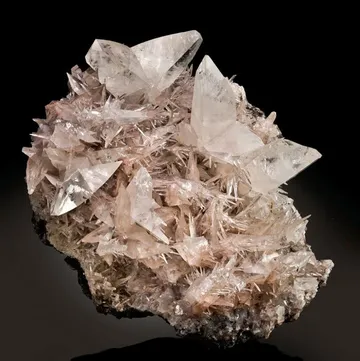
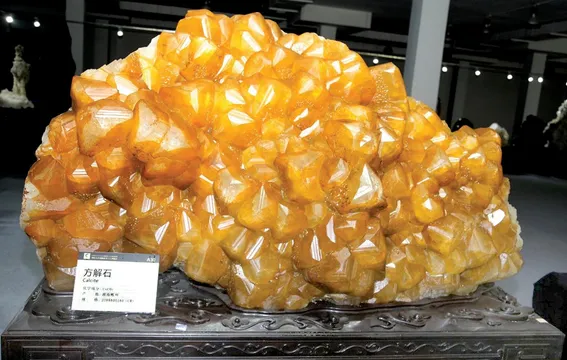
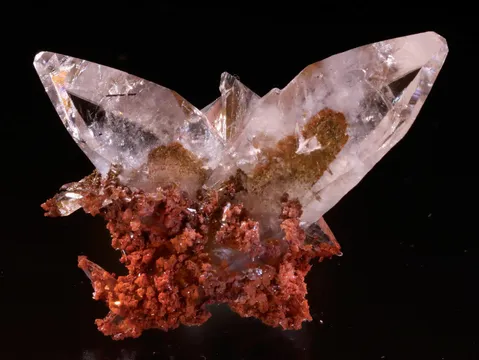
Calcite from Dongposhan is most desirable when it contributes structure and contrast to fluorite-quartz combinations rather than appearing as massive vein carbonate alone. The most distinctive specimens show stark white, very thin “wafer-like” calcite blades perched with purple fluorite on gray prismatic quartz; other recorded examples are neat white to slightly translucent scalenohedral calcite crystals to about 5.5 cm covering a massive calcite matrix and sprinkled with brassy pyrite microcrystals to about 0.3 cm. Good Dongposhan calcite is therefore judged by sharpness, translucency, freedom from bruising on exposed scalenohedron tips or blade edges, and association—especially clean white calcite sitting visibly against purple or green fluorite, quartz, or pyrite—while ordinary pieces are more likely to be pale carbonate masses or contacted pocket fragments without the crisp visual contrast that makes the locality memorable.
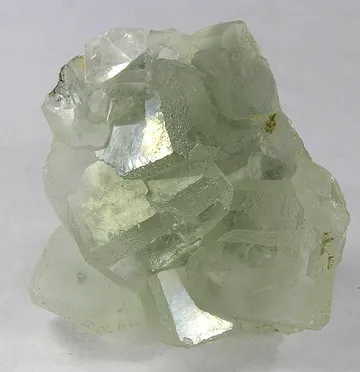
Fluorite is the collector mineral of Dongposhan Mine, occurring as green to dark bluish-purple cubic crystals and modified cubes, commonly with quartz and calcite and less commonly noted with baryte. The older 1990s green material is recognized for mint-green, gemmy to translucent cubes, in one documented example with the largest crystal about 3.1 cm on edge and a soft purple fluorescence; a 2013 find produced fluorite with quartz; and a notable cabinet-size purple fluorite-calcite-quartz specimen measured 11.3 x 7.3 x 4.3 cm, with sharp, lustrous, rich purple fluorites to about 1.8 cm showing cubic and dodecahedral faces. The finest examples are balanced, undamaged combinations where the fluorite is sharply crystallized, glassy or gemmy, and visibly set off by white calcite or sparkling quartz; lesser pieces tend to suffer from edge wear, dull silky faces without compensating translucency, or vague “Hunan” labeling that loses the mine-level significance.
Other minerals documented specifically from Dongposhan Mine include andradite, diopside, dolomite, epidote, galena, hedenbergite, hornblende-group amphibole, plagioclase, quartz, scheelite, and sphalerite. No type-locality species is central to Dongposhan’s identity in the available mineralogical records; its importance is instead paragenetic. Scheelite and the garnet-pyroxene-epidote-calc-silicate assemblage record skarn development, while galena and sphalerite mark the Pb-Zn ore system. For collectors, these species matter mostly when they explain the setting of the fluorite and calcite, though sharp sulfides or fluorescent scheelite from correctly attributed Dongposhan material would be of significant locality interest.
Dongposhan is a locality where labels matter. Specimens may appear under “Dongposhan Mine,” “Dongpo Mine,” “Dongpo ore field,” or abbreviated and misspelled forms, and the broader Chenzhou region contains several famous fluorite-producing districts that can be confused in trade: Yaogangxian, Xianghualing, Xianghuapu, Shizhuyuan, Manaoshan, Huangshaping, and others. The chief authenticity concern is therefore not a well-documented treatment specific to Dongposhan, but locality drift. A good Dongposhan label should ideally name the mine, the Dongpo ore field, Yizhang County, Chenzhou, Hunan, and should be consistent with the specimen’s style: green older-generation cubes, purple modified cubes with white calcite and quartz, or documented calcite-pyrite material.
Condition is a serious issue. Fluorite cleaves easily and the Dongposhan cubes commonly present exposed edges, corners, and high faces; even a specimen described as otherwise choice may show wear along a cube edge. Pocket removal can also leave peripheral contacts or broken margins, especially on broad plates. Calcite blades and scalenohedra are more vulnerable still, with chipped tips, bruised blade edges, and cleaved white surfaces reducing value quickly. Quartz matrix can be sturdy, but sawn bases are known on display pieces and should be evaluated as preparation rather than damage when disclosed.
Fluorescence adds interest but should not be oversold. At least some green Dongposhan fluorite has been described with a gentle purple fluorescence, but the locality is not primarily collected as a fluorescent-mineral site. Scheelite, if present and verified, should be tested carefully with appropriate ultraviolet light, but most market specimens are fluorite-calcite-quartz combinations and should be valued first for color, transparency, crystal form, aesthetics, and provenance.
Market availability is limited. Dongposhan is not a steady producer in the way some Chinese fluorite localities have been at their peak. Quality examples appear sporadically, often as resales from older collections. A 2021–2022 Mineral Auctions cabinet fluorite-calcite-quartz specimen from the Dr. Stephen Smale collection closed at $460 against a stated inventory value of $2,000, while a later indexed Arkenstone/Minfind listing showed a 50 x 40 x 40 mm older-generation green fluorescent Dongposhan fluorite offered at $1,250. Those figures are not a fixed price guide, but they do show the spread: attractive but contacted combination plates may trade within reach of advanced collectors, while pristine, well-labeled, older green fluorites or especially aesthetic purple combinations can command strong locality premiums.
The broader Dongpo district has the kind of mining history that rarely survives on a mineral label. Chinese sources describe it as an old mining area with more than 400 years of activity, but the modern scientific chapter began much later. In the 1930s, older-generation geologists made preliminary traverses through the district. After 1949, geological work intensified; formal prospecting and exploration began in 1956, and the next decades produced a remarkable accumulation of reports, mine sections, and newly defined orebodies. By one account, more than twenty mining areas around the Dongpo field and its periphery had been examined repeatedly, nearly thirty deposits or occurrences had been checked or explored, and more than fifty geological reports had been submitted, including seven formal exploration reports. Dongposhan was part of that push: its lead-zinc mining area was the subject of detailed exploration from 1958 to 1966.
One cabinet specimen gives Dongposhan a human story far outside Hunan. In late 2021 and early 2022, Mineral Auctions sold a fluorite with calcite on quartz from the Dr. Stephen Smale collection. The specimen was a cabinet plate, 11.3 x 7.3 x 4.3 cm, with rich purple fluorite crystals to 1.8 cm, wafer-thin white calcite, and gray quartz. Smale was not just another collector: he was the mathematician awarded the Fields Medal in 1966 and the Wolf Prize in 2007. The piece sold on January 8, 2022 after a run of incremental bids, closing at $460. Its description captured both the appeal and the frustration of Dongposhan collecting: an important combination specimen, but with contacted peripheral edges from pocket removal, and from a locality that had not produced similar material for several years.
Another Dongposhan curiosity is the fluorite pierced by the ghosts of earlier calcite. A dealer listing from early summer 2021 described two green fluorite crystals penetrated by scalenohedral holes in the shape of former calcite crystals, with the cavities filled by drusy quartz. The cabinet-size specimen measured 8.8 x 5.3 x 5.2 cm and showed “2 larger and 3 smaller casts inside the Fluorite cubes.” It is exactly the sort of paragenetic oddity that makes Dongposhan rewarding: not merely green fluorite, but fluorite recording the disappearance of calcite and the later arrival of silica.