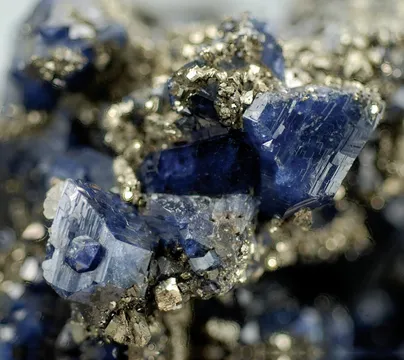
Gongcheng County, Guangxi — famed for Daoping pyromorphite and yellow cerussite from a Pb–Zn system, with Limu rare-metal minerals prized by collectors.
Key facts
Gongcheng County, in the Guilin area of Guangxi, occupies a small but consequential place in modern mineral collecting because it links two very different specimen worlds. The first is the Daoping–Yangshuo lead-zinc system: a Devonian, carbonate-hosted hydrothermal Pb-Zn deposit whose oxidized pockets produced some of the most vivid green pyromorphite ever marketed from China, along with elegant yellow cerussite and cerussite-pyromorphite combinations. The second is the Limu rare-metal district, a Li-F-Na-rich topaz-albite granite complex with Sn-Ta-Nb-W-Li mineralization that belongs to the broader Nanling rare-metal province. Most collectors know Gongcheng through the Daoping label, but the county’s mineralogical range is much broader: secondary lead minerals from weathered Pb-Zn ore on one hand, and cassiterite, wolframite-group minerals, columbite-tantalite minerals, zinnwaldite/lepidolite-bearing granites, topaz, albite, and accessory rare-metal species on the other.
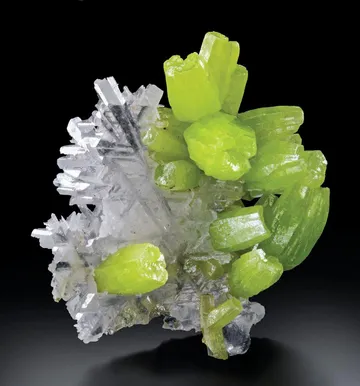
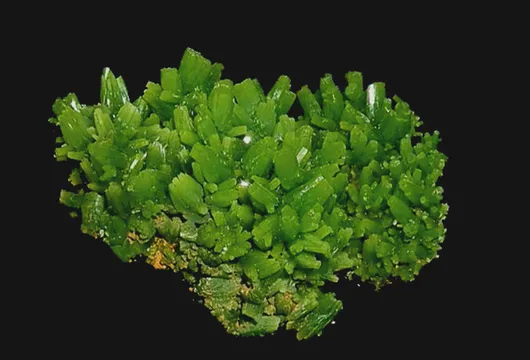
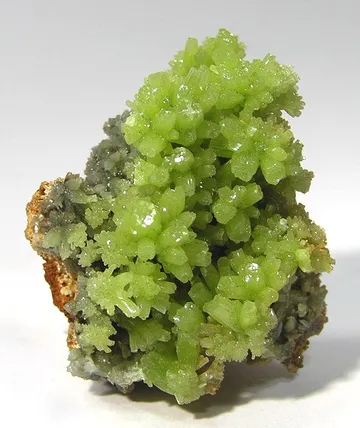
The finest Daoping pyromorphites are instantly recognizable. They are not merely “green pyromorphite”; they are glassy, juicy, highly saturated clusters of hexagonal prisms, barrels, hoppered crystals, curved sprays, and mounded linings of vugs, ranging from yellow-green and apple-green to darker forest tones, with occasional yellow-orange material. Good cabinet pieces can have a sculptural, geode-like architecture, with crystals growing inward around open cavities. The best cerussites are a quieter but no less locality-specific prize: yellow to straw-yellow flattened crystals, reticulated “snowflake” twins, and delicate transparent-to-translucent crystals accented by green pyromorphite. The mineralogical drama is the weathering of galena and sphalerite in a lead-zinc system, but the collecting drama is color, luster, texture, and the fragility of crystals that were never abundant in top condition.
Regional View
Country View
The Daoping material entered the international market at the turn of the 21st century and very quickly changed expectations for Chinese pyromorphite. Earlier Chinese localities had already begun to reshape the collector’s map, but the Gongcheng–Yangshuo production was one of the decisive finds: large numbers of bright, lustrous, aesthetic pyromorphites appeared, many of them good enough to stand with classic European, American, and Australian material rather than merely supplement it. Because the Daoping and Yangshuo workings were later connected underground, later labels can be difficult to assign cleanly to one side of the county boundary. For careful collectors, “Daoping,” “Yangshuo,” and “Yangshuo–Daoping” should be read not as casual synonyms but as a locality history written into the specimen trade.


Search for specimens: View all specimens from Gongcheng Co., China
Gongcheng County’s collector reputation is anchored by the Daoping Mine, a hydrothermal lead-zinc deposit hosted in limestone, sandstone, and shale of the Devonian Wuzhishan Formation. The sedimentary host sequence is locally cut by granite and lamprophyre dykes, and oxidation of primary galena and sphalerite generated the secondary lead minerals that made the locality famous. In collector terms, Daoping is an oxidized Pb-Zn pocket locality: lead supplied by galena, open space supplied by fractures and carbonate dissolution, and enough phosphate-bearing fluid movement to crystallize pyromorphite in unusually rich and colorful habits.
The Daoping deposit straddles the practical boundary with the adjacent Yangshuo Mine. The two operations worked the same broader mineralized system from opposite sides and have been connected underground since 2003. This matters greatly for provenance. Material collected before the underground connection may be more confidently attributed to the original Daoping or Yangshuo workings; material recovered afterward is often more responsibly described as from the Yangshuo–Daoping mines unless a mine-level source is documented. Old labels may also use Tangping or Tang Ping for the Daoping area. Those names persist in the trade, but modern locality usage treats Daoping Mine, Gongcheng County, Guilin, Guangxi, as the correct collector locality for the Gongcheng-side lead-zinc specimen production.
The early specimen history is unusually well documented in collector literature and field discussion. Pyromorphite specimens were first collected in June 1999 from Yangshuo Mine tunnels numbered 1335 and 1370, interpreted as elevations in meters. The success of those lots encouraged miners to search more aggressively for specimen pockets. In January and February 2000, pyromorphite was found in three Daoping Mine tunnels: 2398, 3250, and 3199, where the final three digits record tunnel elevations of about 1398, 1250, and 1199 meters respectively. From that point forward, the district became a sustained source of Chinese pyromorphite, with the most sought-after early material especially valued for neon apple-green color, glassy luster, translucent crystals, and lively three-dimensional composition.
Ore and specimen styles vary pocket by pocket. Massive and vuggy oxidized matrix may carry crusts of small pyromorphite crystals, larger isolated prisms, curving “pipe-organ” or spray groups, hoppered terminations, and crystals embedded in limonite-hematite-rich material. Cerussite occurs as flattened yellow crystals, reticulated twins, transparent cyclic twins, crusts, and combinations with pyromorphite. The best combination pieces balance contrast: bright green Pb5(PO4)3Cl prisms on pale cerussite or carbonate matrix, rather than a crowded surface where the pyromorphite merely coats everything.
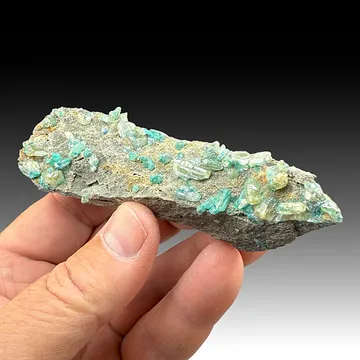
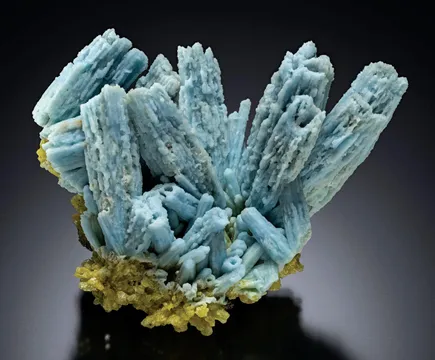
A separate Gongcheng locality of major importance is the Laohuan Mine on Laohu Hill, north of the Daoping–Yangshuo workings. Laohuan is a group of small artisanal adits and excavations that was originally worked for lead, zinc, silver, and baryte. Commercial ore mining ceased long ago, but specimen mining continued intermittently once local miners recognized that pyromorphite and associated minerals could be more profitable than low-grade ore. Laohuan is best known for sky-blue to blue-gray plumbogummite that coats and partly replaces yellow-green pyromorphite. For many years such specimens were widely sold as Daoping or Yangshuo; modern references place the famous plumbogummite-pyromorphite pseudomorph material at Laohuan.
The Limu Ta-Sn ore field gives Gongcheng County a very different geological identity. Limu is a rare-metal granite district made of ultra-acidic, peraluminous, Li-F-Na-rich topaz-albite granite stocks intruded into Cambrian and Devonian-Carboniferous sedimentary rocks. The mining area contains small exposed granite stocks above a deeper inferred batholith, with staged granite evolution from weakly mineralized early muscovite granite through W-Sn-related muscovite granite to lepidolite-albite granite associated with Sn-Nb-Ta mineralization. Documented reserves include Ta2O5, Nb2O5, Sn, WO3, and significant Li2O, making Limu a serious economic rare-metal system rather than a specimen locality in the Daoping sense.
Limu’s important ore types include granite-type Nb-Ta-W-Sn-Li mineralization and feldspar/quartz-vein W-Sn mineralization. The granite-type ores are especially associated with the Laohutou, Shuiximiao, and Jinzhuyuan areas, while W-Sn quartz veins occur in the Xiangtanling, Niulanling, and Jinzhuyuan areas, with additional feldspar-quartz veins in contact-zone settings. Mineralogically, Limu is a place for cassiterite, wolframite-group minerals including ferberite and hübnerite, columbite-(Fe), columbite-(Mn), tantalite-(Mn), strüverite and niobium-bearing rutile, zinnwaldite/lepidolite-bearing granites, albite, topaz, quartz, fluorite, beryl, xenotime-(Y), monazite-group minerals, and related accessory phases. These are not generally the showy display specimens that made Daoping famous, but they are central to the county’s scientific mineralogy.
Collecting access in Gongcheng should be regarded as mine-controlled rather than open collecting. Daoping, Yangshuo, Laohuan, and the Limu mines are active or formerly active mining areas, with underground workings, unstable oxidized stopes, and land/mineral-rights issues. Specimen material reaches collectors through miners, local buyers, dealers, auctions, and older collection dispersals. Serious collectors should focus on documentation, labels, and chain of ownership rather than assuming that a visit or field collection is possible.
Cerussite from Gongcheng is principally a Daoping Mine collector mineral, best known in yellow to straw-yellow, colorless to pale, and green-accented pieces associated with pyromorphite in the oxidized Pb-Zn zone. The most distinctive specimens include flattened yellow crystals, transparent cyclic twins, delicate reticulated “snowflake” aggregates, and cerussite forming matrix or contrast for apple-green pyromorphite prisms. Typical attractive pieces are miniatures to small-cabinet specimens, though individual crystals are usually more important than overall size because exposed cerussite edges chip easily. The top examples have adamantine to glassy luster, translucency, clean crystal outlines, and enough green pyromorphite or oxidized matrix to make the locality unmistakable; ordinary pieces tend to be dull, crowded, bruised, or too coated to show the cerussite form clearly. The yellow material has often been traded as “chrome cerussite,” but that label should be treated cautiously unless supported by analysis, since color-based variety names in the Daoping trade have not always been chemically demonstrated.
Pyromorphite is the signature Gongcheng collector mineral, with Daoping producing lustrous hexagonal prisms, barrel-shaped crystals, hoppered crystals, radial sprays, crusts, and geode-like vug linings in colors from pale yellow-green through saturated apple-green to dark green and occasional yellow-orange. Early production beginning around 1999–2000 included some of the most coveted material, and collector descriptions of the finest pieces emphasize glassy luster, translucency, “juicy” color, crystals to several centimeters, and three-dimensional clusters rather than flat coatings. The best specimens have sharp terminations, open architecture, strong color without muddiness, and lively contrast against cerussite, quartz, carbonate, or iron oxide matrix. Daoping pieces should be distinguished from Laohuan pyromorphite-plumbogummite material, where yellow-green pyromorphite is commonly coated, replaced, or partly preserved inside sky-blue to blue-gray plumbogummite; both are from Gongcheng County, but they represent different collecting stories and should not be merged under a casual Daoping label.
Other documented Gongcheng minerals extend well beyond cerussite and pyromorphite. The Daoping list includes galena, sphalerite, hawleyite, hematite, quartz, calcite, dolomite, malachite, dundasite, gypsum, descloizite, plumbogummite as an uncertain or historically confused report, and pyromorphite; analyzed hawleyite on shale with cyclic-twinned cerussite is a notable rarity in the lead-zinc suite. Laohuan adds the famous plumbogummite after pyromorphite, along with cerussite, malachite, baryte, and sparse wulfenite in collector accounts. Limu contributes the county’s rare-metal mineralogy: cassiterite, wood tin, rutile varieties including strüverite and niobium-bearing rutile, wolframite-group minerals, ferberite, hübnerite, columbite-(Fe), columbite-(Mn), tantalite-(Mn), uraninite, anatase, xenotime-(Y), triplite, fluorapatite, beryl, tourmaline, zinnwaldite or lithian mica, topaz, albite, fluorite, zircon, molybdenite, stannite, and associated granite and greisen minerals.
The first authenticity issue is locality, not species. Many genuine Gongcheng-region specimens have problematic or obsolete labels: Tangping for Daoping, Daoping for Yangshuo, Yangshuo for Daoping, and—most importantly—Daoping or Yangshuo for Laohuan plumbogummite after pyromorphite. For green pyromorphite and cerussite-pyromorphite combinations, Daoping remains a correct and important locality, but specimens recovered after the 2003 underground connection between Daoping and Yangshuo may be best labelled Yangshuo–Daoping unless reliable mine-level provenance is present. For blue plumbogummite pseudomorphs after pyromorphite, the modern consensus places the classic material at Laohuan Mine, not Daoping or Yangshuo.
The second issue is condition. Daoping pyromorphite is generally sturdier than cerussite, but protruding prisms, hoppered terminations, and sprays are easily bruised. Look closely for chipped terminations that have been hidden by orientation, old dust, or color contrast. Cerussite is heavier, more brittle, and less forgiving: reticulated twins and flattened yellow blades often have edge bruises or missing arms. A small, complete, lustrous miniature is preferable to a larger damaged plate.
Repairs and stabilization should be considered possible on large, vuggy, or matrix-supported pieces, especially those with open cavities lined by crystals. Ask specifically about gluing, reattached matrix, stabilized crumbly limonite, and repaired crystal clusters. No locality-wide evidence supports routine dyeing of Daoping pyromorphite, but the color can be so intense that unfamiliar buyers may suspect enhancement; a reputable source and good provenance are the practical safeguards. Be wary of vague “China pyromorphite” labels attached to specimens with no mine history, since several Chinese localities produced green lead phosphates and dealers have not always been precise.
Lead minerals require sensible handling. Cerussite and pyromorphite are not dangerous to display when left intact, but they should not be abraded, powdered, cleaned aggressively, licked, or handled before eating. Wash hands after handling, keep dust away from children and pets, and avoid acid cleaning unless performed by someone who understands lead-carbonate and lead-phosphate chemistry. Cerussite can be sensitive to acids, and porous oxidized matrix may respond unpredictably.
Fluorescence is especially relevant for Laohuan plumbogummite-pyromorphite specimens. Reports from fluorescent-mineral collectors show that Laohuan plumbogummite can fluoresce green, brightest under midwave UV, with uranyl-related emission peaks documented in spectra; pyromorphite on these pieces may show yellow fluorescence. This fluorescence is a useful collecting feature, but it is not a substitute for locality work: the presence of blue plumbogummite after pyromorphite should push the label toward Laohuan unless strong contrary evidence exists.
Market availability is uneven. Small Daoping pyromorphites remain obtainable, and inexpensive lower-grade pieces still circulate, but early fine specimens with glassy apple-green crystals, cabinet size, and minimal damage have been steadily absorbed into collections. Good Daoping cerussites are less common than pyromorphites and are often undervalued by general buyers until condition and locality style are understood. Laohuan plumbogummite-pyromorphite specimens became a modern Chinese classic after the locality was clarified; clean blue pseudomorphs with visible yellow-green pyromorphite cores or terminations are increasingly treated as a separate collecting category rather than a Daoping variant.
The Daoping story began not with a polished locality article but with a practical moment: a pyromorphite specimen was brought to the Geological Survey in Changsha and identified. That identification mattered. Once the first material sold successfully, the local miners realized that crystals—rather than ore alone—could be a source of income. In June 1999, pyromorphite specimens were collected from the Yangshuo Mine’s tunnels 1335 and 1370, tunnel numbers that recorded elevations in meters. Then, in January and February 2000, the search crossed into the Daoping workings, where pyromorphite was found in tunnels 2398, 3250, and 3199. Those numbers preserve an unusually concrete snapshot of a specimen rush: not a vague “late 1990s find,” but particular adits at particular elevations in a mountain worked for lead and zinc.
Collectors remember the first great Daoping material because it looked almost implausible. A famous photographed specimen from the Steve Smale collection was described as having “juicy neon” color and glass-like luster, the sort of apple-green that made even experienced collectors think the color looked unreal. The best early pieces were not simple carpets of green; they were three-dimensional clusters with sweeping forms, open space, and depth. That is why early Daoping pyromorphite remains so competitive in the market: the locality produced plenty of specimens, but only a fraction have that combination of saturated color, clean luster, translucency, and sculptural movement.
Cerussite had its own brief moment of surprise. A small 2007 Daoping find produced very fine reticulated cerussite, described in one photographed example as a “snowflake” accented by wet-looking apple-green pyromorphite prisms. The specimen was only about 5.1 x 2.9 x 2.8 cm, but that is the correct scale for the best of the style. The appeal is not mass; it is delicacy. The lead carbonate forms a pale, intricate lattice, while the pyromorphite supplies the color flash that anchors the piece to Daoping.
The Laohuan story is a locality detective story. For years, beautiful sky-blue plumbogummite pseudomorphs after pyromorphite were commonly sold as Daoping or Yangshuo. The correction came slowly through field visits, comparison with newly collected material, and conversations with local dealers and miners. Laohuan turned out not to be a major industrial mine but a collection of artisanal adits and excavations on Laohu Hill—“Old Tiger Hill”—originally worked for lead, zinc, silver, and baryte. The ore was not rich enough to keep conventional mining alive, but once specimen-quality pyromorphite and later plumbogummite were recognized, the miners had a better reason to keep digging. In that sense, Laohuan became something relatively uncommon in China: a locality worked principally for crystals.
The chemistry of Laohuan produced one of the great visual transformations in modern Chinese mineral collecting. Yellow-green pyromorphite formed first. Later, blue-gray plumbogummite coated and partly replaced it, sometimes leaving yellow-green pyromorphite visible at crystal tips or inside broken cross-sections. Under white light the result can be sky-blue knobs and crusts preserving the pyromorphite habit; under midwave UV, some plumbogummite fluoresces green strongly enough to make fluorescent-mineral collectors treat the material as a dual specialty. The old Daoping and Yangshuo labels are part of the story, but the modern collector’s label should preserve the correction: Laohuan Mine, Gongcheng County, Guilin, Guangxi, China.